 Click main image to view in full screen.
SCRUM Poster: SCRUM Sprint Cycle (A2, A1, A0) - New 2020 – PDF
PDF document 1 Pages


BENEFITS OF THIS DOWNLOADABLE PDF DOCUMENT
- Scrum at glance
- SCRUM Awareness
- SCRUM Certification and learning
SCRUM PDF DESCRIPTION
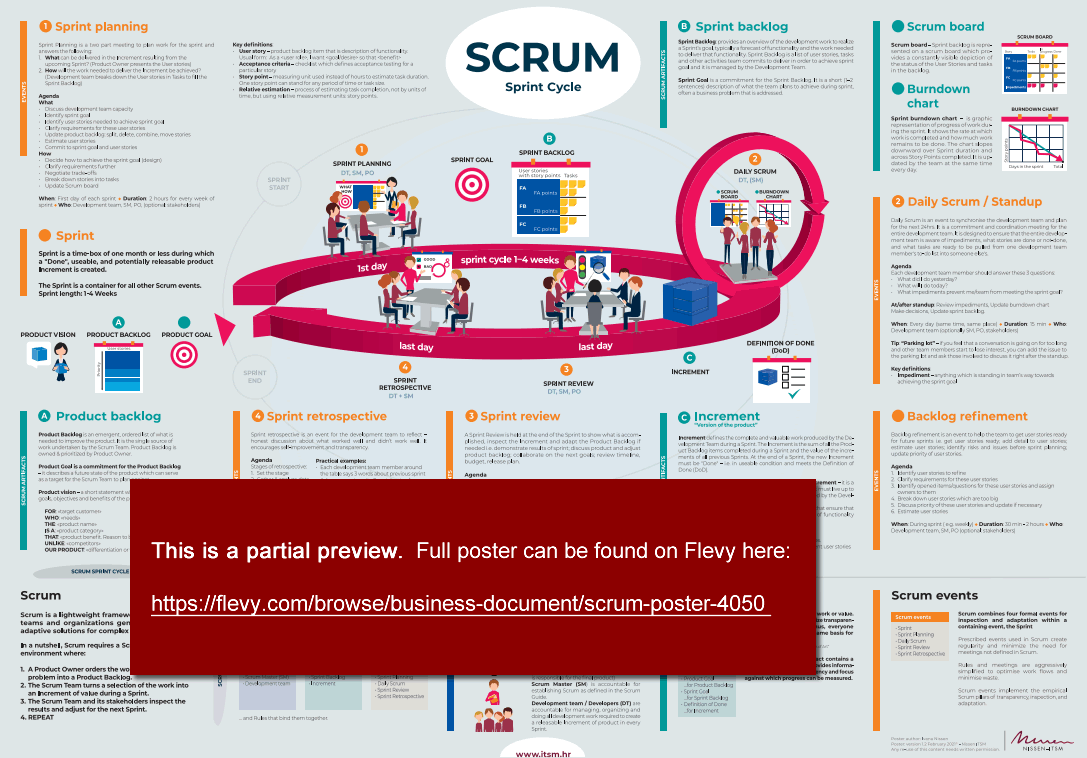
This SCRUM poster is based on a new Scrum Guide (November 2020) and gives an detailed insight in the SCRUM Sprint Cycle.
Poster is in A2 format, but also printable in A1 and A0 format.
The poster explains one sprint cycle, including:
1. Scrum Team
2. Scrum Events
3. Scrum Artifacts
4. Key terms and definitions
Scrum is a framework for developing, delivering, and sustaining complex products. The Scrum framework consists of: Roles, Events, Artifacts, and Rules that bring them together.
Scrum Team:
1. Product Owner
2. Scrum Master
3. Development team
Events:
Prescribed events used in Scrum create regularity and minimize the need for meetings not defined in Scrum. Rules and meetings are aggressively simplified to optimise work flows and minimise waste.
Primary Scrum events are:
Sprint
1. Sprint Planning
2. Daily Scrum / Standup
3. Sprint Review
4. Sprint Retrospective
and Backlog Refinement
• each with their own timebox and deliverables.
Artifacts:
Scrum's artifacts represent work or value in various ways that are useful in providing transparency and opportunities for inspection and adaptation.
Primary Scrum artifacts:
A. Product Backlog
B. Sprint Backlog
C. Increment
Poster also gives key Terms and definitions.
The visual layout of this poster is designed to be both informative and engaging, ensuring that key concepts are easily digestible at a glance. The use of color coding and clear sections allows for quick reference, making it an invaluable tool for both new and experienced Scrum practitioners. The poster's design emphasizes clarity and accessibility, which is crucial for maintaining team alignment and understanding throughout the sprint cycle.
This poster is not just a static reference; it’s a dynamic tool that can be used in daily stand-ups, sprint planning sessions, and retrospectives. The detailed breakdown of roles, events, and artifacts provides a comprehensive overview that supports continuous improvement and effective project management. This resource is ideal for teams looking to refine their Scrum practices and achieve higher levels of productivity and collaboration.
Got a question about the product? Email us at support@flevy.com or ask the author directly by using the "Ask the Author a Question" form. If you cannot view the preview above this document description, go here to view the large preview instead.
TOPIC FAQ
What are the core elements of the Scrum framework I should teach a new team?
The Scrum framework consists of Roles, Events, Artifacts, and Rules that bring them together. Roles are Product Owner, Scrum Master, and Development Team; primary artifacts are Product Backlog, Sprint Backlog, and Increment, and Events form the sprint cycle. The poster lists the 3 roles and 3 primary artifacts.Which events make up a typical sprint cycle and what do they achieve?
Primary Scrum events are Sprint Planning, Daily Scrum/Standup, Sprint Review, Sprint Retrospective, plus Backlog Refinement. Each event is timeboxed and produces specific deliverables to create regularity and minimize unnecessary meetings, with these 5 events forming the sprint cadence.How do Scrum artifacts support transparency and adaptation in a sprint?
Scrum artifacts represent work or value in ways that enable transparency, inspection, and adaptation. The primary artifacts are the Product Backlog (work to be done), Sprint Backlog (work selected for the sprint), and the Increment (completed value), with 3 primary artifacts documented on the poster.What visual features should I look for in a Scrum poster for team rooms?
Effective posters use clear sections and color coding to make concepts digestible at a glance, and specify roles, events, artifacts, and key terms. SCRUM Poster: SCRUM Sprint Cycle (A2, A1, A0) - New 2020 explicitly uses color coding and clear sections and is provided as an A2 PDF.How can a single-page poster fit into sprint ceremonies like planning and retrospectives?
A one-page poster serves as an on-the-wall reminder of roles, event sequence, timeboxes, and artifact definitions so teams can reference timeboxes during planning, confirm Daily Scrum focus, and review artifact expectations in retrospectives; the Flevy poster is a 1-page PDF printable in A2/A1/A0.What is the value of buying a printable Scrum poster versus a full toolkit when on a limited budget?
A printable poster offers a low-cost visual reference for recurring ceremonies and team alignment without the time or cost of full toolkits; it’s useful for daily stand-ups and planning, and SCRUM Poster: SCRUM Sprint Cycle (A2, A1, A0) - New 2020 is a single-page PDF in A2 format.I’m onboarding a new Scrum Master — which quick reference materials are most helpful?
Concise references that list Scrum roles, primary events with their timeboxes, artifacts, and key definitions help new Scrum Masters run ceremonies and coach teams. SCRUM Poster: SCRUM Sprint Cycle (A2, A1, A0) - New 2020 includes roles, events, artifacts, and definitions based on the Scrum Guide (November 2020).After a sprint review the team is unclear on artifact definitions — where should they look?
Teams should reference definitions of Product Backlog, Sprint Backlog, and Increment to clarify scope and completion criteria; a sprint-cycle poster that lists these artifacts and key terms provides immediate clarity, specifically the 3 primary artifacts shown on the poster.Source: Best Practices in Scrum PDF: SCRUM Poster: SCRUM Sprint Cycle (A2, A1, A0) - New 2020 PDF (PDF) Document, ITSM Consulting




























