 Click main image to view in full screen.
Working Capital Release & Covenant Headroom Model – Excel XLSX
Excel (XLSX) + PowerPoint (PPTX)


BENEFITS OF THIS DOWNLOADABLE EXCEL DOCUMENT
- Converts a leverage covenant into the number of days of working capital that must come out, which is the only unit credit control and purchasing can act on.
- Separates receivables, inventory and payables so you can see which lever carries the release and which one is being assumed away.
- Runs the released cash through the revolver, the interest charge and both covenant tests quarter by quarter, with eighteen built-in checks.
WORKING CAPITAL MANAGEMENT EXCEL DESCRIPTION
Ask a working capital spreadsheet what the covenant needs and it will give you a multiple of EBITDA. Nobody in credit control or purchasing can act on a multiple. This model gives you the answer in days.
It takes receivable, inventory and payable days as they are today and as you want them, moves them quarter by quarter over the implementation period you set, releases the cash that comes out of the balance sheet, pays down the revolver with it, and recomputes leverage and interest cover against your covenants as it goes. Then it inverts itself: it states the net debt that has to disappear for the leverage test to pass, divides that by the cash released per day of cycle, and tells you how many days of working capital stand between the business and a breach.
WHAT MAKES IT DIFFERENT
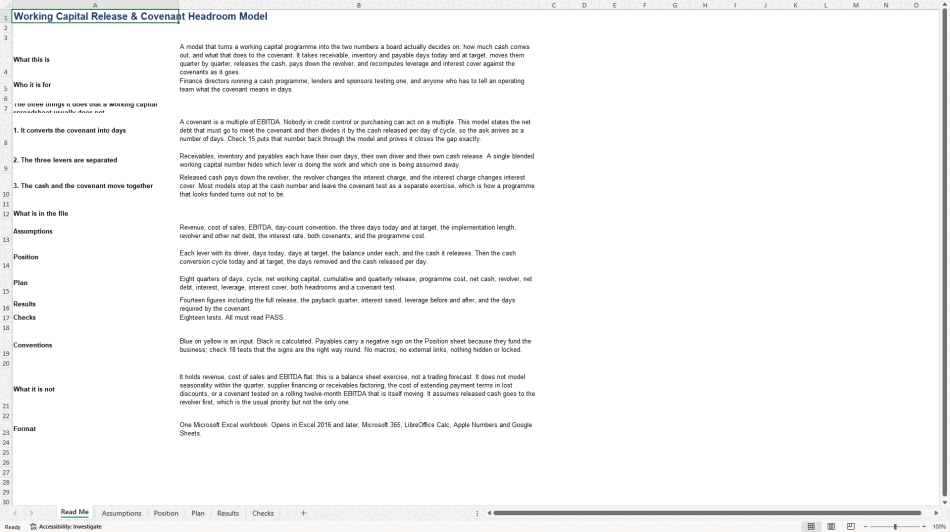
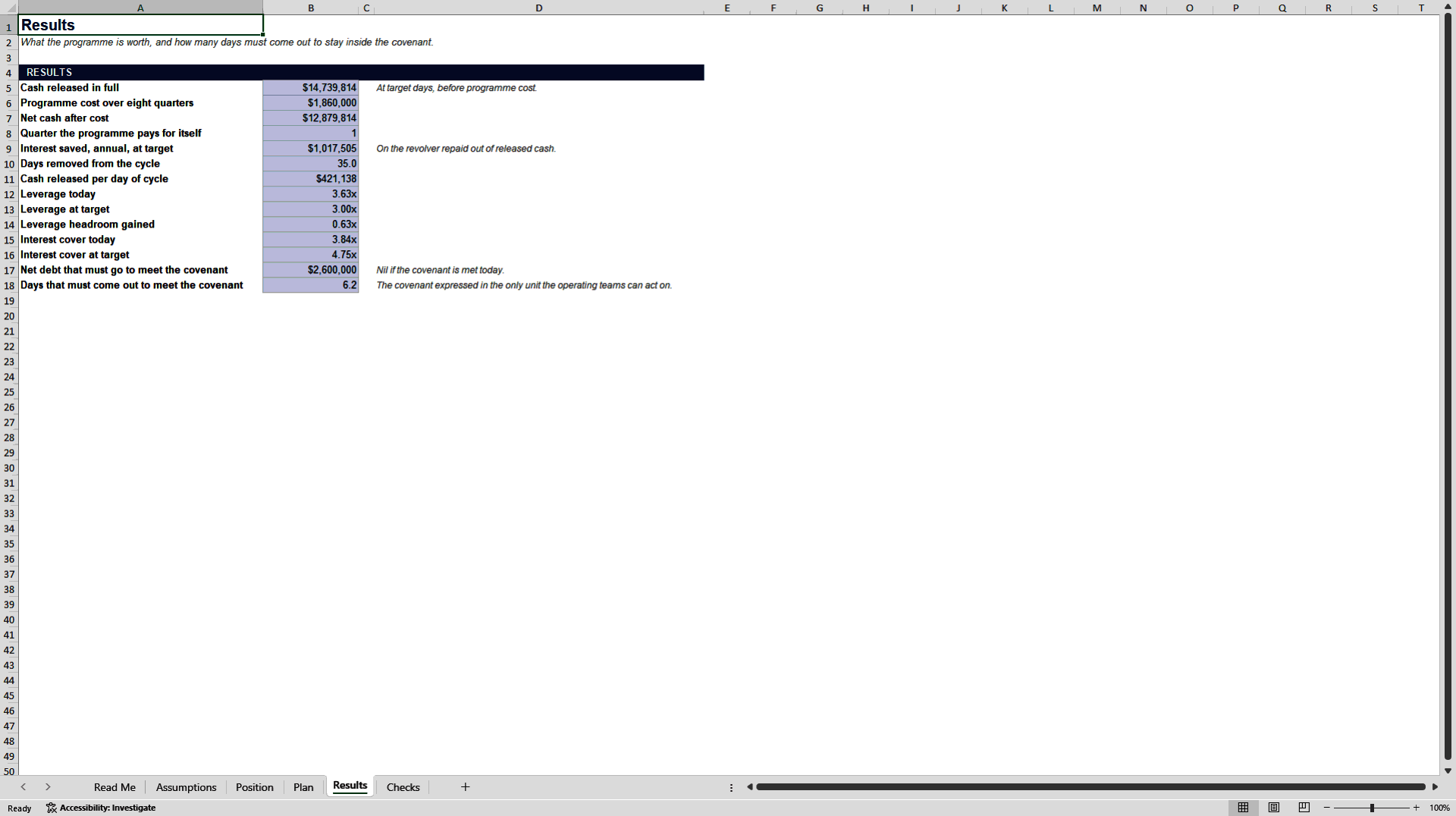
It converts the covenant into days. In the worked example the company is outside both covenants, two point six million of net debt has to go, and that is six point two days of working capital against a cycle of a hundred and seven days. One of the eighteen checks takes that number, puts it back through the model, and proves it closes the gap exactly.
The three levers are separated. Receivables, inventory and payables each carry their own days, their own driver and their own cash release, so the plan can be handed to three different owners with three different numbers. A single blended working capital figure hides which lever is doing the work.
The cash and the covenant move together. Released cash pays down the revolver, the revolver changes the interest charge, and the interest charge changes interest cover. Most models stop at the cash number and leave the covenant test as a separate exercise, which is how a programme that looks funded turns out not to be.
WHAT IS IN IT
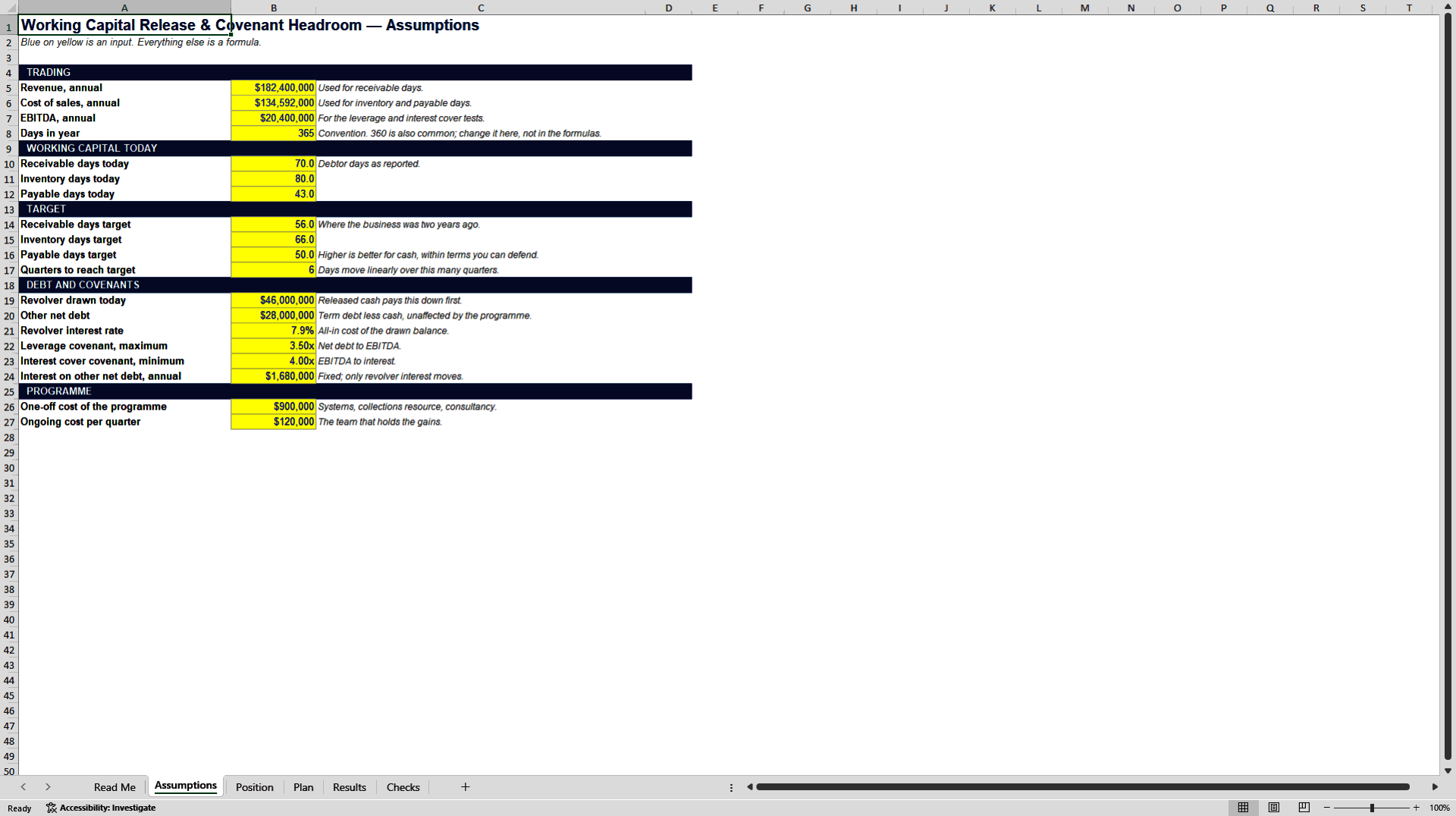
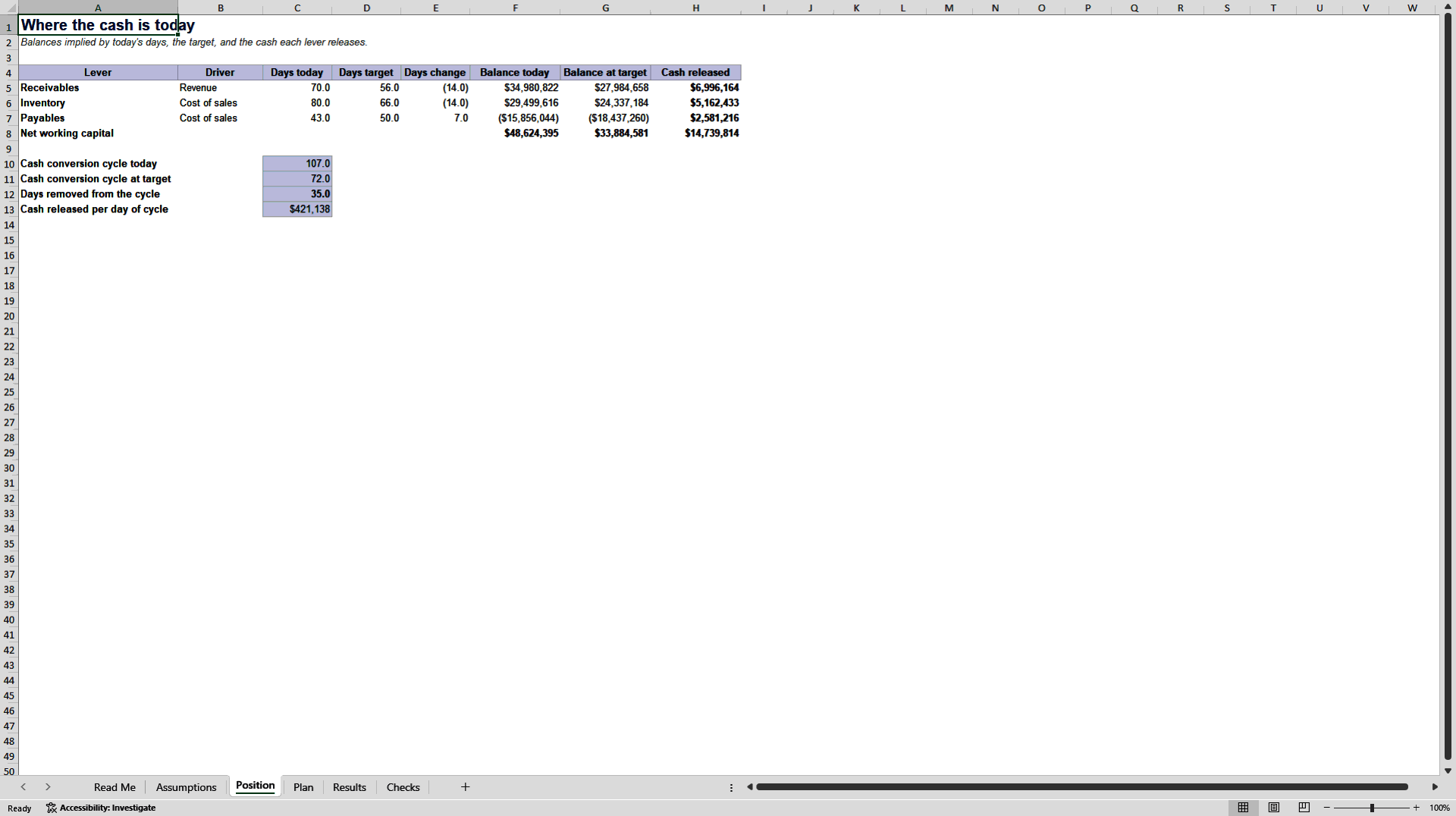
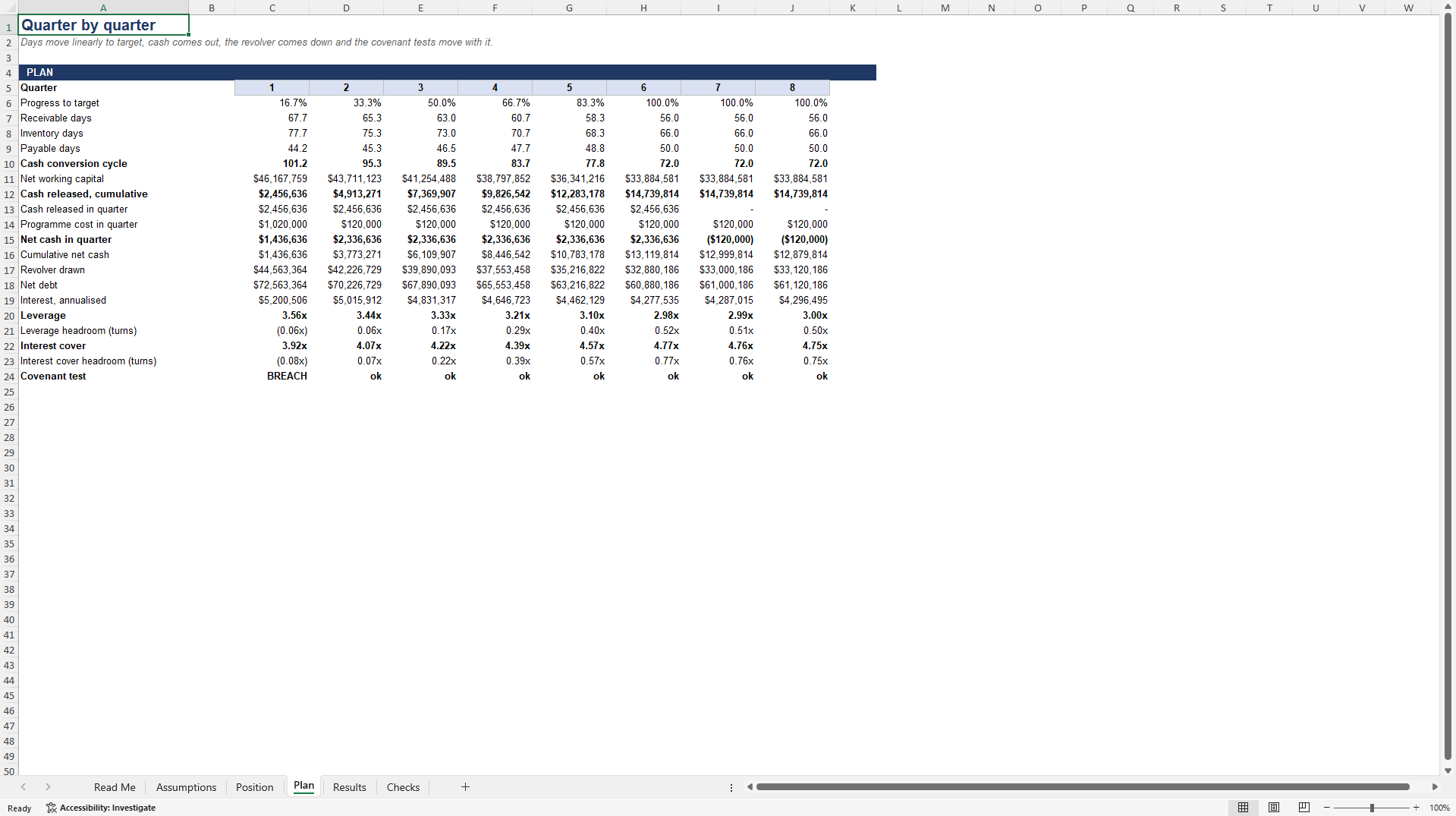
Six tabs. Assumptions holds revenue, cost of sales, EBITDA, the day-count convention, the three days today and at target, the implementation length, revolver and other net debt, the interest rate, both covenants and the programme cost. Position shows each lever with its driver, the balance under today's days and under target days, and the cash it releases, then the cash conversion cycle before and after, the days removed, and the cash released per day. Plan builds eight quarters of days, cycle, net working capital, cumulative and quarterly release, programme cost, net cash, revolver, net debt, interest, leverage, interest cover, both headrooms and a covenant test that reads BREACH or ok. Results holds fourteen figures including the full release, the payback quarter, interest saved, leverage before and after, and the days the covenant requires. Checks holds eighteen tests and every one must read PASS.
A ten-slide PowerPoint deck is included, built to be put in front of a board as it stands: where the covenant sits today, what the programme is worth, the three levers with their owners, leverage against the covenant quarter by quarter, what each lever actually requires operationally, and what would make the programme fail.
THE WORKED EXAMPLE
Revenue of a hundred and eighty-two million, cost of sales of a hundred and thirty-five million, EBITDA of twenty point four million. Receivable days seventy going to fifty-six, inventory eighty going to sixty-six, payables forty-three going to fifty, over six quarters. A forty-six million revolver at seven point nine per cent and twenty-eight million of other net debt, against a leverage covenant of three and a half times and an interest cover covenant of four times.
The company is outside both today: leverage three point six three, cover three point eight four. The programme releases fourteen point seven million, twelve point nine after cost, removes thirty-five days from the cycle, saves a million a year of interest, and takes leverage to three times and cover to four point seven five. The leverage test clears in quarter two. The covenant needed six point two days; the plan delivers thirty-five.
WHAT IT IS NOT
It holds revenue, cost of sales and EBITDA flat: this is a balance sheet exercise, not a trading forecast. It does not model seasonality inside the quarter, supplier finance or receivables factoring, the margin cost of extending payment terms, or a covenant tested on a rolling EBITDA that is itself moving. It assumes released cash goes to the revolver first.
FORMAT
One Microsoft Excel workbook and one PowerPoint deck. No macros, no add-ins, no external links, no password protection, no locked cells. Blue on pale yellow is an input; nothing else should be typed into. Opens in Excel 2016 and later, Microsoft 365, LibreOffice Calc, Apple Numbers and Google Sheets. Building this from scratch takes a competent financial modeller two to four days.
FREQUENTLY ASKED QUESTIONS
Why are payables shown as a negative balance? Because they fund the business rather than consume cash. Check eighteen tests that the signs are the right way round, so a mistyped target cannot quietly reverse a lever.
Can I change the implementation length? Yes. It is an input, and the days move linearly over whatever number of quarters you set. The model runs eight quarters whatever you choose.
Why does leverage tick up again at the end of the worked example? The release finishes in quarter six but the ongoing programme cost continues, so net debt creeps back. A working capital gain is held, not banked, and the model keeps the cost of holding it visible.
Does it handle a covenant on rolling twelve-month EBITDA? EBITDA is a single input held flat. If your EBITDA is moving, run the model twice and compare, rather than trusting one pass.
Can I use it for a cash forecast? No. It is a balance sheet and covenant model. Pair it with a thirteen-week cash flow if you need the weekly profile.
How do I know the day figures tie to the balance sheet? Set the days so that the balances on the Position tab match your reported receivables, inventory and payables. If they do not tie, the days are wrong, not the model.
Is anything locked or hidden? No. There are no macros, no protection, no hidden sheets and no external links. Every formula is visible and editable.
Got a question about the product? Email us at support@flevy.com or ask the author directly by using the "Ask the Author a Question" form. If you cannot view the preview above this document description, go here to view the large preview instead.
Source: Best Practices in Working Capital Management, Integrated Financial Model Excel: Working Capital Release & Covenant Headroom Model Excel (XLSX) Spreadsheet, Paweł Dudek, Balancewright
ABOUT THE AUTHOR

Balancewright is Paweł Dudek. The catalogue covers project finance, fund and waterfall structures, corporate three-statement forecasting, working capital, valuation and FP&A -- built as working models rather than formatted templates.
Every model is formula-driven end to end. No locked cells, no passwords, no macros and no external links, so any calculation can be inspected, adapted and
... [read more]
Ask the Author a Question
You must be logged in to contact the author.




























