 Click main image to view in full screen.
Utility-Scale Solar Site Screening & Energy Yield Pack – Excel XLSX
Excel (XLSX) + Zip archive file (ZIP)


BENEFITS OF THIS DOWNLOADABLE EXCEL DOCUMENT
- Screens up to 10 utility-scale solar sites through one consistent framework covering solar resource, grid access, land, permitting, social context and logistics, with fatal flags that keep unacceptable sites out of the ranking regardless of score.
- Converts the selected site's resource evidence into a transparent 25-year P50/P75/P90 energy forecast, including monthly transposition, performance-ratio losses, degradation and uncertainty.
- Connects site selection to energy yield through a sealed handoff, so the site that wins the screening is the same physical project that enters the production forecast.
SOLAR ENERGY EXCEL DESCRIPTION
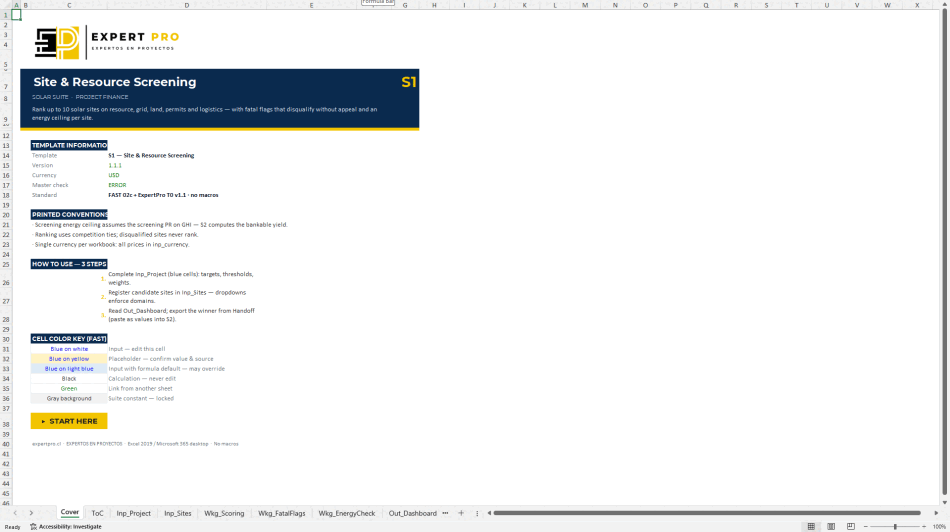
Solar Site Screening & Energy Yield Pack is a two-model Excel toolkit designed for the first technical and development stages of a utility-scale photovoltaic project.
The pack answers two questions that should be resolved before a detailed budget or financing model is built: Where should we develop? And how much energy can that site reasonably produce, and with what level of confidence?
The two workbooks operate as a connected chain. S1 identifies the site that deserves further development expenditure. S2 replaces S1's high-level screening estimate with a detailed monthly production and uncertainty model.
S1 – SITE & RESOURCE SCREENING
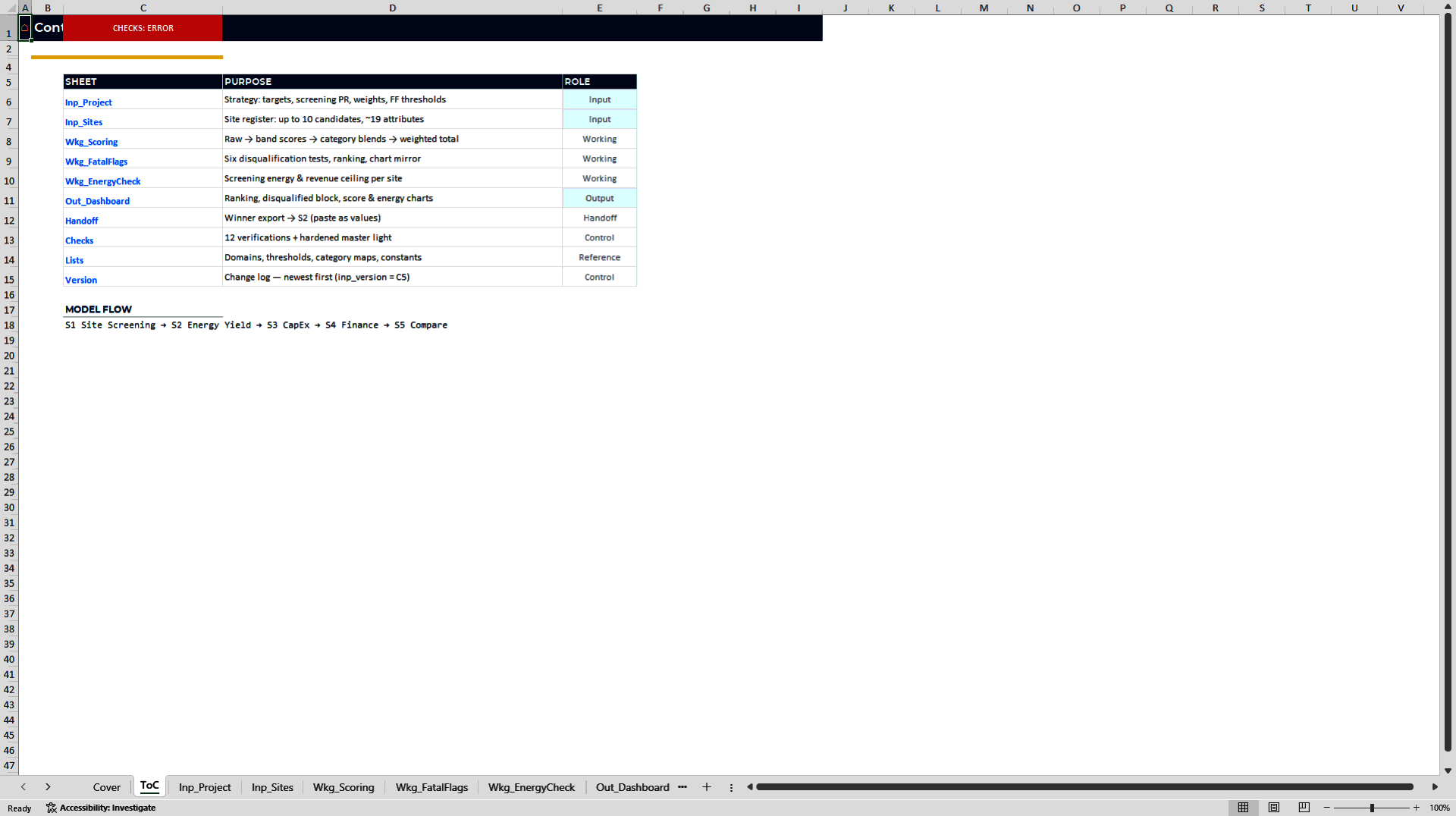
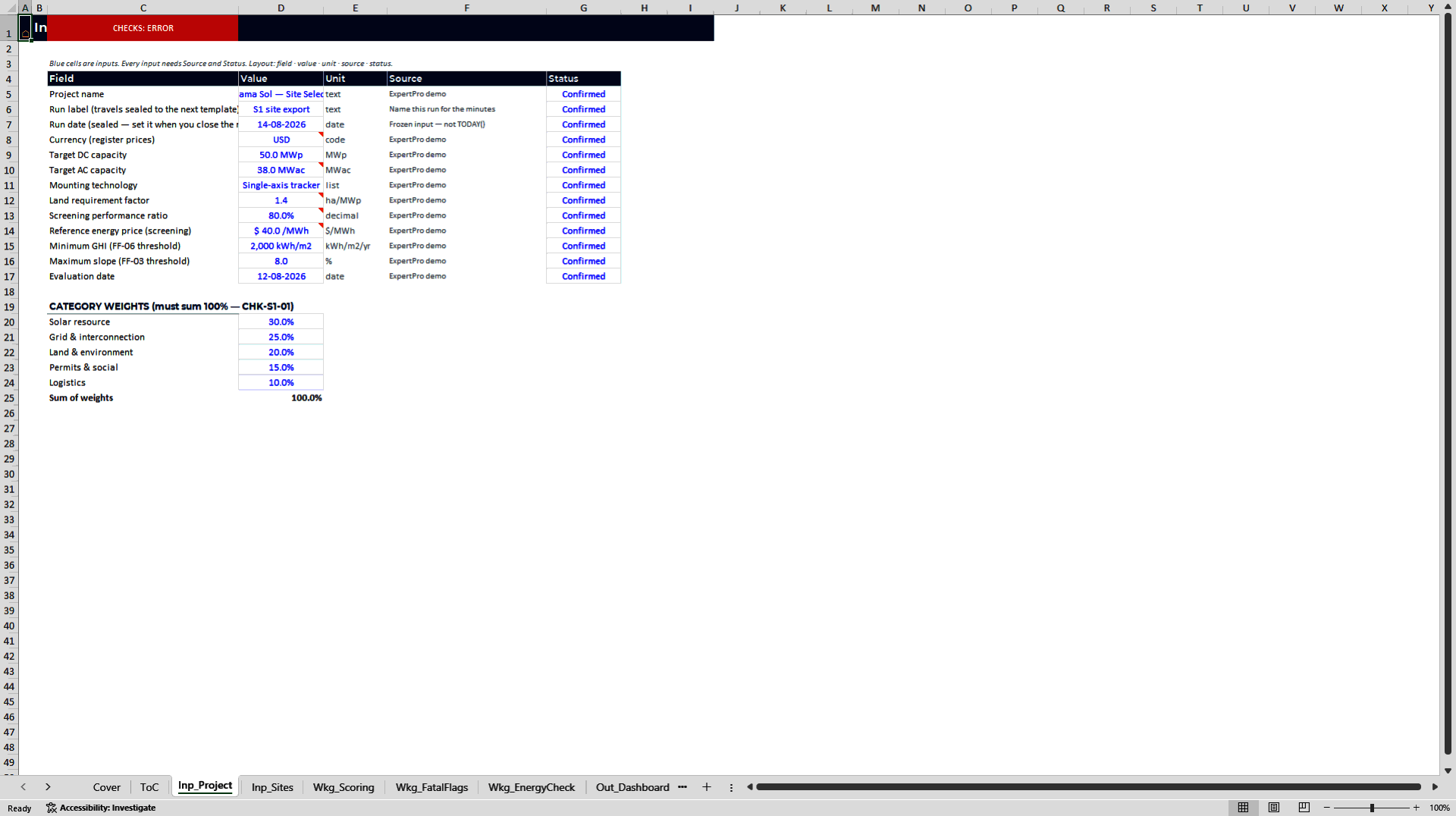
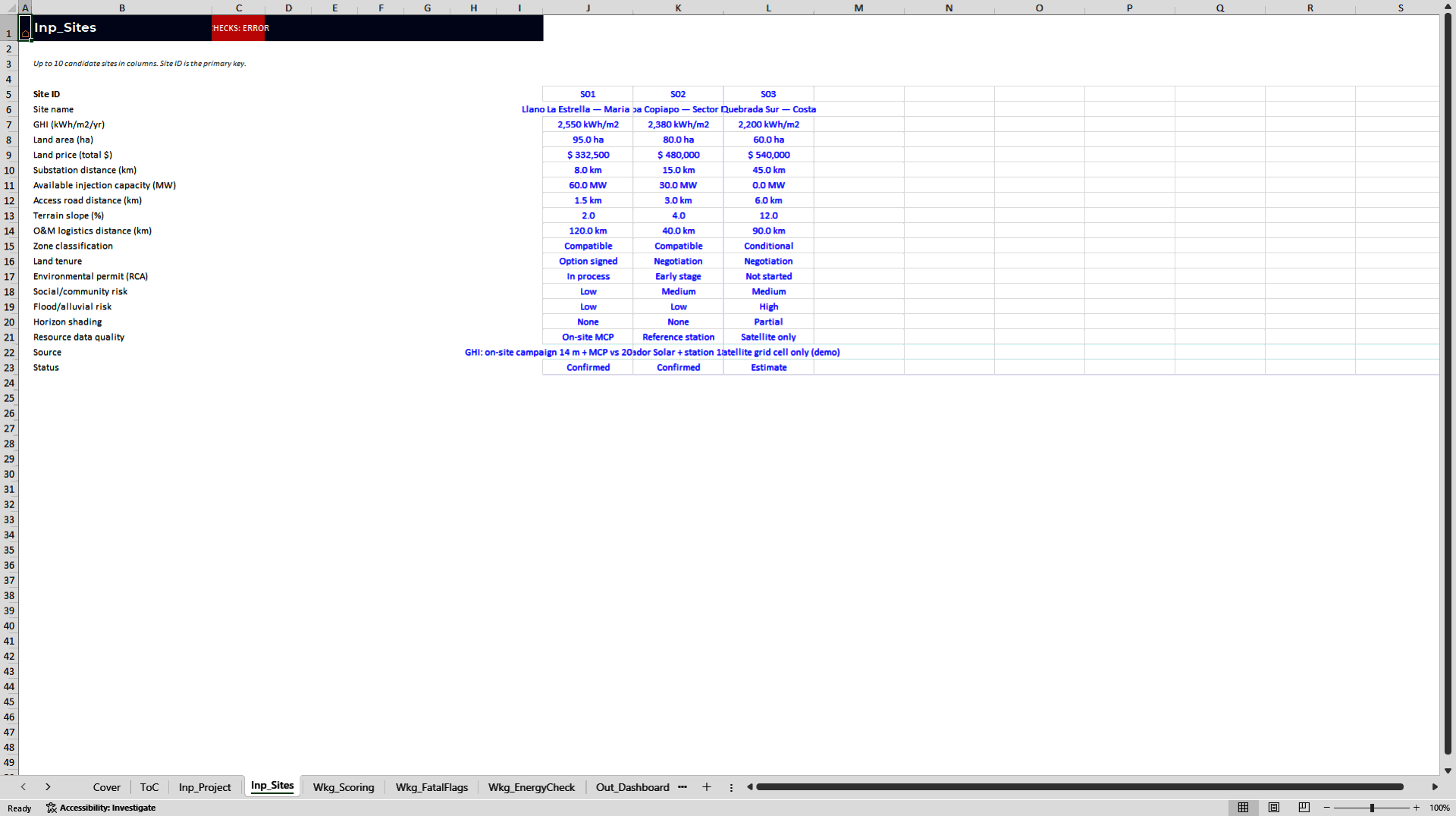
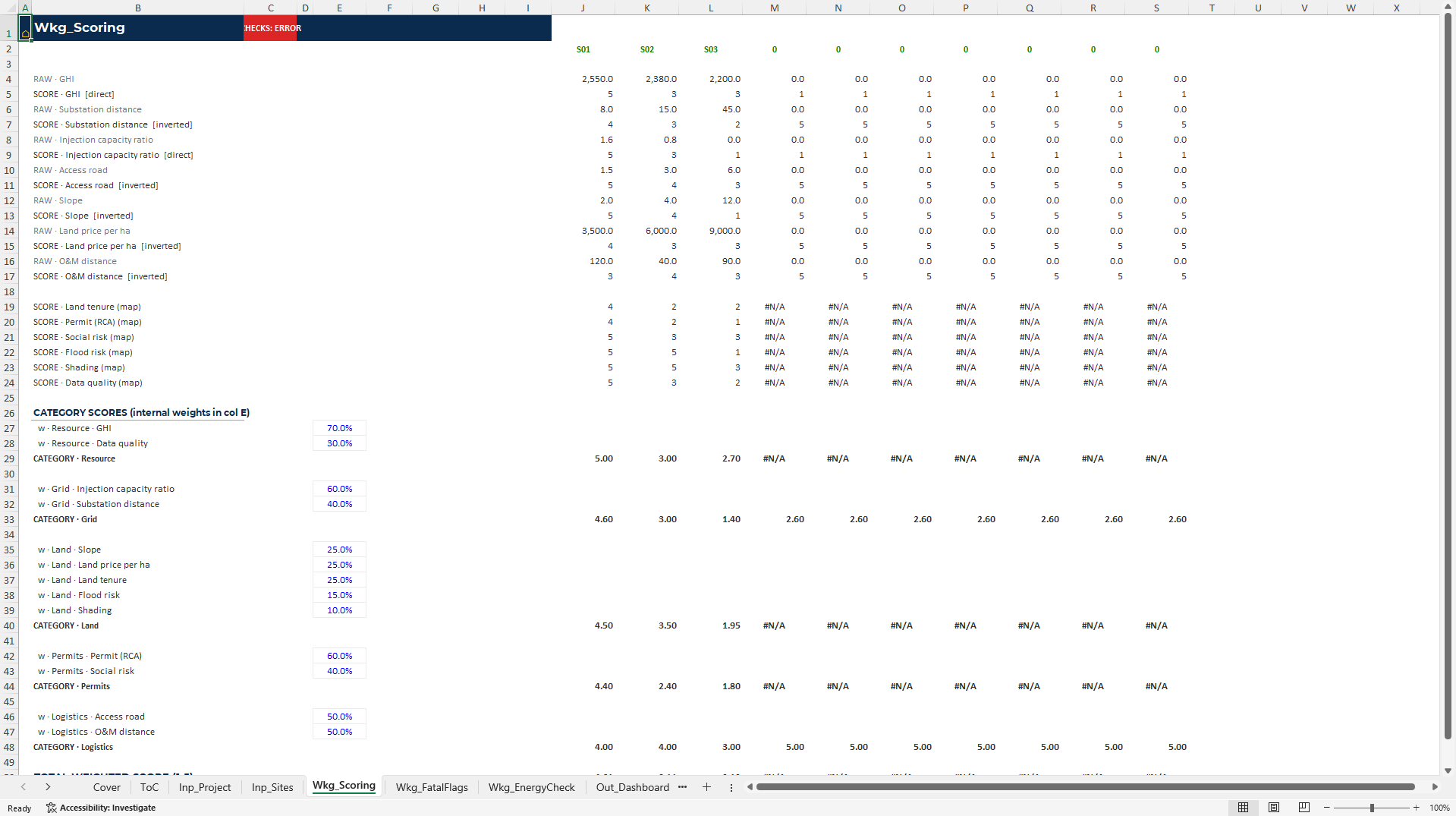
S1 evaluates up to 10 candidate sites using 19 attributes grouped into five weighted categories: solar resource, grid access, land, permitting and social context, and construction logistics.
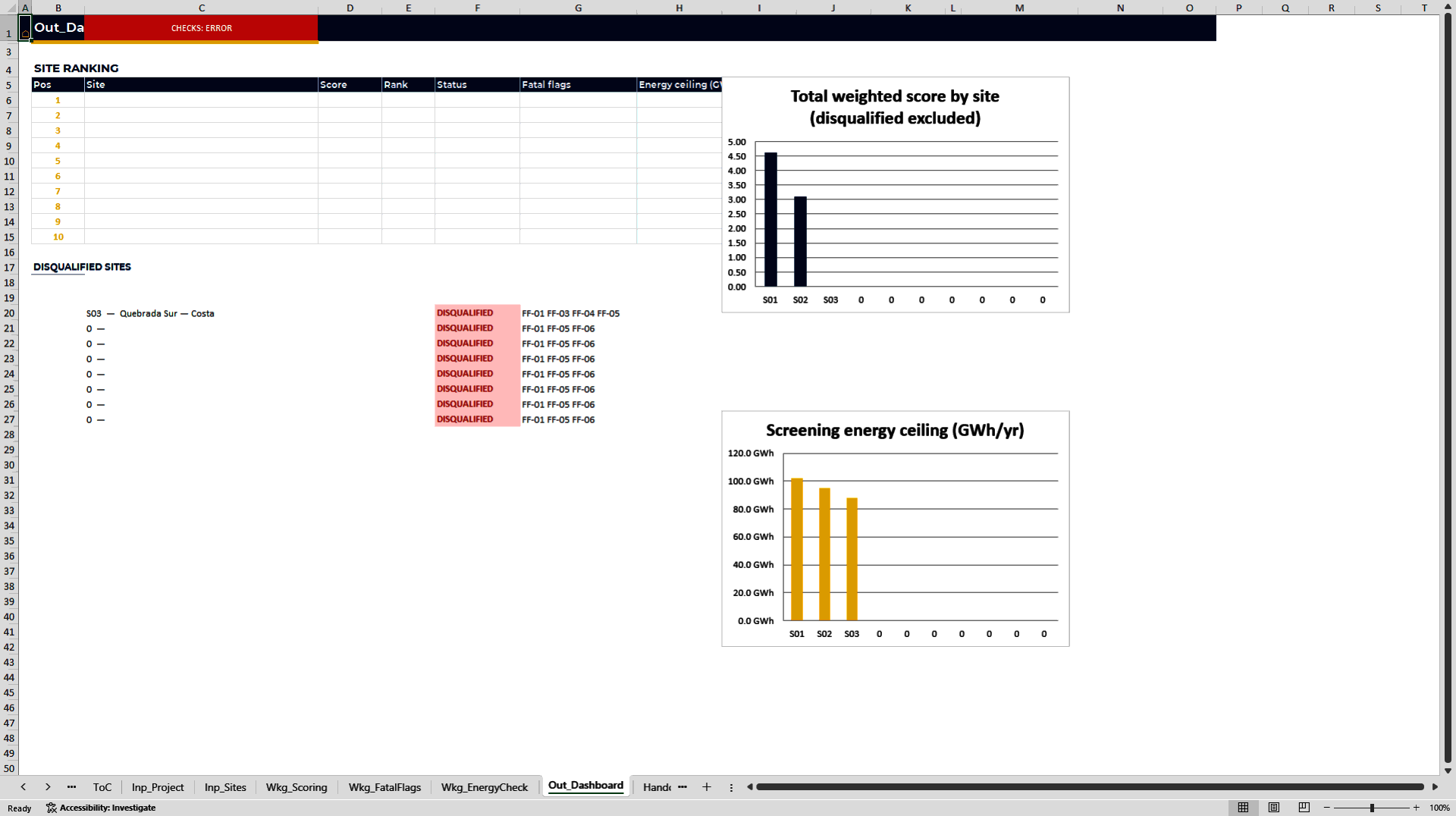
Six fatal flags operate outside the weighted score. A site can therefore rank highly on irradiance or land cost and still be disqualified if it fails a critical condition such as grid capacity or site suitability.
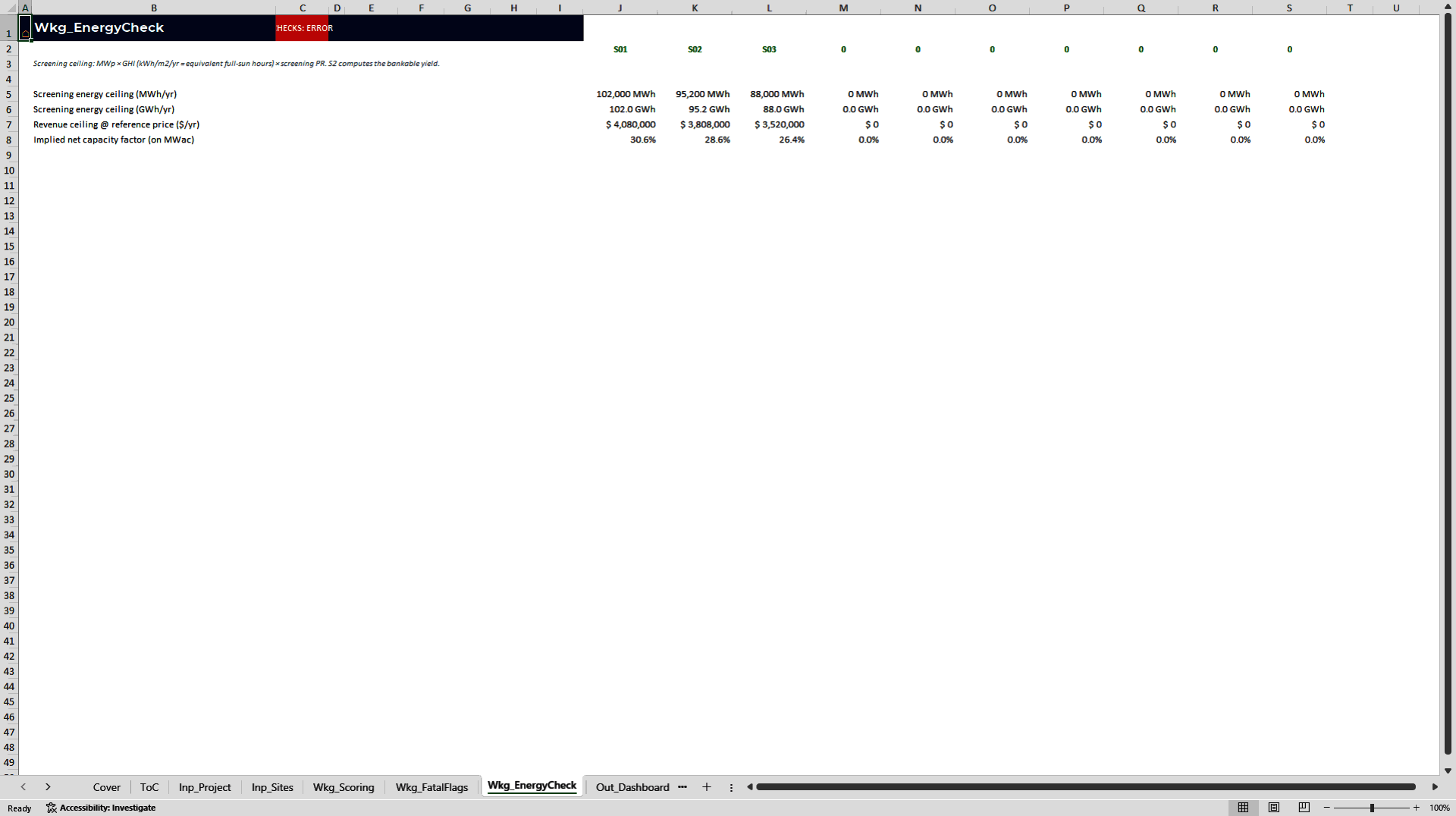
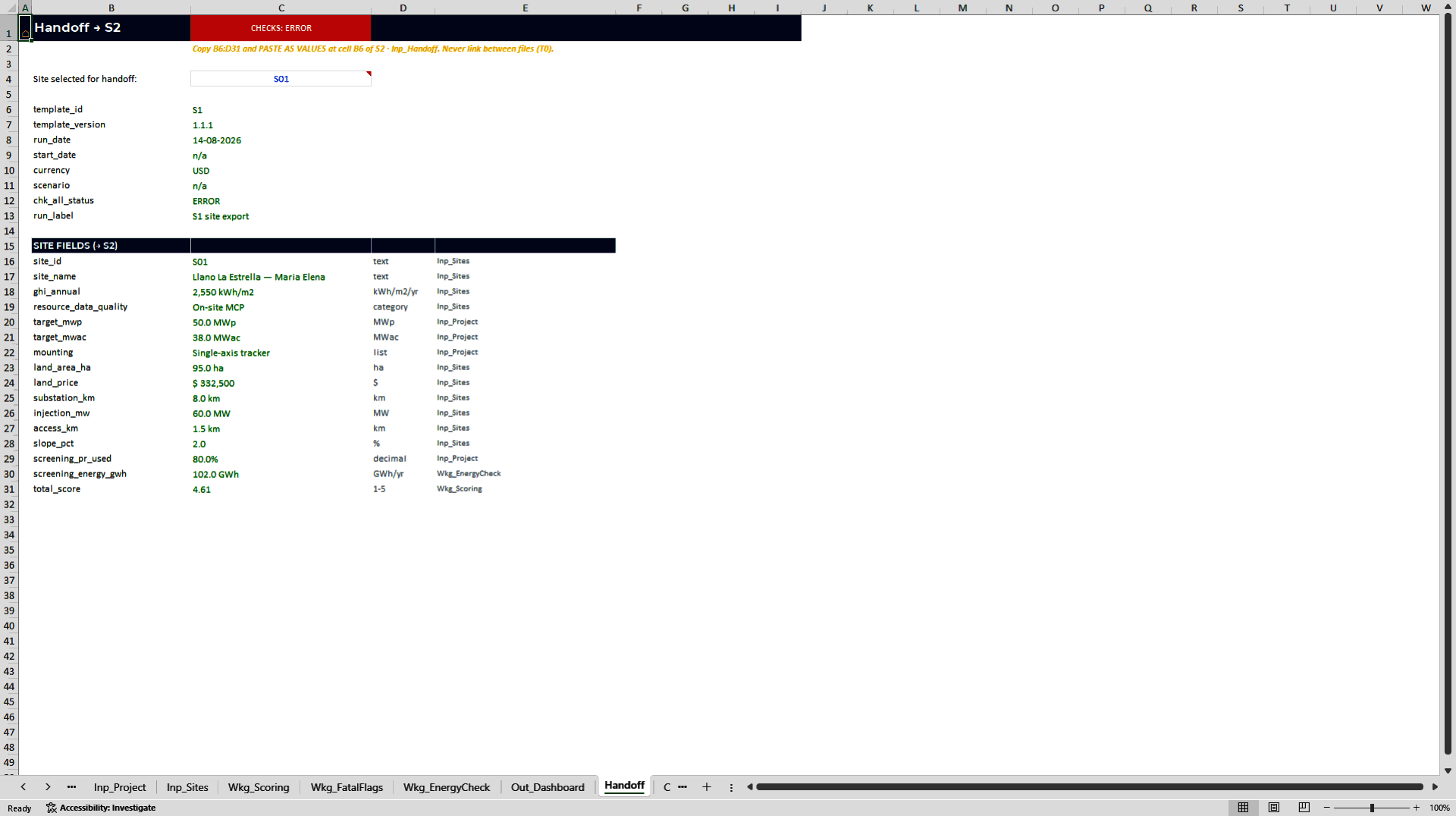
The workbook produces a committee-ready ranking, category breakdowns, disqualification reasons and a screening-level estimate of annual production. The selected site's attributes are then exported through a controlled Handoff to S2.
S1 is deliberately a screening model, not a detailed yield study. Its purpose is to spend diligence money on the right sites.
S2 – ENERGY YIELD ASSESSMENT
S2 receives the selected site and turns the resource assumptions into a 300-month energy model rolled into 25 operating years.
The model covers monthly irradiance distribution, plane-of-array transposition, constant and seasonal loss factors, temperature, soiling, availability, curtailment, first-year degradation, long-term degradation and uncertainty.
The resulting P50 forecast is converted into P75 and P90 through transparent exceedance arithmetic. No Monte Carlo engine is hidden inside the workbook: the logic is deterministic and visible.
P50 and P90 are exported separately so that the same physical plant can later support different investor and lender cases.
HOW THE TWO MODELS CONNECT
S1 ends with a sealed Handoff containing the selected site's identity and relevant attributes. The values are pasted into S2 rather than linked through external Excel formulas.
This creates a timestamped snapshot of the site used for the yield study while protecting the project from broken workbook links or silent upstream changes.
WHAT YOU RECEIVE
Two Excel models, the S1 and S2 dedicated user manuals, a Pack Quick Start, an illustrative utility-scale solar demonstration case, and the licence and scope documentation. The primary download is the S1 screening workbook; the secondary file is a ZIP containing the S2 energy yield model, both user manuals, the Pack Quick Start, the demonstration case and the licence documentation.
WHO IT IS FOR
Solar developers, independent power producers, development analysts, renewable-energy consultants, technical advisors, site acquisition teams and investors evaluating early-stage solar opportunities.
WHAT IT IS NOT
This pack is an early-development and underwriting toolkit. It does not replace a site walkover, geotechnical investigation, title review, grid interconnection study, measurement campaign, PVsyst-class simulation or independent engineer's energy report.
It does not calculate project CapEx, debt or investment returns; those functions belong to the later modules of the complete ExpertPro Solar Suite.
Got a question about the product? Email us at support@flevy.com or ask the author directly by using the "Ask the Author a Question" form. If you cannot view the preview above this document description, go here to view the large preview instead.
Source: Best Practices in Solar Energy Excel: Utility-Scale Solar Site Screening & Energy Yield Pack Excel (XLSX) Spreadsheet, ExpertPro Consulting
ABOUT THE AUTHOR

ExpertPro is an advisory firm that builds the financial and decision infrastructure behind capital projects. Our work sits at the intersection of project finance, engineering economics and data: we model, stress-test and document infrastructure investments so that sponsors, lenders and investment committees can decide on evidence rather than intuition.
The practice is led by Eduard Kofman, .
... [read more]
Ask the Author a Question
You must be logged in to contact the author.




























