
A practical, battle-tested framework for building resilient supply chains during geopolitical conflict.
Modern supply chains are collapsing under wars, sanctions, chokepoint attacks, and political instability.
This guide breaks down:
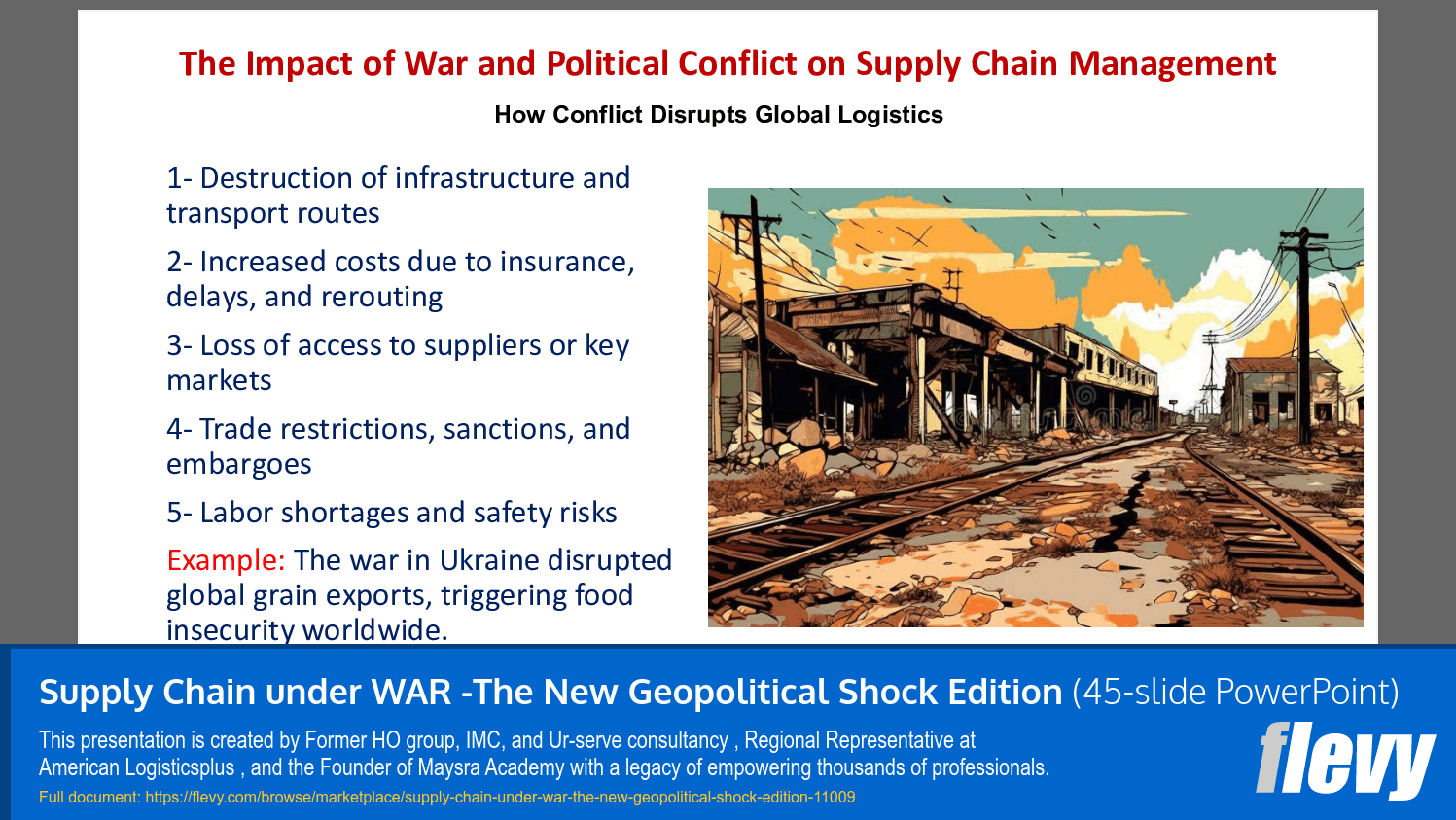
What really happens during war:
• Trade routes collapse overnight
• Ports shut down
• Suppliers disappear
• Costs skyrocket
• Human behavior becomes unpredictable
What you'll learn:
• Why traditional risk models fail under conflict
• How to build war-proof supply chains
• Global alternatives to Suez, Panama, Hormuz, and Malacca
• Case studies: Ukraine, Red Sea attacks, Japan earthquake
• A full action plan (short, medium, long term)
Who is this for?
• Supply chain managers
• Logistics professionals
• Consultants
• Operations leaders
• Anyone responsible for risk & resilience
This is not just a book – it's a framework for surviving and thriving in a volatile world.
Got a question about the product? Email us at support@flevy.com or ask the author directly by using the "Ask the Author a Question" form. If you cannot view the preview above this document description, go here to view the large preview instead.
Executive Summary
This presentation, titled "Supply Chain under War - New Geopolitical Shock Edition," provides critical insights into building resilient supply chains amid geopolitical crises, including wars and sanctions. Developed by seasoned professionals from various consulting backgrounds, it equips corporate executives and supply chain leaders with actionable strategies to navigate disruptions. The presentation includes historical case studies, risk mitigation frameworks, and practical action plans, enabling organizations to adapt and thrive in volatile environments.
Who This Is For and When to Use
• Supply Chain Executives responsible for strategic planning and risk management
• Logistics Managers overseeing operational continuity during crises
• Risk Management Teams focused on geopolitical threats and supply chain vulnerabilities
• Consultants advising organizations on resilience strategies
Best-fit moments to use this deck:
• During crisis management planning sessions
• When assessing supply chain vulnerabilities in light of geopolitical tensions
• For training workshops on resilience and risk mitigation strategies
Learning Objectives
• Define the impact of geopolitical crises on supply chains
• Build frameworks for assessing and mitigating supply chain risks
• Establish strategic partnerships to enhance supply chain resilience
• Implement inventory strategies that accommodate geopolitical uncertainties
• Analyze historical case studies to extract actionable lessons
• Develop a comprehensive action plan for immediate and long-term resilience
Table of Contents
• Introduction to Supply Chain Resilience (page 3)
• Historical Context of Logistics in Conflict (page 4)
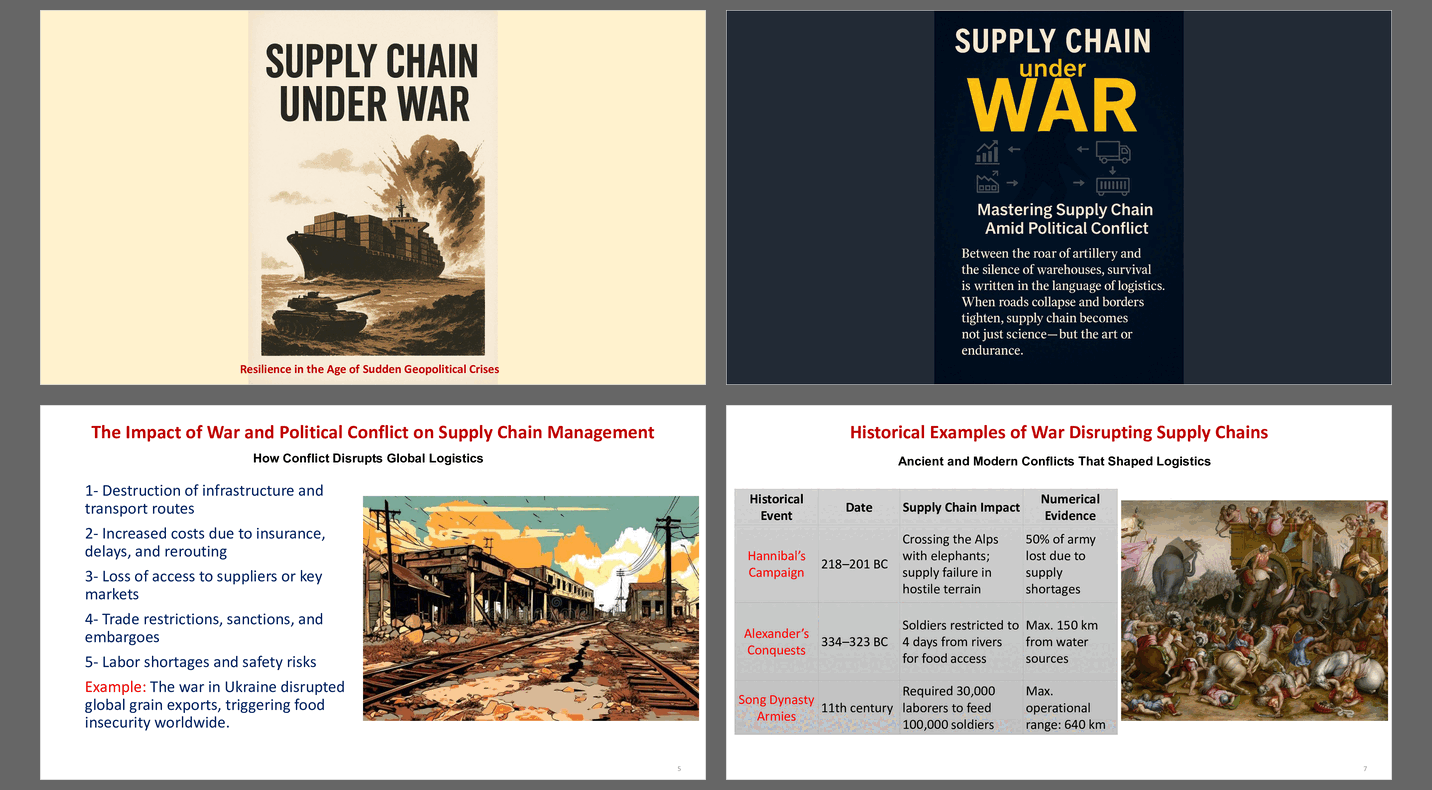
• Impact of Geopolitical Crises on Supply Chains (page 5)
• Case Studies of Supply Chain Disruptions (page 6)
• Mitigation Strategies for Supply Chain Risks (page 10)
• The Four Pillars of a Resilient Supply Chain (page 11)
• Global Alternatives to Traditional Trade Routes (page 15)
• Action Plan and Strategic Recommendations (page 39)
• Conclusion: Building Resilient Supply Chains (page 43)
Primary Topics Covered
• Geopolitical Impact - Understanding how wars and sanctions disrupt supply chains and logistics operations.
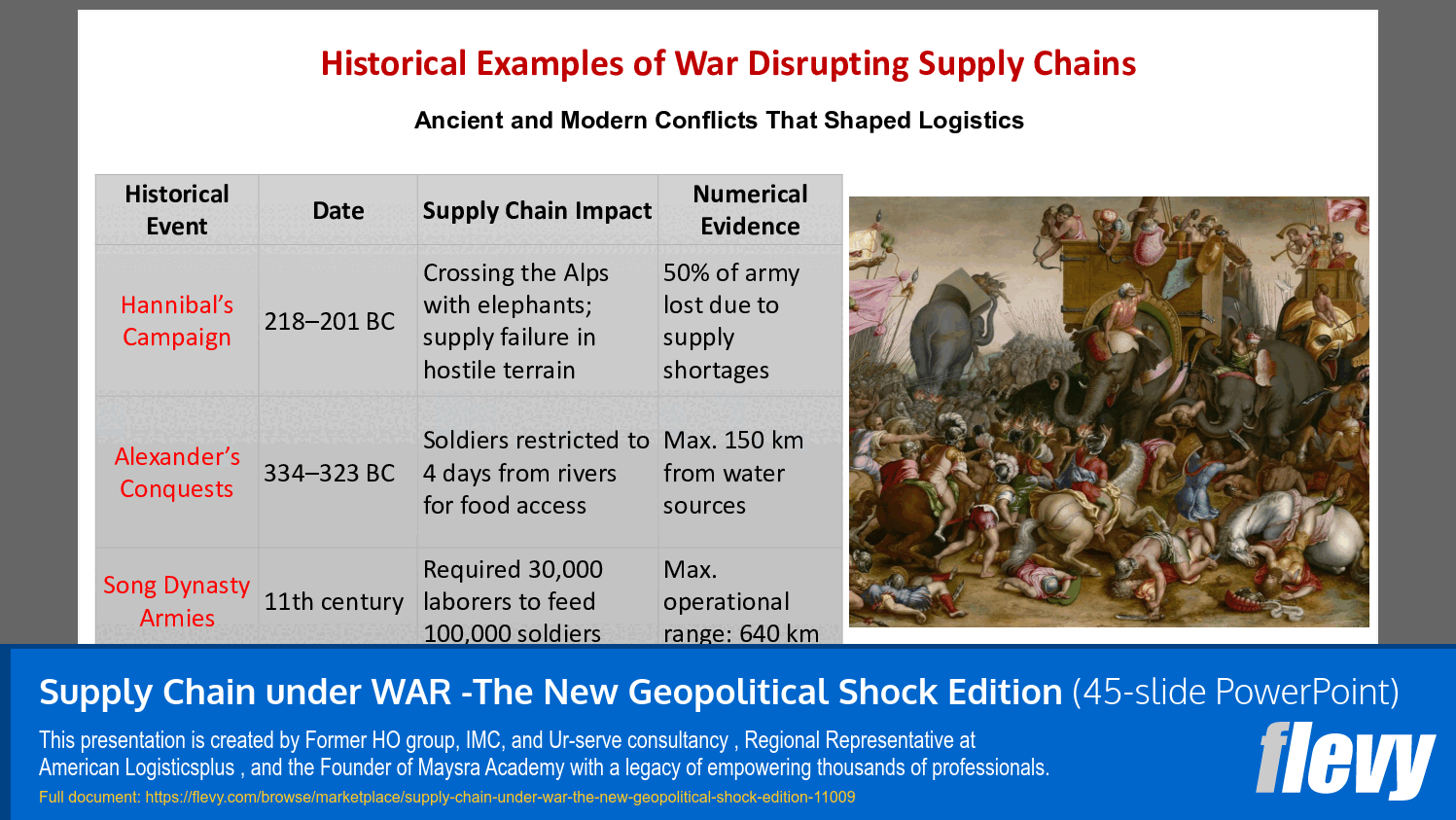
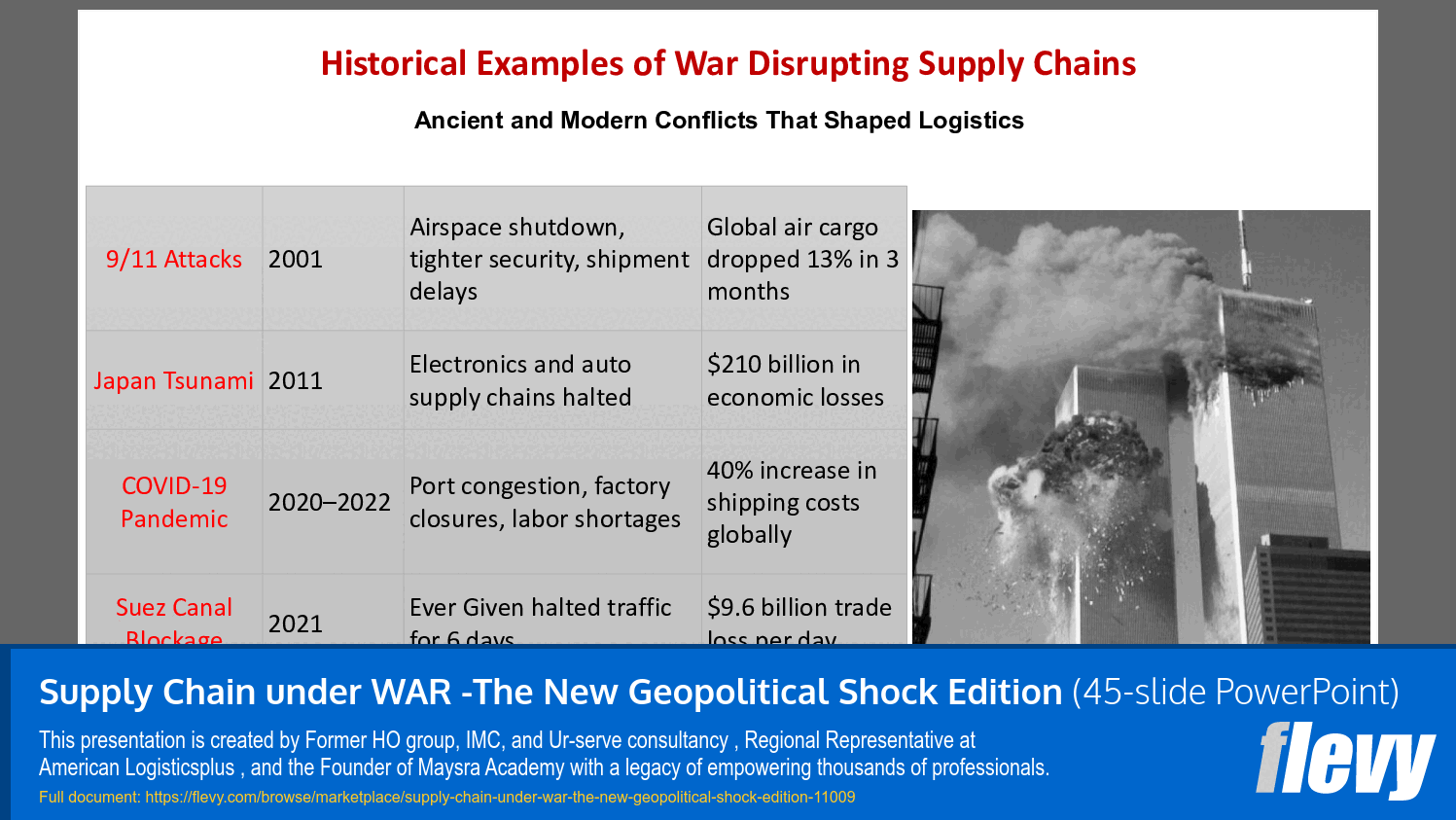
• Historical Case Studies - Analyzing historical events that illustrate the vulnerability of supply chains during conflicts.
• Risk Mitigation Strategies - Practical approaches for diversifying suppliers, establishing inventory buffers, and leveraging technology.
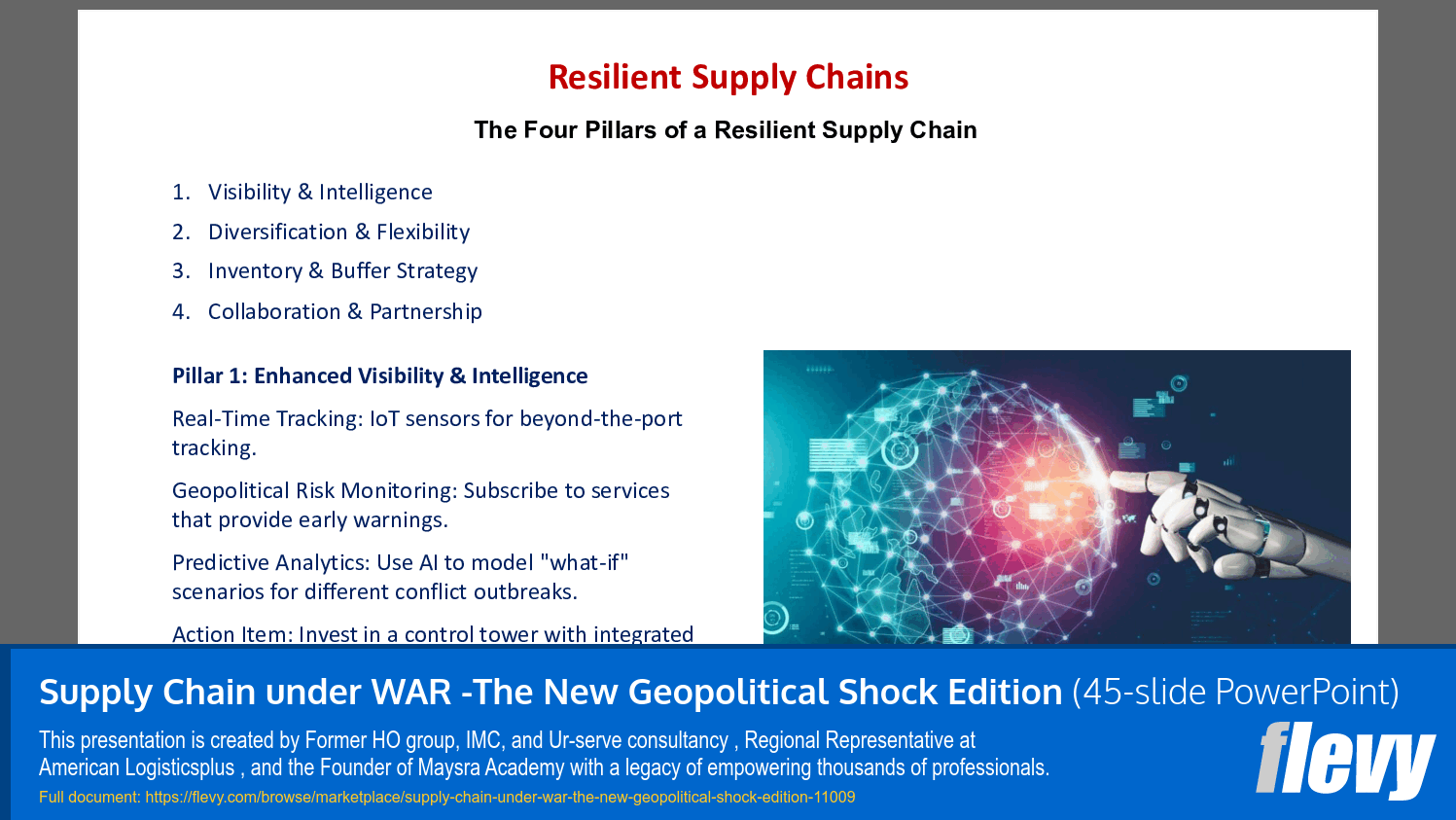
• Resilience Framework - The 4 pillars of supply chain resilience: visibility, diversification, inventory strategy, and collaboration.
• Alternative Trade Routes - Exploring global logistics alternatives in response to chokepoints and geopolitical risks.
Deliverables, Templates, and Tools
• Risk assessment templates for evaluating supply chain vulnerabilities
• Strategic inventory management models for critical items
• Frameworks for establishing supplier partnerships and collaboration
• Action plans for immediate response and long-term resilience
• Case study analysis templates for learning from historical disruptions
Slide Highlights
• Overview of the 4 pillars of a resilient supply chain
• Case study analysis showcasing the Ukraine-Russia conflict's impact on global logistics
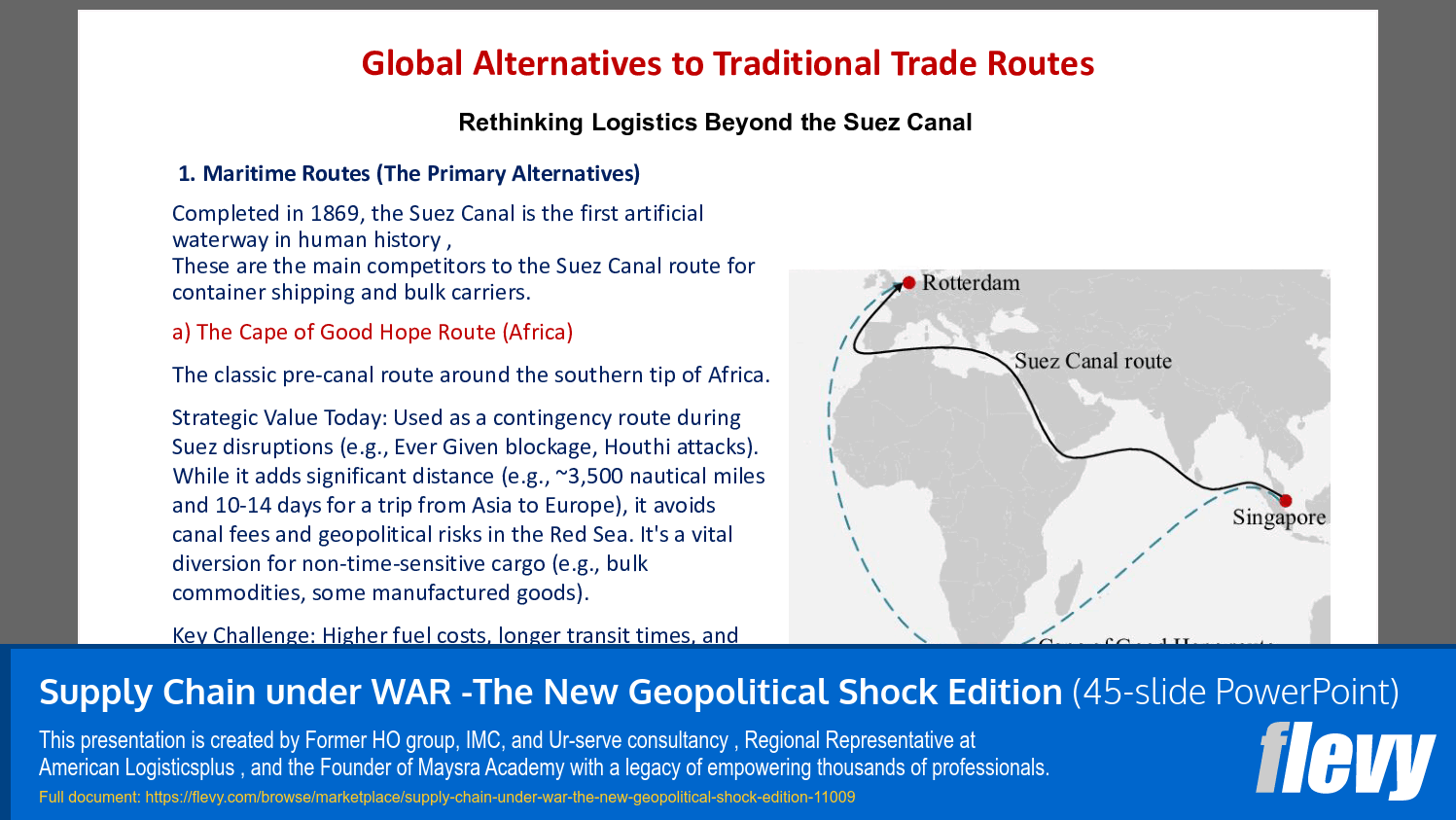
• Visual representation of alternative trade routes to mitigate risks
• Strategic recommendations for building agile supply chains
Potential Workshop Agenda
Supply Chain Resilience Overview (60 minutes)
• Discuss the impact of geopolitical crises on supply chains
• Review historical case studies and lessons learned
Risk Mitigation Strategies (90 minutes)
• Identify vulnerabilities in current supply chains
• Develop action plans for immediate and long-term resilience
Collaborative Partnerships (60 minutes)
• Explore strategies for building supplier relationships
• Discuss the importance of industry consortia and government engagement
Customization Guidance
• Tailor risk assessment templates to reflect specific geopolitical threats relevant to your organization
• Adjust inventory strategies based on the unique supply chain dynamics of your industry
• Incorporate organizational terminology and metrics into the frameworks provided
Secondary Topics Covered
• Historical examples of logistics failures during conflicts
• The role of technology in enhancing supply chain visibility
• Strategies for nearshoring and diversifying supplier bases
• Government programs that support supply chain security
Topic FAQ
Document FAQ
These are questions addressed within this presentation.
What are the main risks to supply chains during geopolitical crises?
Geopolitical crises can lead to infrastructure destruction, increased costs, loss of supplier access, and trade restrictions, all of which disrupt logistics and supply chains.
How can organizations build resilience in their supply chains?
Organizations can build resilience by diversifying suppliers, establishing strategic inventory reserves, leveraging technology for visibility, and fostering collaboration with key partners.
What historical examples illustrate the impact of conflict on supply chains?
Historical events such as the Ukraine-Russia conflict and the COVID-19 pandemic demonstrate how geopolitical tensions can disrupt global logistics and supply chains.
What are the 4 pillars of a resilient supply chain?
The 4 pillars are visibility and intelligence, diversification and flexibility, inventory and buffer strategy, and collaboration and partnership.
How can companies assess their supply chain vulnerabilities?
Companies can conduct risk assessments to identify potential vulnerabilities, analyze historical disruptions, and develop tailored action plans to mitigate risks.
What role does technology play in enhancing supply chain resilience?
Technology, such as AI and predictive analytics, can provide real-time visibility, facilitate risk monitoring, and support scenario planning to enhance supply chain resilience.
How can organizations leverage trade agreements to reduce dependency?
Organizations can utilize trade agreements to diversify their supplier base and reduce reliance on single sources, thereby enhancing supply chain resilience.
What are the implications of not addressing supply chain risks?
Failure to address supply chain risks can lead to significant revenue loss, increased operational costs, and reputational damage due to disruptions.
Glossary
• Geopolitical Risk - The potential for political events to disrupt supply chains and logistics.
• Supply Chain Resilience - The ability of a supply chain to adapt and recover from disruptions.
• Nearshoring - The practice of relocating production closer to the end consumer to reduce risk.
• Inventory Buffer - Extra stock held to mitigate the impact of supply chain disruptions.
• Strategic Partnerships - Collaborations with suppliers and logistics providers to enhance resilience.
• Predictive Analytics - The use of data analysis to forecast potential disruptions and inform decision-making.
• Trade Agreements - Legal agreements between countries to facilitate trade and reduce barriers.
• Supply Chain Visibility - The ability to track and monitor supply chain activities in real-time.
• Logistics Chokepoint - A critical point in the supply chain that can cause delays or disruptions.
• Diversification Strategy - A risk management approach that involves spreading resources across multiple suppliers or routes.
• Control Tower - A centralized hub for monitoring and managing supply chain operations.
• Scenario Planning - A strategic method for anticipating potential disruptions and developing response strategies.
• Agile Supply Chain - A flexible supply chain model that can quickly adapt to changes and disruptions.
• Digital Twin - A virtual representation of a physical supply chain used for simulation and analysis.
• Supply Chain Risk Management - The process of identifying, assessing, and mitigating risks in the supply chain.
• Just-in-Time (JIT) - An inventory strategy that aims to reduce carrying costs by receiving goods only as needed.
• Just-in-Case (JIC) - An inventory strategy that involves holding extra stock to prepare for uncertainties.
• Third-Party Logistics (3PL) - Outsourcing logistics and supply chain management to an external provider.
• Supply Chain Network - The interconnected system of suppliers, manufacturers, and distributors involved in delivering products.

• Operational Continuity - The ability to maintain business operations during disruptions.
• Market Share - The portion of a market controlled by a particular company or product.
Source: Best Practices in Supply Chain Resilience, Macroeconomics PowerPoint Slides: Supply Chain under War - New Geopolitical Shock Edition PowerPoint (PPTX) Presentation Slide Deck, Mohamed Abu Rahal Consulting
|
Receive our FREE presentation on Operational Excellence
This 50-slide presentation provides a high-level introduction to the 4 Building Blocks of Operational Excellence. Achieving OpEx requires the implementation of a Business Execution System that integrates these 4 building blocks. |