 Click main image to view in full screen.
Strategic Risk Management Guide – PowerPoint PPTX Template
PowerPoint (PPTX) + Word (DOCX) 60 Slides


BENEFITS OF THIS DOWNLOADABLE POWERPOINT DOCUMENT
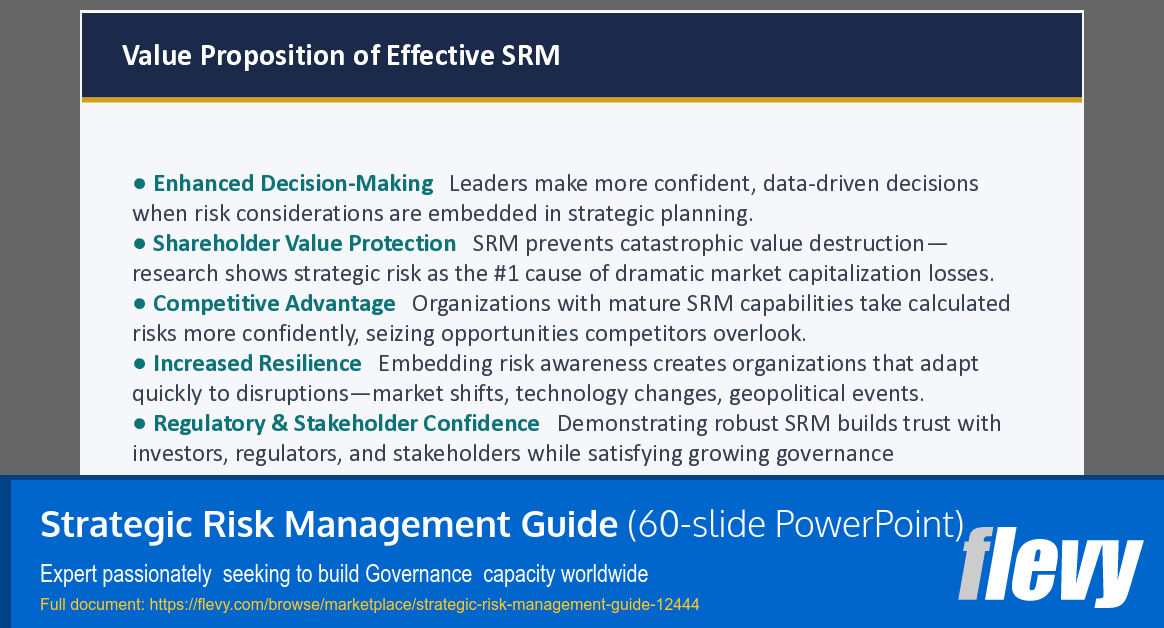
- This manual provides a framework for Effective Strategic Risk Management to protect market value, build organizational resilience, and enable confident pursuit of transformational opportunities,
- By implementing this guide, organizations become more resilient in the face of threats and ensure business sustainability
RISK MANAGEMENT PPT TEMPLATE DESCRIPTION
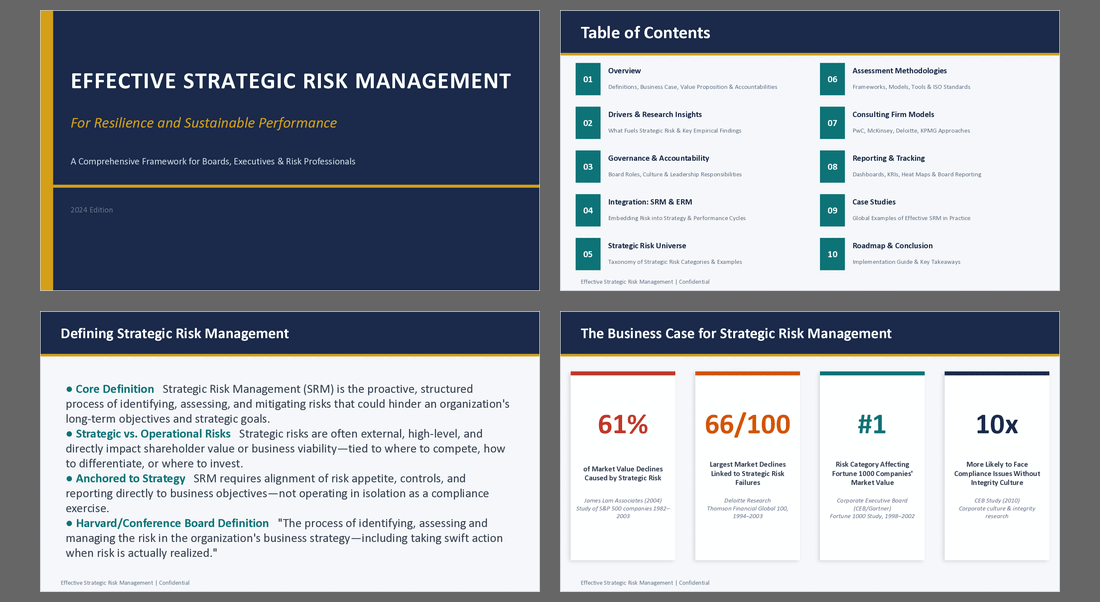
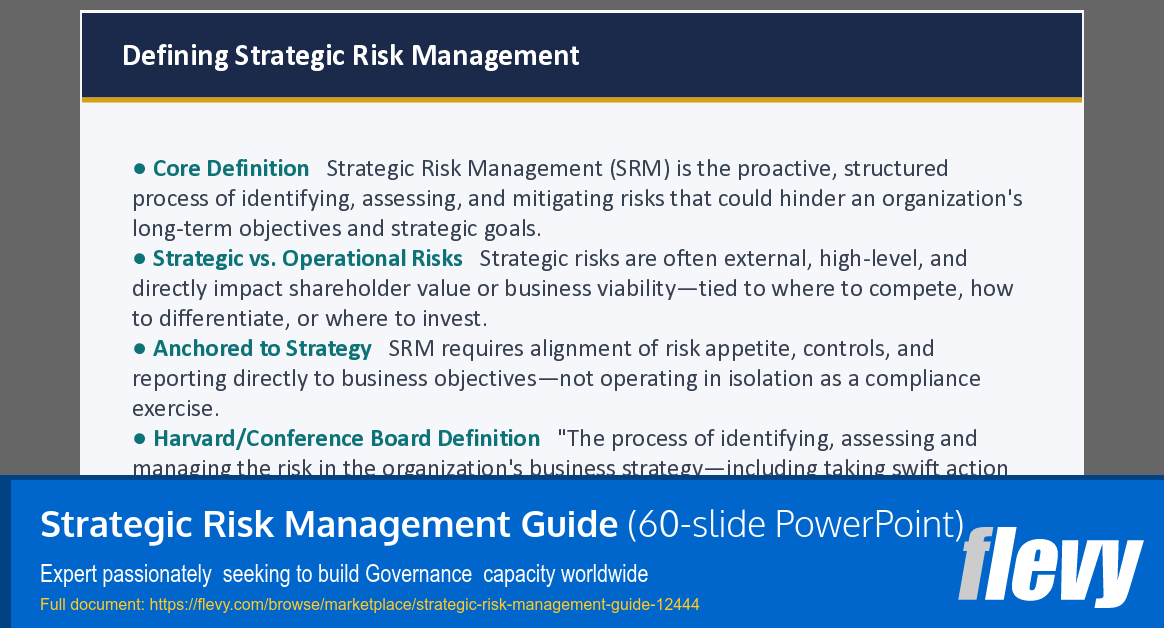
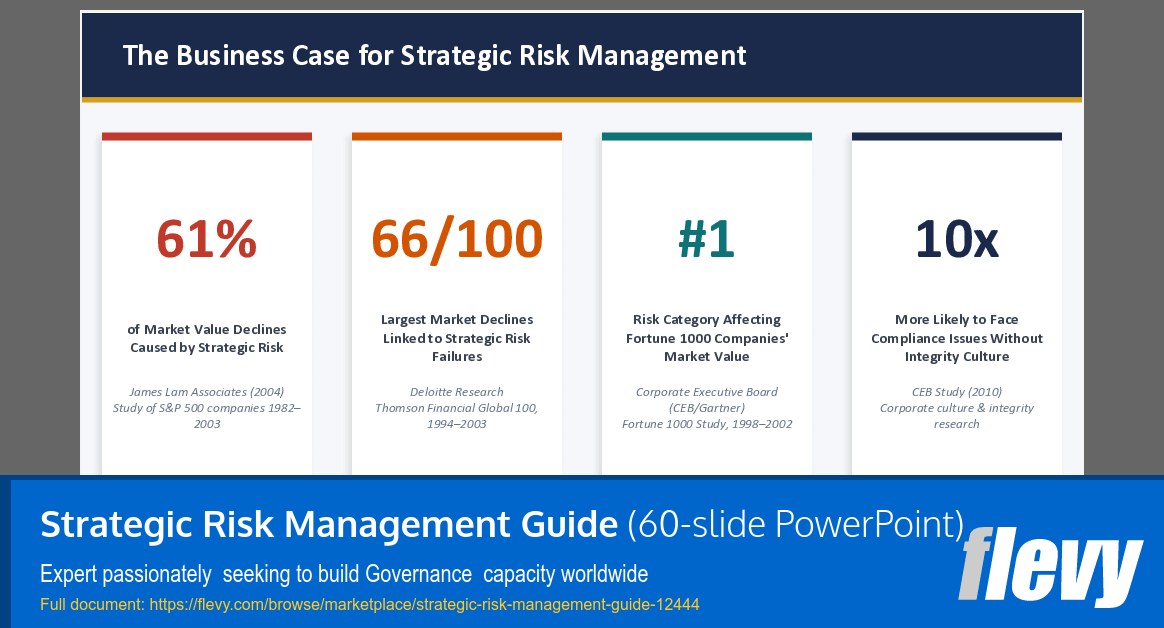
Strategic Risk Management (SRM) has emerged as the most consequential dimension of enterprise governance in the twenty-first century. Decades of empirical research—including landmark studies by James Lam Associates, the Corporate Executive Board (CEB/Gartner), and Deloitte Research—confirm that strategic risks account for 61–66% of major organizational market value declines, consistently ranking above operational and financial risks as the primary driver of corporate value destruction. Despite this evidence, most Enterprise Risk Management programs remain disproportionately focused on operational and compliance risks, leaving organizations dangerously exposed at precisely the point where value is most at risk.
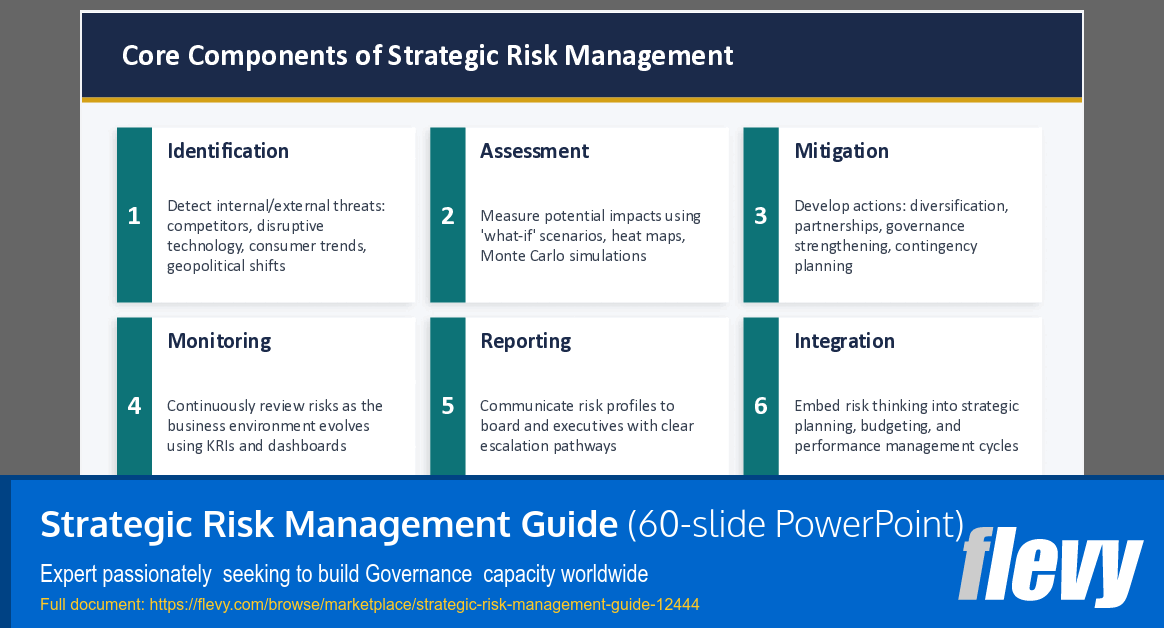
This manual provides a comprehensive framework for Effective Strategic Risk Management for Resilience and Sustainable Performance. Drawing on the authoritative foundation of Frigo and Anderson's Harvard Law School Forum guidance (2012), the Kaplan-Norton Strategy Execution Model, COSO ERM (2017), and the ISO 31000 family of standards—including ISO/TS 31050:2023, ISO 22301, ISO 22336, ISO 31022:2020, and ISO/IEC 27001—the manual guides boards, executives, and risk professionals through the complete SRM lifecycle: from definition and business case, through the seven-step assessment process and strategic integration model, to emerging technology applications and proven risk response strategies.
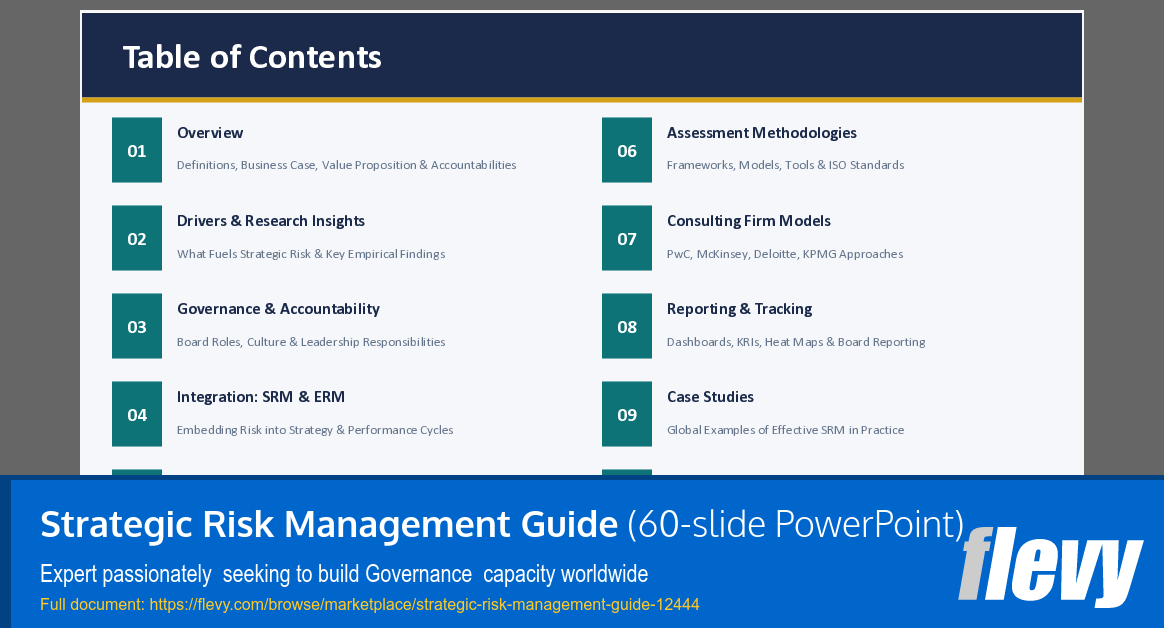
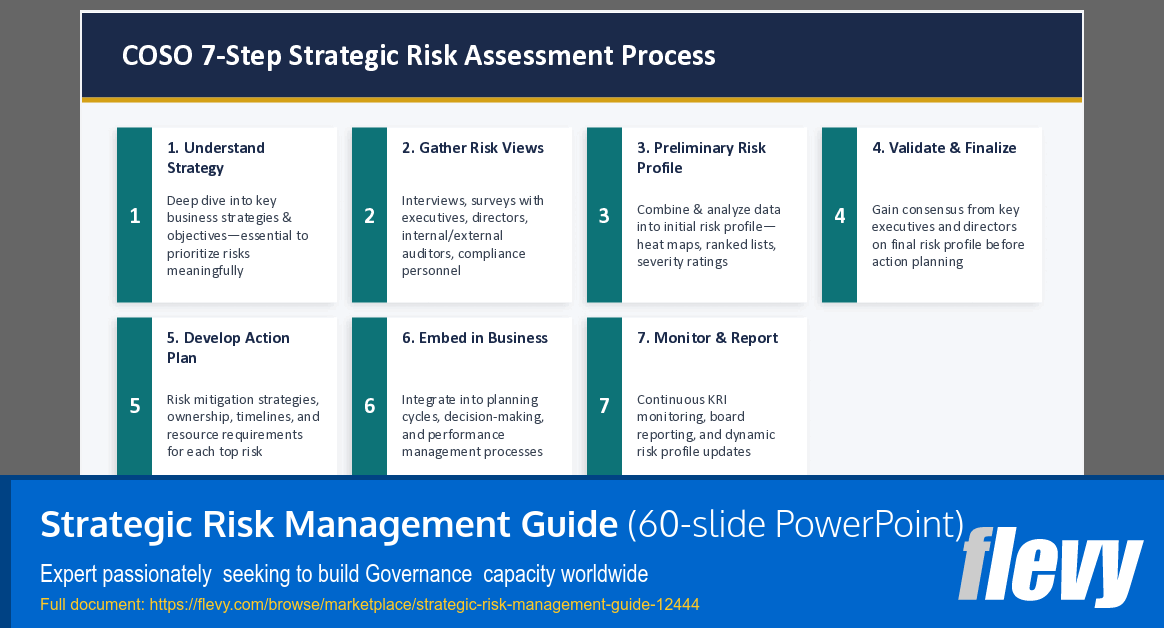
The manual is organized into fifteen sections covering: the theoretical and empirical foundations of SRM; drivers of strategic risk in the modern environment; the Harvard/Conference Board seven-step strategic risk assessment process; the Kaplan-Norton six-stage model for integrating SRM with strategy execution and performance measurement; ISO international standards for strategic risk; leading consulting firm frameworks from PwC, McKinsey, Deloitte, and KPMG; governance and accountability structures including the role of those charged with governance; strategic risk universe taxonomy; assessment methodologies; reporting and tracking systems; illustrative case studies; emerging technologies for SRM; proven strategies for managing strategic risks; and an implementation roadmap.
The manual concludes that effective SRM is not primarily a technical discipline—it is a governance discipline anchored in organizational culture, board leadership, and the deliberate embedding of risk intelligence into every significant strategic decision. Organizations that achieve excellence in SRM do not merely avoid catastrophic risk events; they build the organizational resilience and strategic confidence to pursue transformational opportunities that their less risk-mature competitors cannot confidently access.
Got a question about the product? Email us at support@flevy.com or ask the author directly by using the "Ask the Author a Question" form. If you cannot view the preview above this document description, go here to view the large preview instead.
Source: Best Practices in Risk Management PowerPoint Slides: Strategic Risk Management Guide PowerPoint (PPTX) Presentation Slide Deck, Patrick Gitau