
Editor Summary
Strategic Analysis Framework is a 28-slide PowerPoint presenting a 3-phase strategic analysis approach based on A.
Read moreE. Boardman and A. R. Vining, covering Current Situational Analysis, Analysis Assessment, and Solution Analysis. Includes tools and templates such as the Impact Matrix, GE Matrix, PEST Analysis, Performance Assessment Tool, Life Cycle Portfolio Matrix, and Strategic Group Maps. Targeted at corporate strategists, business analysts, management consultants, and executives for strategic planning and alternative evaluation. Sold as a digital download on Flevy with immediate digital download.
Use this deck when an organization needs a structured review of current performance, external factors, and strategic alternatives—such as during annual strategy reviews, post-market shifts, or pre-investment decisions.
Corporate strategists conducting a Current Situation Analysis of products, customers, and competitive positioning.
Business analysts performing macro-environment scans and risk assessments using PEST Analysis.
Management consultants mapping business-unit attractiveness and competitive stance with the GE Matrix and Life Cycle Portfolio Matrix.
Executives facilitating workshops to generate and evaluate alternatives using the Impact Matrix.
The 3-phase sequencing aligns with an evidence-driven, academic strategic-analysis approach defined by Boardman and Vining.
This document outlines a 3-phase framework for conducting robust Strategic Analysis, based on a paper published by A. E. Boardman and A. R. Vining. The framework describes the major elements of a strategic analysis, and consists of a logically-sequenced, coherent skeleton of a comprehensive strategic analysis. The phases are:
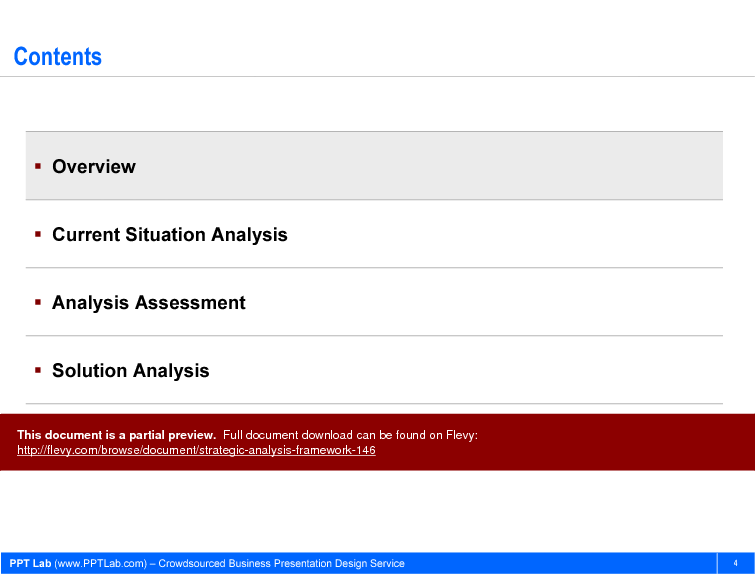
1. Current Situational Analysis
2. Analysis Assessment
3. Solution Analysis
Concepts and supporting frameworks discussed include Impact Matrix, Political Strategy, Solution Analysis, Life Cycle Portfolio Matrix, GE Matrix, Portfolio Matrix, Performance Assessment Tool, and PEST Analysis.
This Strategic Analysis Framework delves deep into the core of strategic planning, offering a granular breakdown of each phase. The document begins with a thorough Current Situation Analysis, covering basic descriptors like firm ownership, control, and supply chain dynamics. It then transitions into an internal characteristics assessment, identifying competitive advantages and potential sources of rents. This section is critical for understanding the firm's intrinsic strengths and weaknesses.
The Analysis Assessment phase employs tools such as the Basic Portfolio Matrix to evaluate the firm's competitive position within the industry. By mapping out industry attractiveness against the firm's competitive stance, this framework provides a clear visual representation of strategic positioning. This phase is essential for identifying growth opportunities and potential areas of improvement, making it a vital component for any strategic analysis.
The Solution Analysis phase incorporates elements of political strategy, addressing how firms can navigate regulatory landscapes and stakeholder interests. This section includes a detailed examination of argument alternatives, target alternatives, and financial contribution strategies. This comprehensive approach ensures that all aspects of strategic planning are covered, providing a robust framework for decision-making and strategic direction.
Got a question about the product? Email us at support@flevy.com or ask the author directly by using the "Ask the Author a Question" form. If you cannot view the preview above this document description, go here to view the large preview instead.
MARCUS OVERVIEW
This synopsis was written by Marcus [?] based on the analysis of the full 28-slide presentation.
Executive Summary
This presentation outlines a 3-phase framework for conducting robust Strategic Analysis, as articulated by A. E. Boardman and A. R. Vining. The framework is designed to provide a structured approach to strategic analysis, enabling organizations to assess their current situation, evaluate strategic alternatives, and recommend actionable solutions. Utilizing tools such as the Impact Matrix, GE Matrix, and PEST Analysis, this consulting-grade presentation equips executives with the insights needed to generate returns exceeding opportunity costs.
Who This Is For and When to Use
• Corporate strategists focused on long-term planning and competitive positioning
• Business analysts conducting market assessments and performance evaluations
• Management consultants advising clients on strategic direction
• Executives seeking to align organizational goals with market realities
Best-fit moments to use this deck:
• During strategic planning sessions to evaluate current performance and future directions
• When assessing the impact of external factors on business strategy
• In workshops aimed at generating and analyzing strategic alternatives
Learning Objectives
• Define the components of a comprehensive strategic analysis framework
• Build a structured approach to assess current business situations
• Establish criteria for evaluating strategic alternatives
• Generate actionable recommendations based on situational assessments
• Analyze external and internal factors influencing strategic decisions
• Utilize various analytical tools to enhance decision-making processes
Primary Topics Covered
• Current Situation Analysis - A detailed examination of the firm’s products, customers, and competitive landscape to understand its current positioning.
• Analysis Assessment - Evaluates the effectiveness of the current strategy and identifies potential issues that may arise if the strategy continues unchanged.
• Solution Analysis - Proposes strategic alternatives and evaluates them against established goals and criteria to recommend the best course of action.
• Impact Matrix - A tool for comparing strategic alternatives based on their expected impact on organizational goals.
• GE Matrix - A framework for assessing business units based on industry attractiveness and competitive position.
• PEST Analysis - An analysis of external macro-environmental factors affecting the organization, including political, economic, social, and technological influences.
Deliverables, Templates, and Tools
• Impact Matrix template for evaluating strategic alternatives
• GE Matrix for assessing business unit performance
• PEST Analysis framework for macro-environmental scanning
• Performance Assessment Tool for summarizing current and expected performance
• Life Cycle Portfolio Matrix for evaluating product offerings
• Strategic Group Maps for visualizing competitive positioning
Slide Highlights
• Overview of the 3-phase Strategic Analysis Framework
• Key questions for each phase of the analysis process
• Visual representation of the logical sequence of analysis
• Detailed breakdown of the Current Situation Analysis components
• Examples of the Impact Matrix and GE Matrix in action
Potential Workshop Agenda
Introduction to Strategic Analysis Framework (30 minutes)
• Overview of the framework and its importance
• Discussion of key components and tools
Current Situation Analysis Session (60 minutes)
• Identify and analyze current products and customers
• Assess competitive landscape and external factors
Solution Analysis Workshop (90 minutes)
• Generate strategic alternatives based on assessments
• Evaluate alternatives using the Impact Matrix and GE Matrix
Customization Guidance
• Tailor the framework to reflect specific organizational contexts and industry dynamics
• Adjust the PEST Analysis to include relevant external factors specific to the firm
• Modify the Impact Matrix to align with unique organizational goals and performance metrics
Secondary Topics Covered
• Organizational analysis and its role in strategic assessment
• Financial performance metrics and their implications for strategy
• Competitive forces analysis using Porter’s Five Forces framework
• Internal characteristics that influence strategic advantages and disadvantages
Topic FAQ
What are the main phases I should follow in a strategic analysis process?
A widely used structure divides strategic analysis into 3 phases: Current Situational Analysis, Analysis Assessment, and Solution Analysis. This sequencing originates from the framework described by A. E. Boardman and A. R. Vining and is the core structure of the Strategic Analysis Framework's 3 phases.
How does PEST analysis help when preparing strategy recommendations?
PEST analysis identifies Political, Economic, Social, and Technological external factors that can affect strategic choices, allowing teams to anticipate external risks and opportunities. The Strategic Analysis Framework incorporates PEST as the macro-environment scanning tool to inform later phase assessments and recommendations, specifically the PEST Analysis.
When should I use a GE Matrix versus a Life Cycle Portfolio Matrix?
Use the GE Matrix to evaluate business units by industry attractiveness and competitive position for resource-allocation decisions; use a Life Cycle Portfolio Matrix to evaluate product offerings based on market position and profitability. Both tools are included in the Strategic Analysis Framework as separate analytic templates, namely the GE Matrix and Life Cycle Portfolio Matrix.
What should I look for when buying a strategic analysis PowerPoint template?
Prioritize a clear phase-based structure, inclusion of core analytic tools (Impact Matrix, GE Matrix, PEST), performance-assessment templates, customization guidance, and the slide count to match your workshop length. The Strategic Analysis Framework provides these elements and totals 28 slides, which can inform purchase decisions.
How much time should I plan to run a workshop using a strategic analysis template?
The provided sample agenda suggests a 30-minute introduction, a 60-minute Current Situation Analysis session, and a 90-minute Solution Analysis workshop, totaling 180 minutes of core activity. Use these durations as a baseline when scheduling stakeholder workshops.
I need to compare several strategic options—what tool helps rank them objectively?
Use an Impact Matrix to compare strategic alternatives against defined goals and expected organizational impacts; it enables side-by-side scoring and prioritization. The Strategic Analysis Framework includes an Impact Matrix template to support objective comparison of options.
How can I decide if a business unit should receive more investment?
Assess the unit’s industry attractiveness and competitive position using the GE Matrix to determine where to allocate resources versus divest. The GE Matrix in the Strategic Analysis Framework is designed for this purpose and guides investment decisions based on those 2 dimensions.
What cost and value factors should I consider before purchasing a strategic analysis template?
Evaluate whether the template contains the analytic tools and deliverables you need (PEST Analysis, Impact Matrix, GE Matrix, Performance Assessment Tool), how customizable it is for your industry, and the slide count and guidance for workshops. These concrete attributes—tool coverage and 28 slides—help assess value relative to budget.
Document FAQ
These are questions addressed within this presentation.
What is the purpose of the Strategic Analysis Framework?
The framework is designed to provide a structured approach for organizations to assess their current situation, evaluate strategic alternatives, and make informed recommendations for future actions.
How can the Impact Matrix be utilized?
The Impact Matrix allows organizations to compare and measure the effectiveness of various strategic alternatives against established goals, facilitating informed decision-making.
What is the significance of the GE Matrix?
The GE Matrix helps organizations assess their business units based on industry attractiveness and competitive position, guiding resource allocation and strategic focus.
How does PEST Analysis contribute to strategic planning?
PEST Analysis provides insights into external macro-environmental factors that may impact the organization, allowing for proactive strategy adjustments.
What are the key components of Current Situation Analysis?
Current Situation Analysis includes understanding the firm’s products, customers, competitive landscape, and financial performance, among other factors.
How can organizations assess the effectiveness of their current strategy?
Organizations can evaluate their current strategy by analyzing performance metrics, identifying potential issues, and forecasting future outcomes based on existing strategic directions.
What types of strategic alternatives should be considered?
Organizations should consider both corporate-level and business-level strategic alternatives, ensuring a comprehensive approach to strategic planning.
How can the framework be customized for different industries?
The framework can be tailored by incorporating industry-specific factors into the PEST Analysis and adjusting the evaluation criteria in the Impact Matrix to reflect unique organizational goals.
Glossary
• Strategic Analysis - A systematic approach to understanding an organization's current position and future direction.
• Impact Matrix - A tool for evaluating the potential impacts of strategic alternatives on organizational goals.
• GE Matrix - A framework for assessing business units based on their competitive position and industry attractiveness.
• PEST Analysis - An analysis of external macro-environmental factors: Political, Economic, Social, and Technological.
• Current Situation Analysis - An assessment of the firm's existing products, customers, and competitive landscape.
• Analysis Assessment - The evaluation of current strategy effectiveness and identification of potential issues.
• Solution Analysis - The process of generating and evaluating strategic alternatives to recommend actionable solutions.
• Performance Assessment Tool - A framework for summarizing current and expected performance metrics.
• Life Cycle Portfolio Matrix - A tool for evaluating the portfolio of offerings based on their market position and profitability.
• Strategic Group Maps - Visual representations of competitive positioning within an industry.
• Financial Ratio Analysis - An assessment of a company's financial health through key ratios.
• Macro-Environment Scanning - The process of analyzing external factors that may impact the organization.
• Competitive Forces Analysis - An evaluation of the competitive landscape using frameworks like Porter’s Five Forces.
• Core Competencies - Unique strengths and capabilities that provide a competitive advantage.
• Rents - Returns generated in excess of opportunity costs.
• Strategic Direction - The overarching path an organization chooses to pursue in its strategic planning.
• Scenario Analysis - The process of evaluating different future scenarios to inform strategic decision-making.
• Goals and Evaluation Criteria - Specific, measurable objectives used to assess strategic alternatives.
• Organizational Analysis - An assessment of internal characteristics, resources, and capabilities.
• Competitive Position - The relative standing of a firm in its industry compared to competitors.
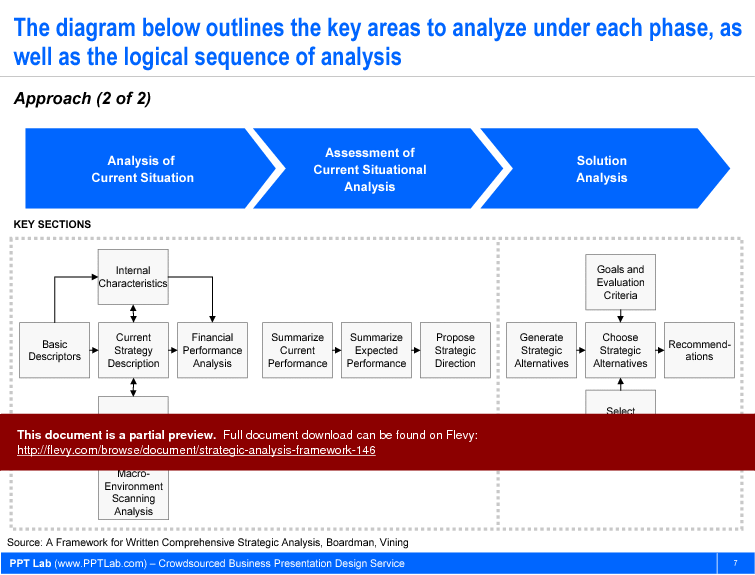
This PPT slide outlines a structured approach to strategic analysis, divided into 3 phases: Analysis of Current Situation, Assessment of Current Situational Analysis, and Solution Analysis. The first phase focuses on internal characteristics, including company profile, current strategy, and financial performance analysis, establishing a baseline for future assessments. It also incorporates external analysis of macro-environmental factors. The second phase evaluates summarized data to propose a strategic direction, projecting expected performance and identifying gaps. The final phase generates and selects strategic alternatives, defining goals and evaluation criteria for recommendations. This framework serves as a roadmap for informed decision-making in strategic planning.
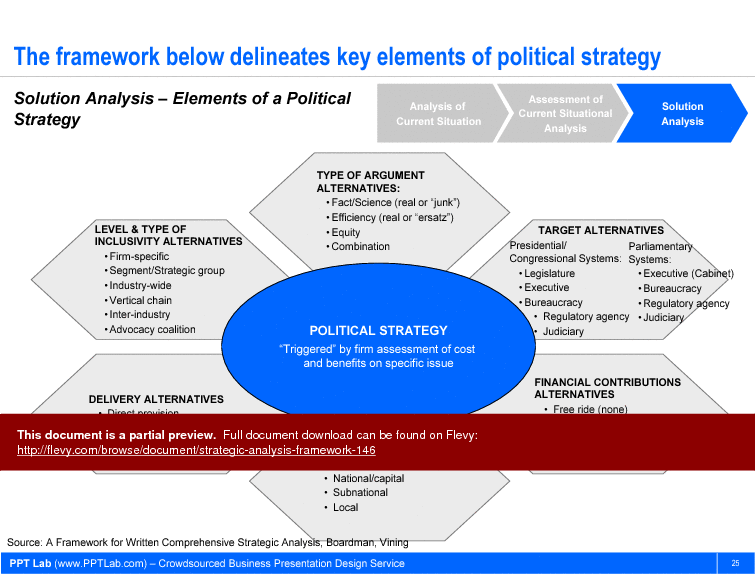
This PPT slide presents a framework for political strategy, centered on a firm's assessment of costs and benefits related to specific issues. It includes 5 components:
1. Level & Type of Inclusivity Alternatives - Engagement scopes from firm-specific strategies to industry-wide approaches.
2. Type of Argument Alternatives - Categories of arguments: factual, efficiency-based, equity-focused, or a combination, emphasizing the need for persuasive communication.
3. Target Alternatives - Identifies political systems and entities, such as legislative bodies and regulatory agencies, requiring tailored strategies.
4. Financial Contributions Alternatives - Discusses financial aspects of political engagement, including contribution options and their implications.
5. Delivery Alternatives - Options for strategy implementation, including direct provision or outsourcing, highlighting execution deliberation.
This framework guides firms in navigating political complexities effectively.
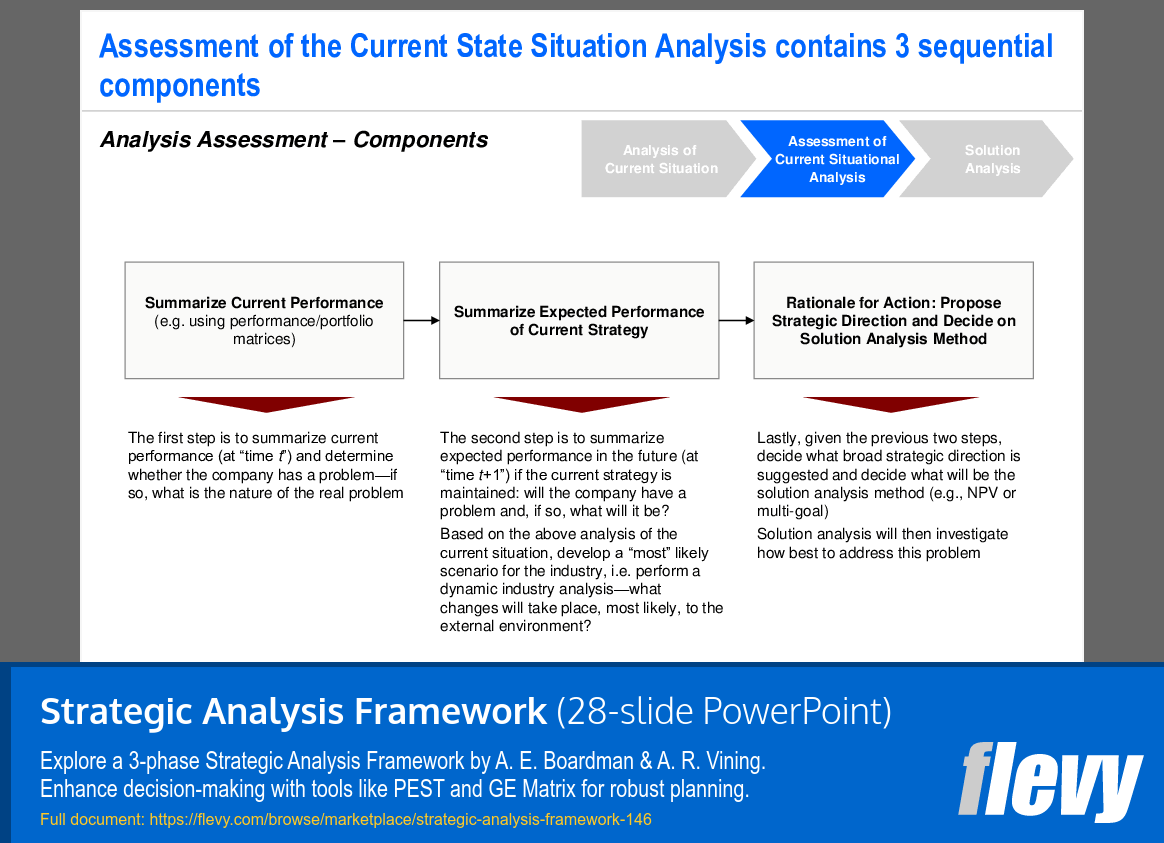
This PPT slide outlines a structured methodology for assessing a business's current state, comprising 3 sequential components. The first component involves summarizing current performance through performance metrics and portfolio matrices to identify existing issues. The second component projects expected performance based on the current strategy, forecasting future outcomes and potential challenges if the strategy remains unchanged. This includes developing a "most likely" scenario for the industry. The final component formulates a rationale for action, guiding strategic decision-making and solution analysis using methods like Net Present Value (NPV) or a multi-goal framework. This approach equips leaders with insights to address challenges and seize opportunities effectively.
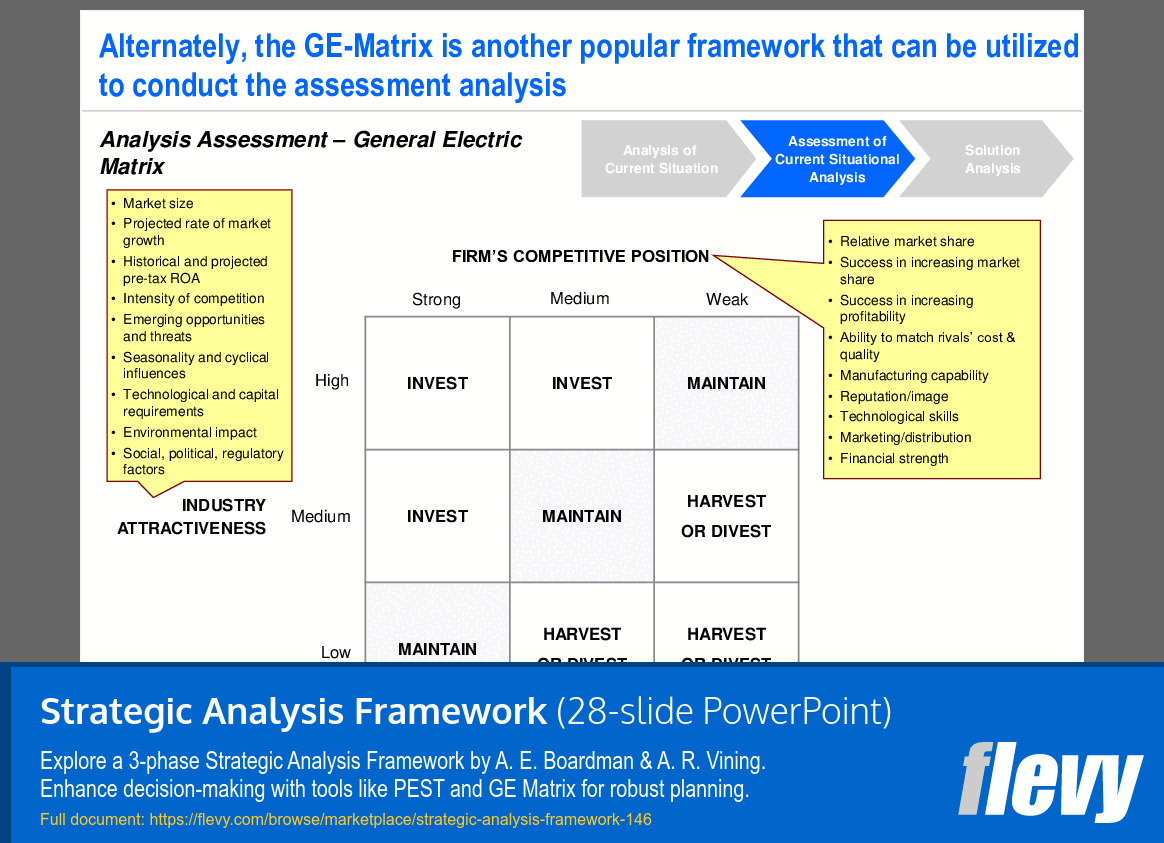
The General Electric (GE) Matrix is a strategic tool for assessing a firm's industry position, categorizing business units by "Industry Attractiveness" and "Firm's Competitive Position." The matrix features 4 quadrants with strategic recommendations: "Invest," "Maintain," and "Harvest or Divest." Units in the high attractiveness and strong competitive position quadrant are advised to "Invest," indicating significant growth potential. Conversely, units in the low attractiveness and weak competitive position quadrant should "Harvest or Divest," suggesting minimized investment or market exit. Key factors influencing this assessment include market size, growth rates, competition intensity, and external influences like social and regulatory factors, essential for effective resource allocation.
This PPT slide outlines a framework for analyzing corporate strategy and competitive (business) level strategy. Corporate strategy defines the firm's overarching scope, prompting executives to identify the sectors and product-customer segments in which the company operates. Competitive level strategy focuses on how each business unit competes in its market, emphasizing the firm's strategic stance and value chain. This involves analyzing revenue generation and differentiation from competitors. The visual elements likely illustrate the relationships between corporate and competitive strategies, highlighting their interconnectedness. Understanding both levels is essential for aligning resources, optimizing operations, and enhancing market performance.
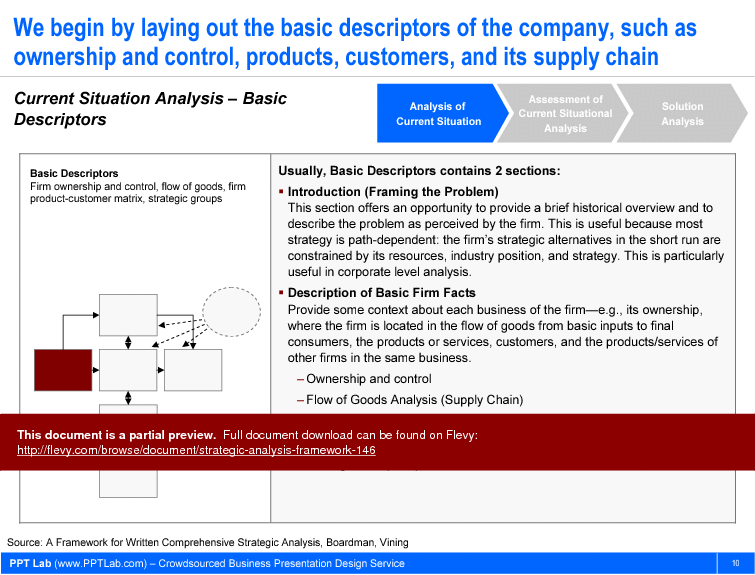
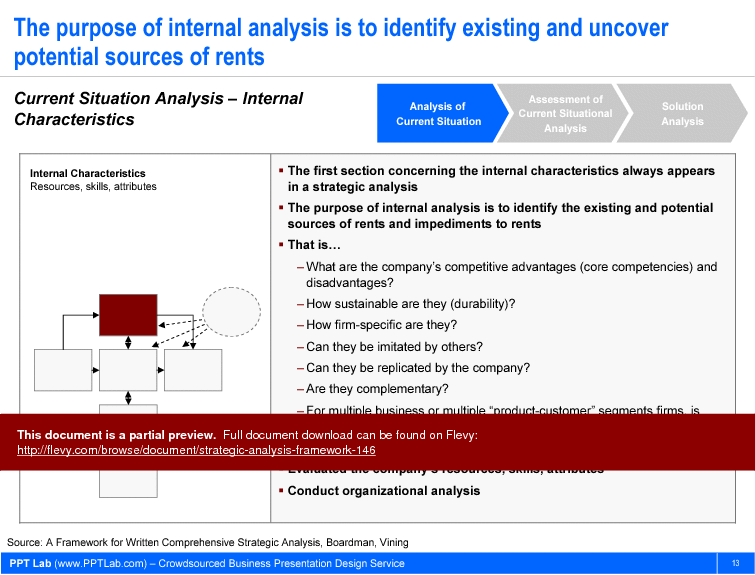
This PPT slide outlines the components of a Current Situation Analysis, crucial for assessing a company's operational context. It begins with basic descriptors such as firm ownership, control, and flow of goods. Internal Characteristics focus on resources, skills, and attributes defining organizational capabilities. The Current Strategy Description details corporate-level and competitive-level strategies, essential for market positioning. An External (Industry) Analysis examines competitive forces and their impact on the organization. The Macro-Environment Scanning Analysis reviews macroeconomic factors affecting the business, identifying potential opportunities and threats. Finally, the Past and Current Financial Performance Analysis emphasizes financial ratios, cash flow, and Economic Value Added (EVA), critical for evaluating historical performance and future viability.
This PPT slide features a Basic Portfolio Matrix for assessing a firm's competitive position against industry attractiveness, structured into 4 quadrants defined by "Industry Attractiveness" (Low to High) and "Firm’s Competitive Position" (Weak to Strong). The upper left quadrant indicates high attractiveness and strong position, suggesting optimal growth conditions. The lower left quadrant reflects low attractiveness and weak position, signaling risks or the need for reevaluation. The remaining quadrants represent opportunities for improvement. Indicators labeled "t" with subscripts denote specific products or business units, aiding performance analysis. Arrows indicate potential strategic shifts between quadrants, allowing firms to adapt based on market dynamics. This adaptable framework supports broader product portfolio analysis, emphasizing situational assessment in strategic planning for informed decision-making and enhanced organizational performance.
Source: Best Practices in Strategy Development, Strategic Analysis PowerPoint Slides: Strategic Analysis Framework PowerPoint (PPT) Presentation Slide Deck, PPT Lab
PPT Lab is a presentation design firm specializing in business frameworks and PowerPoint templates. Our team is comprised of ex-consultants from McKinsey, E&Y, Bearing Point, and boutique consulting firms. We have worked with hundreds of clients globally, ranging from mid-size manufacturing companies to global Fortune 500 conglomerates.
All of our documents are of the
... [read more] same quality produced by top-tier consulting firms and utilize the Consulting Presentation Framework.
The average daily rate of a McKinsey consultant is $6,625 (not including expenses). The average price of a Flevy document is $65.
Trusted by over 10,000+ Client Organizations
Since 2012, we have provided business templates to over 10,000 businesses and organizations of all sizes, from startups and small businesses to the Fortune 100, in over 130 countries.
"[Flevy] produces some great work that has been/continues to be of immense help not only to myself, but as I seek to provide professional services to my clients, it gives me a large "tool box" of resources that are critical to provide them with the quality of service and outcomes they are expecting."
– Royston Knowles, Executive with 50+ Years of Board Level Experience
"As a consultant requiring up to date and professional material that will be of value and use to my clients, I find Flevy a very reliable resource.
The variety and quality of material available through Flevy offers a very useful and commanding source for information. Using Flevy saves me time, enhances my expertise and ends up being a good decision."
– Dennis Gershowitz, Principal at DG Associates
"My FlevyPro subscription provides me with the most popular frameworks and decks in demand in today’s market. They not only augment my existing consulting and coaching offerings and delivery, but also keep me abreast of the latest trends, inspire new products and service offerings for my practice, and educate me
in a fraction of the time and money of other solutions. I strongly recommend FlevyPro to any consultant serious about success.
"
– Bill Branson, Founder at Strategic Business Architects
"As a consulting firm, we had been creating subject matter training materials for our people and found the excellent materials on Flevy, which saved us 100's of hours of re-creating what already exists on the Flevy materials we purchased."
– Michael Evans, Managing Director at Newport LLC
"Last Sunday morning, I was diligently working on an important presentation for a client and found myself in need of additional content and suitable templates for various types of graphics. Flevy.com proved to be a treasure trove for both content and design at a reasonable price, considering the time I
saved. I encountered a download issue during the ordering process. However, a quick email to Flevy's support team, even on a Sunday (!!!), resulted in assistance within less than an hour, allowing me to download the content I needed. Fantastic job, Flevy! I give 5 stars for both content/price and customer service. Thank you!
"
– M. E., Chief Commercial Officer, International Logistics Service Provider
"FlevyPro provides business frameworks from many of the global giants in management consulting that allow you to provide best in class solutions for your clients."
– David Harris, Managing Director at Futures Strategy
"As an Independent Management Consultant, I find Flevy to add great value as a source of best practices, templates and information on new trends. Flevy has matured and the quality and quantity of the library is excellent. Lastly the price charged is reasonable, creating a win-win value for
the customer, Flevy and the various authors. This is truly a service that benefits the consulting industry and associated clients. Thanks for providing this service.
"
– Jim Schoen, Principal at FRC Group
"As a niche strategic consulting firm, Flevy and FlevyPro frameworks and documents are an on-going reference to help us structure our findings and recommendations to our clients as well as improve their clarity, strength, and visual power. For us, it is an invaluable resource to increase our impact and value."
– David Coloma, Consulting Area Manager at Cynertia Consulting
Download our free compilation of 50+ Strategy & Transformation slides and templates. Frameworks include McKinsey 7-S, Balanced Scorecard, Disruptive Innovation, BCG Curve, and many more.