
 Click main image to view in full screen. Unlock all 12 preview images:
Solar PV EPC (Engineering, Procurement & Construction) Financial Model – Excel XLSX
Excel (XLSX)


BENEFITS OF THIS DOWNLOADABLE EXCEL DOCUMENT
- Provides a structured framework for building accurate revenue, cost, cash flow, and working capital forecasts for a Solar PV EPC business.
- Enables users to evaluate project economics, scalability, and profitability across residential, commercial, and utility-scale EPC contracts.
- Supports informed decision-making by linking operational assumptions to fully integrated financial statements and capital planning.
SOLAR ENERGY EXCEL DESCRIPTION
This financial model is designed to evaluate and forecast the operating and financial performance of a Solar Photovoltaic (PV) Engineering, Procurement, and Construction (EPC) business. The business scope includes the design, procurement, installation, and commissioning of turnkey solar PV projects across residential, commercial & industrial (C&I), and community or utility / distribution-scale applications.
The model captures project-driven revenue, solar module and balance-of-system procurement economics, civil and electrical installation costs, and monthly operating dynamics across configurable Solar PV market segments. It delivers a 5-year (60-month), forward-looking forecast, enabling decision-makers to assess scalability, revenue and cost trajectories, project-level margins, working capital requirements, and overall profitability.
Model Structure – Five Core Sections
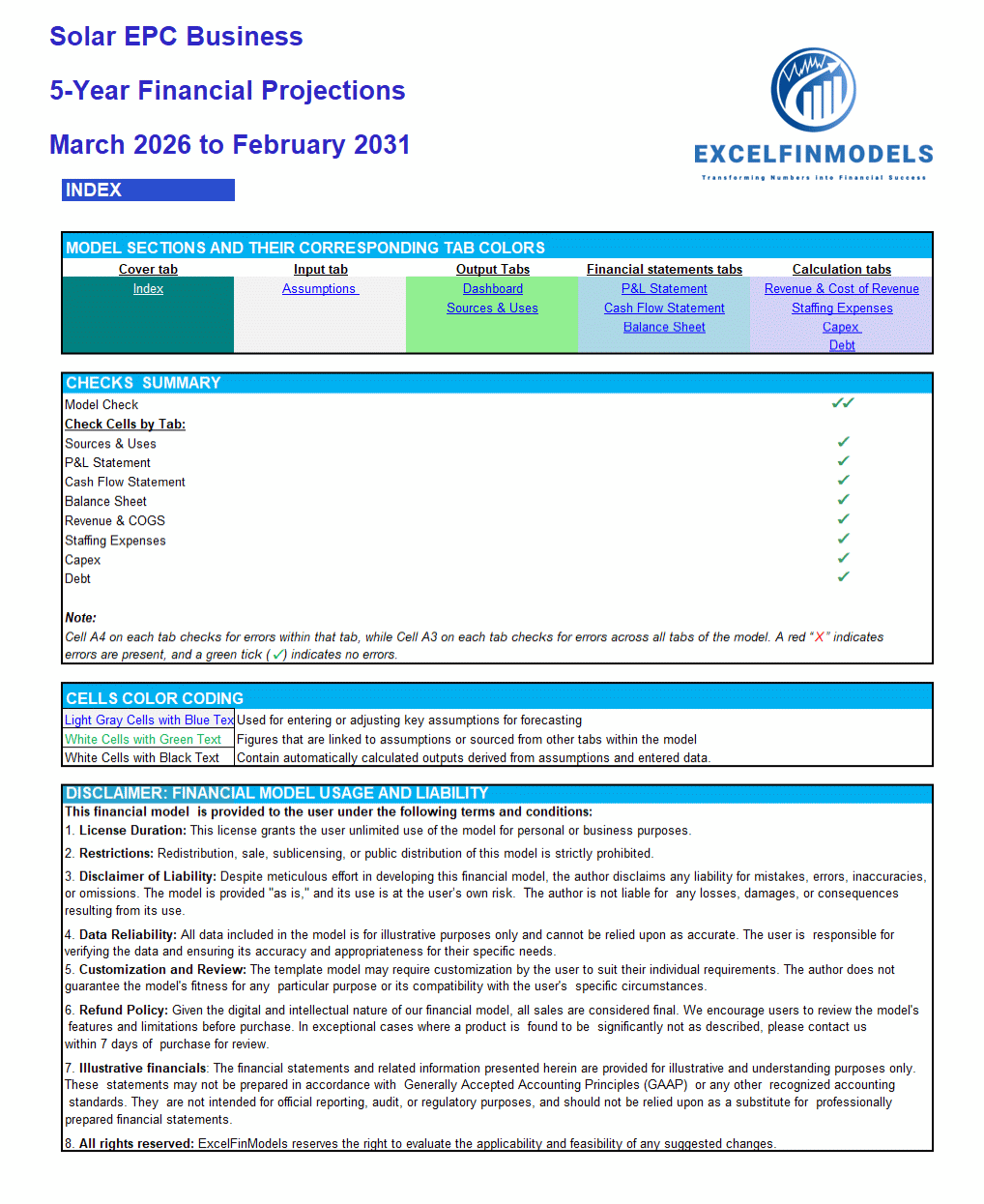
1. Cover & Navigation
• Clear index with intuitive navigation across all schedules.
• Summary checks validating structural consistency and model integrity.
• Color coding for tabs and cells.
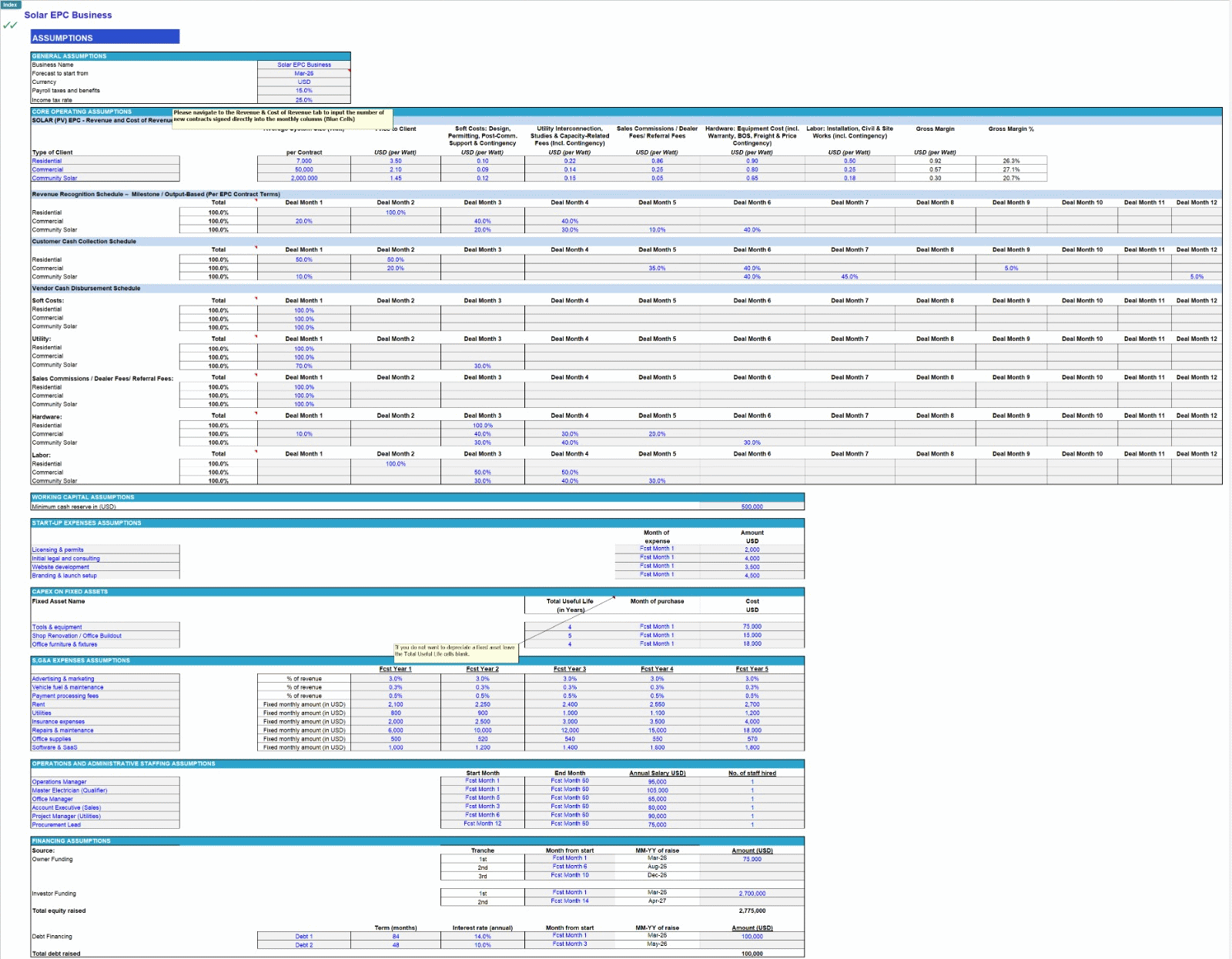
2. Input Assumptions
Key business drivers are consolidated into a centralized assumptions interface. To support granular monthly forecasting, assumptions related to the number of new Solar PV EPC contracts signed are embedded within the Revenue & Cost of Revenue tab.
Revenue Assumptions
The model supports industry-standard Solar PV EPC revenue frameworks, including:
• Customer Segments: Fully customizable segments (e.g., Residential, Commercial Solar and Community).
• Project Specifications: Volume drivers based on installed solar capacity (kW DC) and pricing per unit of capacity ($/W).
• Revenue Timing: Milestone-based billing and revenue recognition aligned with Solar EPC execution stages.
Direct Costs (COGS) & Procurement
• Hardware: Solar PV modules, inverters, mounting structures (fixed-tilt or trackers), combiner boxes, DC/AC cabling, transformers, and other balance-of-system (BOS) components.
• Execution Costs: Civil works, structural installation, electrical installation, testing, and commissioning.
• Soft Costs: Engineering and design, permitting, utility interconnection, grid studies, and contingency allowances.
SG&A & Operating Expenses
• Variable Costs: Sales commissions, dealer or referral fees, marketing and business development expenses.
• Fixed Costs: Management and staff payroll, office rent, software and SaaS tools, fleet costs, and general insurance.
Balance Sheet & Capital Structure Drivers
• CapEx: Tools and equipment, installation machinery, service vehicles, IT assets, and office infrastructure.
• Financing: Equity contributions, revolving working-capital facilities, and term-debt amortization schedules.
3. Output & Analytics
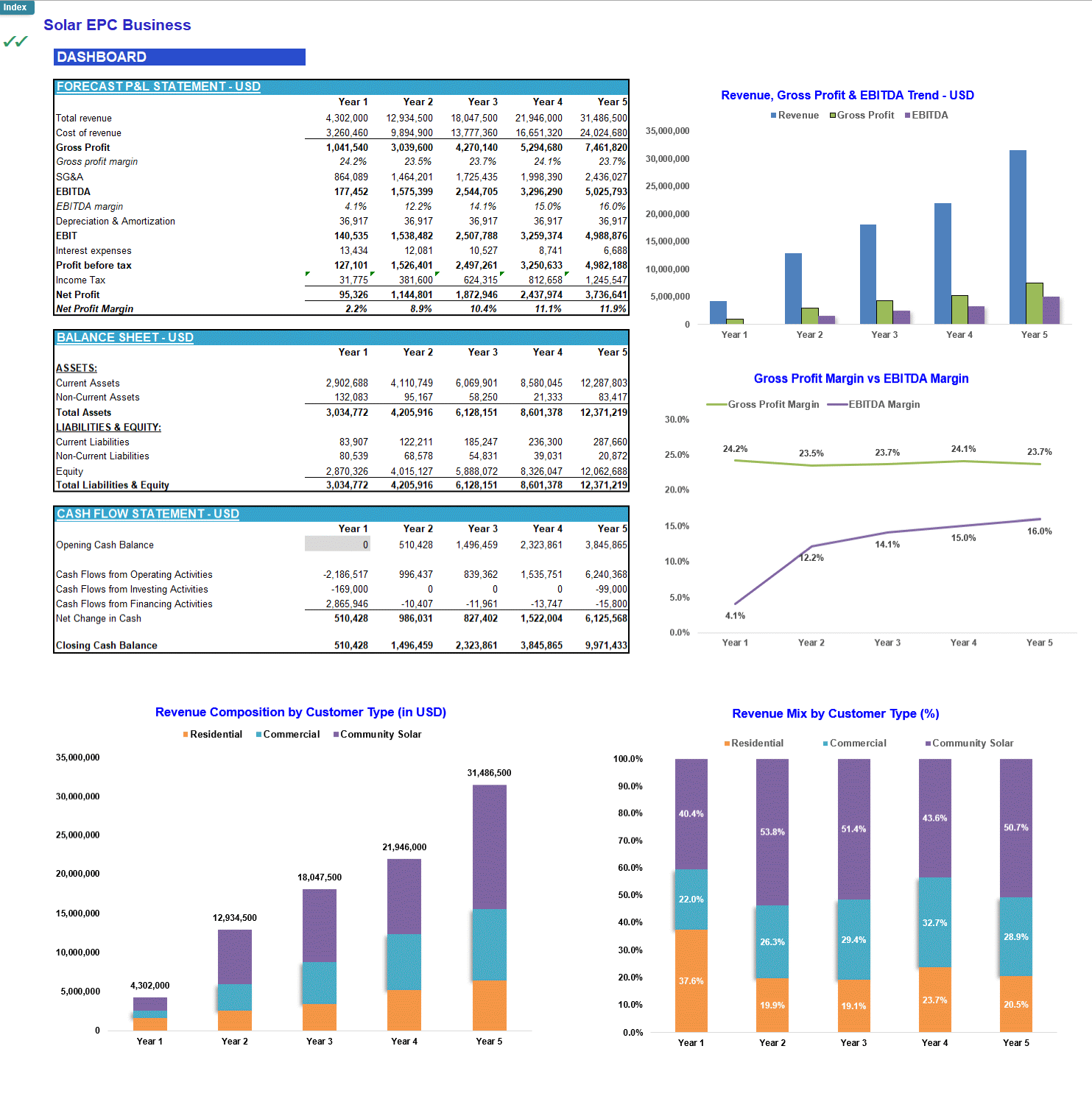
Dashboard
• Revenue trends segmented by Solar PV customer type.
• Gross profit, EBITDA, and net margin evolution.
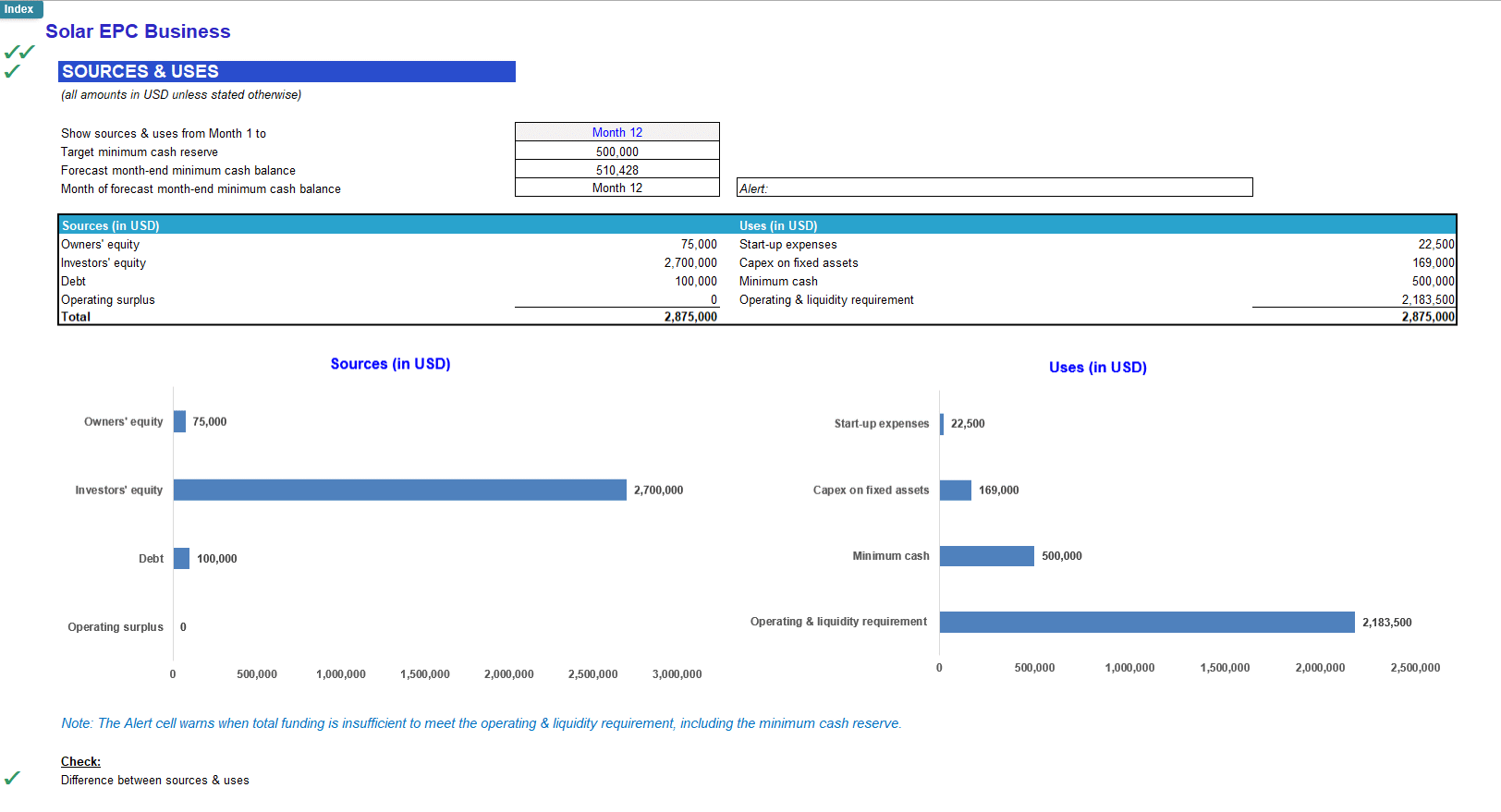
Sources & Uses
• Uses: Start-up costs, pre-development expenses, project working capital, and capital expenditures.
• Sources: Equity injections and debt financing.
4. Integrated Financial Statements
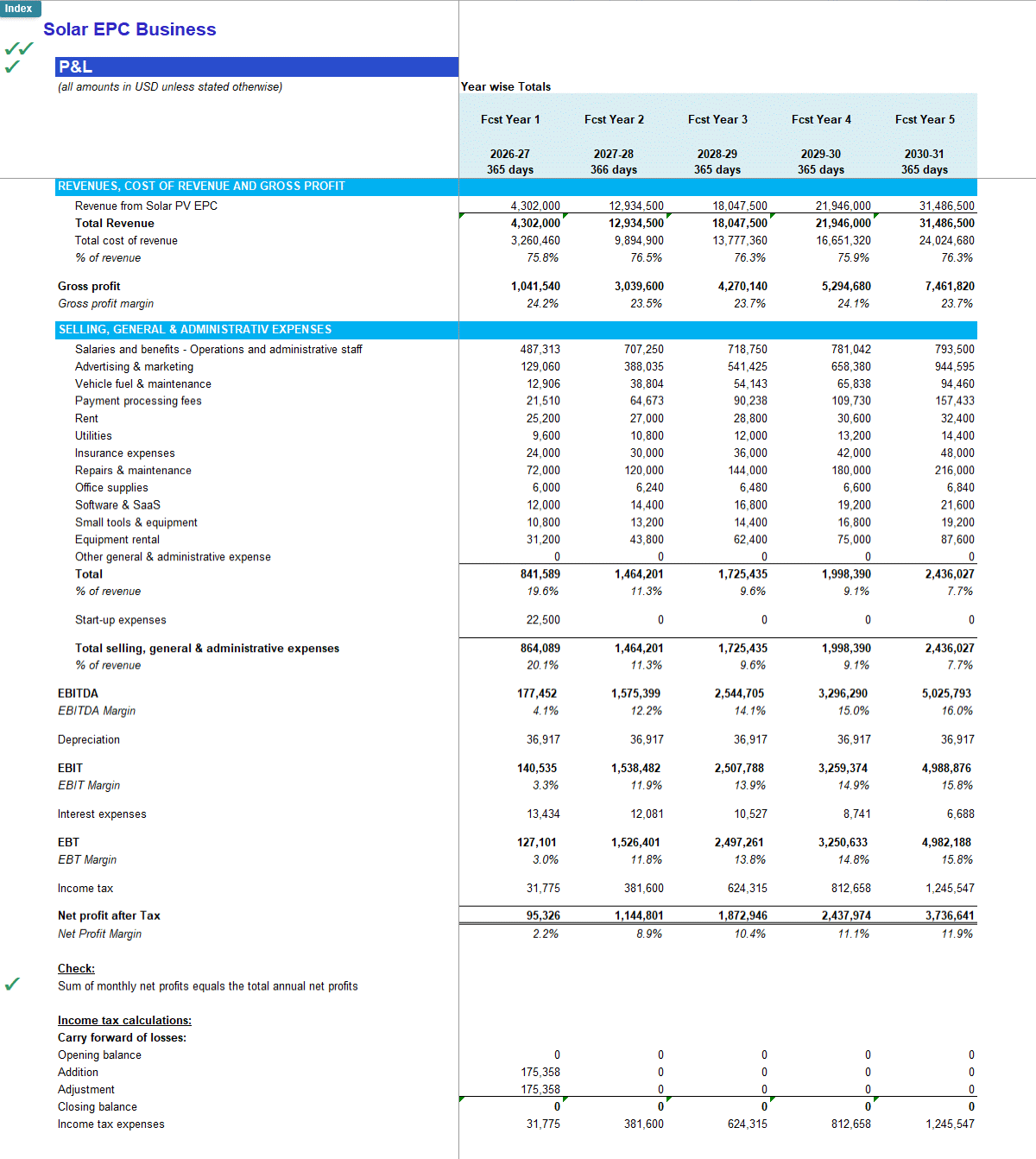
• Profit & Loss Statement
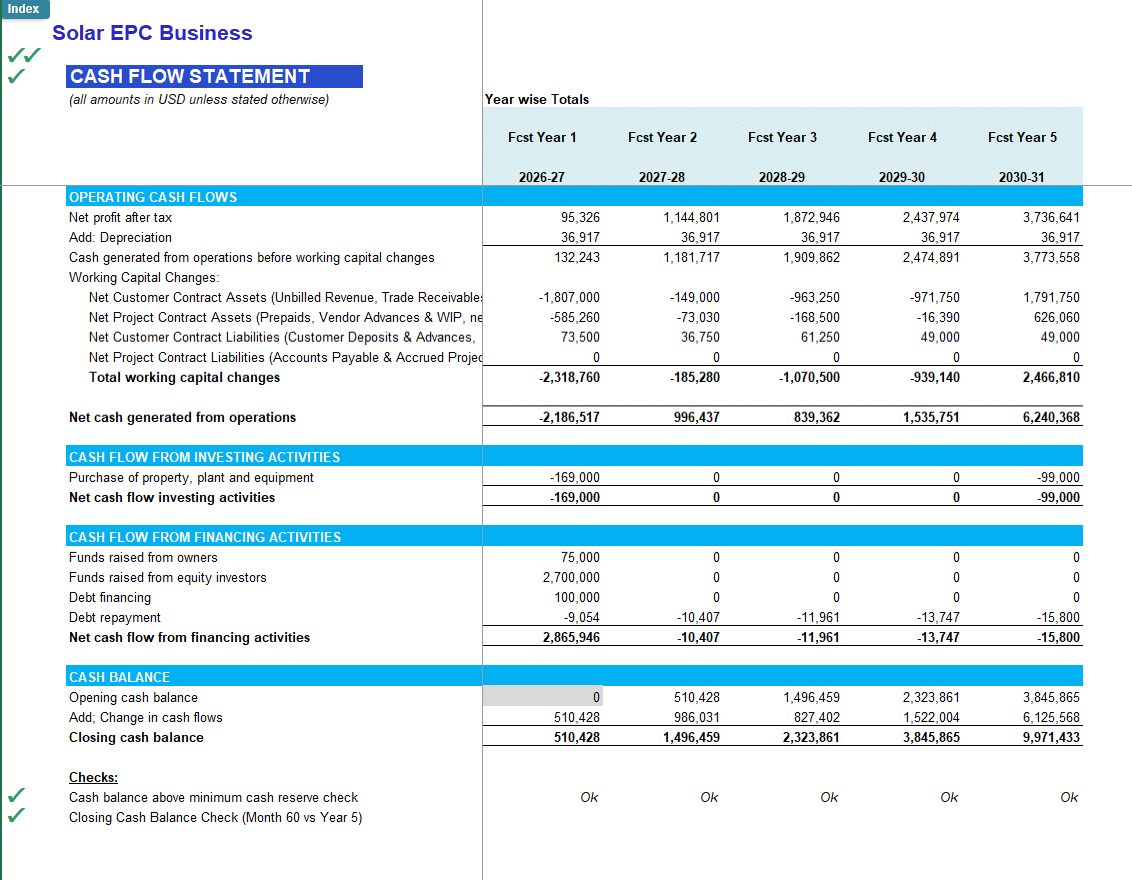
• Cash Flow Statement
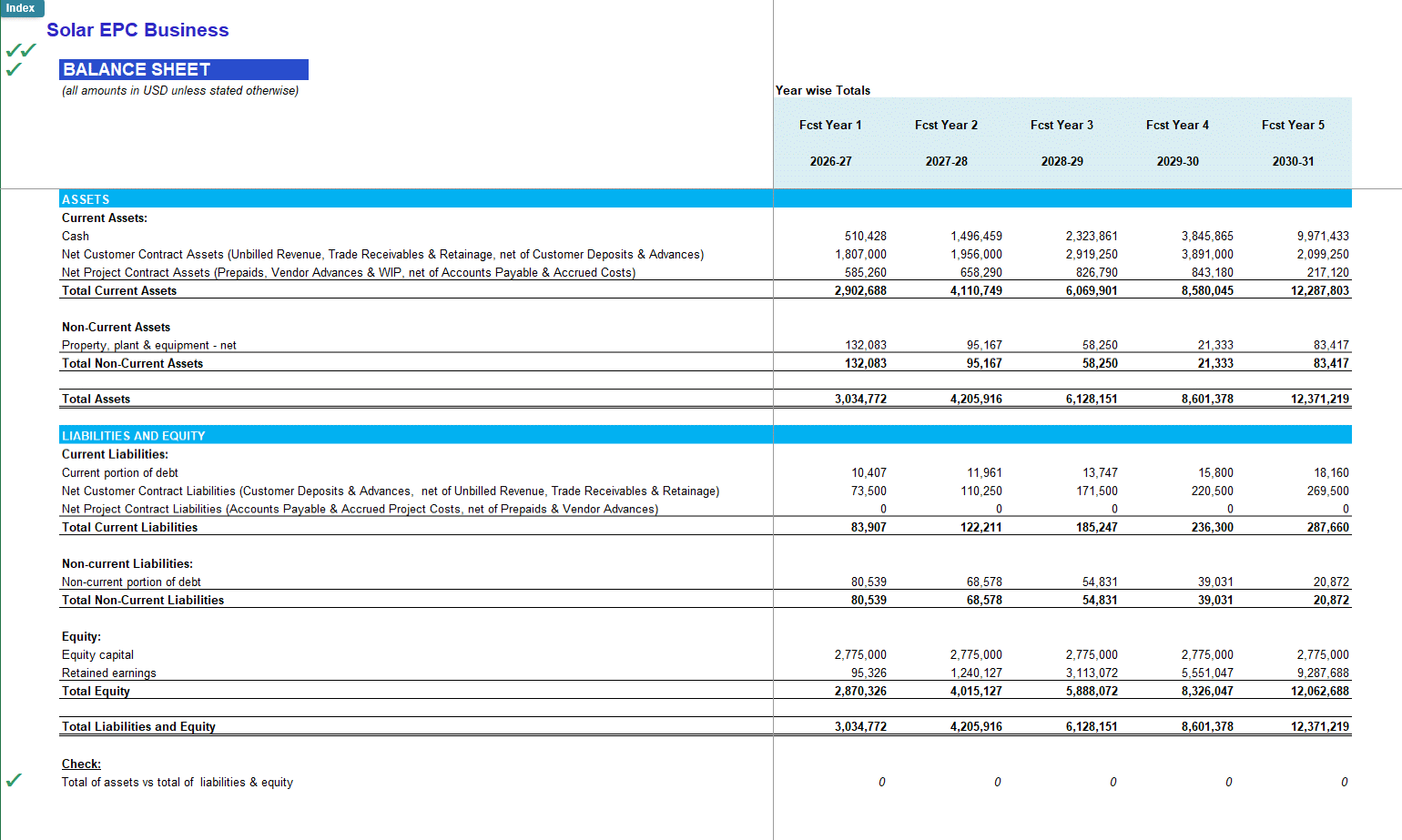
• Balance Sheet
5. Core Calculations
• Revenue and COGS recognition aligned with Solar PV EPC construction milestones.
• Staffing and payroll expense calculations.
• Debt schedules and capital expenditure roll-forwards.
Technical Specifications
• Fully transparent structure (no VBA or macros).
• Circular reference–free.
• Compatible with Excel 2021 or newer. Excel 2010–2019 Users- Certain calculations rely on array formulas and may require Ctrl + Shift + Enter for correct execution.
Validation & Control Checks
Built-in validation controls ensure model integrity:
• Green checkmarks (✓): Logic and calculations are consistent.
• Red indicators (✗): Inputs or assumptions require review.
Why This Model Is Well-Suited for Solar PV EPC Businesses
This model supports institutional-grade financial planning for Solar PV EPC contractors. It is purpose-built to address the project-based revenue profile, procurement-driven cost structure, milestone-based billing, and working-capital intensity inherent in Solar EPC businesses, while maintaining transparency across execution risk, cash-flow timing, and profitability drivers.
Got a question about the product? Email us at support@flevy.com or ask the author directly by using the "Ask the Author a Question" form. If you cannot view the preview above this document description, go here to view the large preview instead.
TOPIC FAQ
What are the primary revenue drivers in Solar PV EPC financial models?
Key revenue drivers include customer segment mix (residential, commercial, community/utility), installed capacity measured in kW DC, and pricing per unit capacity expressed as $/W. Models typically layer revenue timing through milestone-based billing tied to EPC execution stages and forecast monthly volume and pricing inputs over 60 months.How should direct costs and procurement be modeled for a Solar EPC business?
Direct costs should separate hardware (modules, inverters, mounting structures, cabling, transformers), execution costs (civil, structural, electrical installation, testing, commissioning), and soft costs (engineering, permitting, interconnection, contingency). Procurement economics and balance-of-system components are modeled at project level to reflect COGS and margin drivers across projects.Which financial statements and outputs are essential in a Solar EPC model?
A Solar EPC model should produce integrated Profit & Loss, Cash Flow, and Balance Sheet statements, plus a dashboard showing revenue trends by customer type and margin evolution. It should also include Sources & Uses detailing start-up, working capital, CapEx uses and equity/debt sources for financing analysis.How is milestone-based revenue recognition implemented for EPC projects?
Milestone-based recognition aligns billing and revenue with construction stages: define project milestones, map percentage of contract value to each milestone, and recognize corresponding COGS as execution progresses. The approach integrates revenue and COGS schedules to reflect cash timing and margin realization tied to construction milestones.What should I look for when choosing a Solar PV EPC financial model template?
Look for transparent, circular-reference–free structure (no VBA/macros), centralized assumptions, monthly granularity for project timing, built-in validation checks, and integrated debt schedules and sources & uses. Templates that explicitly support milestone billing and a 5-year (60-month) forward forecast are preferable.How much Excel expertise is required to adapt a Solar EPC template to my projects?
Templates compatible with Excel 2021 or newer require basic to intermediate Excel skills; older Excel 2010–2019 users may need familiarity with array formulas and Ctrl+Shift+Enter. Choose a template with clear navigation, color coding, and summary checks to reduce adaptation time and errors.I need a financial model for fundraising—what outputs will investors expect?
Investors typically expect Sources & Uses, projected equity and debt financing, 5-year cash-flow forecasts, margin and EBITDA evolution, and sensitivity to working-capital and procurement assumptions. A model that produces integrated statements plus a Sources & Uses schedule and dashboard addresses these investor needs.How can I model procurement and inventory risk for solar modules and BOS components?
Model procurement by itemizing module and BOS unit costs, lead times, contingency allowances, and working-capital requirements; map purchases to project schedules so inventory and payables align with installation milestones. Capturing module, inverter, and BOS timing with contingency allowances helps quantify procurement risk.Source: Best Practices in Solar Energy, Integrated Financial Model Excel: Solar PV EPC (Engineering, Procurement & Construction) Financial Model Excel (XLSX) Spreadsheet, ExcelFinModels
ABOUT THE AUTHOR

I am a finance professional with over 15 years of experience in financial modeling, analysis, planning, budgeting, and forecasting on various freelancing platforms. I have assisted over 500 start-ups and SMBs across diverse industries in securing over $1 billion in funding, internal planning, financial reporting, and strategy formulation. Additionally, I have provided services to numerous ... [read more]
Ask the Author a Question
You must be logged in to contact the author.




























