
 Click main image to view in full screen.
Seven Segment Decoder Driver Presentation – PowerPoint PPTX Template
PowerPoint (PPTX) 10 Slides


BENEFITS OF THIS DOWNLOADABLE POWERPOINT DOCUMENT
- This template provides a repeatable digital logic design framework that can be adapted to any engineering discipline requiring code conversion or display driving.
- You can apply the same theory-to-hardware workflow documented here to future projects involving sensors, microcontrollers, or embedded systems across any industry.
- The structured approach to truth tables, Boolean simplification, and simulation serves as a reusable foundation for any organization teaching or prototyping digital systems.
PPT TEMPLATE DESCRIPTION
Project Overview: From Theory to Physical Construction
This presentation provides a complete, step-by-step documentation of a fundamental digital logic design project: the construction of a 3-bit binary to seven segment decoder driver. The work begins with theoretical analysis and progresses through Boolean simplification, simulation, and finally physical implementation on a breadboard. This resource is ideal for engineering educators, students, or professionals seeking a clear case study in code conversion, number systems, and the practical application of logic gates.
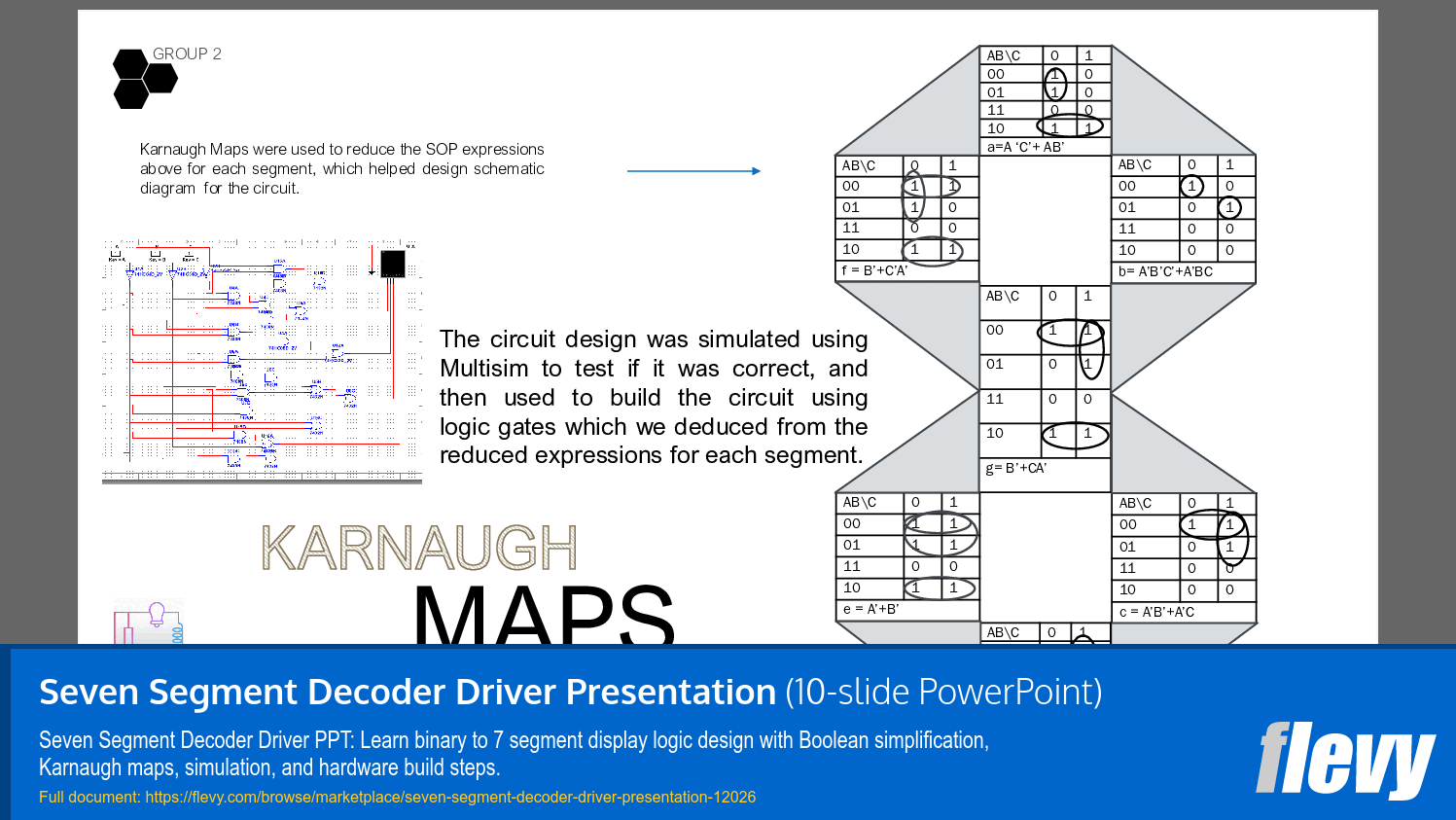
The project accepts a 3-bit binary input and drives a seven segment display to show the hexadecimal letters A through F. Inputs corresponding to binary 6 (110) and 7 (111) are intentionally left blank, demonstrating deliberate design constraints. The presentation walks through the creation of Truth Tables from the required input-output relationships, followed by Karnaugh map simplification to derive minimized Boolean equations. Every logical step is documented, making it easy to follow the transition from abstract requirements to gate-level implementation.
Hardware Simulation and Breadboard Construction
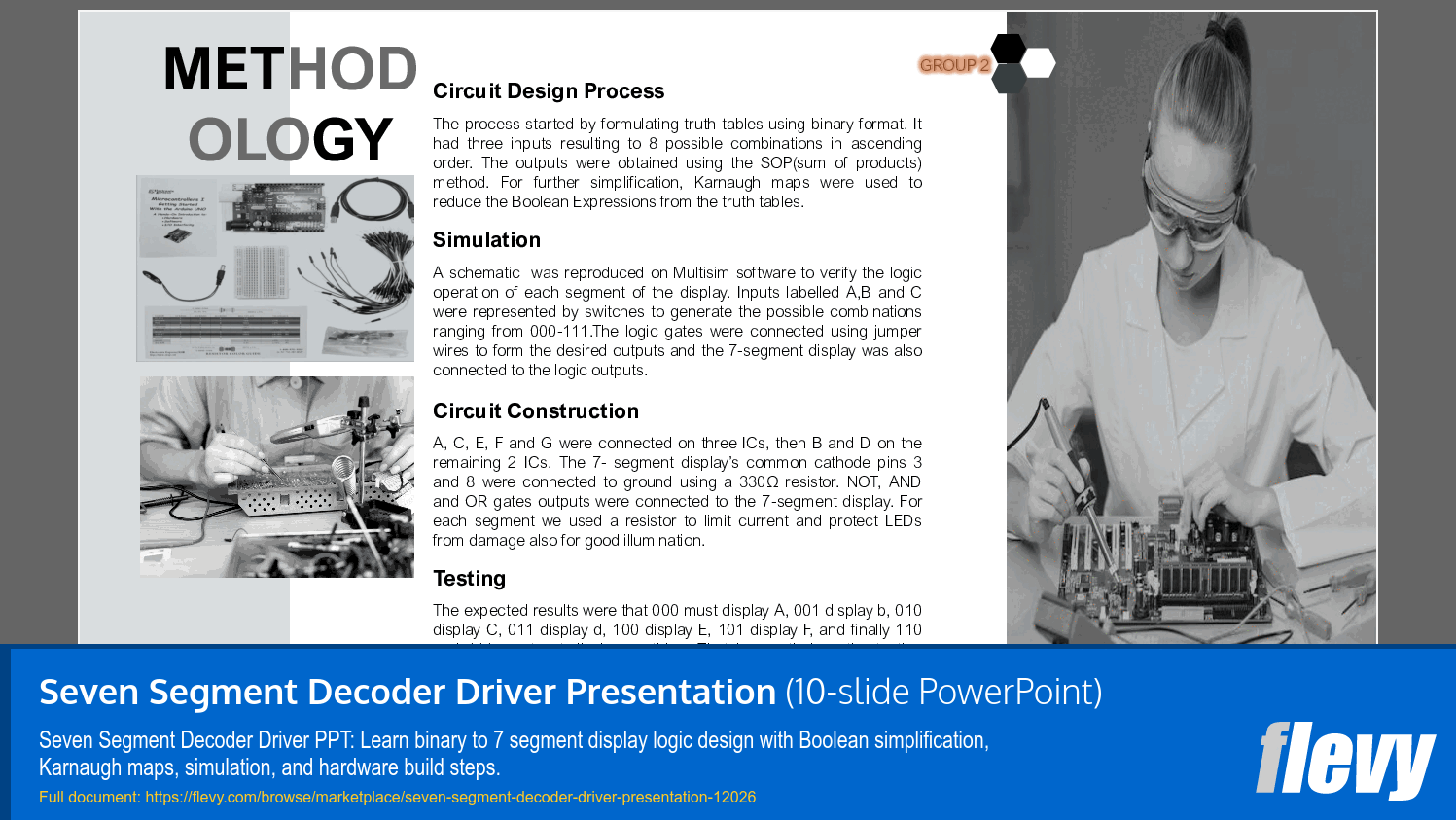
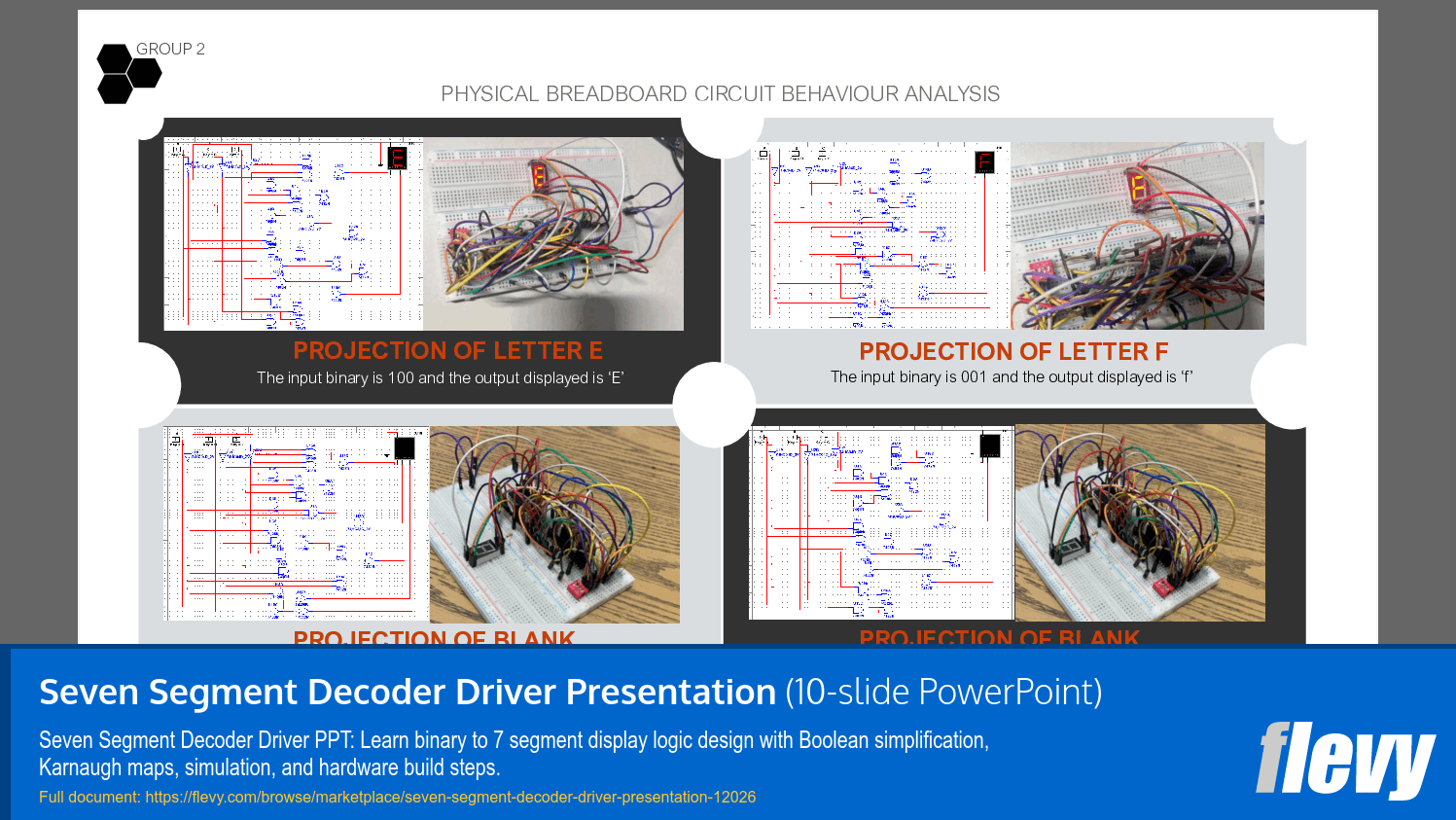
After deriving the Boolean equations, the design was simulated using Multisim to verify correct behavior before any physical components were assembled. The presentation includes observations from the simulation phase, noting how each segment responded to the full range of input combinations. Once simulation confirmed the logic, the circuit was constructed on a physical breadboard using standard integrated circuits. This phase introduced real-world considerations such as chip pinouts, power supply connections, pull-up and pull-down resistors, and signal propagation across multiple gates.
Learning Outcomes and Practical Value
This presentation is more than a set of slides; it is a documentation of the entire engineering design process from theory to tangible result. Key learning outcomes include mastering code conversion between binary and seven segment display patterns, applying Karnaugh maps to reduce complex logic expressions, translating Boolean equations into working hardware, using simulation tools to validate a design before physical construction, and developing systematic fault tracing skills when the physical circuit behaves unexpectedly. This project bridges the gap between classroom digital logic theory and the practical realities of working with integrated circuits on a breadboard. It serves as an excellent teaching aid or a portfolio piece demonstrating hands-on digital design competency.
Got a question about the product? Email us at support@flevy.com or ask the author directly by using the "Ask the Author a Question" form. If you cannot view the preview above this document description, go here to view the large preview instead.
Source: Seven Segment Decoder Driver Presentation PowerPoint (PPTX) Presentation Slide Deck, g54255862o94




























