
 Click main image to view in full screen. Unlock all 9 preview images:
Self-Storage Acquisition and Underwriting Model – Excel XLSX
Excel (XLSX) + supplemental PDF


BENEFITS OF THIS DOWNLOADABLE EXCEL DOCUMENT
- Builds gross potential rent from the actual unit mix across six unit sizes, rather than from an average rate per square foot.
- Bridges physical occupancy to economic occupancy, deducting concessions and delinquency so you underwrite the revenue you collect.
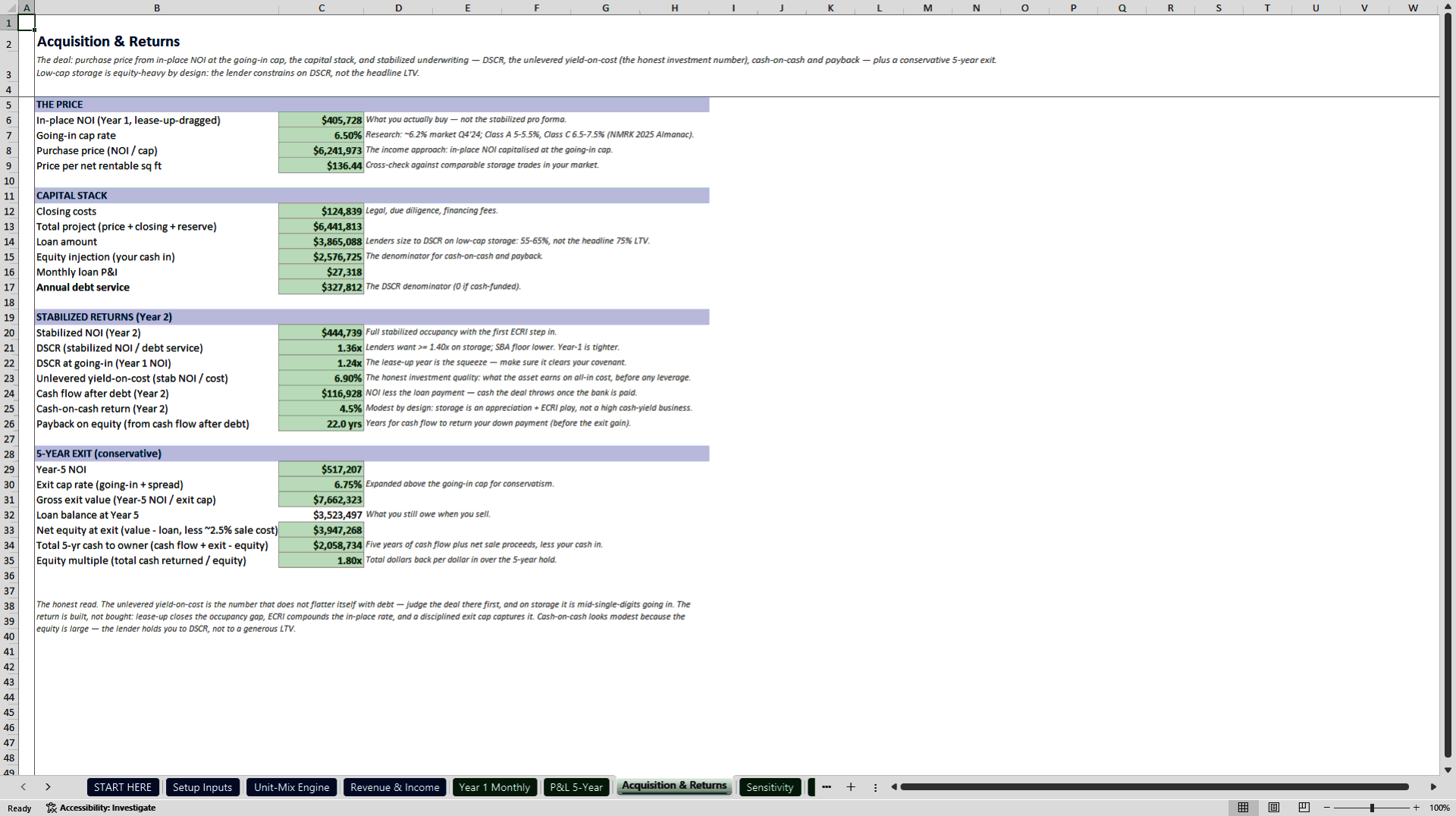
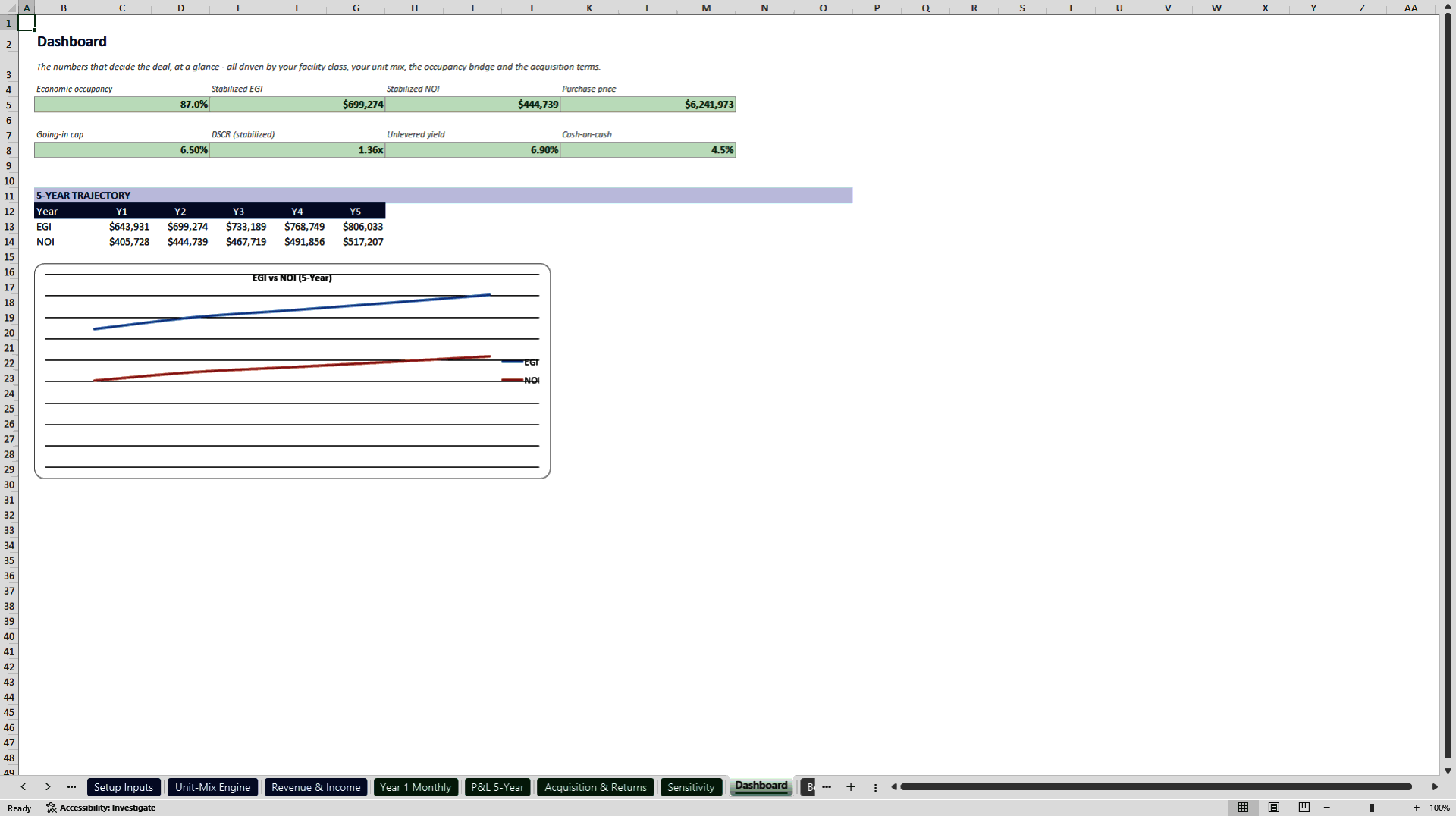
- Prices the facility on in-place net operating income and a going-in cap rate, then tests it with debt service coverage, yield on cost and a five-year equity multiple.
REAL ESTATE EXCEL DESCRIPTION
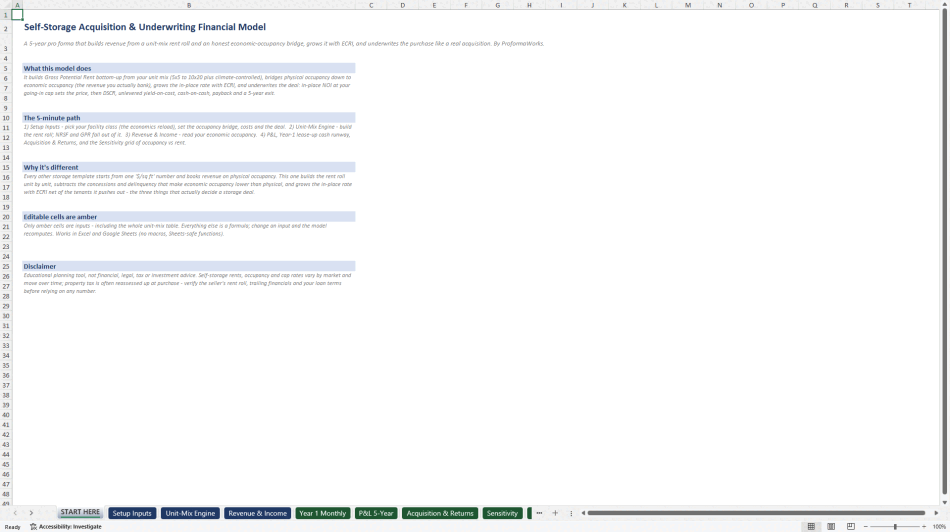
A self-storage deal turns on two numbers the seller's summary rarely separates: what the rent roll would produce if every unit were full and paying, and what actually lands in the bank.
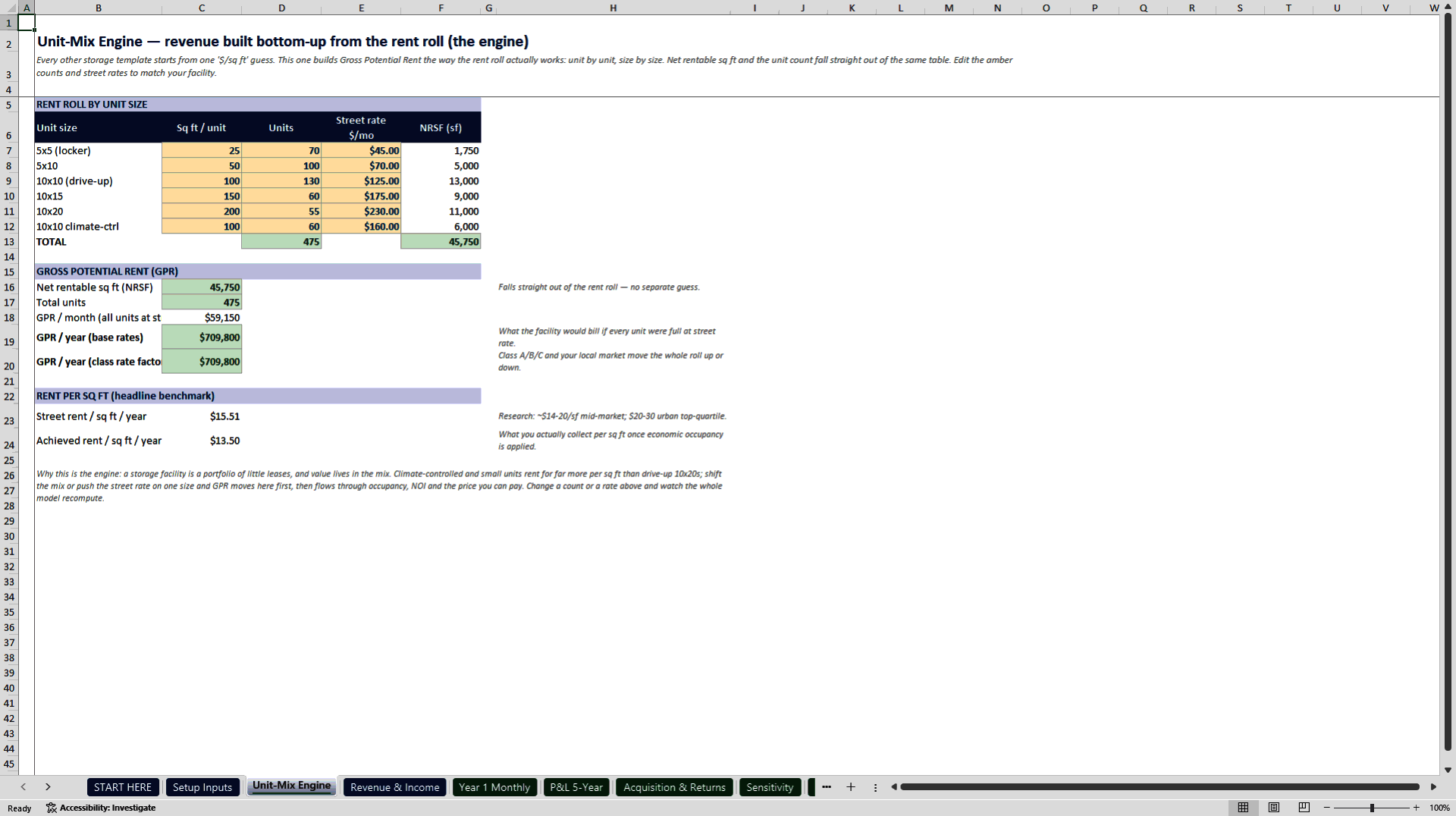
This workbook underwrites the acquisition of a single facility from the rent roll up. Gross potential rent is built across six unit sizes plus a climate-controlled tier, each with its own unit count and street rate, so total net rentable square feet and total unit count both fall out of the same table you can check line by line against the seller's rent roll. No average rate per square foot, no single blended number standing in for a mix.
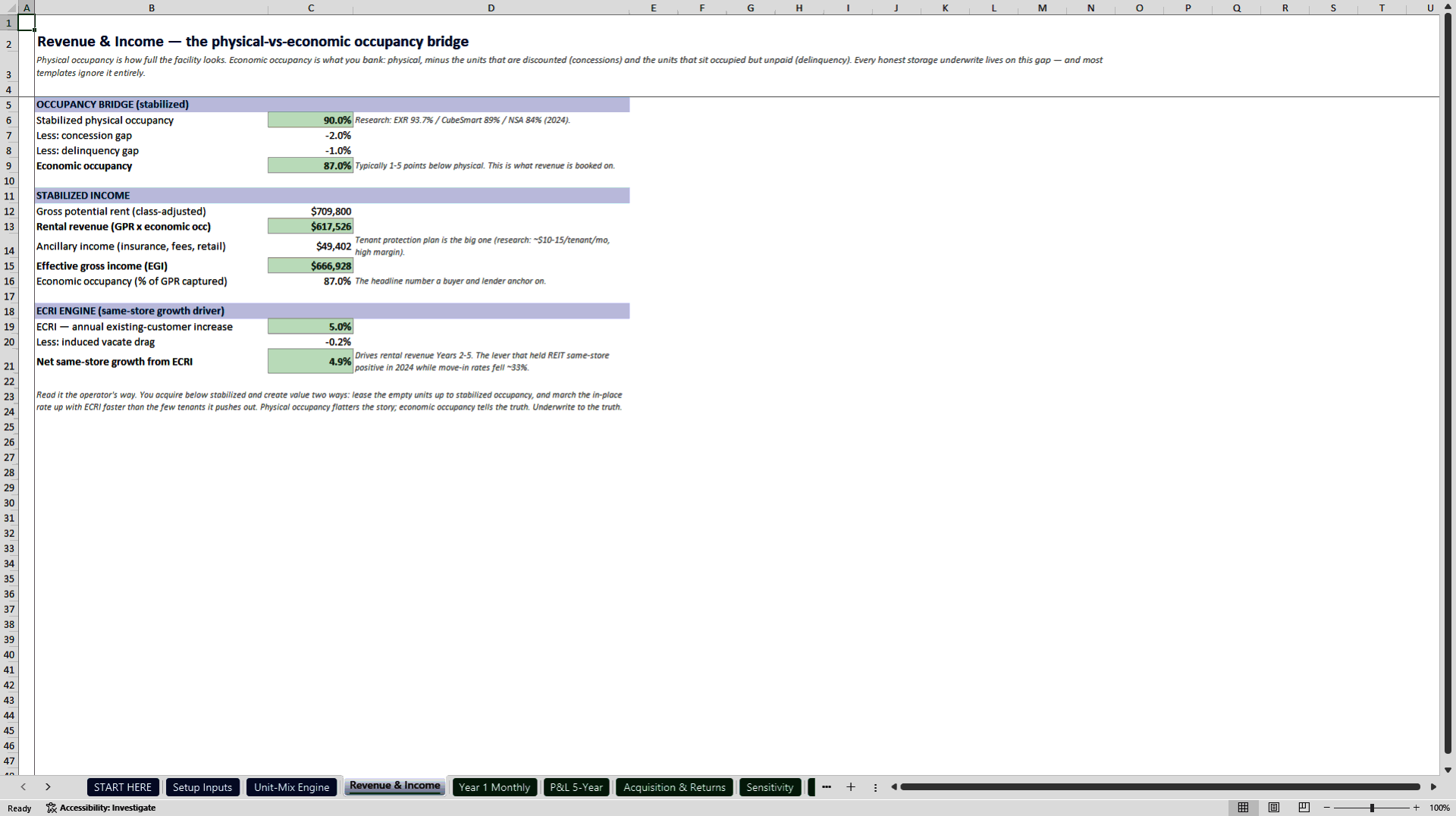
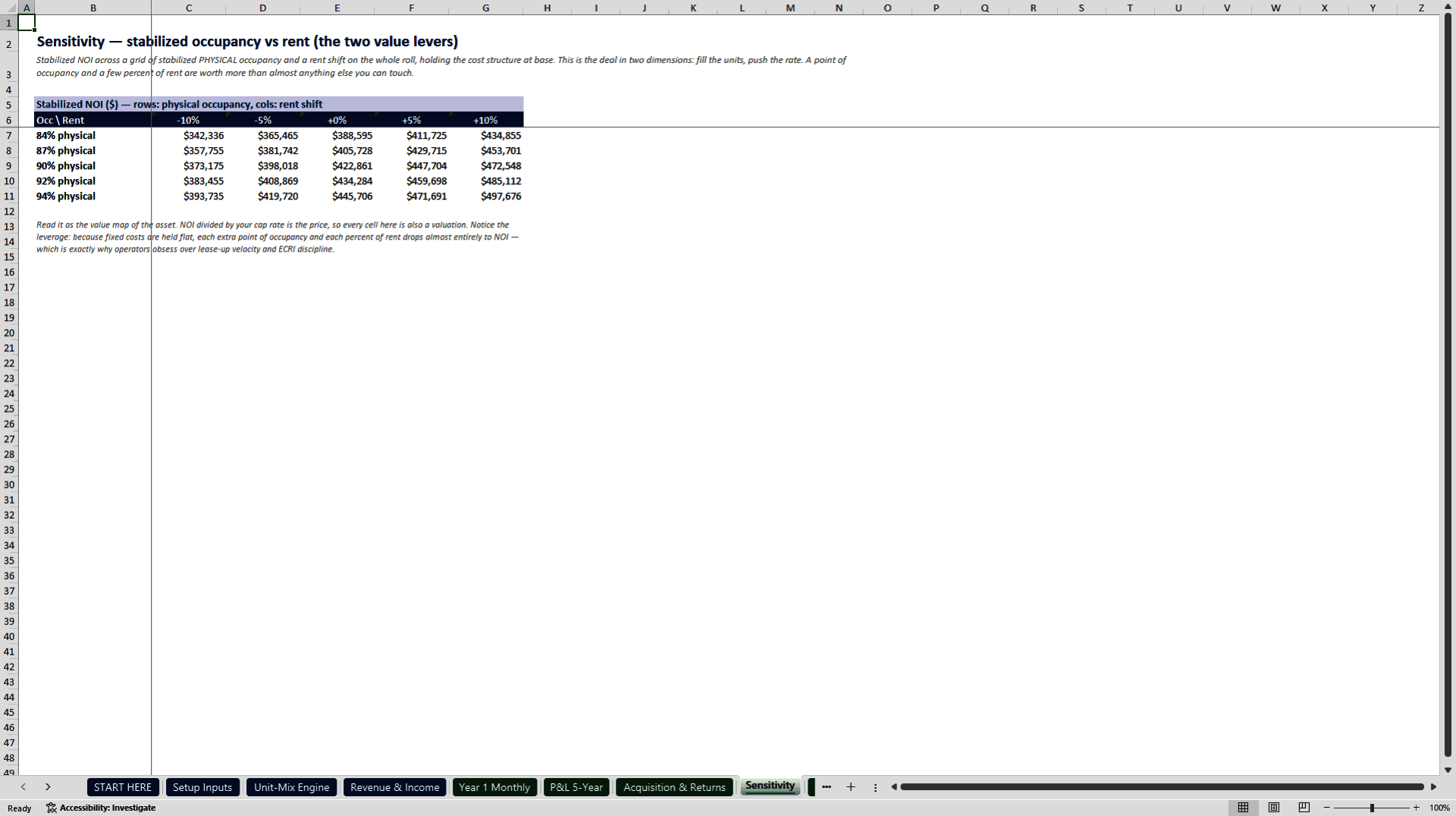
Then comes the bridge most templates skip. Physical occupancy is not economic occupancy. The model starts at physical occupancy, deducts concessions and discounts, deducts delinquency and bad debt, and reports the economic occupancy that revenue is actually recorded on. In the base case that gap is several points of occupancy, and it is often the difference between a deal that covers its debt and one that does not.
Growth is driven by existing customer rate increases rather than a flat inflation assumption. You set the size of the increase and the share of tenants who vacate in response, and the model computes the net same-store effect year by year, which is the mechanism operators actually use to grow net operating income.
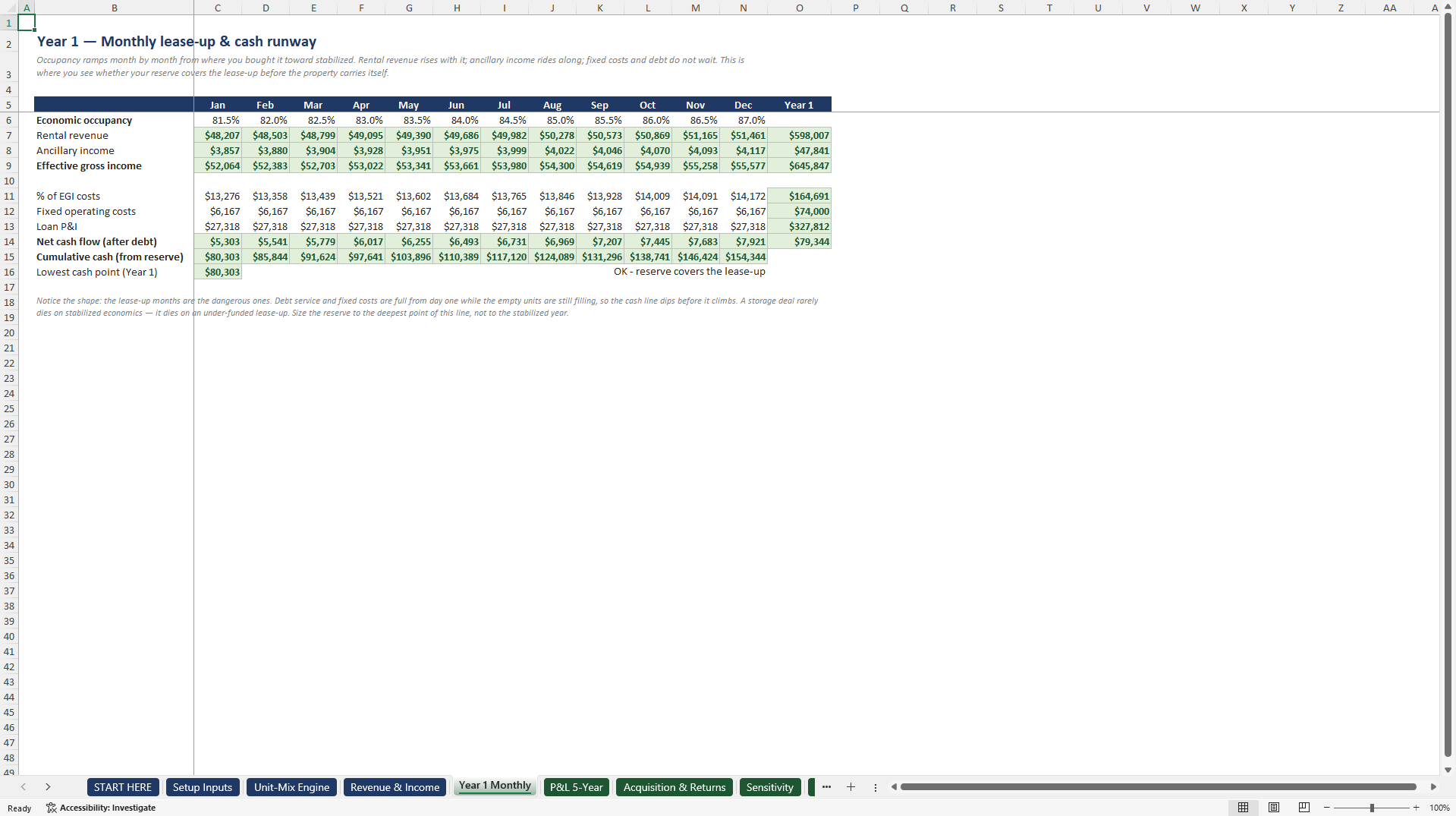
Pricing and financing follow: in-place net operating income, going-in cap rate, price per square foot and per unit, a loan sized on the lesser of loan-to-value and a coverage constraint, and the tests a lender applies. You get debt service coverage in the lease-up year and at stabilisation, the unlevered yield on cost measured against the going-in cap, cash-on-cash, a five-year equity multiple with an exit cap you choose, and the minimum monthly cash balance during lease-up.
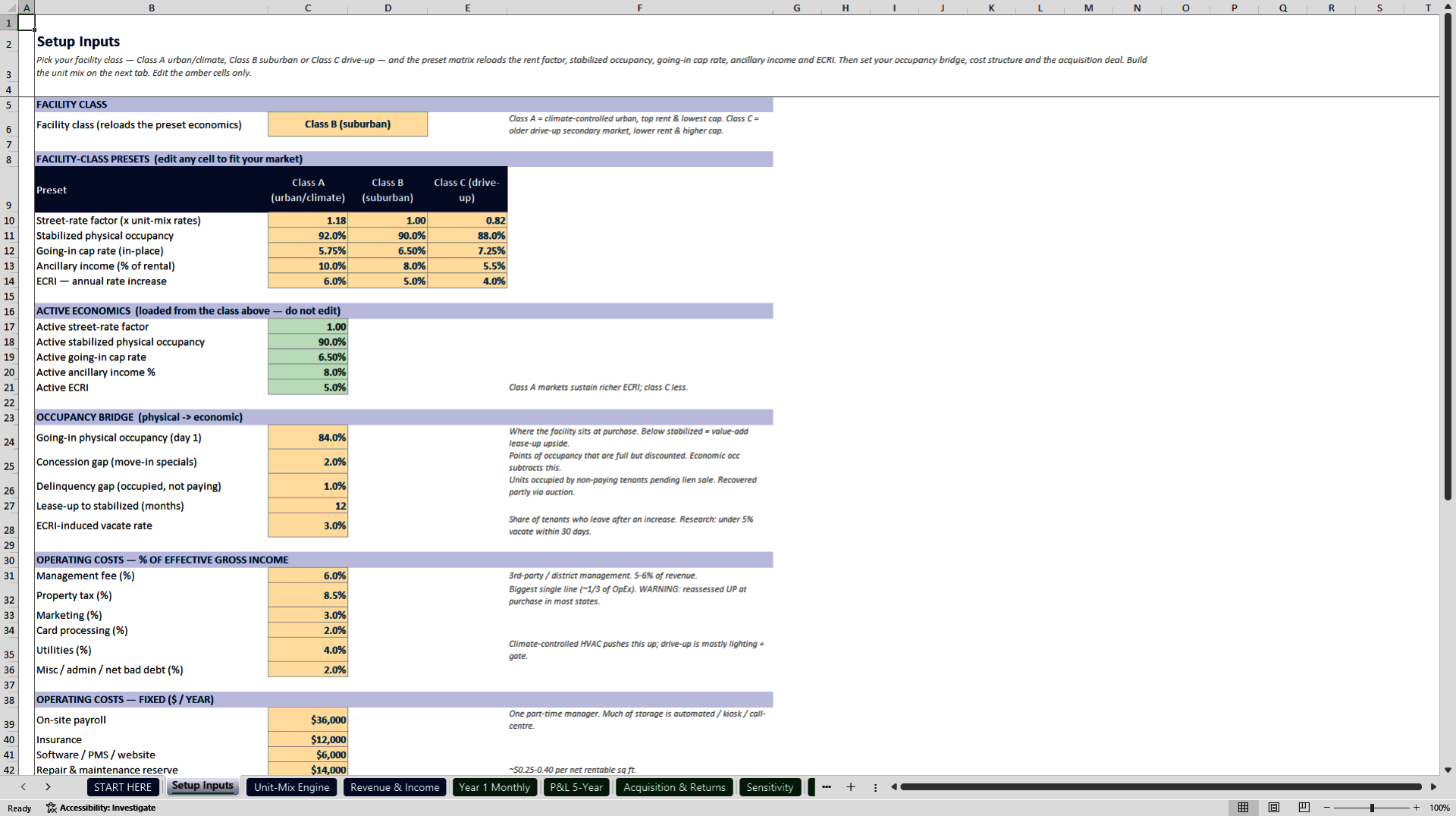
A three-way toggle switches the whole file between Class A, Class B and Class C facilities, moving street rates, occupancy, expense ratio, ancillary income and cap rate together.
The file is a ten-sheet Excel workbook with no macros, no add-ins and no external links, so it opens in Google Sheets as well. The second document included with this purchase is a nineteen-page PDF user guide: quick start, a sheet-by-sheet walkthrough, how the occupancy bridge works, how a lender reads your coverage ratio, and where to find the real numbers for the facility in front of you.
Got a question about the product? Email us at support@flevy.com or ask the author directly by using the "Ask the Author a Question" form. If you cannot view the preview above this document description, go here to view the large preview instead.
Source: Best Practices in Real Estate, Integrated Financial Model Excel: Self-Storage Acquisition and Underwriting Model Excel (XLSX) Spreadsheet, ProformaWorks
ABOUT THE AUTHOR

ProformaWorks builds acquisition-grade financial models for Main Street and lower-middle-market businesses - the kind of deal financed with an SBA 7(a) loan or a small commercial facility.
Every model answers one question: does this deal pencil at the bank? That means SDE or NOI rebuilt from the seller's own numbers, the add-backs a lender will and will not accept, a debt-service
... [read more]
Ask the Author a Question
You must be logged in to contact the author.




























