

Scrum Crash Course   124-slide PPT PowerPoint presentation slide deck (PPTX)
$55.00

Scrum Crash Course (124-slide PPT PowerPoint presentation slide deck (PPTX)) Preview Image
Log in to unlock full preview.
Scrum Crash Course (124-slide PPT PowerPoint presentation slide deck (PPTX)) Preview Image
Arrow   Click main image to view in full screen.

Scrum Crash Course (PowerPoint PPTX Slide Deck)

PowerPoint (PPTX) 124 Slides

Top 1,000 Best Practice $55.00
Developed by a team of experts with global consulting experience at McKinsey, Deloitte, and Capgemini.
Add to Cart


Immediate download
Fully editable PowerPoint
Free lifetime updates

SCRUM PPT DESCRIPTION

Editor Summary Scrum Crash Course is a 124-slide PowerPoint (PPTX) training deck developed by RadVector Consulting with team experience at McKinsey, Deloitte, and Capgemini, covering Scrum roles, events, planning, estimation, monitoring, and advanced concepts. Read more

Unlock the Potential of Agile Project Management with Scrum

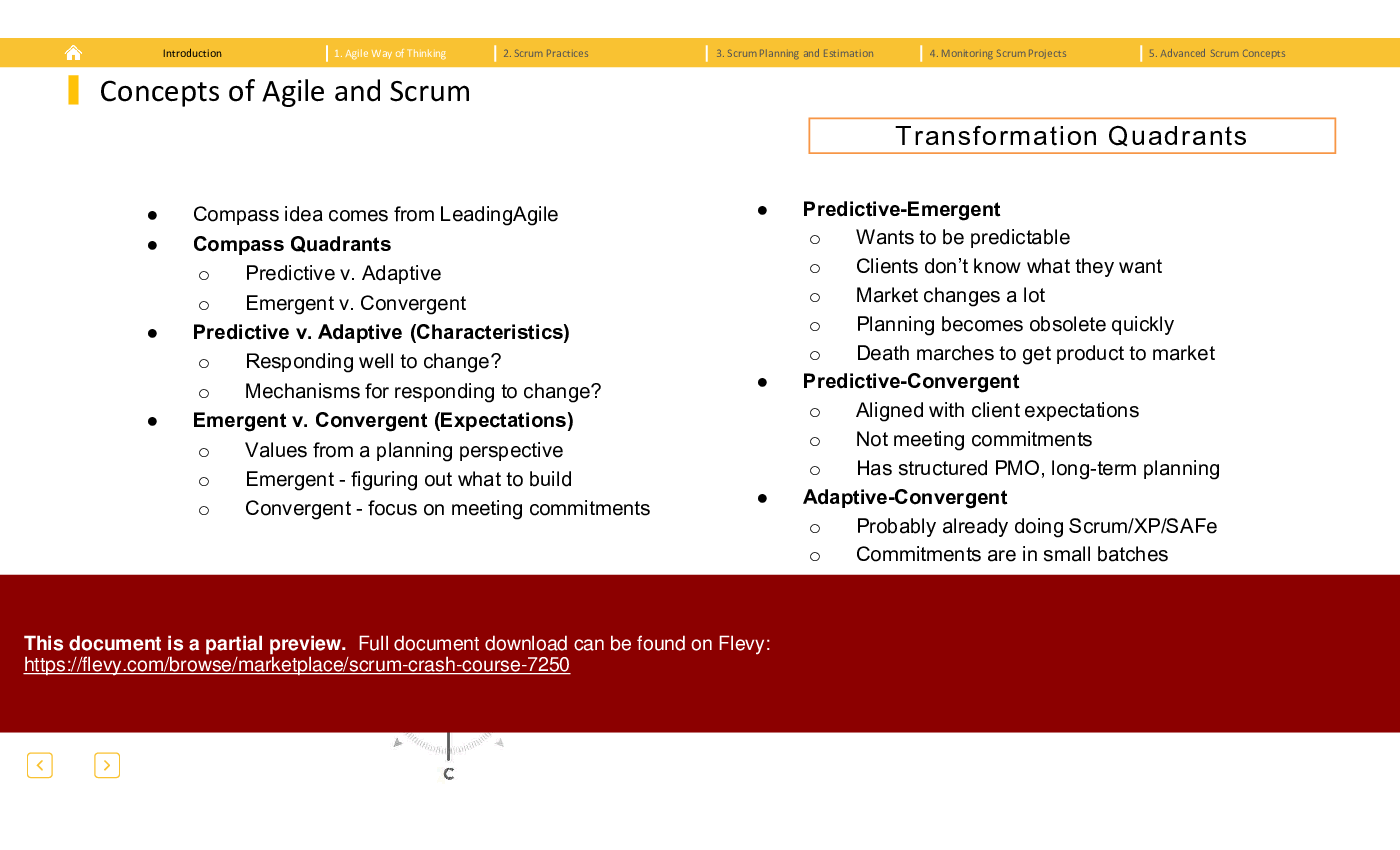
Scrum, an agile framework, revolutionizes project and product development by championing adaptability, continuous improvement, and unwavering customer satisfaction. Within Scrum's flexible and iterative embrace, cross-functional teams unite to deliver value collaboratively, all while being self-organizing.

Key Scrum Principles and Practices:

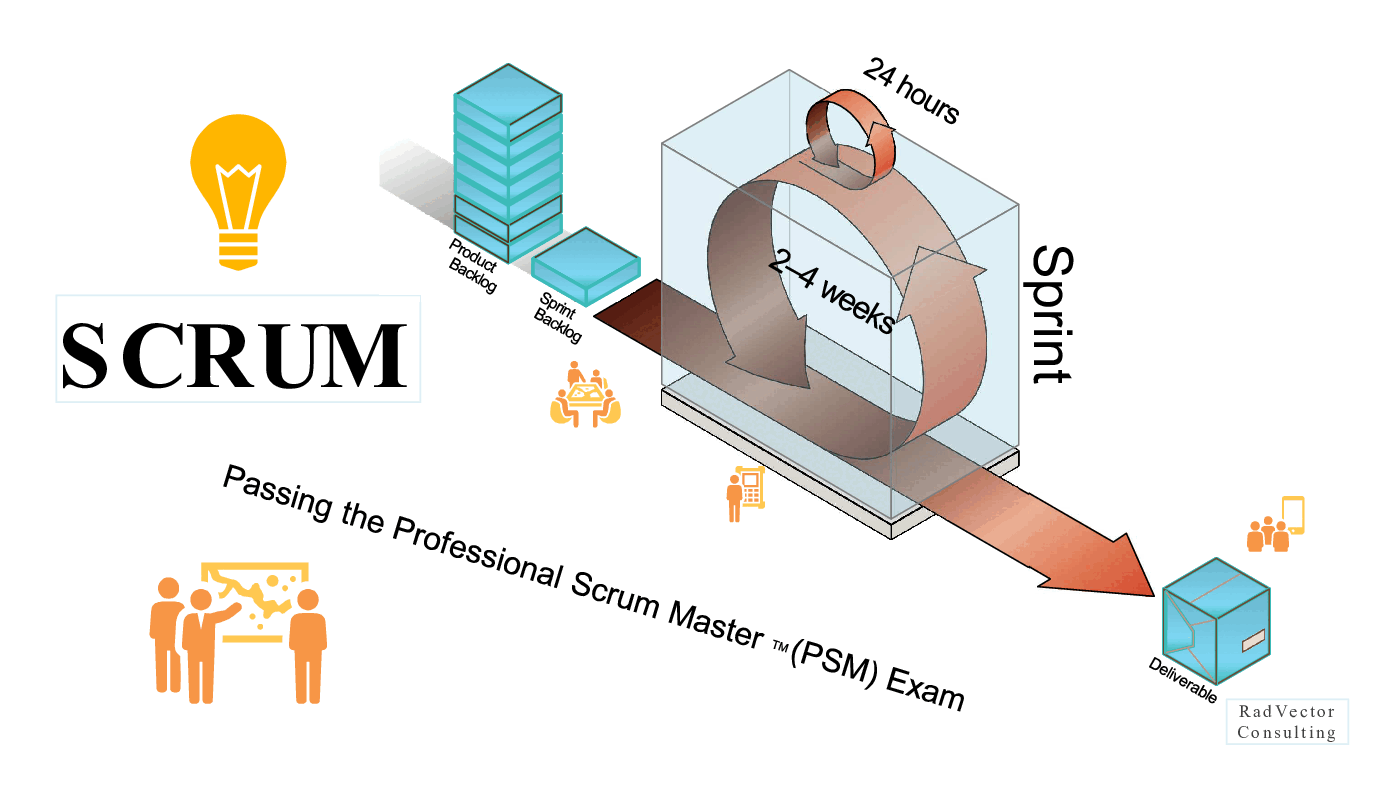
1. Sprints for Precision: Projects are divided into time-bound sprints (1-4 weeks) to concentrate efforts efficiently.
2. Product Backlog: A prioritized repository of user stories and requirements, meticulously managed by the Product Owner.
3. Daily Scrums: Short daily meetings for progress updates, planning, and issue resolution.
4. Empowered Development Teams: Cross-functional teams that have the autonomy to decide how to fulfill their tasks.
5. Sprint Reviews: Stakeholders witness potentially releasable product increments.
6. Retrospectives: Periodic reflections that fuel continuous process improvement.

The Scrum Ecosystem:

•  Product Owner: The bridge to stakeholders, safeguarding the product backlog.
•  Development Team: Cross-functional experts who breathe life into product increments.
•  Stakeholders: Active participants in sprint reviews, providing invaluable feedback.
•  Scrum Master: The servant leader, fostering a culture of agility and improvement.

Scrum thrives on transparency, communication, and inspection at every project juncture. It cultivates a collaborative mindset, values incremental value delivery, and excels in the face of change. Scrum's versatility extends across industries and projects, empowering teams to deliver excellence and adapt to evolving customer needs.

Harness the Power of Scrum for Agile Success

This comprehensive, customizable document is a valuable resource for SCRUM presentations and exam preparation. Rich in graphics, it offers a holistic view of interrelated concepts, equipping you to unlock the potential of agile project management with Scrum.

This PPT serves as an essential guide for executives looking to implement or refine Scrum methodologies within their organizations. It provides actionable insights into agile practices, emphasizing the importance of adaptability and team collaboration to drive project success.

Got a question about the product? Email us at support@flevy.com or ask the author directly by using the "Ask the Author a Question" form. If you cannot view the preview above this document description, go here to view the large preview instead.

MARCUS OVERVIEW

This synopsis was written by Marcus [?] based on the analysis of the full 124-slide presentation.


Executive Summary
The Scrum Crash Course presentation is designed to provide a comprehensive introduction to the Agile Scrum framework, including its roles, events, and practices. Developed by a team with extensive consulting experience at McKinsey, Deloitte, and Capgemini, this training resource equips corporate executives, integration leaders, and consultants with the knowledge needed to implement Scrum effectively. By utilizing this presentation, users will gain insights into Scrum planning, estimation, monitoring, and advanced concepts, enabling them to enhance team collaboration and project delivery.

Who This Is For and When to Use
•  Agile Coaches and Scrum Masters looking to enhance their team's performance
•  Product Owners responsible for maximizing product value
•  Development Teams aiming to improve collaboration and efficiency
•  Corporate Executives seeking to implement Agile methodologies within their organizations

Best-fit moments to use this deck:
•  During Agile transformation initiatives to train teams on Scrum practices
•  For onboarding new team members to familiarize them with Scrum roles and responsibilities
•  As a refresher for existing teams before starting new projects or sprints

Learning Objectives
•  Define the Agile mindset and its core principles
•  Identify Scrum roles and their responsibilities
•  Describe Scrum events and their significance in project management
•  Explain the importance of the Product Backlog and Sprint Backlog
•  Establish effective planning and estimation techniques within Scrum
•  Monitor Scrum projects using key metrics and tools

Table of Contents
•  Agile Way of Thinking (page 1)
•  Scrum Practices (page 2)
•  Scrum Planning and Estimation (page 3)
•  Monitoring Scrum Projects (page 4)
•  Advanced Scrum Concepts (page 5)

Primary Topics Covered
•  Agile Mindset - Understanding the foundational principles that drive Agile methodologies, emphasizing collaboration, flexibility, and customer focus.
•  Scrum Roles - Overview of key roles including the Product Owner, Scrum Master, and Development Team, detailing their responsibilities and interactions.
•  Scrum Events - Description of essential Scrum events such as Sprint Planning, Daily Scrum, Sprint Review, and Sprint Retrospective, highlighting their purpose and structure.
•  Product Backlog - Importance of maintaining a prioritized list of work items that guide the development process and ensure alignment with business goals.
•  Sprint Planning and Estimation - Techniques for effective sprint planning, including story estimation methods like Planning Poker and Affinity Estimation.
•  Monitoring Projects - Tools and metrics for tracking progress, such as Burn-Down and Burn-Up charts, to ensure transparency and accountability.

Deliverables, Templates, and Tools
•  User Story templates for capturing requirements
•  Sprint Planning templates to outline goals and tasks
•  Burn-Down and Burn-Up chart templates for tracking progress
•  Definition of Done (DoD) checklist to ensure quality standards are met
•  Retrospective formats for continuous improvement discussions

Slide Highlights
•  Visual representation of Scrum roles and their interactions
•  Flowcharts illustrating the Scrum process from planning to delivery
•  Examples of effective User Stories and Acceptance Criteria
•  Metrics dashboards for monitoring team velocity and project health
•  Retrospective formats that encourage team reflection and improvement

Potential Workshop Agenda
Introduction to Agile and Scrum (30 minutes)
•  Overview of Agile principles and the Scrum framework
•  Discussion on the Agile mindset and its importance

Scrum Roles and Responsibilities (60 minutes)
•  Detailed exploration of Scrum roles
•  Interactive session on role responsibilities and collaboration

Sprint Planning and Estimation Techniques (90 minutes)
•  Hands-on activities for creating User Stories and estimating tasks
•  Group exercises using Planning Poker for story estimation

Monitoring and Adapting Scrum Projects (60 minutes)
•  Overview of metrics and tools for project monitoring
•  Discussion on adapting processes based on retrospective feedback

Customization Guidance
•  Tailor the presentation to your organization's specific Agile practices and terminology
•  Incorporate real project examples to enhance relatability
•  Adjust the workshop agenda based on team experience levels and needs

Secondary Topics Covered
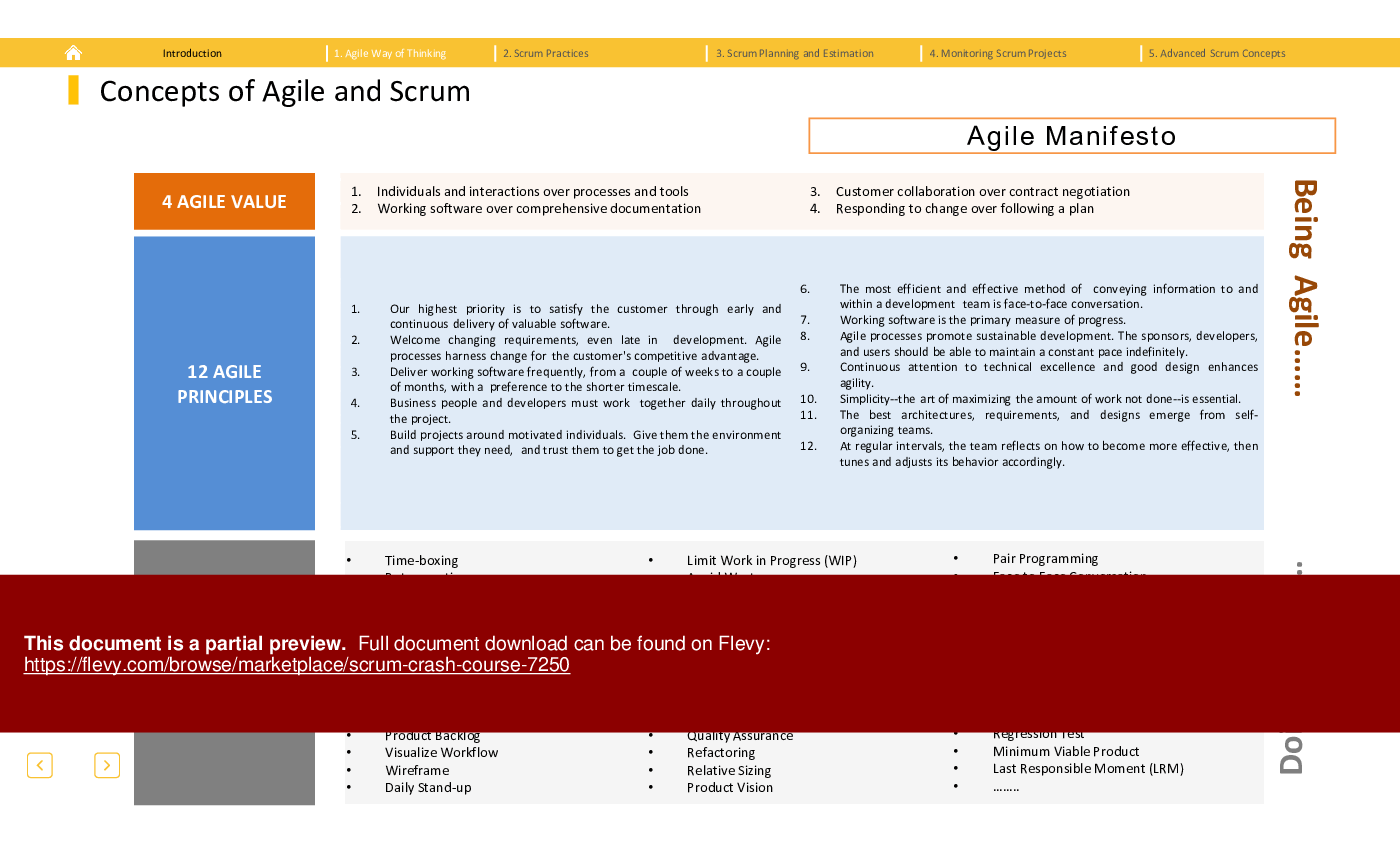
•  Agile Manifesto principles
•  Techniques for effective communication within Scrum teams
•  Strategies for managing technical debt
•  Best practices for conducting Scrum events

Topic FAQ

What are the core Scrum roles and what does each do in practice?

Scrum defines 3 core roles: the Product Owner, who prioritizes and manages the Product Backlog and stakeholder expectations; the Scrum Master, who facilitates the process and removes impediments; and the Development Team, a cross-functional group that delivers product increments. These 3 roles are central to Scrum practice.

How long should a sprint be and what is the purpose of time-boxing?

Sprints are time-boxed iterations typically lasting 1–4 weeks to focus work, create predictable delivery cadences, and enable frequent inspection and adaptation. Time-boxing helps teams plan, estimate, and deliver potentially releasable increments within 1–4 weeks.

Which estimation techniques are commonly used in Scrum teams?

Common estimation techniques used in Scrum include Planning Poker and Affinity Estimation, both of which help teams reach consensus on relative effort and plan sprint capacity. These techniques are highlighted as part of sprint planning and estimation guidance.

What metrics and tools do Scrum teams use to monitor progress?

Scrum teams monitor progress using visual tools such as Burn-Down and Burn-Up charts and measure team output with velocity, enabling transparency and early identification of issues. Burn-Down and Burn-Up charts and velocity are typical monitoring artefacts.

What should I look for when choosing a Scrum training deck for corporate teams?

Choose a deck that covers the Agile mindset, Scrum roles, events, planning and estimation techniques, monitoring metrics, and includes practical templates such as user story templates, sprint planning templates, a Definition of Done checklist, and Burn-Down/Burn-Up charts.

How can I justify buying a ready-made Scrum slide deck for a tight training budget?

A slide deck that supports onboarding, refresher training, and transformation workshops can reduce internal preparation time and provide reusable templates and a workshop agenda, making it practical for constrained teams; for example, a 124-slide PowerPoint with templates and a suggested agenda.

I need to onboard a new development team to Scrum—what topics should the onboarding cover?

Onboarding should cover the Agile mindset, Scrum roles and responsibilities, Scrum events (Sprint Planning, Daily Scrum, Sprint Review, Retrospective), backlog structure and estimation approaches, and include hands-on use of user story and sprint planning templates for practical learning.

Teams are struggling with collaboration after a reorganization—how can Scrum address this practically?

Scrum promotes cross-functional teams, role clarity, and regular inspect-and-adapt events—Daily Scrums for synchronization and Sprint Retrospectives for continuous improvement—helping teams re-establish collaboration rhythms through structured events like the Daily Scrum and Sprint Retrospective.

Document FAQ
These are questions addressed within this presentation.

What is the Agile mindset?
The Agile mindset emphasizes collaboration, flexibility, and a focus on delivering value to customers through iterative development and continuous improvement.

What are the key roles in Scrum?
The key roles in Scrum include the Product Owner, who prioritizes the backlog; the Scrum Master, who facilitates the process; and the Development Team, which executes the work.

How do you estimate tasks in Scrum?
Tasks can be estimated using various methods, including Planning Poker and Affinity Estimation, which help teams assess the relative effort required for each task.

What is the Definition of Done (DoD)?
The Definition of Done is a checklist that outlines the criteria a product increment must meet to be considered complete, ensuring quality and consistency.

How do you monitor Scrum projects?
Scrum projects can be monitored using tools like Burn-Down and Burn-Up charts, which visualize progress and help identify potential issues early.

What is a Sprint Retrospective?
A Sprint Retrospective is a meeting held at the end of each sprint where the team reflects on their process, identifies improvements, and plans for the next sprint.

How can Scrum be adapted for different situations?
Scrum can be adapted by modifying roles, events, and artifacts to fit the specific needs of a project or organization while maintaining its core principles.

What are some common challenges in implementing Scrum?
Common challenges include resistance to change, lack of understanding of Agile principles, and difficulties in maintaining team collaboration.

How does Scrum support continuous improvement?
Scrum supports continuous improvement through regular retrospectives, allowing teams to reflect on their processes and make adjustments based on feedback.

What is the significance of the Product Backlog?
The Product Backlog is a prioritized list of work items that guides the development process, ensuring that the team focuses on delivering the most valuable features first.

Glossary
•  Agile - A methodology emphasizing iterative development and customer collaboration.
•  Scrum - A framework for managing complex projects, focusing on delivering value through iterative cycles.
•  Product Owner - The role responsible for maximizing product value and managing the Product Backlog.
•  Scrum Master - The facilitator of the Scrum process, ensuring adherence to Scrum principles.
•  Development Team - A cross-functional group responsible for delivering product increments.
•  Sprint - A time-boxed period during which specific work is completed and made ready for review.
•  Backlog - A prioritized list of work items, including user stories and tasks.
•  Definition of Done (DoD) - A checklist of criteria that must be met for a product increment to be considered complete.
•  Velocity - A measure of the amount of work a team can complete in a sprint, typically expressed in story points.
•  Retrospective - A meeting to reflect on the past sprint and identify areas for improvement.
•  User Story - A brief description of a feature from the perspective of the end user.
•  Burn-Down Chart - A visual representation of work remaining versus time in a sprint.
•  Planning Poker - A consensus-based technique for estimating effort or relative size of user stories.
•  Technical Debt - The implied cost of additional rework caused by choosing an easy solution now instead of a better approach that would take longer.
•  Kanban - A visual workflow management method that helps teams visualize their work and maximize efficiency.
•  Sprint Review - A meeting at the end of a sprint to showcase completed work and gather feedback.
•  Sprint Planning - A meeting where the team defines what will be delivered in the upcoming sprint and how that work will be achieved.
•  Increment - The sum of all the completed product backlog items at the end of a sprint.

Source: Best Practices in Scrum PowerPoint Slides: Scrum Crash Course PowerPoint (PPTX) Presentation Slide Deck, RadVector Consulting


$55.00
Developed by a team of experts with global consulting experience at McKinsey, Deloitte, and Capgemini.
Add to Cart
  

ABOUT THE AUTHOR

Additional documents from author: 183

We are a group of aviation experts & specialists (PhDs, Engineers, Pilots, Navigators, ...), leaders in helping organizations to transform their business performance using Methodologies and Principles of Lean, Agile, Six Sigma, and Innovation.

Ask the Author a Question

You must be logged in to contact the author.

Click here to log in Click here register

Did you know?
The average daily rate of a McKinsey consultant is $6,625 (not including expenses). The average price of a Flevy document is $65.


Trusted by over 10,000+ Client Organizations
Since 2012, we have provided business templates to over 10,000 businesses and organizations of all sizes, from startups and small businesses to the Fortune 100, in over 130 countries.
AT&T GE Cisco Intel IBM Coke Dell Toyota HP Nike Samsung Microsoft Astrazeneca JP Morgan KPMG Walgreens Walmart 3M Kaiser Oracle SAP Google E&Y Volvo Bosch Merck Fedex Shell Amgen Eli Lilly Roche AIG Abbott Amazon PwC T-Mobile Broadcom Bayer Pearson Titleist ConEd Pfizer NTT Data Schwab


Read Customer Testimonials

 
"[Flevy] produces some great work that has been/continues to be of immense help not only to myself, but as I seek to provide professional services to my clients, it gives me a large "tool box" of resources that are critical to provide them with the quality of service and outcomes they are expecting."

– Royston Knowles, Executive with 50+ Years of Board Level Experience
 
"I have used Flevy services for a number of years and have never, ever been disappointed. As a matter of fact, David and his team continue, time after time, to impress me with their willingness to assist and in the real sense of the word. I have concluded in fact "

– Roberto Pelliccia, Senior Executive in International Hospitality
 
"As a consulting firm, we had been creating subject matter training materials for our people and found the excellent materials on Flevy, which saved us 100's of hours of re-creating what already exists on the Flevy materials we purchased."

– Michael Evans, Managing Director at Newport LLC
 
"My FlevyPro subscription provides me with the most popular frameworks and decks in demand in today’s market. They not only augment my existing consulting and coaching offerings and delivery, but also keep me abreast of the latest trends, inspire new products and service offerings for my practice, and educate me "

– Bill Branson, Founder at Strategic Business Architects
 
"I am extremely grateful for the proactiveness and eagerness to help and I would gladly recommend the Flevy team if you are looking for data and toolkits to help you work through business solutions."

– Trevor Booth, Partner, Fast Forward Consulting
 
"FlevyPro has been a brilliant resource for me, as an independent growth consultant, to access a vast knowledge bank of presentations to support my work with clients. In terms of RoI, the value I received from the very first presentation I downloaded paid for my subscription many times over! The "

– Roderick Cameron, Founding Partner at SGFE Ltd
 
"Last Sunday morning, I was diligently working on an important presentation for a client and found myself in need of additional content and suitable templates for various types of graphics. Flevy.com proved to be a treasure trove for both content and design at a reasonable price, considering the time I "

– M. E., Chief Commercial Officer, International Logistics Service Provider
 
"The wide selection of frameworks is very useful to me as an independent consultant. In fact, it rivals what I had at my disposal at Big 4 Consulting firms in terms of efficacy and organization."

– Julia T., Consulting Firm Owner (Former Manager at Deloitte and Capgemini)


Customers Also Bought These Documents


Customers Also Like These Documents

Explore Templates on Related Management Topics


Your Recently Viewed Documents
Download our FREE Digital Transformation Templates

Download our free compilation of 50+ Digital Transformation slides and templates. DX concepts covered include Digital Leadership, Digital Maturity, Digital Value Chain, Customer Experience, Customer Journey, RPA, etc.










