
Risk Management System Implementation - The ISO 31000:2018   133-slide PPT PowerPoint presentation slide deck (PPTX)
$65.00

Risk Management System Implementation - The ISO 31000:2018 (133-slide PPT PowerPoint presentation slide deck (PPTX)) Preview Image
Log in to unlock full preview.
Risk Management System Implementation - The ISO 31000:2018 (133-slide PPT PowerPoint presentation slide deck (PPTX)) Preview Image
Arrow   Click main image to view in full screen.

Risk Management System Implementation - The ISO 31000:2018 (PowerPoint PPTX Slide Deck)

PowerPoint (PPTX) 133 Slides

#3 in ISO 31000 $65.00
Developed by a team of experts with global consulting experience at McKinsey, Deloitte, and Capgemini.
Add to Cart


Immediate download
Fully editable PowerPoint
Free lifetime updates

BENEFITS OF THIS POWERPOINT DOCUMENT

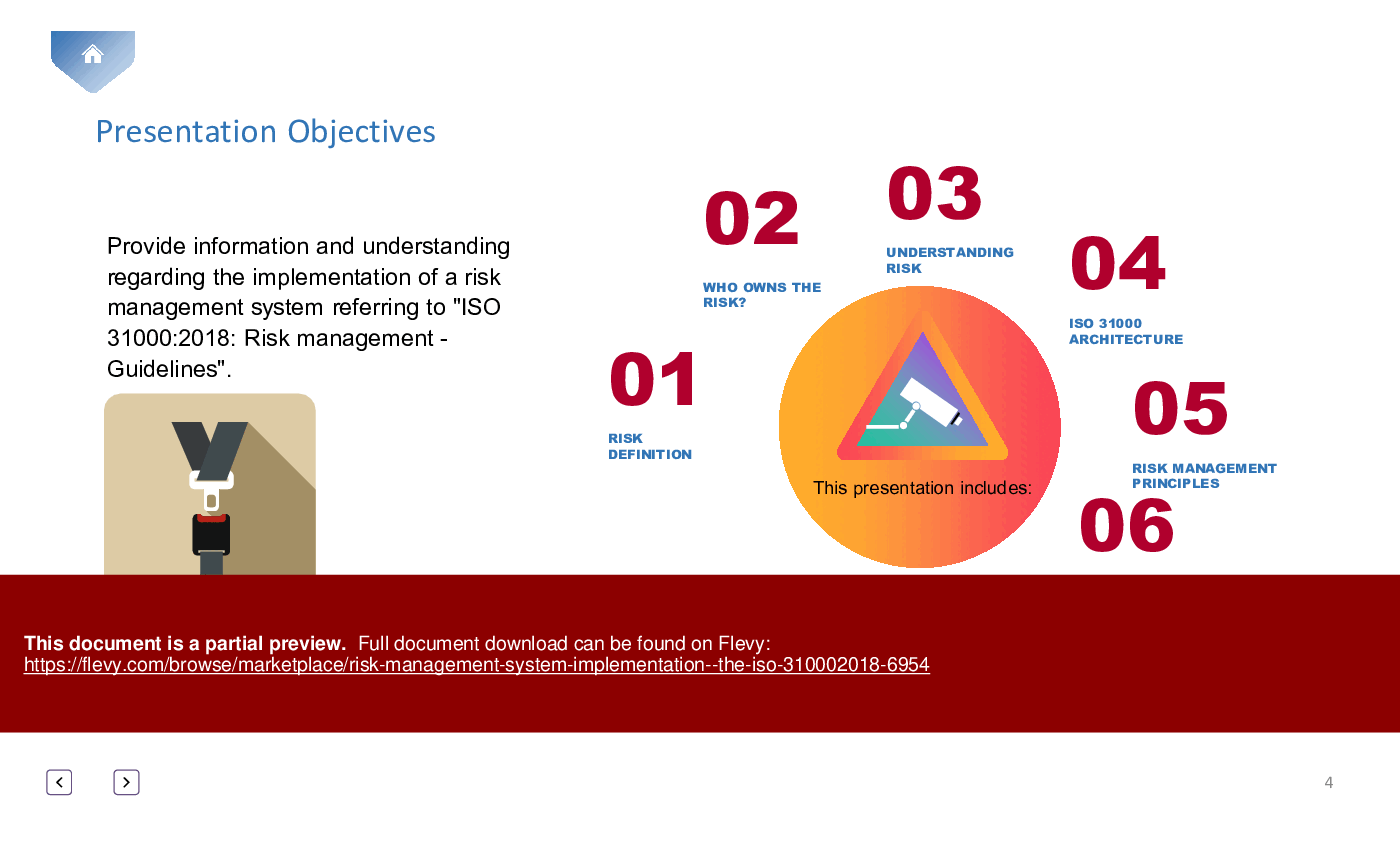
  1. Provide information and understanding regarding the implementation of a risk management system.

ISO 31000 PPT DESCRIPTION

Editor Summary Risk Management System Implementation - The ISO 31000:2018 is a 133-slide PowerPoint deck developed by RadVector Consulting with contributors experienced at McKinsey, Deloitte, and Capgemini, sold as a digital download on Flevy. Read more

Risk is an inherent facet of business, and prudent organizations invest in risk management. Gary Cohn succinctly captures this necessity: "If you don't invest in risk management, it doesn't matter what business you're in, it's a risky business." To navigate this perilous terrain, ISO 31000 offers a beacon of guidance.

Illuminating Risk Management with ISO 31000:2018

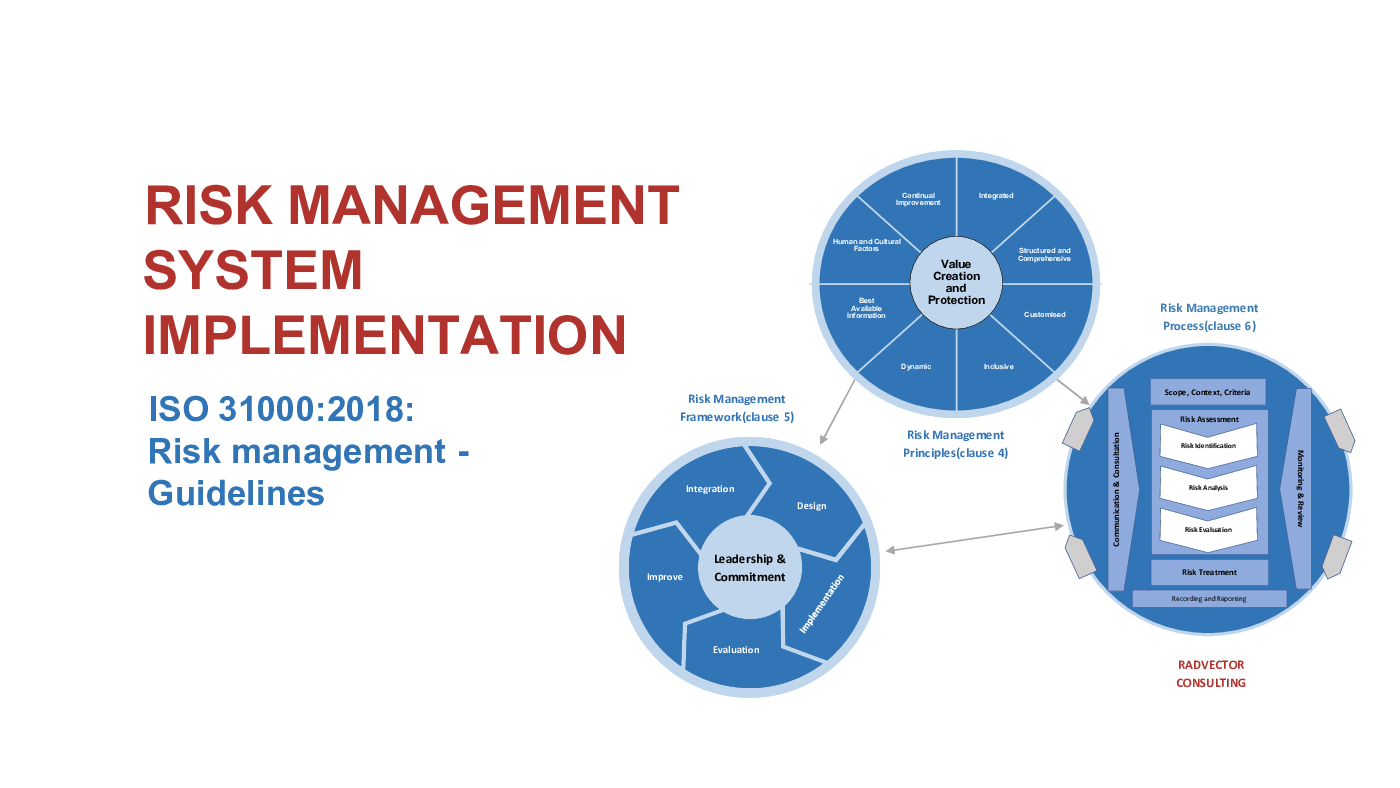
ISO 31000 is a comprehensive framework that offers principles, a structure, and a process for effective risk management. Its applicability spans across organizations of all sizes, activities, and sectors. This internationally recognized standard equips organizations to enhance their odds of achieving objectives, elevate their discernment of opportunities and threats, and optimize the allocation and utilization of resources for risk treatment.

Beyond Certification: A Benchmark for Excellence

ISO 31000 is not intended for certification purposes, but it serves as an invaluable compass for internal and external audit programs. Organizations that embrace ISO 31000 can gauge the alignment of their risk management practices with a globally acknowledged benchmark. This benchmark doesn't just pave the path to effective risk management; it underpins robust corporate governance.

A Voyage Through Risk Management Implementation

Embark on a journey through the implementation of a risk management system with ISO 31000:2018 as your guide. This comprehensive 133-slide PowerPoint document delves into the intricacies of risk management system implementation. From risk definition to understanding risk, from risk management principles to the risk management framework, this document provides a holistic view of the Quality Systems to fortify your risk management endeavors.

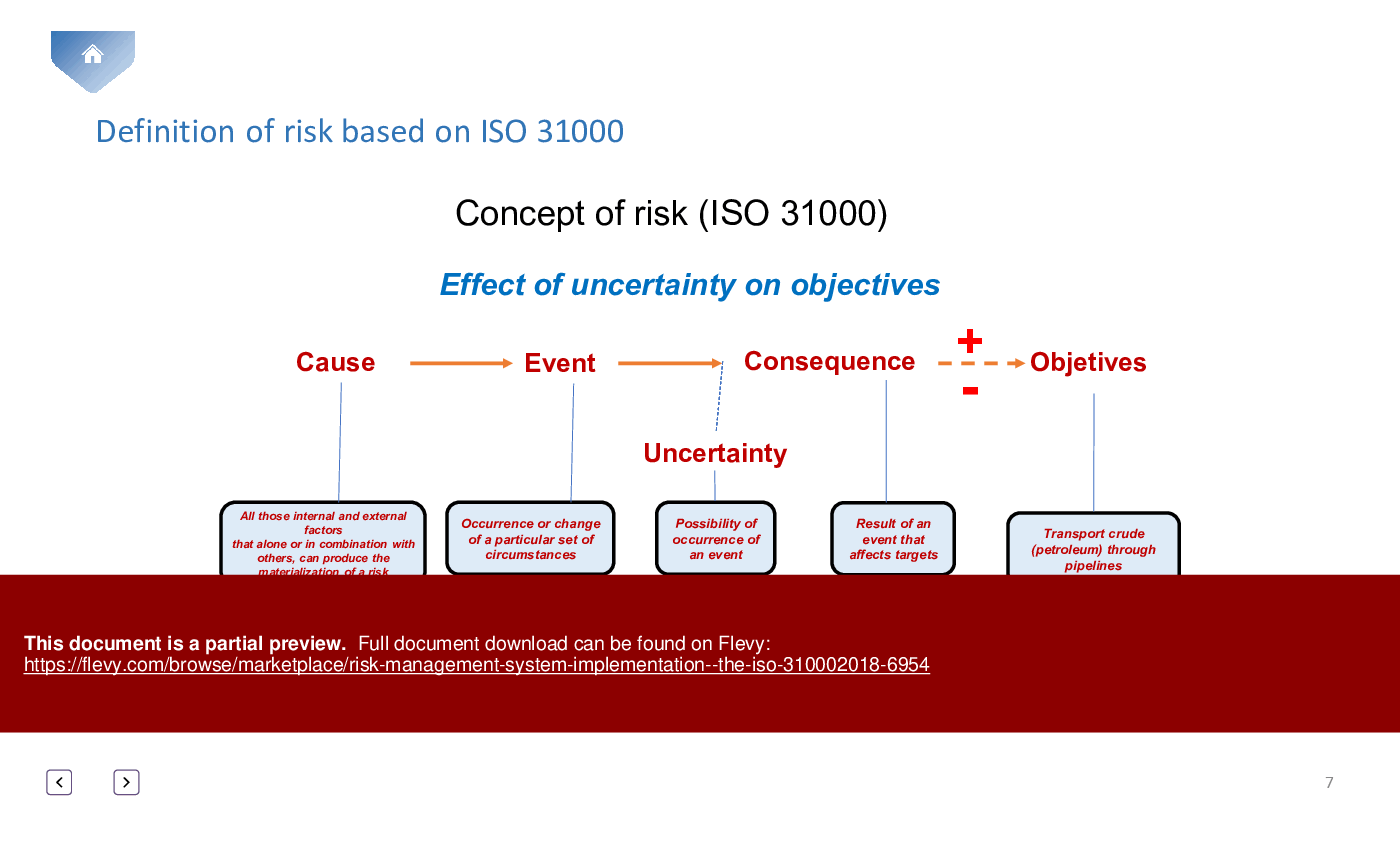
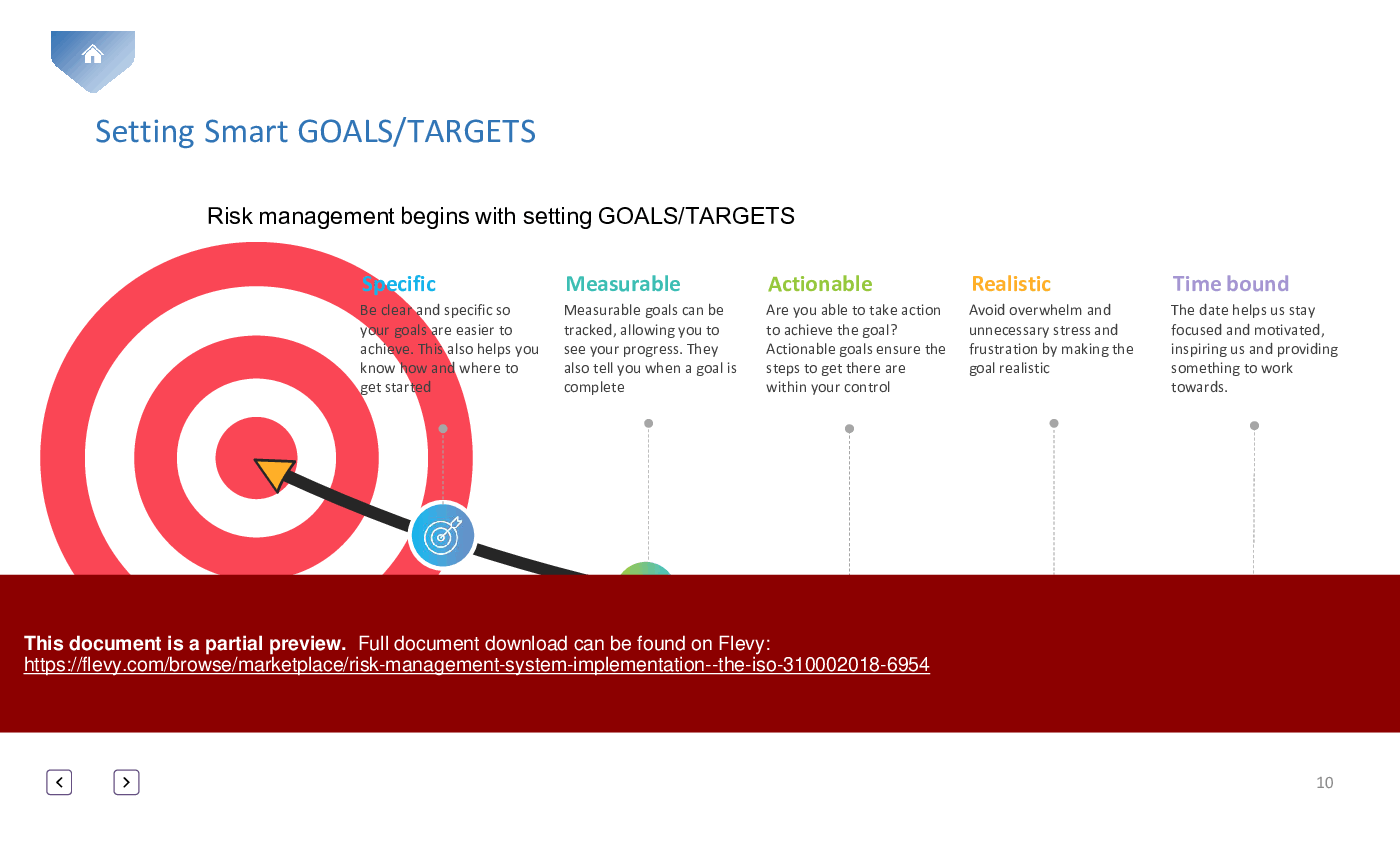
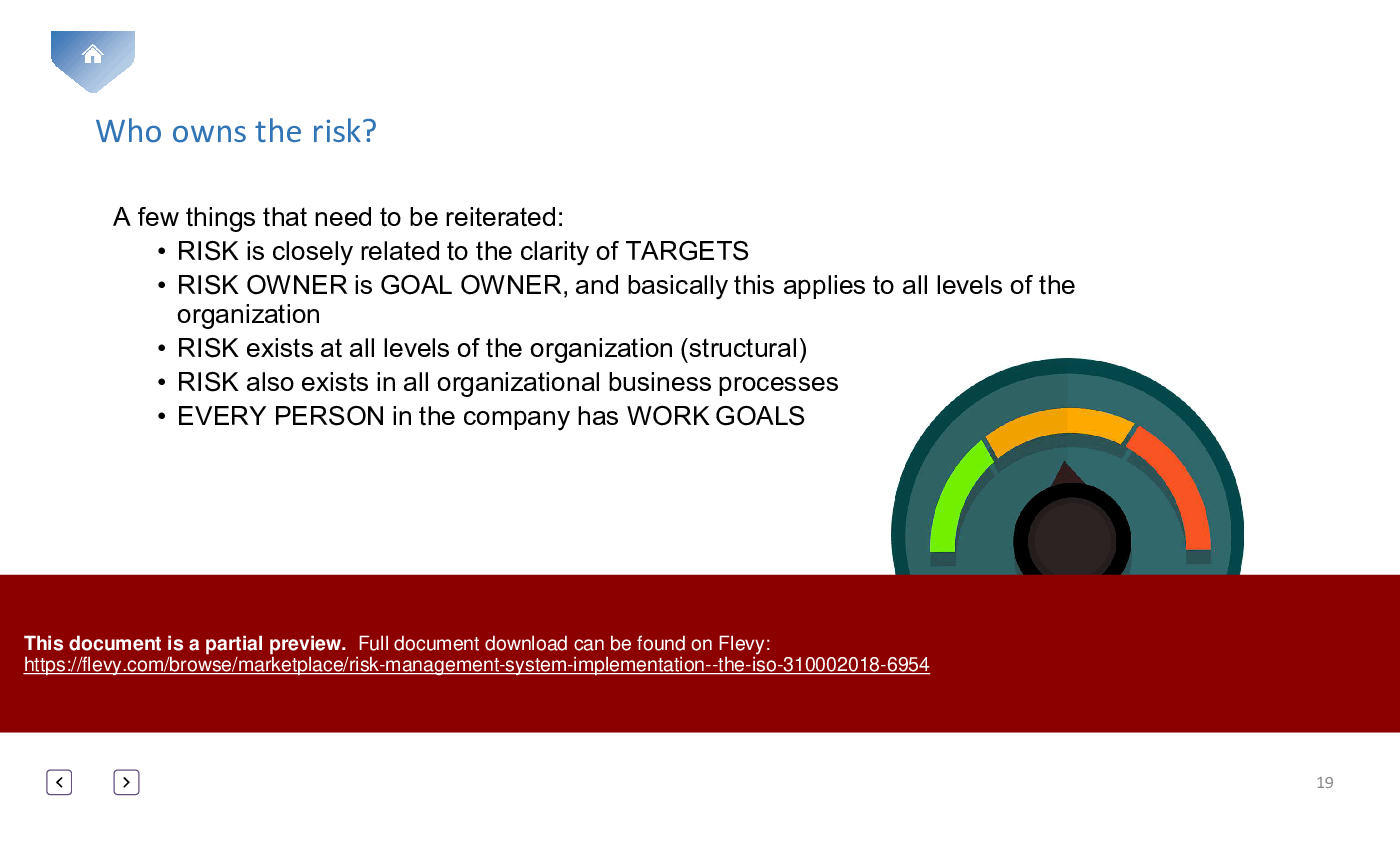
This PPT provides a detailed exploration of the ISO 31000:2018 framework, emphasizing the importance of understanding risk ownership and the impact of uncertainty on objectives. It outlines the necessity of setting SMART goals/targets to ensure clarity and direction in risk management efforts. The presentation also delves into the architecture of ISO 31000, highlighting the principles and processes essential for effective risk management. With practical examples and structured methodologies, this document equips organizations with the tools needed to integrate risk management into their business processes, fostering a culture of resilience and proactive risk mitigation.

Got a question about the product? Email us at support@flevy.com or ask the author directly by using the "Ask the Author a Question" form. If you cannot view the preview above this document description, go here to view the large preview instead.

MARCUS OVERVIEW

This synopsis was written by Marcus [?] based on the analysis of the full 133-slide presentation.


Executive Summary
The "Risk Management System Implementation - The ISO 31000:2018" presentation provides a structured approach to implementing a risk management system based on the ISO 31000:2018 guidelines. This comprehensive slide deck, developed by experts from top consulting firms, offers clear insights into risk management principles, frameworks, and processes. It equips corporate executives and consultants with the necessary tools to identify, analyze, and treat risks effectively, ensuring organizational resilience and the achievement of strategic objectives.

Who This Is For and When to Use
•  Corporate executives responsible for risk governance and strategy
•  Risk management professionals seeking to align practices with ISO standards
•  Consultants advising organizations on risk management frameworks
•  Project managers overseeing risk assessments and mitigation strategies

Best-fit moments to use this deck:
•  During the implementation phase of a risk management system
•  For training sessions focused on ISO 31000 principles
•  When conducting risk assessments or evaluations within projects

Learning Objectives
•  Define the key concepts of risk management as per ISO 31000
•  Build a comprehensive risk management framework tailored to organizational needs
•  Establish effective communication and consultation strategies for risk management
•  Identify and analyze risks using structured methodologies
•  Develop and implement risk treatment plans based on thorough evaluations
•  Monitor and review risk management processes to ensure continuous improvement

Table of Contents
•  Introduction to Risk Management (page 2)
•  Risk Definition (page 5)
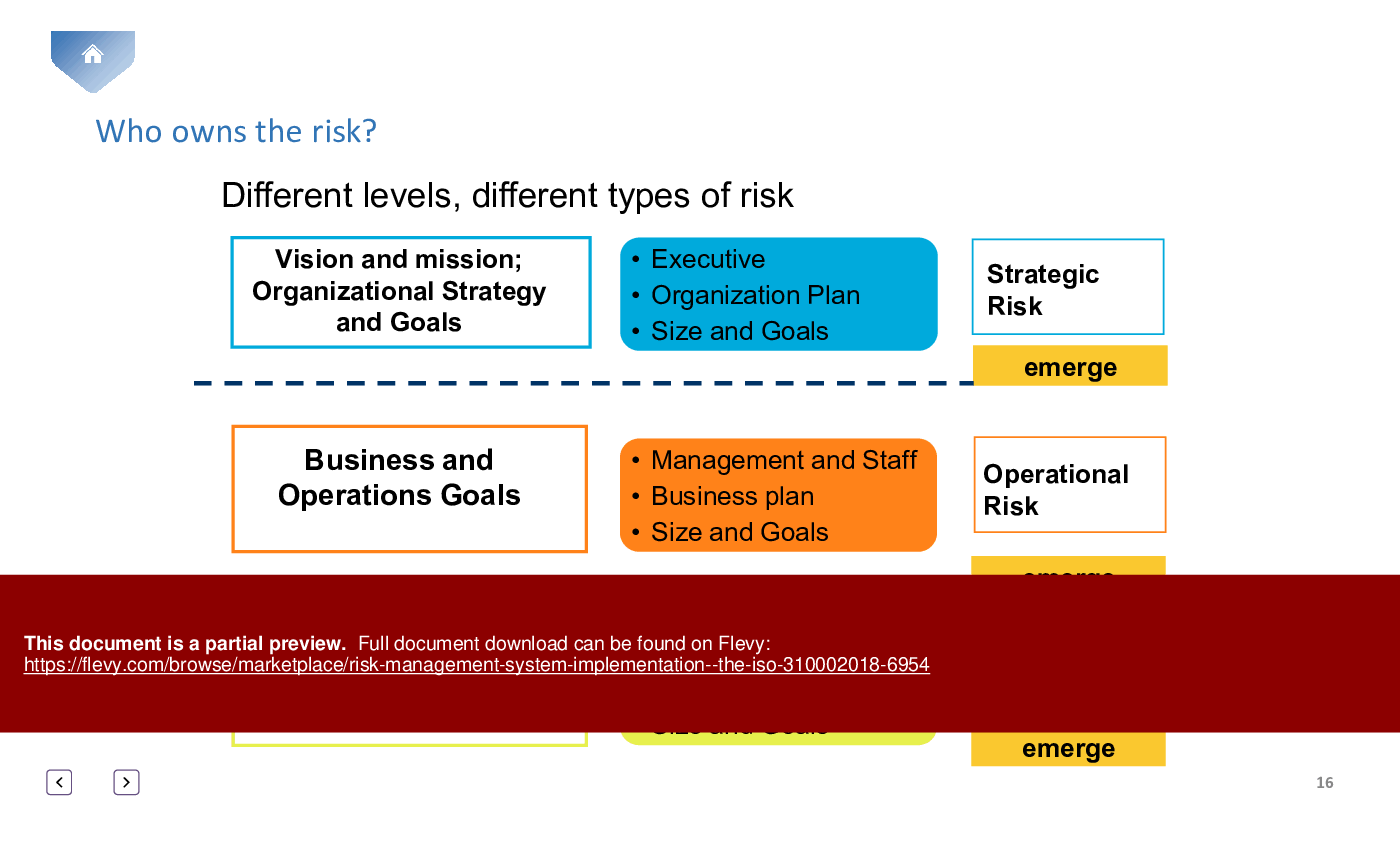
•  Who Owns the Risk? (page 13)
•  Understanding Risk (page 23)
•  ISO 31000 Architecture (page 34)
•  Risk Management Principles (page 43)
•  Risk Management Framework (page 64)
•  Risk Management Process (page 75)

Primary Topics Covered
•  Risk Management Principles - Core principles guiding effective risk management, including integration into organizational processes and continuous improvement.
•  Risk Management Framework - A structured approach to implementing risk management, detailing roles, responsibilities, and resource allocation.
•  Risk Management Process - A systematic process for identifying, analyzing, evaluating, and treating risks, ensuring alignment with organizational objectives.
•  Communication and Consultation - Strategies for engaging stakeholders in the risk management process, enhancing information sharing and collaboration.
•  Monitoring and Review - Techniques for assessing the effectiveness of risk management strategies and adapting to changing circumstances.
•  Risk Identification and Analysis - Methods for recognizing and evaluating potential risks, including retrospective and prospective approaches.

Deliverables, Templates, and Tools
•  Risk management framework template tailored to organizational context
•  Risk assessment and evaluation tools for identifying and prioritizing risks
•  Communication plan template for stakeholder engagement in risk management
•  Monitoring and review checklist for ongoing risk management effectiveness
•  Risk treatment plan template outlining actions to mitigate identified risks
•  Risk register template for tracking identified risks and their management

Slide Highlights
•  Overview of ISO 31000 architecture emphasizing the integration of risk management principles
•  Visual representation of the risk management process, illustrating key stages from identification to treatment
•  Case studies showcasing successful risk management implementations in various industries
•  Graphical tools for risk assessment, including heat maps and risk matrices
•  Best practices for communication and consultation in risk management

Potential Workshop Agenda
Introduction to Risk Management (30 minutes)
•  Overview of ISO 31000 principles and framework
•  Discussion on the importance of risk management in achieving organizational goals

Risk Identification and Analysis (60 minutes)
•  Techniques for identifying risks
•  Group activity: Conducting a risk assessment

Developing a Risk Management Framework (90 minutes)
•  Steps to create a tailored risk management framework
•  Interactive session: Drafting a framework based on case studies

Monitoring and Review Strategies (30 minutes)
•  Methods for evaluating the effectiveness of risk management
•  Q&A session on continuous improvement in risk management

Customization Guidance
•  Tailor the risk management framework to align with specific organizational goals and culture
•  Adjust risk assessment methodologies to fit the unique context of projects or operations
•  Incorporate organizational terminology and metrics into communication and reporting templates

Secondary Topics Covered
•  The relationship between risk management and organizational culture
•  Legal and compliance considerations in risk management
•  The role of leadership in fostering a risk-aware culture
•  Techniques for integrating risk management into strategic planning

Topic FAQ

What are the main components of an ISO 31000-based risk management approach?

ISO 31000 organizes risk management around core principles, a risk management framework, and a risk management process that includes identification, analysis, evaluation, treatment, communication/consultation, and monitoring. The standard emphasizes integration into organizational processes and continuous improvement, illustrated across the deck’s principles, framework, and process sections.

How should I build a practical risk register for my organization?

A practical risk register records each risk, a clear description, the risk owner, likelihood and impact assessments, existing controls, and planned treatments. The product includes a risk register template and guidance to populate these fields, helping track ownership, status, and treatment actions in the register template.

How frequently should a risk management process be reviewed and updated?

Risk management should be monitored continuously with formal reviews at least annually or whenever significant changes occur to strategy, operations, or context. The slide deck explicitly recommends ongoing monitoring and formal annual reviews to ensure the framework and processes remain effective at least once per year.

What analytical tools are commonly used for risk analysis under ISO 31000?

Common analytical tools include qualitative and quantitative analysis techniques, heat maps, risk matrices, and bow-tie analysis to visualize causes and consequences. The presentation highlights graphical tools like heat maps and risk matrices for prioritizing risks and supports both qualitative and quantitative assessment methods.

What should I look for when choosing an ISO 31000 implementation toolkit or slide deck?

Buyers should look for clear coverage of ISO 31000 principles, a ready-to-adapt risk management framework, templates for a risk register, treatment plans and communication, assessment tools (heat maps/matrices), workshop agendas, and customization guidance; the presence of a risk register template and workshop agenda is a practical indicator.

How can a ready-made ISO 31000 PowerPoint help when I have limited time or budget?

A pre-built slide deck supplies structured content, templates, graphical tools, and suggested workshop agendas to accelerate training and implementation without building materials from scratch. For constrained timelines, a 133-slide PowerPoint with templates and case-study examples can reduce preparation time and standardize delivery.

After a merger, how should I align differing risk processes across business units?

Use ISO 31000’s common principles and a unified risk management framework to standardize roles, responsibilities, assessment criteria, and reporting across units. The presentation provides customization guidance, case studies, and a risk management framework template to help harmonize processes and responsibilities using the framework template.

How do I integrate risk management into strategic planning and performance management?

Integrate risk management by aligning risk identification and treatment with organizational objectives, setting SMART targets, embedding risk processes into planning cycles, and using a communication plan and monitoring checklist to report on risk treatment effectiveness; the deck includes a communication plan template and monitoring checklist to support integration.

Document FAQ
These are questions addressed within this presentation.

What is ISO 31000?
ISO 31000 is an international standard that provides guidelines for effective risk management, emphasizing a structured approach to identifying, assessing, and treating risks.

How can this presentation help my organization?
This presentation equips organizations with the necessary tools and frameworks to implement a robust risk management system, enhancing resilience and strategic alignment.

Who should be involved in the risk management process?
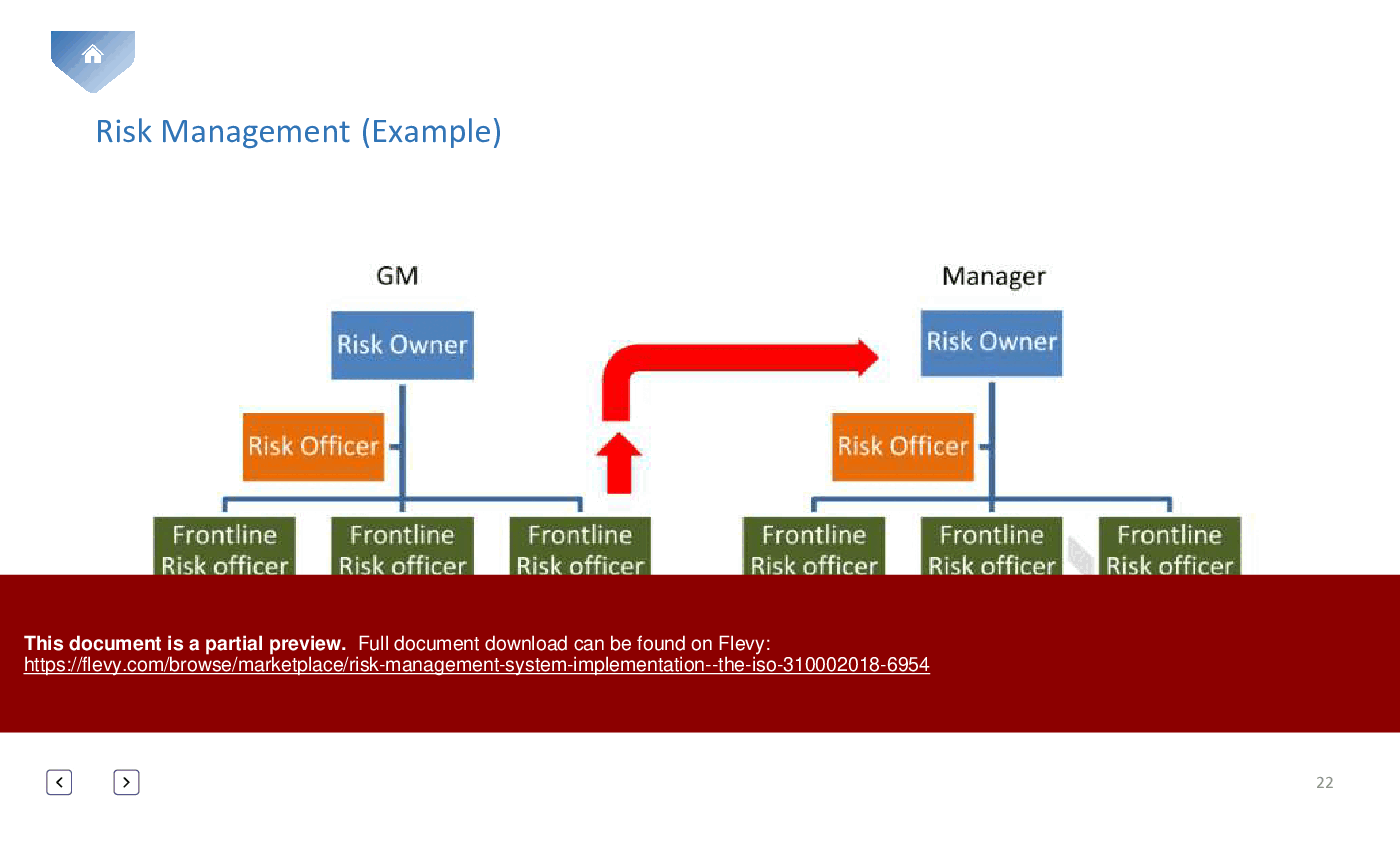
All stakeholders, including executives, project managers, and team members, should be involved to ensure comprehensive risk identification and management.

What are the key components of a risk management framework?
Key components include leadership commitment, integration into organizational processes, clear roles and responsibilities, and effective communication strategies.

How often should the risk management process be reviewed?
The risk management process should be monitored regularly, with formal reviews conducted at least annually or whenever significant changes occur.

What is the difference between risk identification and risk analysis?
Risk identification involves recognizing potential risks, while risk analysis assesses the likelihood and impact of those risks to prioritize them effectively.

How can we ensure effective communication in risk management?
Establish a clear communication plan that outlines stakeholder roles, methods of information sharing, and regular updates on risk management activities.

What tools can assist in risk assessment?
Tools such as risk matrices, heat maps, and risk registers can help visualize and prioritize risks effectively.

Glossary
•  Risk - The effect of uncertainty on objectives.
•  Risk Owner - A person or entity accountable for managing a specific risk.
•  Risk Assessment - The process of identifying and evaluating risks.
•  Risk Treatment - Actions taken to mitigate or eliminate risks.
•  Risk Tolerance - The level of risk an organization is willing to accept.
•  Stakeholders - Individuals or groups with an interest in the organization's risk management process.
•  Communication Plan - A strategy for engaging stakeholders in risk management.
•  Monitoring - The ongoing process of tracking risks and the effectiveness of treatment measures.
•  Continuous Improvement - The ongoing effort to enhance risk management practices based on feedback and evaluation.
•  ISO 31000 - An international standard for risk management guidelines.
•  Heat Map - A visual tool for assessing and prioritizing risks based on their likelihood and impact.
•  Risk Register - A document used to track identified risks and their management strategies.
•  Qualitative Analysis - A method of assessing risks based on subjective judgment rather than numerical data.
•  Quantitative Analysis - A method of assessing risks using numerical data and statistical methods.
•  Bow Tie Analysis - A risk assessment tool that visualizes the relationship between causes and consequences of risks.
•  Control Measures - Actions taken to minimize the impact or likelihood of risks.
•  Risk Appetite - The amount and type of risk an organization is willing to pursue or retain.
•  Event - An occurrence that may affect the achievement of objectives.
•  Consequence - The outcome of an event that affects objectives.
•  Likelihood - The probability of a risk event occurring.

Source: Best Practices in ISO 31000 PowerPoint Slides: Risk Management System Implementation - The ISO 31000:2018 PowerPoint (PPTX) Presentation Slide Deck, RadVector Consulting


$65.00
Developed by a team of experts with global consulting experience at McKinsey, Deloitte, and Capgemini.
Add to Cart
  

ABOUT THE AUTHOR

Additional documents from author: 182

We are a group of aviation experts & specialists (PhDs, Engineers, Pilots, Navigators, ...), leaders in helping organizations to transform their business performance using Methodologies and Principles of Lean, Agile, Six Sigma, and Innovation.

Ask the Author a Question

You must be logged in to contact the author.

Click here to log in Click here register

Did you know?
The average daily rate of a McKinsey consultant is $6,625 (not including expenses). The average price of a Flevy document is $65.


Trusted by over 10,000+ Client Organizations
Since 2012, we have provided business templates to over 10,000 businesses and organizations of all sizes, from startups and small businesses to the Fortune 100, in over 130 countries.
AT&T GE Cisco Intel IBM Coke Dell Toyota HP Nike Samsung Microsoft Astrazeneca JP Morgan KPMG Walgreens Walmart 3M Kaiser Oracle SAP Google E&Y Volvo Bosch Merck Fedex Shell Amgen Eli Lilly Roche AIG Abbott Amazon PwC T-Mobile Broadcom Bayer Pearson Titleist ConEd Pfizer NTT Data Schwab


Read Customer Testimonials

 
"My FlevyPro subscription provides me with the most popular frameworks and decks in demand in today’s market. They not only augment my existing consulting and coaching offerings and delivery, but also keep me abreast of the latest trends, inspire new products and service offerings for my practice, and educate me "

– Bill Branson, Founder at Strategic Business Architects
 
"As a young consulting firm, requests for input from clients vary and it's sometimes impossible to provide expert solutions across a broad spectrum of requirements. That was before I discovered Flevy.com.

Through subscription to this invaluable site of a plethora of topics that are key and crucial to consulting, I "

– Nishi Singh, Strategist and MD at NSP Consultants
 
"I have used FlevyPro for several business applications. It is a great complement to working with expensive consultants. The quality and effectiveness of the tools are of the highest standards."

– Moritz Bernhoerster, Global Sourcing Director at Fortune 500
 
"[Flevy] produces some great work that has been/continues to be of immense help not only to myself, but as I seek to provide professional services to my clients, it gives me a large "tool box" of resources that are critical to provide them with the quality of service and outcomes they are expecting."

– Royston Knowles, Executive with 50+ Years of Board Level Experience
 
"I am extremely grateful for the proactiveness and eagerness to help and I would gladly recommend the Flevy team if you are looking for data and toolkits to help you work through business solutions."

– Trevor Booth, Partner, Fast Forward Consulting
 
"FlevyPro provides business frameworks from many of the global giants in management consulting that allow you to provide best in class solutions for your clients."

– David Harris, Managing Director at Futures Strategy
 
"As a consulting firm, we had been creating subject matter training materials for our people and found the excellent materials on Flevy, which saved us 100's of hours of re-creating what already exists on the Flevy materials we purchased."

– Michael Evans, Managing Director at Newport LLC

 
"I like your product. I'm frequently designing PowerPoint presentations for my company and your product has given me so many great ideas on the use of charts, layouts, tools, and frameworks. I really think the templates are a valuable asset to the job."

– Roberto Fuentes Martinez, Senior Executive Director at Technology Transformation Advisory


Customers Also Bought These Documents


Customers Also Like These Documents

Explore Templates on Related Management Topics


Your Recently Viewed Documents
Receive our FREE presentation on Operational Excellence

This 50-slide presentation provides a high-level introduction to the 4 Building Blocks of Operational Excellence. Achieving OpEx requires the implementation of a Business Execution System that integrates these 4 building blocks.








