
 Click main image to view in full screen. Unlock all 20 preview images:
Private School and University Financial Model – Excel XLSX
Excel (XLSX) + supplemental PDF


BENEFITS OF THIS DOWNLOADABLE EXCEL DOCUMENT
- Provides a complete financial planning framework for integrated private school and university operations across enrollment, tuition, aid, staffing, endowment, auxiliary revenue, CapEx, debt, and financial statements.
- Helps users assess institutional sustainability through 10-year forecasts, 36-month cash flow visibility, dashboards, ratios, scenarios, sensitivity analysis, and automated audit checks.
- Supports strategic education decision-making through program profitability, breakeven enrollment, tuition discount analysis, capital planning, endowment modeling, and debt covenant review.
EDUCATION EXCEL DESCRIPTION
🎓 Private School & University Financial Model
The Private School & University Financial Model is a premium Excel-based financial model built for integrated education institutions, including private K-12 schools, academies, colleges, universities, boarding schools, online education divisions, and multi-campus education groups.
This model is designed to help users evaluate the financial feasibility, operating performance, enrollment growth, tuition revenue, financial aid burden, staffing requirements, grants, endowment activity, auxiliary revenue, CapEx planning, debt capacity, cash flow, institutional ratios, scenarios, sensitivities, program profitability, and long-term financial sustainability of an education institution.
Unlike a simple school budget spreadsheet, this model connects academic operations with institutional finance. It includes a 10-year annual projection period and a 36-month academic-calendar monthly view, allowing users to evaluate both long-term strategic planning and near-term seasonal cash flow patterns.
⚡ What This Model Is Used For
This model can be used for:
✅ Private school financial planning
✅ University financial forecasting
✅ K-12 and higher education feasibility analysis
✅ Tuition and fee revenue planning
✅ Enrollment growth and attrition modeling
✅ Student-to-faculty ratio planning
✅ Financial aid and tuition discount analysis
✅ Endowment and grants modeling
✅ Auxiliary revenue forecasting
✅ OPEX and staffing cost planning
✅ CapEx and campus capital planning
✅ Debt schedule and covenant analysis
✅ 3-statement financial forecasting
✅ Program profitability analysis
✅ Scenario and sensitivity analysis
✅ Executive dashboard reporting
The model is suitable for decision-making by owners, investors, founders, CFO teams, school administrators, university finance teams, consultants, education operators, and financial analysts.
🔥 Core Model Features
1. Integrated K-12 and University Structure
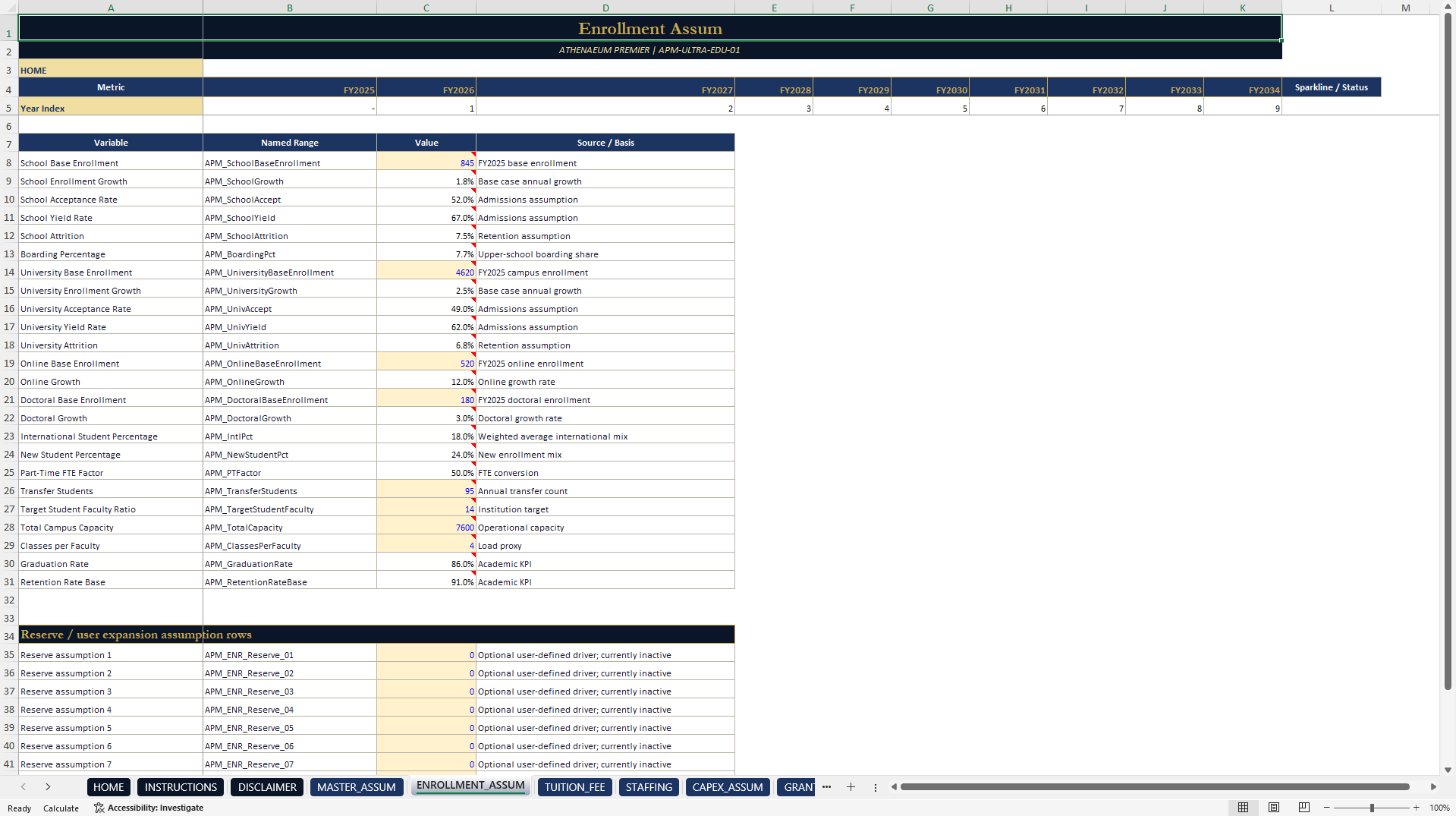
The workbook is built for an integrated education institution covering both school and university operations. The model includes separate assumptions for school enrollment, university enrollment, online programs, doctoral programs, boarding, international students, acceptance rates, yield rates, attrition, transfer students, and student-to-faculty ratios.
The enrollment engine supports school divisions such as PreK, Lower School, Middle School, Upper School, and Boarding, as well as university divisions such as Business, Engineering, Arts & Sciences, Law, Education, Online, and Doctoral programs.
2. Enrollment Forecasting Engine
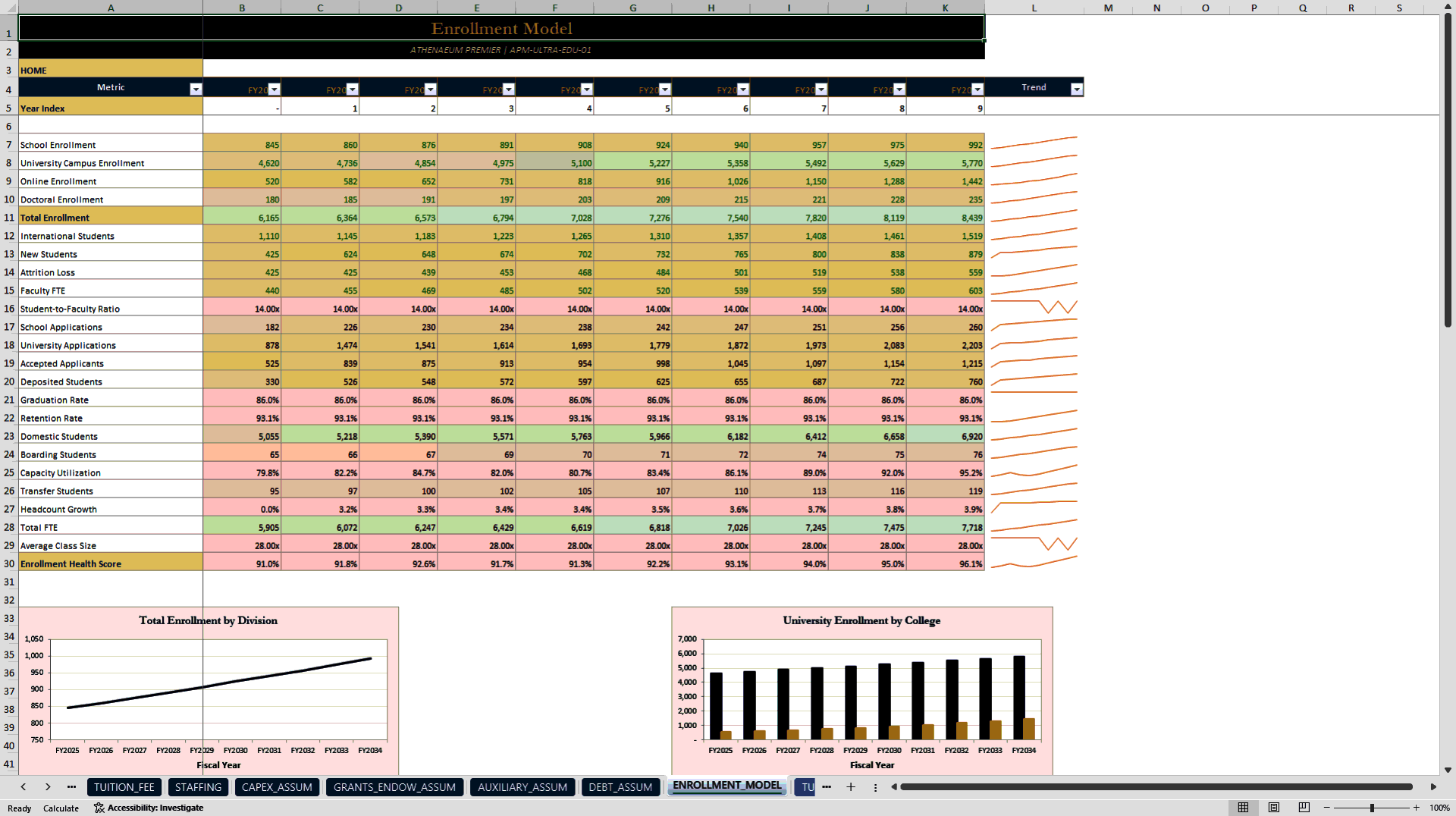
The model includes a detailed enrollment forecast that calculates returning students, new students, transfer students, attrition, total enrollment, full-time equivalent students, student-to-faculty ratio, and division-level enrollment mix.
This is important because education business performance is highly dependent on enrollment volume, retention, yield, attrition, and program mix.
The enrollment module includes multiple charts such as total enrollment by division, university enrollment by college, new enrollment vs. attrition, student-to-faculty ratio, enrollment bridge, admissions funnel, and domestic vs. international mix.
3. Tuition and Fee Revenue Model
The tuition model calculates gross tuition, student fees, international premium, financial aid deductions, net tuition revenue, tuition discount rate, and program-level revenue.
It supports separate tuition assumptions for school grades, boarding, university undergraduate programs, graduate programs, online programs, doctoral programs, and professional education.
The model also includes financial aid logic covering merit aid, need-based aid, external scholarships, school aid, university aid, athletic aid, and total discount rates.
4. Staffing and Operating Expense Model
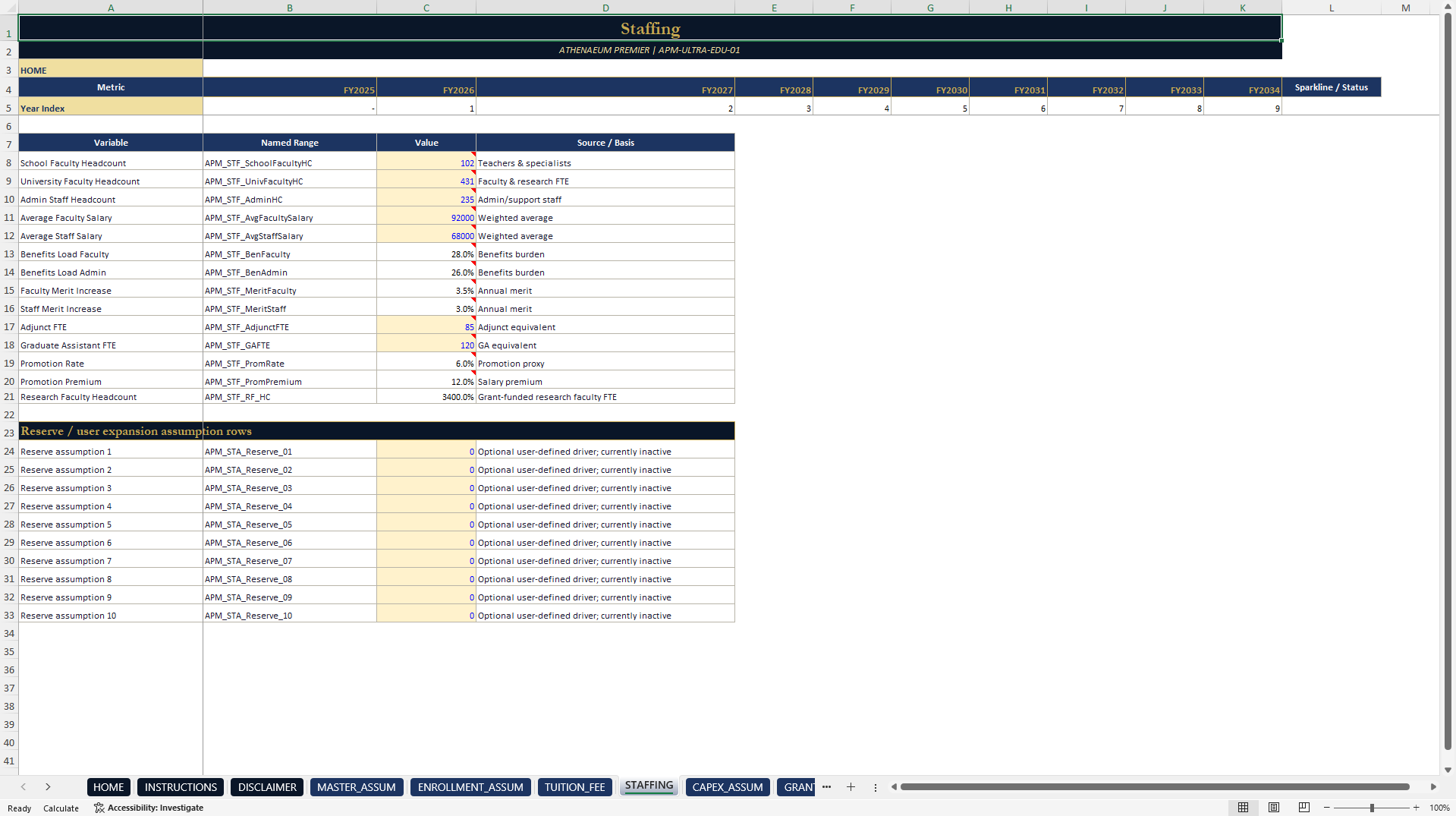
Education institutions are staffing-intensive. This model includes staffing assumptions for school faculty, university faculty, administration, student services, facilities, IT, finance, development, athletics, research staff, adjunct faculty, graduate assistants, and support teams.
The OPEX module calculates payroll, benefits, payroll tax, merit increases, academic expenses, student services, administration, operations and maintenance, research expenses, auxiliary expenses, financial aid expense recognition, depreciation, and total operating costs.
This helps users understand the relationship between enrollment growth, faculty requirements, cost per student, operating leverage, and institutional margin.
5. Grants, Endowment, and Philanthropy
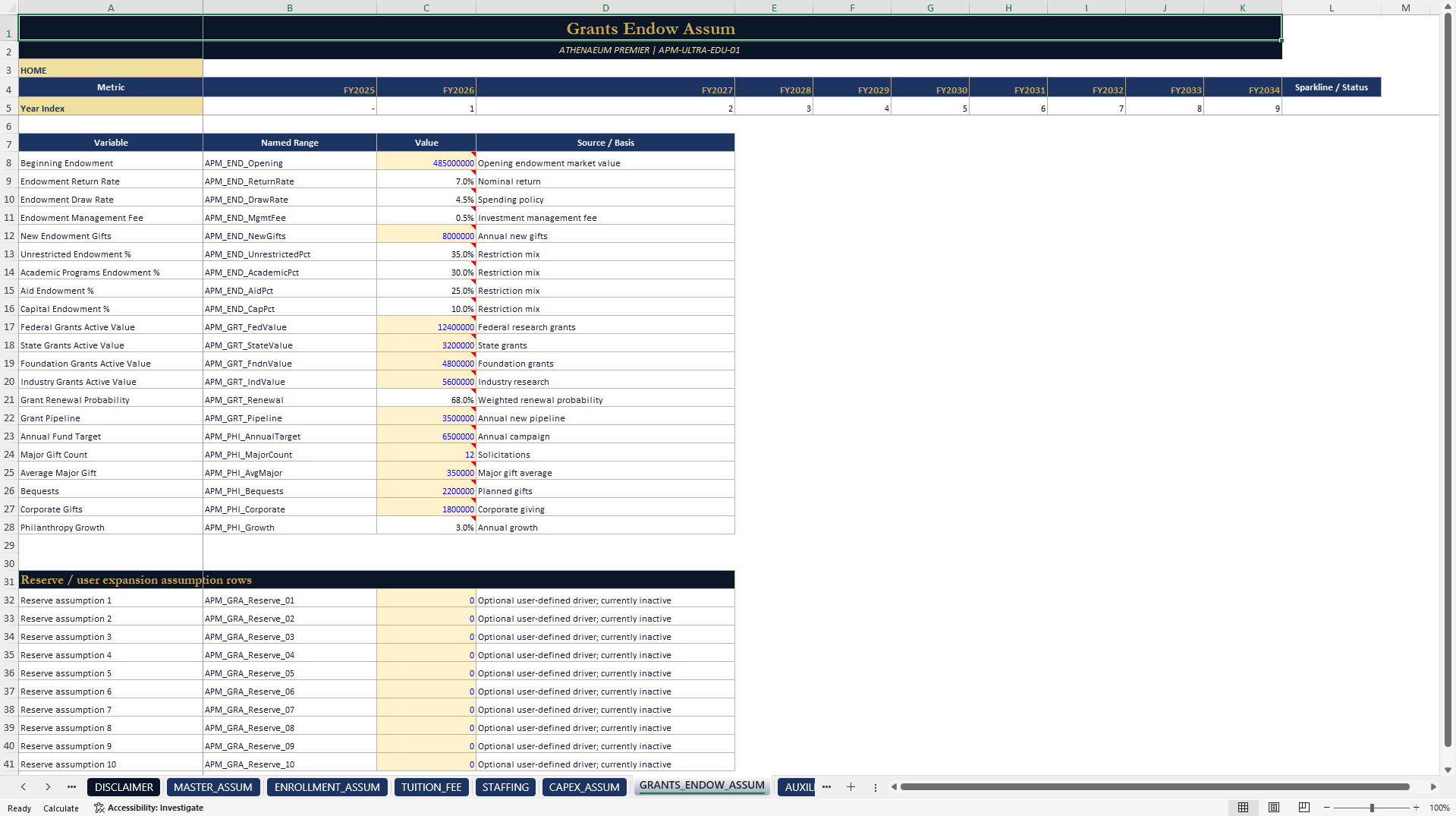
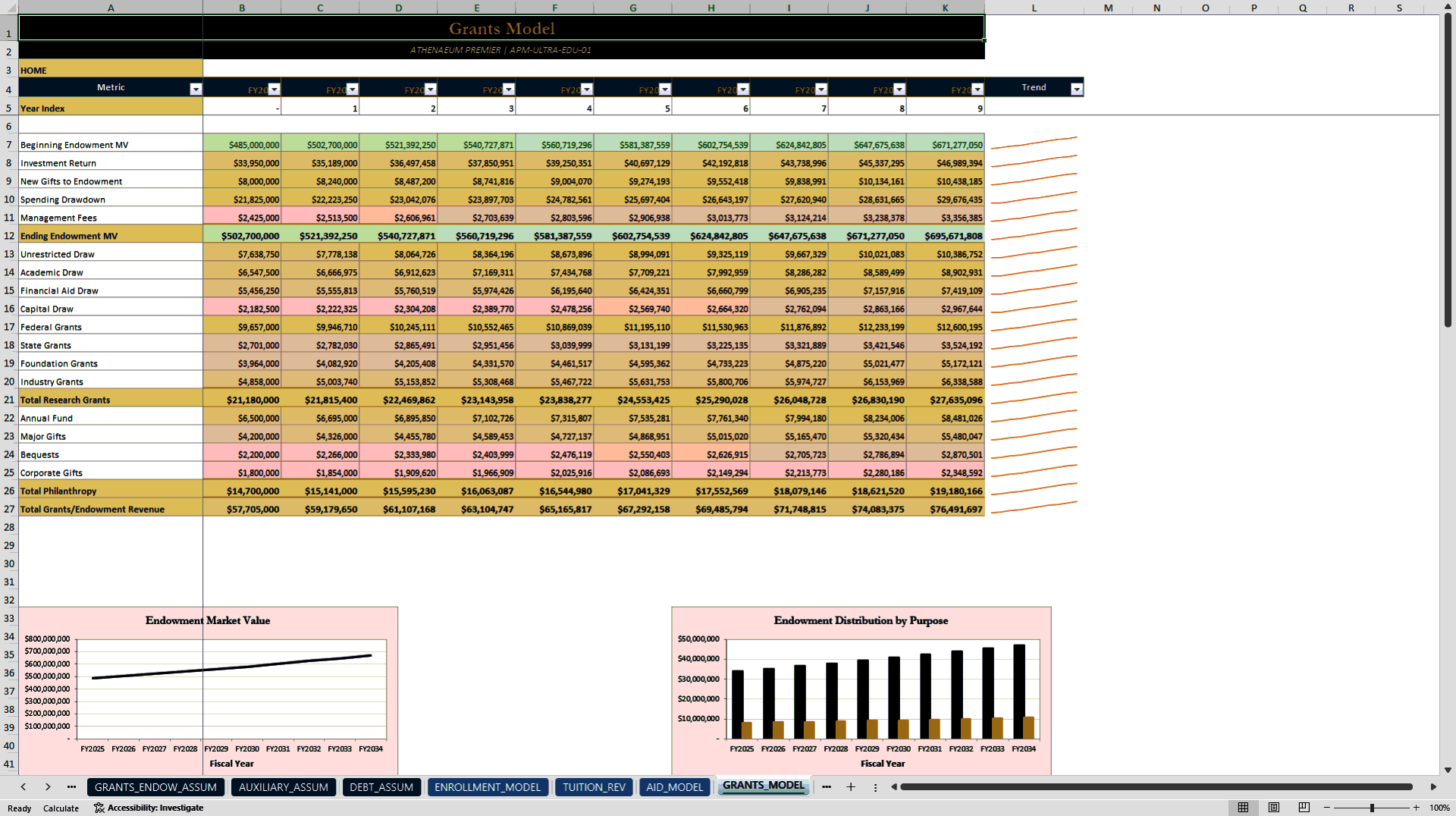
The model includes endowment, grants, and philanthropic giving assumptions. It covers beginning endowment value, return rate, endowment drawdown, investment management fees, new gifts, restricted and unrestricted endowment allocation, research grants, grant renewal probability, indirect cost recovery, annual fund campaigns, alumni giving, major gifts, planned gifts, and corporate donations.
This makes the model especially useful for universities, private schools, nonprofit education groups, foundations, and institutions with endowment-supported operations.
6. Auxiliary Revenue Forecast
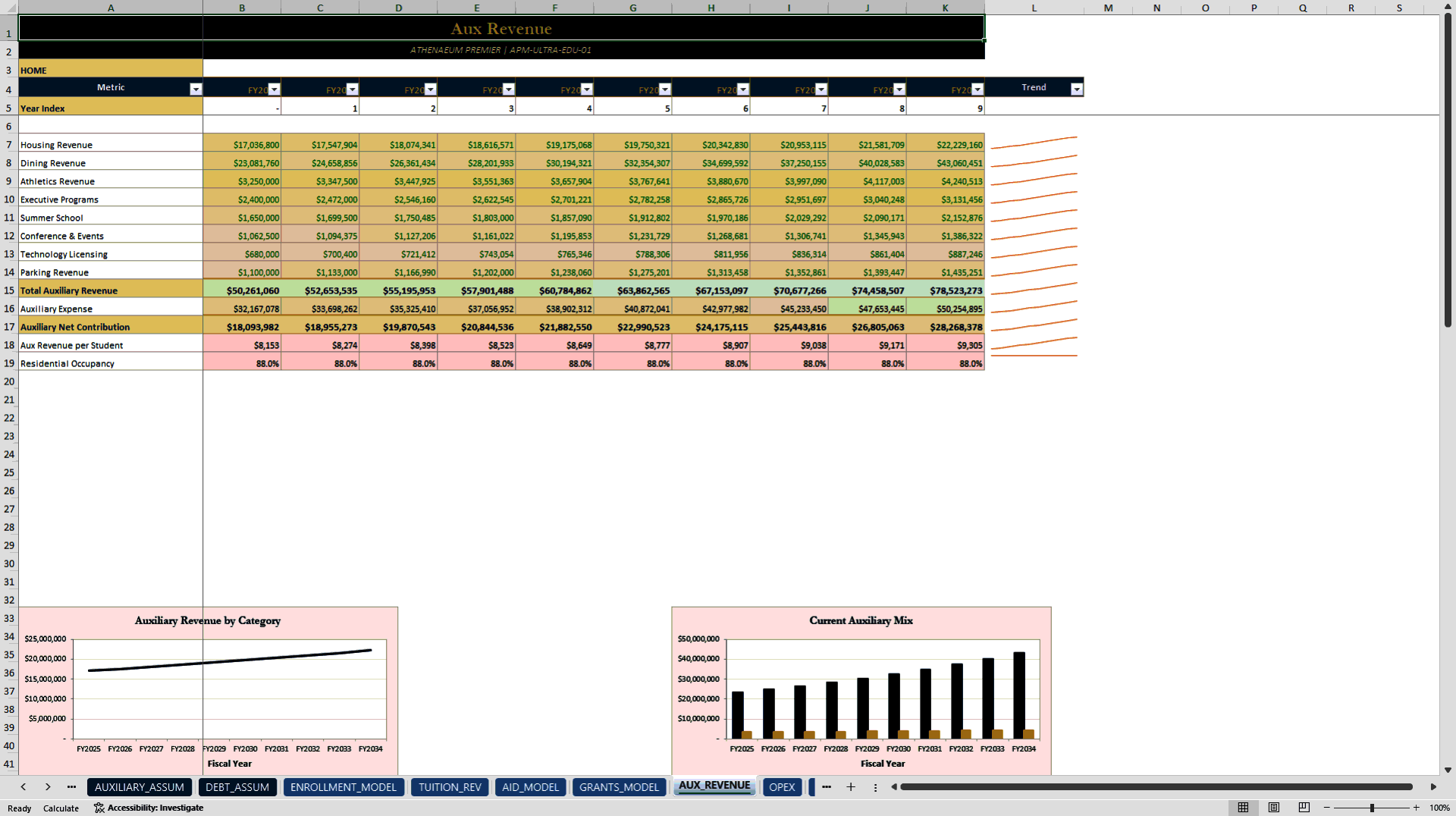
The workbook includes auxiliary revenue modeling for housing, dining, athletics, continuing education, summer school, executive education, conferences, parking, technology licensing, and other non-tuition revenue streams.
This is important because private schools and universities often depend on diversified revenue sources beyond tuition.
7. CapEx, Capital Plan, and Debt Schedule
The model includes capital expenditure assumptions, PP&E roll-forward, depreciation, planned projects, funding sources, debt schedules, loan tranches, construction loans, revolving credit lines, debt service, DSCR, debt-to-assets, and covenant thresholds.
The capital plan includes project prioritization, funding waterfall, construction-phase spending, deferred maintenance, space utilization, lease vs. buy analysis, and debt capacity comparison.
8. Integrated 3-Statement Forecast
The model includes a full financial statement structure:
📌 Income Statement
📌 Balance Sheet
📌 Cash Flow Statement
📌 Financial Ratios
The income statement includes tuition, endowment drawdown, grants, auxiliary revenue, philanthropy, other revenue, operating expenses, EBITDA, interest expense, and net operating surplus or deficit.
The balance sheet includes cash, short-term investments, receivables, pledges, long-term investments, endowment assets, PP&E, debt, liabilities, and net assets.
The cash flow statement includes operating cash flow, investing cash flow, financing cash flow, CapEx, endowment flows, debt proceeds, repayments, and cash reconciliation.
9. Scenarios, Sensitivity, and Breakeven
The model includes Base, Optimistic, Conservative, and Stress scenarios. Users can evaluate the impact of enrollment growth, tuition escalation, cost inflation, endowment return, financial aid rate, grant renewal rate, and auxiliary growth.
The sensitivity section includes eight two-variable heat map panels covering net surplus, EBITDA margin, DSCR, days cash on hand, endowment balance, net tuition revenue, operating surplus, and program profitability.
The breakeven sheet analyzes fixed versus variable cost structure, contribution margin per student, breakeven enrollment, breakeven tuition, operating leverage, and margin of safety.
10. Program Profitability and Academic Dashboards
The program profitability module evaluates revenue, direct cost, overhead allocation, and net contribution by program. It covers PreK, Lower School, Middle School, Upper School, Boarding, Business, Engineering, Arts & Sciences, Law, Education, Online, Doctoral, and Continuing Education.
The model also includes dashboards for executive review, enrollment review, financial performance, and academic performance.
These dashboards help users quickly review enrollment, revenue, net surplus, EBITDA margin, cash, days cash, tuition discount rate, endowment value, DSCR, net assets, student-to-faculty ratio, cost per student, research grant intensity, and financial aid percentage.
11. Automated Audit Checks
The workbook includes an audit sheet with automated quality assurance checks. It validates balance sheet balancing, cash flow tie-out, revenue links, OPEX links, depreciation links, interest expense links, and model integrity.
This is valuable for buyers because education financial models can easily become unreliable if revenue, aid, staffing, debt, and cash flow links are not properly controlled.
🧭 How to Use This Model
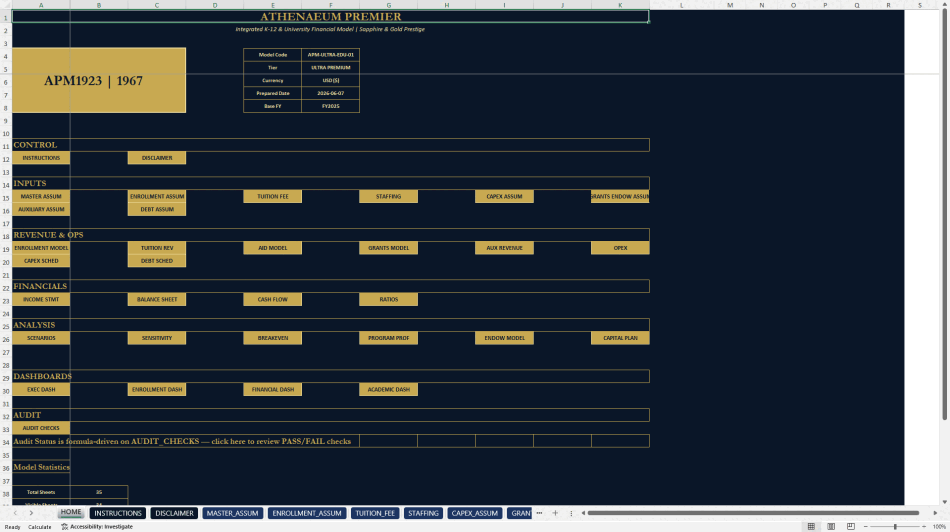
Start with the HOME sheet to navigate the model.
Then update the key input sheets:
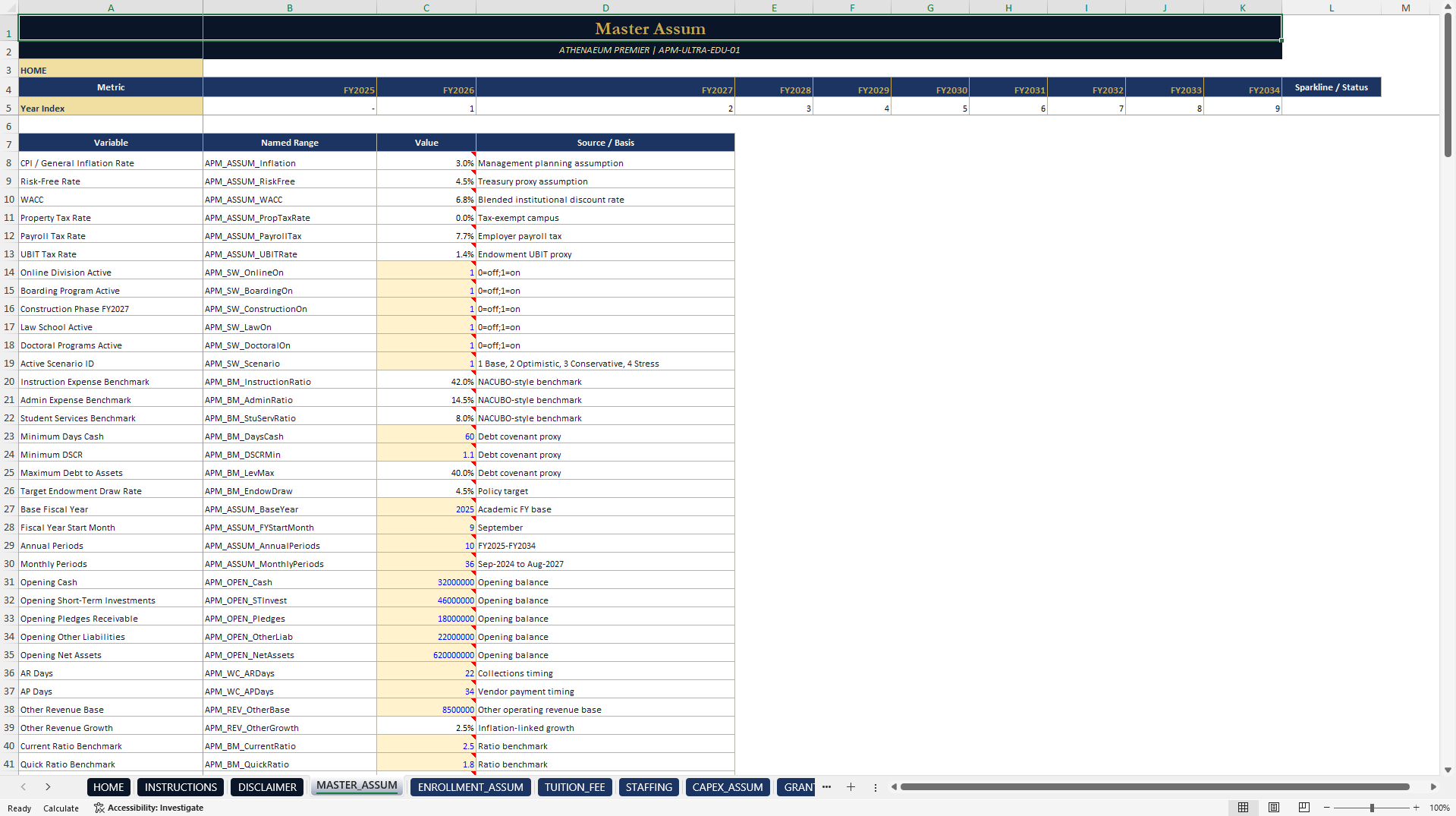
🔹 MASTER_ASSUM
🔹 ENROLLMENT_ASSUM
🔹 TUITION_FEE
🔹 STAFFING
🔹 CAPEX_ASSUM
🔹 GRANTS_ENDOW_ASSUM
🔹 AUXILIARY_ASSUM
🔹 DEBT_ASSUM
After updating assumptions, review the operating model sheets:
🔹 ENROLLMENT_MODEL
🔹 TUITION_REV
🔹 AID_MODEL
🔹 GRANTS_MODEL
🔹 AUX_REVENUE
🔹 OPEX
🔹 CAPEX_SCHED
🔹 DEBT_SCHED
Then review the financial outputs:
🔹 INCOME_STMT
🔹 BALANCE_SHEET
🔹 CASH_FLOW
🔹 RATIOS
Finally, analyze decision-making outputs:
🔹 SCENARIOS
🔹 SENSITIVITY
🔹 BREAKEVEN
🔹 PROGRAM_PROF
🔹 ENDOW_MODEL
🔹 CAPITAL_PLAN
🔹 EXEC_DASH
🔹 ENROLLMENT_DASH
🔹 FINANCIAL_DASH
🔹 ACADEMIC_DASH
🔹 AUDIT_CHECKS
🎯 Who Should Buy This Model?
This model is suitable for:
✅ Private school owners and operators
✅ University finance departments
✅ K-12 academy founders
✅ Education investors
✅ School CFOs and finance teams
✅ College and university administrators
✅ Education consultants
✅ Charter and private education groups
✅ Boarding school operators
✅ Online education divisions
✅ Nonprofit education institutions
✅ Institutional planning teams
✅ Financial analysts and business planners
💡 Why You Need This Model
Education institutions have unique financial drivers. Tuition revenue depends on enrollment, aid, retention, yield, program mix, tuition escalation, and capacity. Costs depend on faculty requirements, staffing ratios, compensation, facilities, student services, technology, and campus operations. Long-term sustainability depends on endowment, grants, auxiliary income, debt capacity, CapEx discipline, cash flow, and program profitability.
A generic business model cannot properly capture these relationships.
This model provides a structured financial planning tool built specifically for private schools and universities.
It helps users understand whether an education institution is financially sustainable, how much funding is required, which programs are profitable, what tuition levels are needed, how much aid can be supported, whether debt covenants are safe, and how the institution performs under base, optimistic, conservative, and stress cases.
Got a question about the product? Email us at support@flevy.com or ask the author directly by using the "Ask the Author a Question" form. If you cannot view the preview above this document description, go here to view the large preview instead.
Source: Best Practices in Education, Integrated Financial Model Excel: Private School and University Financial Model Excel (XLSX) Spreadsheet, PDMM Financial Models
ABOUT THE AUTHOR

PDMM Financial Models develops professional, decision-ready Excel models for business owners, entrepreneurs, investors, consultants, analysts, and finance teams. Our objective is to transform complex business assumptions into clear, structured analysis that supports better planning and investment decisions.
Our models cover business planning, forecasting, budgeting, feasibility analysis,
... [read more]
Ask the Author a Question
You must be logged in to contact the author.




























