 Click main image to view in full screen.
Power Delivery Constraint: Physical Capacity Risk – PDF
PDF document 12 Pages


BENEFITS OF THIS DOWNLOADABLE PDF DOCUMENT
- Provides a structured framework for identifying where generation, transmission, equipment, interconnection, and grid-capacity constraints can limit physical industrial capacity.
- Helps decision-makers assess project power readiness and translate physical constraints into actionable infrastructure, procurement, location, and project-sequencing decisions.
- Provides reusable analytical tools--including the Power Constraint Stack™, Power Delivery Readiness™ diagnostic, Executive Power Decision Tree, constraint scenarios, and action radar--for strategic risk assessment.
ENERGY INDUSTRY PDF DESCRIPTION
The Power Delivery Constraint: Physical Capacity Risk is an Executive Intelligence Playbook examining how electricity demand, grid infrastructure, electrical equipment, interconnection capacity, and project execution timelines can combine to constrain the physical expansion of electricity-intensive industrial and AI infrastructure.
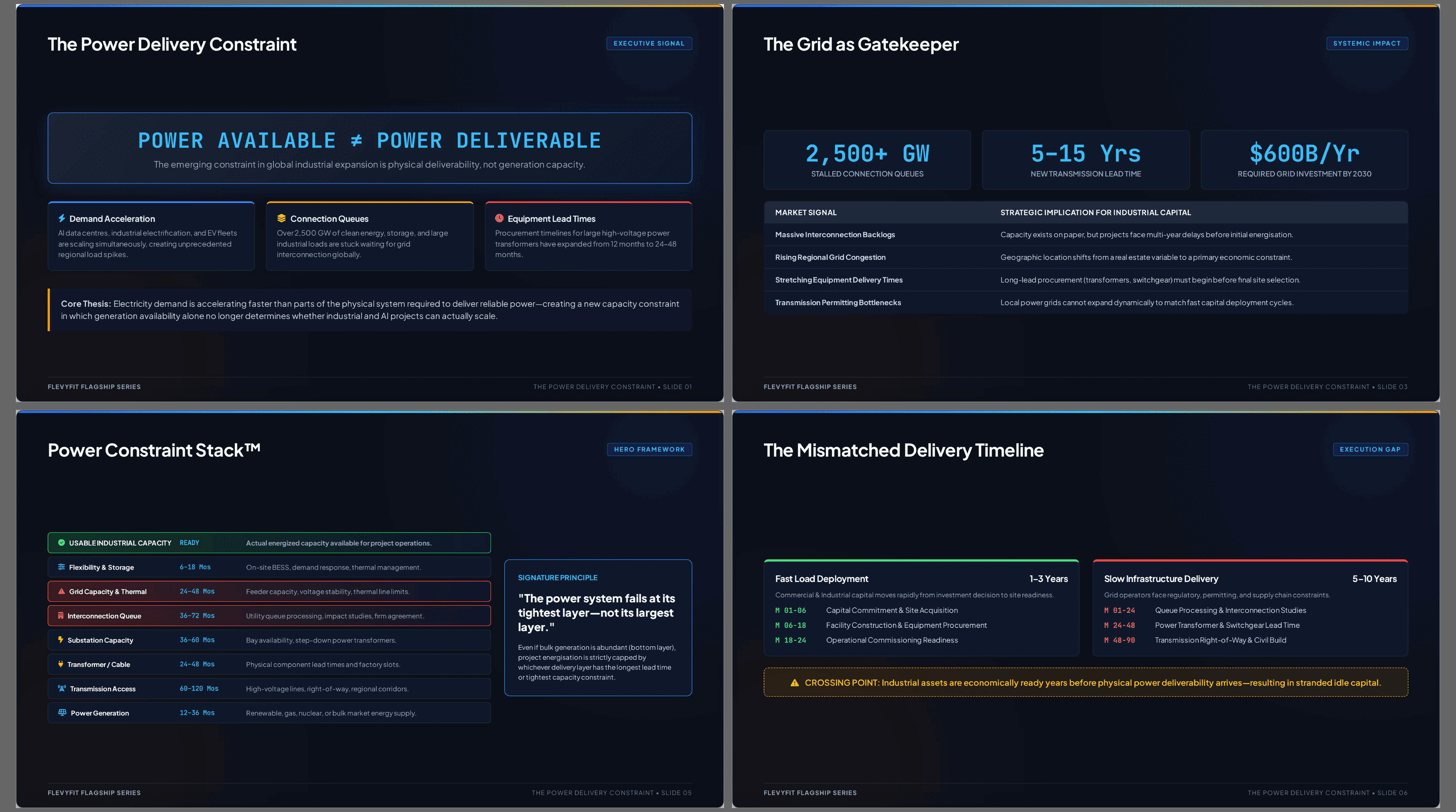
The central thesis is simple: POWER AVAILABLE ≠ POWER DELIVERABLE.
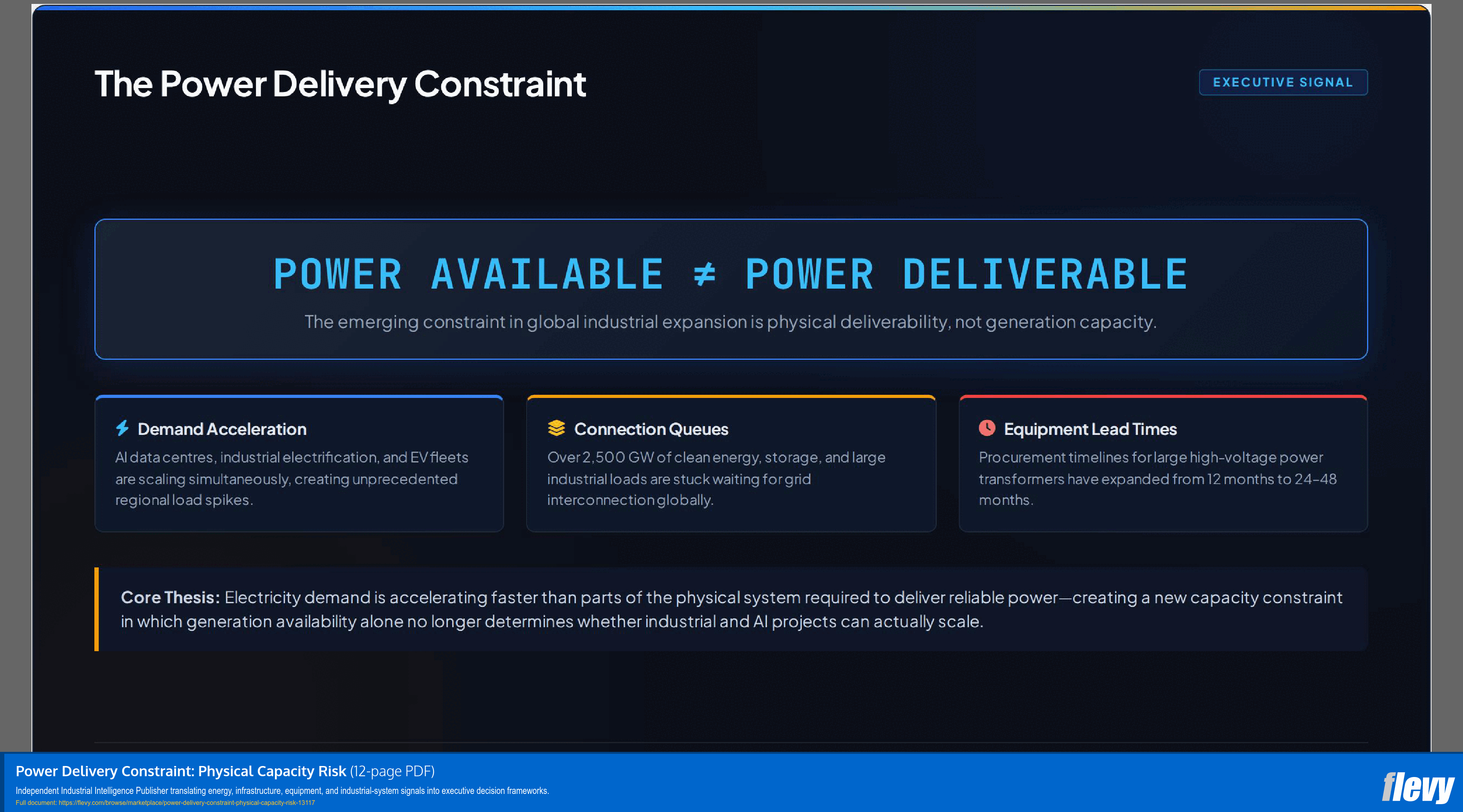
Electricity demand is accelerating across multiple sectors, including AI and hyperscale data centres, industrial process electrification, EV and fleet transport hubs, industrial cooling, and renewable hydrogen and e-fuels. At the same time, transmission development, interconnection, transformer procurement, high-voltage cable availability, substations, and grid hosting capacity can require significantly longer timelines than the projects they are intended to support.
Rather than presenting a conventional electricity-market outlook, this playbook examines the physical delivery system between generation and productive industrial capacity.
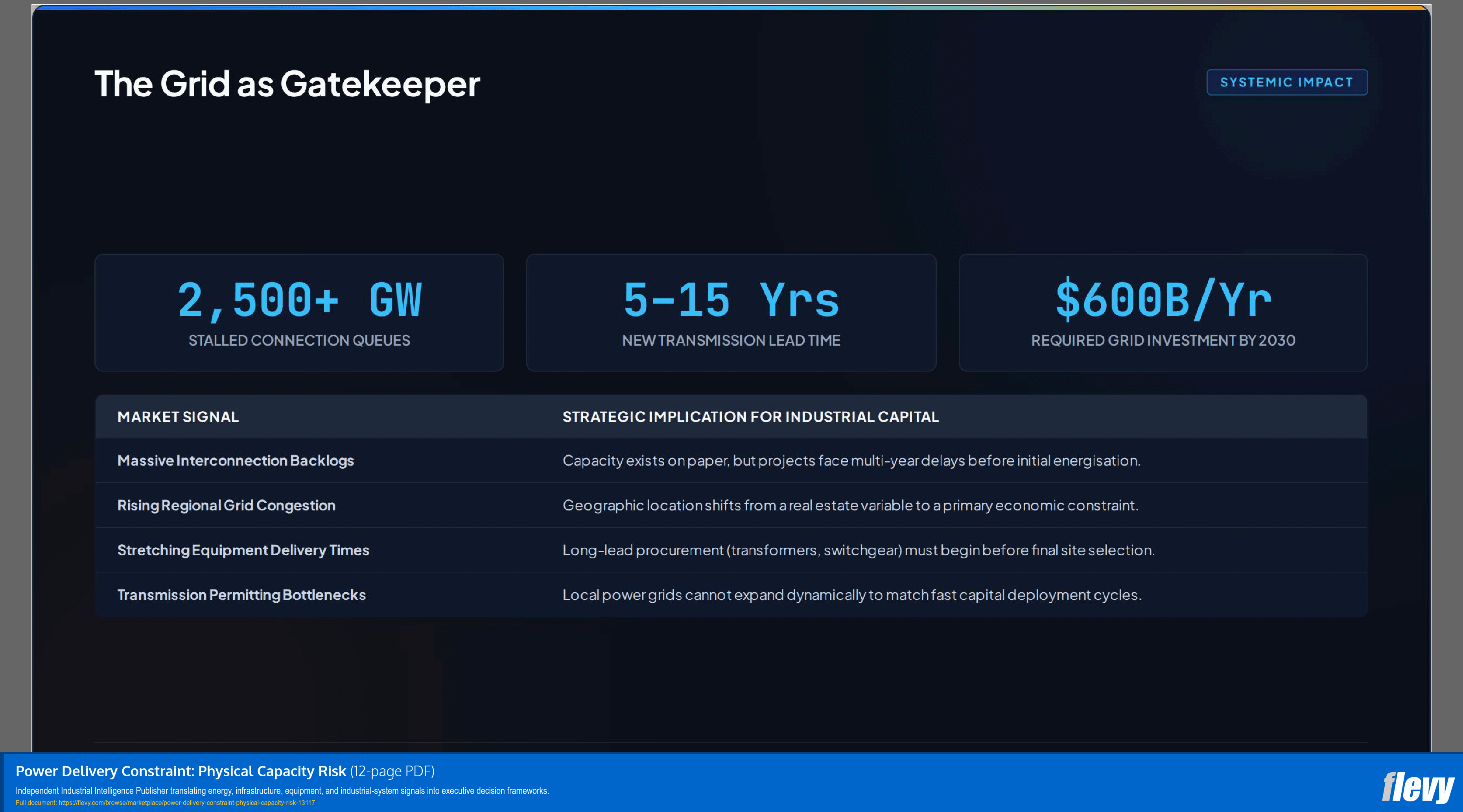
Its central analytical framework, the Power Constraint Stack™, maps the sequence from power generation through transmission access, transformer and cable availability, substation capacity, interconnection queues, grid capacity and thermal constraints, flexibility and storage, and ultimately usable industrial capacity. The framework is designed to identify where the system is most likely to encounter a binding physical constraint.
The playbook also introduces the Power Delivery Readiness™ (PDR) diagnostic, an analyst-developed framework assessing seven dimensions: generation availability, transmission access, equipment availability, interconnection status, grid hosting capacity, on-site flexibility, and execution alignment. The resulting score classifies projects into four conditions: Power Ready, Connection Risk, Structural Constraint, and Capacity Unready.
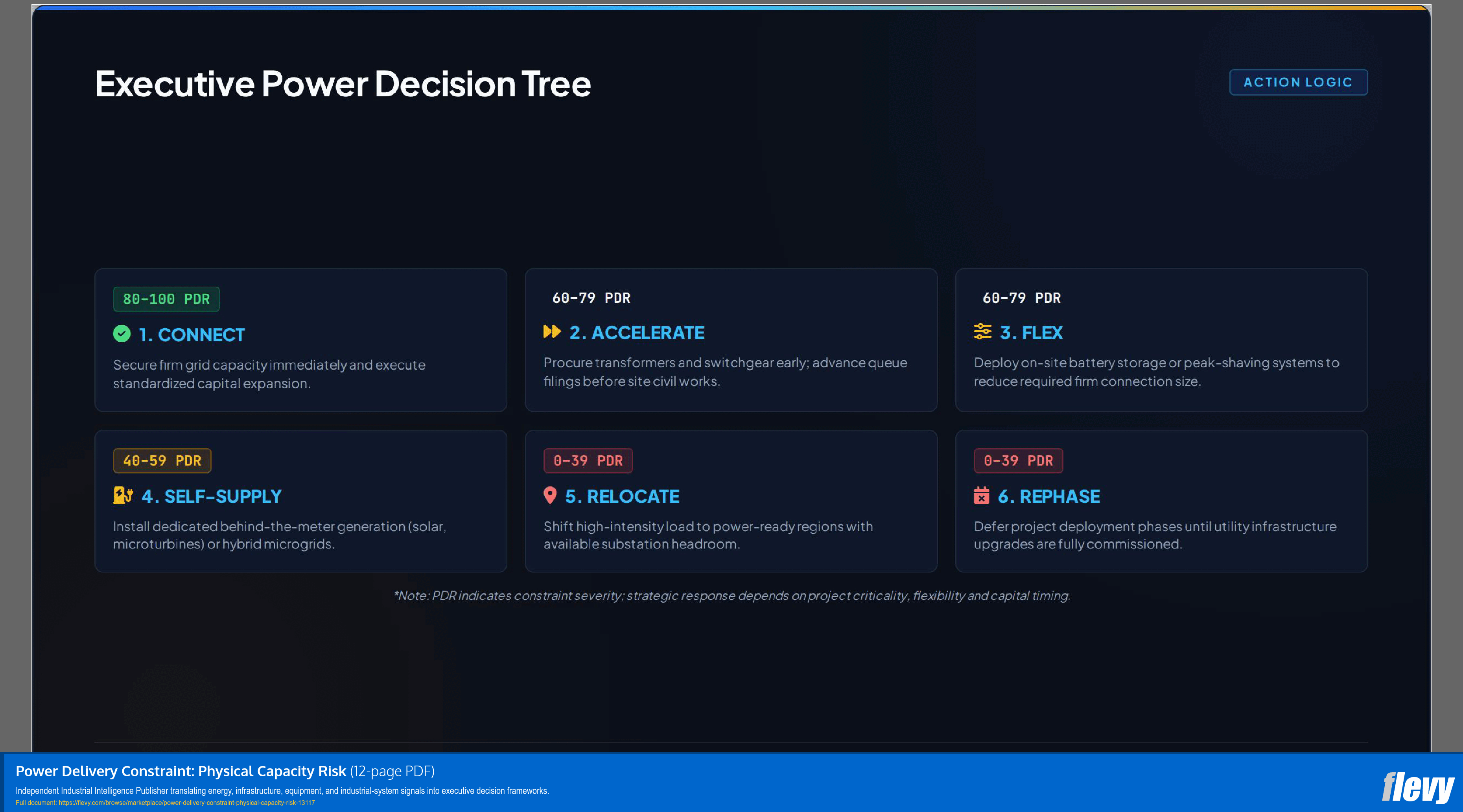
The analysis then translates the diagnosis into an Executive Power Decision Tree, linking constraint severity with strategic responses including CONNECT, ACCELERATE, FLEX, SELF-SUPPLY, RELOCATE, and REPHASE. This helps decision-makers evaluate whether a power-intensive project should secure capacity, accelerate equipment procurement, reshape demand, add on-site generation or storage, reconsider location, or adjust project sequencing.
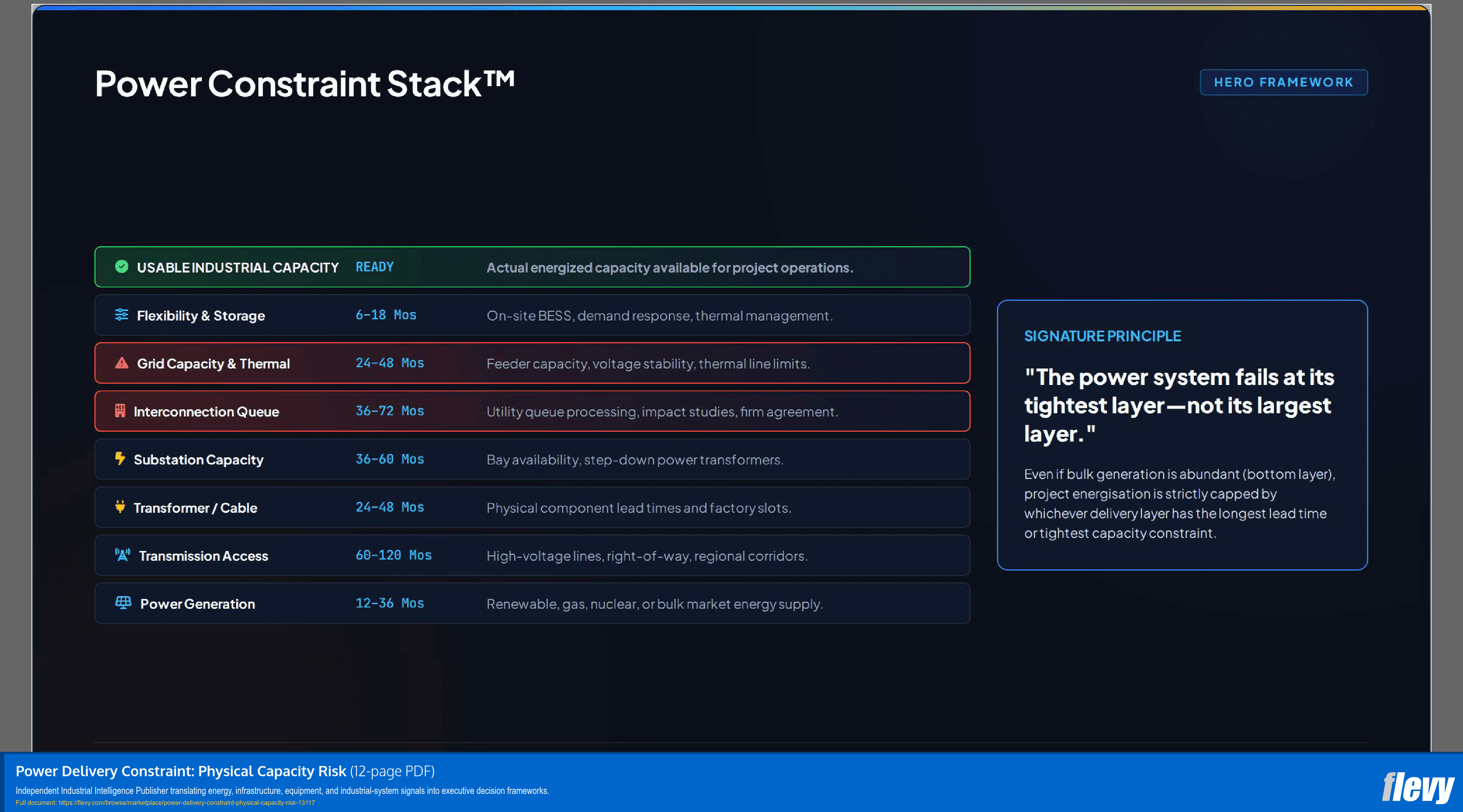
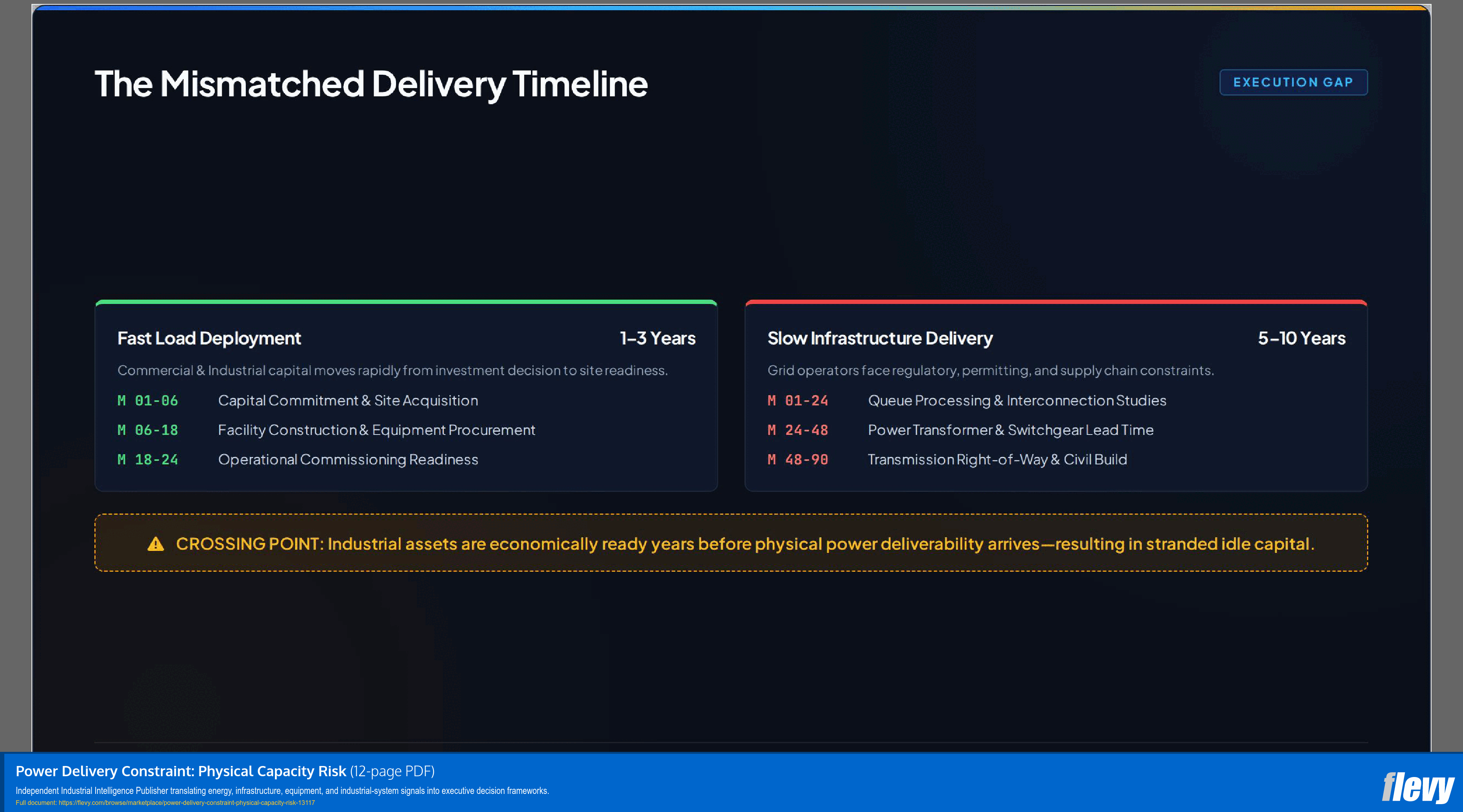
The playbook further examines the Mismatched Delivery Timeline, where industrial assets can become economically ready before the infrastructure required to deliver physical power is available. This creates a strategic risk extending beyond energy procurement into project timing, capital deployment, location strategy, infrastructure planning, and industrial expansion.
Three analytical constraint states—Managed Delivery, Structural Delivery Gap, and Systemic Power Constraint—provide a forward-looking monitoring structure without presenting the scenarios as forecasts.
Designed for executives and strategists involved in infrastructure, operations, procurement, industrial development, energy-intensive projects, utilities, EPC, data centres, manufacturing, mining and processing, the playbook provides a compact decision-oriented framework for evaluating physical power deliverability before major capital commitments are made.
Core proposition: the emerging constraint may not be whether electricity can be generated, but whether the physical system can deliver reliable power where and when new industrial capacity requires it.
Got a question about the product? Email us at support@flevy.com or ask the author directly by using the "Ask the Author a Question" form. If you cannot view the preview above this document description, go here to view the large preview instead.
Source: Best Practices in Energy Industry PDF: Power Delivery Constraint: Physical Capacity Risk PDF (PDF) Document, Wisnu Pandega Wardana
ABOUT THE AUTHOR

I am an independent Industrial Intelligence and Strategic Innovation Publisher focused on developing structured business intelligence, innovation frameworks, and opportunity-oriented research for decision-makers.
My work focuses on translating emerging technologies, industrial transformation, sustainability, resource efficiency, and market shifts into structured intelligence assets that
... [read more]
Ask the Author a Question
You must be logged in to contact the author.




























