
 Click main image to view in full screen. Unlock all 11 preview images:
Online Coaching Marketplace - Business Plan Financial Model – Excel XLSB
Excel (XLSB)


BENEFITS OF THIS DOWNLOADABLE EXCEL DOCUMENT
- Model is built on monthly timeline which provides more detailed data for Analysis
- All revenue and cost assumptions can be input into 3 scenarios. This helps user to assess the impact of multiple business scenarios in one model. This can be operated simply on a click of a button.
- The debt repayment has been profiled with 2 scenarios i.e. Annuity payment and Even Principal Payment repayment. You can change the scenario on a click of a button and assess the impact on IRR.
COACHING EXCEL DESCRIPTION
Online Coaching Marketplace
This Online Coaching Marketplace Business Plan Model is a perfect tool for financial feasibility study on launching a online coaching platform. The model can be used by start-up to create 5 years projections along with the development phase.
The Model can be used by a platform with focus on any of the following revenue streams:
1. Premium Subscription
2. Offline Counseling
3. Offline Coaching
4. Product Sale
5. Advertisements
User can forecast revenue from any combination from the above options.
Also, you can incorporate 3 scenarios into the model which can be updated on a click of a button to understand the impact of ever evolving business environment on business returns.
The Model includes assumptions related to:
1. Platform Development cost
2. Revenue source includes Premium Subscription, Offline Counseling, Offline Coaching, Product Sale, and Ad revenue. You can keep revenue assumptions from all the mentioned sources or can pick and choose the option which is a best Fit for the business.
3. Operating costs can be assumed separately for all the 5 business divisions as a % of revenue and you can forecast Other Fixed Annual Costs (Up to 11 different cost heads)
4. Flexible Funding Profile – Cash equity, Bank Debt and Bank overdraft
5. Working Capital Assumptions related to accounts receivables and payables
6. Straight Line Depreciation with option to renew asset at the end of it's useful economic life.
7. Annuity and Even Principal Repayment options
8. Inflation and Indexation
9. VAT during construction and operations phase
10. Tax Assumptions including Tax holiday period
Model Output includes:
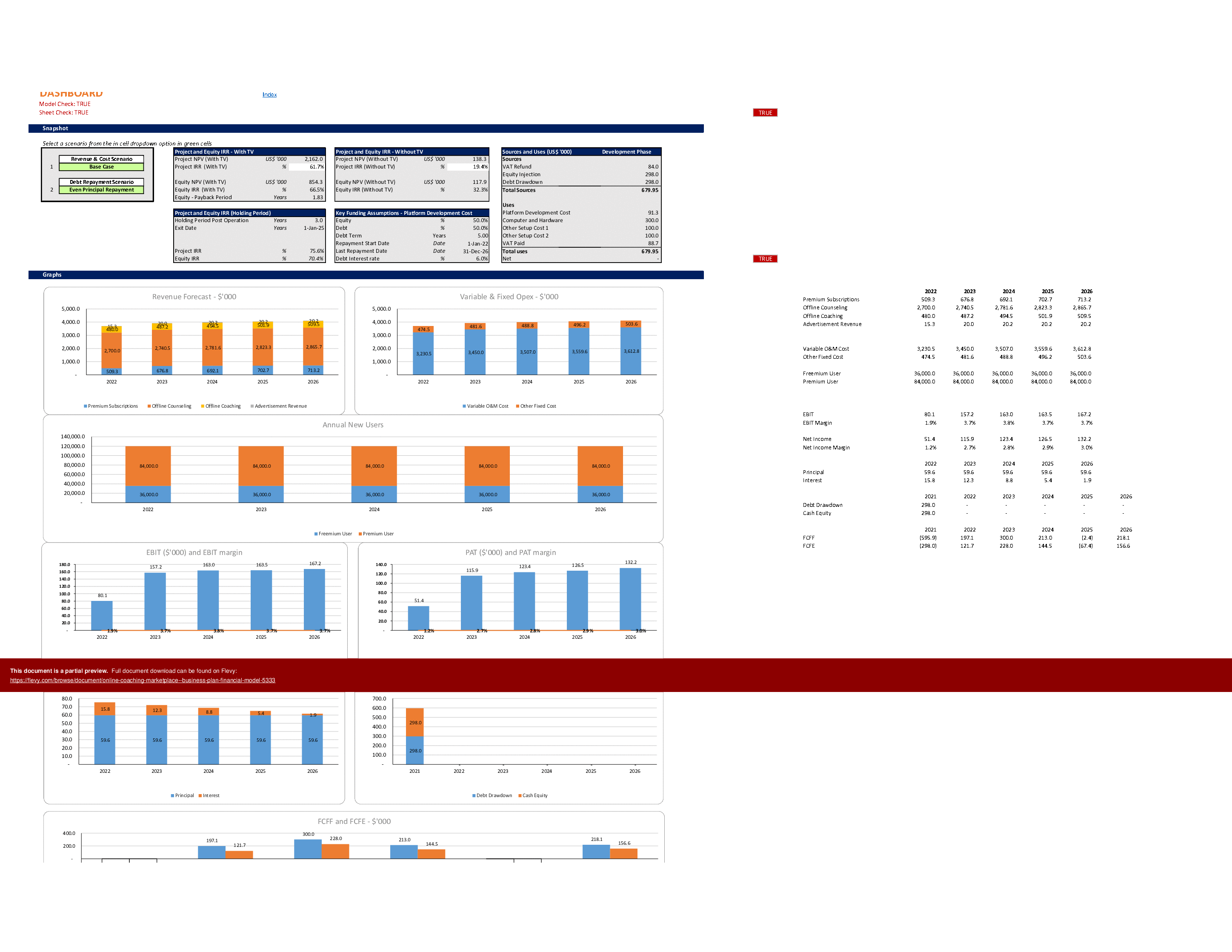
1. Project IRR & NPV (via DCF Valuation)
2. Equity IRR & NPV (via DCF Valuation)
3. Relative valuation
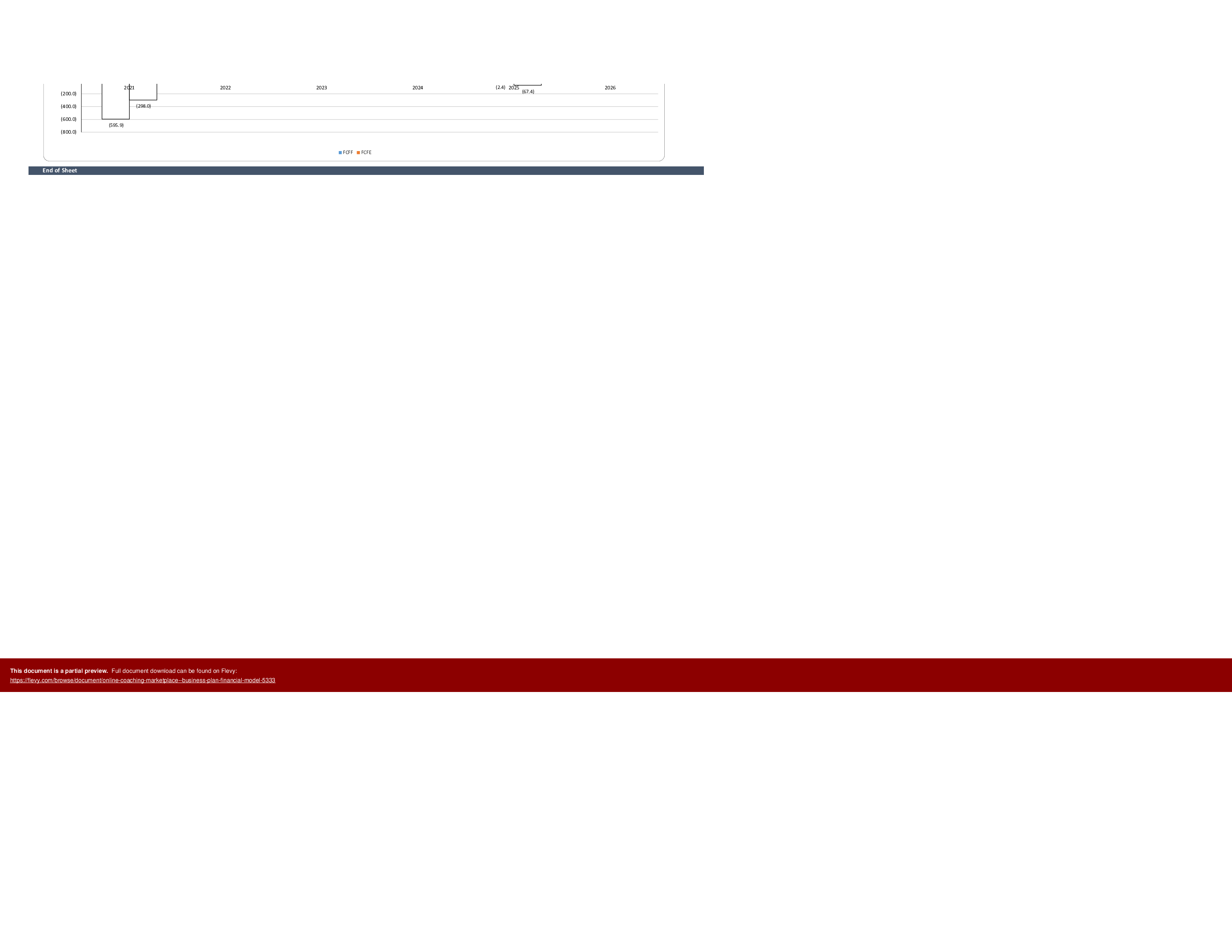
4. Football Field Analysis
5. Equity Payback Period
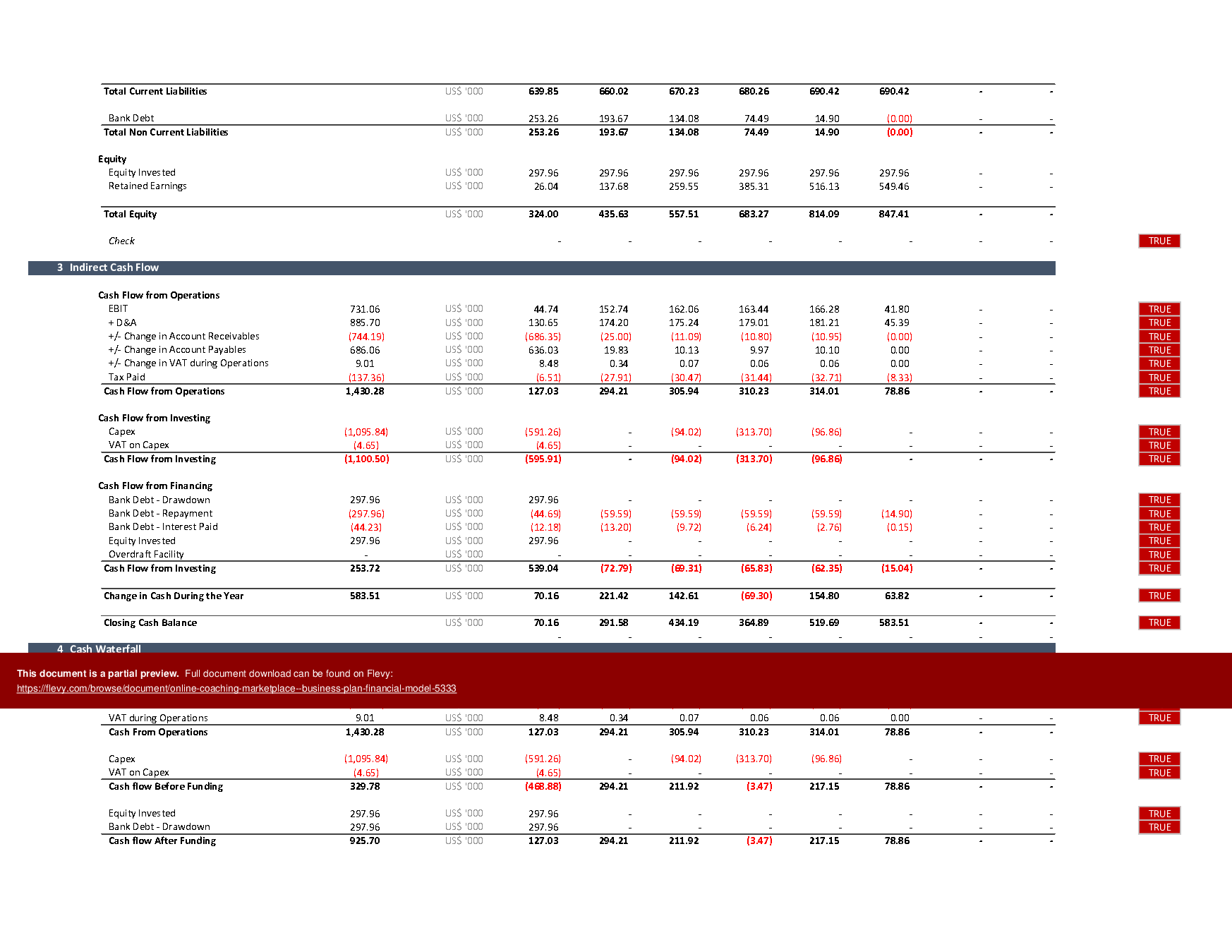
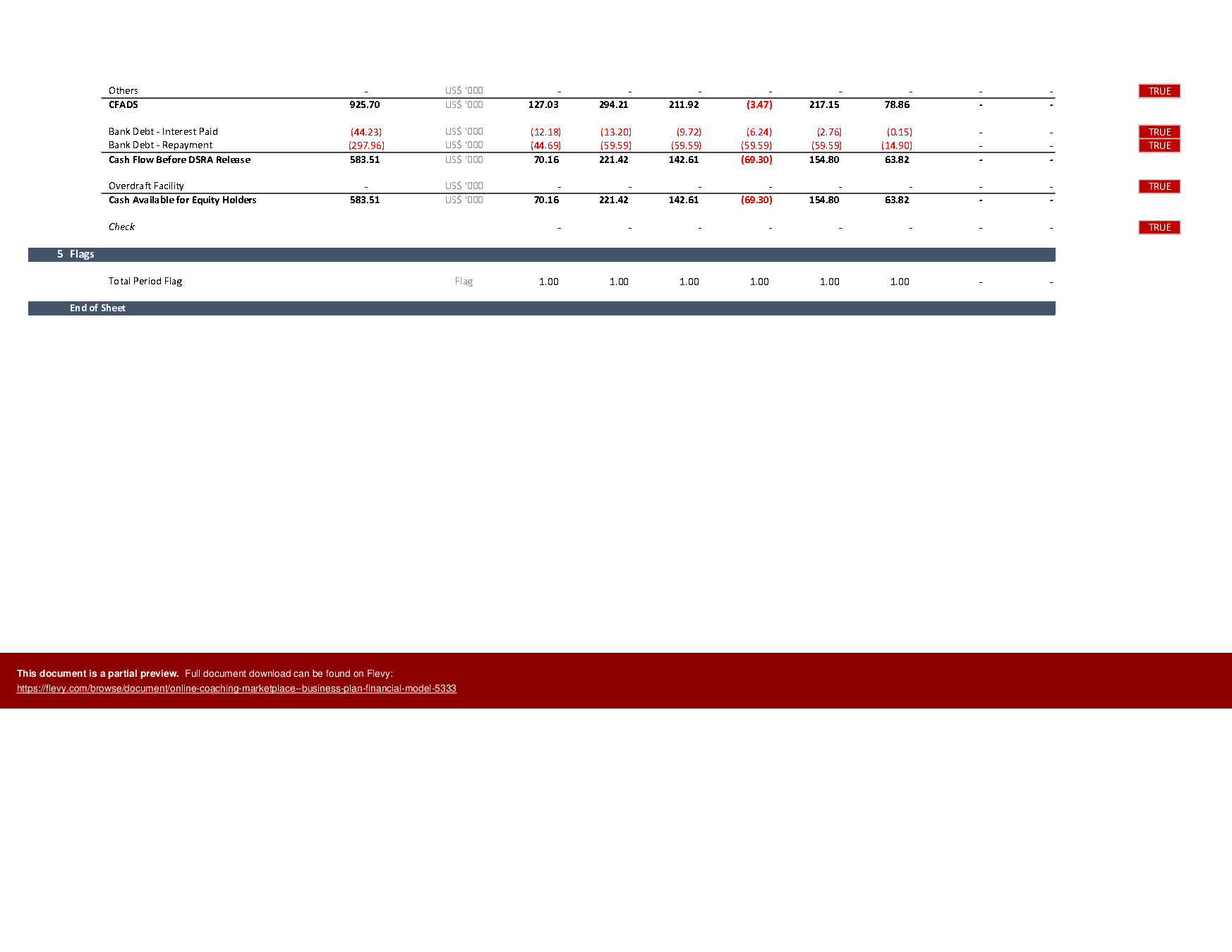
6. Cash Waterfall
7. Debt Service Profile
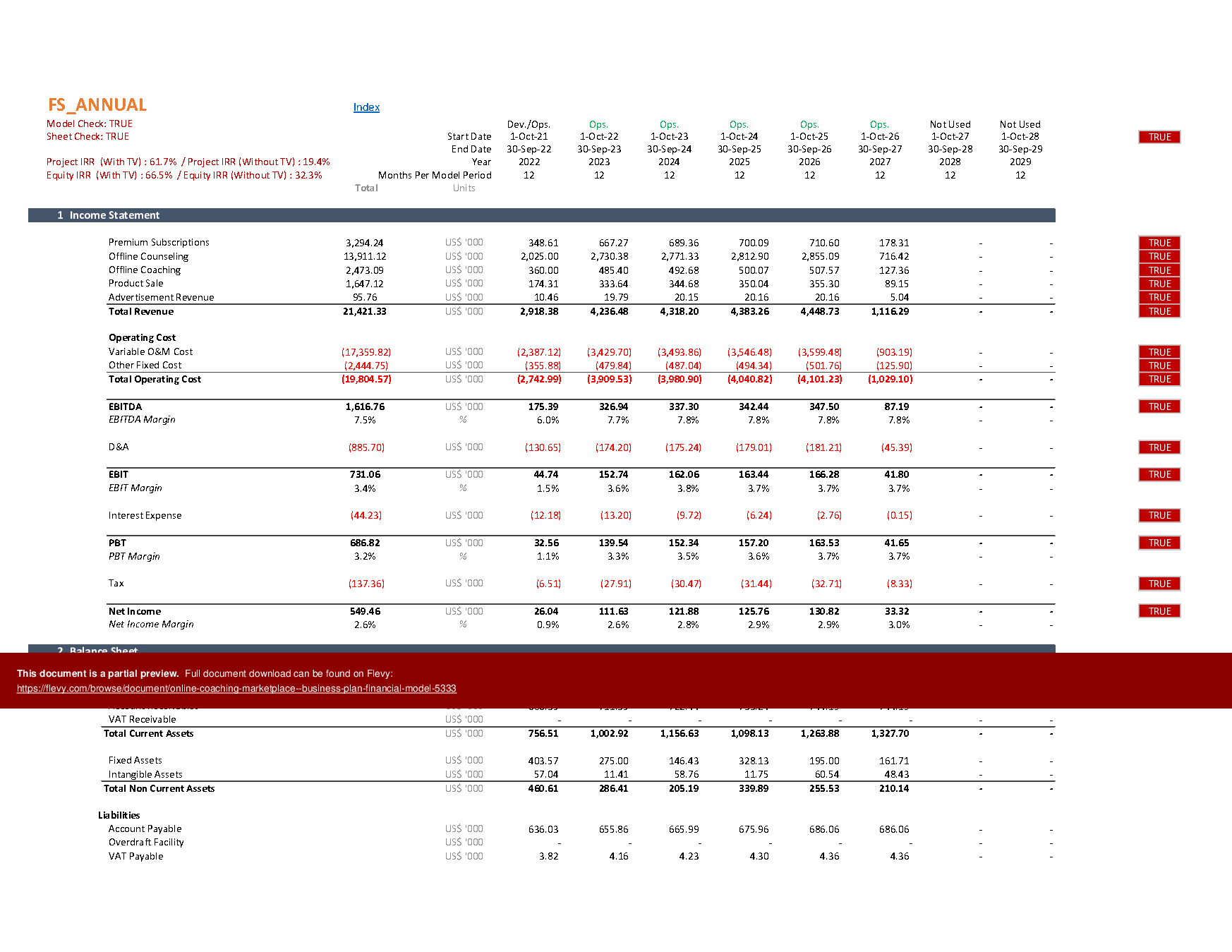
8. Integrated Financial Statements
9. Fully Integrated Dashboard
10. Exit Analysis
Why Fin-wiser' Financial Model Template:
1. Our model is built on monthly timeline which provides more detailed data for Analysis
2. The model is divided into two phases i.e. Development and Operations
3. All revenue and cost assumptions can be input into 3 scenarios. This helps user to assess the impact of multiple business scenarios in one model. This can be operated simply on a click of a button.
4. The debt repayment has been profiled with 2 scenarios i.e. Annuity payment and Even Principal Payment repayment. You can change the scenario on a click of a button and assess the impact on IRR.
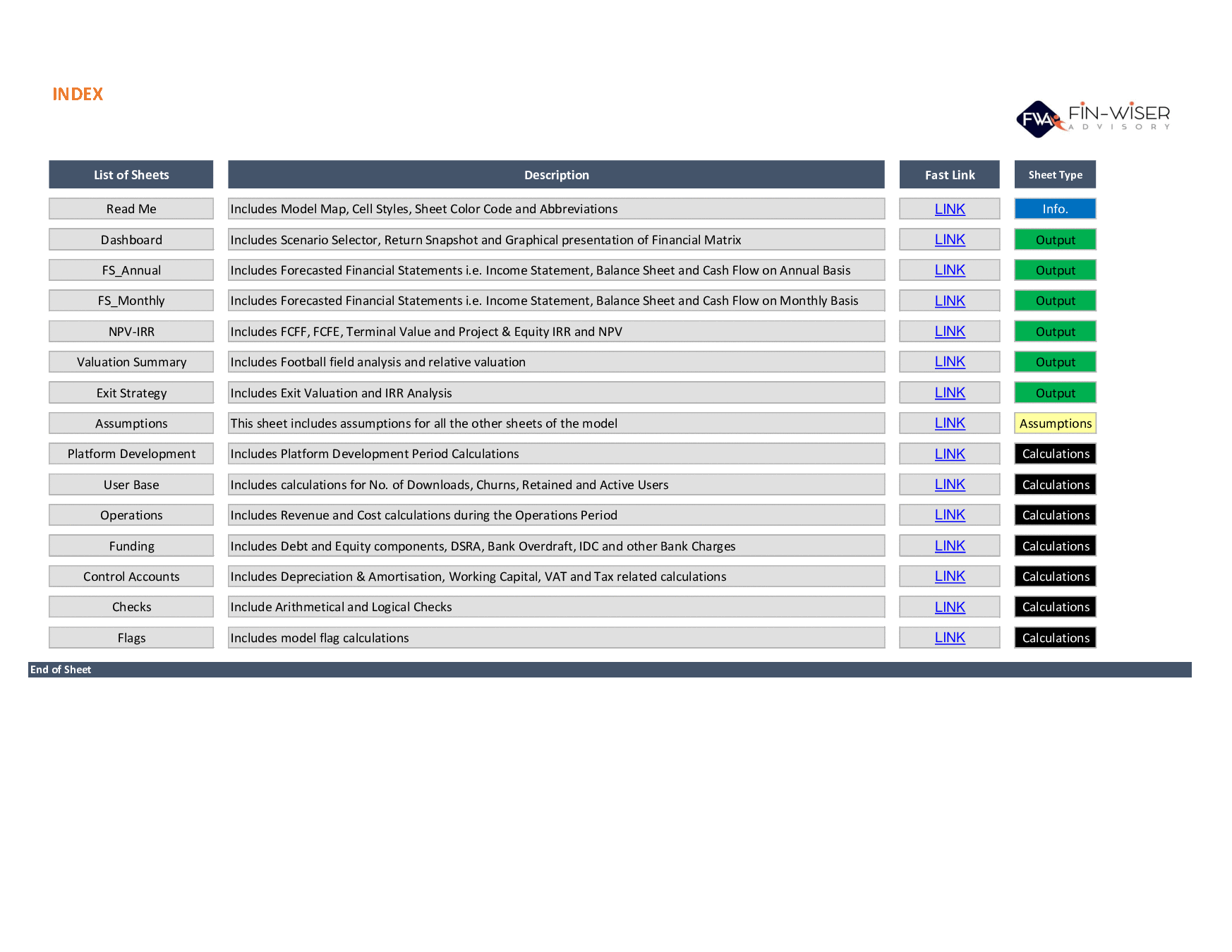
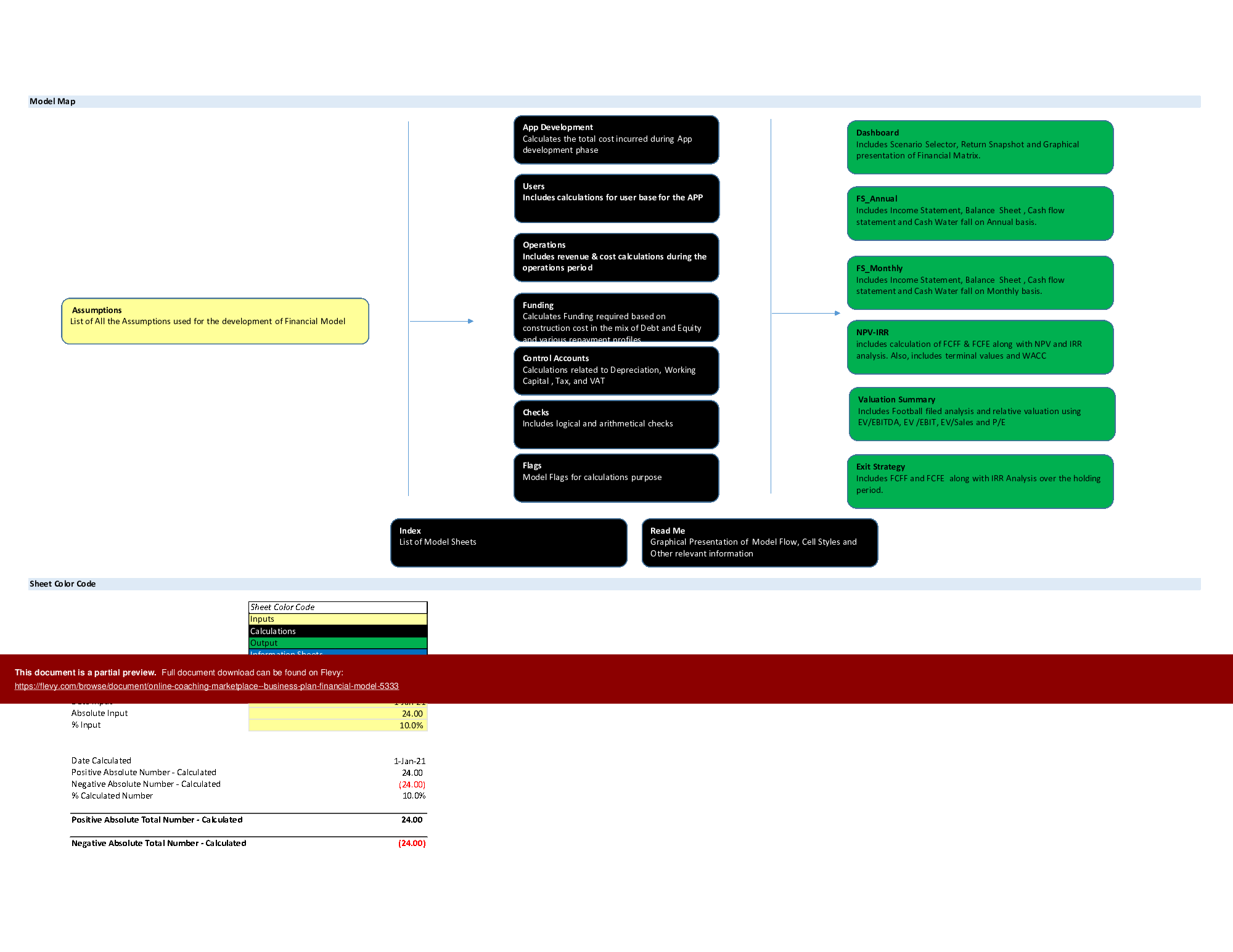
5. The model is built with Financial Modeling Best Practice and have clearly defined input, calculations, output cells and tabs to help even a rookie excel user to operate the model efficiently.
6. Our Models are thoroughly reviewed, and Quality checked for Arithmetic and Logical flow
Technical Specifications:
1. Model doesn't use Macros (VBA) and hence the impact of change in any assumption can be directly seen on the return.
2. Model is built using Microsoft Excel 2019 version for Windows. Please note, on certain Mac laptops or MS Excel prior to 2007, Excel with Macros can slow down your computer if your PC does not have enough processing power.
3. We advise not to delete or insert rows and columns into the model if you are not aware of the model structure as it can distort model functioning. If you need assistance with customizing the model template, the author is more than willing to help you.
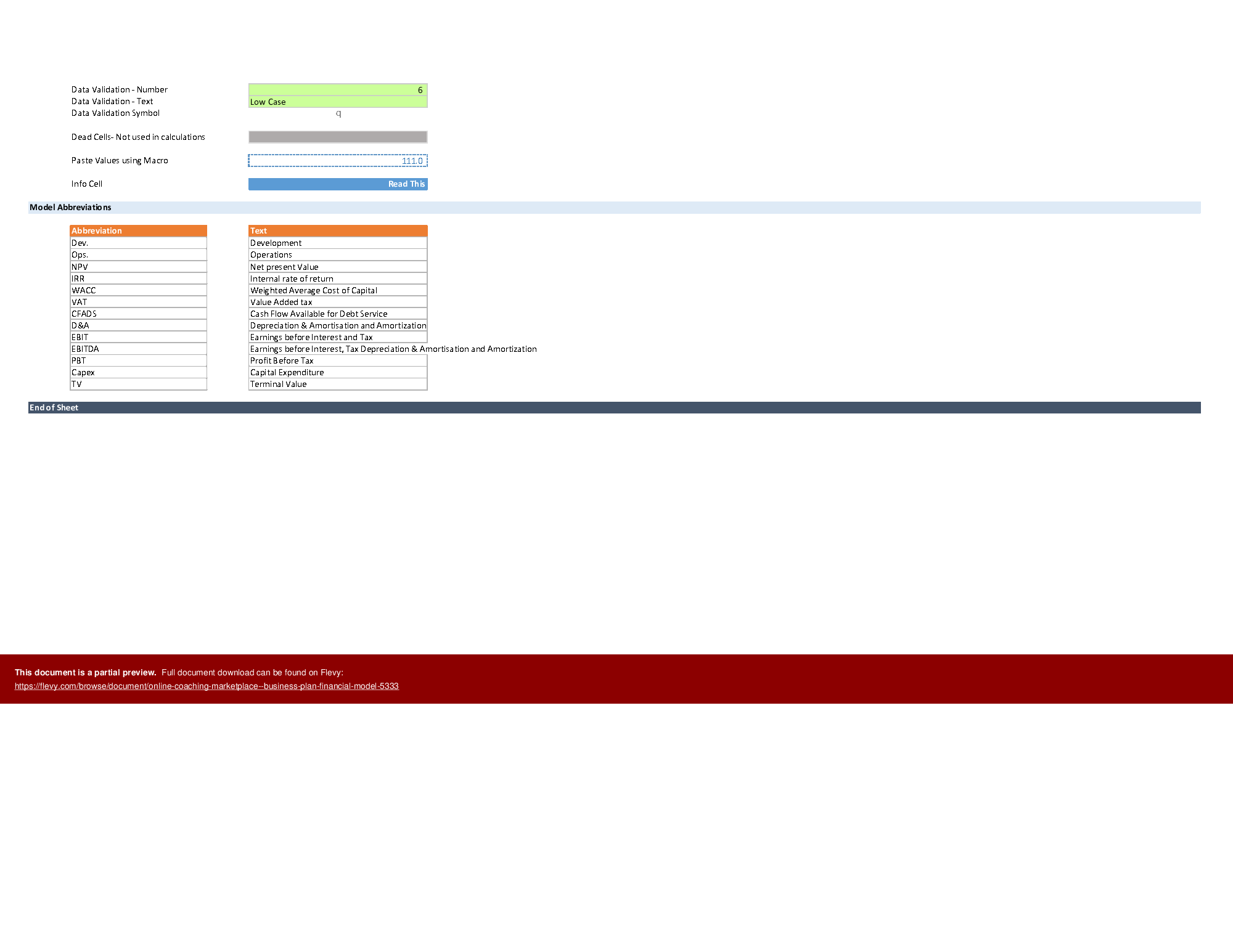
4. Model uses Cell Styles
Got a question about the product? Email us at support@flevy.com or ask the author directly by using the "Ask the Author a Question" form. If you cannot view the preview above this document description, go here to view the large preview instead.
TOPIC FAQ
What revenue streams should I model for an online coaching marketplace?
Typical revenue streams for an online coaching marketplace include Premium Subscription, Offline Counseling, Offline Coaching, Product Sale, and Advertisements. A model can combine any subset of these 5 streams and allow separate revenue assumptions for each to reflect different business strategies, totaling 5 choices.How can scenario analysis help assess an online coaching platform’s financial outlook?
Scenario analysis lets you switch between alternative assumptions to see impacts on returns and cash flows. The referenced model allows 3 scenarios that can be toggled on a click, enabling comparison of development and operations outcomes across 3 distinct forecasts.Which debt repayment profiles are relevant for modeling platform financing?
Common debt profiles to include are annuity repayment and even principal repayment, as they produce different cash service patterns and equity returns. The model includes both Annuity and Even Principal repayment options to assess impact on IRR and cash flows.What forecast granularity is recommended for a digital marketplace financial model?
A monthly timeline is recommended for detailed cash-flow analysis and early-stage sensitivity testing. The Fin-Wiser model is built on a monthly timeline to provide finer-grained analysis across development and operations phases, using monthly inputs and outputs.What features should I prioritize when buying a financial model template for a marketplace?
Prioritize monthly timelines, separate development and operations phases, scenario-switching, clear input/calculation/output segregation, debt and working-capital profiling, and integrated financial statements. Flevy’s Online Coaching Marketplace Business Plan Financial Model lists these features, including 2 phases and scenario-switching.Are paid financial model templates useful for startup feasibility and fundraising?
Paid templates can accelerate building standardized projections, offer built-in scenario and debt options, and provide integrated outputs for investor materials. The product claims quality checks, no macros for live recalculation, and support for 5-year monthly projections to aid feasibility and fundraising tasks.What investor-facing financial outputs are typically produced for a marketplace pitch?
Investor-facing outputs often include Project IRR & NPV, Equity IRR & NPV, relative valuation, football-field analysis, equity payback period, cash waterfall, debt service profile, integrated financial statements, a dashboard, and exit analysis, as included in the referenced model’s outputs.How should I handle working capital, VAT, and taxes when modeling a marketplace with a development phase?
Include working-capital assumptions for accounts receivable and payable, model VAT implications during construction and operations, and incorporate tax assumptions such as tax-holiday periods. The model supports AR/AP assumptions, VAT during construction and operations, and tax-holiday inputs.Source: Best Practices in Coaching, Marketplace, Integrated Financial Model Excel: Online Coaching Marketplace - Business Plan Financial Model Excel (XLSB) Spreadsheet, Fin-Wiser Advisory
ABOUT THE AUTHOR

Fin-wiser is a specialist advisory boutique focused on providing financial modelling, financial analysis, business transformation and business research services.
Our mission is to deliver high-quality Financial Models, Financial Analysis, Operational Transformation and Data Analytics which are custom made as per the business requirements. These solutions can integrate elements of business,
... [read more]
Ask the Author a Question
You must be logged in to contact the author.




























