

 Click main image to view in full screen. Unlock all 10 preview images:
Mergers and Acquisition (M&A) Financial Model – Excel XLSX
Excel (XLSX)


BENEFITS OF THIS DOWNLOADABLE EXCEL DOCUMENT
- Assess the financial viability of the resulting proforma merger of 2 companies and their synergies
- Generates proforma post-merger financial statements, accretion/dilution analysis, merger increase in equity value, debt service coverage ratio, loan life coverage ratio, leverage ratios
- Purchase price allocation, and valuation of the buyer, target and post-merger company.
M&A (MERGERS & ACQUISITIONS) EXCEL DESCRIPTION
Merger and Acquisition Model template consists of an excel model that assists the user to assess the financial viability of the resulting proforma merger of 2 companies and their synergies. Additionally, the user can feed the deal details, the buyer, target, as well as the merged company assumptions, and evaluate the merger in the tabs "Summary", "Merger Analysis", "Metrics" and "Graphs".
The model generates proforma post-merger financial statements, accretion/dilution analysis, merger increase in equity value, debt service coverage ratio, loan life coverage ratio, leverage ratios, purchase price allocation, and valuation of the buyer, target and post-merger company.
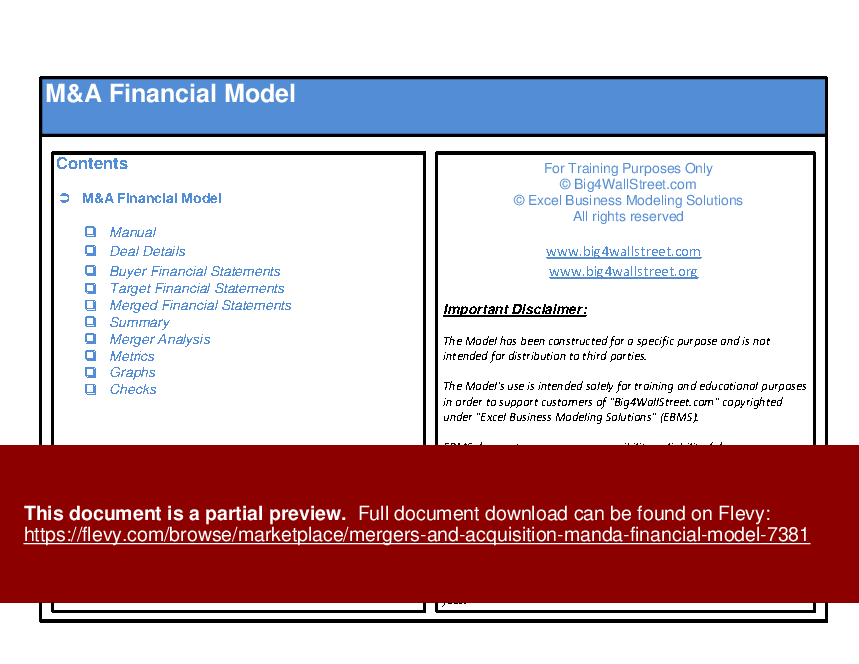
So, a quick overview of the model, in the contents tab you can see the structure of the model and by clicking on any of the headlines to be redirected to the relevant worksheet.
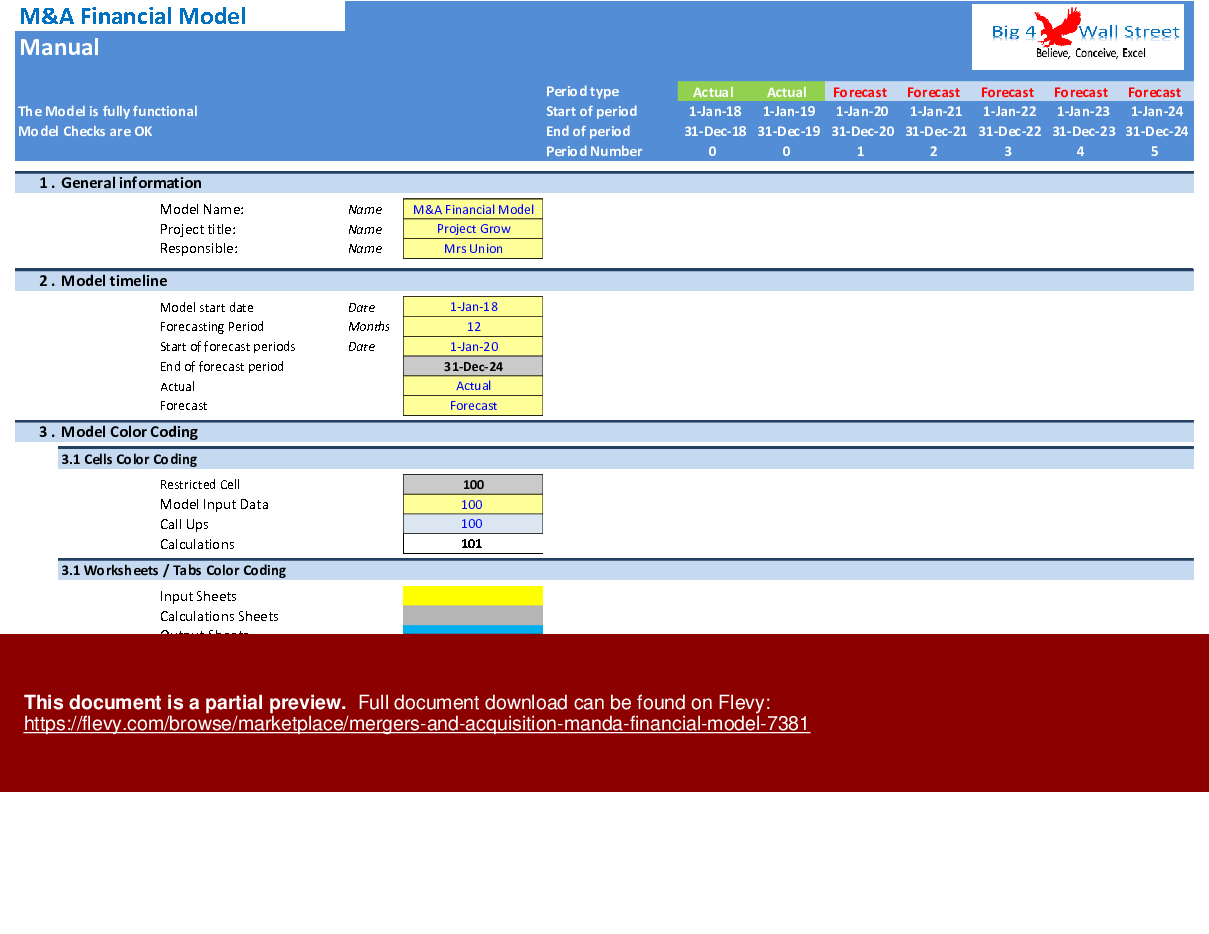
Additionally, there is a description of the color-coding of the model in the "Manual" tab. Inputs / Assumptions are always depicted with a yellow fill and blue letters, call up (that is direct links from other cells) are filled in light blue with blue letters while calculations are depicted with white fill and black characters.
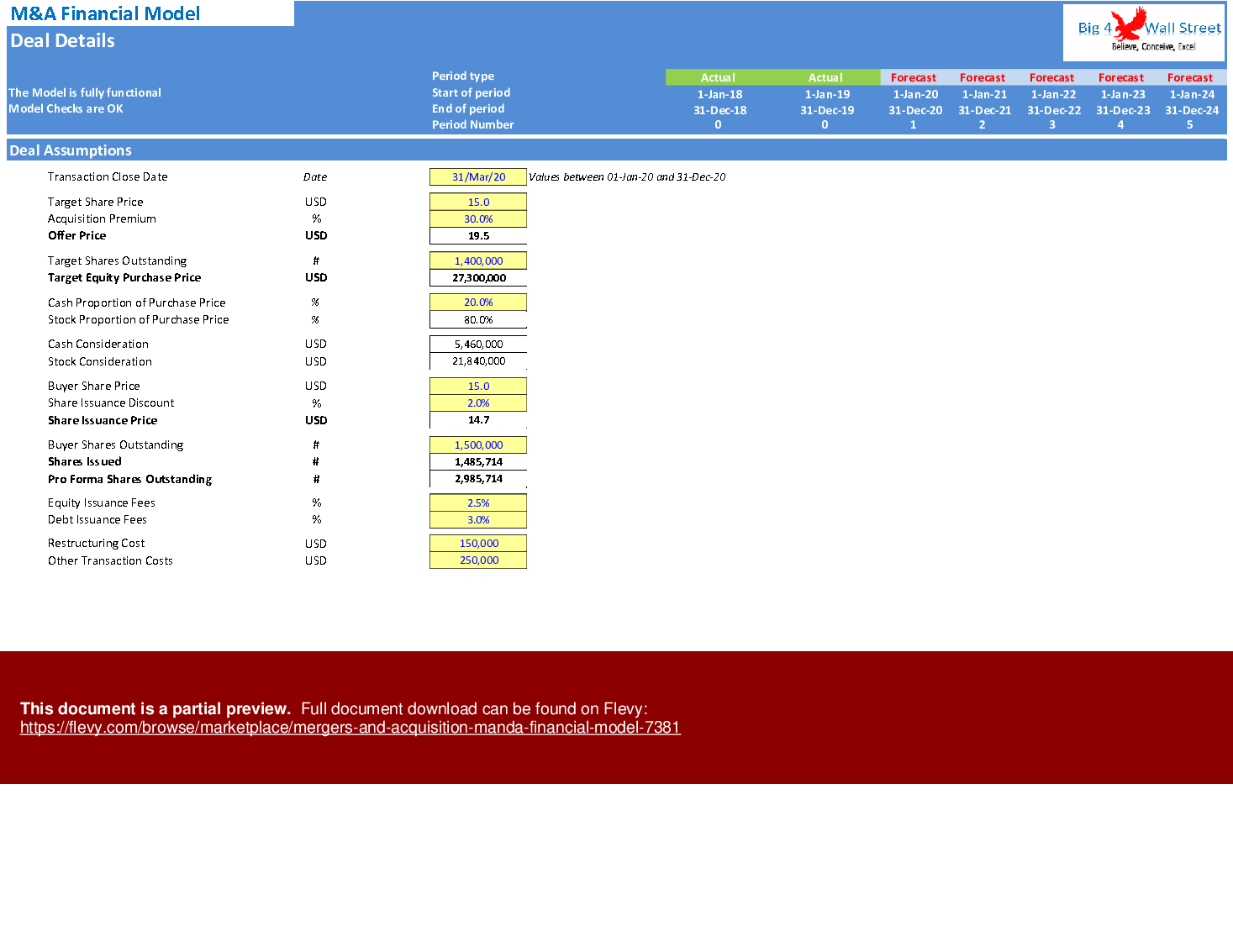
In the "Deal Details" tab, there are four set of assumptions. The first set is related to the deal assumptions such as share prices, shares outstanding for both buyer and target, acquisition premium, cash proportion of the purchase price, equity and debt issuance fees, as well as restructuring and other transaction costs.
The second set is related to the debt refinancing into senior and sub-debt, the third set is related to the fair value of the acquired target assets, while the fourth set is related to the synergies from the merger (don't forget to set synergies as positive numbers).
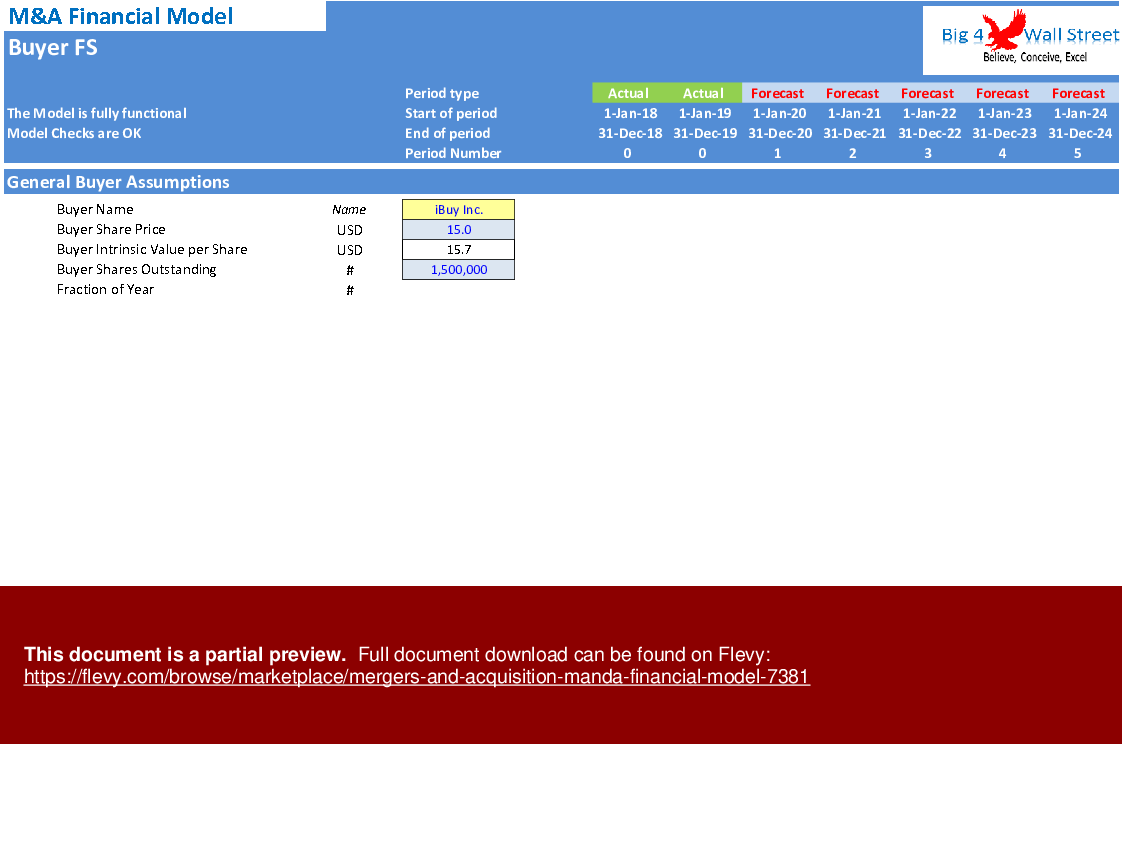
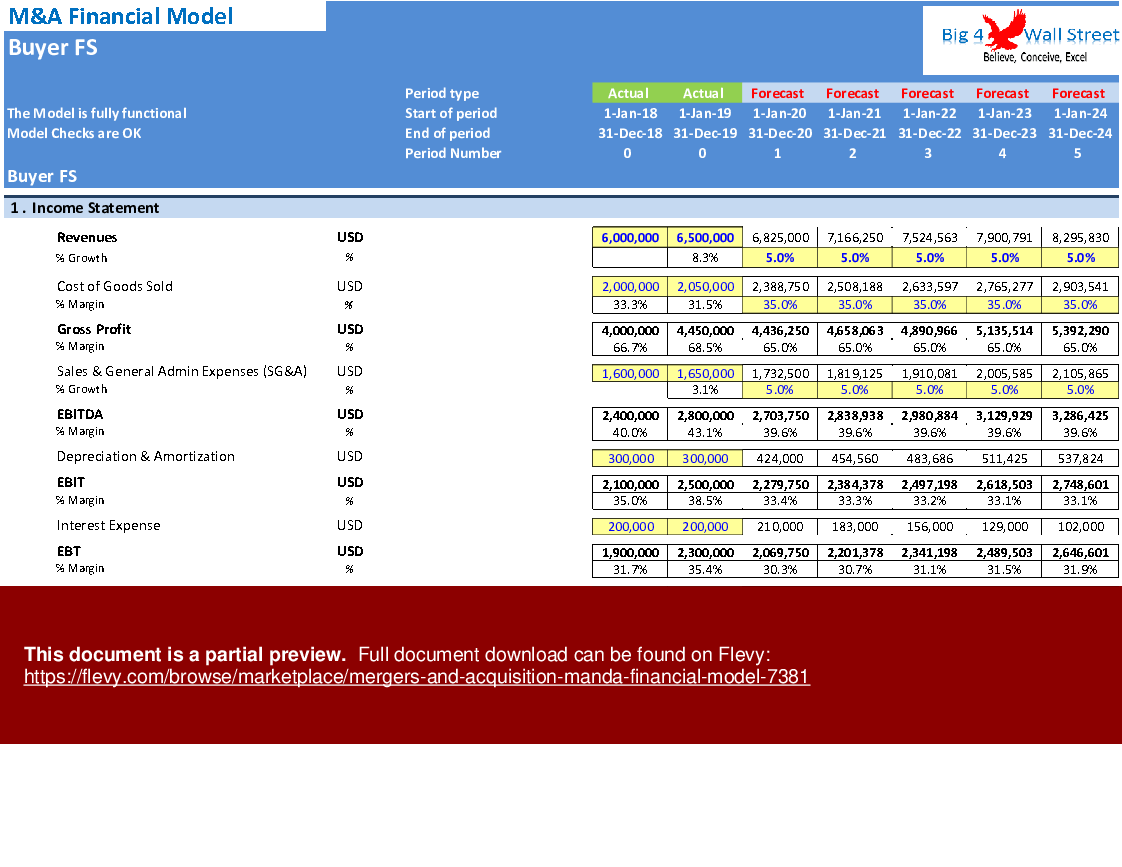
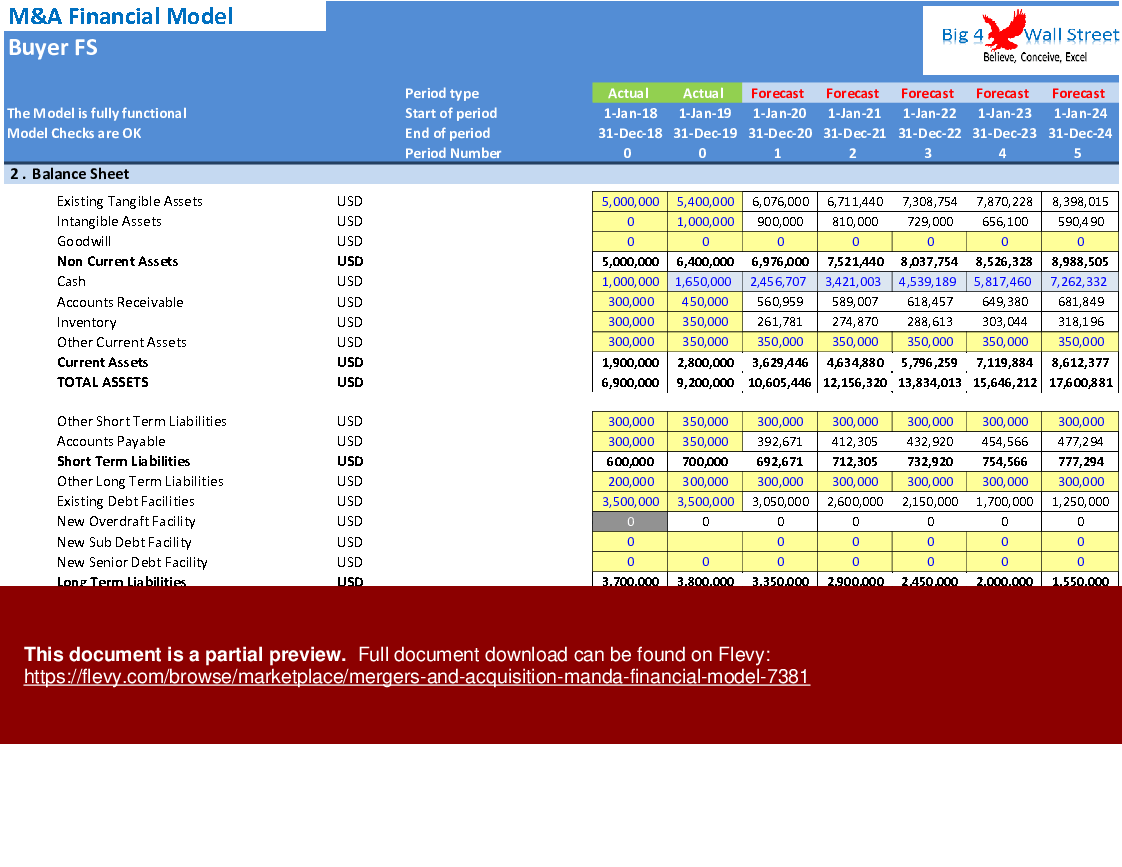
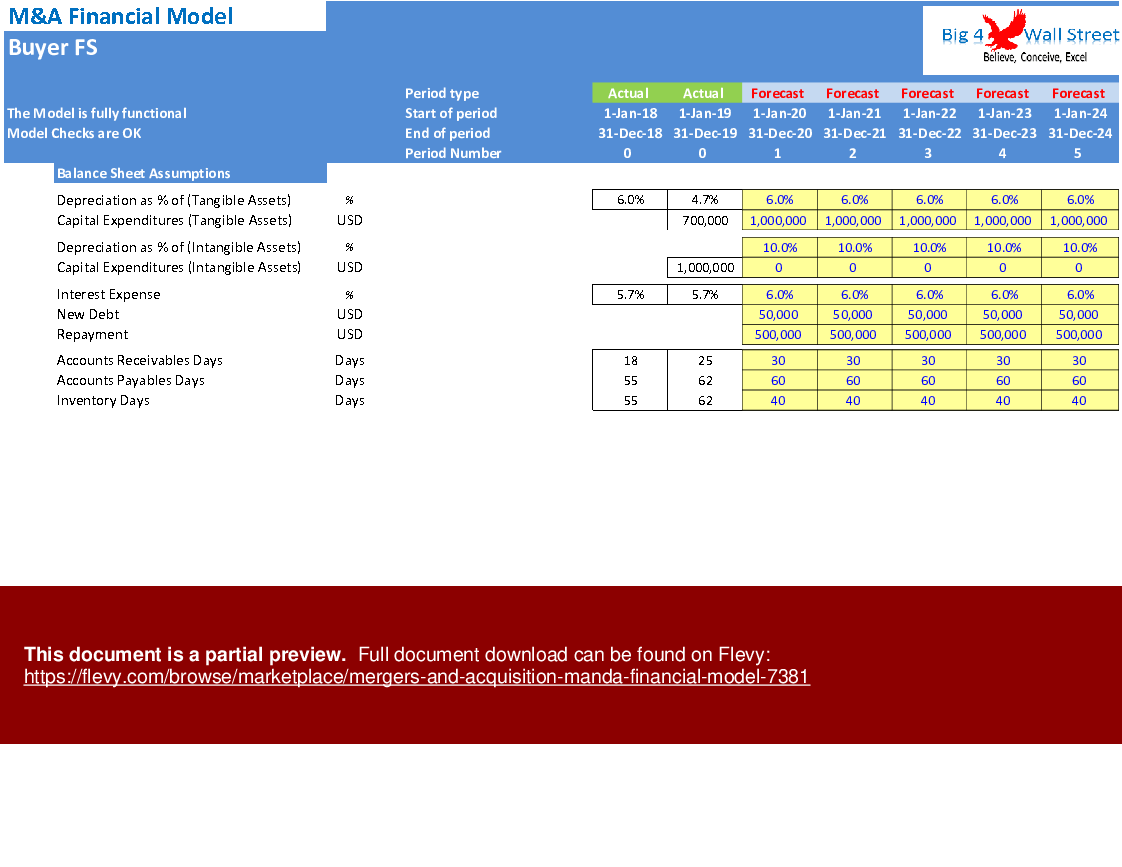
The next step is for the user to set the assumptions for both the buyer and target financial statements, such as revenues, growth rates, costs, margins, tax rates, depreciation rates, interest rates, CAPEX, new debt, repayments, and working capital assumptions (account receivables, payables, and inventory). Additionally, the user needs to feed some valuation assumptions such as Weighted Average Cost of Capital, and E.V. to EBITDA exit multiple.
Regarding the tab "Merger FS", a similar set of assumptions such as balance sheet and valuation items need to be adjusted (profit and loss items, as well as debt refinancing come from the merger of the two companies).
The results are presented in the following tabs "Summary", "Merger Analysis", "Metrics" and "Graphs"
In the "Summary" tab, you will see the pre-merger buyer and target metrics, as well as the post-merger metrics. Additionally, you will see the financing assumptions, sources and uses of funds, as well as the revenues and EBITDA of the separate and combined company.
In the "Merger Analysis" tab, an accretion / dilution analysis is performed, as well as a calculation as to whether there is an increase in the equity value per share.
In the "Metrics" tab some leverage ratios are calculated along with the debt service and loan life coverage ratios.
In the "Graphs" tab, a series of graphs are presented which are related to the sources and uses of funds, synergies, purchase price allocation, earnings and operating flows per share, EBITDA and Free Cash Flows to the Firm, leverage ratios, coverage ratios, enterprise and equity value, as well as equity value per share.
Checks: A dedicated worksheet that makes sure that everything is working as it should!
Important Notice: Yellow indicates inputs and assumptions that the user can change, blue cells are used for called up cells, and white cells with black characters indicates calculation cells.
The model includes a comprehensive timeline and detailed color coding for easy navigation and data input. It also features dedicated tabs for buyer and target financial statements, ensuring thorough analysis and accurate forecasting.
Got a question about the product? Email us at support@flevy.com or ask the author directly by using the "Ask the Author a Question" form. If you cannot view the preview above this document description, go here to view the large preview instead.
TOPIC FAQ
What are the core outputs I should expect from an M&A financial model?
A typical M&A financial model produces proforma post‑merger financial statements, accretion/dilution analysis, change in equity value per share, purchase price allocation, buyer/target/post‑merger valuation, leverage ratios, debt service and loan life coverage ratios, and graphical summaries in dedicated tabs such as Summary, Merger Analysis, Metrics, and Graphs.How are synergies typically incorporated into an M&A model?
Synergies are entered as explicit positive assumptions in the Deal Details or similar input section and then flow into combined revenue, EBITDA, or cost lines of the merged financial statements. Outputs show synergy impact across Summary and Graphs tabs, with the Deal Details tab holding the synergy inputs.What does accretion/dilution analysis show and where is it calculated?
Accretion/dilution analysis compares buyer and proforma earnings or equity value per share to determine whether the transaction increases or decreases shareholder value; in this model the calculation and the resulting change in equity value per share appear in the Merger Analysis worksheet.What should I look for when choosing an M&A model template for a buy‑side analysis?
For buy‑side work choose templates that support deal assumptions (share prices, premiums, cash/equity mix), proforma statements, accretion/dilution mechanics, purchase price allocation, sources & uses, and leverage/coverage ratio calculations, plus integrity checks—features found in templates with dedicated Deal Details, Merger FS, and Checks worksheets.How does a pre-built model add value compared with building from scratch for an M&A deal?
A pre-built model centralizes typical M&A workflows—deal inputs, proforma statements, accretion/dilution, PPA, and metric calculations—reducing setup time and ensuring consistent treatment of financing, fees, and synergies; value is realized in having ready inputs and outputs like proforma statements and accretion/dilution analysis.How is purchase price allocation (PPA) handled in a merger model?
PPA is driven by fair‑value assumptions for acquired target assets entered in the Deal Details or fair‑value section; those allocations adjust the merged balance sheet and are summarized in outputs and graphs that present purchase price allocation results and impacts on post‑merger financials.Which leverage and coverage ratios should I model to assess post‑merger debt capacity?
Key ratios include leverage ratios (debt to EBITDA or similar), debt service coverage ratio, and loan life coverage ratio; modeling those metrics across forecast years helps assess refinancing scenarios and repayment capacity as presented in a Metrics worksheet.What’s the best way to present M&A model results to executives who want a quick decision view?
Condense inputs and outcomes onto a Summary worksheet showing pre‑merger and post‑merger metrics, sources & uses, and combined revenues/EBITDA, and use Graphs to display sources & uses, synergies, valuation, and equity value per share for a concise executive view.Source: Best Practices in M&A (Mergers & Acquisitions), Integrated Financial Model Excel: Mergers and Acquisition (M&A) Financial Model Excel (XLSX) Spreadsheet, Big4WallStreet
ABOUT THE AUTHOR

We help small and midsize businesses' leaders with their strategic problems by creating or improving financial models, implementing tools to drive efficiency, performance, and better decision making.
With over 15 years of experience in Financial & Business Modeling / Planning, Performance & Analysis (Ernst & Young, Toyota, Viohalco and Upstream), we have developed strong business
... [read more]
Ask the Author a Question
You must be logged in to contact the author.




























