
 Click main image to view in full screen. Unlock all 12 preview images:
IT Risk Assessment Methodology & Workshop Facilitation Guide – PowerPoint PPTX Template
PowerPoint (PPTX) 41 Slides


RISK MANAGEMENT PPT TEMPLATE DESCRIPTION
Mastering IT Risk Assessment: Methodology & Workshop Facilitation
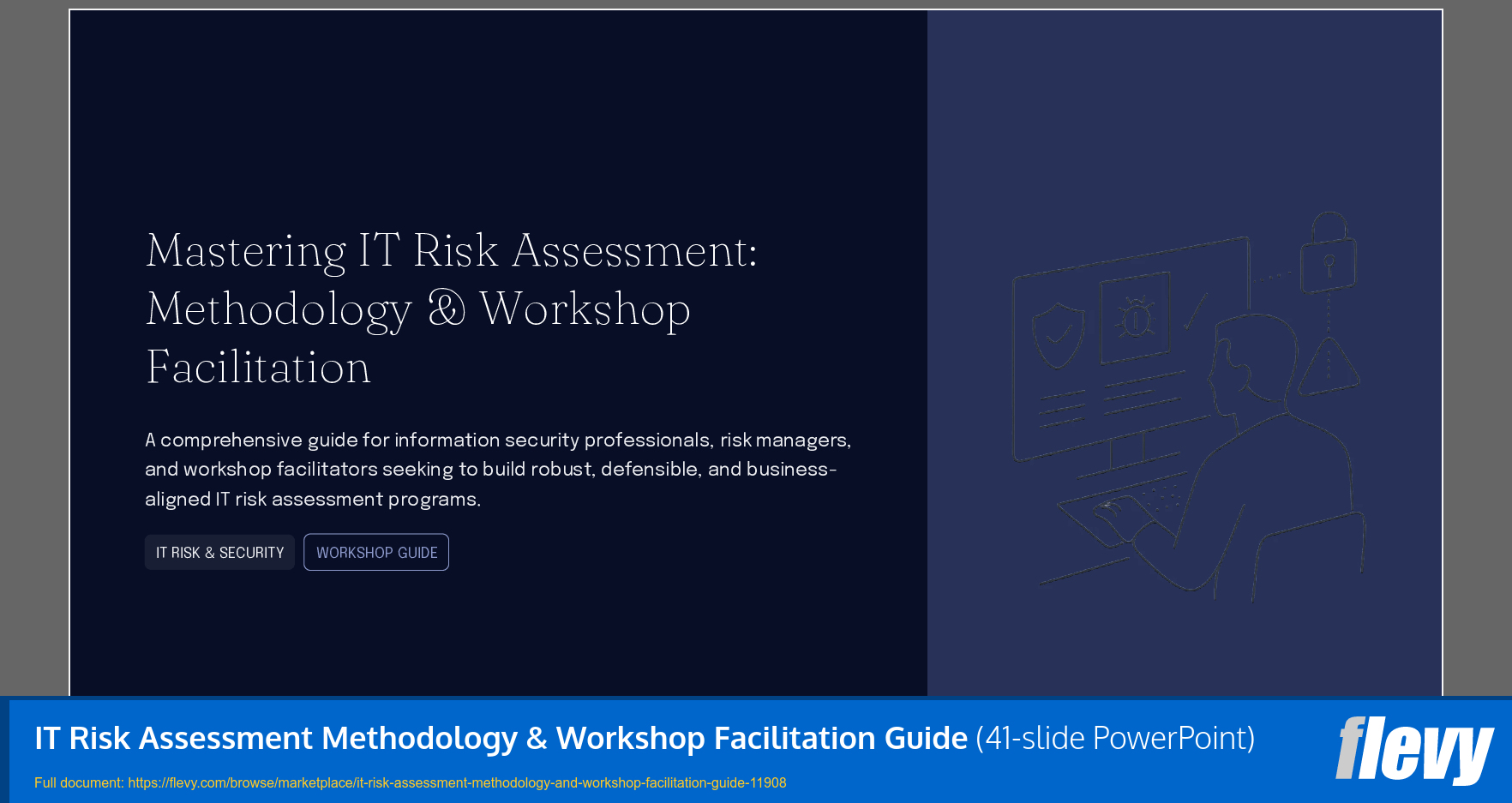
Chapter 1: The Imperative of IT Risk Assessment
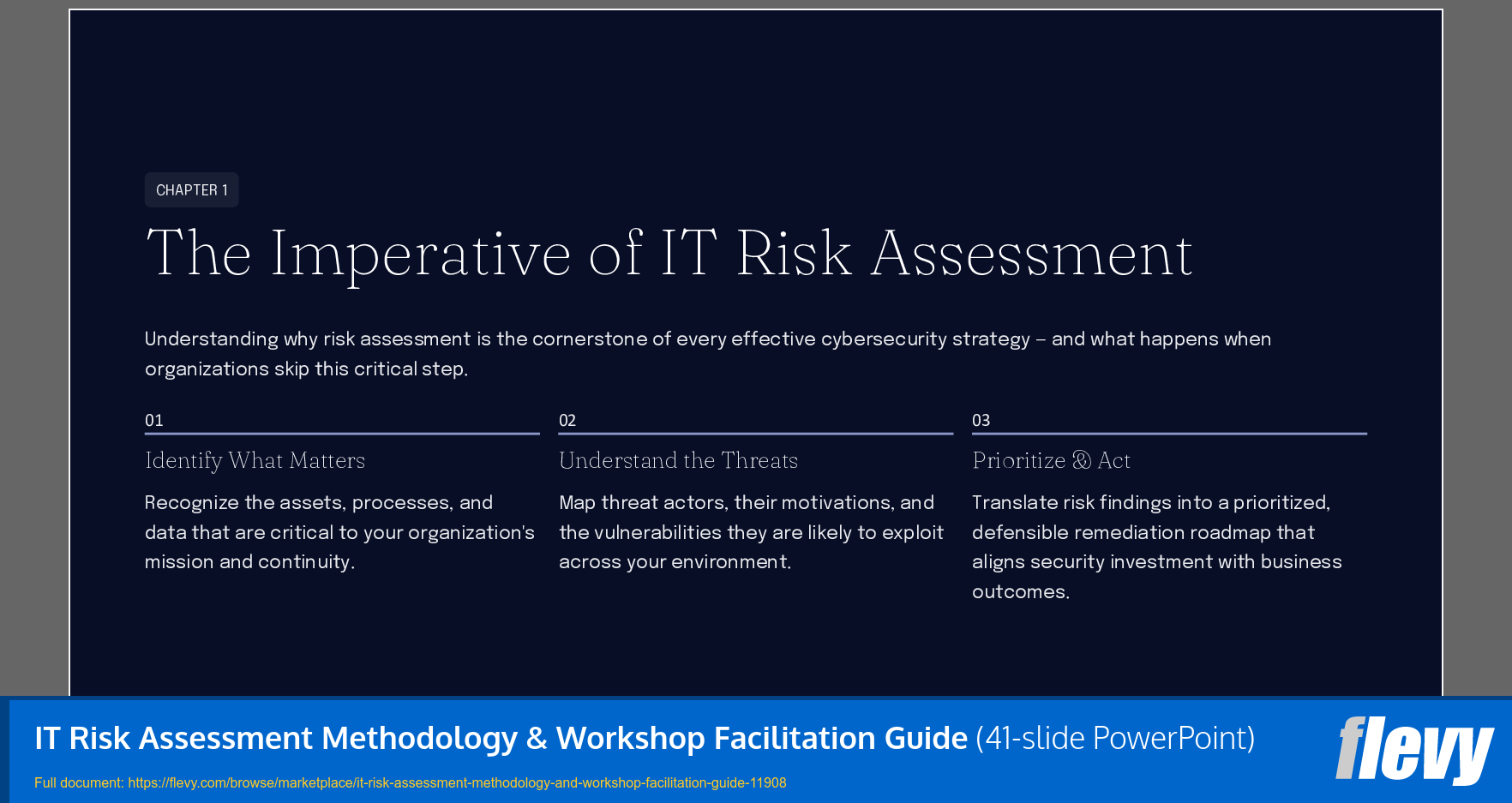
Why Risk Assessment Matters: Beyond the Budget
• A cybersecurity risk assessment is the foundational activity that separates organizations with a security strategy from those with a security budget.
• Without a risk assessment, security spending is driven by vendor relationships, incident reaction, and compliance checkbox mentality – not by actual organizational risk.
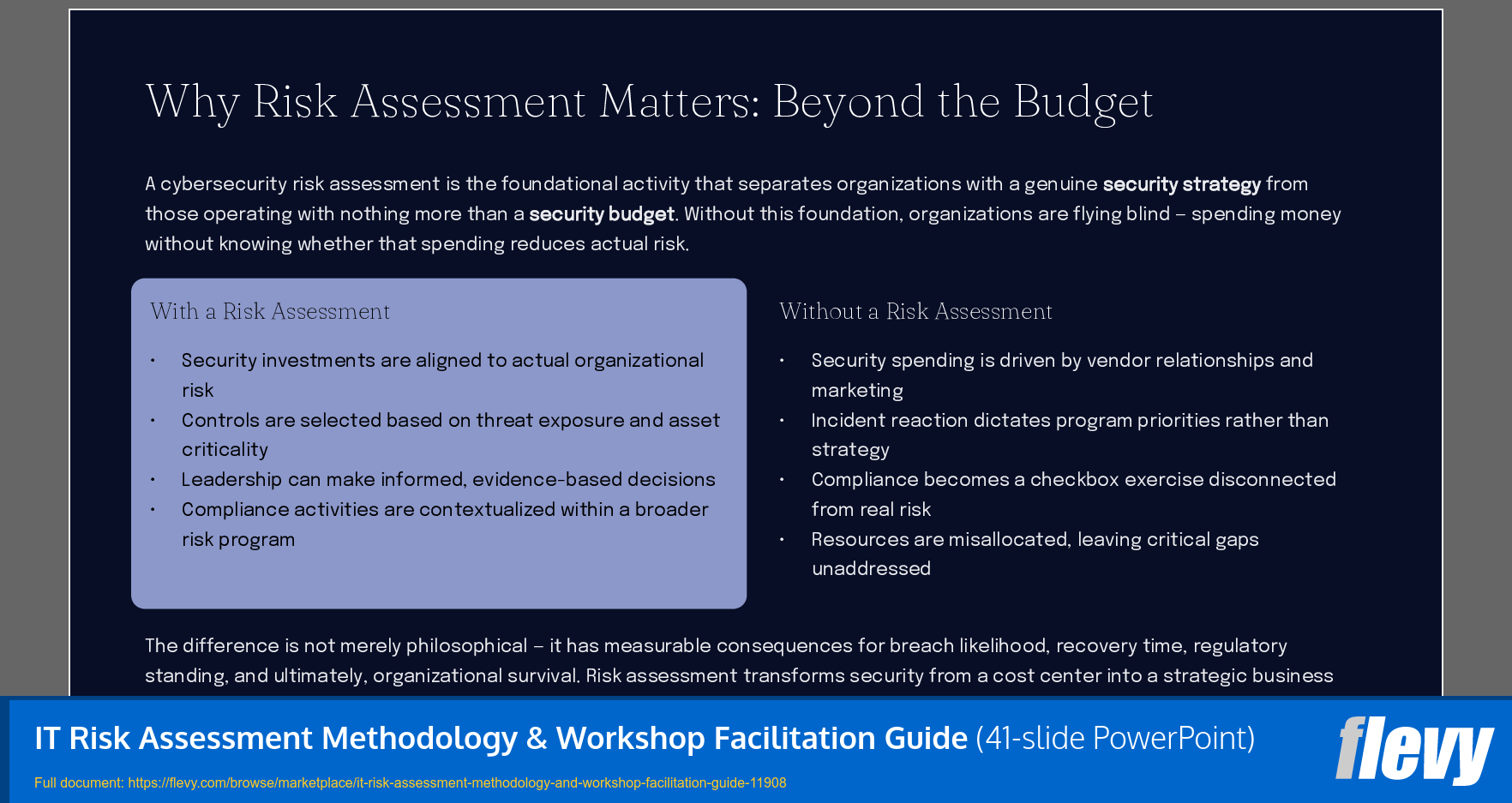
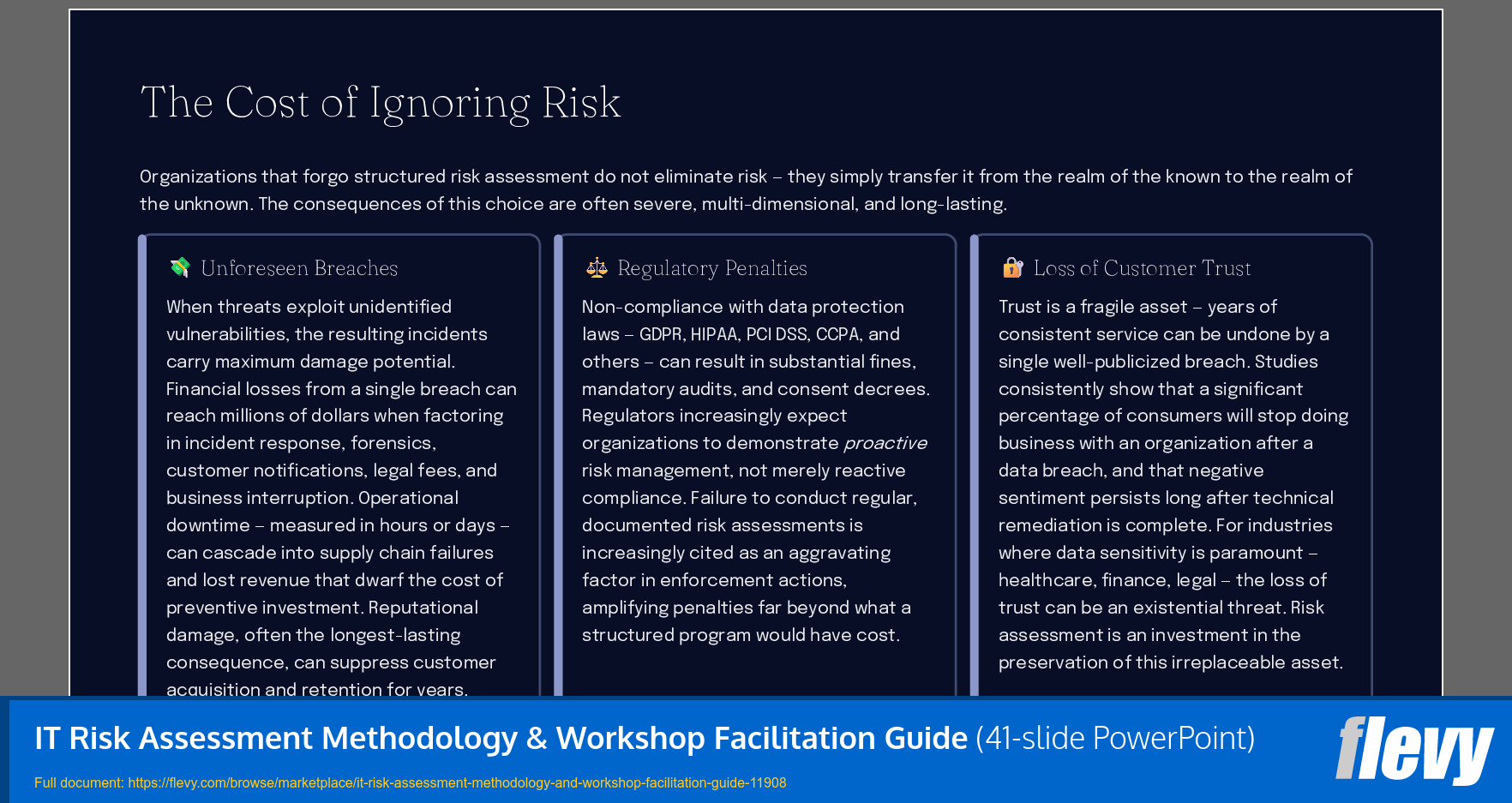
The Cost of Ignoring Risk
• Unforeseen breaches: Leading to significant financial losses, reputational damage, and operational downtime.
• Regulatory penalties: Non-compliance with data protection laws can result in hefty fines.
• Loss of customer trust: A single breach can erode years of built-up confidence.
[image] A cracked digital shield with data streams flowing out, text: "Ignoring Risk is the Biggest Risk"
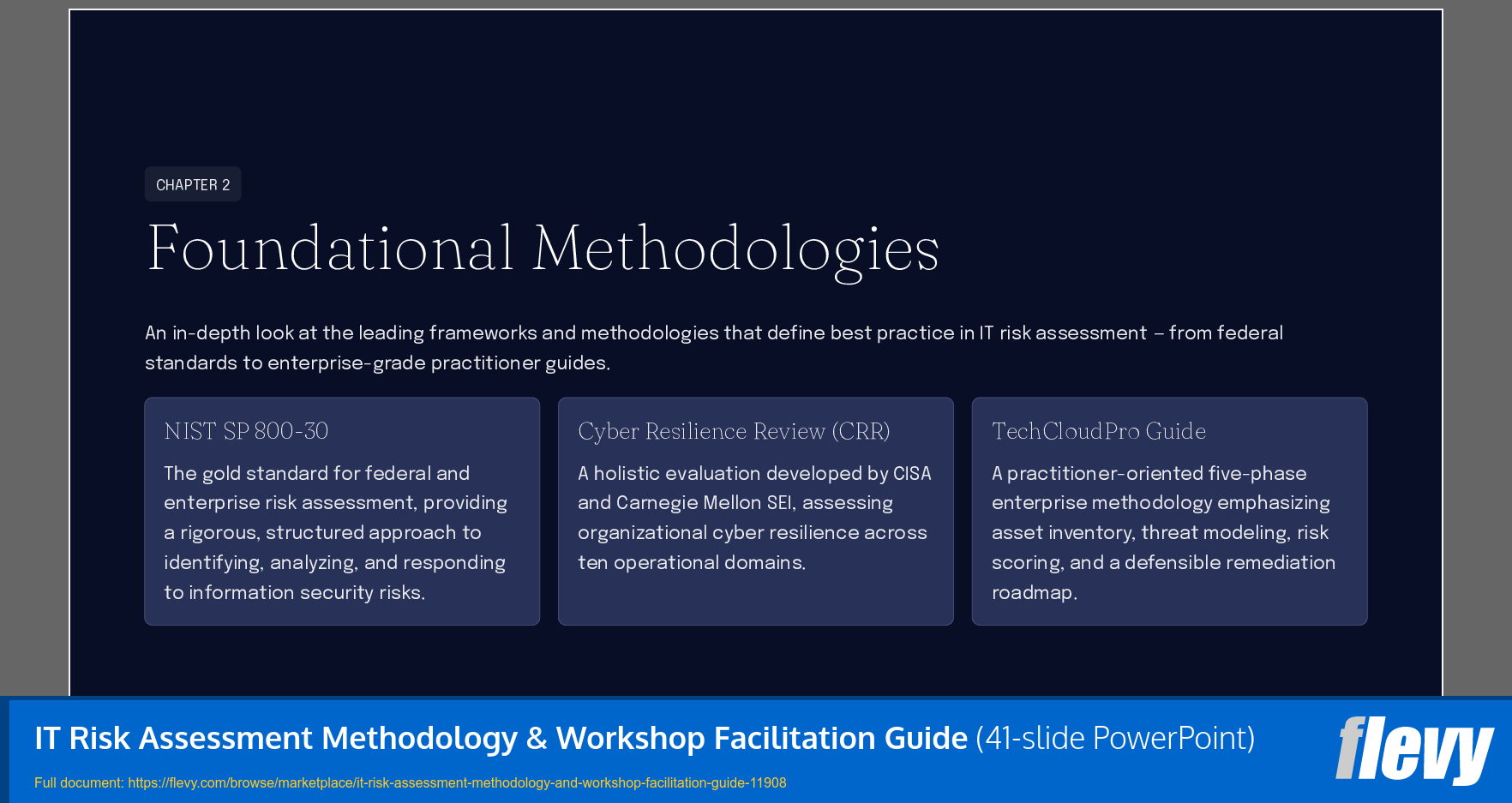
Chapter 2: Foundational Methodologies
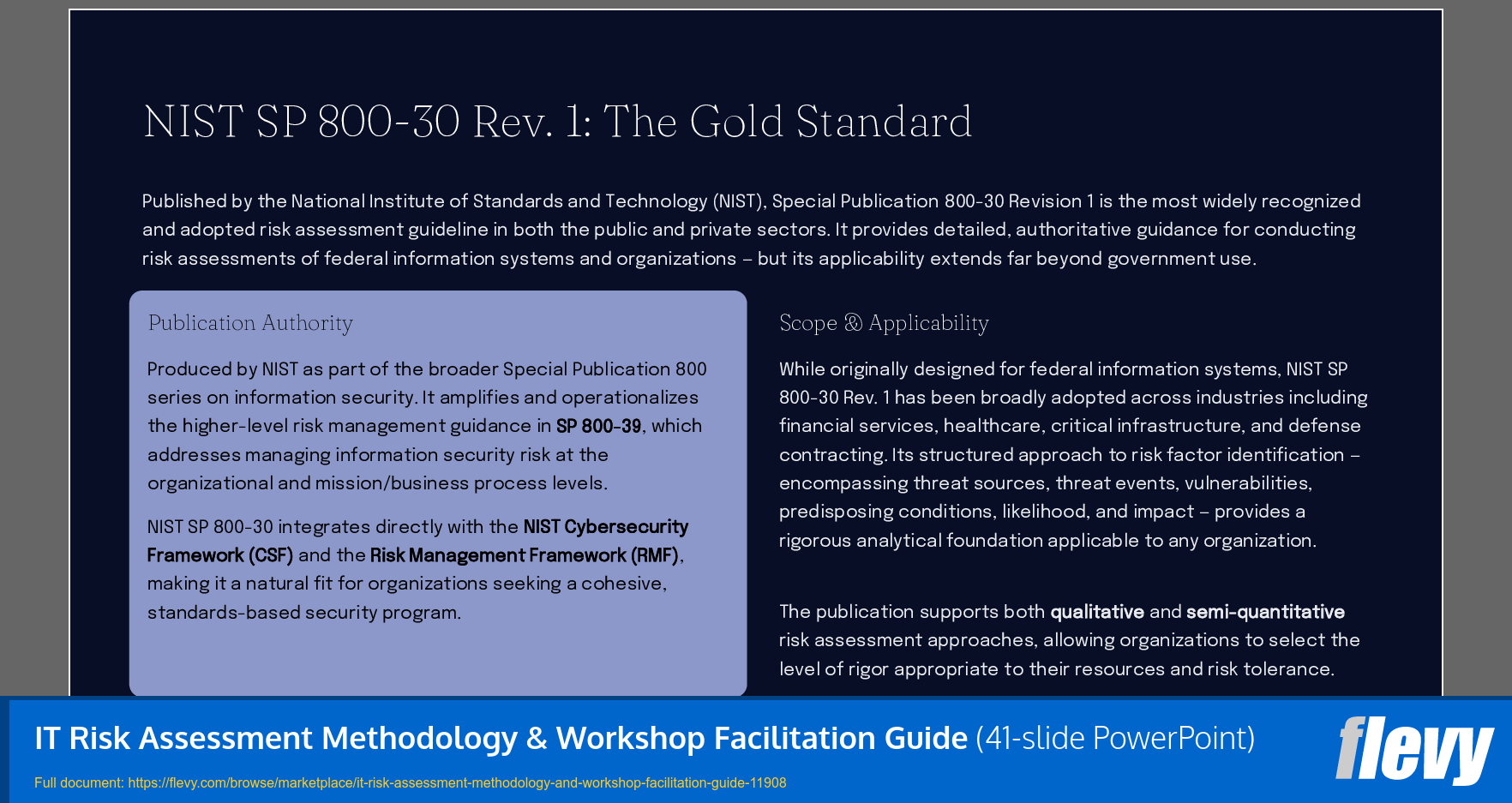
NIST SP 800-30 Rev. 1: The Gold Standard
• Published by the National Institute of Standards and Technology (NIST).
• Provides guidance for conducting risk assessments of federal information systems and organizations.
• Amplifies guidance from SP 800-39.
NIST's Three-Step Approach
1. Prepare for the Assessment: Defining scope, objectives, and resources.
1. Conduct the Assessment: Identifying assets, threats, vulnerabilities, and analyzing risks.
1. Maintain the Assessment: Ongoing monitoring, review, and updates.
Key Concepts from NIST
• Risk Model: Understanding the relationship between threats, vulnerabilities, and impact.
• Risk Management Framework (RMF): A structured process for managing security and privacy risks.
• Monitoring Risk: Continuous observation of the risk landscape.
[image] A flowchart illustrating the NIST Risk Management Framework (RMF)
Cyber Resilience Review (CRR): A Holistic View
• Developed by Carnegie Mellon University's Software Engineering Institute (SEI).
• Based on the Cyber Resilience Evaluation Method (CREM) and CERT® Resilience Management Model (CERT-RMM).
• Focuses on an organization's ability to prepare for, respond to, and recover from cyber incidents.
CRR Domain Descriptions
• Asset Management (AM): Identifying and managing all organizational assets.
• Controls Management (CM): Implementing and maintaining security controls.
• Vulnerability Management (VM): Identifying and addressing weaknesses.
• Risk Management (RM): The core process of identifying, assessing, and mitigating risks.
• Service Continuity Management (SCM): Ensuring essential services can continue during disruptions.
CRR Self-Assessment: A Practical Tool
• A structured method for organizations to evaluate their cyber resilience.
• Involves identifying participants, preparing for workshops, and completing the assessment.
• Generates reports that can be used to interpret scores and identify areas for improvement.
[image] A dashboard showing various cybersecurity metrics and scores
TechCloudPro's Enterprise Cybersecurity Risk Assessment Guide
• A step-by-step guide for conducting enterprise cybersecurity risk assessments.
• Covers methodology, asset inventory, threat modeling, risk scoring, and remediation roadmap.
• Emphasizes a practical methodology for a prioritized, defensible remediation roadmap.
TechCloudPro's Five-Phase Methodology
1. Scope and Asset Inventory: Identifying systems, data, processes, and their business value.
1. Threat Identification: Structuring threats around relevant actor categories (nation-state, cybercrime, opportunistic, insiders).
1. Vulnerability Identification: Pinpointing weaknesses that could be exploited.
1. Risk Analysis & Scoring: Determining likelihood and impact to prioritize risks.
1. Remediation Planning: Developing an actionable roadmap to address identified risks.
[image] A visual representation of the five phases of the TechCloudPro methodology
Chapter 3: The Risk Assessment Process in Detail
Phase 1: Scope and Asset Inventory
• What to Protect: Identify all information assets (systems, data, processes, third-party vendors).
• Business Value: Determine criticality to operations (impact of unavailability, corruption, disclosure).
• Asset Categories: Data (PII, financial, IP), System (servers, endpoints, cloud), Process (payroll, customer service), Third-Party.
[image] An infographic showing different types of IT assets
Phase 2: Threat Identification
• Focus on Actor Categories:
• Nation-state actors (espionage, disruption)
• Organized cybercrime (financial gain)
• Opportunistic attackers (easy targets)
• Malicious insiders (financial gain, revenge)
• Negligent insiders (accidental exposure)
Understanding Threat Motivations
• Espionage: Stealing sensitive information.
• Disruption: Causing operational downtime.
• Financial Gain: Ransomware, fraud, data theft for profit.
• Revenge/Ideology: Targeting organizations for personal or political reasons.
[image] Icons representing different threat actor types
Phase 3: Vulnerability Identification
• Technical Weaknesses: Unpatched systems, misconfigurations, weak passwords.
• Process Weaknesses: Inadequate access controls, lack of segregation of duties.
• Human Weaknesses: Lack of security awareness, susceptibility to social engineering.
Vulnerability Scanning vs. Risk Assessment
• Vulnerability Scan: Identifies technical weaknesses without business context.
• Risk Assessment: Identifies what could go wrong, how likely, and how much damage it would cause, linking technical weaknesses to business impact.
[image] A magnifying glass over a network diagram, highlighting potential weak points
Phase 4: Risk Analysis and Scoring
• Likelihood: Probability of a threat exploiting a vulnerability.
• Impact: The damage caused if the risk materializes (financial, operational, reputational).
• Risk Score: A quantitative or qualitative measure combining likelihood and impact.
• Prioritization: Ranking risks based on their scores to focus remediation efforts.
Qualitative vs. Quantitative Risk Analysis
• Qualitative: Uses descriptive scales (e.g., High, Medium, Low) for likelihood and impact.
• Quantitative: Assigns numerical values (e.g., dollar amounts) to impact and probabilities.
[image] A risk matrix showing likelihood vs. impact
Phase 5: Remediation Planning
• Actionable Roadmap: A prioritized list of steps to mitigate identified risks.
• Control Implementation: Deploying new security controls or enhancing existing ones.
• Policy Updates: Revising security policies and procedures.
• Training and Awareness: Educating employees on security best practices.
The Risk Register: Your Living Document
• A central repository for all identified risks, their analysis, and mitigation plans.
• Should be regularly reviewed and updated.
[image] A sample risk register table
Chapter 4: Facilitating Effective Risk Assessment Workshops
The Role of the Workshop Facilitator
• Neutral Guide: Ensures the process stays on track and objectives are met.
• Process Expert: Understands the risk assessment methodology.
• Communication Bridge: Facilitates discussion and consensus among participants.
• Timekeeper: Manages the agenda and ensures efficient use of time.
Preparing for the Workshop (CISA CRR Guide)
• Identify the Scope: Clearly define what the assessment will cover.
• Identify and Prepare Participants: Select individuals with relevant knowledge and roles.
• Prepare Workshop Materials: Agendas, templates, data, and tools.
Key Roles in the Self-Assessment Process
• Sponsor: Provides authority and resources.
• Facilitator: Guides the process.
• Participants: Provide expertise and input.
• Scribe: Documents discussions and decisions.
[image] A diagram showing the roles in a workshop setting
During the Workshop: Best Practices
• Set Clear Objectives: Reiterate the purpose and desired outcomes.
• Establish Ground Rules: Encourage open communication and respect.
• Active Listening: Pay attention to all contributions.
• Manage Time Effectively: Stick to the agenda, but be flexible.
Techniques for Engagement
• Brainstorming: Generate ideas for threats and vulnerabilities.
• Group Discussion: Facilitate dialogue and consensus building.
• Scenario Planning: Walk through potential risk events.
• Visual Aids: Use whiteboards, flip charts, or digital tools.
[image] A diverse group of people collaborating around a table with sticky notes
Handling Disagreements and Challenges
• Acknowledge Different Perspectives: Validate concerns.
• Focus on Data and Evidence: Base decisions on facts.
• Seek Consensus: Aim for agreement, but document dissenting opinions.
• Escalate When Necessary: Know when to involve higher management.
Post-Workshop Activities
• Document Findings: Compile the risk register and assessment report.
• Communicate Results: Share findings with stakeholders.
• Develop Remediation Plans: Translate findings into actionable steps.
• Follow Up: Track progress on mitigation efforts.
[image] A checklist with items like "Document Findings," "Communicate Results," "Track Progress"
Chapter 5: Integrating Risk Assessment into the Organization
From Assessment to Action: Building a Remediation Roadmap
• Prioritization: Focus on high-impact, high-likelihood risks first.
• Resource Allocation: Assign budget and personnel to mitigation efforts.
• Ownership: Clearly define who is responsible for each mitigation task.
• Timelines: Set realistic deadlines for completion.
[image] A roadmap graphic with milestones and deadlines
Continuous Monitoring and Improvement
• Regular Reviews: Conduct periodic risk assessments (e.g., annually).
• Event-Driven Updates: Re-assess risks after significant changes (new systems, major incidents).
• Metrics and KPIs: Track the effectiveness of risk management efforts.
Risk Management as a Culture
• Leadership Buy-in: Essential for driving a risk-aware culture.
• Employee Training: Empowering everyone to identify and report risks.
• Integration with Business Processes: Embedding risk considerations into decision-making.
[image] A graphic showing a cycle of continuous risk management
Chapter 6: Advanced Topics and Future Trends
Emerging Threats and Technologies
• AI and Machine Learning: New attack vectors and defense mechanisms.
• IoT and OT Security: Expanding attack surface.
• Cloud Security Risks: Shared responsibility models and misconfigurations.
• Supply Chain Risks: Vulnerabilities in third-party software and services.
[image] Icons representing AI, IoT, Cloud, and Supply Chain
The Role of Automation in Risk Assessment
• Automating data collection and analysis.
• Streamlining vulnerability scanning and threat intelligence.
• Improving the efficiency and accuracy of risk assessments.
[image] A robot arm interacting with a digital interface
Future of Risk Assessment: Proactive and Predictive
• Moving beyond reactive identification to predictive risk modeling.
• Leveraging big data and advanced analytics.
• Integrating threat intelligence for early warning.
[image] A futuristic dashboard showing predictive risk indicators
Chapter 7: Key Takeaways and Next Steps
Recap: The Pillars of Effective IT Risk Assessment
• Methodology: NIST, CRR, TechCloudPro provide robust frameworks.
• Process: A structured approach from scope to remediation.
• Facilitation: Skilled workshops drive engagement and consensus.
• Culture: Embedding risk awareness throughout the organization.
Your Action Plan
1. Review your current risk assessment process.
1. Identify gaps based on NIST SP 800-30 Rev. 1 and CRR.
1. Plan and conduct a facilitated risk assessment workshop.
1. Develop and implement a prioritized remediation roadmap.
1. Foster a continuous risk management culture.
Got a question about the product? Email us at support@flevy.com or ask the author directly by using the "Ask the Author a Question" form. If you cannot view the preview above this document description, go here to view the large preview instead.
Source: Best Practices in Risk Management, Information Technology PowerPoint Slides: IT Risk Assessment Methodology & Workshop Facilitation Guide PowerPoint (PPTX) Presentation Slide Deck, Mohamed Alshamey
ABOUT THE AUTHOR

Senior Consultant in Cybersecurity GRC, Data Governance, Cybersecurity, Privacy, and Data Management, with over 20 years of experience in information technology, consulting, training, and technical capacity building. holds a PhD. In AI & Data Privacy, he has a master's degree in cybersecurity and is currently pursuing research focused on data privacy. possesses extensive expertise in ... [read more]
Ask the Author a Question
You must be logged in to contact the author.




























