
 Click main image to view in full screen. Unlock all 22 preview images:
Infrastructure Function Substitution – PDF
PDF document 41 Pages


BENEFITS OF THIS DOWNLOADABLE PDF DOCUMENT
- Provides a structured method for identifying when alternative-resource configurations can materially alter conventional infrastructure capacity, timing, capital, or system-architecture decisions.
- Separates technical feasibility from operational, economic, systemic, regulatory, safety, and liability viability so attractive concepts can be rejected before capital is committed.
- Converts qualified opportunities into actionable executive decisions--Substitute, Complement, Defer, Conditional, or Reject--using evidence maturity and capital-deferral logic.
CAPITAL BUDGETING PDF DESCRIPTION
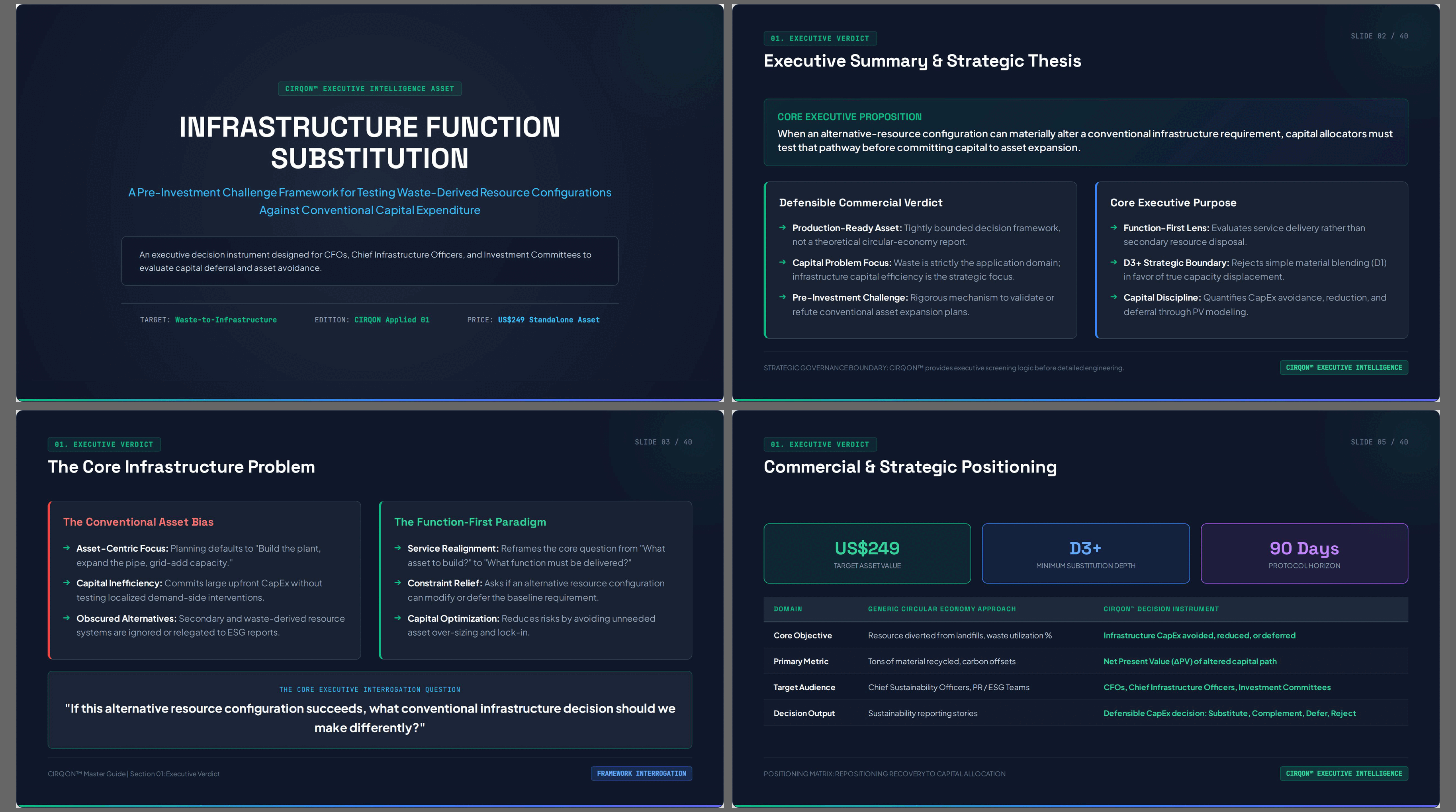
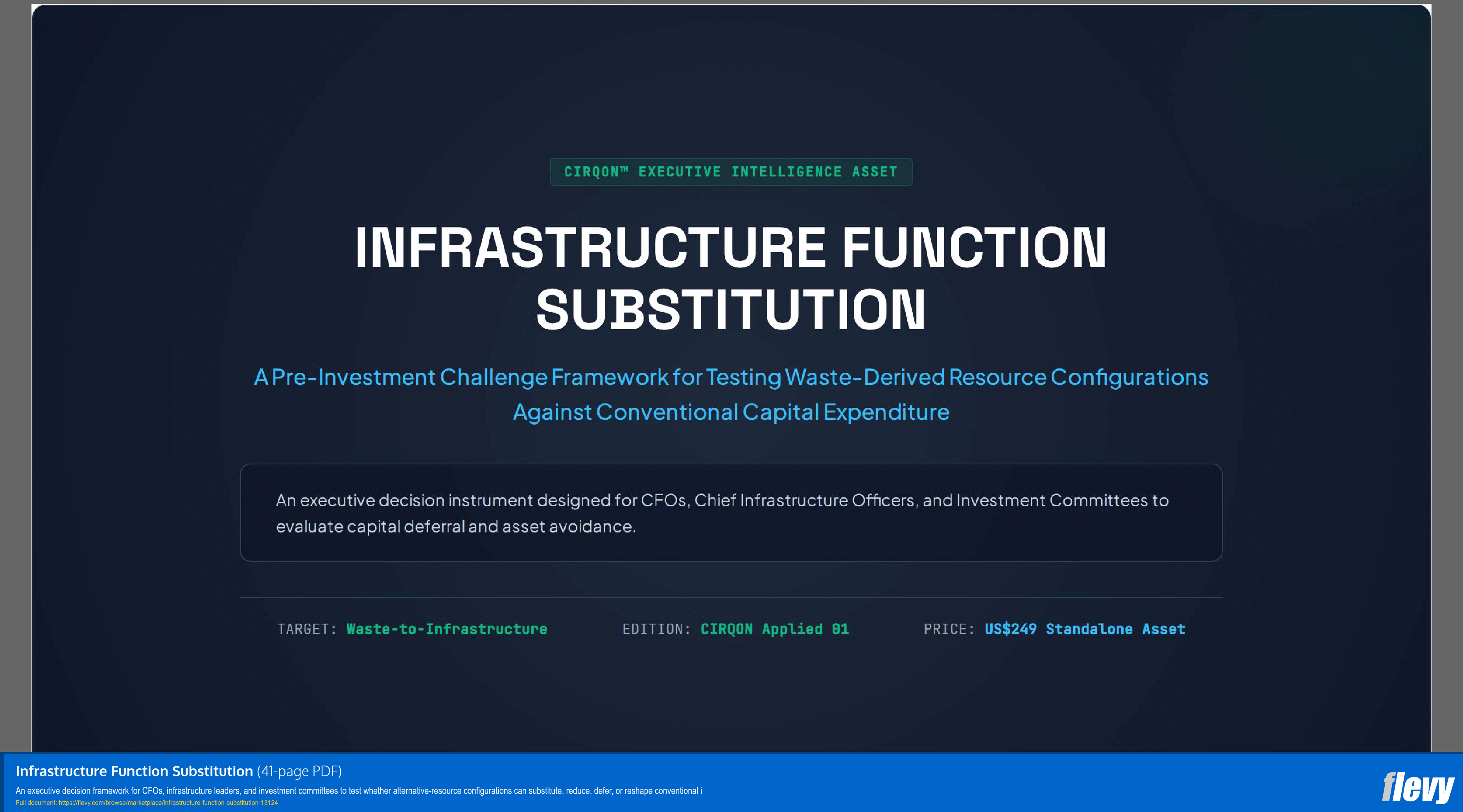
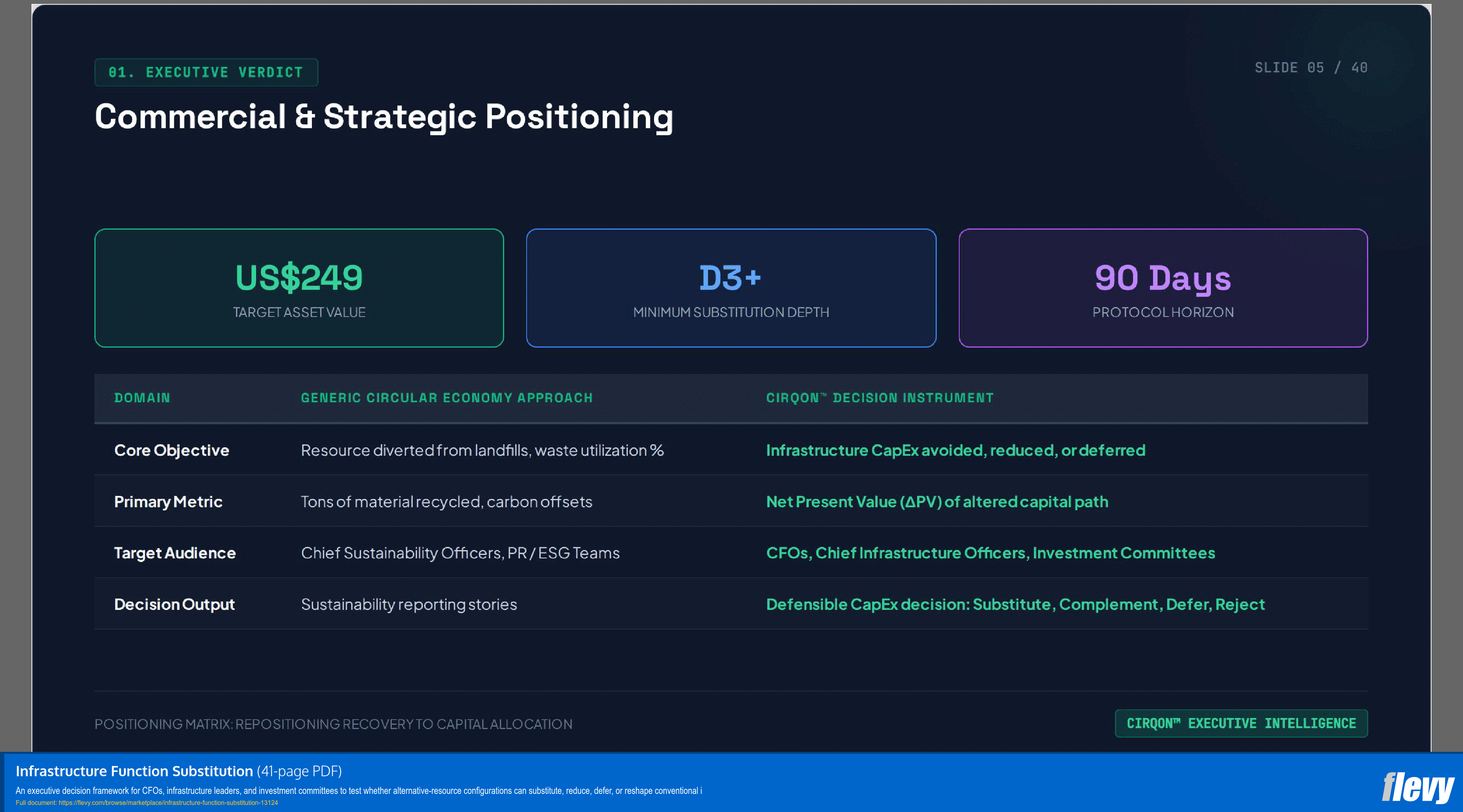
Infrastructure Function Substitution is a pre-investment decision framework for evaluating whether alternative-resource configurations can materially change a conventional infrastructure investment decision.
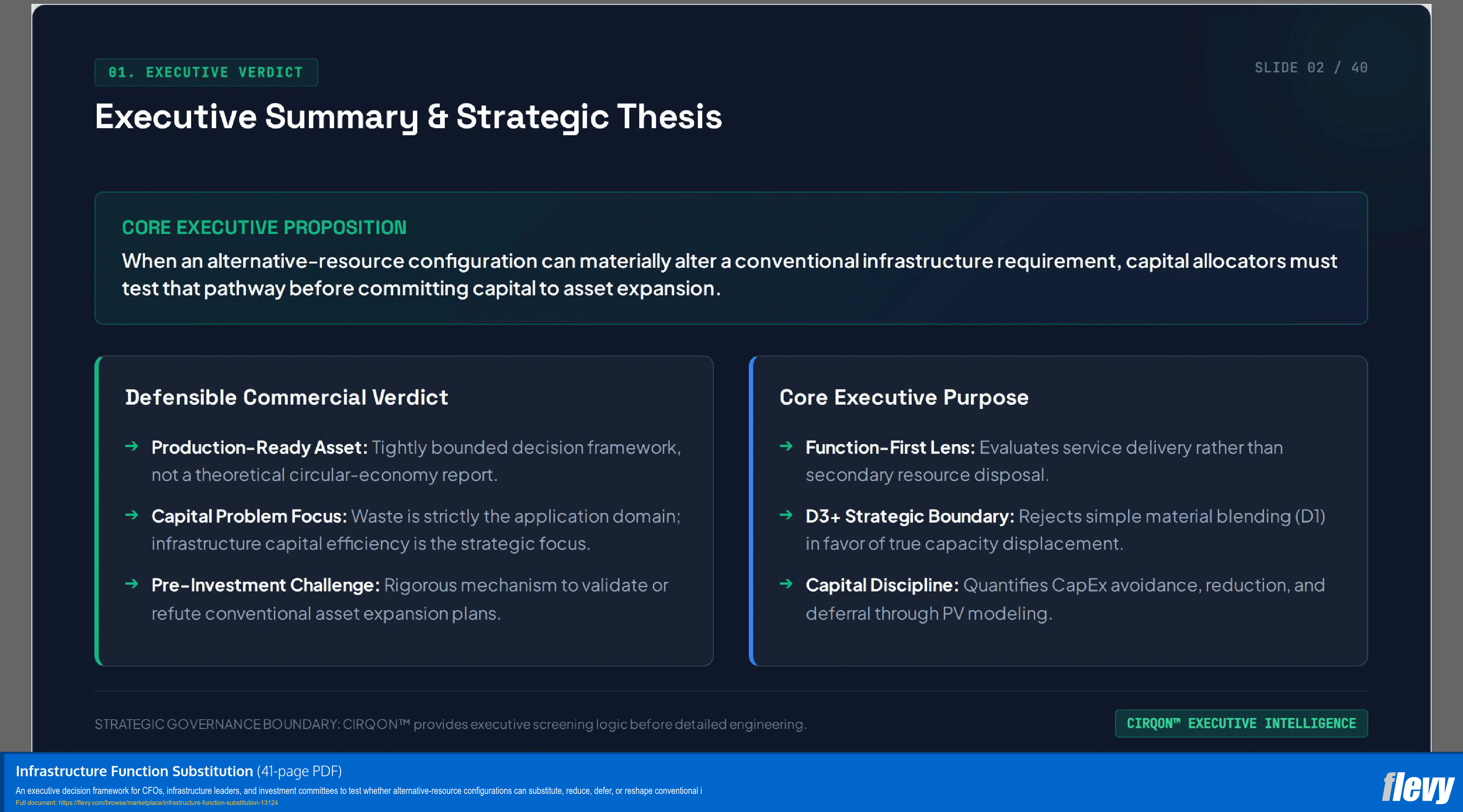
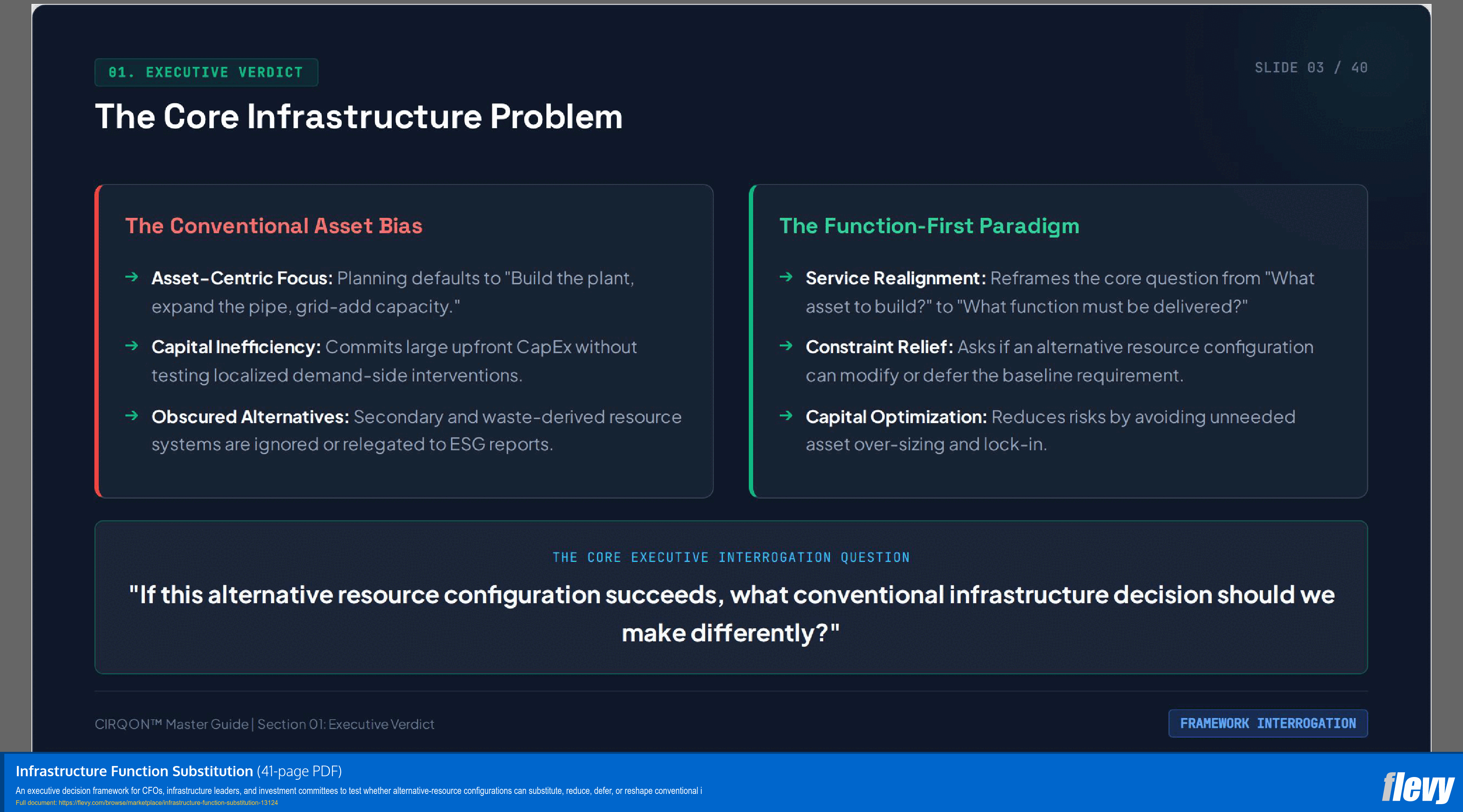
Most infrastructure planning begins with an asset requirement: what facility, capacity expansion, network, plant, or utility asset needs to be built? This playbook introduces a different screening discipline. It begins with the infrastructure function that must be delivered, establishes the conventional asset baseline, identifies an alternative resource configuration, and then tests whether that configuration can produce a meaningful infrastructure consequence.
The framework is specifically designed for waste-derived and secondary-resource opportunities where the strategic question extends beyond whether a waste stream can be recycled, recovered, or converted into a useful product. The critical question is whether the resulting configuration can substitute, complement, defer, reduce, or otherwise alter conventional infrastructure requirements.
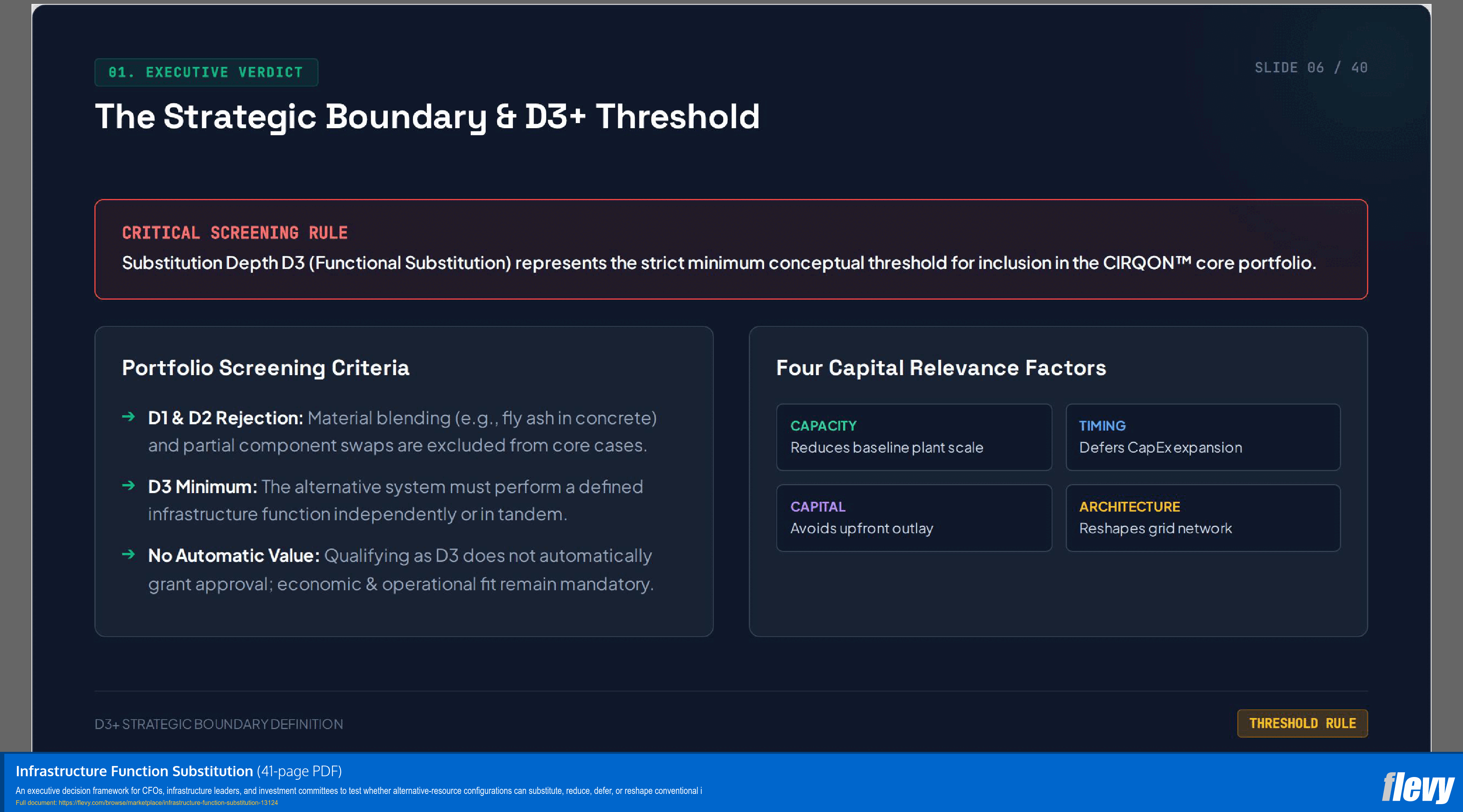
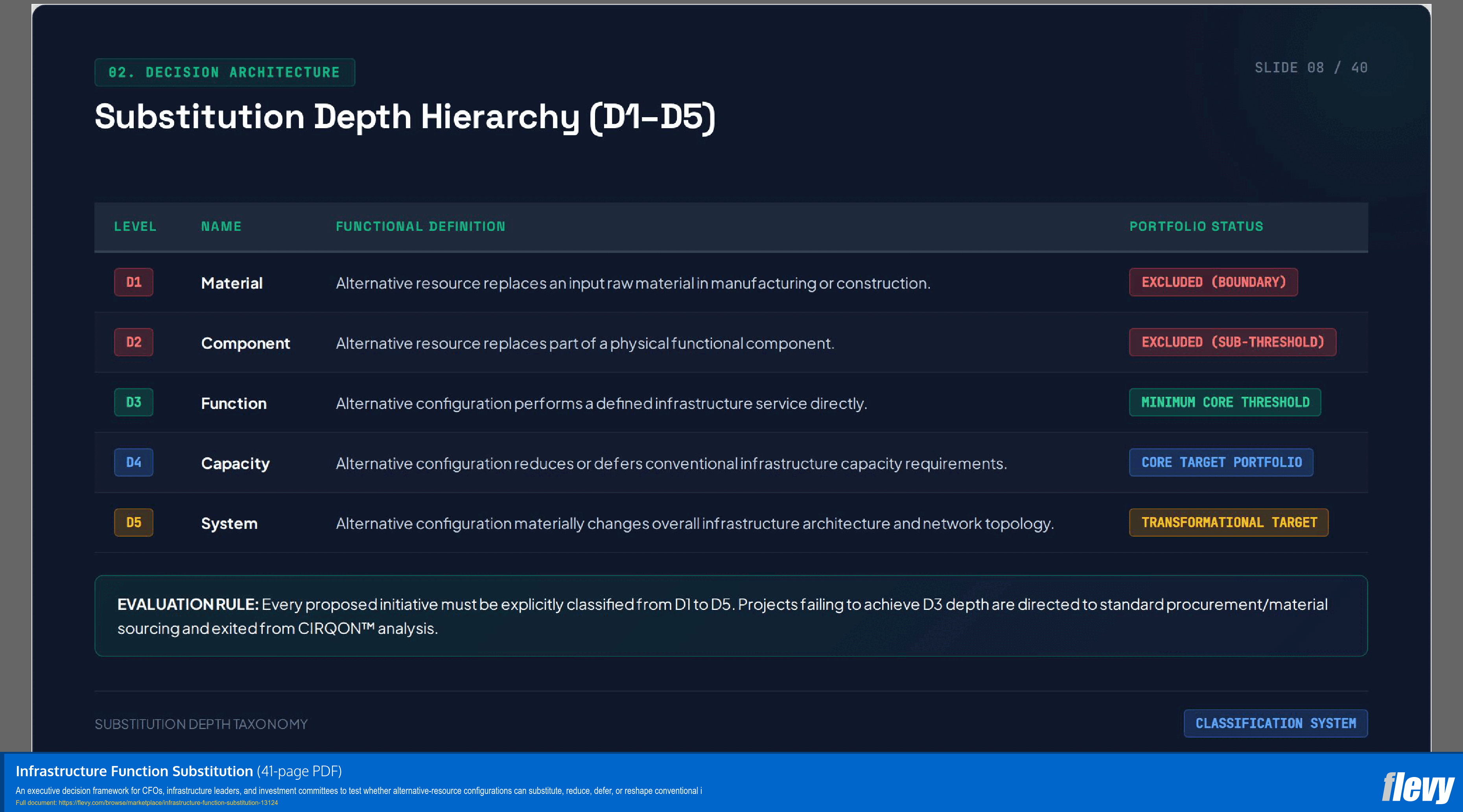
The CIRQON decision architecture applies a D3+ threshold for core opportunities. D1 material substitution and D2 component substitution are treated as boundary cases unless they demonstrate a direct infrastructure consequence. D3 Function Substitution requires the alternative configuration to perform a defined infrastructure service. D4 Capacity Substitution addresses reductions or deferrals in conventional infrastructure capacity. D5 System Substitution addresses changes to infrastructure architecture or network topology.
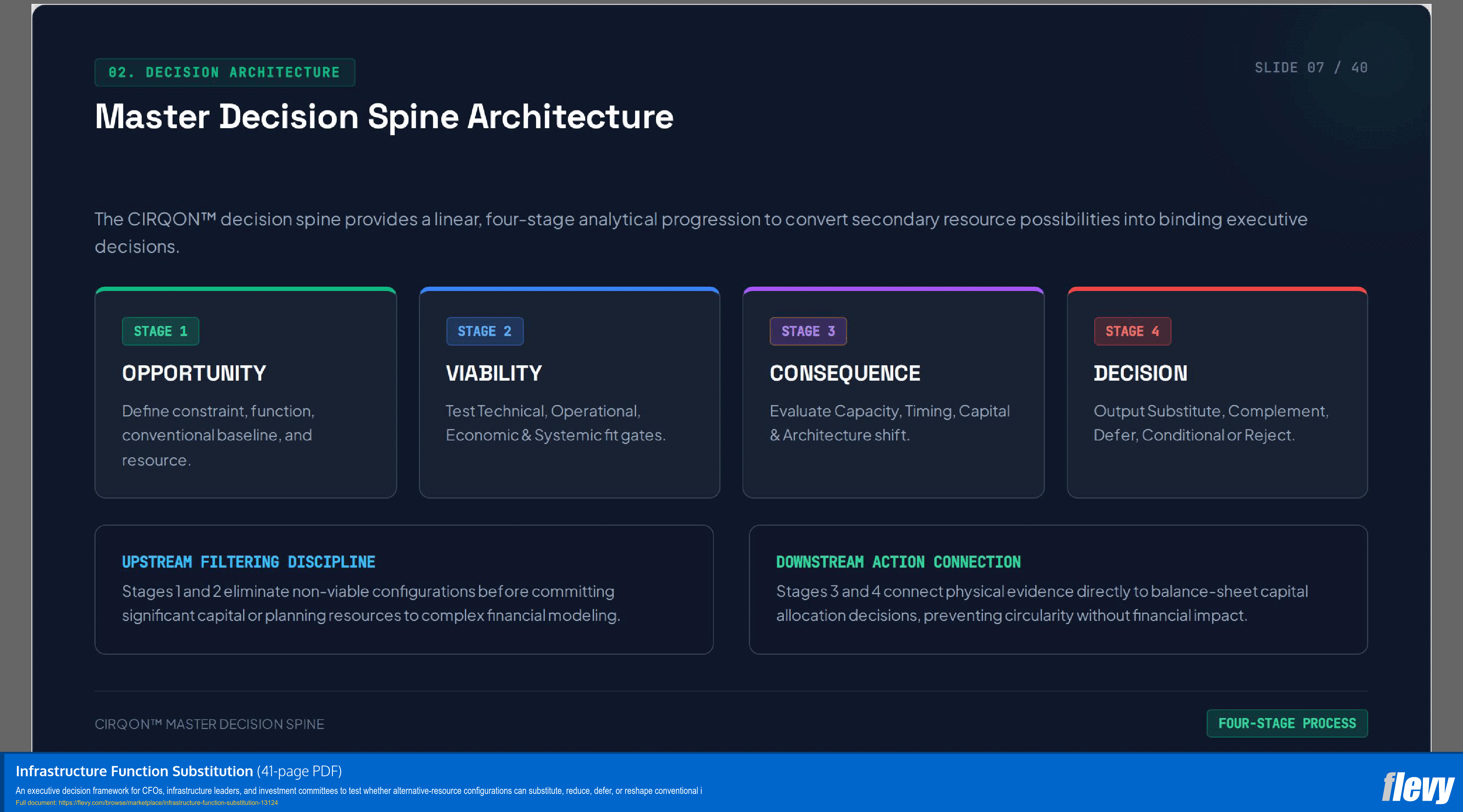
Each opportunity progresses through four decision stages: Opportunity, Viability, Consequence, and Decision. The viability engine evaluates Technical Fit, Operational Fit, Economic Fit, and Systemic Fit, while Safety, Regulatory, and Liability conditions operate as hard vetoes rather than variables that can simply be traded against financial return.
Evidence is assessed independently across technical, operational, economic, and enabling dimensions using an E0–E4 maturity scale. This prevents laboratory concepts, pilot projects, operational deployments, and scaled systems from being treated as equivalent evidence.
The economic engine focuses on infrastructure consequence rather than simple unit-cost comparison. It distinguishes CapEx Avoidance, CapEx Reduction, CapEx Deferral, and No Capital Consequence, and introduces present-value logic for screening the financial value of postponing conventional infrastructure expenditure.
The playbook includes an evidence portfolio covering reclaimed wastewater, industrial waste heat recovery, organic waste energy systems, rainwater harvesting, biomass thermal systems, a boundary case involving passive daylighting, and a rejected water-reuse pathway. The cases are deliberately used to demonstrate both successful and unsuccessful decision pathways.
The final output is not a generic sustainability score. Each qualified opportunity receives an executive decision state: Substitute, Complement, Defer, Conditional, or Reject/Blocked.
The result is a standalone Executive Intelligence Asset designed to help infrastructure strategists, utility leaders, capital planners, corporate executives, and investment committees challenge conventional asset expansion before capital is committed.
It is not an engineering design standard, investment-grade financial model, regulatory approval substitute, or waste-management operating manual. It is a structured pre-investment screening instrument for identifying where alternative-resource configurations deserve deeper validation before conventional infrastructure capital is locked in.
Got a question about the product? Email us at support@flevy.com or ask the author directly by using the "Ask the Author a Question" form. If you cannot view the preview above this document description, go here to view the large preview instead.
Source: Best Practices in Capital Budgeting, Circular Economy PDF: Infrastructure Function Substitution PDF (PDF) Document, Wisnu Pandega Wardana
ABOUT THE AUTHOR

I am an independent Industrial Intelligence and Strategic Innovation Publisher focused on developing structured business intelligence, innovation frameworks, and opportunity-oriented research for decision-makers.
My work focuses on translating emerging technologies, industrial transformation, sustainability, resource efficiency, and market shifts into structured intelligence assets that
... [read more]
Ask the Author a Question
You must be logged in to contact the author.




























