
 Click main image to view in full screen. Unlock all 9 preview images:
HVAC and Home Services Acquisition and Underwriting Model – Excel XLSX
Excel (XLSX) + supplemental PDF


BENEFITS OF THIS DOWNLOADABLE EXCEL DOCUMENT
- Build revenue from the maintenance agreement book, the service mix and the install mix rather than one blended guess.
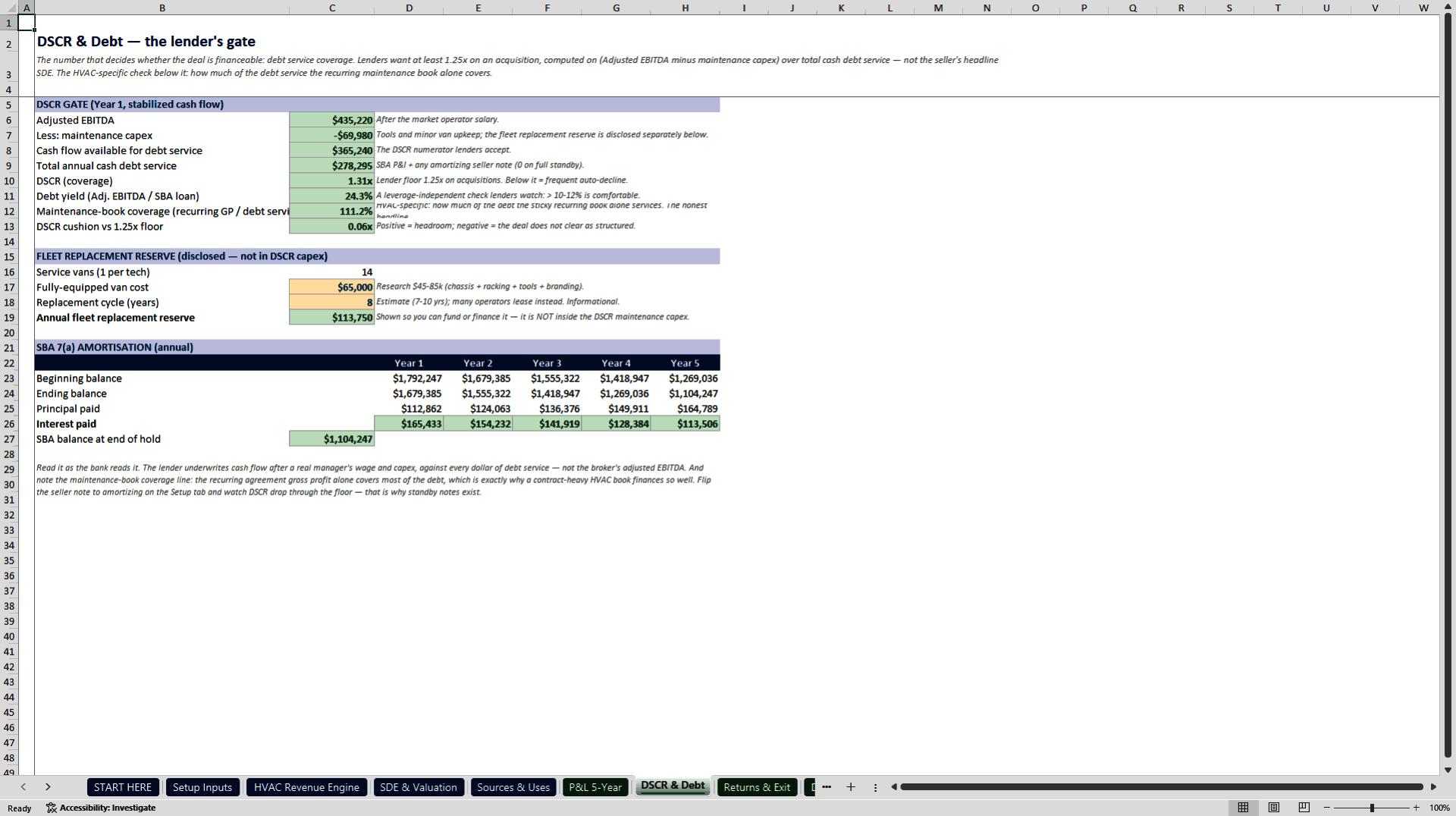
- Structure the SBA 7(a) capital stack and test the seller note standby lever against the lender coverage floor.
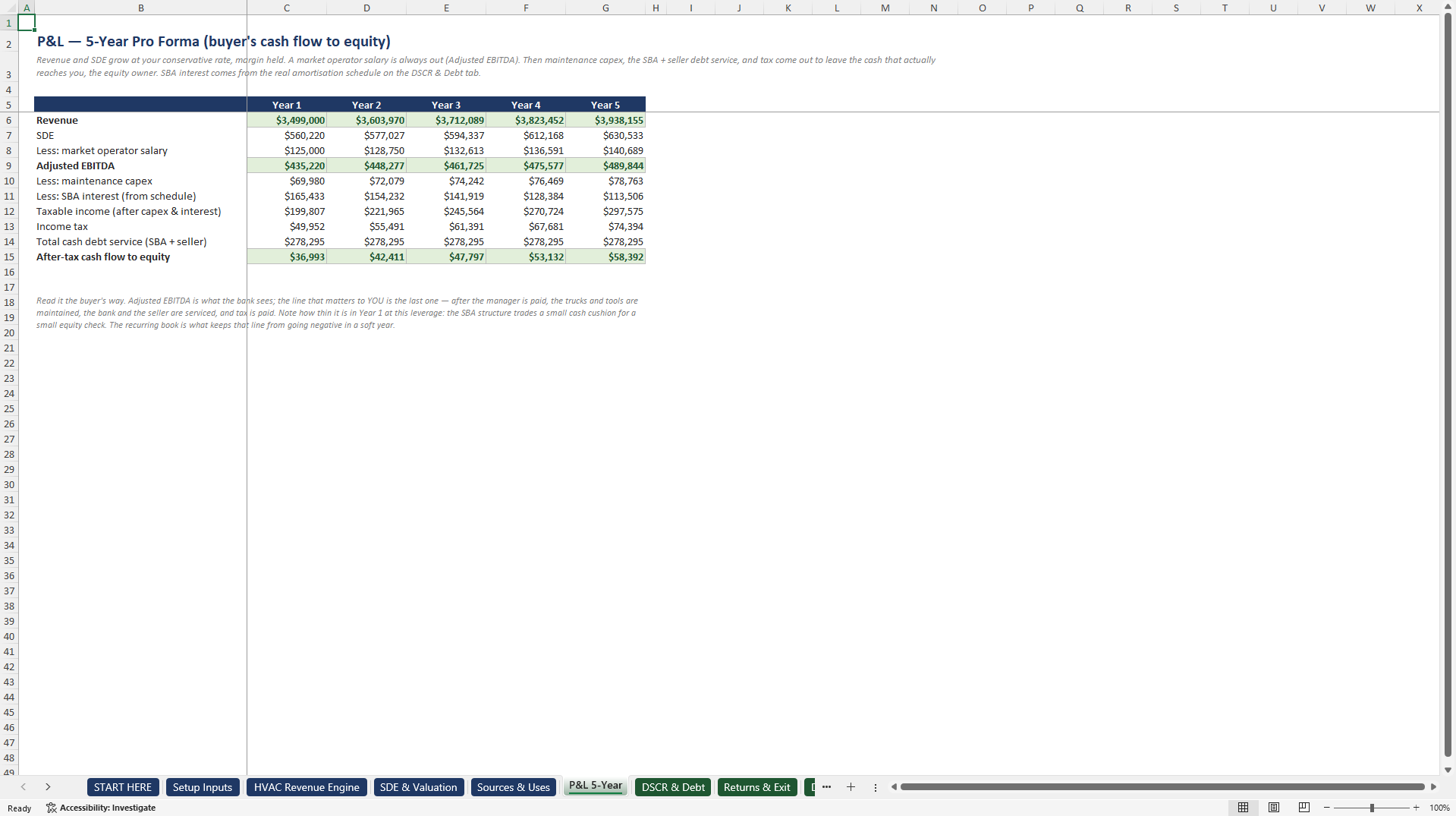
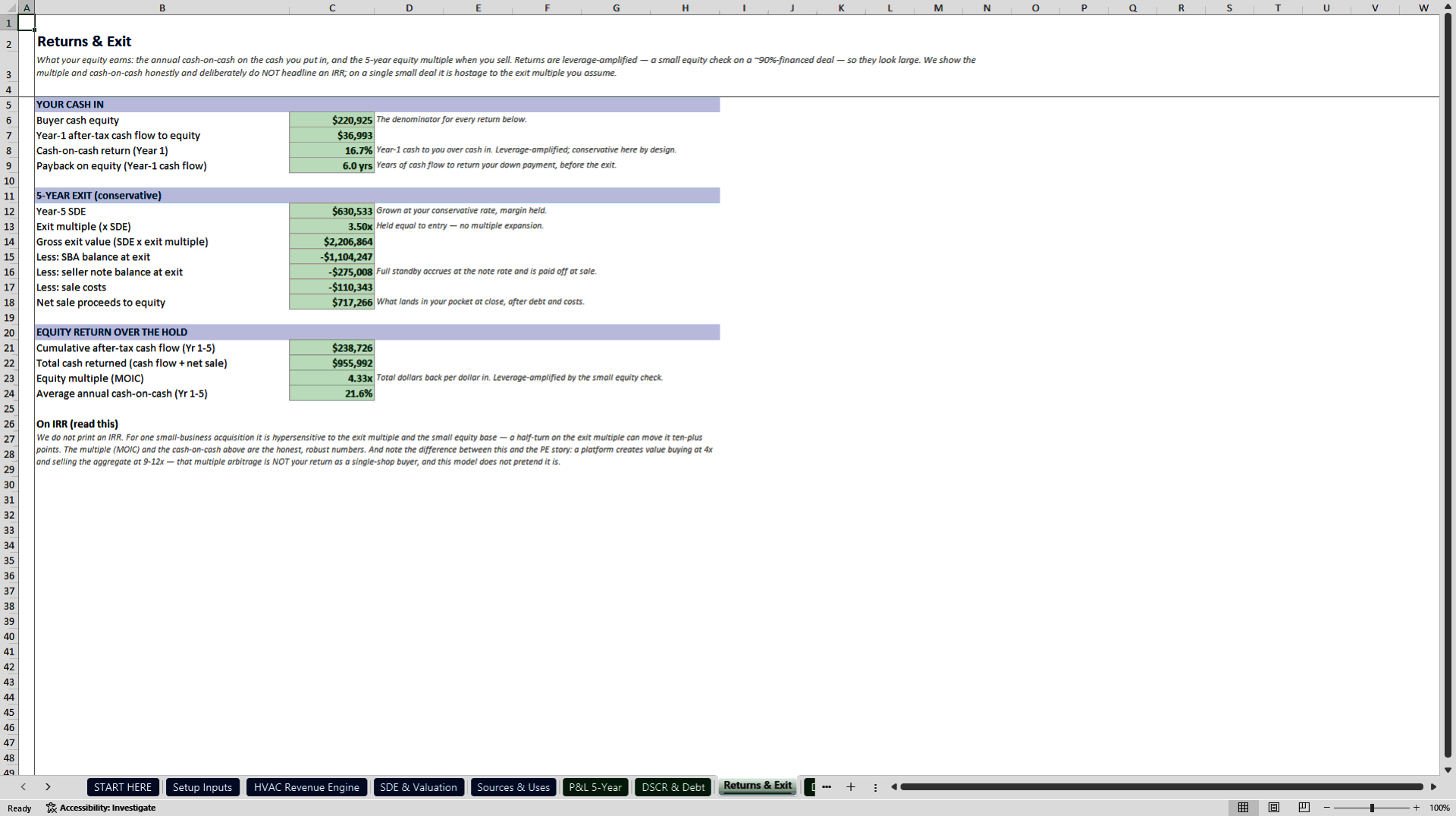
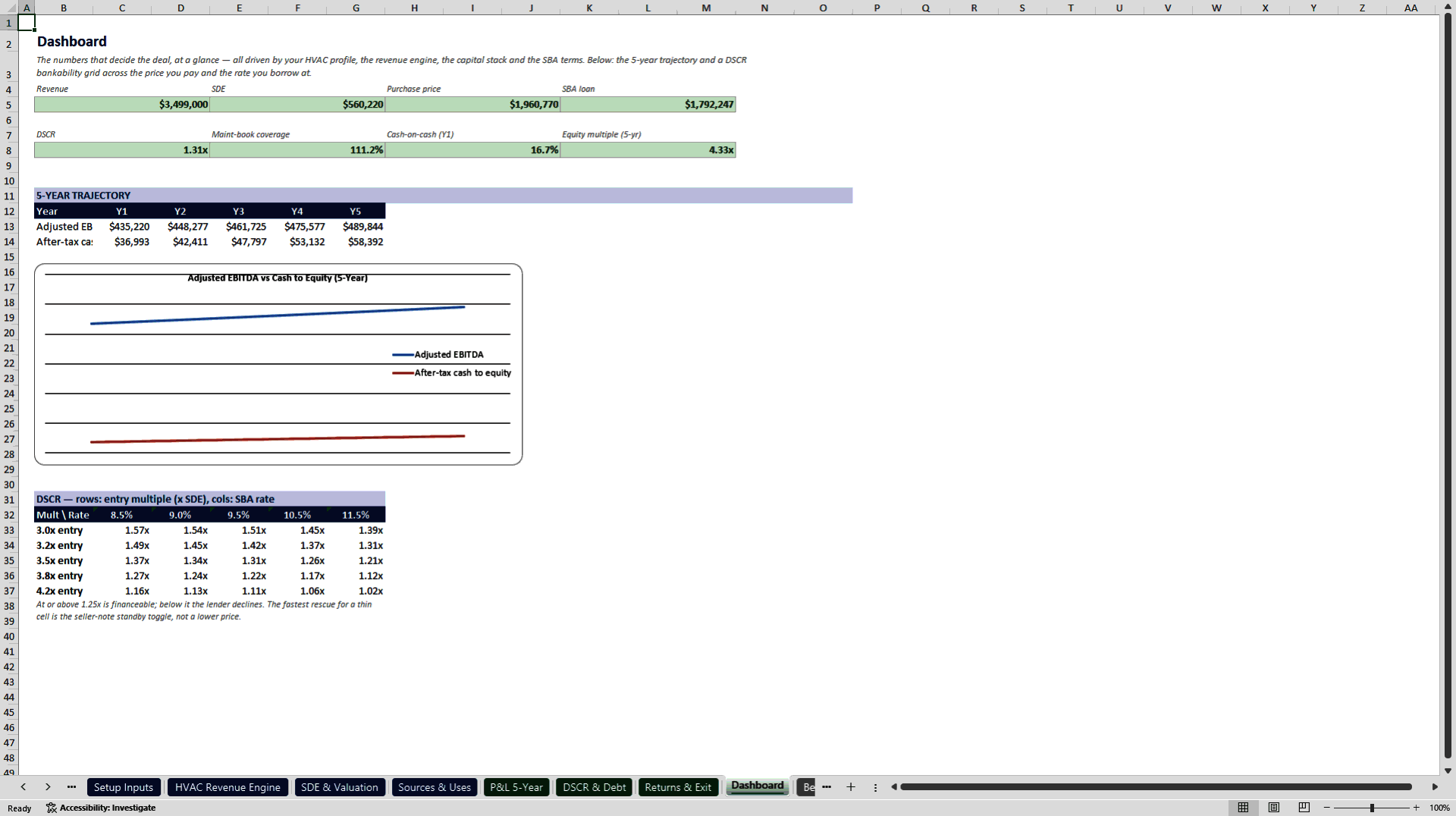
- Read coverage, debt yield, cash-on-cash and the five-year equity multiple on the cash flow a bank accepts.
INTEGRATED FINANCIAL MODEL EXCEL DESCRIPTION
Buying an HVAC or home services company is not buying trucks and a customer list. It is buying the maintenance book, and that is the line an SBA lender leans on. This model underwrites the acquisition the way the lender actually will, so you know whether the deal is financeable before you sign the letter of intent.
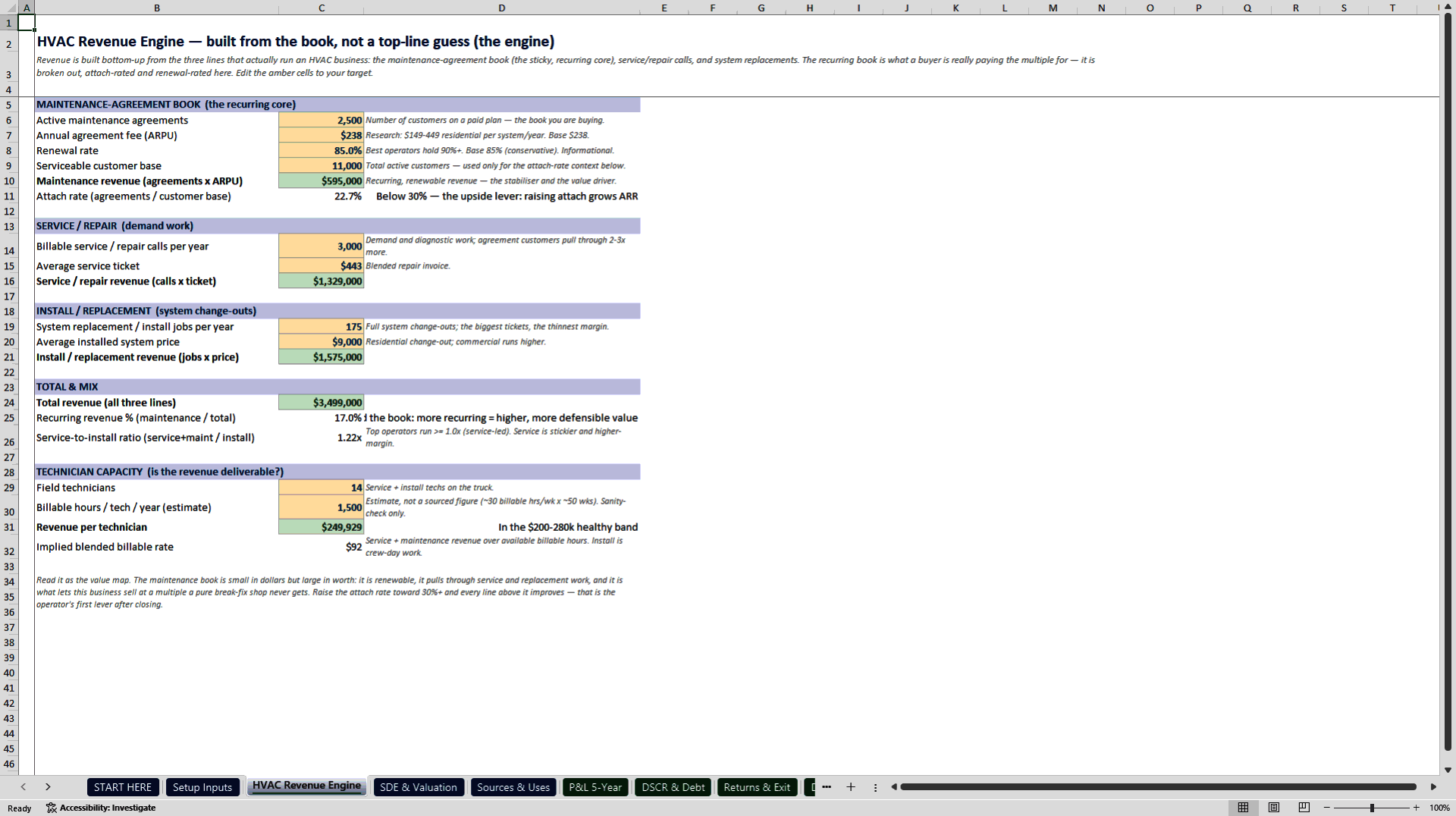
Revenue is built from the bottom up rather than guessed. The maintenance agreement book is modelled as active agreements multiplied by annual revenue per agreement, with attach and renewal rates you control. Service and repair work is calls multiplied by average ticket. Install and replacement work is jobs multiplied by price. The recurring book is broken out on its own line, because it is the part that justifies the multiple.
Each revenue line carries its own gross margin, so gross profit and therefore seller's discretionary earnings fall out as operating results instead of a blended guess. Two shops with identical revenue but a different mix earn very different amounts, and the model shows exactly why. A technician capacity check converts the implied revenue into revenue per technician and a billable rate, to sanity test whether the plan is physically deliverable.
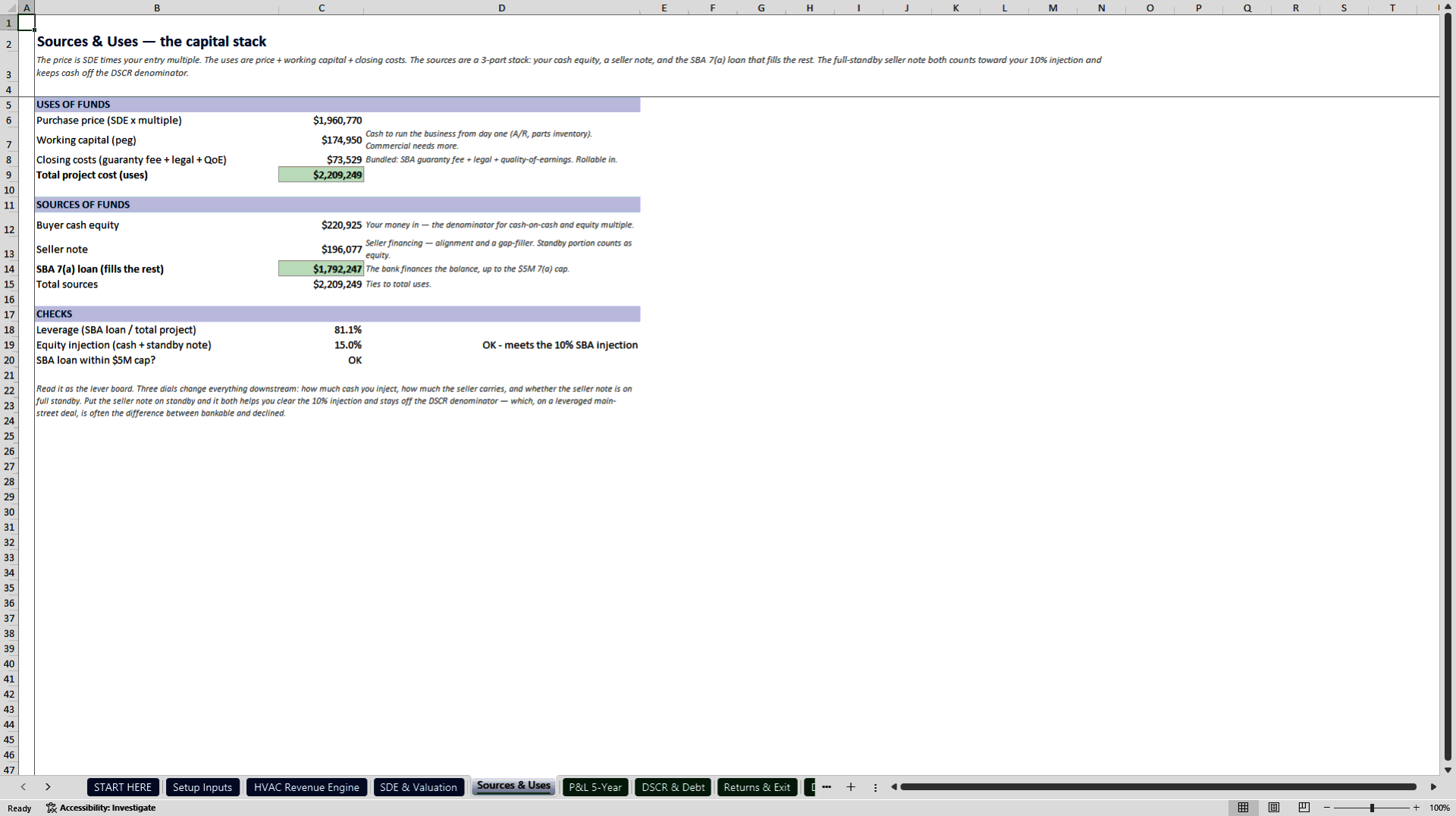
The capital stack is structured the way a small acquisition actually closes: an SBA 7(a) loan, your equity injection and a seller note. One toggle switches the seller note between full standby and amortising. On full standby the note pays no cash and counts toward your injection, and coverage holds; switch it to amortising and coverage falls below the customary 1.25 times floor. That single switch is often the difference between financeable and declined.
Coverage is computed on the cash flow a bank accepts, after a market rate operator salary and after maintenance capital expenditure, and is cross checked with a debt yield. A sensitivity grid runs coverage across purchase multiple and interest rate together.
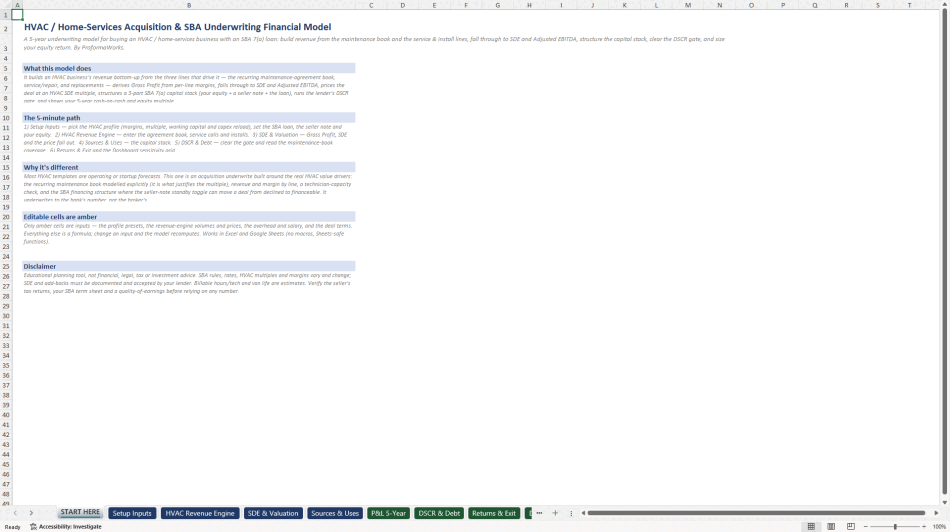
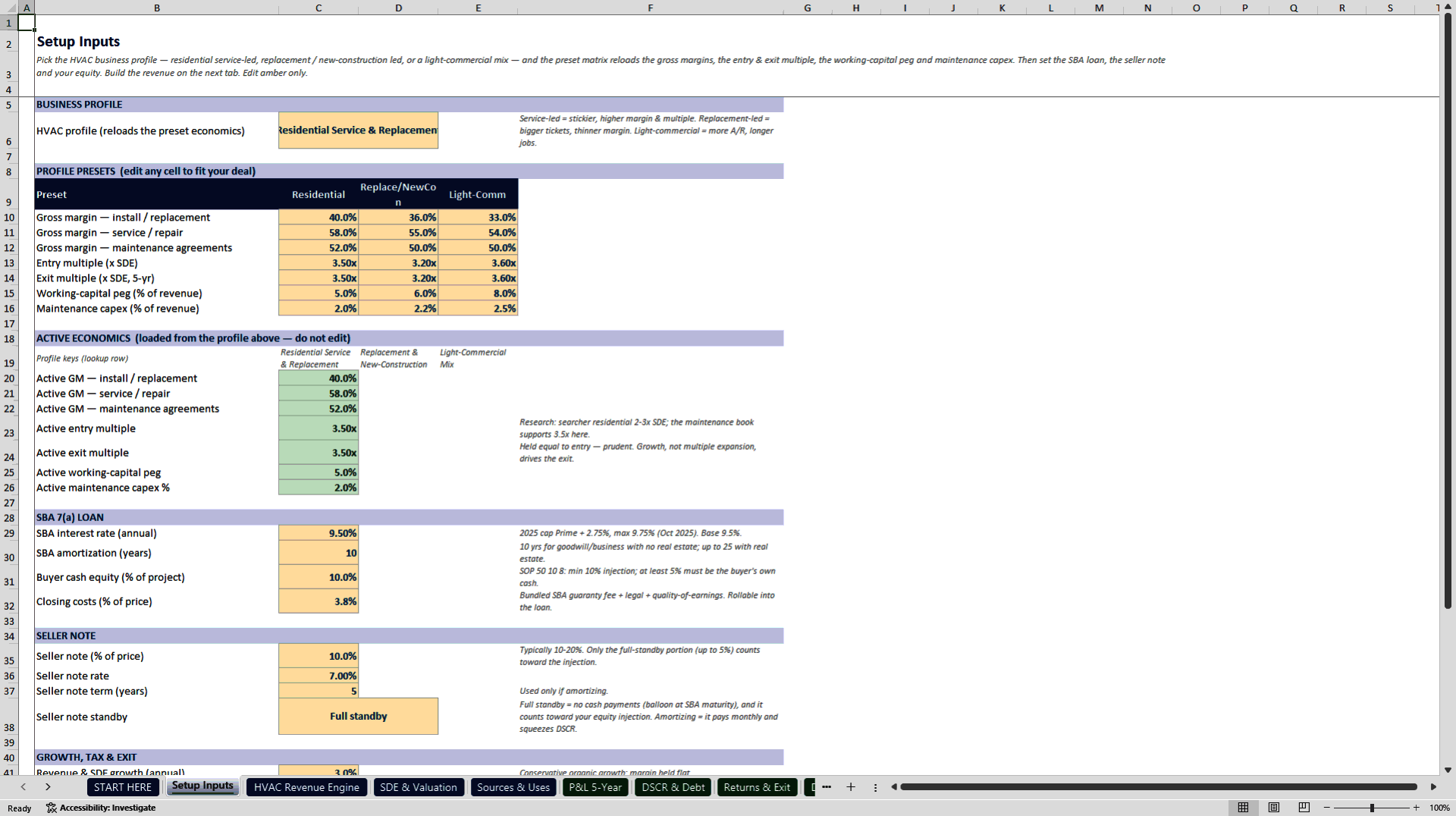
A profile toggle reloads margins, entry and exit multiples, the working capital peg and maintenance capital expenditure for residential service and replacement, replacement and new construction, or a light commercial mix.
Ten sheets, no macros, no add-ins and no external links, so the workbook opens in Excel and in Google Sheets alike. Every formula is recomputed by three independent calculation engines before release.
The download also includes a twenty one page PDF user guide covering quick start, a sheet by sheet walkthrough, how the maintenance book engine and the mix based earnings build work, how the capital stack and the coverage gate work, the standby lever, and a full frequently asked questions section.
Returns here are leverage amplified, and the model says so rather than dressing it up. This is an educational planning tool and not financial, investment, tax, lending or legal advice. Loan rules, rates, multiples and margins vary by lender and change over time, so verify the seller's agreement book, tax returns, your term sheet and a quality of earnings review before relying on any figure.
Got a question about the product? Email us at support@flevy.com or ask the author directly by using the "Ask the Author a Question" form. If you cannot view the preview above this document description, go here to view the large preview instead.
Source: Best Practices in Integrated Financial Model Excel: HVAC and Home Services Acquisition and Underwriting Model Excel (XLSX) Spreadsheet, ProformaWorks
ABOUT THE AUTHOR
ProformaWorks builds acquisition-grade financial models for Main Street and lower-middle-market businesses - the kind of deal financed with an SBA 7(a) loan or a small commercial facility.
Every model answers one question: does this deal pencil at the bank? That means SDE or NOI rebuilt from the seller's own numbers, the add-backs a lender will and will not accept, a debt-service
... [read more]
Ask the Author a Question
You must be logged in to contact the author.




























