
 Click main image to view in full screen. Unlock all 9 preview images:
How to Reshape Strategy with AI – Word DOCX
Word (DOCX) 44 Pages


BENEFITS OF THIS DOWNLOADABLE WORD DOCUMENT
- Provides a practical framework for reshaping your strategy around AI and building durable competitive advantage.
- Provides a systematic framework for connecting AI capabilities to strategic priorities, operational performance, and growth.
- Provides a board-ready framework for identifying where AI can transform your competitive position and drive measurable business value.
STRATEGY DEVELOPMENT WORD DESCRIPTION
Curated by McKinsey-trained Executives
HOW TO RESHAPE STRATEGY WITH AI
A Practical Executive Guide to Competing, Operating, and Growing in the AI Era
Stop Losing Market Share, Failing to Scale AI Value, and Missing Competitive Threats Because Your Organization Treats AI Like a Technology Program Instead of a Strategic Forcing Function.
Most CEOs, CFOs, and Chief Strategy Officers don't fail because they lack intelligence—they fail because they lack the disciplined framework, the systematic architecture, and the step-by-step methodology to translate AI capability into durable competitive advantage that actually moves revenue, margin, capital efficiency, and speed.
They suffer from:
• ❌ Strategy confusion – AI investment scattered across 40 disconnected pilots; no one can articulate which initiatives tie to competitive position; executives don't know which projects to kill
• ❌ AI adoption without value – Training budgets spent, tools deployed, adoption metrics reported—and no measurable change to business economics or competitive position
• ❌ Silent competitive erosion – Competitors using AI to narrow information gaps, execution gaps, capability gaps while your advantage erodes faster than historical strategy cycles predicted
• ❌ Workflow theater, not redesign – Automating a task inside an unchanged process; productivity metrics improve while total cycle time stays flat and customers notice no difference
• ❌ Capital allocation disasters – $50M in AI infrastructure built; the initiatives it supports fail to scale; money spent, value never realized, executives lose credibility
• ❌ Three-horizon portfolio collapse – Everything invested in near-term efficiency; nothing in products or markets that might change competitive position; long-term growth rate declining
• ❌ Board-level embarrassment – Presenting an "AI strategy" that is actually a technology implementation roadmap; directors asking "how does this change what we compete on?" and getting no coherent answer
• ❌ Talent bleeding – Your best people burning out rebuilding processes that never quite work; AI specialists frustrated that capability isn't translating to business impact; leaders leaving for organizations that "actually get AI strategy"
• ❌ Valuation stagnation – Investors seeing AI investment but no evidence of strategic repositioning; analyst reports citing "successful AI adoption" alongside "market share declining in core segments"
• ❌ M&A integration failures – Acquired company's AI capability never integrated; deal thesis about "combining AI capabilities" never materialize; $200M acquisition written down three years later
• ❌ New entrant blindness – A startup uses AI to fundamentally change unit economics in your industry; by the time you recognize the threat, they've captured your most profitable customer segment
• ❌ Organizational paralysis – Can't decide centralized vs. federated vs. platform-based AI operating model; governance bottlenecks slow every initiative; business units lose faith in AI's ability to deliver
• ❌ Valuation committee rejection – Your AI-driven DCF model rejected as "making too many assumptions"; fairness opinion questioned; deal stalls because the valuation doesn't hold up to scrutiny
That's why competitive positions erode. That's why AI investment doesn't move strategic metrics. That's why boards lose confidence in management's ability to navigate AI. That's why companies lose deals to better-positioned competitors.
INTRODUCING: HOW TO RESHAPE STRATEGY WITH AI
The Complete, Board-Ready Strategic Framework: 27 Chapters, 44 Pages, 1 Fully Integrated Five-Year Strategic Case Study (Northstar Coffee Co.) with Every Financial, Operational, and Organizational Element Reconciling Exactly, Covering Where to Play, How to Win, Operating Model Redesign, Workforce Transformation, Capital Allocation, Governance Standards, Industry Applications for 8 Sectors, and the 12 Costliest Strategic Mistakes—Ready to Download, Present to Your Board, and Apply to Every Strategic Decision You Face
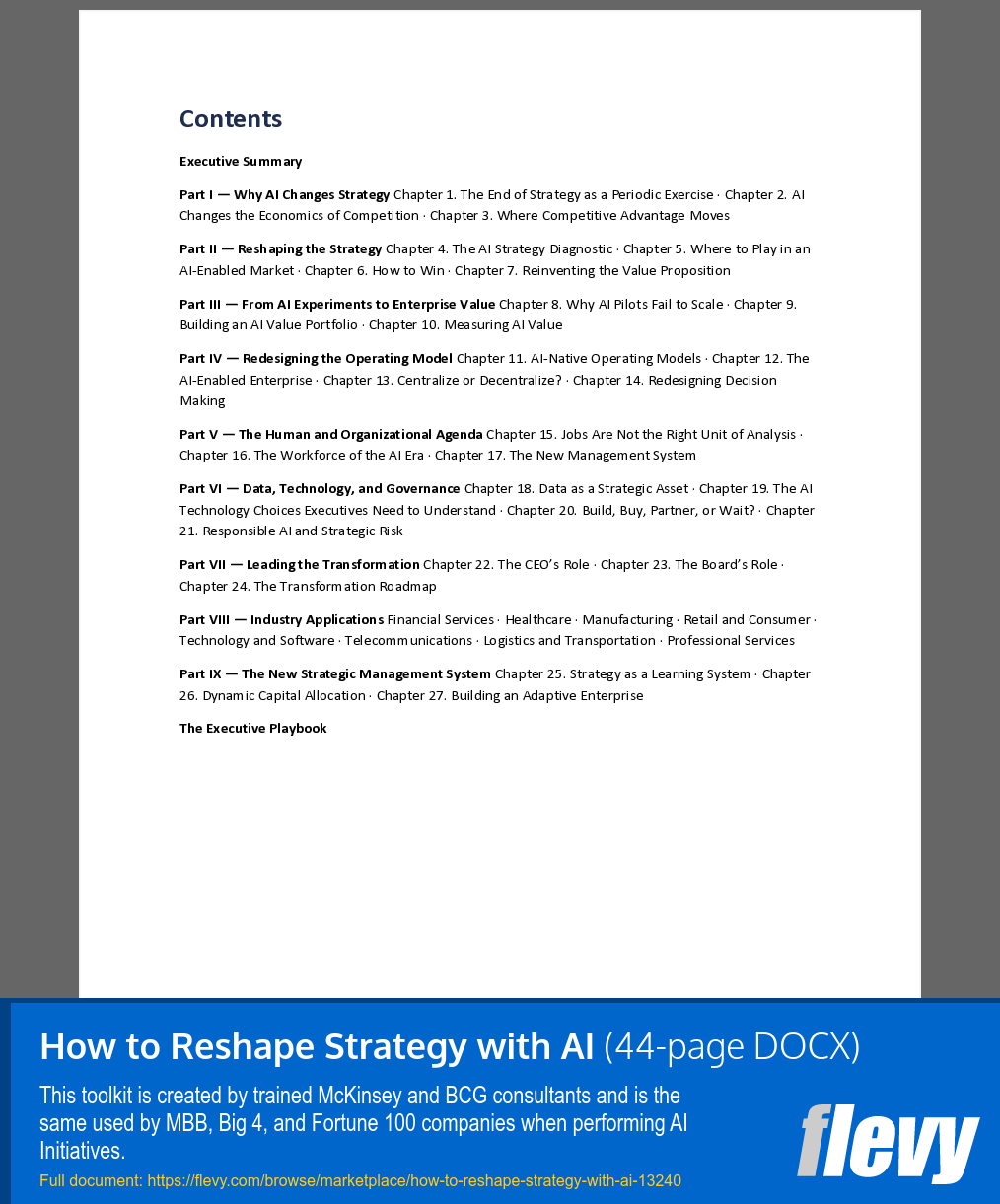
✅ 27 Comprehensive Chapters – From "Why AI Changes Strategy" through "The CEO's Role," diagnostic frameworks, where-to-play matrix, workflow redesign methodology, three-horizon capital allocation, responsible AI governance, transformation roadmaps, eight industry applications, strategic management systems, and the executive playbook
✅ 5-Year Fully Integrated Case Study – Northstar Coffee Co. with operational drivers (store count, same-store sales, new location ramps), revenue build tied to unit economics (not growth percentages), cost structure scaling logically with business expansion, complete three-statement integration, working capital tied to operational assumptions, capex driving depreciation schedules, debt tied to cash flow, market valuation multiples supporting acquisition or private-equity thesis
✅ Every Strategic Assumption Internally Consistent – Store expansion drives revenue growth; revenue growth scales costs proportionally; cost structure changes affect profitability; profitability changes affect cash flow; cash flow changes affect balance sheet; balance sheet changes tie to capital allocation decisions; capital allocation decisions create competitive position
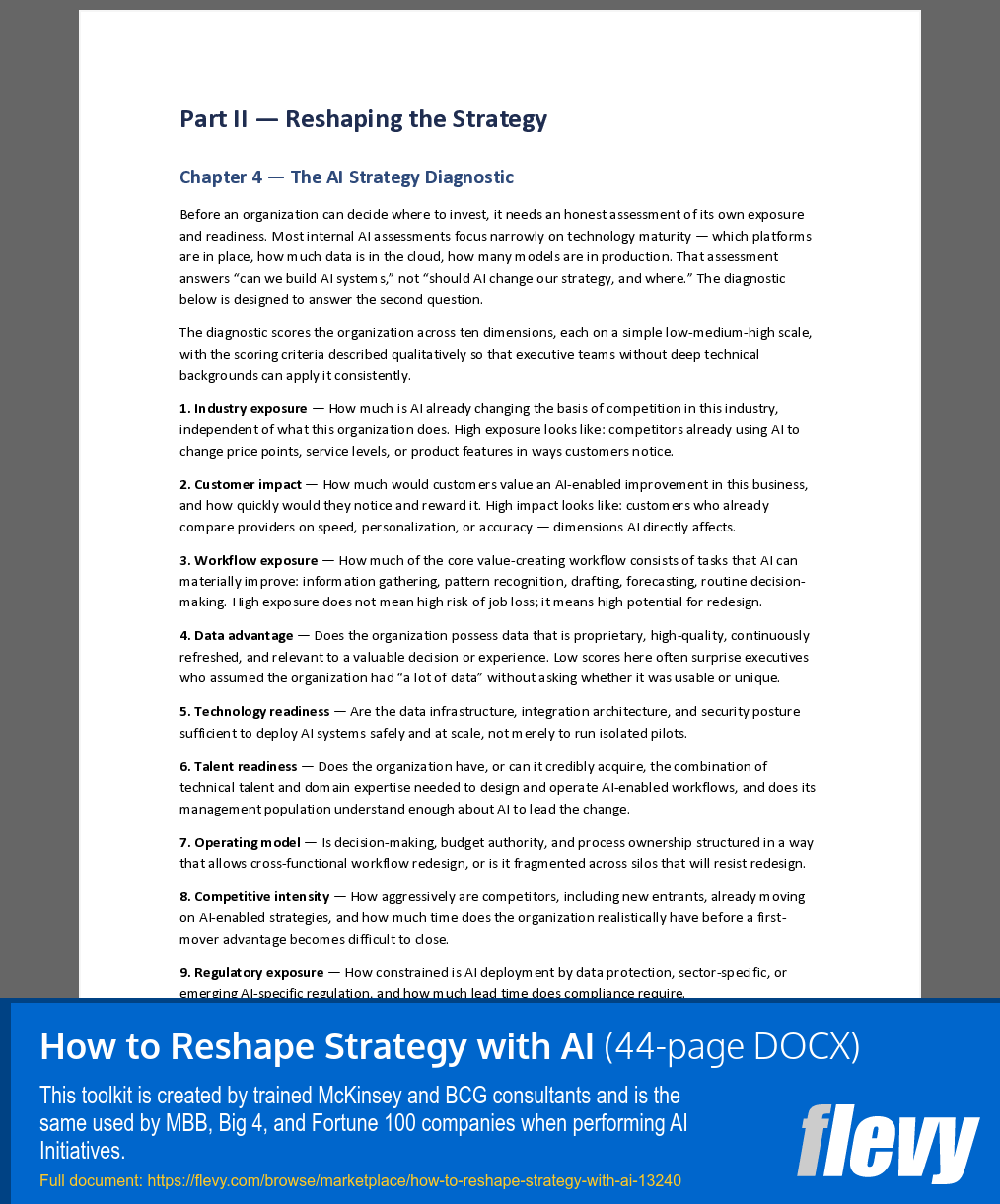
✅ AI Strategy Diagnostic Masterclass – Industry exposure scoring, customer impact assessment, workflow exposure mapping, data advantage evaluation, technology readiness, talent capability, operating model assessment, competitive intensity, regulatory exposure, strategic urgency—everything on one diagnostic that tells you exactly where AI changes your business
✅ Where-to-Play Matrix Explained – Market attractiveness × AI-enabled differentiation × Right to Win × Investment requirement × Execution complexity × Regulatory risk—the exact framework to evaluate which AI-enabled opportunities deserve capital and which should be rejected, stopping wasted investment on ideas that don't drive competitive position
✅ How-to-Win Framework Mastery – Proprietary data, distribution, customer intimacy, domain expertise, workflow integration, ecosystem position, speed, trust—the specific combinations of assets that create durable advantage in AI-enabled markets, not just "we have AI capability"
✅ Workflow Redesign Methodology – Not task automation; the systematic approach to redesigning end-to-end workflows around what AI and humans each do best, where the actual economic value compounds
✅ Three-Horizon Capital Allocation Model – Horizon 1 (Improve—efficiency & productivity), Horizon 2 (Reinvent—products, processes, customer journeys), Horizon 3 (Create—new businesses, business models, markets) with explicit capital allocation discipline, portfolio management approach, and dynamic reallocation methodology
✅ AI Value Measurement Framework – Revenue impact (conversion, retention, cross-sell, pricing, new products), cost impact (labor productivity, automation, reduced rework, service efficiency), capital impact (development time, infrastructure, asset utilization), strategic impact (speed, differentiation, resilience, learning rate)—the complete economic model that separates real value from activity metrics
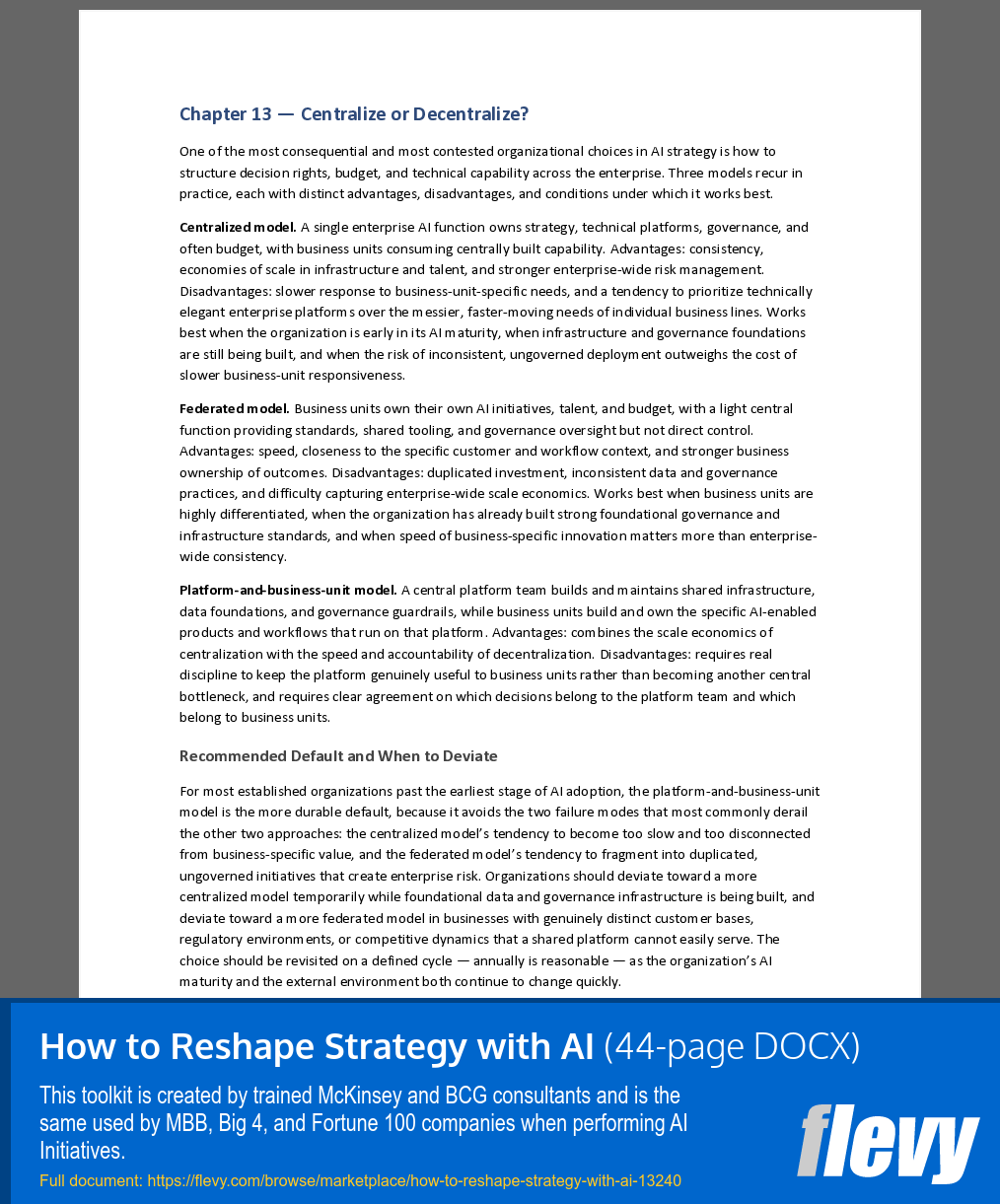
✅ Operating Model Architecture Guide – Centralized vs. federated vs. platform-and-business-unit models; exact advantages and disadvantages of each; conditions for each; how to choose and when to revisit; avoiding the common failures of each approach
✅ Decision-Making Systems Redesign – The AI Decision Stack: data layer, intelligence layer, recommendation layer, human judgment layer, action layer, feedback layer; how AI transforms planning, forecasting, pricing, resource allocation, risk management, and customer decisions
✅ Workforce Redesign (Not AI Training) – Task automation vs. workflow redesign vs. role augmentation vs. role elimination vs. role creation; task exposure × business value × AI capability framework; redesigning roles, management systems, and organizational structures for an AI-era economy
✅ Responsible AI & Governance Framework – Privacy, security, hallucination & accuracy, bias, intellectual property, regulatory exposure, model risk, reputational risk, operational dependency, vendor concentration—governance as an enabler of responsible scale, not as a constraint on speed
✅ Transformation Roadmap, Month by Month – Months 1-2: Strategic diagnostic; Months 3-4: Opportunity portfolio; Months 5-6: Priority initiatives; Months 7-9: Workflow redesign; Months 10-12: Scale and institutionalization—a 12-month plan from strategy through execution
✅ Eight Industry-Specific Applications – Financial Services (underwriting, fraud, wealth management transformation), Healthcare (diagnostics, administrative automation, clinical decision support), Manufacturing (predictive maintenance, quality, production scheduling), Retail (personalization, inventory, pricing), Technology (development acceleration, product adaptation), Telecommunications (network operations, churn, service), Logistics (routing, capacity, demand), Professional Services (research, drafting, outcome-based pricing)—each showing where AI changes economics, customer expectations, and competitive advantage
✅ Strategic Management Systems – Strategy as a learning system (continuous sensing → experiment → measure → learn → reallocate), dynamic capital allocation (smaller bets, faster cycles, milestone-based funding), building an adaptive enterprise (strategic clarity, modular processes, data foundations, empowered teams, rapid experimentation, disciplined governance, continuous learning)
✅ The Executive Playbook – 10 questions every CEO should ask, 10 questions every board should ask, 10 initiatives to avoid, 10 capabilities to build, 10 metrics that matter, 12-month action plan, AI strategy maturity model (Experimenting → Scaling → Integrating → Reshaping)
✅ 15-20 Strategic Frameworks, Matrices & Models – AI Strategy Diagnostic, AI Where-to-Play Matrix, AI Pilot-to-Scale Funnel, AI Value Portfolio (3-horizon), AI Value Tree, AI-Native Operating Model, Centralized vs. Federated Decision Matrix, AI Decision Stack, Task Exposure Framework, Workforce Transformation Framework, Build/Buy/Partner/Wait Decision Tree, AI Risk-Value Matrix, CEO AI Agenda, Board AI Questions, 12-Month Transformation Roadmap, AI Strategy Loop (Sense → Prioritize → Experiment → Measure → Learn → Reallocate), Dynamic Capital Allocation Framework, AI Strategy Maturity Model—every one battle-tested, every one applicable to your next strategic decision
✅ Zero Filler, 100% Application – Every chapter teaches what you actually need to make better strategic decisions; no academic theory disconnected from board conversations; every concept illustrated with operational examples from Northstar's actual five-year forecast and competitive positioning
WHO NEEDS THIS GUIDE
✅ CEOs – You own whether AI reshapes strategy or remains a technology sideshow; this guide is your playbook for transforming the board conversation from "how many AI initiatives?" to "how do we compete differently"
✅ Chief Strategy Officers – Your credibility depends on translating AI capability into strategic advantage; this is the framework that lets you do it
✅ CFOs – Capital allocation to AI is your decision; this guide shows you how to evaluate economic impact, build three-horizon portfolios, and protect the balance sheet while investing in transformation
✅ Chief Digital/AI Officers – You've built AI capability; now learn how to connect it to strategy so it stops being a cost center and starts being a competitive weapon
✅ Chief Operating Officers – Workflow redesign is your domain; this guide teaches the systematic approach to reshaping processes around AI, not bolting AI onto unchanged processes
✅ Board Members – You're accountable for strategic oversight; these 15 questions ensure you're asking management the right things, not just accepting reassurance metrics
✅ Chief Information Officers – Technology infrastructure is your responsibility; this guide clarifies which infrastructure decisions are strategic (data, governance, operating model) vs. execution-level
✅ Private Equity Operating Partners – Your portfolio company valuations and exit multiples depend on competitive position; this framework shows where AI creates value that persists through market cycles
✅ Corporate Development Directors – M&A evaluation requires strategic clarity about AI's role in the thesis; this guide builds that clarity
✅ Business Unit Presidents – Your P&L depends on competitive position; learn where AI changes your segment and how to win before a competitor does
✅ Management Consultants – Your strategic recommendations require frameworks your clients trust; this is the guide you give them
✅ Investment Bankers – Your fairness opinions rest on valuation logic that investors believe; this framework builds that belief
✅ Private Equity Investors – Your exit multiples depend on competitive position at exit; understand how AI changes valuation and competitive positioning
✅ Venture Capital Partners – Your portfolio companies either reshape incumbents or get disrupted by them; this framework teaches both sides
✅ Equity Research Analysts – Your investment theses need to account for how AI reshapes competitive dynamics; this is the systematic way to do it
HOW TO RESHAPE STRATEGY WITH AI DELIVERS IMMEDIATE RESULTS
✅ Strategy Clarity by Week 2 – Run the diagnostic; you will know exactly where AI changes your competitive position and where it's merely nice-to-have
✅ Where-to-Play Portfolio Locked by Week 4 – Stop funding every idea; make explicit choices about which AI-enabled opportunities deserve capital and which don't
✅ Operating Model Decision by Week 6 – Centralized, federated, or platform-based; you'll know which structure fits your organization and when to revisit it
✅ First Workflow Redesign Underway by Week 8 – Not task automation; genuine end-to-end redesign where the actual economic value lives
✅ Capital Allocation Model Implemented by Week 10 – Shift from annual plans and large bets to milestone-based funding, faster cycles, portfolio logic
✅ Board Conversation Transformed by Month 3 – Instead of "how many AI projects?", you're discussing "how does this change competitive position?" and "what's our right to win?"
✅ Three-Horizon Portfolio Balanced by Month 4 – Efficiency, reinvention, and creation being funded deliberately instead of concentrated in near-term cost-cutting
✅ Governance Framework in Place by Month 5 – Risk management that enables scale instead of constraining it; governance becomes a competitive enabler
✅ Workforce Redesign Started by Month 6 – Roles, management structures, incentives redesigned for an AI-era economy—not just training programs
✅ First Initiatives Showing Economic Value by Month 9 – Not productivity improvements on unchanged metrics; actual changes to revenue, margin, customer value, speed, or competitive position
✅ Credibility with Board, Investors, and Team by Month 12 – You can explain AI strategy in 5 minutes instead of 30; investors believe the thesis; team is aligned; competitors are responding to your moves, not the other way around
✅ Speed Advantage That Compounds – Organizations that move first on strategic positioning maintain advantage for 18-36 months before competitors close gaps; every month you move first buys you runway
✅ Competitive Distance Widening – By Year 2, organizations that reshaped strategy are pulling away from competitors still running AI as a technology program
✅ Valuation Multiple Expansion – Investors reward organizations that have reshaped competitive position through AI with higher multiples and higher exit values
✅ Deal Close Advantage – M&A, fundraising, partnerships—all easier when you can clearly articulate strategic position and competitive advantage through AI
WHAT YOU'LL KNOW AFTER READING THIS GUIDE
By the final page, you will understand:
• How to run an AI strategy diagnostic that actually predicts where AI changes your business – not a technology maturity assessment, but a strategic exposure analysis
• How to evaluate where-to-play opportunities using the exact framework VCs and PE investors use – market attractiveness, differentiation, right to win, investment required, execution complexity, regulatory risk
• How to identify your specific "how-to-win" position—what makes your AI-enabled strategy durable when competitors can access similar models – proprietary data, distribution, customer intimacy, domain expertise, workflow integration, ecosystem position
• How three-horizon capital allocation actually works – and why concentrating all investment in near-term efficiency destroys long-term competitive position
• How to measure whether AI investment creates strategic value or just productivity metrics – revenue impact, cost impact, capital impact, strategic impact
• How to redesign workflows, not just automate tasks – the difference between productivity gains that move 5% and competitive position shifts that move 500%
• How to choose between centralized, federated, and platform-based operating models – and exactly when to revisit that choice as AI maturity evolves
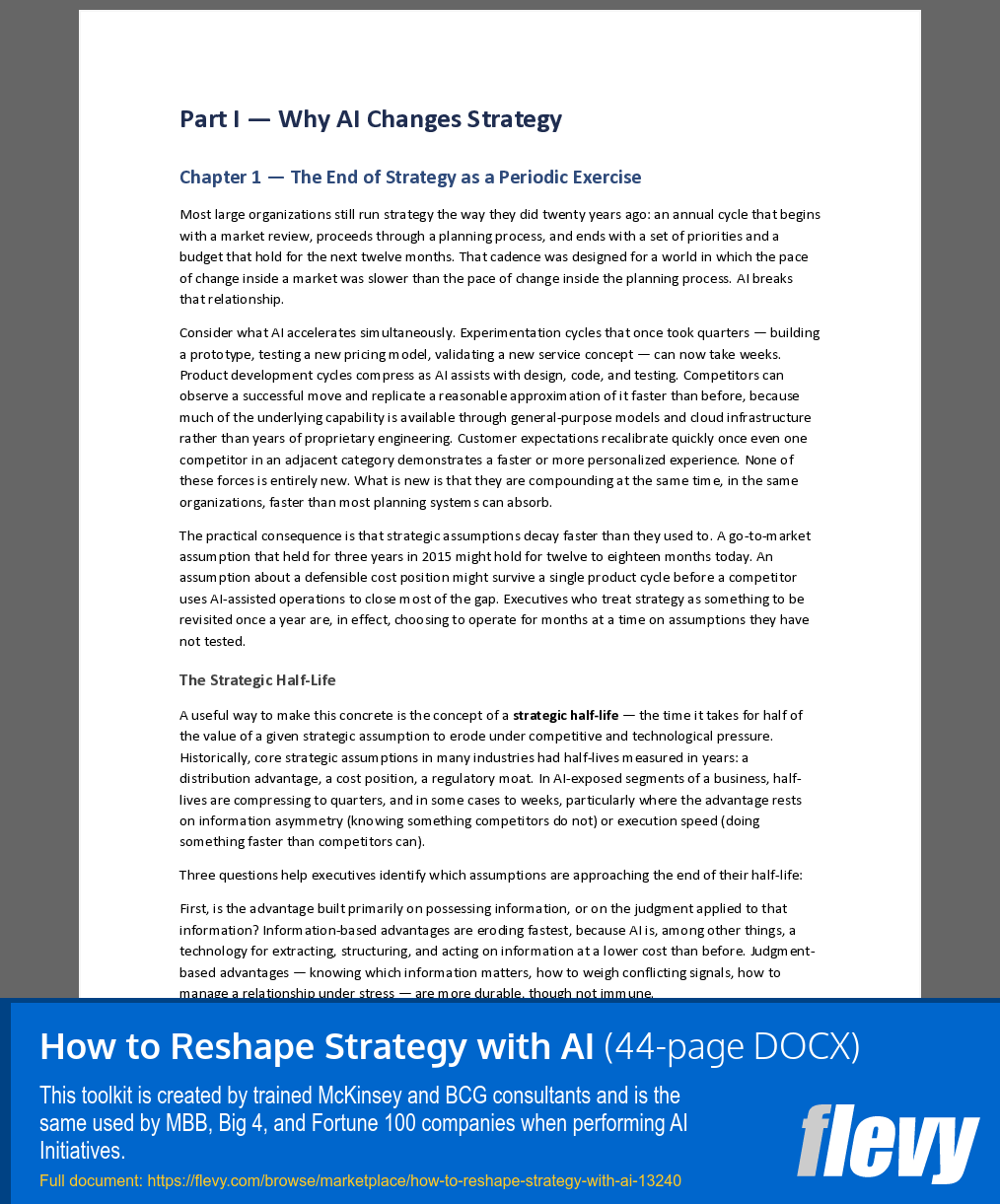
• How AI transforms decision-making systems – from annual planning to continuous sensing and reallocation
• How to redesign jobs, roles, and management structures for an AI-era economy – without devastating your best people and losing institutional knowledge
• How to build governance that enables responsible scaling instead of constraining innovation – managing real risks (bias, security, privacy, model reliability) without creating bureaucratic bottlenecks
• How to transform an organization across 12 months from strategy definition through execution – the exact sequence, the month-by-month roadmap, the decisions at each stage
• How AI reshapes competitive dynamics in eight different industries – from financial services through professional services, the specific economics changes coming to your sector
• How to build a strategic management system that continuously learns and adapts – converting experimentation into strategy evolution instead of treating every pilot as isolated
• How to evaluate and avoid the 12 costliest strategic mistakes – underfunded portfolios, governance bottlenecks, pilot theater, operator model paralysis, workforce burnout
• How to ask the 10 questions that separate strategic leaders from technology managers – and how to answer them with clarity and evidence
THE COMPLETE PACKAGE
📖 44 Pages – Professional, dense, no academic padding, no technology sales hype
📊 27 Chapters – From competitive economics through transformation execution
📈 5-Year Integrated Case Study – Northstar Coffee Co. with every operational and financial element reconciling
✅ 100% Framework-Driven – 15-20 strategic models, matrices, diagnostic tools, decision frameworks
🎯 Pure Strategy – No technology vendor rhetoric; no "AI will change everything"; practical, disciplined, board-ready
📥 Download Instantly – PDF, read offline, reference forever
🔄 Reference Material – Keep open during every strategic planning cycle; return to chapters as needed for each decision
💼 Board-Ready – Every framework, every argument, every question presented at the level your board cares about
🚀 Competitive Advantage – Organizations that implement this framework pull away from competitors within 18 months
STOP BUILDING AI STRATEGIES THAT DON'T DRIVE COMPETITIVE ADVANTAGE
Stop investing in AI initiatives that show productivity gains while market share declines.
Stop presenting AI strategies to boards that amount to "here's a list of technology projects."
Stop watching competitors use AI to reshape competitive dynamics while you're still optimizing existing processes.
Stop rebuilding your strategy every 18 months when competitors outpace you because their AI investment actually reshaped competitive position.
Stop losing your best people because you invested in technology capability but never redesigned the organization around it.
Stop telling your investors you're "AI-forward" while your valuation multiple contracts because competitive position is unchanged.
Stop confusing AI adoption with AI strategy.
GET THIS GUIDE. RESHAPE YOUR STRATEGY. WIN IN THE AI ERA.
Download How to Reshape Strategy with AI today. Read the diagnostic framework this afternoon. Present a clearer strategy to your board next week. Start your first genuine workflow redesign this month. Pull ahead of competitors who are still treating AI as a technology program while you treat it as a strategic forcing function.
This is not a technology book. This is a strategy book. Your competitive position depends on getting this right.
HOW TO RESHAPE STRATEGY WITH AI – YOUR STRATEGIC MASTERY FRAMEWORK
Professional AI strategy is not complicated. It's systematic.
Most organizations fail not because they lack AI capability, but because they fail to connect capability to competitive strategy.
This guide teaches you the system that connects them.
Download now. Learn the framework. Reshape your strategy. Close the competitive gap. Defend your position. Expand your advantage. Close more deals. Grow faster. Increase valuation. Exit at a higher multiple.
Strategic leadership in the AI era starts here. 🎯📊💼
SPECIAL SECTION: FOR YOUR BOARD
If you're presenting this to your board or discussing AI strategy with investors, here's what they actually care about:
1. Do you understand where AI changes our competitive position?
The diagnostic in this guide answers this question systematically—not "will AI change something?" but "specifically, what changes in our business, for our customers, with our competitive advantage?"
2. Have you made explicit choices about where to invest and where to pass?
The where-to-play matrix forces discipline. Not every AI opportunity is worth pursuing. The ones you pursue should have a credible "right to win."
3. Can you explain your operating model choice and when you'll revisit it?
Centralized, federated, platform-based—each has trade-offs. Your board needs to know you've thought through which one fits your organization *now* and which will fit you in 18 months.
4. How will you measure whether AI investment creates strategic value?
Revenue impact, cost impact, capital impact, strategic impact. Not adoption metrics. Not activity. Value.
5. Are you redesigning workflows or automating tasks?
The difference between nice-to-have productivity gains and competitive repositioning. Most organizations automate tasks. Winners redesign workflows.
6. How are you managing the 10 most expensive strategic mistakes?
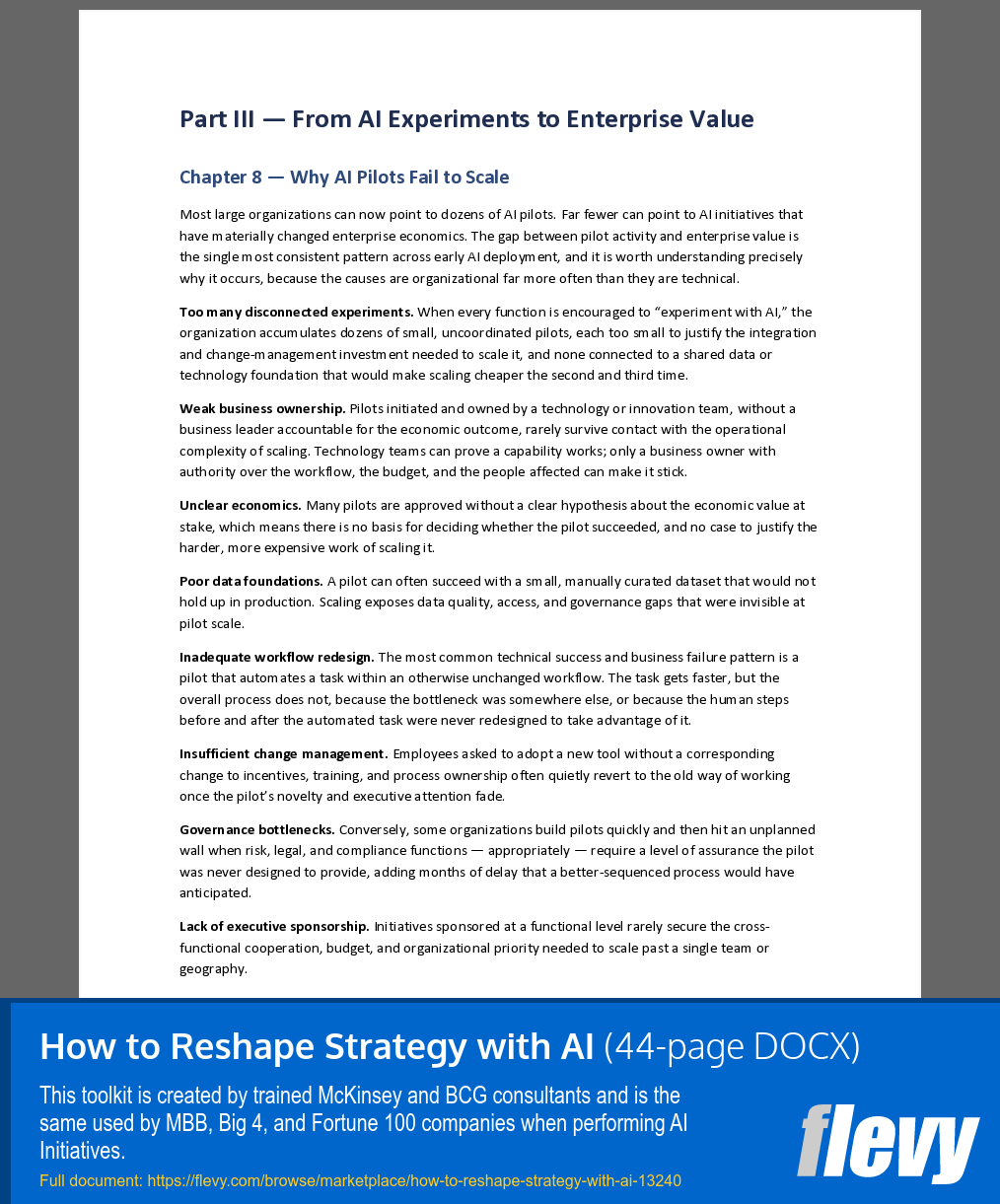
Underfunded portfolios, weak business ownership, unclear economics, poor workflow redesign, insufficient change management, governance bottlenecks, lack of sponsorship—knowing these traps and avoiding them separates strategic leaders from technology managers.
7. What's your governance framework, and how is it enabling scale?
Good governance doesn't constrain innovation; it enables responsible deployment at scale. Your board wants to know you're managing risk, not just taking it.
Your board will trust your AI strategy if you can answer all seven questions clearly. This guide teaches you how.
IMMEDIATE ACTIONS
This week:
• Download the guide
• Run the 10-dimension diagnostic on your organization
• Identify the 2-3 areas where AI most clearly changes competitive position
Next week:
• Present the where-to-play matrix to your executive team
• Have the conversation: which opportunities deserve capital and which should we pass on?
• Make one explicit choice to allocate resources away from an AI project that doesn't drive competitive position
This month:
• Choose your operating model (centralized, federated, platform-based)
• Identify the first workflow you'll redesign end-to-end (not just automate a task)
• Present your 12-month transformation roadmap to the board
By month 3:
• First workflow redesign underway
• Capital allocation shifted toward three-horizon portfolio
• Board confident in your strategic clarity
By month 6:
• Workforce redesign started; roles and management systems evolving
• Governance framework enabling scale
• First initiatives showing measurable economic impact
By month 12:
• Competitive position changed; market beginning to recognize shift
• Investor conversation focuses on strategic advantage, not technology adoption
• Organization pulling away from competitors still treating AI as a technology program
THE INVESTMENT
This guide represents years of strategy work, decades of combined experience across banking, PE, corporate strategy, and transformation leadership, and the systematic frameworks that separate organizations that win with AI from organizations that merely adopt it.
The cost of NOT having this framework:
• Wasted AI investment (average large enterprise: $50-200M with limited strategic impact)
• Competitive position eroded by faster-moving competitors
• Valuation multiple compression as investors recognize you're not actually reshaping competitive position
• Board pressure and management turnover as confidence erodes
The cost of this guide:
One afternoon of reading.
One strategic conversation with your team.
One explicit decision to reshape strategy instead of deploying technology.
The ROI:
Clarity.
Credibility.
Competitive advantage that compounds.
Valuation expansion.
Deal close.
Career advancement.
DOWNLOAD NOW
How to Reshape Strategy with AI
Your strategic framework for competing, operating, and winning in the AI era.
Available immediately. Read this afternoon. Reshape strategy this week. Close deals this month. Build competitive advantage that persists.
🎯 Strategy starts here. 📊💼
Keywords: Inventory Management, Demand Planning, Inventory Optimization, Inventory Control, Supply Chain Management, Warehouse Operations, Replenishment Strategy, Inventory Analytics, WIP Reduction, Inventory Accuracy, Distribution Network, Inventory Forecasting, Supply Chain Excellence, Working Capital, Inventory KPIs, Procurement Strategy, Inventory Governance, Inventory SOPs, Continuous Improvement, Supply Chain Transformation, GenAI deployment SOPs, generative AI operating model, enterprise AI governance framework, AI Center of Excellence, responsible AI, AI risk management, AI use case prioritization, GenAI implementation roadmap, AI vendor selection, prompt engineering standards, AI compliance, AI adoption strategy, generative AI across value chain, AI strategy, enterprise transformation, AI implementation, AI scaling framework
Strategy & Transformation, Growth Strategy, Strategic Planning, Strategy Frameworks, Innovation Management, Pricing Strategy, Core Competencies, Strategy Development, Business Transformation, Marketing Plan Development, Product Strategy, Breakout Strategy, Competitive Advantage, Mission, Vision, Values, Strategy Deployment & Execution, Innovation, Vision Statement, Core Competencies Analysis, Corporate Strategy, Product Launch Strategy, BMI, Blue Ocean Strategy, Breakthrough Strategy, Business Model Innovation, Business Strategy Example, Corporate Transformation, Critical Success Factors, Customer Segmentation, Customer Value Proposition, Distinctive Capabilities, Enterprise Performance Management, KPI, Key Performance Indicators, Market Analysis, Market Entry Example, Market Entry Plan, Market Intelligence, Market Research, Market Segmentation, Market Sizing, Marketing, Michael Porter's Value Chain, Organizational Transformation, Performance Management, Performance Measurement, Platform Strategy, Product Go-to-Market Strategy, Reorganization, Restructuring, SWOT, SWOT Analysis, Service 4.0, Service Strategy, Service Transformation, Strategic Analysis, Strategic Plan Example, Strategy Deployment, Strategy Execution, Strategy Frameworks Compilation, Strategy Methodologies, Strategy Report Example, Value Chain, Value Chain Analysis, Value Innovation, Value Proposition, Vision Statement, Corporate Strategy, Business Development, Business plan pdf, business plan, PDF, Business Plan DOC, Business Plan Template, PPT, Market strategy playbook, strategic market planning, competitive analysis tools, market segmentation frameworks, growth strategy templates, product positioning strategy, market execution toolkit, strategic alignment playbook, KPI and OKR frameworks, business growth strategy guide, cross-functional strategy templates, market risk management, market strategy PowerPoint doc, guide, ebook, e-book ,McKinsey Change Playbook, Organizational change management toolkit, Change management frameworks 2025, Influence model for change, Change leadership strategies, Behavioral change in organizations, Change management PowerPoint templates, Transformational leadership in change, supply chain KPIs, supply chain KPI toolkit, supply chain PowerPoint template, logistics KPIs, procurement KPIs, inventory management KPIs, supply chain performance metrics, manufacturing KPIs, supply chain dashboard, supply chain strategy KPIs, reverse logistics KPIs, sustainability KPIs in supply chain, financial supply chain KPIs, warehouse KPIs, digital supply chain KPIs, 1200 KPIs, supply chain scorecard, KPI examples, supply chain templates, Corporate Finance SOPs, Finance SOP Excel Template, CFO Toolkit, Finance Department Procedures, Financial Planning SOPs, Treasury SOPs, Accounts Payable SOPs, Accounts Receivable SOPs, General Ledger SOPs, Accounting Policies Template, Internal Controls SOPs, Finance Process Standardization, Finance Operating Procedures, Finance Department Excel Template, FP&A Process Documentation, Corporate Finance Template, Finance SOP Toolkit, CFO Process Templates, Accounting SOP Package, Tax Compliance SOPs, Financial Risk Management Procedures.
NOTE: Our digital products are sold on an "as is" basis, making returns and refunds unavailable post-download. Please preview and inquire before purchasing. Please contact us before purchasing if you have any questions! This policy aligns with the standard Flevy Terms of Usage.
Got a question about the product? Email us at support@flevy.com or ask the author directly by using the "Ask the Author a Question" form. If you cannot view the preview above this document description, go here to view the large preview instead.
Source: Best Practices in Strategy Development, Artificial Intelligence Word: How to Reshape Strategy with AI Word (DOCX) Document, SB Consulting
ABOUT THE AUTHOR

SB Consulting is dedicated to empowering businesses to communicate their ideas with impact. This consulting firm specializes in teaching organizations how to create effective corporate and management presentations. With training from top-tier global consulting firms, including McKinsey, BCG, and Porsche Consulting, extensive expertise in presentation design and ... [read more]
Ask the Author a Question
You must be logged in to contact the author.




























