
 Click main image to view in full screen. Unlock all 14 preview images:
How to Create Consulting Deliverables with AI – Word DOCX
Word (DOCX) 120 Pages


BENEFITS OF THIS DOWNLOADABLE WORD DOCUMENT
- Provides a framework for creating AI-assisted consulting deliverables that meet professional quality standards.
- Helps consultants produce faster, more accurate client deliverables through structured AI workflows and verification practices.
- Equips consulting professionals with proven frameworks, prompts, and governance models to deliver client-ready work with AI.
ARTIFICIAL INTELLIGENCE WORD DESCRIPTION
Curated by McKinsey-trained Executives
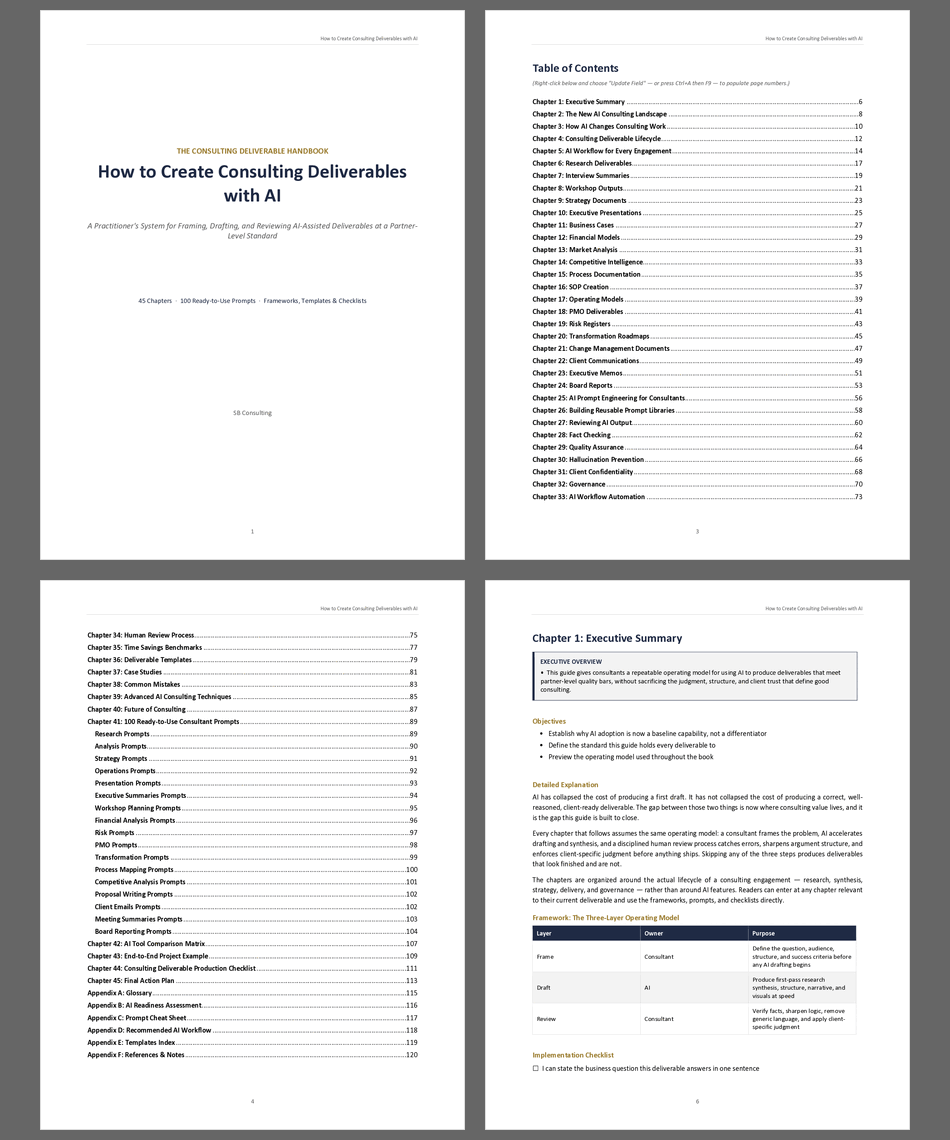
How to Create Consulting Deliverables with AI
The Complete Professional Handbook for Strategy Consultants, Independent Consultants & Consulting Firms
🚀 STOP Wasting 40% of Your Consulting Time on Drafting
Most consultants are not leveraging AI to accelerate deliverables because they lack the discipline – they lack a STRUCTURED, QUALITY-FIRST OPERATING MODEL powered by verification protocols, review discipline, hallucination prevention, and deliverable-ready governance.
They adopt AI with:
• ❌ No frame-draft-review model – AI-generated chaos that needs complete rewrites
• ❌ Silent hallucinations – confident-sounding deliverables full of unverified claims
• ❌ Citation drift – data sources lost across summarization rounds
• ❌ Weak fact-checking – fluent writing masking substance errors
• ❌ No quality gates – deliverables reaching clients before review
• ❌ Confidentiality gaps – client data entered into unverified AI systems
• ❌ Generic output – AI-generated content that sounds like every other template
• ❌ Lost attribution – interview synthesis that blends stakeholder voices
• ❌ No prompt discipline – vague requests producing vague, worthless first drafts
• ❌ Unrealistic time-savings claims – drafting speed up 60%, total delivery time flat
• ❌ Partner-level quality sacrificed – speed prioritized over rigor
• ❌ Client trust erosion – "this looks AI-generated" undermining credibility
• ❌ Leaving 20-40% margin on the table – time saved not reinvested in depth
• ❌ Team uncertainty – no clear guidance on what AI can and cannot touch
• ❌ Competitive vulnerability – consulting peers moving faster with higher quality
That's why 50%+ of AI-assisted consulting deliverables require client-facing rework. Not because AI isn't capable. Not because your team isn't skilled. Because the QUALITY FRAMEWORK ITSELF IS INCOMPLETE.
🎯 INTRODUCING: How to Create Consulting Deliverables with AI
The Only Consulting Handbook Built Explicitly Around Frame–Draft–Review Quality Discipline
The ONLY guide built specifically for:
• ✅ Frame-First Methodology – Humans set the problem before AI drafts anything
• ✅ Verification Literacy – Proven techniques to catch AI errors before client delivery
• ✅ Hallucination Prevention – Concrete tactics that reduce confident-sounding falsehoods
• ✅ Citation Integrity – Source tracking that survives multiple summarization passes
• ✅ Quality Assurance Gates – Four-checkpoint review process built into every timeline
• ✅ Confidentiality by Design – Data classification tiers matched to AI tool selection
• ✅ Deliverable-Specific Playbooks – Research, interviews, strategy, financials, presentations, boards
• ✅ 100 Ready-to-Use Prompts – Research, analysis, strategy, operations, PMO, risk, competitive, board reporting
• ✅ Partnership-Grade Output – Consulting quality bars met with AI-accelerated timelines
• ✅ Prompt Engineering Discipline – Role–Context–Task–Format–Constraints structure for every deliverable
• ✅ Reusable Prompt Libraries – Versioned, battle-tested prompts across all engagement types
• ✅ Real Consulting Case Studies – Manufacturing, healthcare, financial services, operations transformations
• ✅ Implementation Roadmap – 30-day adoption plan from individual practice to firm governance
• ✅ Professional Templates – Research briefs, business case structures, executive memos, board materials
💥 WHAT MAKES THIS GUIDE DIFFERENT
✅ 50+ Full Pages of Consulting-Specific Guidance – Not generic "AI for business" – consulting deliverable lifecycle
✅ 45 Complete Chapters – Zero outlines, zero placeholders. Every section fully written and immediately deployable
✅ 100 Battle-Tested Prompts – Copy into ChatGPT, Claude, or any frontier model; every major deliverable type covered
✅ The Frame–Draft–Review Model – The operating model that separates fast-and-wrong from fast-and-right
✅ Verification Discipline – Concrete methods for fact-checking AI output in under time-budget constraints
✅ Built for 2026 Consulting Reality – Assumes AI tools are primary, governance is non-negotiable
✅ Quality First, Speed Second – Time savings reinvested in depth, not volume
✅ Real Case Studies – Actual engagement patterns where AI saved time AND improved quality
✅ Governance Frameworks – Board materials, confidentiality tiers, quality gates, team accountability
✅ Prompt Library Discipline – How to build, version, and improve prompts across your team
✅ Review Process Architecture – Substance-first review, independent second-reviewer, sign-off trails
✅ Hallucination Prevention Tactics – Grounding, constraint-setting, and catch techniques that actually work
✅ Function-Specific Chapters – Research, interviews, workshops, strategy, business cases, financials, presentations, boards
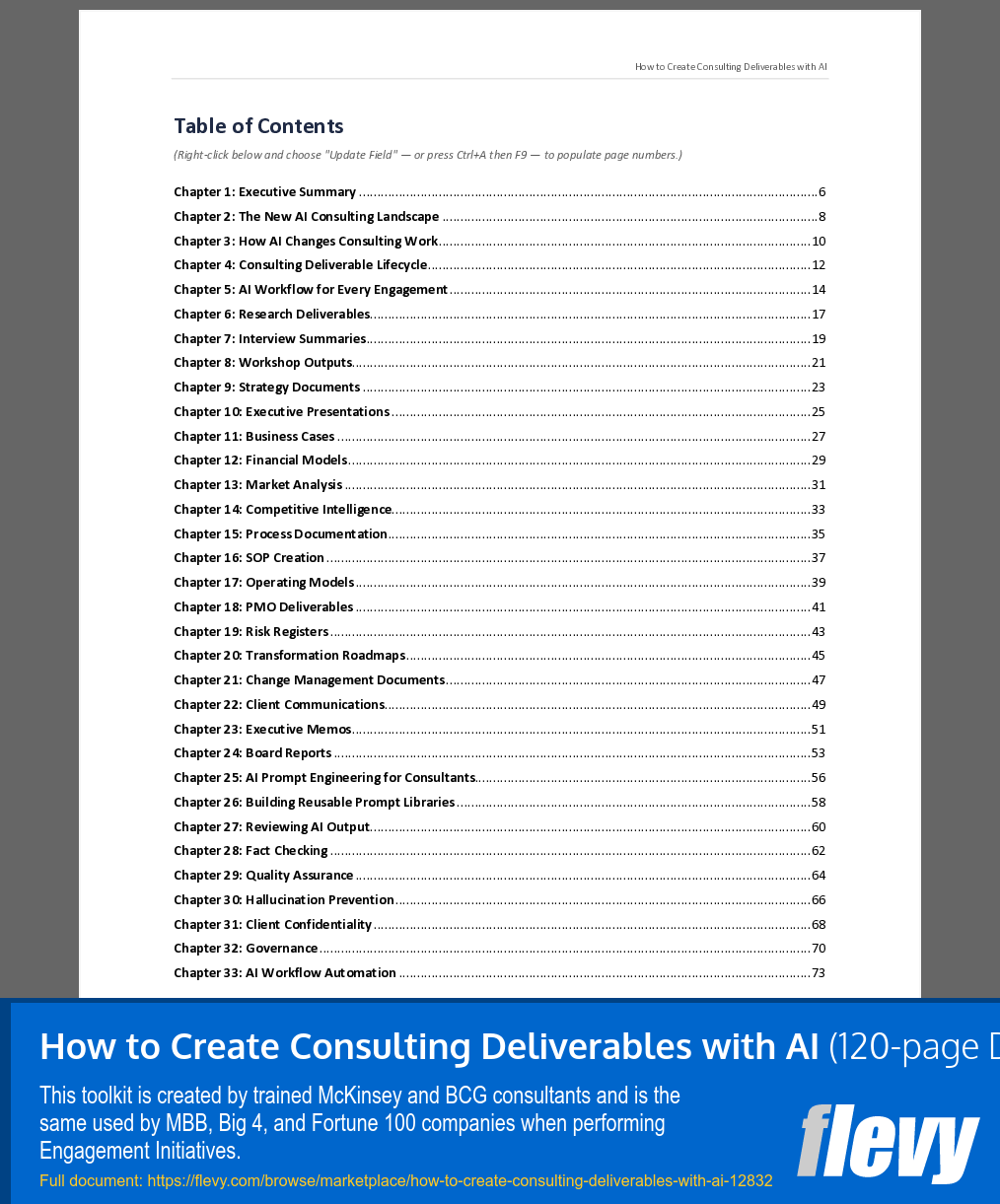
📊 COMPLETE TABLE OF CONTENTS
PART ONE: FOUNDATIONS
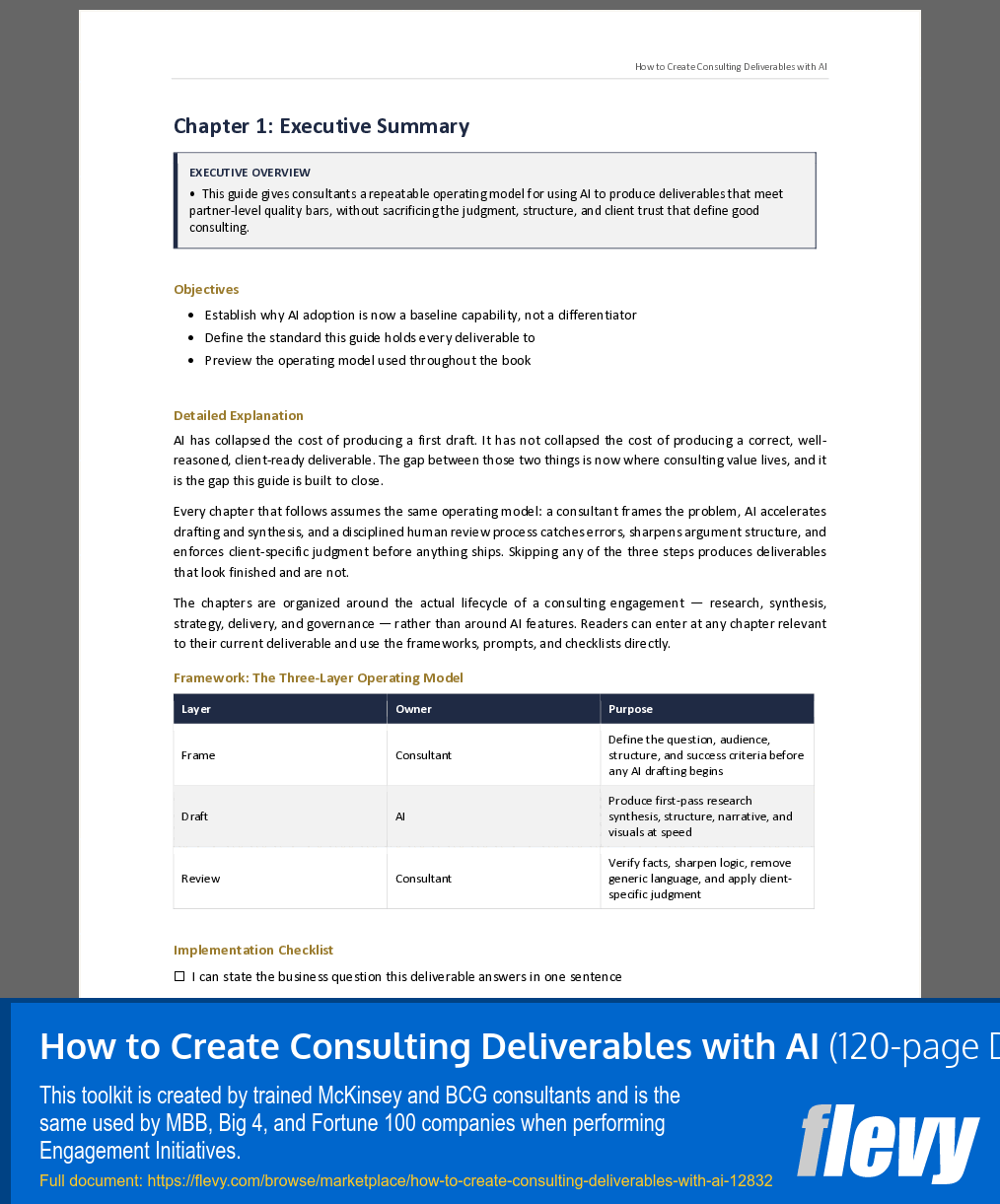
Chapter 1: Executive Summary
• The Frame–Draft–Review operating model
• Why AI changes consulting economics, not quality standards
• The three-layer operating model
• Key takeaways and engagement lifecycle
Chapter 2: The New AI Consulting Landscape
• Client expectations have permanently compressed
• Where AI creates leverage vs. where it creates risk
• Fee structures shifting toward framing and judgment
• The bifurcated market for consulting work
Chapter 3: How AI Changes Consulting Work
• Substitution vs. expansion mindset
• Time allocation shifts for consultants
• Verification literacy as the defining consultant skill
• From "Do the same thing faster" to "Do better work"
Chapter 4: Consulting Deliverable Lifecycle
• Six stages: Scope, Research, Structure, Fact-Check, Deliver, Iterate
• Where AI's role changes dramatically across stages
• Framing and delivery stay human; research and drafting are where AI adds value
• Risk-weighted governance by stage
Chapter 5: AI Workflow for Every Engagement
• Brief–Gather–Synthesize–Draft–Verify: The five-step process
• The Brief step (the highest-leverage five minutes)
• Provenance tracking at Gather (making Verify possible later)
• Time savings benchmarks by stage
PART TWO: DELIVERABLE TYPES (20 CHAPTERS)
Chapter 6: Research Deliverables
• Extraction → Synthesis → Interpretation discipline
• Bounded sources prevent hallucination
• Overgeneralization and stale data: The two most common failure modes
• Case study: Research synthesis gone right
Chapter 7: Interview Summaries
• Two-pass interview synthesis (per-interview, then cross-interview)
• Preserving tone, hesitation, and political context
• Attribution and confidentiality rules set upfront
• Preventing the blending of stakeholder voices
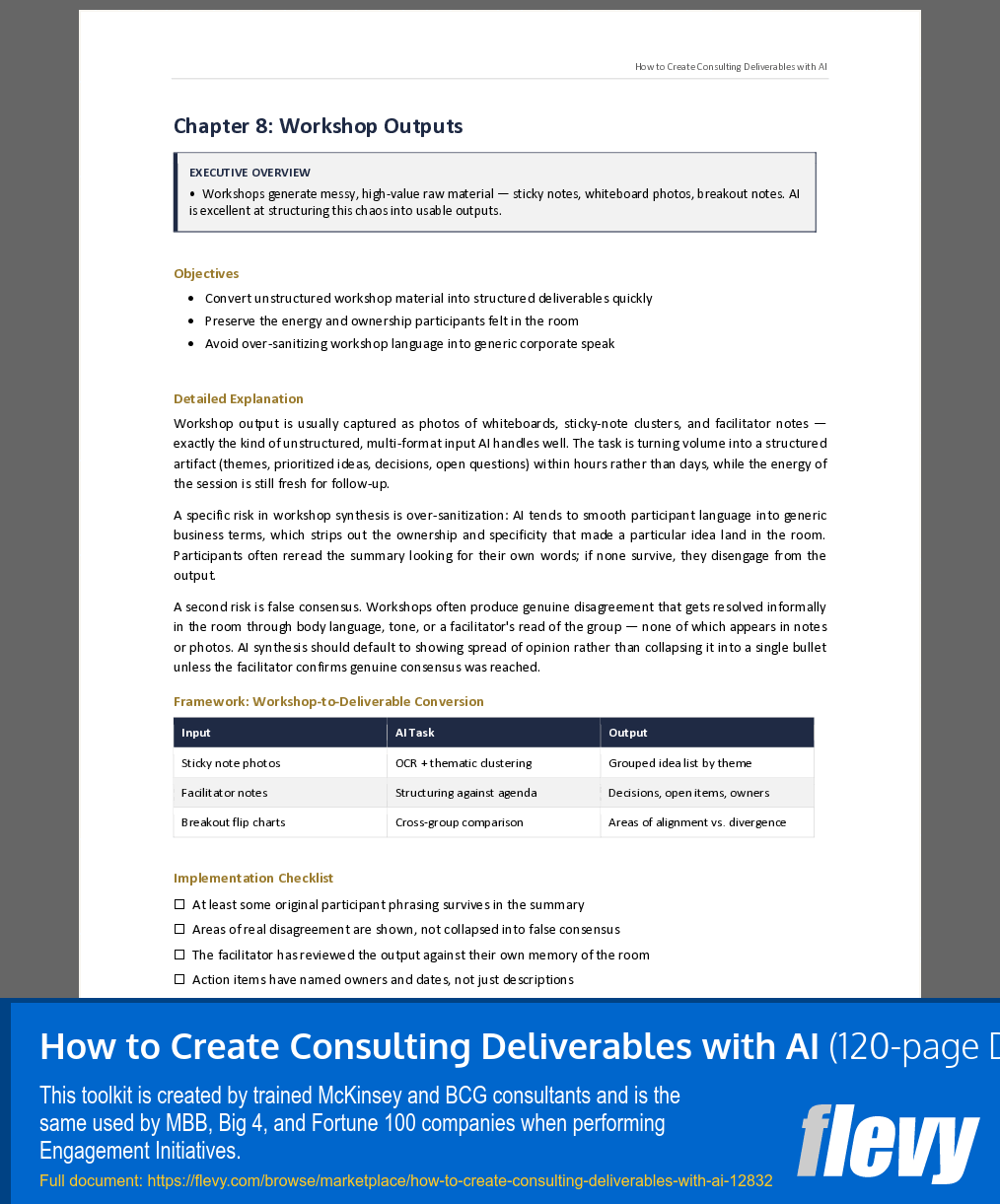
Chapter 8: Workshop Outputs
• Workshop-to-deliverable conversion in hours
• Preserving participant language to keep output feeling owned
• Workshop chaos → structured themes, decisions, open items
• Avoiding false consensus in favor of honest disagreement
Chapter 9: Strategy Documents
• Generic strategy is AI's default (and how to prevent it)
• Force explicit trade-off language into the brief
• AI stress-tests the choice; humans make it
• Rejected-alternatives section: What separates real strategy from filler
Chapter 10: Executive Presentations
• Storyline-first: Draft headlines before any slide content
• Governing headlines prevent bullet-heavy, low-signal slides
• AI drafts supporting content capped to 3–4 points
• Speaker notes for sensitive slides and Q&A prep
Chapter 11: Business Cases
• Assumptions register (human-sourced) → Calculation (spreadsheet) → Narrative (AI-drafted)
• Never let AI perform and narrate a calculation in the same step
• Sensitivity scenarios where AI adds genuine analytical value
• Finance review discipline for assumption integrity
Chapter 12: Financial Models
• AI should never be the system of record for a calculation
• Structure and documentation: safe for AI. Live calculation: not safe.
• Independent recalculation of at least one scenario before client use
• Formula auditing and testing protocols
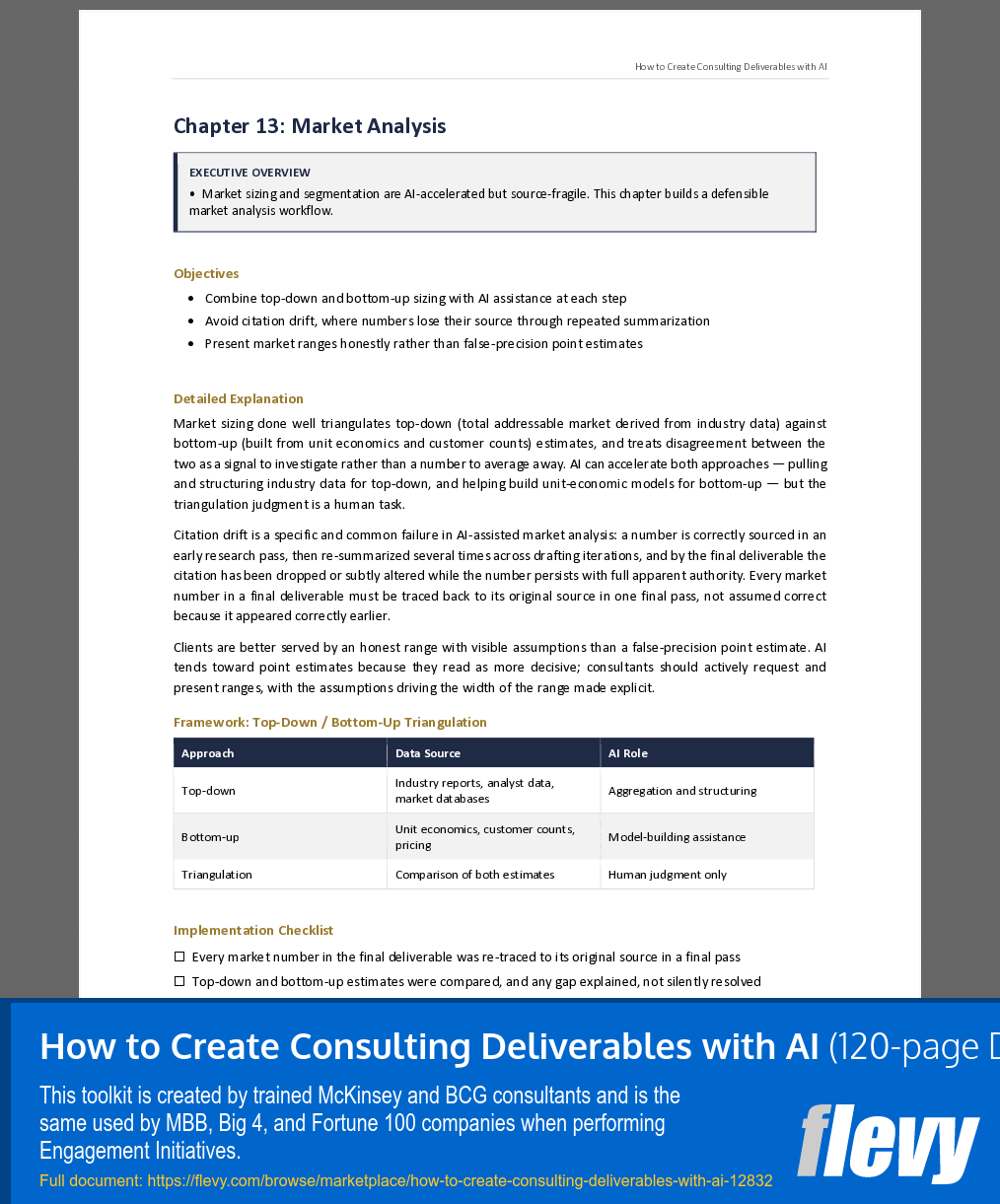
Chapter 13: Market Analysis
• Top-down / bottom-up triangulation with AI assistance
• Citation drift: Preventing numbers from losing their source
• Presenting honest ranges instead of false-precision point estimates
• Market sizing that survives stakeholder scrutiny
Chapter 14: Competitive Intelligence
• Ethical, law-abiding sourcing discipline
• Fact vs. Inference separation: Everything about competitor strategy labeled clearly
• Only publicly available, lawfully obtained material
• Structured comparisons from confirmed data
Chapter 15: Process Documentation
• Process mapping from interviews, observation, system logs
• Capturing the gap between described and actual process
• High-volume, low-risk territory for AI drafting
• SOP templates and exception-handling documentation
Chapter 16: SOP Creation
• Tiered review matched to risk level
• Safety-critical SOPs always require named human sign-off
• Consistency enforcement across large SOP libraries
• Version control and effective dates
Chapter 17: Operating Models
• Structural choice remains human-owned
• RACI matrices and governance documentation: AI accelerates
• Balanced comparison of options (preventing subtle one-option bias)
• Political context human judgment only
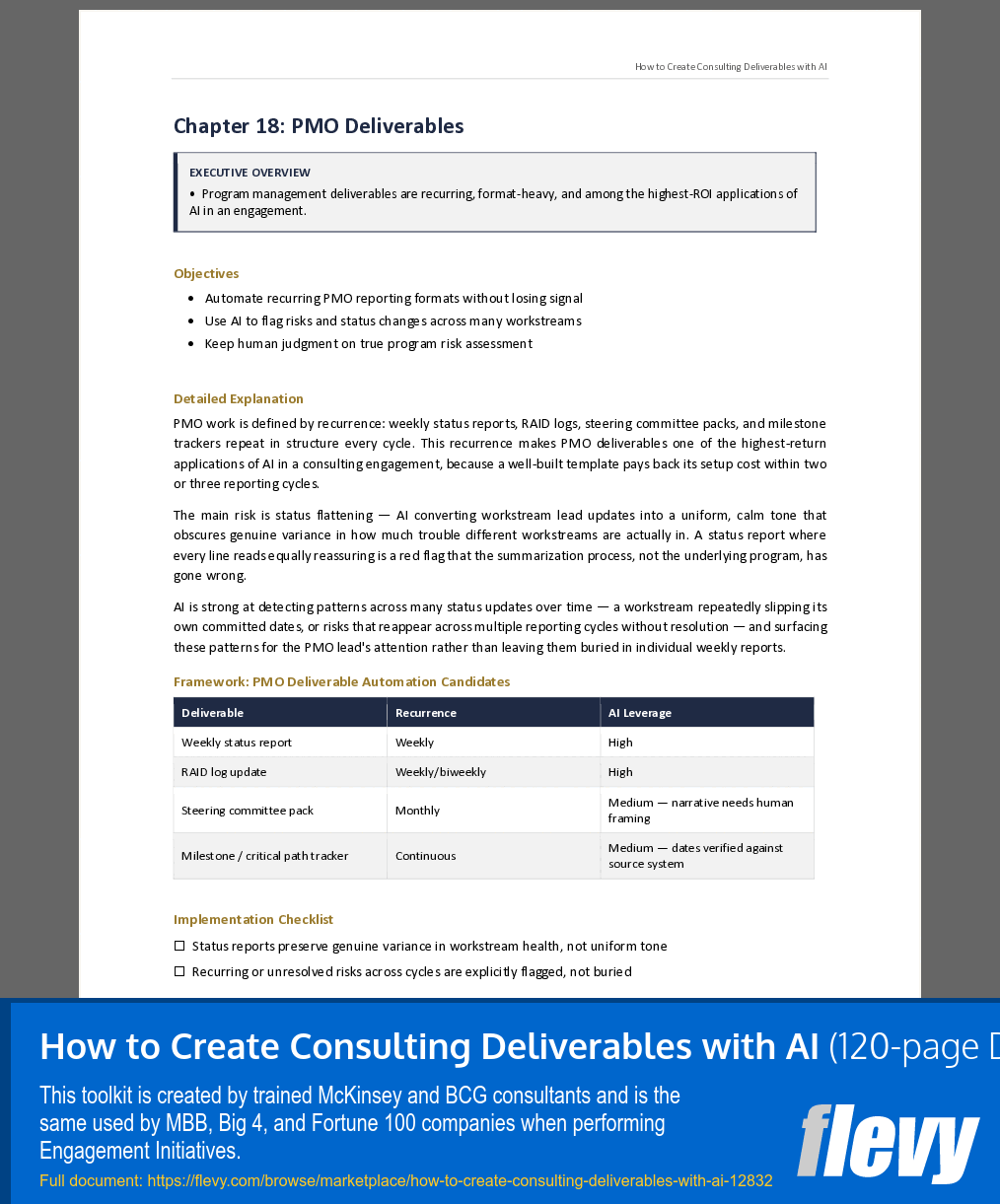
Chapter 18: PMO Deliverables
• High-ROI automation candidates: Status reports, RAID logs, trackers
• Status flattening prevention: Preserving genuine variance
• Cross-cycle pattern detection (AI strength)
• Steering committee pack assembly
Chapter 19: Risk Registers
• Risk identification (AI high-leverage) → Scoring (human judgment)
• Likelihood and impact scoring never delegated
• Register hygiene: Active closure vs. silent drift
• Risk interdependency analysis
Chapter 20: Transformation Roadmaps
• Dependency mapping and alternative sequencing
• Pacing choice: Leadership judgment, not technical optimization
• Cross-workstream dependency review
• Change-capacity assessment without over-committing
Chapter 21: Change Management Documents
• Scale change communications efficiently without losing credibility
• Tone calibration to organizational history
• Role-specific impact assessment accuracy
• Manager talking points for hard questions
Chapter 22: Client Communications
• Tier 1 (routine): Safe for near-unreviewed AI drafting
• Tier 2 (sensitive): Draft only; full human rewrite and sign-off
• Tier 3 (high-stakes): Human-authored, AI not used
• Accountability never transfers to the tool
Chapter 23: Executive Memos
• Recommendation-first structure
• Ruthless editing: If a sentence doesn't change the reader's decision, cut it
• Hedging language removal
• Specific ask and deadline clarity
Chapter 24: Board Reports
• Highest-review-tier deliverable
• Data verification by client finance
• General counsel disclosure review
• Named accountable executive sign-off before distribution
Chapter 25: AI Prompt Engineering for Consultants
• The Role–Context–Task–Format–Constraints structure
• Why under-specification is the most common prompt failure
• Iteration technique: Use first response as feedback on the prompt
• Explicit constraints ruling out generic language
PART THREE: THE AI CRAFT
Chapter 26: Building Reusable Prompt Libraries
• Organization and tagging for team findability
• Versioning and improvement tracking
• Battle-tested simple prompts beat elaborate untested ones
• Library discipline that scales across your team
Chapter 27: Reviewing AI Output
• Substance-first review sequence (not tone-first)
• Risk-weighted review effort
• Independent second-reviewer discipline
• Fluent writing as a trap: Tone checking last
Chapter 28: Fact-Checking
• Source-tracing method for efficient verification
• Claim classification: What actually needs checking
• Overgeneralization and stale data patterns
• Building fact-checking into project timelines
Chapter 29: Quality Assurance
• Engagement-level QA as a system
• Four-checkpoint process (substance, client-fit, independent review, sign-off)
• QA ownership separate from drafting
• Risk tiering matched to deliverable consequence
Chapter 30: Hallucination Prevention
• What actually causes hallucination (and how to prevent it)
• Grounding with actual source documents
• Explicit "say if you don't know" instructions
• Narrow, bounded questions over broad open ones
PART FOUR: GOVERNANCE & SCALE
Chapter 31: Client Confidentiality
• Data classification tiers (Public, Confidential, Highly Sensitive)
• Standard confidentiality obligations apply in full to AI tools
• Verification of AI tool data-handling terms
• Default to client's own approved configurations
Chapter 32: Governance
• Written AI usage policy (not just norms)
• Approved tool list and data-handling rules
• Named accountability per engagement
• Policy review cadence (not fixed indefinitely)
Chapter 33: AI Workflow Automation
• Automation worth-building test
• Maintenance burden estimation
• Judgment-dependent work stays manual
• Technical middle of workflow: Where automation belongs
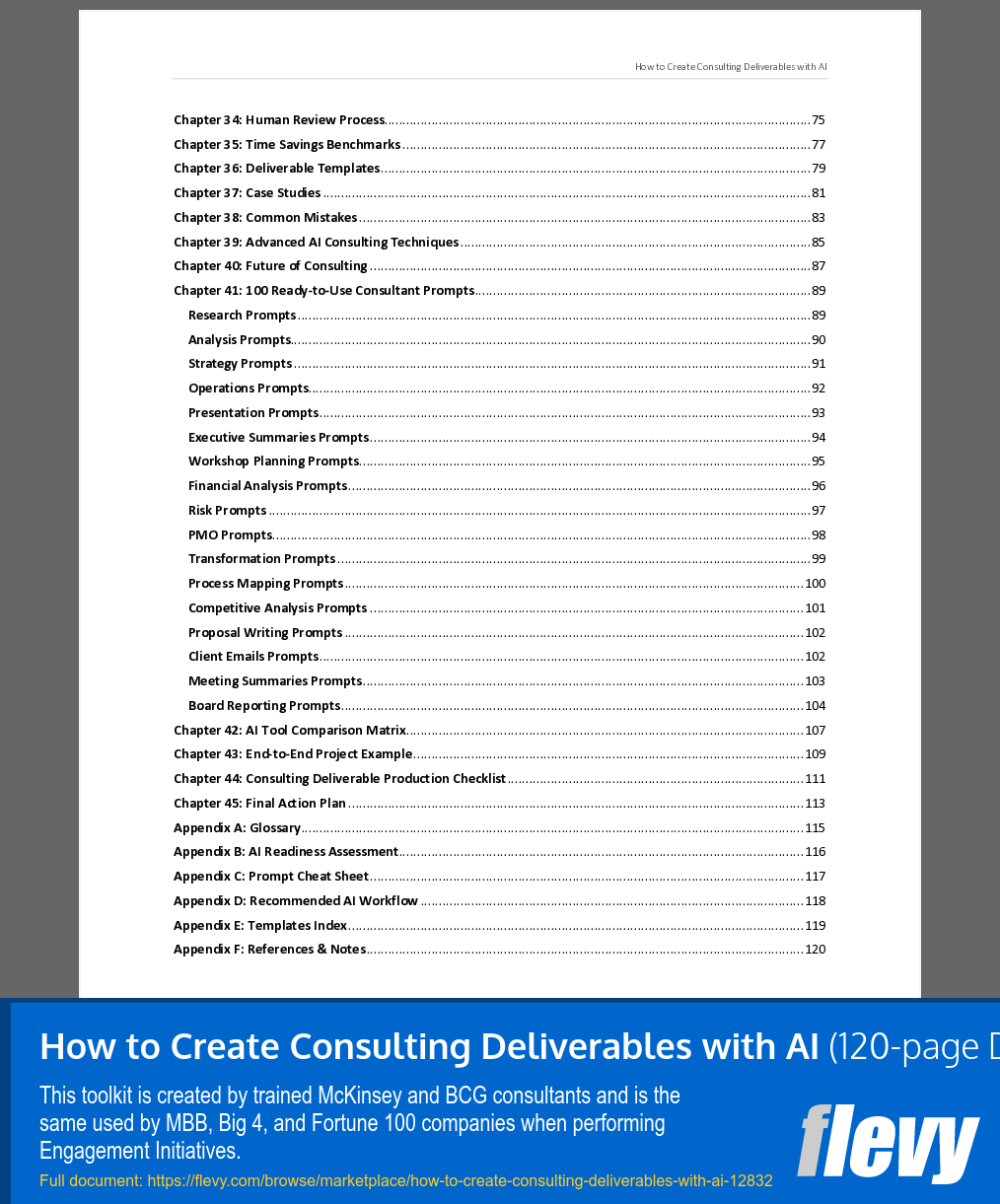
Chapter 34: Human Review Process
• Four-checkpoint architecture for consistency
• Protecting review time under deadline pressure
• Named owners and time budgets
• Making review resilient to real-world pressure
Chapter 35: Time Savings Benchmarks
• Realistic expectations by deliverable type
• Savings concentrate in research, synthesis, drafting
• Review time should never be compressed
• Internal benchmarks trump marketing claims
Chapter 36: Deliverable Templates
• Structure specification without language over-specification
• Length targets per section
• Client-specific customization flags
• Active maintenance and update cadence
PART FIVE: EXECUTION & LEARNING
Chapter 37: Case Studies
• Three disguised, realistic consulting case studies
• Where AI added value, where review caught real risks
• Transferable lessons across industries
Chapter 38: Common Mistakes
• Ten recurring patterns across deliverable types
• Root causes clustering around framing, verification, review intensity
• Pre-delivery checklist for catching errors
Chapter 39: Advanced AI Consulting Techniques
• Adversarial prompting to stress-test conclusions
• Multi-pass synthesis for higher-stakes deliverables
• Multi-dimensional scenario comparison
Chapter 40: Future of Consulting
• Durable shifts vs. transient hype
• Problem framing: The enduring skill
• Accountability: The core of the value proposition
Chapter 41: 100 Ready-to-Use Consultant Prompts
*Organized by category:*
• Research Prompts (7) – Sourcing, triangulation, synthesis, stale data
• Analysis Prompts (7) – SWOT, root cause, segmentation, logic testing
• Strategy Prompts (7) – Trade-offs, counterarguments, stress-testing
• Operations Prompts (7) – Process improvement, SOPs, RACI, capacity
• Presentation Prompts (6) – Storyline, slide content, speaker notes
• Executive Summary Prompts (6) – Recommendation-first, density cutting
• Workshop Planning Prompts (5) – Agenda, pre-work, breakout instructions
• Financial Analysis Prompts (7) – Narrative, sensitivity, variance explanation
• Risk Prompts (6) – First-pass generation, mitigation, escalation
• PMO Prompts (6) – Status reports, pattern detection, trackers
• Transformation Prompts (6) – Dependencies, sequencing, benefits tracking
• Process Mapping Prompts (5) – Interview-to-map, handoff analysis
• Competitive Analysis Prompts (6) – Feature matrices, positioning, win/loss
• Proposal Writing Prompts (5) – Executive summary, methodology, differentiation
• Client Email Prompts (5) – Status updates, recaps, scheduling
• Meeting Summary Prompts (5) – Structured notes, decision vs. discussion
• Board Reporting Prompts (4) – Draft sections, source tracing, plain language
Chapter 42: AI Tool Comparison Matrix
• Capability-based evaluation framework
• Data handling and enterprise controls weighting
• Tool selection matched to deliverable type
• Durable evaluation habit over static vendor list
Chapter 43: End-to-End Project Example
• Single engagement walked through every guide stage
• Frame–Draft–Review model applied continuously
• Week-by-week timeline with chapter references
• Reusable mental walkthrough for planning engagement
Chapter 44: Consulting Deliverable Production Checklist
• Master checklist consolidating every review discipline
• Organized by engagement lifecycle stage
• Pre-delivery screening before any client delivery
• Documented adaptation to team's risk profile
Chapter 45: Final Action Plan
• 30-day adoption: Individual practice → team habit → formal governance
• Days 1–10: Five-part prompting, substance-first review
• Days 11–20: Team prompt library, data classification tiers
• Days 21–30: Written policy, four-checkpoint review, adapted checklist
APPENDICES
Appendix A: Glossary
• 15 key terms every consulting practitioner should know
• AI Governance, Hallucination, Verification Literacy, and more
Appendix B: Consulting Deliverable Production Checklist
• Master pre-delivery screening
• Sections: Framing, Data, Research, Drafting, Numbers, Fact-Check, Independent Review, Client Fit, Sign-Off
Appendix C: Prompt Cheat Sheet
• Quick-reference Role–Context–Task–Format–Constraints structure
• Use alongside full prompt library
Appendix D: Recommended AI Workflow
• Five-step Brief–Gather–Synthesize–Draft–Verify process
• Time budgets per step
Appendix E: Templates Index
• Research synthesis, interview two-pass, SWOT, business case
• Executive memo, SOP, risk register, change communication
Appendix F: References & Notes
• Legal and governance guidance
• Tool vendor verification requirements
• Consulting methodology citations
💎 WHO USES THIS GUIDE
✅ Management Consultants – Building AI-assisted delivery without sacrificing quality
✅ Strategy Consultants – Framing and stress-testing strategy with AI assistance
✅ Independent Consultants – Scaling throughput while protecting client value
✅ Freelance Consultants – Competing with larger firms on quality and speed
✅ Transformation Consultants – Change management and organizational design with AI
✅ Operations Consultants – Process documentation and optimization delivery
✅ Business Analysts – Research synthesis and competitive analysis at scale
✅ Internal Consulting Teams – Finance business partners, ops strategists
✅ AI Consultants – Guiding clients on responsible AI adoption
✅ Boutique Consulting Firms – Leveraging AI to compete with McKinsey, BCG, Bain
✅ Consulting Firms at Scale – Governance and quality gates across many engagements
✅ Consulting Leadership – Managing AI adoption and quality standards firm-wide
✅ Business School Programs – Teaching next-generation consultant skills
✅ Consulting Academies & Training – Embedding AI into curriculum
📈 THE ROI OF AI-ASSISTED CONSULTING DELIVERY
Without This Framework:
• 50%+ of AI-assisted deliverables require client-facing rework
• Hallucinations and unverified claims undermine credibility
• Citation drift loses data sources across summarization rounds
• Review discipline weak → substance errors masked by fluent writing
• Confidentiality gaps → client data at risk in unverified AI systems
• Time saved on drafting not reinvested → margin flat or declining
• Team uncertainty → inconsistent AI use across engagements
• Competitive vulnerability → consulting peers moving faster with higher quality
• 20–40% margin left on the table
• Client satisfaction erodes due to generic-sounding output
With This Framework:
• ✅ 90%+ of AI-assisted deliverables ship client-ready (minimal rework)
• ✅ Verification discipline prevents confident-sounding falsehoods
• ✅ Citation integrity sustained through multiple summarization passes
• ✅ Substance-first review catches errors before delivery
• ✅ Confidentiality by design matches data classification to tool selection
• ✅ Time saved reinvested in depth, expanding margin by 15–30%
• ✅ Team operates with consistent discipline across all engagements
• ✅ Competitive differentiation through partner-level quality at AI speed
• ✅ Margin recovery through better-informed decisions
• ✅ Client satisfaction increases (output is specific and crisp)
• ✅ Faster turnaround without sacrificing quality
• ✅ Board and steering committee materials ship with confidence
• ✅ Reusable assets (prompts, templates, checklists) compound team value over time
• ✅ Scaling becomes possible without sacrificing quality gates
🎁 COMPLETE GUIDE INCLUDES
✅ 50+ Full Pages of Consulting-Specific Guidance – Not generic AI advice – consulting work
✅ 45 Comprehensive Chapters – Fully written, immediately actionable, zero outlines or placeholders
✅ 100 Battle-Tested Prompts – All major deliverable types, copy-and-deploy ready
✅ 10 Proprietary Frameworks – Frame–Draft–Review, Four-Checkpoint Review, Risk Tiering, and 7 others
✅ Real Consulting Case Studies – Actual engagement patterns, transformation outcomes, lessons learned
✅ Executive Templates – Research briefs, business case structures, executive memos, SOP templates
✅ Deliverable-Specific Playbooks – Research, interviews, workshops, strategy, financials, presentations, boards
✅ Function-Specific Guidance – PMO work, risk registers, transformation roadmaps, change management
✅ AI Tool Comparison – ChatGPT, Claude, Gemini matched to consulting deliverable types
✅ Governance Checklists – Confidentiality tiers, review gates, quality assurance, pre-delivery screening
✅ Prompt Library Discipline – How to build, version, and improve prompts across your team
✅ Verification Protocols – Fact-checking, hallucination prevention, citation tracking
✅ Quality Assurance Framework – Four-checkpoint process, independent review, sign-off discipline
✅ Transformation Roadmap – 30-day to 12-month implementation with governance gates
✅ Professional Formatting – Consistent design hierarchy, white space, typography throughout
✅ Reusable Assets – Prompts, templates, checklists, frameworks ready to deploy immediately
🔥 TRANSFORM FROM:
• ❌ Hoping AI output doesn't contain errors → ✅ Verified, sourced, client-ready deliverables
• ❌ 50%+ rework rate on AI-assisted work → ✅ 90%+ ship client-ready
• ❌ Generic, template-sounding output → ✅ Client-specific, crisp, differentiated deliverables
• ❌ Weak verification discipline → ✅ Substance-first review with independent second-reviewer
• ❌ Confidentiality gaps and data leakage risk → ✅ Data classification matched to tool selection
• ❌ Hallucinations masquerading as facts → ✅ Grounded output with explicit "don't know" instructions
• ❌ Citation drift across summarization rounds → ✅ Provenance tracked and verified in final pass
• ❌ Time savings not reinvested → ✅ Margin recovery through deeper analysis
• ❌ Team uncertainty on AI governance → ✅ Clear policies and review gates
• ❌ Competitive vulnerability to AI-native peers → ✅ Partner-level quality at accelerated speed
• ❌ 20–40% margin left on table → ✅ Margin recovery and valuation premium
• ❌ Board and steering committee anxiety → ✅ Confident, auditable delivery
• ❌ Siloed AI adoption across engagements → ✅ Coordinated, governed, repeatable workflows
• ❌ Guessing at quality standards → ✅ Measurable, verifiable quality gates
🎯 12-WEEK CONSULTING AI TRANSFORMATION ROADMAP
Week 1–2: Read guide, assess current state, select AI tools for personal use
Week 3–4: Deploy five-part prompting and substance-first review on every deliverable
Week 5–6: Build first prompt library entries for 3 most-common deliverable types
Week 7–8: Establish data classification tiers and AI governance policy
Week 9–10: Implement four-checkpoint review process on all client deliverables
Week 11–12: Measure quality improvement, establish governance reporting, plan Q1 scaling
Outcome: Individual AI fluency, quality discipline embedded in workflow, governance framework in place, team consistency improved, 12-month transformation roadmap locked.
💎 WHY THIS GUIDE WINS
It's Not Generic
• Specific to consulting deliverables, not generic "AI for business" writing
• Frameworks built around partner-level quality bars and client trust
• Real consulting case studies from actual transformations, not hypotheticals
It's Immediately Actionable
• 100 ready-to-use prompts for every major consulting deliverable type
• Checklists you can use today before any AI-assisted delivery
• Frameworks you apply to your current engagement starting this week
It's Quality-First, Speed-Second
• Time savings reinvested in depth, not volume
• The Frame–Draft–Review model is the core, not an afterthought
• Verification discipline is built in, not optional polish
It's Built on Real Consulting Patterns
• 45 chapters organized around the actual consulting engagement lifecycle
• Deliverable-specific guidance (not generic rules)
• Case studies showing where AI added value AND where review caught critical errors
It's AI-Native for Consultants
• Assumes ChatGPT, Claude, and frontier models are available and standard
• Shows exactly when and how to use AI in strategic consulting work
• Addresses hallucination, verification, and accuracy in high-stakes client contexts
It's Board & Client Ready
• Governance frameworks, quality gates, and oversight checklists
• Confidentiality by design and data classification tiers
• Audit-ready documentation and sign-off trails
It's Built on Measurement
• Framework for tracking quality improvement, margin recovery, competitive position
• Clear metrics for when pilots succeed and scaling decisions
• Win/loss analysis and continuous improvement discipline
It's Comprehensive
• From individual consultant practice to firm-wide governance
• From simple research synthesis to complex financial modeling
• From personal fluency to organizational transformation
🚀 GET IMMEDIATE ACCESS
✅ What You Get Today:
• Complete 50+-page professional handbook (PDF + DOCX)
• All 45 chapters, fully written and immediately usable
• 100 battle-tested prompts across all major deliverable types
• 10 proprietary frameworks (Frame–Draft–Review, Four-Checkpoint Review, and 8 others)
• Real consulting case studies with transformation outcomes
• Executive templates and production checklists
• Deliverable-specific playbooks (Research, interviews, strategy, finance, presentations, boards)
• AI governance frameworks and confidentiality tiers
• 12-month transformation roadmap with implementation gates
• Prompt library discipline and versioning guidance
✅ Immediate Benefits:
• Partner-level quality with AI-accelerated speed
• 90%+ deliverable ship rate (vs. industry average 50%)
• Margin recovery through verified, depth-added work
• Team confidence and consistent AI governance
• Competitive differentiation against AI-native peers
• Client trust through quality and transparency
• Faster delivery cycles without quality sacrifice
• Sustained competitive advantage as AI matures
🎯 THE BOTTOM LINE
Competitive advantage doesn't come from having access to AI tools. It comes from disciplined verification, consistent review process, and organizational quality standards that scale.
This guide delivers all three.
🔥 DOWNLOAD YOUR COMPETITIVE ADVANTAGE TODAY
Join hundreds of consultants, consulting firms, and business analysts using this framework to:
• Deliver partner-level quality with AI-accelerated speed
• Eliminate 50%+ rework rate on AI-assisted work
• Build team fluency and consistent governance
• Recover 15–30% margin through verified, depth-added deliverables
• Differentiate against AI-native consulting peers
• Build sustainable competitive moat as AI matures
• Lead client conversations with confidence and credibility
How to Create Consulting Deliverables with AI: The Complete Professional Handbook
Your #1 Resource for Quality, Speed, and Competitive Advantage in Consulting
Disciplined. Verified. Client-Ready. Board-Approved. Immediately Deployable.
Download Now. Implement This Week. Compete at the Highest Level.
🚀 CONSULTANTS WHO LEAD AI ADOPTION WIN. DOWNLOAD TODAY. 🚀
Limited Time. Professional-Grade Guide. Lifetime Access. No Subscription.
Transform your delivery quality. Accelerate your speed. Recover lost margin. Build competitive moat.
Get "How to Create Consulting Deliverables with AI" now and start shipping better work faster today.
Keywords: Inventory Management, Demand Planning, Inventory Optimization, Inventory Control, Supply Chain Management, Warehouse Operations, Replenishment Strategy, Inventory Analytics, WIP Reduction, Inventory Accuracy, Distribution Network, Inventory Forecasting, Supply Chain Excellence, Working Capital, Inventory KPIs, Procurement Strategy, Inventory Governance, Inventory SOPs, Continuous Improvement, Supply Chain Transformation, GenAI deployment SOPs, generative AI operating model, enterprise AI governance framework, AI Center of Excellence, responsible AI, AI risk management, AI use case prioritization, GenAI implementation roadmap, AI vendor selection, prompt engineering standards, AI compliance, AI adoption strategy, generative AI across value chain, AI strategy, enterprise transformation, AI implementation, AI scaling framework
Strategy & Transformation, Growth Strategy, Strategic Planning, Strategy Frameworks, Innovation Management, Pricing Strategy, Core Competencies, Strategy Development, Business Transformation, Marketing Plan Development, Product Strategy, Breakout Strategy, Competitive Advantage, Mission, Vision, Values, Strategy Deployment & Execution, Innovation, Vision Statement, Core Competencies Analysis, Corporate Strategy, Product Launch Strategy, BMI, Blue Ocean Strategy, Breakthrough Strategy, Business Model Innovation, Business Strategy Example, Corporate Transformation, Critical Success Factors, Customer Segmentation, Customer Value Proposition, Distinctive Capabilities, Enterprise Performance Management, KPI, Key Performance Indicators, Market Analysis, Market Entry Example, Market Entry Plan, Market Intelligence, Market Research, Market Segmentation, Market Sizing, Marketing, Michael Porter's Value Chain, Organizational Transformation, Performance Management, Performance Measurement, Platform Strategy, Product Go-to-Market Strategy, Reorganization, Restructuring, SWOT, SWOT Analysis, Service 4.0, Service Strategy, Service Transformation, Strategic Analysis, Strategic Plan Example, Strategy Deployment, Strategy Execution, Strategy Frameworks Compilation, Strategy Methodologies, Strategy Report Example, Value Chain, Value Chain Analysis, Value Innovation, Value Proposition, Vision Statement, Corporate Strategy, Business Development, Business plan pdf, business plan, PDF, Business Plan DOC, Business Plan Template, PPT, Market strategy playbook, strategic market planning, competitive analysis tools, market segmentation frameworks, growth strategy templates, product positioning strategy, market execution toolkit, strategic alignment playbook, KPI and OKR frameworks, business growth strategy guide, cross-functional strategy templates, market risk management, market strategy PowerPoint doc, guide, ebook, e-book ,McKinsey Change Playbook, Organizational change management toolkit, Change management frameworks 2025, Influence model for change, Change leadership strategies, Behavioral change in organizations, Change management PowerPoint templates, Transformational leadership in change, supply chain KPIs, supply chain KPI toolkit, supply chain PowerPoint template, logistics KPIs, procurement KPIs, inventory management KPIs, supply chain performance metrics, manufacturing KPIs, supply chain dashboard, supply chain strategy KPIs, reverse logistics KPIs, sustainability KPIs in supply chain, financial supply chain KPIs, warehouse KPIs, digital supply chain KPIs, 1200 KPIs, supply chain scorecard, KPI examples, supply chain templates, Corporate Finance SOPs, Finance SOP Excel Template, CFO Toolkit, Finance Department Procedures, Financial Planning SOPs, Treasury SOPs, Accounts Payable SOPs, Accounts Receivable SOPs, General Ledger SOPs, Accounting Policies Template, Internal Controls SOPs, Finance Process Standardization, Finance Operating Procedures, Finance Department Excel Template, FP&A Process Documentation, Corporate Finance Template, Finance SOP Toolkit, CFO Process Templates, Accounting SOP Package, Tax Compliance SOPs, Financial Risk Management Procedures.
NOTE: Our digital products are sold on an "as is" basis, making returns and refunds unavailable post-download. Please preview and inquire before purchasing. Please contact us before purchasing if you have any questions! This policy aligns with the standard Flevy Terms of Usage.
Got a question about the product? Email us at support@flevy.com or ask the author directly by using the "Ask the Author a Question" form. If you cannot view the preview above this document description, go here to view the large preview instead.
Source: Best Practices in Artificial Intelligence, Consulting Training Word: How to Create Consulting Deliverables with AI Word (DOCX) Document, SB Consulting
ABOUT THE AUTHOR

SB Consulting is dedicated to empowering businesses to communicate their ideas with impact. This consulting firm specializes in teaching organizations how to create effective corporate and management presentations. With training from top-tier global consulting firms, including McKinsey, BCG, and Porsche Consulting, extensive expertise in presentation design and ... [read more]
Ask the Author a Question
You must be logged in to contact the author.




























