 Click main image to view in full screen.
Government Contractor Borrowing Base Control Tower – Excel XLSX
Excel (XLSX) + Zip archive file (ZIP)


BENEFITS OF THIS DOWNLOADABLE EXCEL DOCUMENT
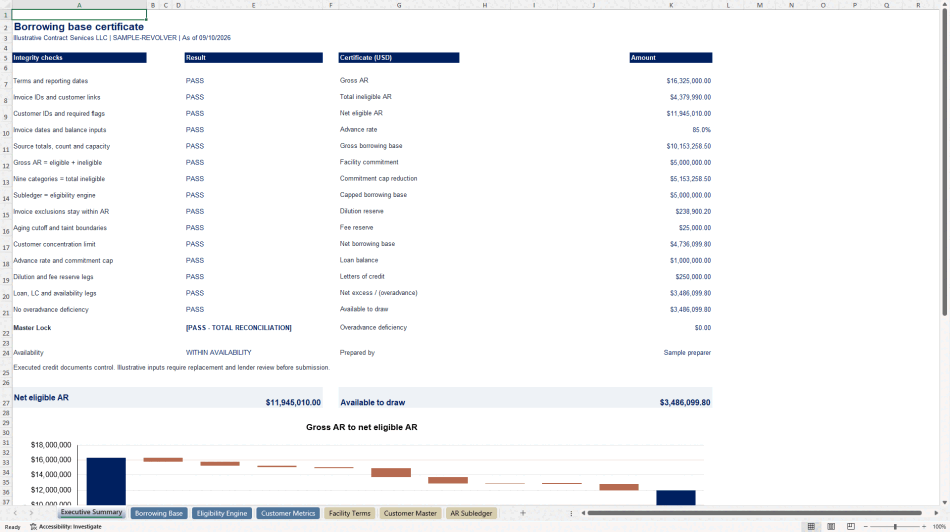
- Provides a traceable bridge from receivables to eligible collateral and the borrowing base.
- Supports exception review, reconciliation, escalation, and approval evidence.
- Includes an operating procedure, Quick Start Guide, and sign-off template.
GOVERNMENT EXCEL DESCRIPTION
Executive context
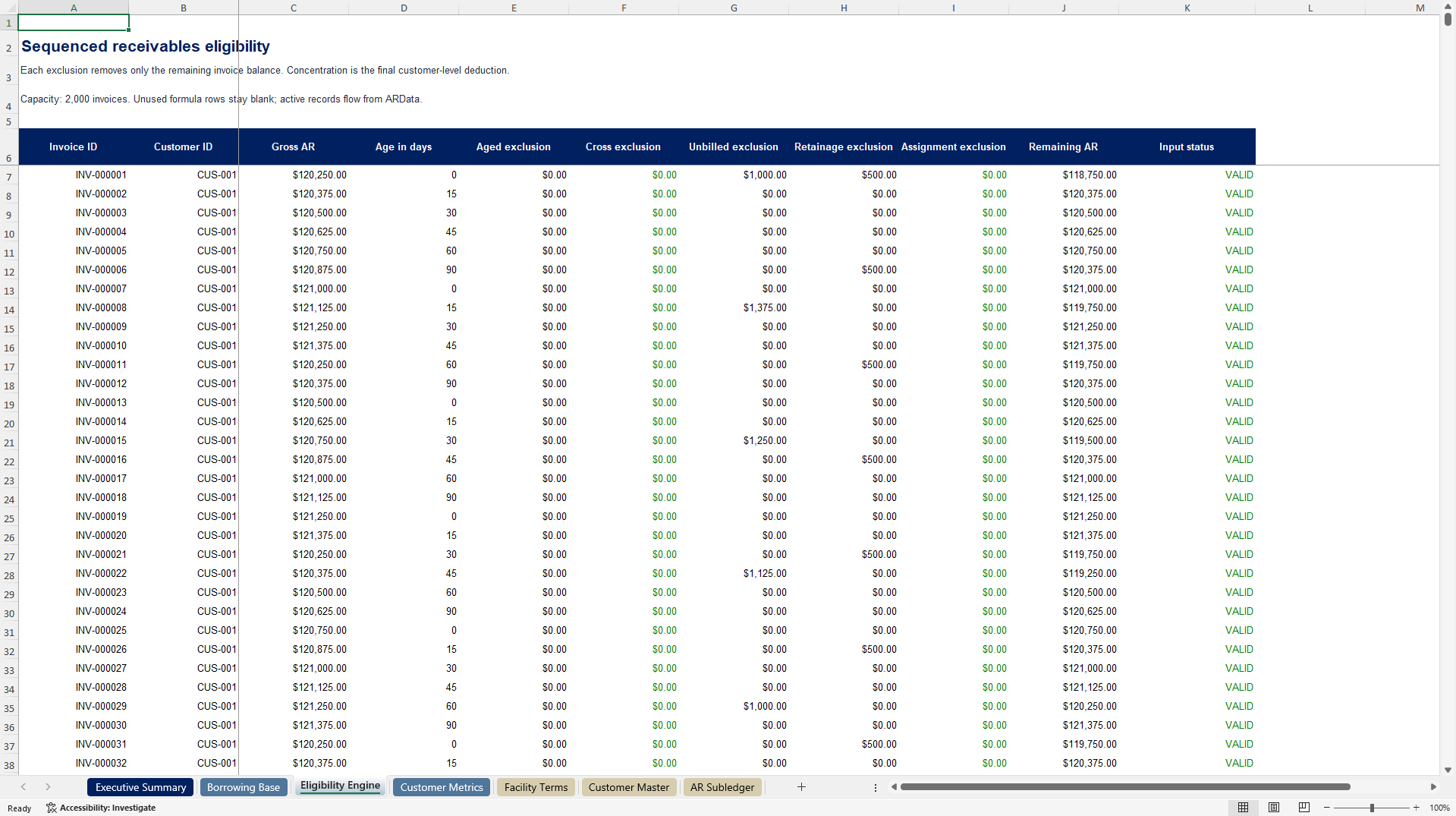
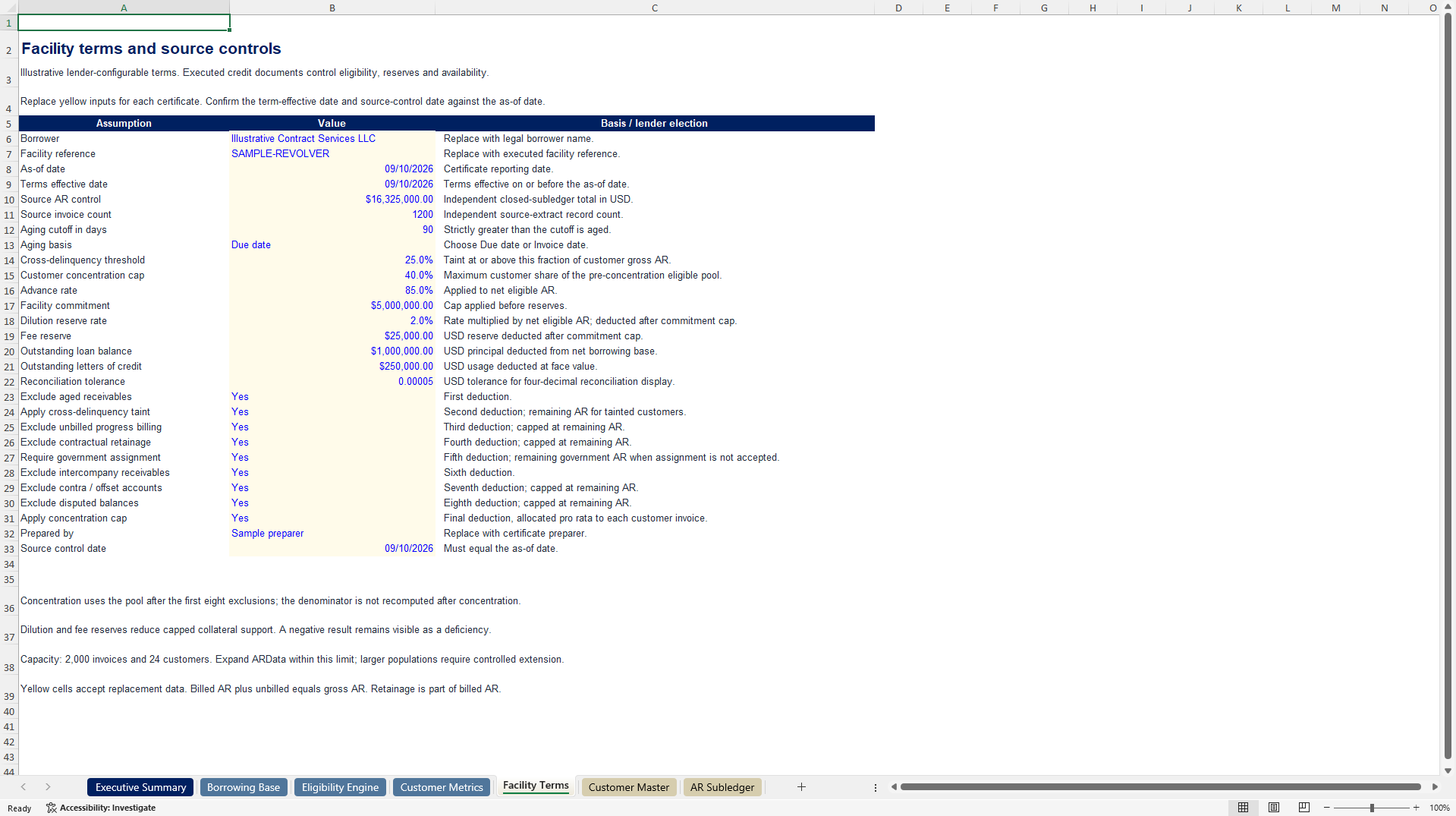
A government contractor may have substantial billed receivables while a lender recognizes only a portion as eligible collateral. The bridge between those figures must be repeatable, explainable, and documented. This Excel control tower is built for finance leaders who need a structured method to review invoice eligibility, calculate a borrowing base, investigate exceptions, and approve the reporting package.
Analytical structure
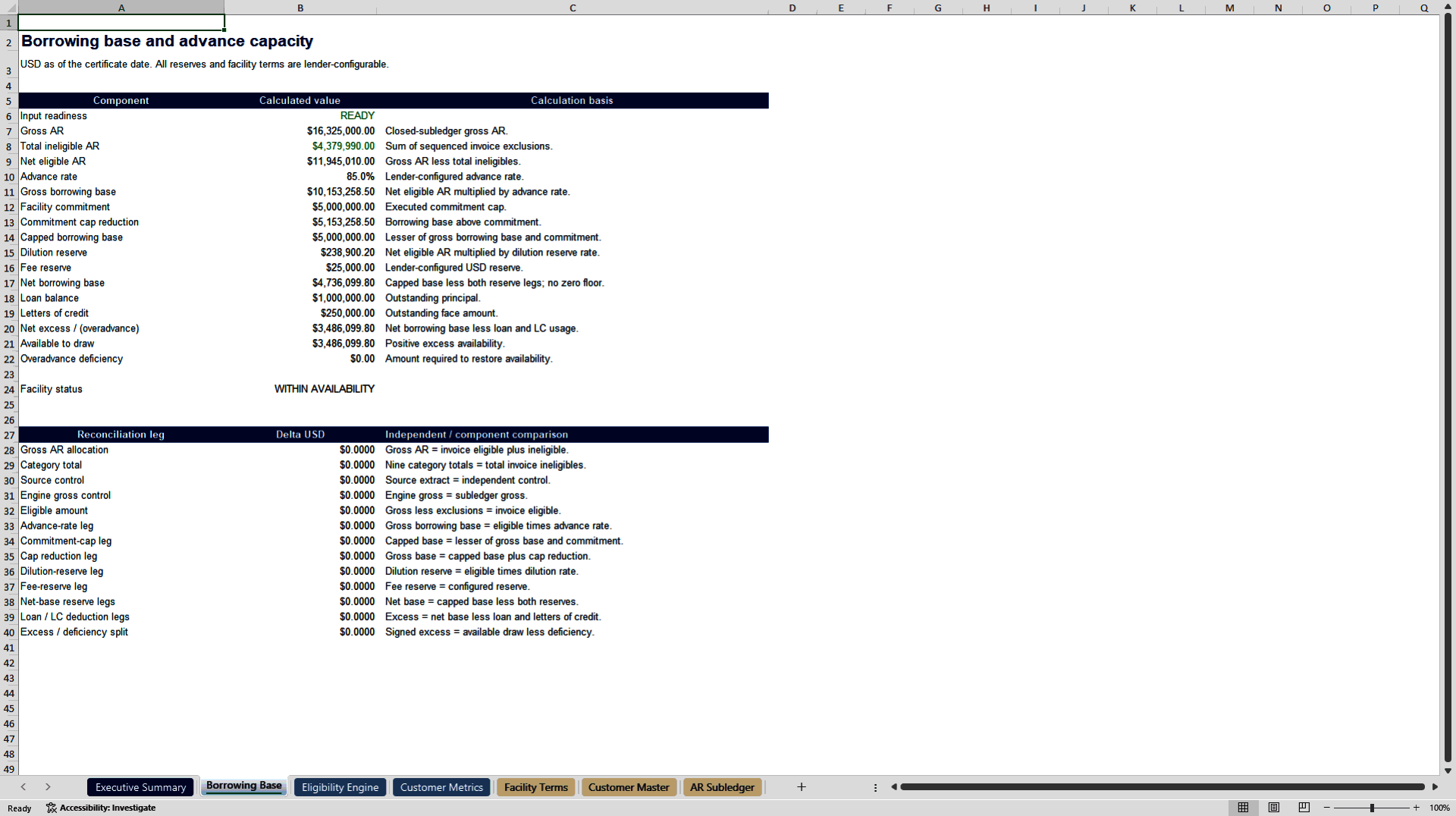
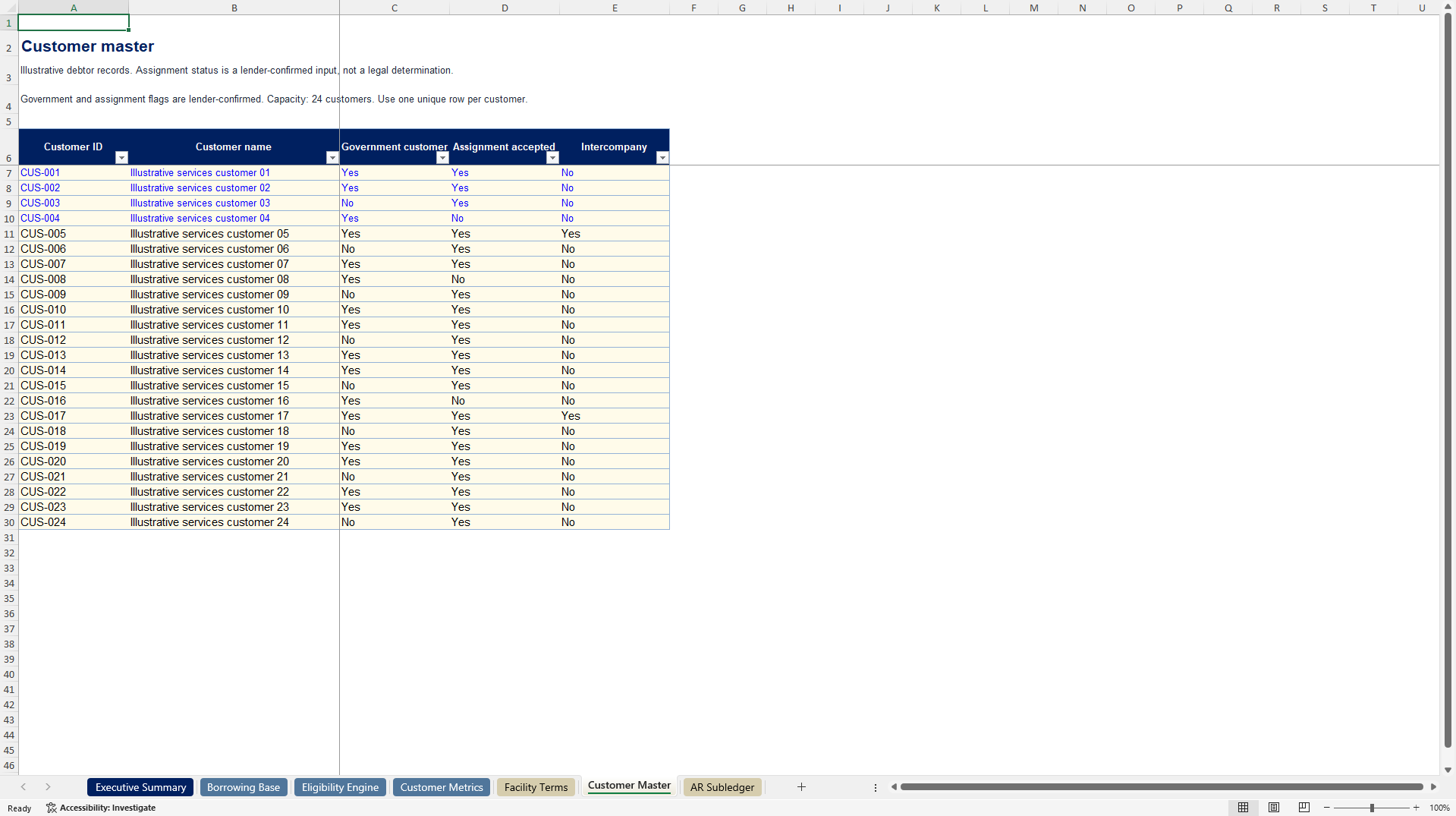
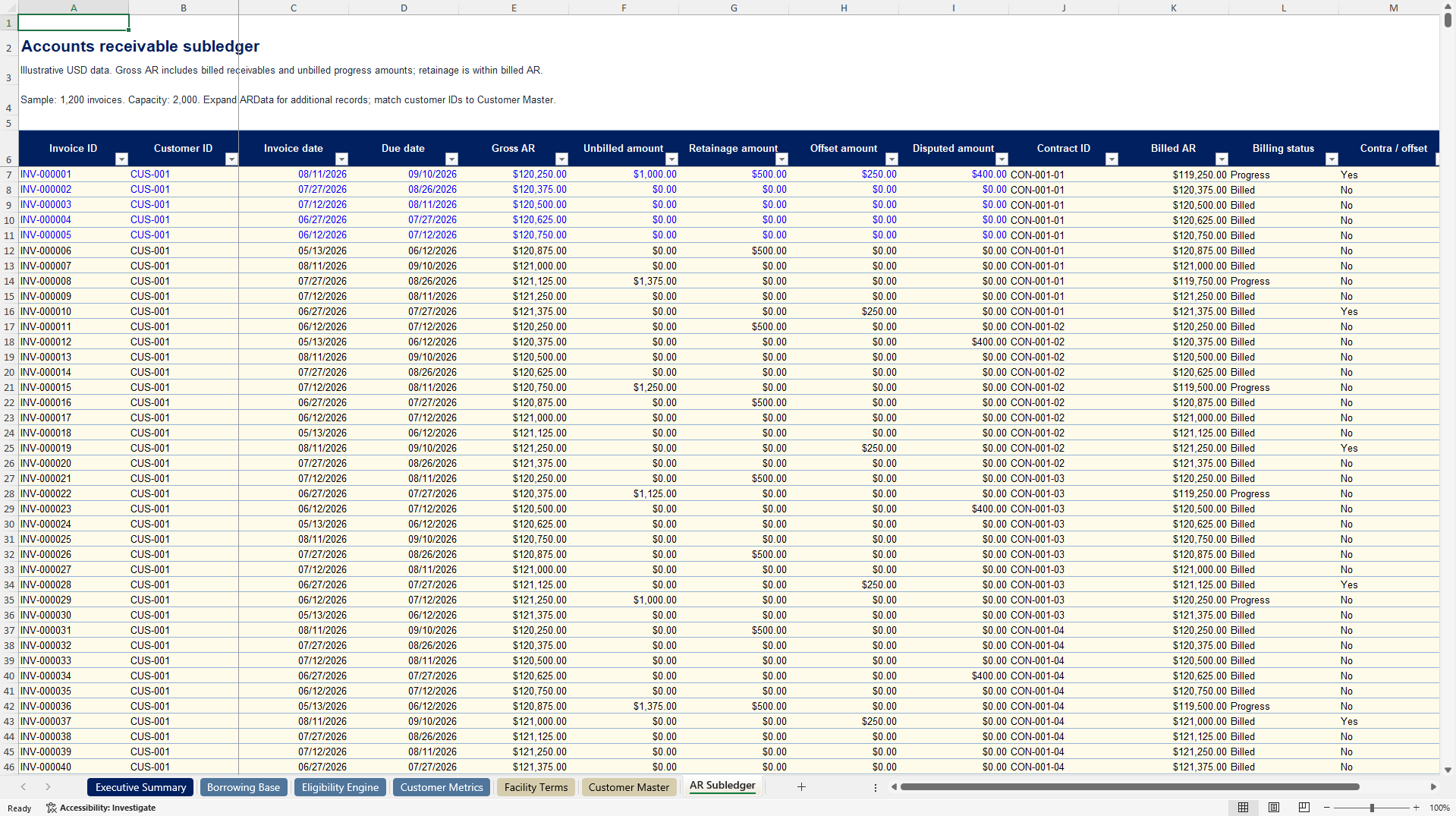
The included demonstration processes 1,200 fictional enterprise accounts-receivable and billing records. Nine ineligible-receivable criteria support the eligibility review, while an 85% facility advance-rate assumption converts net eligible receivables into a gross borrowing-base measure. The workbook contains 50,317 formulas and fifteen formula-driven integrity checks. The supplied sample closes with a $0.0000 reconciliation delta. These are characteristics of the included demonstration, not promised outcomes for a different facility or data set.
Documentation package
Flevy receives the Excel workbook as the primary document and a separate secondary archive containing exactly three customer PDFs: the operating procedure, Quick Start Guide, and borrowing-base sign-off template. The wider five-file customer suite also includes a fictional sample-data CSV. The documents explain source preparation, role ownership, exception review, reconciliation, escalation, recurring operation, and approval evidence.
Management use
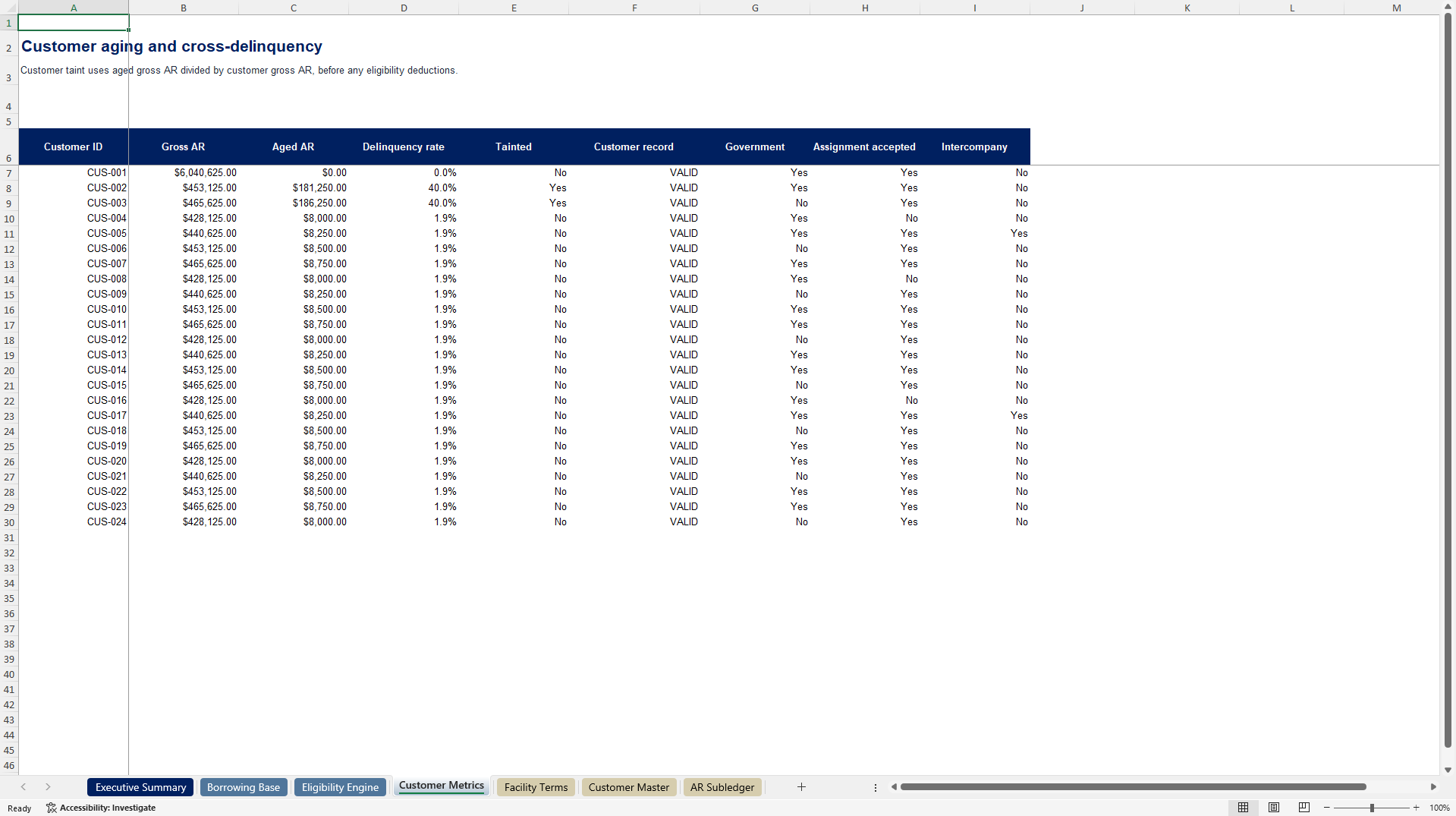
Controllers, treasury leaders, credit teams, finance transformation professionals, and government-contractor accounting groups can use the model as a common review workpaper. The workflow supports disciplined discussion of why receivables were excluded, how eligible collateral moved, whether totals reconcile, and which approvals remain outstanding. It is designed to expose the calculation trail rather than produce an unexplained answer.
Management can also use the documented sequence to assign preparation, challenge, escalation, and approval responsibilities, making the recurring certificate process easier to govern across treasury, accounting, and credit stakeholders.
Implementation approach
Start with the demonstration, map authorized ledger and billing exports, define the applicable facility rules, update controlled assumptions, review each exclusion category, reconcile the borrowing-base result, and complete sign-off. The included data is synthetic and must not be treated as client evidence.
This model is a decision-support control tool. It does not replace lender requirements, legal interpretation, contract review, regulatory obligations, accounting policy, or professional judgment. Confirm all eligibility definitions, advance rates, caps, concentrations, reporting duties, and approvals against current governing documents before use.
Got a question about the product? Email us at support@flevy.com or ask the author directly by using the "Ask the Author a Question" form. If you cannot view the preview above this document description, go here to view the large preview instead.
Source: Best Practices in Government, Loans Excel: Government Contractor Borrowing Base Control Tower Excel (XLSX) Spreadsheet, Luke A.
ABOUT THE AUTHOR

CPA and Forensic Systems Architect specializing in financial control, ERP remediation, close governance, and automated reconciliation. Develops executive close control towers, J-SOX-oriented evidence frameworks, reconciliation governance, and finance operating models. Each framework makes exception handling, ownership, sign-off, and executive review visible and auditable. Fixed-price, ... [read more]
Ask the Author a Question
You must be logged in to contact the author.




























