 Click main image to view in full screen.
GenAI - Agent Harness Strategy - Including Case Studies – PowerPoint PPTX Template
PowerPoint (PPTX) 25 Slides


BENEFITS OF THIS DOWNLOADABLE POWERPOINT DOCUMENT
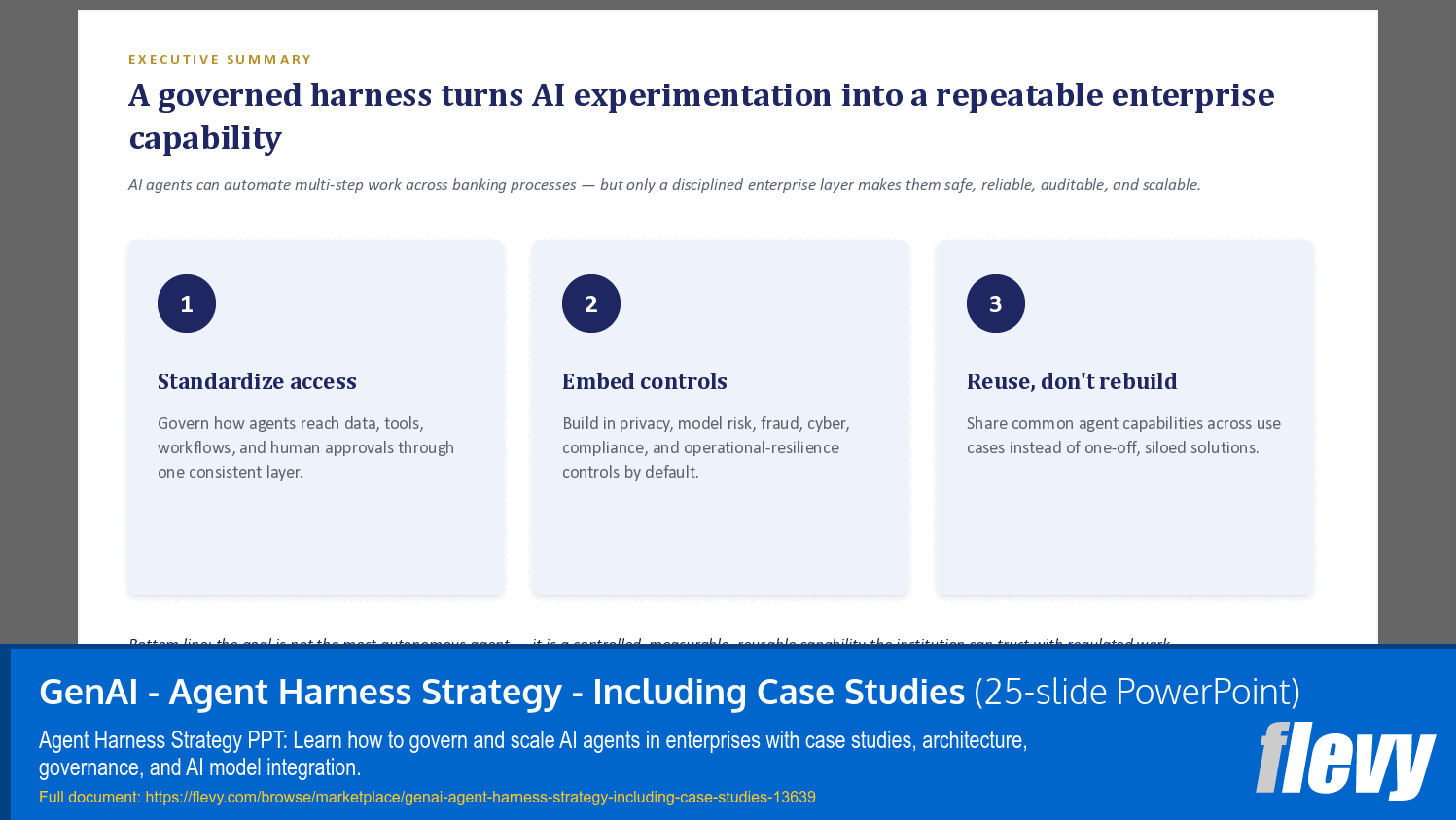
- Comprehensive Agent Harness Strategy to turn AI experimentation into a repeatable enterprise capability
- A reusable platform layer governing how agents reason, retrieve, act, and operate within policy and risk boundaries.
- Comprehensive Model Architecture for Agent Harness, include case study, solution architecture and operating model
AGENTIC AI PPT TEMPLATE DESCRIPTION
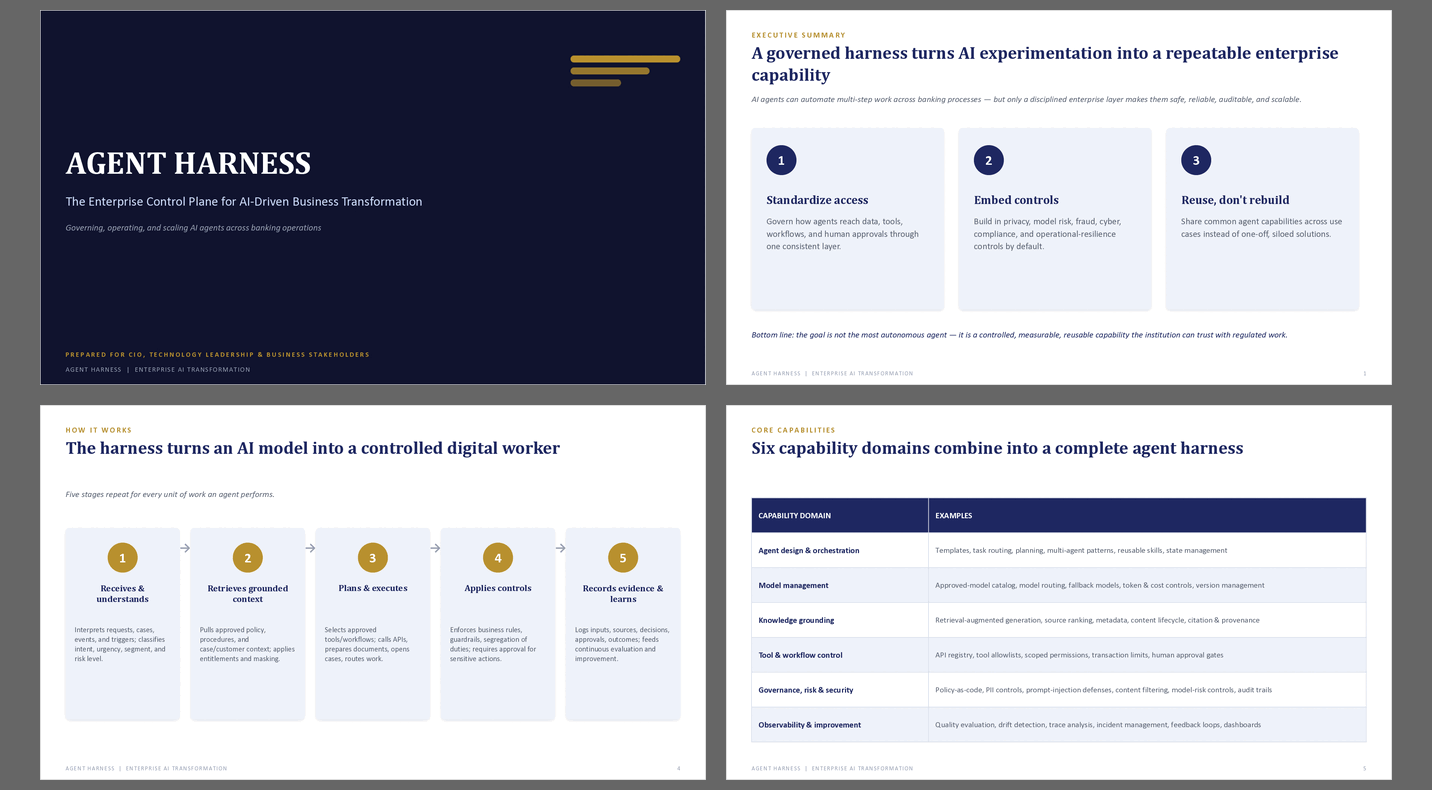
This executive deck provides a business-led, architecture-grounded blueprint for moving agentic AI from isolated experimentation to a governed enterprise capability. It explains how an Agent Harness can become the control plane that connects AI models, enterprise data, tools, workflows, human decision-makers, and risk controls—allowing banks and other regulated enterprises to deploy AI agents safely, consistently, and at scale.
Rather than positioning AI agents as stand-alone applications, the deck presents a reusable platform model that enables organizations to build once and scale across multiple business processes. It connects strategy, architecture, data, AI, governance, operating model, and measurable business outcomes in language that can be understood by CIOs, business executives, architects, risk leaders, data teams, and AI engineers.
What the deck delivers:
1) Establishes a clear enterprise definition of an Agent Harness
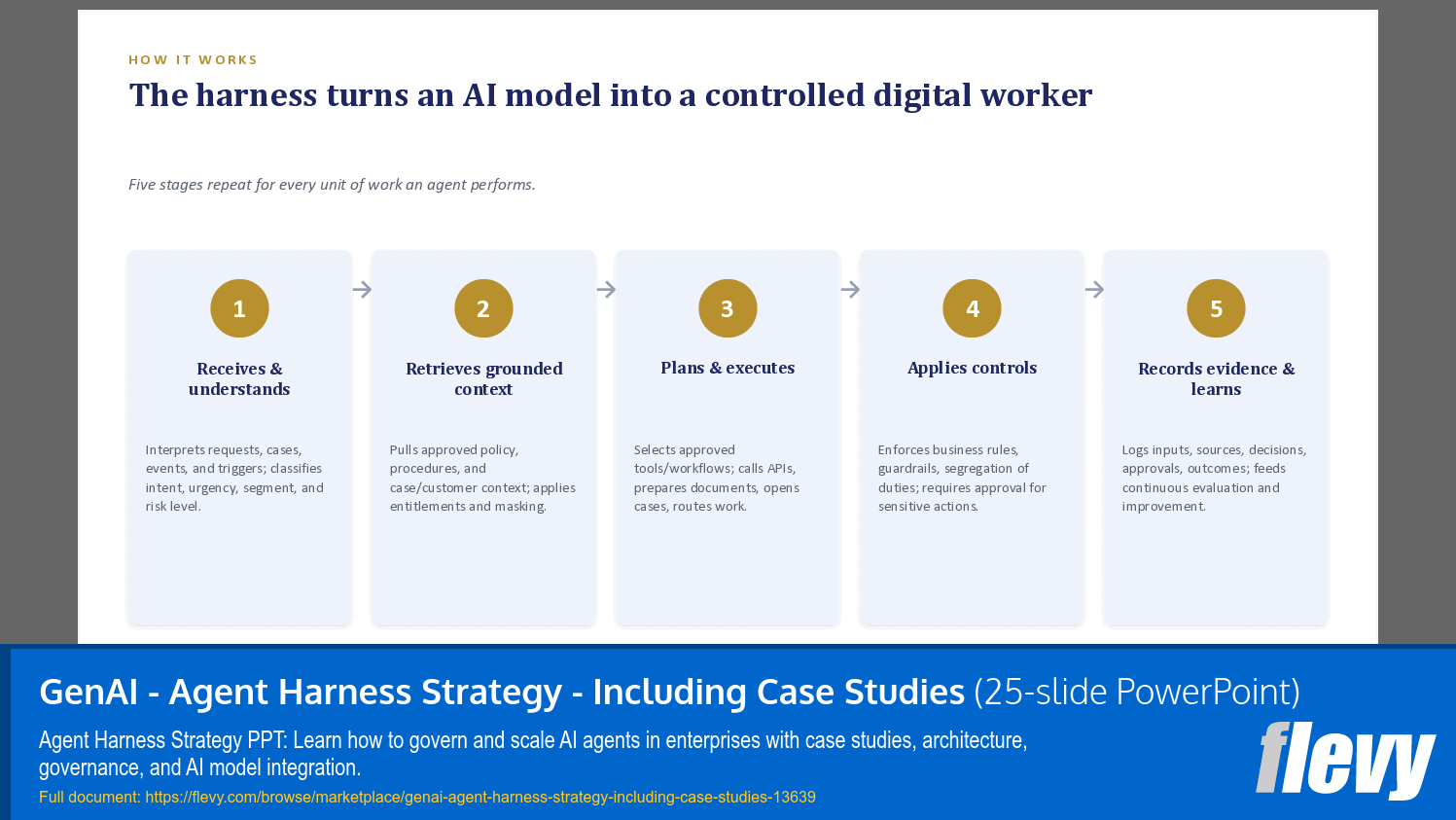
Explains the harness as the runtime and control framework governing how agents reason, retrieve information, use tools, execute workflows, collaborate, and operate within enterprise policy boundaries.
2) Connects AI models to real enterprise work
Shows how models such as Google Gemini and other approved LLMs become useful only when surrounded by orchestration, context management, tool access, controls, approvals, auditability, and operational monitoring.
3) Creates a reusable enterprise control plane for AI agents
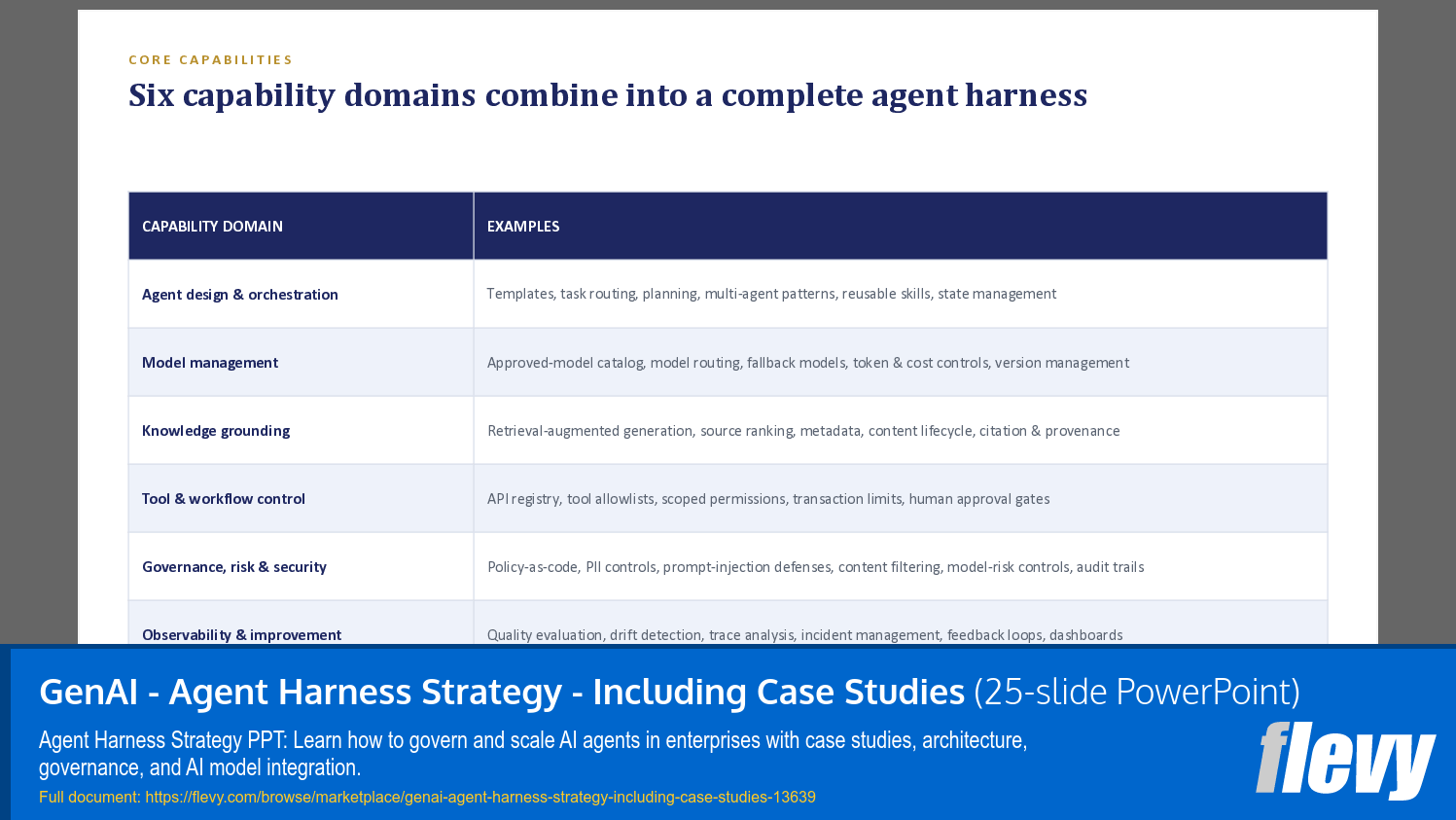
Illustrates capabilities such as agent registries, orchestration, memory/state, model routing, policy engines, guardrails, tool gateways, approval workflows, observability, evaluation, and audit traces.
4) Explains the complete data-to-outcome architecture
Connects authorized enterprise data sources through data quality, lineage, APIs, IAM/PAM, secure connectivity, semantic retrieval, and knowledge grounding before information is made available to an agent or AI model.
Shows how organizations can protect sensitive on-premise data while using cloud AI
Demonstrates hybrid patterns in which banking systems and sensitive data remain under enterprise control while the harness securely invokes cloud-based AI capabilities for reasoning, summarization, extraction, and embeddings.
Introduces eight capabilities required to industrialize agentic AI
Brings together Agentic mesh & marketplace, Agent studio & builder, Event-driven orchestration, Knowledge fabric, Multi-modal ingestion, Composite AI, Interoperability, and Self-healing operations into a coherent enterprise architecture.
Shows multiple ways to organize those capabilities architecturally
The layered architecture views demonstrate how the same capabilities can be organized from foundational inputs → knowledge → intelligence → orchestration → agent collaboration → resilient operations, helping architecture teams select a model appropriate for their organization.
Moves beyond simple LLM orchestration
Positions the platform as a combination of AI, automation, data, integration, governance, and operations, rather than treating agentic AI as simply another chatbot or workflow engine.
Provides a practical autonomy model
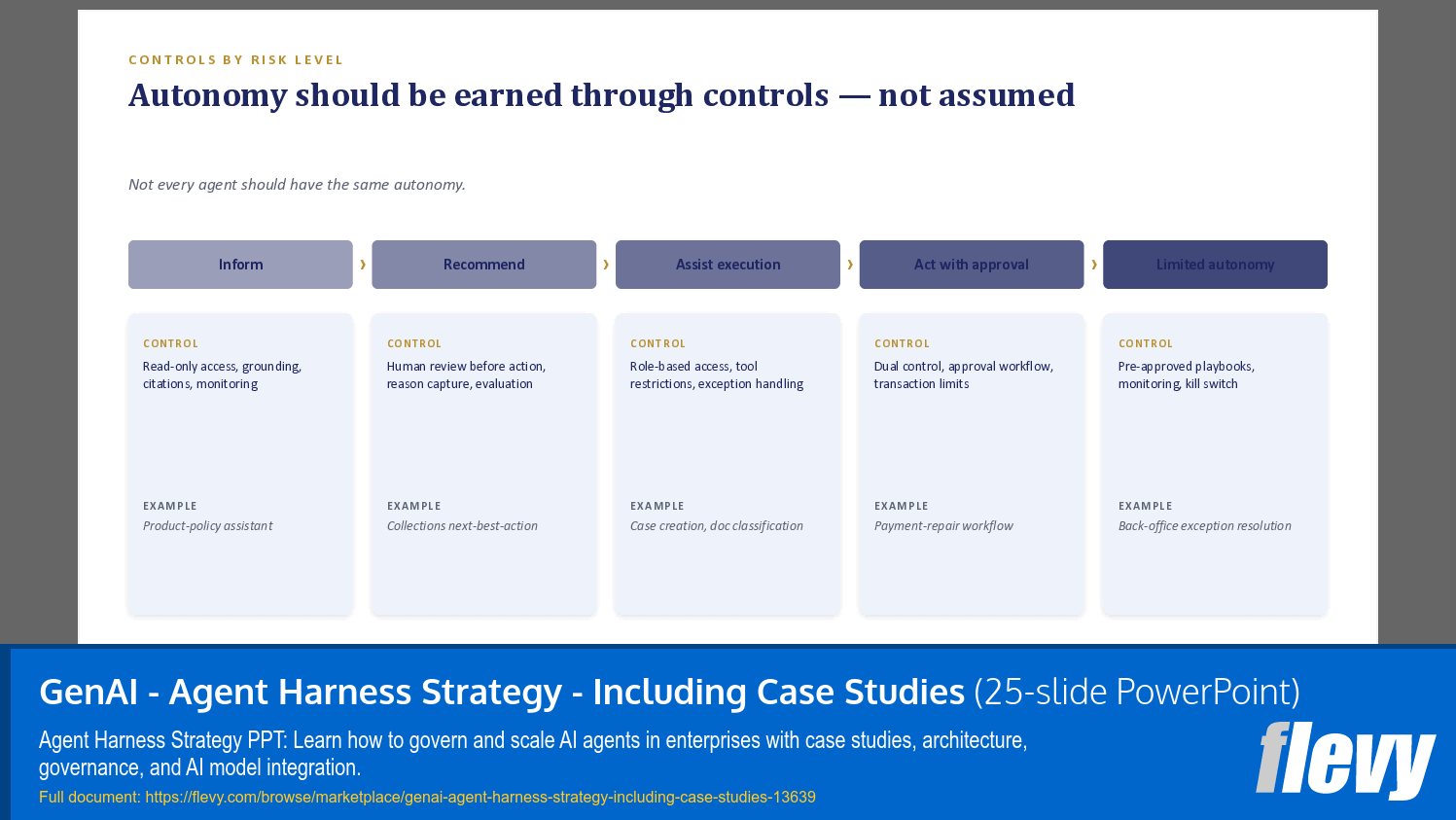
Shows how organizations can progressively move agents from inform → recommend → assist execution → act with approval → limited autonomy, with stronger controls as authority increases.
Makes human accountability explicit
Reinforces that high-risk actions—credit approvals, funds movement, pricing exceptions, covenant waivers, limit changes, and similar decisions—remain subject to accountable human authority and defined approval policies.
Brings commercial banking use cases to life
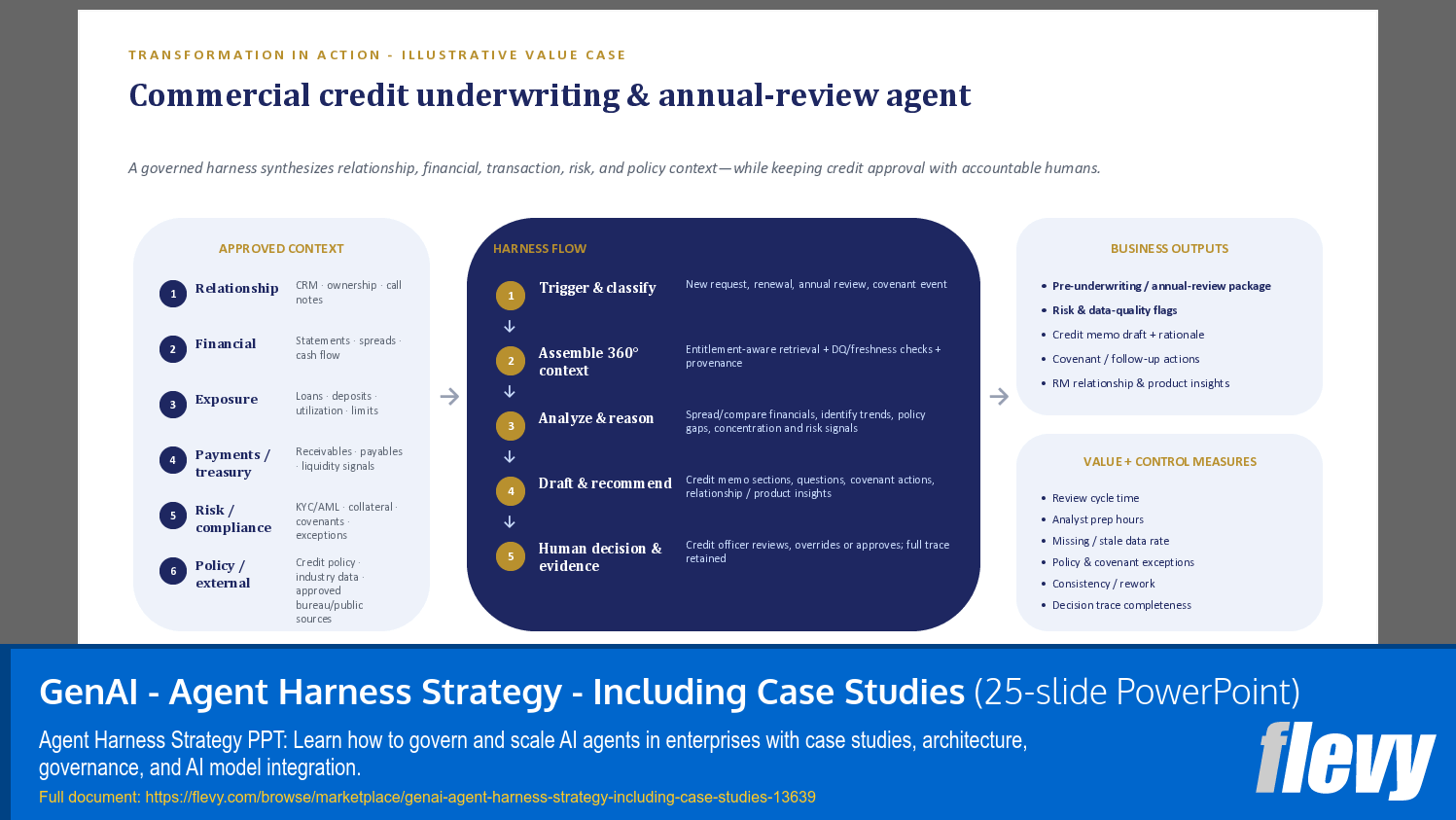
Demonstrates how the architecture can support commercial credit underwriting and annual reviews, synthesizing relationship information, financial statements, exposures, collateral, covenants, payments, risk, compliance, policy, and external information into an officer-ready decision-support package.
Demonstrates payment exception management end to end
Shows how an agent can automatically detect an exception, retrieve transaction and case context, evaluate policies, draft a repair recommendation, execute permitted high-confidence actions, route exceptions for human review, and retain a complete decision trace.
Shows how Google ADK can provide agent orchestration
Illustrates how Google Agent Development Kit (ADK) can coordinate agents, tools, state, workflows, and enterprise services while the harness provides the broader governance and control framework.
Shows how Google Gemini fits into the model layer
Positions Google Gemini for reasoning, summarization, document understanding, extraction, and semantic capabilities without allowing the model itself to become the enterprise control boundary.
Introduces grounded enterprise reasoning through a Knowledge Fabric
Shows how internal and approved external information can be combined with business context, entitlements, lineage, freshness, provenance, and semantic retrieval to improve answer quality and reduce unsupported model output.
Incorporates Composite AI rather than relying exclusively on generative AI
Demonstrates how agentic AI, generative AI, traditional ML/NLP, rules engines, analytics, and RPA can work together so each task uses the most appropriate technology.
Enables multi-agent collaboration and reuse
The Agentic Mesh & Marketplace concept allows organizations to reuse domain-trained agents, skills, templates, workflows, connectors, and controls rather than creating a new stack for every use case.
Supports event-driven enterprise automation
Shows agents responding to alerts, documents, transactions, workflow events, cases, and operational signals rather than depending solely on conversational user prompts.
Builds interoperability into the platform
Enables agents to collaborate across applications, APIs, workflows, systems, and potentially multiple agent frameworks while maintaining enterprise permissions and human escalation paths.
Extends the architecture into operational resilience
Incorporates self-healing operations, anomaly detection, automated remediation, intelligent routing, fallbacks, monitoring, and kill switches, making reliability part of the platform architecture rather than an afterthought.
Addresses the concerns of Risk, Compliance, Cybersecurity, and Audit
Covers policy enforcement, privacy, PII protection, identity, tool restrictions, segregation of duties, provenance, approvals, traceability, monitoring, evaluation, and evidence retention.
Creates a scalable operating model
Recommends centralizing the platform, standards, reusable services, and controls while federating business use-case ownership to product and domain teams.
Links architecture directly to measurable business value
Provides metrics such as cycle-time reduction, analyst preparation hours, straight-through processing, first-time-right resolution, exception aging, data-quality rates, rework, escalation rates, cost per case, and capacity released.
Provides a pragmatic transformation roadmap
Guides organizations from establishing governance and foundational services, to industrializing reusable patterns, and finally to expanding controlled autonomy across lending, payments, financial crime, operations, cybersecurity, and other domains.
Creates a common language across executives and engineers
The architecture deliberately connects business outcomes, operating processes, data domains, enterprise services, agent orchestration, AI models, controls, and infrastructure, making it useful as a leadership conversation as well as a technology blueprint.
Got a question about the product? Email us at support@flevy.com or ask the author directly by using the "Ask the Author a Question" form. If you cannot view the preview above this document description, go here to view the large preview instead.
Source: Best Practices in Agentic AI, GenAI PowerPoint Slides: GenAI - Agent Harness Strategy - Including Case Studies PowerPoint (PPTX) Presentation Slide Deck, Aadhya Solutions




























