
Logistics & Supply Chain Management is a vital field in business and operations management. It centers on the efficient flow and storage of goods, services, and information from origin to consumption. This 95-slide document delves into key components and concepts within this field:
A – Supply Chain Management (SCM):
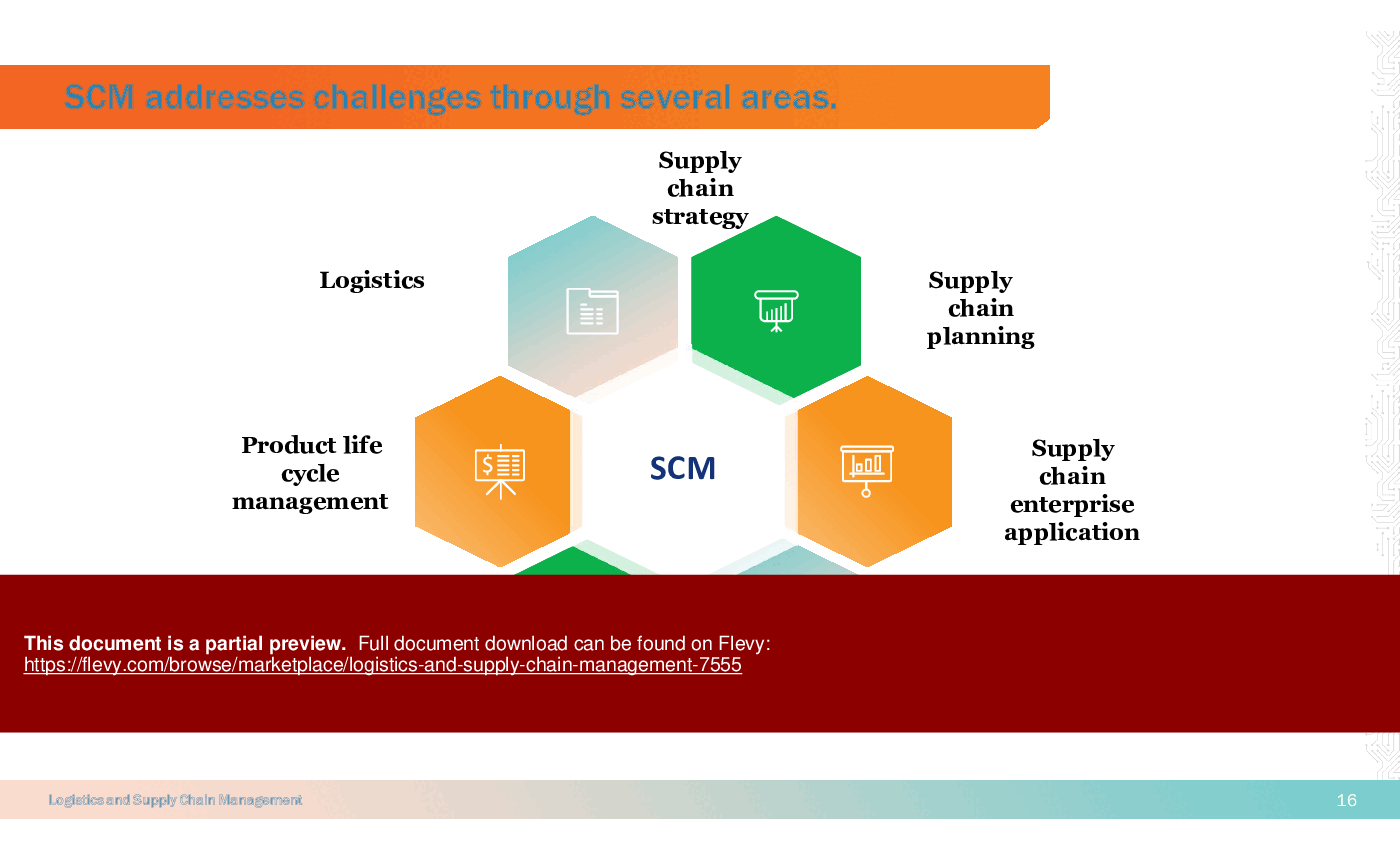
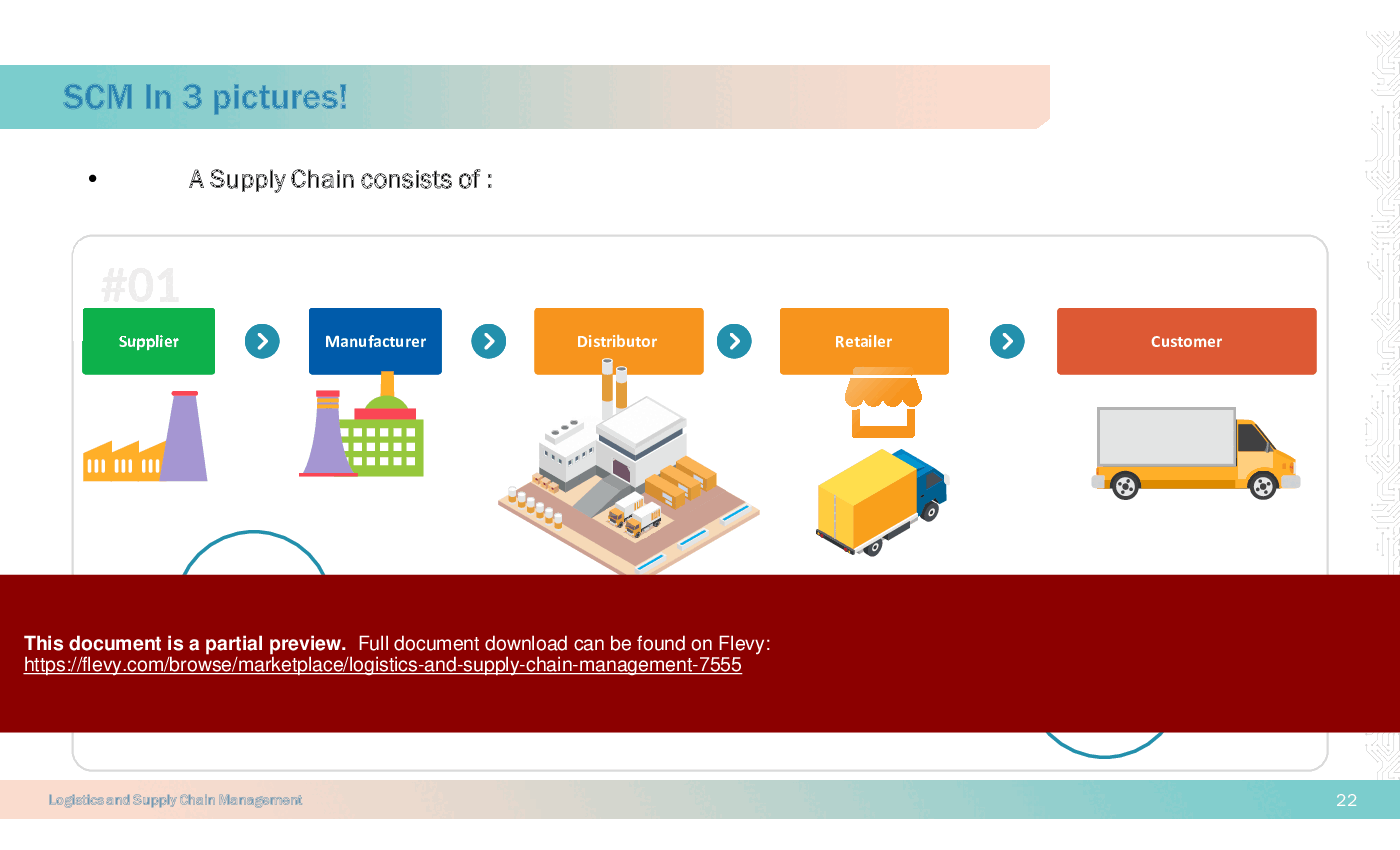
SCM is the strategic and operational management of all activities involved in product creation and distribution. It covers planning, procurement, production, logistics, and distribution to maximize efficiency and meet customer demands.
B – Supply Chain Strategy Framework:
This framework aligns supply chain strategies with business objectives. It defines the supply chain's mission, objectives, and key performance indicators, and selects strategies to optimize it.
C – Supply Chain Drivers and Obstacles:
Drivers push for efficient supply chain operations, including customer demand, technology, competition, and regulations. Obstacles, like disruptions and supplier issues, can hinder performance.
D – Role and Function of Logistics:
Logistics manages the physical flow and storage of goods. It includes transportation, warehousing, inventory management, order processing, and distribution, ensuring timely and cost-effective product delivery.
E – Value Chains:
Value Chains encompass all activities from product conception to customer delivery. Analyzing them identifies cost reduction and value creation opportunities.
These topics provide a framework for effective logistics and supply chain management, optimizing strategies and ensuring the smooth flow of goods and services.
Got a question about the product? Email us at support@flevy.com or ask the author directly by using the "Ask the Author a Question" form. If you cannot view the preview above this document description, go here to view the large preview instead.
Executive Summary
This Logistics and Supply Chain Management presentation provides a comprehensive overview of key concepts, frameworks, and strategies essential for effective supply chain management. Developed by experienced consultants, this deck equips corporate executives and integration leaders with the tools to optimize supply chain operations, enhance collaboration among stakeholders, and drive efficiency. Users will gain insights into the importance of supply chain management, the role of logistics, and the integration of technology to meet customer demands while managing costs.
Who This Is For and When to Use
• Supply Chain Managers overseeing logistics and operations
• Integration Leaders responsible for aligning supply chain strategies with business goals
• Consultants advising organizations on supply chain optimization
• Executives seeking to enhance operational efficiency and reduce costs
Best-fit moments to use this deck:
• During strategic planning sessions to align supply chain initiatives with business objectives
• In workshops aimed at improving supplier relationships and logistics management
• When assessing current supply chain performance and identifying areas for improvement
Learning Objectives
• Define supply chain management and its critical components
• Build a supply chain strategy framework that aligns with organizational goals
• Identify key supply chain drivers and obstacles to performance
• Establish effective logistics management practices to enhance operational efficiency
• Analyze value chains to optimize production and distribution processes
• Implement technology solutions to improve supply chain visibility and responsiveness
Table of Contents
• What is Supply Chain Management? (page 5)
• A Supply Chain Strategy Framework (page 26)
• Supply Chain Drivers and Obstacles (page 40)
• The Role and Function of Logistics (page 61)
• Value Chains (page 79)
Primary Topics Covered
• Supply Chain Management Definition - A management philosophy focused on coordinating and integrating various business processes to enhance customer satisfaction and operational efficiency.
• Supply Chain Strategy Framework - A structured approach to developing supply chain strategies that align with business objectives, including global sourcing and risk management.
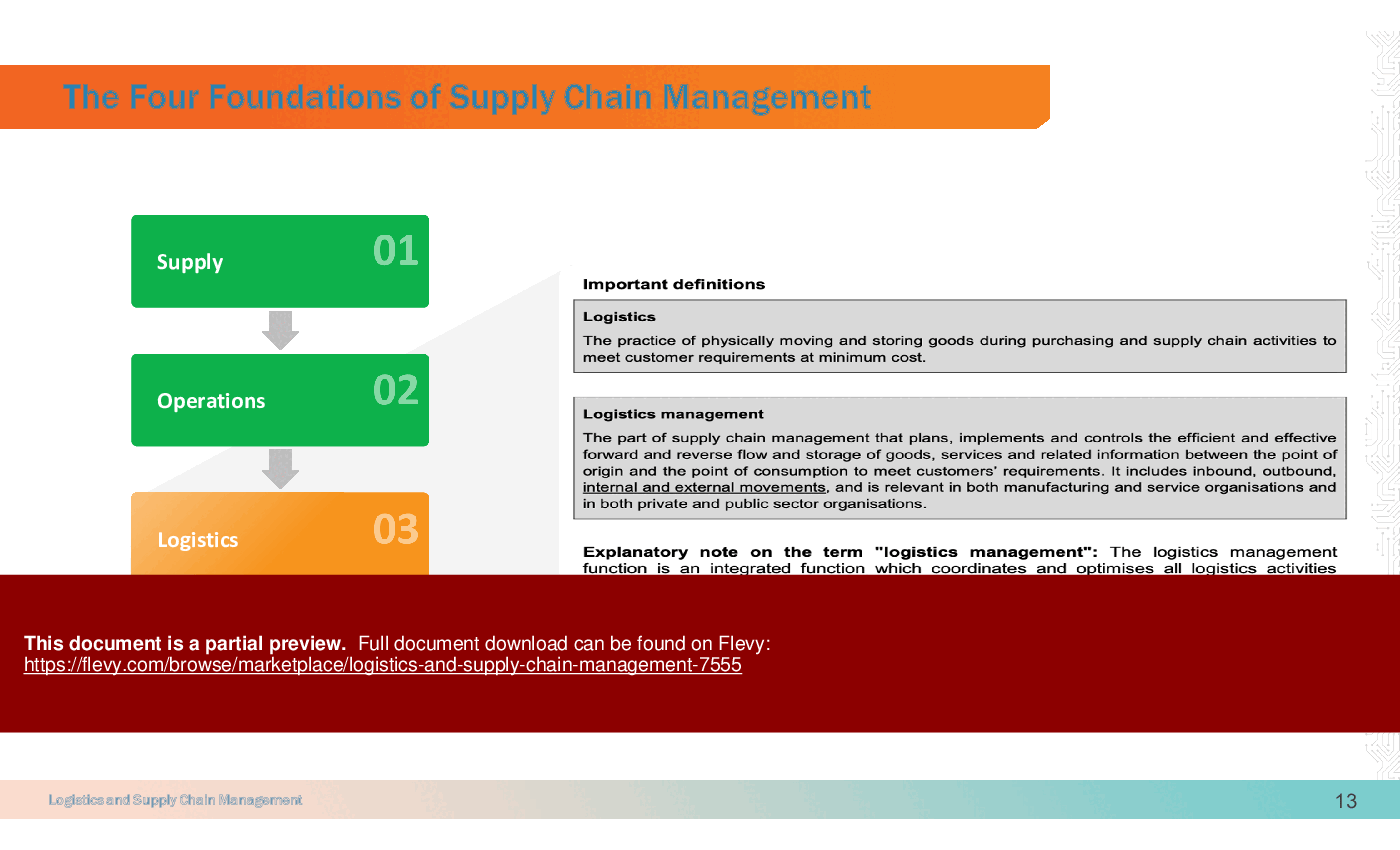
• Logistics Management - The process of planning, implementing, and controlling the efficient flow of goods, services, and related information from point of origin to point of consumption.
• Drivers of Supply Chain Performance - Key factors such as inventory management, transportation, facilities, information, sourcing, and pricing that influence supply chain efficiency and responsiveness.
• Value Chain Analysis - An examination of the series of activities that add value to products and services throughout the supply chain, from raw materials to final delivery.
Deliverables, Templates, and Tools
• Supply chain strategy framework template for aligning initiatives with business goals
• Value chain analysis template to identify areas for improvement and optimization
• Logistics management checklist to ensure effective operational practices
• Performance measurement tools for tracking supply chain efficiency and responsiveness
• Technology integration guidelines for enhancing supply chain visibility
Slide Highlights
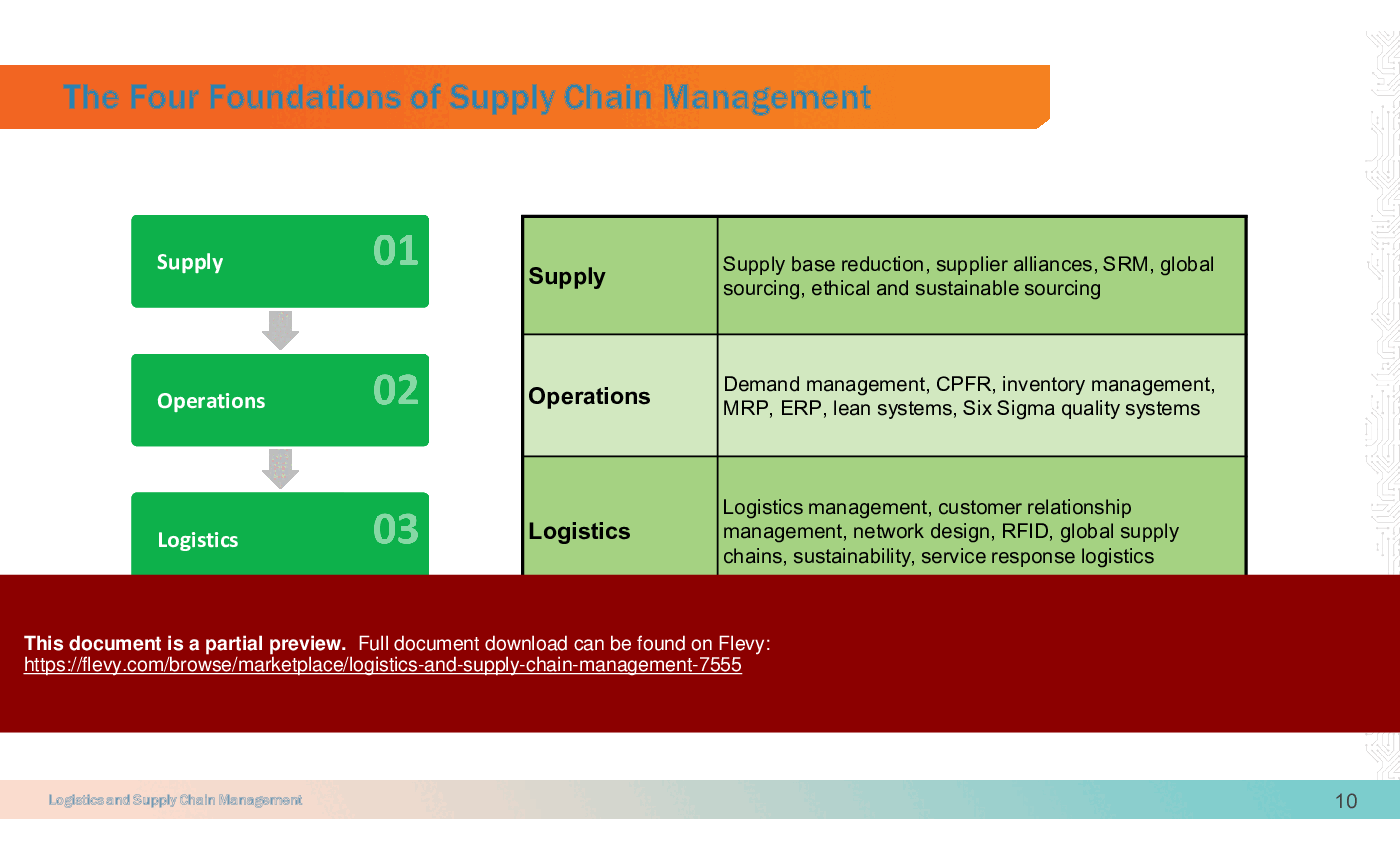
• Overview of the 4 foundations of supply chain management: Supply, Operations, Logistics, and Integration
• Visual representation of supply chain cycles and the "bullwhip effect"
• Key statistics on logistics costs and their impact on economic development
• Current trends in supply chain management, including risk management and visibility enhancement
Potential Workshop Agenda
Supply Chain Overview Session (90 minutes)
• Define supply chain management and its importance
• Discuss the 4 foundations of supply chain management
• Explore current trends and challenges in supply chain management
Logistics Management Deep Dive (60 minutes)
• Review logistics goals and operations
• Analyze the role of technology in logistics management
• Discuss best practices for effective logistics operations
Value Chain Analysis Workshop (90 minutes)
• Conduct a value chain analysis for a selected product or service
• Identify areas for optimization and cost reduction
• Develop actionable strategies to enhance value delivery
Customization Guidance
• Tailor the supply chain strategy framework to reflect specific organizational goals and market conditions
• Adjust logistics management practices based on industry-specific requirements and customer expectations
• Incorporate relevant technology solutions that align with existing systems and processes
Secondary Topics Covered
• The evolution of logistics and its impact on supply chain management
• Strategies for managing supply chain risks and uncertainties
• The significance of collaboration among supply chain partners
Topic FAQ
Document FAQ
These are questions addressed within this presentation.
What is supply chain management?
Supply chain management is a management philosophy that focuses on proactively integrating and coordinating various business processes to enhance customer satisfaction and operational efficiency.
How can this presentation help improve supply chain performance?
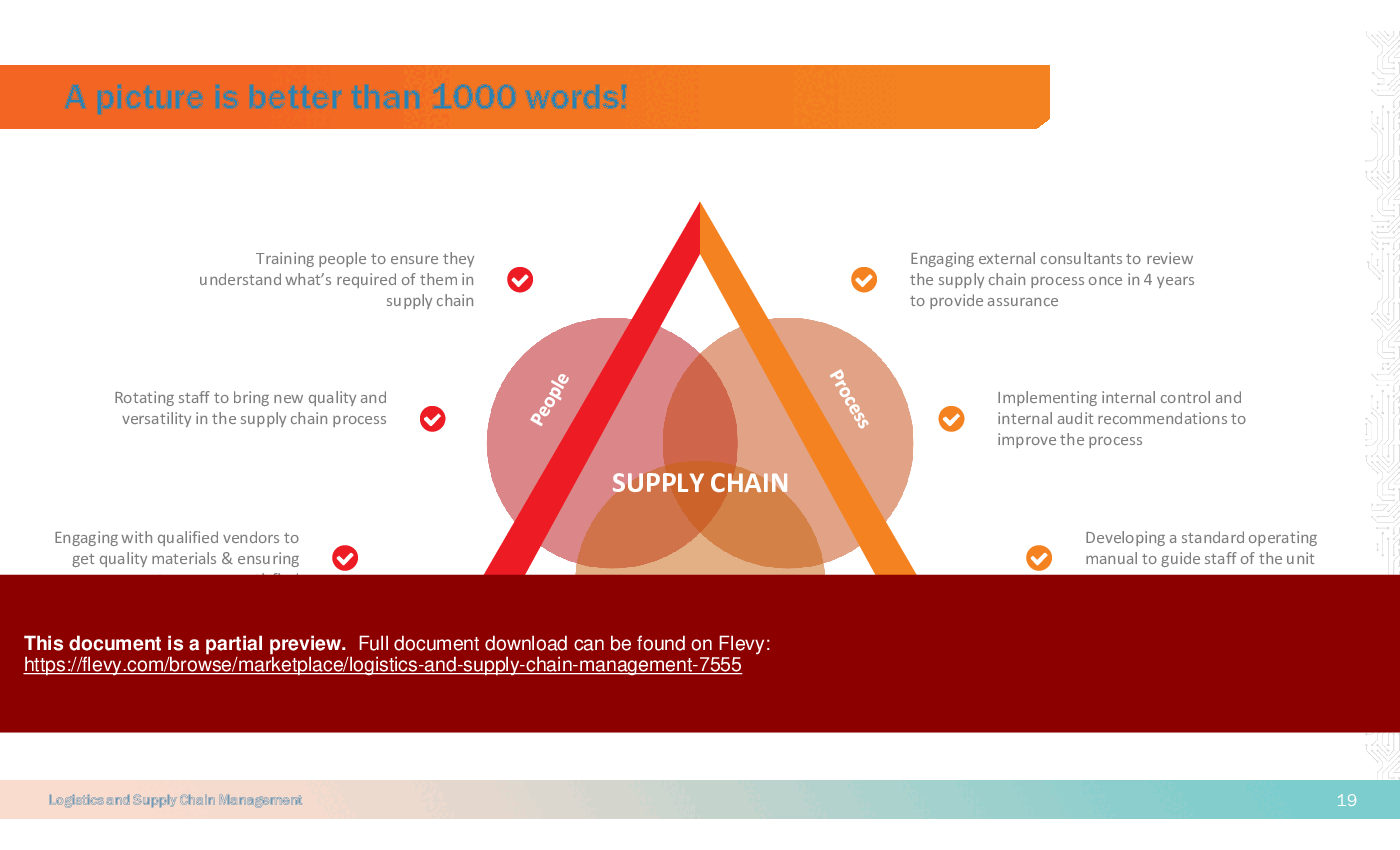
This presentation provides frameworks, strategies, and best practices that can be directly applied to optimize supply chain operations, enhance collaboration, and drive efficiency.
What are the key drivers of supply chain performance?
Key drivers include inventory management, transportation, facilities, information systems, sourcing strategies, and pricing decisions that collectively influence supply chain efficiency and responsiveness.
How does logistics management differ from supply chain management?
Logistics management is a subset of supply chain management focused specifically on the movement and storage of goods, while supply chain management encompasses the broader coordination of all business processes involved in delivering products and services.
What is a value chain?
A value chain is a functionally integrated network of production, trade, and service activities that add value to products as they move from raw materials to finished goods.
How can technology improve supply chain visibility?
Technology solutions such as ERP systems, real-time tracking, and data analytics enhance visibility by providing accurate, timely information about inventory levels, order status, and supply chain performance.
What are common obstacles to achieving supply chain fit?
Common obstacles include local optimization, lack of coordination among stakeholders, information sharing challenges, and the complexity of managing multiple supply chain owners.
How often should supply chain performance be assessed?
Regular assessments should be conducted to ensure that supply chain strategies remain aligned with organizational goals and to identify areas for continuous improvement.
Glossary
• Supply Chain Management - A management philosophy focused on coordinating and integrating business processes to enhance customer satisfaction.
• Logistics Management - The planning and execution of the movement and storage of goods.
• Value Chain - A series of activities that add value to products as they move through the supply chain.
• Bullwhip Effect - The phenomenon where small fluctuations in demand at the retail level cause larger fluctuations in demand at the wholesale, distributor, and manufacturer levels.
• ERP - Enterprise Resource Planning; integrated management of core business processes.
• Inventory Management - The supervision of non-capitalized assets and stock items.
• Sourcing - The process of identifying and selecting suppliers to provide goods and services.
• Transportation - The movement of goods from one location to another.
• Supply Chain Visibility - The ability to track and monitor all components of the supply chain in real-time.
• Demand Forecasting - The process of estimating future customer demand for a product or service.
• Lean Systems - A systematic method for waste minimization within a manufacturing system.
• Six Sigma - A set of techniques and tools for process improvement.
• Cross-Docking - A logistics practice where products are unloaded from an incoming truck and loaded onto outbound trucks with little or no storage in between.
• Supplier Relationship Management (SRM) - A systematic approach for developing and managing partnerships with suppliers.
• Global Sourcing - The practice of sourcing from the global market for goods and services.
• Performance Measurement - The process of evaluating the efficiency and effectiveness of an organization or its processes.
• Risk Management - The identification, assessment, and prioritization of risks followed by coordinated efforts to minimize, monitor, and control the probability or impact of unfortunate events.
• Sustainability - The ability to maintain or improve standards without compromising the ability of future generations to meet their needs.
• Customer Relationship Management (CRM) - A technology for managing a company’s relationships and interactions with potential customers and clients.
• Demand Management - The process of forecasting, planning, and controlling customer demand to ensure that supply meets demand.
Source: Best Practices in Supply Chain Analysis, Logistics PowerPoint Slides: Logistics and Supply Chain Management PowerPoint (PPTX) Presentation Slide Deck, RadVector Consulting
|
Receive our FREE presentation on Operational Excellence
This 50-slide presentation provides a high-level introduction to the 4 Building Blocks of Operational Excellence. Achieving OpEx requires the implementation of a Business Execution System that integrates these 4 building blocks. |










