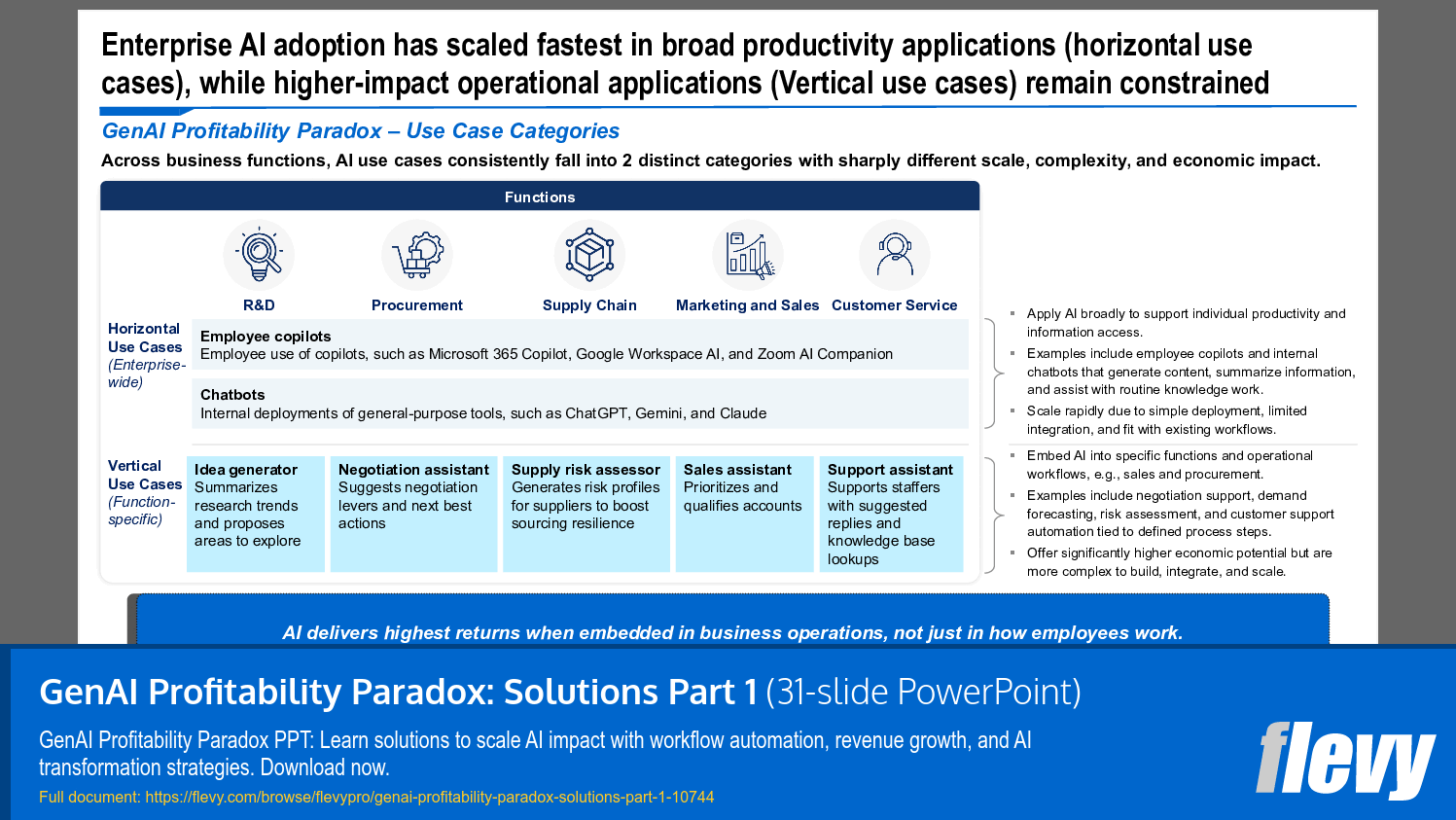

Many organizations have rapidly adopted GenAI through copilots and chatbots, achieving broad usage but limited financial impact. In fact, nearly 8 in 10 organizations report deploying GenAI in at least one business function. However, more than 80% report no material impact on earnings.
The core challenge is not access to technology, but how AI is deployed. Most GenAI initiatives enhance individual tasks rather than reshaping the workflows, decisions, and systems that drive enterprise value.
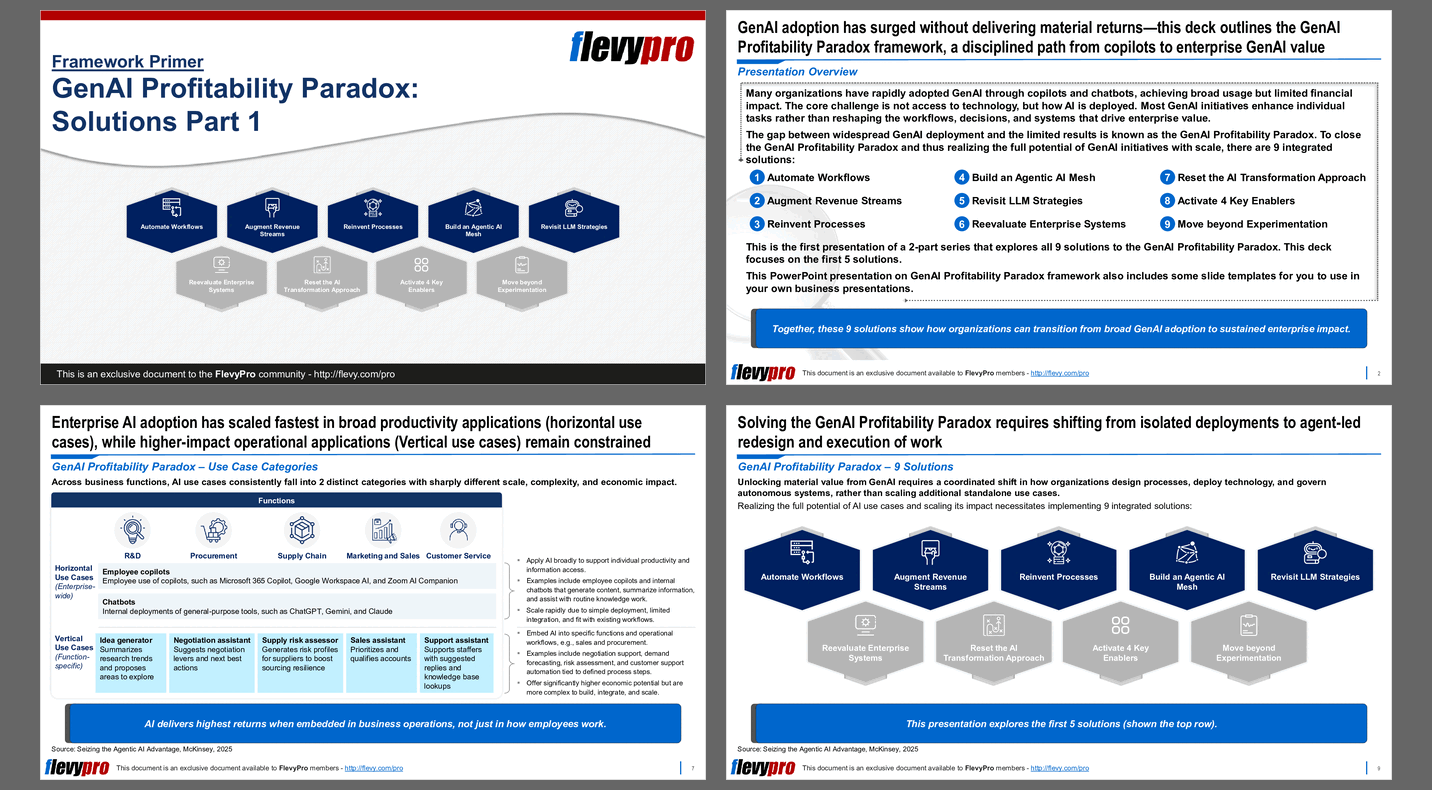
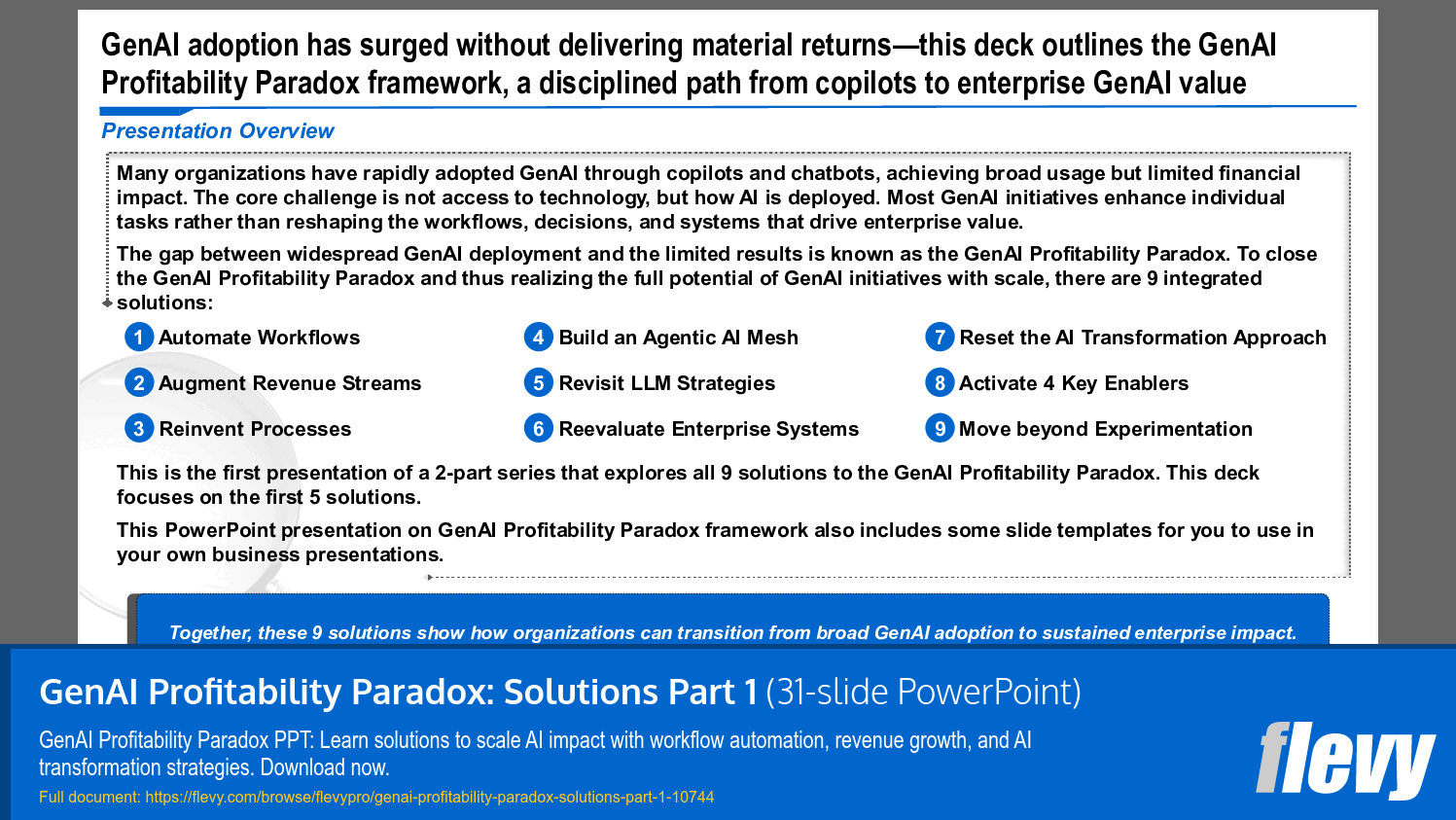
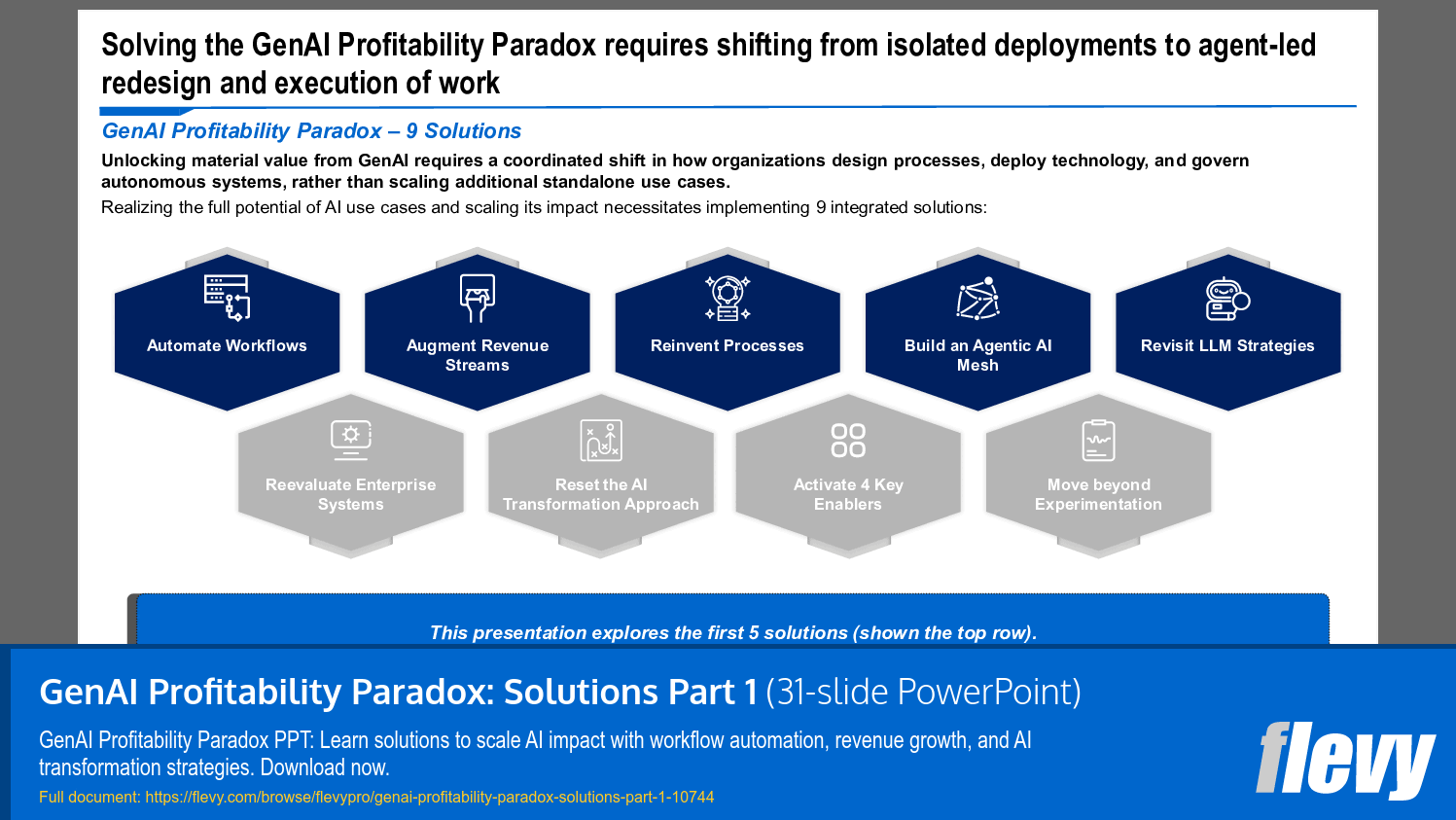
The gap between widespread GenAI deployment and the limited results is known as the GenAI Profitability Paradox. To close the GenAI Profitability Paradox and thus realizing the full potential of GenAI initiatives with scale, there are 9 integrated solutions:
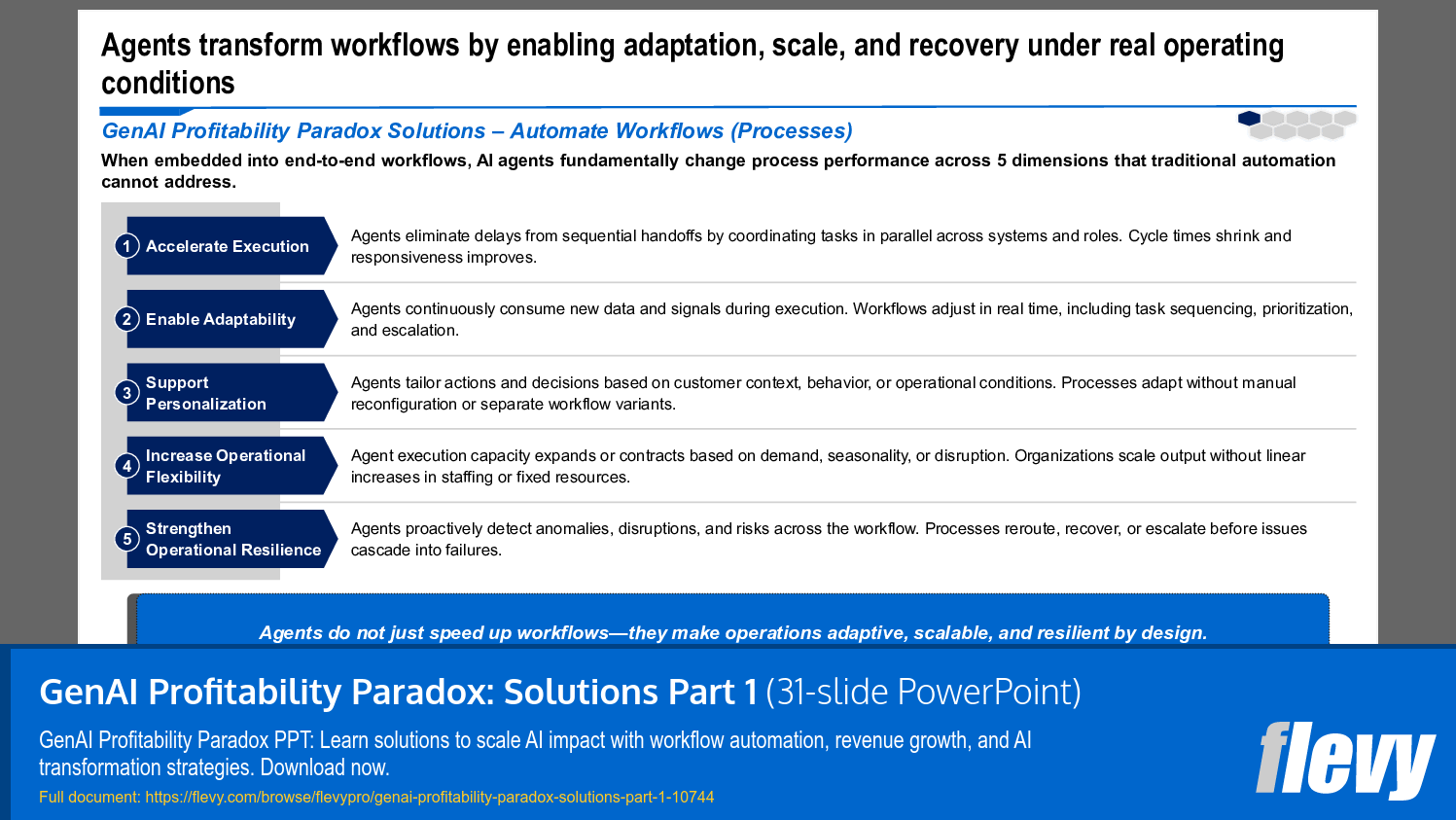
1. Automate Workflows
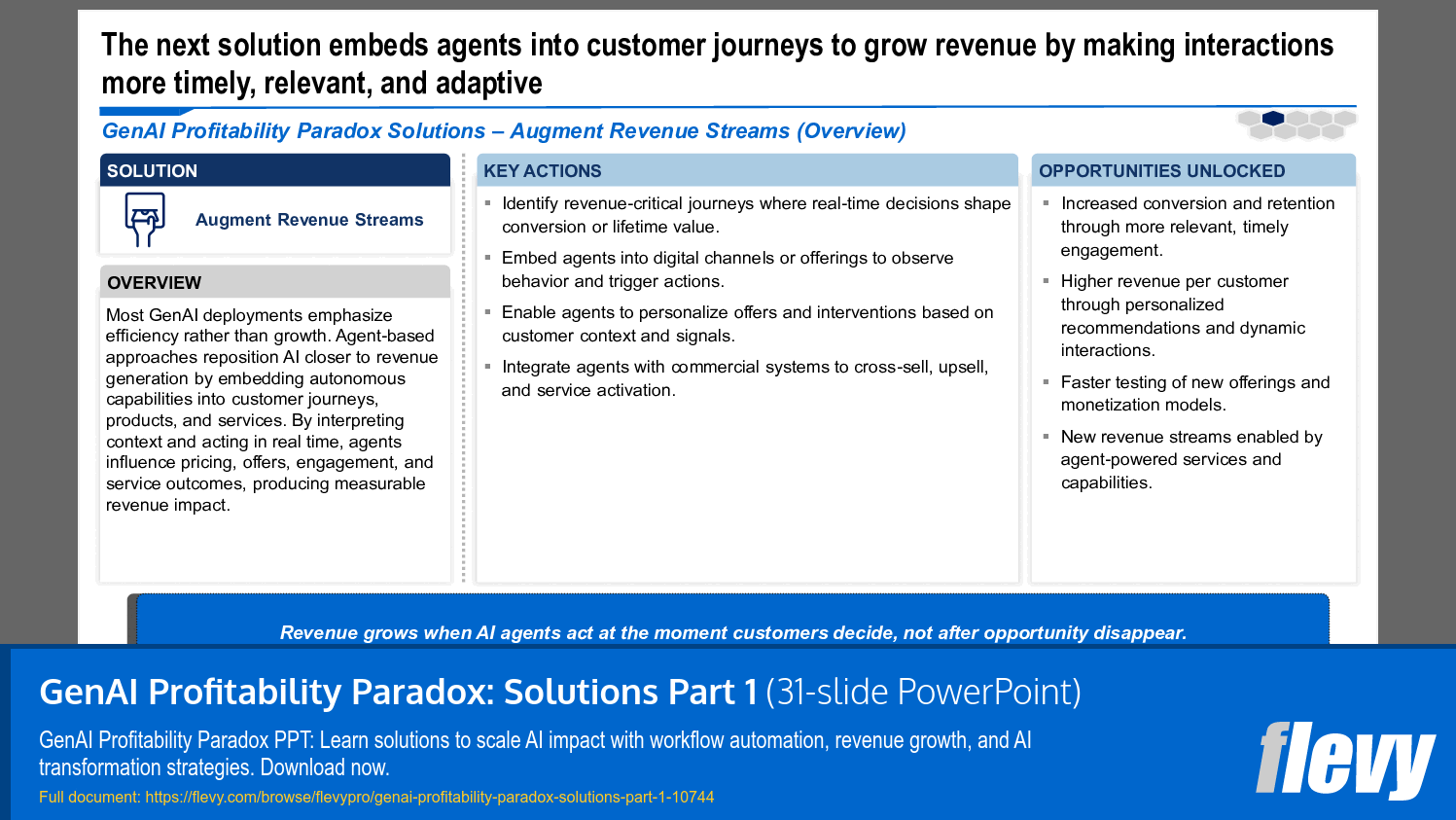
2. Augment Revenue Streams
3. Reinvent Processes
4. Build an Agentic AI Mesh
5. Revisit LLM Strategies
6. Reevaluate Enterprise Systems
7. Reset the AI Transformation Approach
8. Activate 4 Key Enablers
9. Move beyond Experimentation
Together, these 9 solutions show how organizations can transition from broad GenAI adoption to sustained enterprise impact. Scaling AI tools creates activity—scaling agents inside operations creates results.
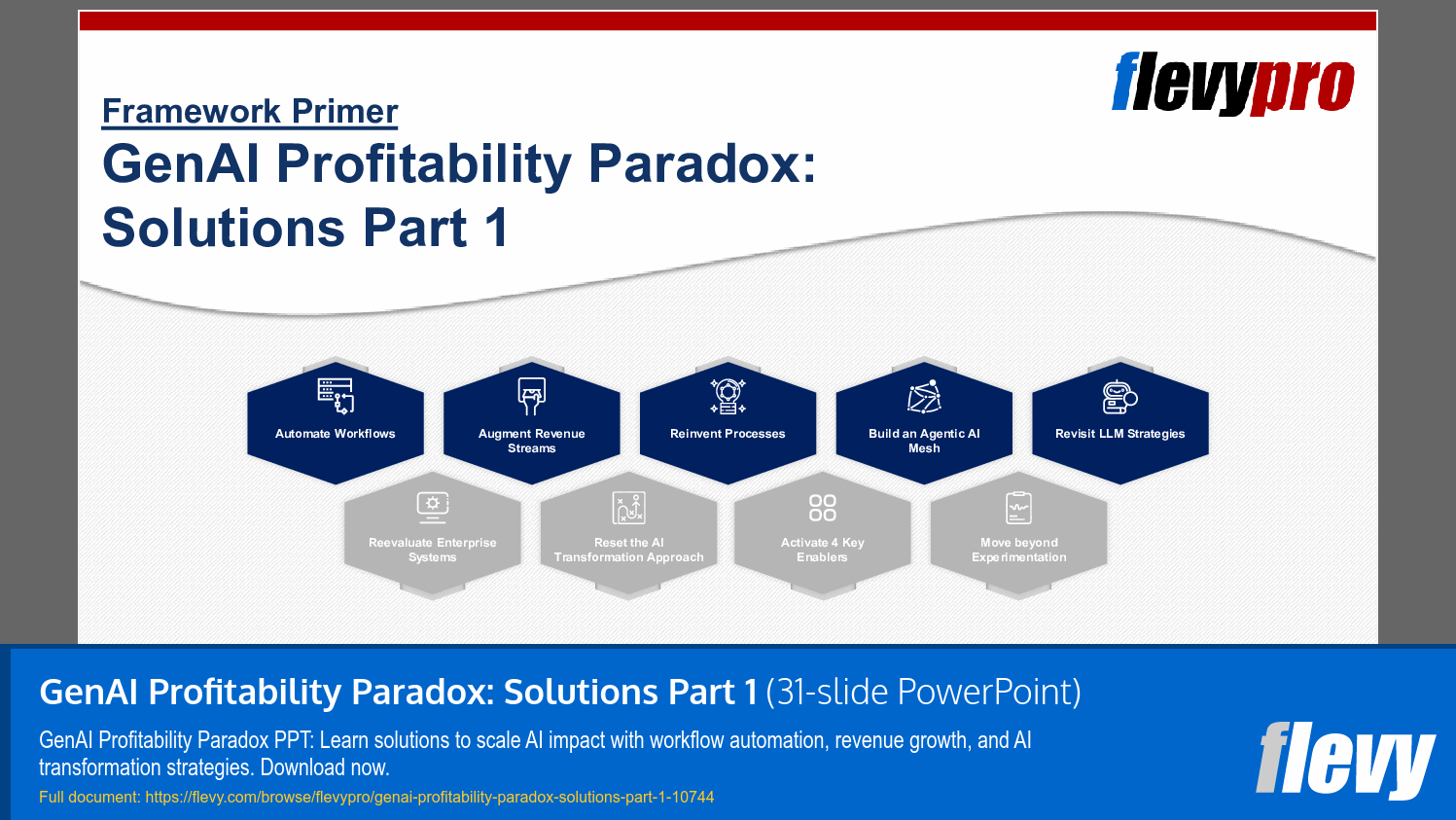
This is the first presentation of a 2-part series that explores all 9 solutions to the GenAI Profitability Paradox. This deck focuses on the first 5 solutions. Each of these 5 solutions is discussed in depth.
This PowerPoint presentation on GenAI Profitability Paradox framework also includes some slide templates for you to use in your own business presentations.
Got a question about this document? Email us at flevypro@flevy.com.
Executive Summary
The "GenAI Profitability Paradox: Solutions Part 1" presentation offers a strategic framework for organizations grappling with the challenges of Generative AI (GenAI) adoption. Despite rapid deployment, many organizations face the paradox of limited financial returns. This presentation outlines a disciplined approach to bridge the gap between technology access and effective deployment. It introduces nine integrated solutions to enhance AI impact, focusing on the first five: Automate Workflows, Augment Revenue Streams, Reinvent Processes, Build an Agentic AI Mesh, and Revisit LLM Strategies. Executives will gain actionable insights to transform GenAI initiatives from mere experimentation to sustainable enterprise value.
Who This Is For and When to Use
• Corporate executives overseeing digital transformation initiatives
• Integration leaders responsible for AI deployment strategies
• Consultants advising on AI and technology adoption
• Business analysts evaluating the financial impact of AI initiatives
Best-fit moments to use this deck:
• During strategic planning sessions for AI implementation
• In workshops aimed at redesigning workflows and processes
• When assessing the effectiveness of current AI initiatives
Learning Objectives
• Define the GenAI Profitability Paradox and its implications for organizations
• Identify key solutions to enhance the financial impact of GenAI initiatives
• Develop strategies for automating workflows to improve operational efficiency
• Explore methods for augmenting revenue through AI-driven customer interactions
• Reinvent business processes to leverage AI capabilities effectively
• Build an agentic AI mesh to facilitate scalable and controlled AI execution
• Revisit LLM strategies to align with operational needs and governance
Table of Contents
• Overview (page 1)
• GenAI Profitability Paradox (page 2)
• GenAI Profitability Paradox Solutions (page 3)
• Slide Design Structure & Templates (page 4)
Primary Topics Covered
• GenAI Profitability Paradox - The disparity between widespread GenAI adoption and limited financial results, highlighting the need for strategic deployment.
• Automate Workflows - Strategies for implementing agent-based automation to enhance operational efficiency and reduce cycle times.
• Augment Revenue Streams - Techniques for embedding AI into customer journeys to drive timely and relevant interactions that increase revenue.
• Reinvent Processes - The importance of rethinking workflows to integrate AI capabilities, moving beyond simple task automation.
• Build an Agentic AI Mesh - Creating a collaborative architecture that supports multi-agent execution and governance.
• Revisit LLM Strategies - Aligning foundation models with operational needs to ensure effective AI deployment and governance.
Deliverables, Templates, and Tools
• Workflow automation templates for cross-functional processes
• Revenue augmentation models for customer engagement strategies
• Process redesign frameworks to facilitate AI integration
• Agentic AI mesh architecture guidelines for scalable deployment
• LLM strategy assessment tools for operational alignment
Slide Highlights
• Overview of the GenAI Profitability Paradox and its implications
• Detailed breakdown of the first 5 solutions to enhance AI impact
• Visual representations of workflow automation and revenue augmentation strategies
• Frameworks for reinventing processes and building an agentic AI mesh
Potential Workshop Agenda
Introduction to GenAI Profitability Paradox (30 minutes)
• Overview of the paradox and its implications for organizations
• Discussion on current AI initiatives and their effectiveness
Automating Workflows Session (60 minutes)
• Identify key processes for automation
• Develop a roadmap for implementing agent-based automation
Augmenting Revenue Streams Workshop (60 minutes)
• Explore customer journey mapping techniques
• Design strategies for real-time engagement and personalization
Customization Guidance
• Tailor the workflow automation templates to fit specific organizational processes and roles
• Adjust revenue augmentation strategies to align with industry-specific customer journeys
• Modify process redesign frameworks to reflect unique operational challenges
Secondary Topics Covered
• Challenges of scaling vertical AI use cases
• The role of governance in AI deployment
• Cultural and organizational barriers to effective AI integration
• Best practices for managing AI-related change
Topic FAQ
Document FAQ
These are questions addressed within this presentation.
What is the GenAI Profitability Paradox?
The GenAI Profitability Paradox refers to the gap between widespread GenAI adoption and the limited financial results it generates for organizations.
How can organizations automate workflows effectively?
Organizations can automate workflows by identifying cross-functional processes, redesigning them for agent-based execution, and integrating with existing systems.
What are the benefits of augmenting revenue streams with AI?
Augmenting revenue streams with AI can lead to increased conversion rates, higher customer retention, and the creation of new monetization models.
Why is it important to reinvent processes for AI integration?
Reinventing processes allows organizations to fully leverage AI capabilities, enabling more efficient workflows and better alignment with business objectives.
What is an agentic AI mesh?
An agentic AI mesh is a collaborative architecture that allows multiple AI agents to operate together, facilitating scalable and controlled execution across functions.
How should organizations revisit their LLM strategies?
Organizations should align their LLM strategies with operational contexts, prioritize model selection based on specific needs, and ensure compliance and governance.
What are the key actions for implementing the solutions outlined in this presentation?
Key actions include identifying critical processes for automation, embedding AI into customer journeys, and designing frameworks for effective AI governance.
Glossary
• GenAI - Generative AI that creates new content based on user prompts.
• Agent-Based Automation - Automation that utilizes AI agents to execute tasks across workflows.
• Revenue Streams - Channels through which an organization generates income.
• LLM - Large Language Model, a type of AI model used for natural language processing.
• Agentic AI Mesh - A framework for integrating multiple AI agents to work collaboratively.
• Workflow Automation - The use of technology to automate complex business processes.
• Process Redesign - The rethinking of existing workflows to improve efficiency and effectiveness.
• Customer Journey - The complete experience a customer has with a brand, from awareness to purchase.
• Governance - The framework that ensures AI systems operate within defined guidelines and regulations.
• Vertical Use Cases - AI applications tailored to specific functions within an organization.
• Horizontal Use Cases - AI applications that are broadly applicable across multiple functions.
• Cultural Resistance - The reluctance of employees to adopt new technologies or processes.
• Technical Debt - The implied cost of additional rework caused by choosing an easy solution now instead of using a better approach that would take longer.
• Operational Resilience - The ability of an organization to adapt to disruptions while maintaining continuous operations.
• Data Accessibility - The ease with which data can be accessed and utilized within an organization.
• Performance Metrics - Standards used to measure the efficiency and effectiveness of an organization’s operations.
• Integration - The process of combining different systems and processes to work together effectively.
• Scalability - The capability of a system to handle a growing amount of work or its potential to accommodate growth.
• Change Management - The approach to transitioning individuals, teams, and organizations to a desired future state.
• AI Deployment - The process of integrating AI technologies into business operations.
Source: Best Practices in Agentic AI, GenAI PowerPoint Slides: GenAI Profitability Paradox: Solutions Part 1 PowerPoint (PPTX) Presentation Slide Deck, LearnPPT Consulting
Did you need more documents?
Consider a FlevyPro subscription from $39/month. View plans here.
For $10.00 more, you can download this document plus 2 more FlevyPro documents. That's just $13 each.
|
Download our FREE Digital Transformation Templates
Download our free compilation of 50+ Digital Transformation slides and templates. DX concepts covered include Digital Leadership, Digital Maturity, Digital Value Chain, Customer Experience, Customer Journey, RPA, etc. |