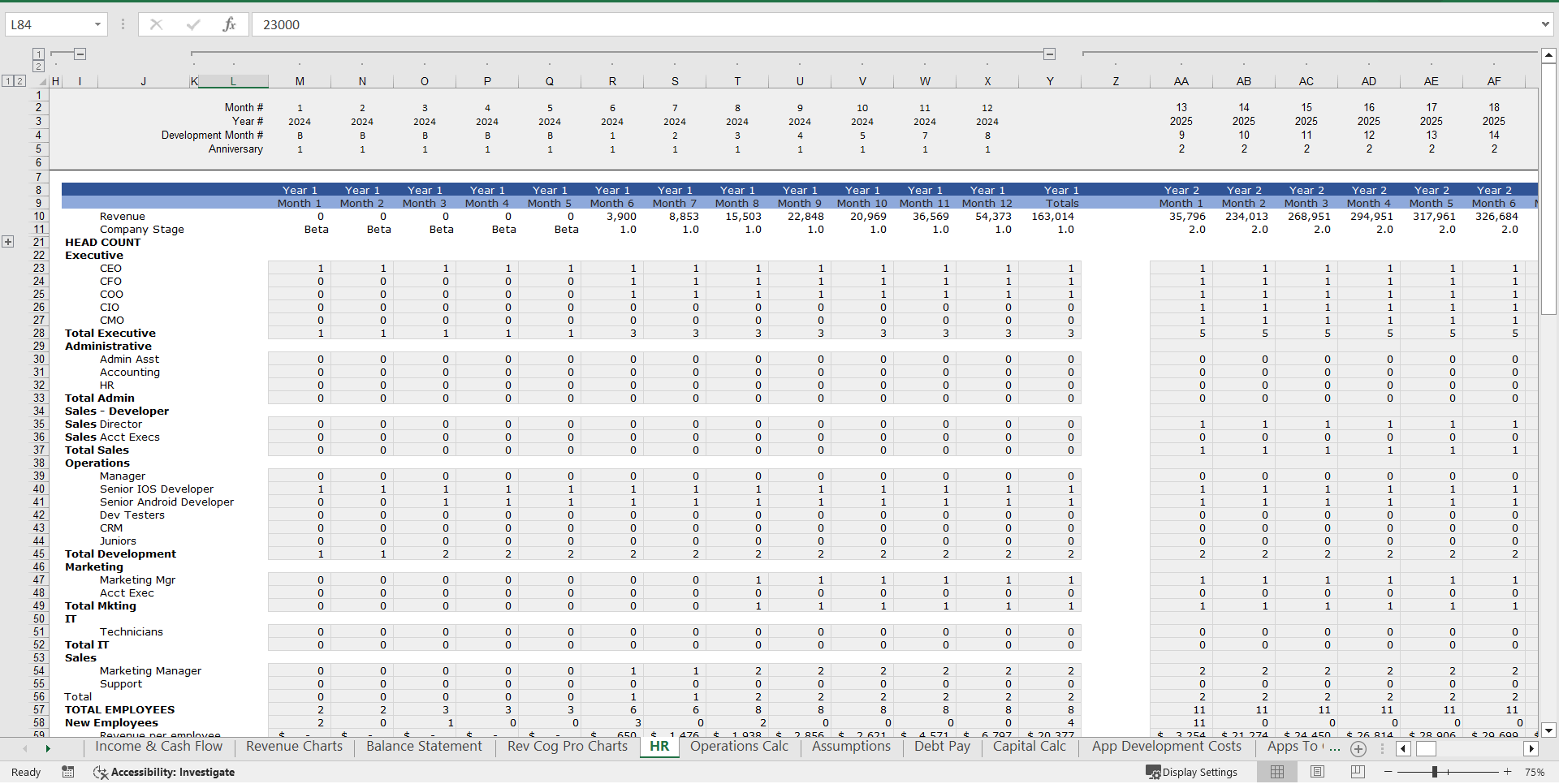
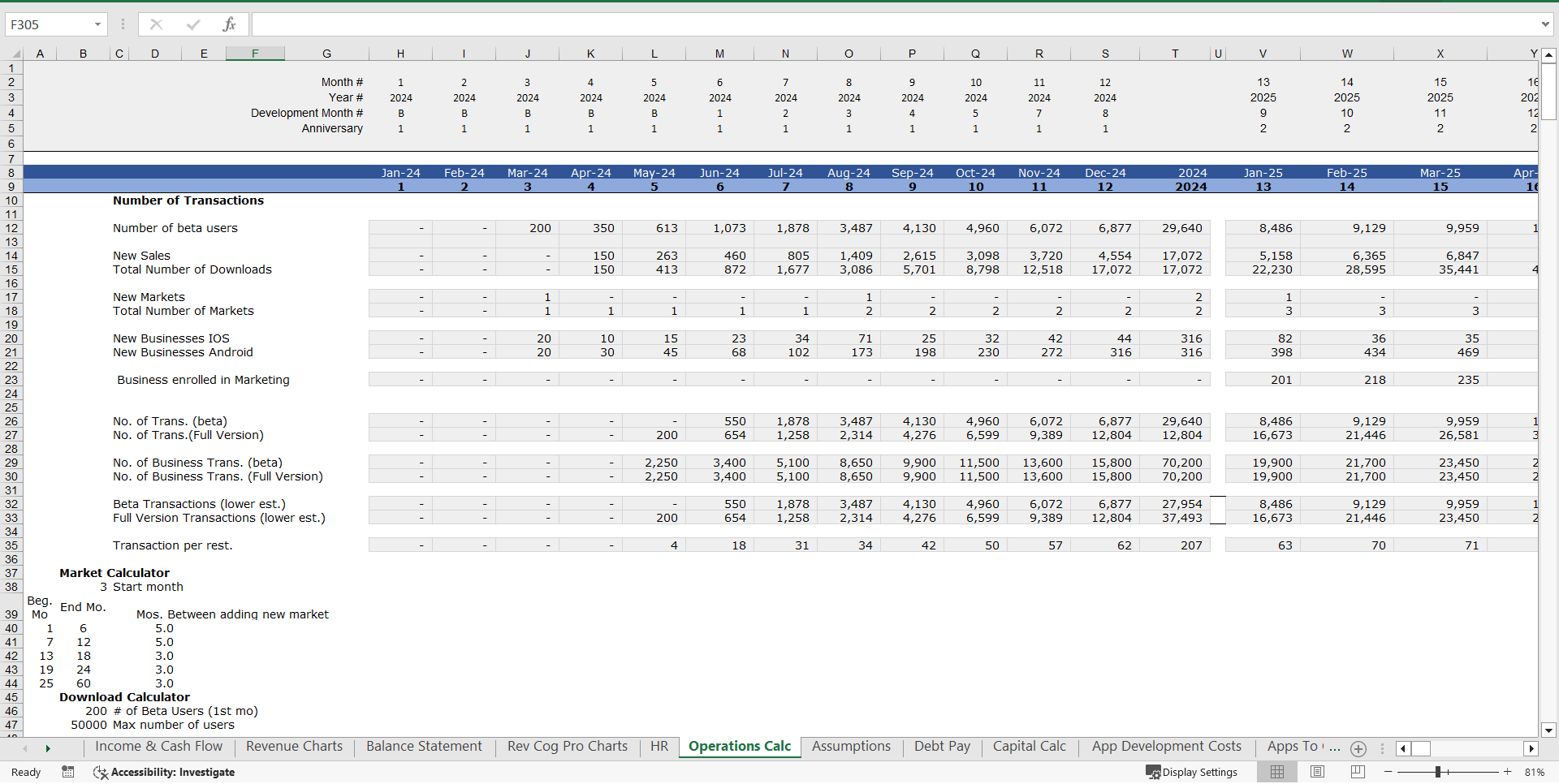
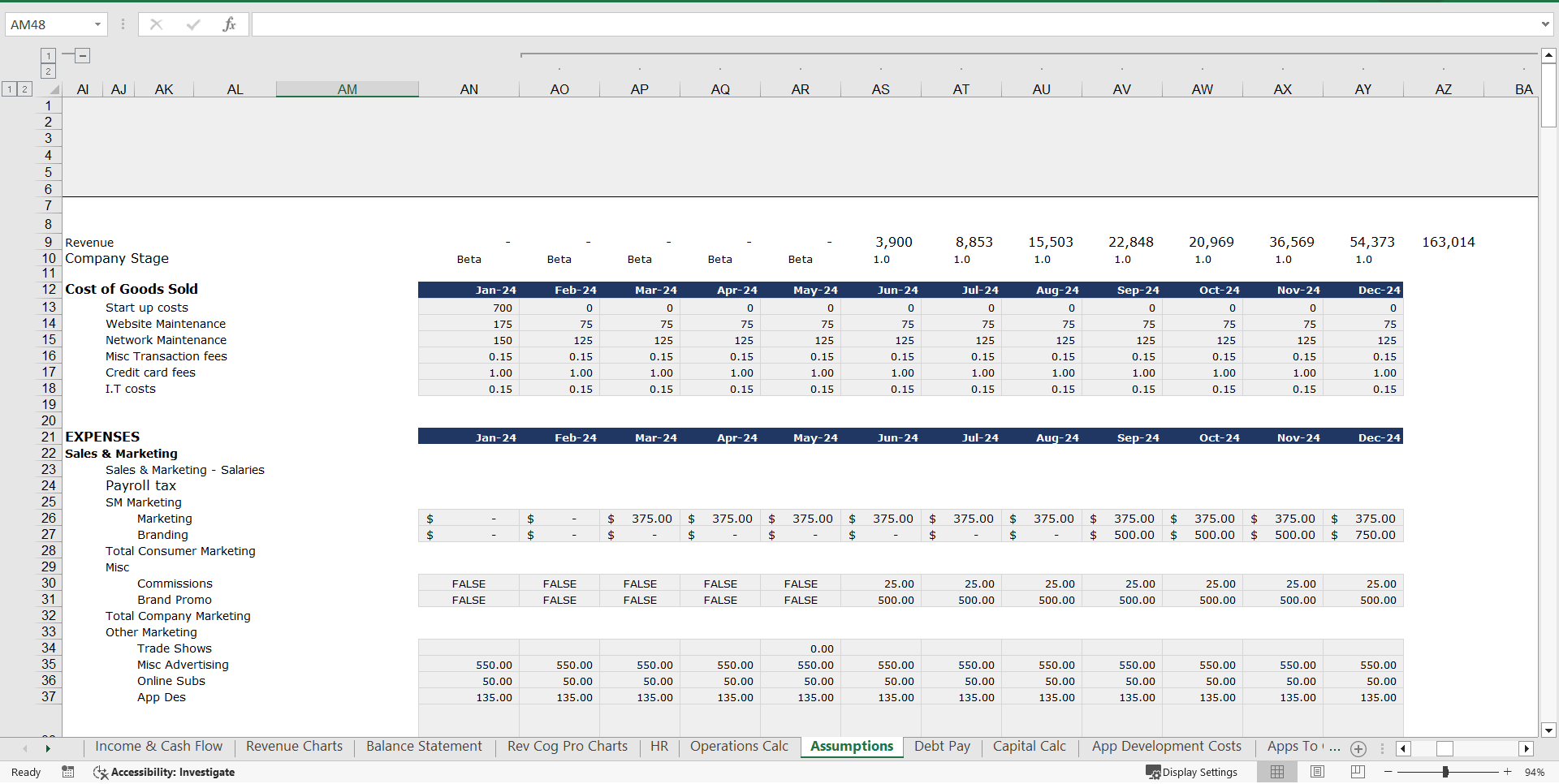
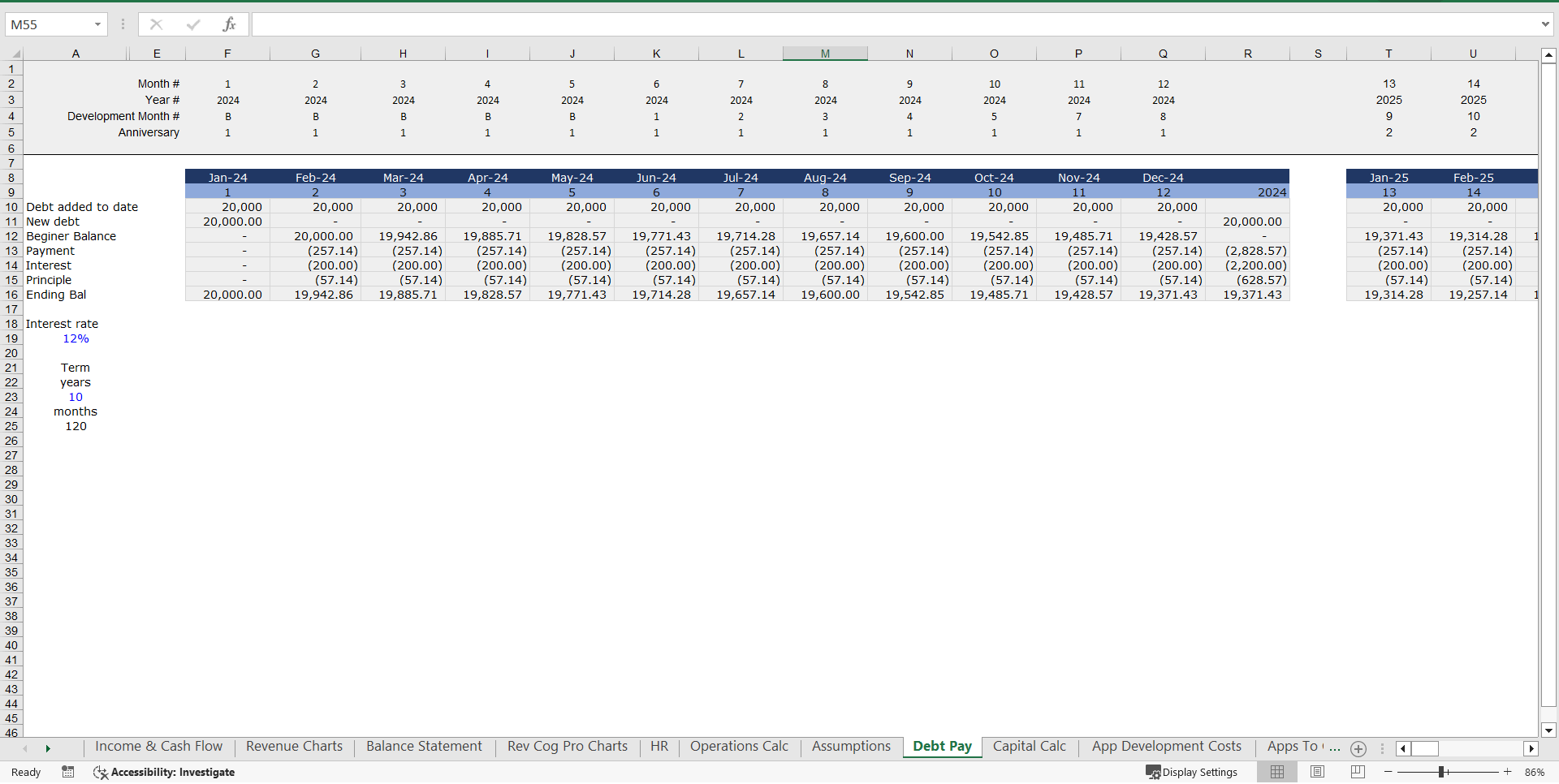

 Click main image to view in full screen.
Fintech Mobile App Financial Model (Excel XLSX)
Excel (XLSX)


BENEFITS OF THIS EXCEL DOCUMENT
- Provides thorough oversight, tracking, and reporting of Fintech Mobile App finances, including updates on budget utilisation and projections.
- Eliminates the need to create project finance trackers from scratch and includes all common Fintech Mobile Apps actual and projection components
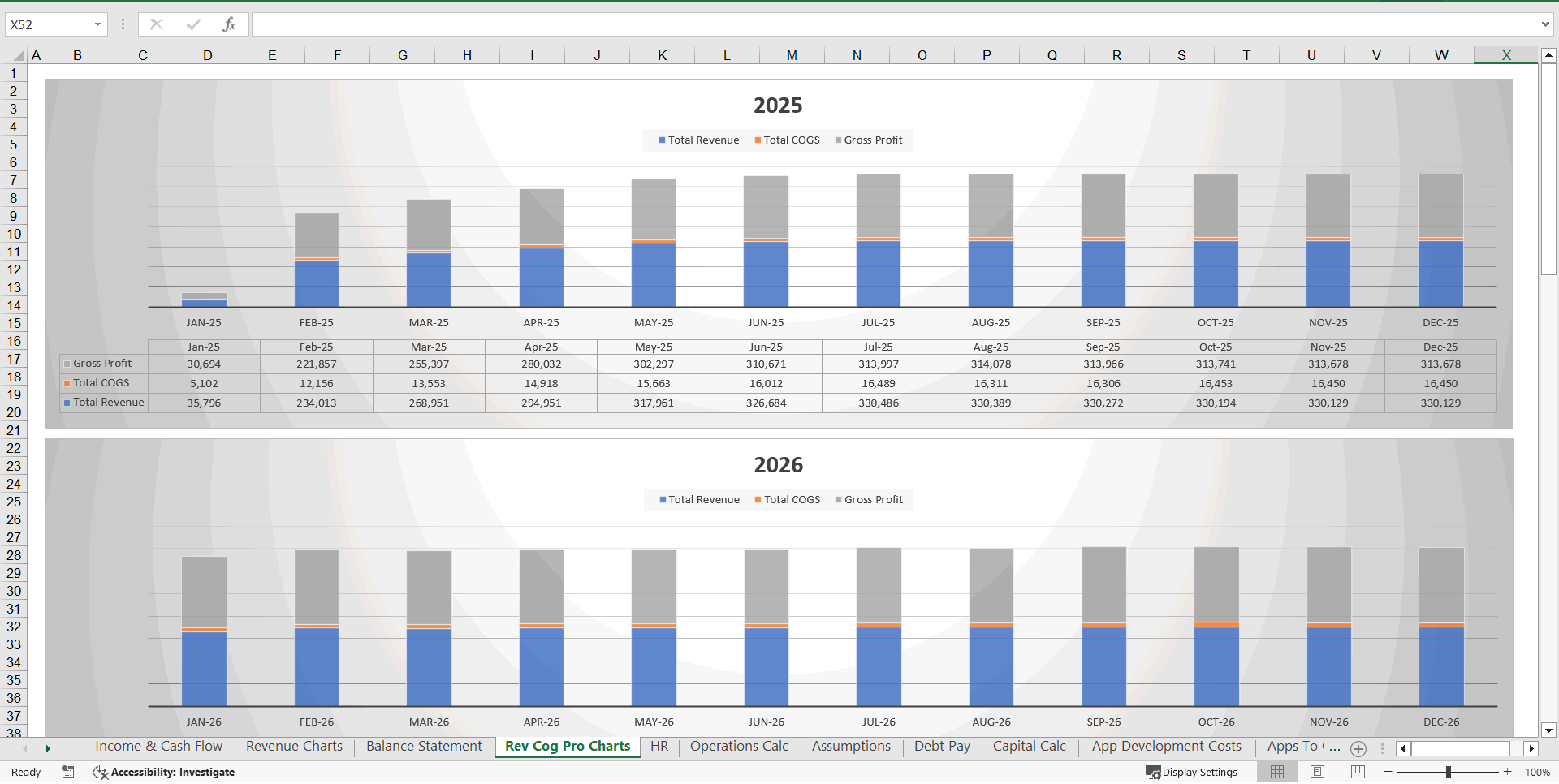
- Offers several chart tabs for the cost status that can be used in senior management reports and status reports.
MOBILE APP EXCEL DESCRIPTION
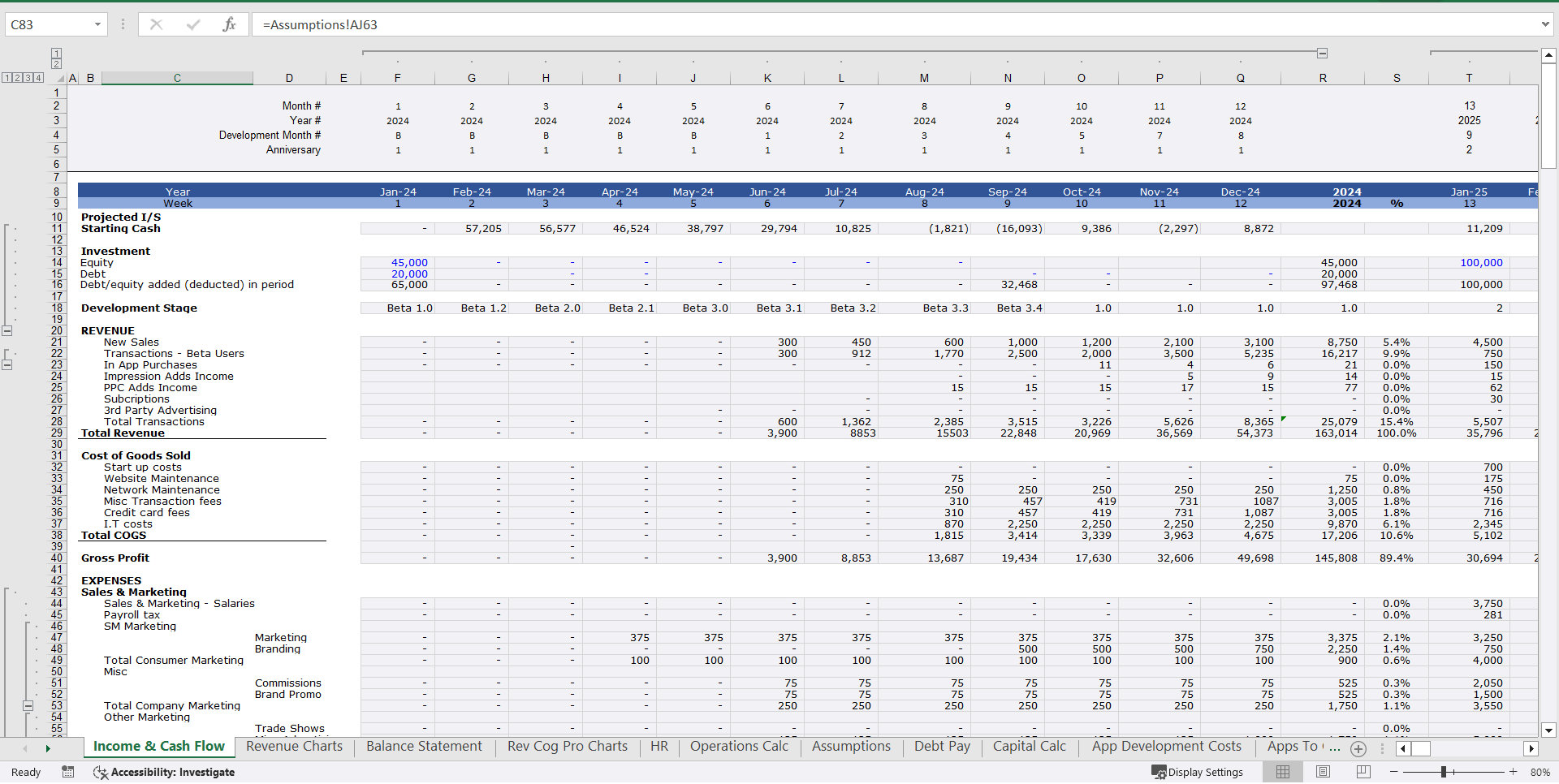
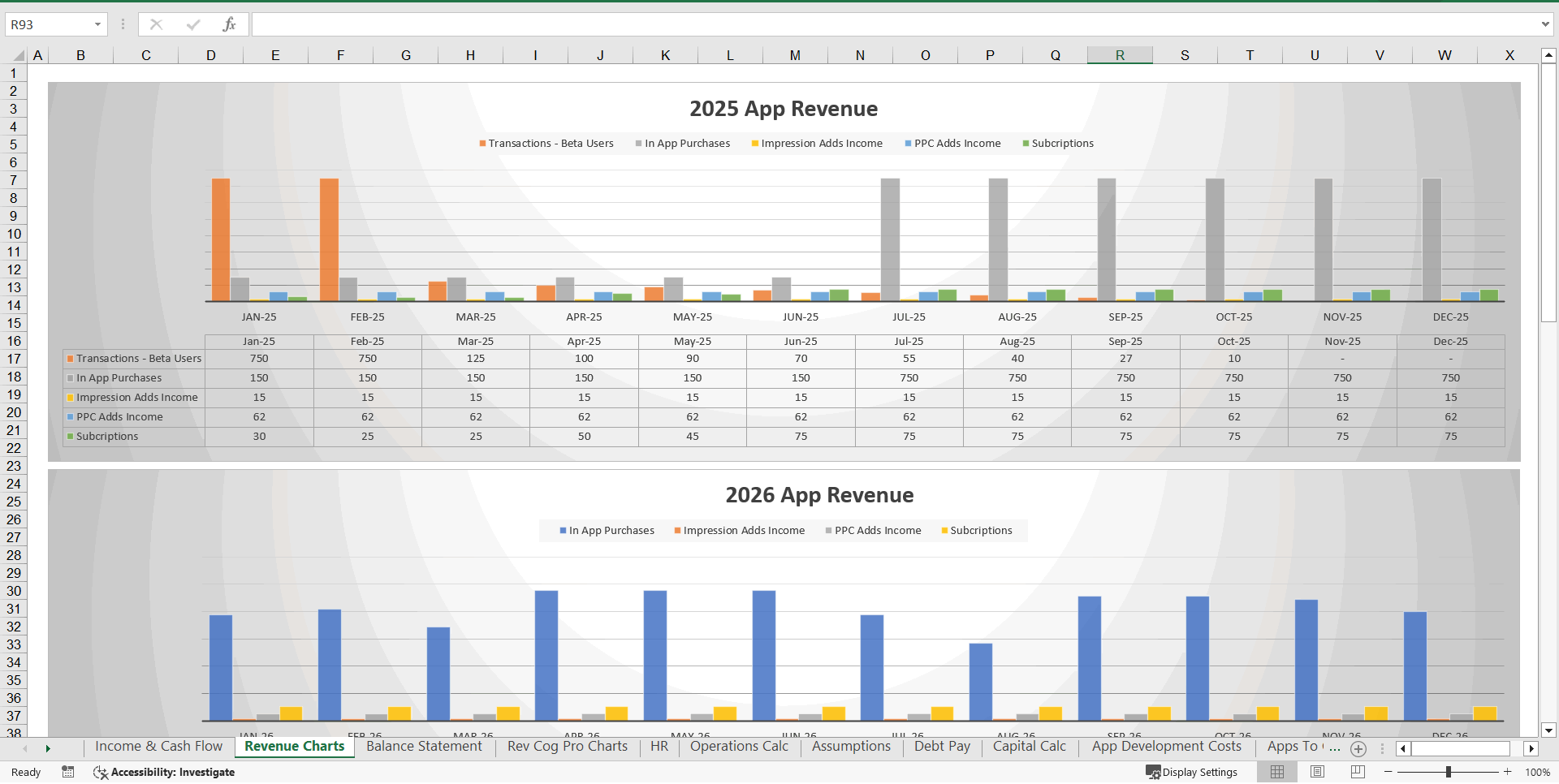
3-Statement Financial Model for a Fintech App that covers the Income Statement, Cash Flow Statement, and Balance Sheet while incorporating multiple revenue streams.
Here's a structured 6-tier subscription model for your Fintech Mobile App, designed to cater to different customer needs:
1. Free Tier (Basic)
• Features:
• View account balances
• Transaction history (last 30 days)
• Basic budgeting tools
• Limited customer support (email only)
• Ads displayed
• Target Audience: Casual users, students, or those exploring the app.
2. Starter Tier
• Everything in Free Tier +
• Unlimited transaction history
• Custom budget categories
• Basic financial insights & alerts
• Priority email support
• Remove ads
• Target Audience: Individuals looking for basic money management tools.
3. Plus Tier
• Everything in Starter Tier +
• AI-powered financial insights
• Credit score tracking
• Bill reminders & automated savings suggestions
• Limited investment tracking
• Chat-based customer support
• Target Audience: Users seeking a more advanced personal finance experience.
4. Premium Tier
• Everything in Plus Tier +
• Advanced investment tracking (stocks, crypto, real estate)
• Multi-account aggregation (connect multiple banks, PayPal, etc.)
• Fraud detection & alerts
• Smart financial goal-setting tools
• Phone support with financial advisors (limited to 2 sessions/month)
• Target Audience: Serious budgeters & early investors.
5. Pro Tier
• Everything in Premium Tier +
• Personalized AI-driven investment recommendations
• Tax optimization insights
• Advanced credit analysis & improvement tips
• International currency tracking
• Unlimited access to financial advisors (via chat & phone)
• Target Audience: High-income professionals & investors.
6. Elite Tier
• Everything in Pro Tier +
• Dedicated financial advisor (1:1 support)
• Exclusive investment opportunities (private equity, pre-IPOs, etc.)
• Advanced tax planning with CPA integration
• Custom financial reports & wealth management tools
• Priority 24/7 concierge support
• Target Audience:** High-net-worth individuals & financial power users.
1. Income Statement
The income statement outlines the company's financial performance, focusing on revenue, expenses, and profitability.
Revenue Streams
Subscription Fees – Recurring revenue from users subscribing to the app for premium features or access.
Transaction Revenue Sharing – A percentage of fees from financial transactions processed through the platform.
Advertising Revenue – Income from ads displayed within the app (e.g., banners, sponsored content).
Partnerships & Sponsorships – Revenue from collaborations with financial institutions, brands, or other fintech firms.
Data Monetization – Revenue from anonymized user data insights sold to third parties.
Affiliate Marketing – Commissions earned by directing users to partner financial products (e.g., credit cards, loans).
White-Label Solutions – Revenue from selling the app's technology to other businesses under a different brand.
Revenue Section
Total Revenue = Sum of all revenue streams
Operating Expenses
Cost of Goods Sold (COGS) – Direct costs related to payment processing and third-party API fees.
Sales & Marketing Expenses – User acquisition costs, advertising, influencer partnerships.
Research & Development (R&D) – Software development, AI enhancements, security improvements.
General & Administrative (G&A) – Salaries, office expenses, legal, compliance costs.
Technology & Infrastructure – Cloud hosting, data storage, cybersecurity costs.
Customer Support & Compliance – Call centers, regulatory compliance team expenses.
Operating Profit (EBITDA) = Total Revenue – Total Operating Expenses
Non-Operating Items
Depreciation & Amortization – Software development cost amortization.
Interest Expenses – Loans or financing costs.
Taxes – Corporate income tax.
Net Income = Operating Profit – (D&A + Interest + Taxes)
2. Cash Flow Statement
The cash flow statement categorizes cash movements into operating, investing, and financing activities.
Operating Cash Flow
Cash Receipts from Revenue Streams (subscriptions, transactions, ads, partnerships).
Cash Payments for Operating Expenses (marketing, salaries, infrastructure).
Adjustments for Non-Cash Items (depreciation, stock-based compensation).
Net Operating Cash Flow = (Cash Inflows – Cash Outflows)
Investing Cash Flow
Capital Expenditures (CapEx) – Development of app features, and security enhancements.
Acquisitions or Investments – Purchasing complementary fintech startups or assets.
Investment in R&D – AI-powered features, fraud detection.
Net Investing Cash Flow = (Investment Inflows – Investment Outflows)
Financing Cash Flow
Equity Financing – Funds raised from investors.
Debt Financing – Loans or credit lines.
Dividends/Buybacks – Payments to shareholders if applicable.
Net Financing Cash Flow = (Funds Raised – Debt Repayments – Dividends)
Ending Cash Balance = Net Operating Cash Flow + Net Investing Cash Flow + Net Financing Cash Flow + Beginning Cash Balance
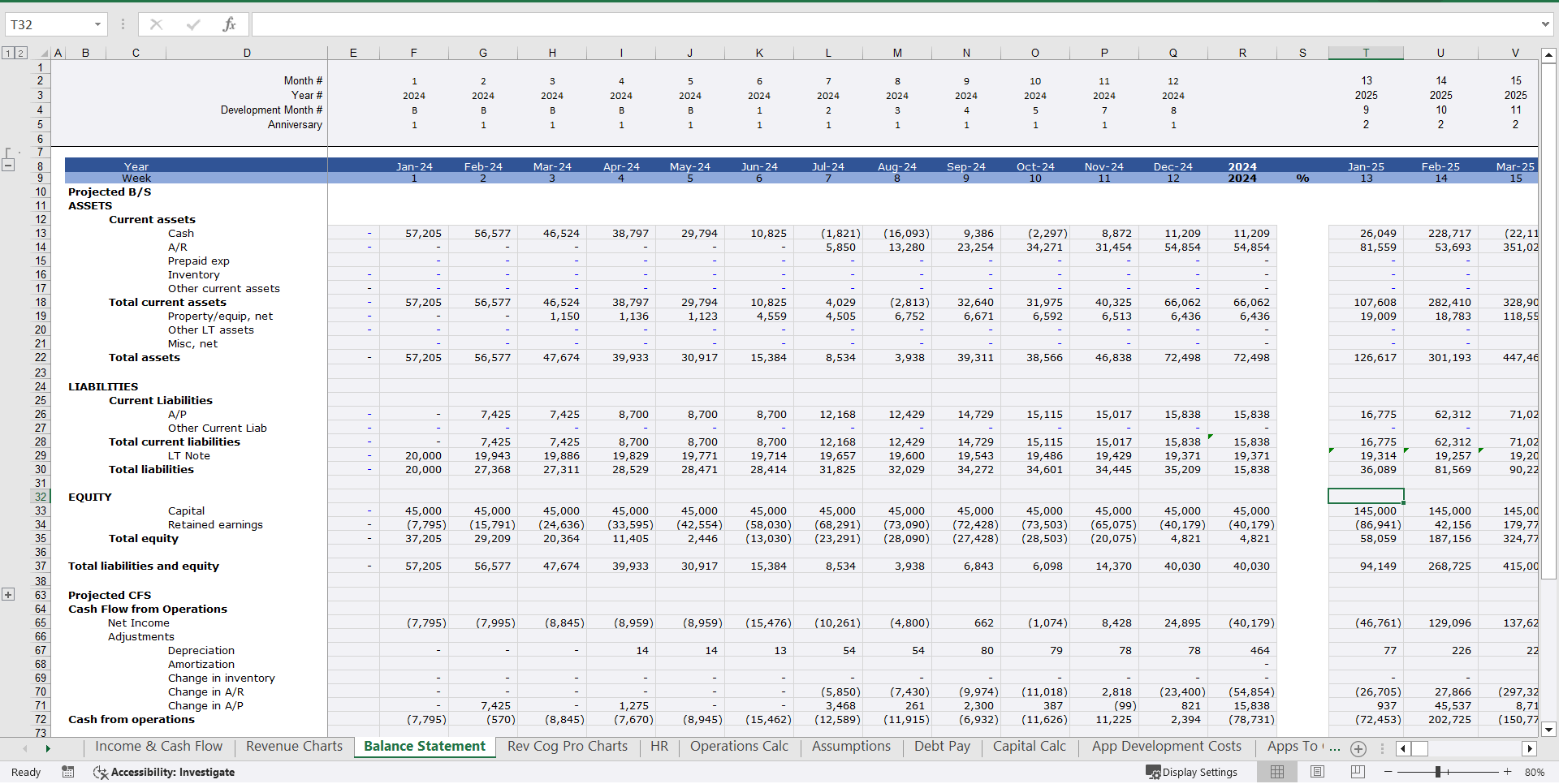
3. Balance Sheet
The balance sheet provides a snapshot of the company's financial position.
Assets Current Assets
Cash & Cash Equivalents – Money in the bank.
Accounts Receivable – Outstanding revenue from partnerships and subscriptions.
Prepaid Expenses – Paid but not yet incurred costs (e.g., prepaid software licenses).
Non-Current Assets
Intangible Assets – Software development costs, patents.
Property, Plant & Equipment (PP&E) – Server infrastructure, office equipment.
Liabilities Current Liabilities
Accounts Payable – Unpaid operating expenses.
Deferred Revenue – Subscription fees received in advance.
Short-Term Debt – Loan repayments due within 12 months.
Non-Current Liabilities
Long-Term Debt – Loans or bonds payable beyond one year.
Equity
Common Stock – Investor funding.
Retained Earnings – Profits reinvested into the business.
Balance Sheet Equation:
Assets = Liabilities + Equity
Key Takeaways
The Income Statement shows revenue growth and profitability.
The Cash Flow Statement tracks liquidity and cash movements.
The Balance Sheet reflects financial health and company value.
Got a question about the product? Email us at support@flevy.com or ask the author directly by using the "Ask the Author a Question" form. If you cannot view the preview above this document description, go here to view the large preview instead.
TOPIC FAQ
What are the main revenue streams I should model for a fintech mobile app?
Typical revenue streams for a fintech mobile app include recurring Subscription Fees, Transaction Revenue Sharing (a percentage of processed fees), Advertising Revenue from in-app ads, Partnerships & Sponsorships, Data Monetization of anonymized insights, Affiliate Marketing commissions, and White-Label Solutions revenue, as listed in the model’s revenue section.How should I structure subscription tiers and what features belong in each tier?
The overview presents a 6-tier structure (Free, Starter, Plus, Premium, Pro, Elite) with escalating features: basic balance views and ads in Free up to dedicated advisors and exclusive investments in Elite. Use tiered feature sets to map pricing, feature access, and target segments across the 6-tier subscription model.What operating expense categories are essential in a fintech app financial model?
Key operating expense categories to include are Cost of Goods Sold (payment processing, third-party APIs), Sales & Marketing expenses (user acquisition), Research & Development (software, AI), General & Administrative (salaries, compliance), Technology & Infrastructure (cloud, security), and Customer Support & Compliance.How do I forecast cash flow for a fintech startup with multiple revenue streams?
Forecast cash flow by separating Operating Cash Flow (cash receipts from subscriptions, transactions, ads; payments for operating expenses; adjustments for non-cash items), Investing Cash Flow (CapEx, acquisitions, R&D investments), and Financing Cash Flow (equity/debt raises, repayments). Ending Cash Balance equals net operating + net investing + net financing + beginning cash balance.What should I look for when buying a financial model template for a fintech app?
Prioritize templates that integrate Income Statement, Cash Flow, and Balance Sheet; model multiple revenue streams and subscription tiers; include marketing/channel assumptions and summary tabs for outputs. Flevy's Fintech Mobile App Financial Model explicitly includes a 3-statement structure, summary tabs, and a 6-tier subscription model.How can I assess the value of a paid fintech financial model versus building one internally?
Assess fit by checking whether the template already provides integrated three-statement forecasting, the specific revenue streams you need, subscription-tier modeling, and marketing channel inputs; if those are present you save initial build time. Flevy's model contains an integrated Income Statement, Cash Flow Statement, and Balance Sheet to evaluate against requirements.I’m preparing an investor pitch—what financial outputs should I prepare for a fintech mobile app?
Investors typically expect a three-statement forecast (Income Statement, Cash Flow, Balance Sheet), revenue breakdown by stream and subscription tier, operating expense schedule, and cash runway/funding needs. Include tiered monetization metrics and revenue stream detail such as Subscription Fees and Transaction Revenue Sharing.We plan to run online and offline marketing—how should marketing spend be modeled for impact on revenue?
Model marketing as Sales & Marketing expense, allocate spend across online and offline channels, and capture channel-level % opportunities or expected contribution to user acquisition and revenue. The spreadsheet supports yearly Online and Offline Marketing % opportunities and development channels for channel-level assumptions.Source: Best Practices in Mobile App, Fintech, Integrated Financial Model Excel: Fintech Mobile App Financial Model Excel (XLSX) Spreadsheet, Willcox PMO




























