

A due diligence report is key to finalizing an investment, merger, acquisition, or legal agreement. The due diligence report offers a comprehensive exploration a company's financial records. The scope of the report varies from project to project.
Due diligence Is divided Into three primary categories:
1. Business/Commercial Due Diligence: a detailed examination of the persons engaged in a transaction, and the business's future viability.
2. Financial Due Diligence: This is a key step in evaluating the business's operational, financial and commercial prospects. It gives the purchasing firm a clear picture of whether the purchase is worthwhile. It examines accounting rules and methods, tax compliance, and internal controls.
3. Legal Due Diligence: is concerned primarily with the legal issues of a transaction. It searches for any legal red flags.
A due diligence report may include the below elements:
1. An analysis of historical financial information over a period of years, legal records, market research, and other research documents
2. SWOT Analysis summarises the Target entity's strengths, weaknesses, opportunities, and threats
3. Any liabilities, debts, or financial responsibilities may alter any commercial transaction's conditions
4. An analysis of the projections of the forecasts as well as contractual information (if available) to support the forecasts.
5. If an issue is discovered when conducting a due diligence, consider describing it and its potential ramifications, as well as actions to resolve the issue identified.
The due diligence report summarises the data gathered throughout the due diligence process. This template focuses of the areas to cover when conducting a financial due diligence and provides a framework for communicating the due diligence findings.
Prior to beginning the due diligence report, an information request list of data required to complete the exercise should be provided to the Target. Please see comprehensive information request list: https://flevy.com/browse/marketplace/comprehensive-due-diligence-information-request-list-manda-3747
Got a question about the product? Email us at support@flevy.com or ask the author directly by using the "Ask the Author a Question" form. If you cannot view the preview above this document description, go here to view the large preview instead.
Executive Summary
The Financial Due Diligence Report Template (PPTX) is a structured framework designed for professionals engaged in mergers and acquisitions. Created by a team of former transaction advisors from EY and Grant Thornton, this template facilitates a thorough analysis of financial statements, forecasts, and compliance issues. Users can effectively assess the financial health of target companies, identify key risks, and make informed recommendations based on historical performance. This template is essential for executives and consultants looking to streamline their due diligence processes and enhance decision-making in M&A transactions.
Who This Is For and When to Use
• Corporate executives overseeing M&A transactions
• Integration leaders managing post-acquisition activities
• Financial analysts conducting due diligence assessments
• Consultants providing advisory services in M&A
• Compliance officers ensuring regulatory adherence
Best-fit moments to use this deck:
• During the pre-acquisition phase to assess target financials
• When preparing for negotiations with potential sellers
• In post-acquisition integration planning to align financial expectations
• For compliance reviews to ensure adherence to financial regulations
Learning Objectives
• Define the scope and purpose of financial due diligence in M&A transactions
• Analyze historical financial performance and identify key trends
• Assess the balance sheet for financial stability and risk factors
• Evaluate cash flow statements to understand liquidity and operational efficiency
• Develop actionable recommendations based on financial findings
• Create a comprehensive report that communicates key insights to stakeholders
Table of Contents
• Transaction Summary and Overview of Target (page 4)
• Key Findings and Recommendations (page 8)
• Historical Trading (page 14)
• Balance Sheet (page 19)
• Cash Flow Analysis (page 24)
• Glossary (page 30)
• Important Notice (page 31)
• Letter of Engagement (page 33)
• Summary of Key Contracts (page 34)
Primary Topics Covered
• Transaction Summary - Overview of the target company and the context of the acquisition, including key stakeholders and transaction details.
• Key Findings - Identification of significant financial risks and opportunities based on the analysis of historical data.
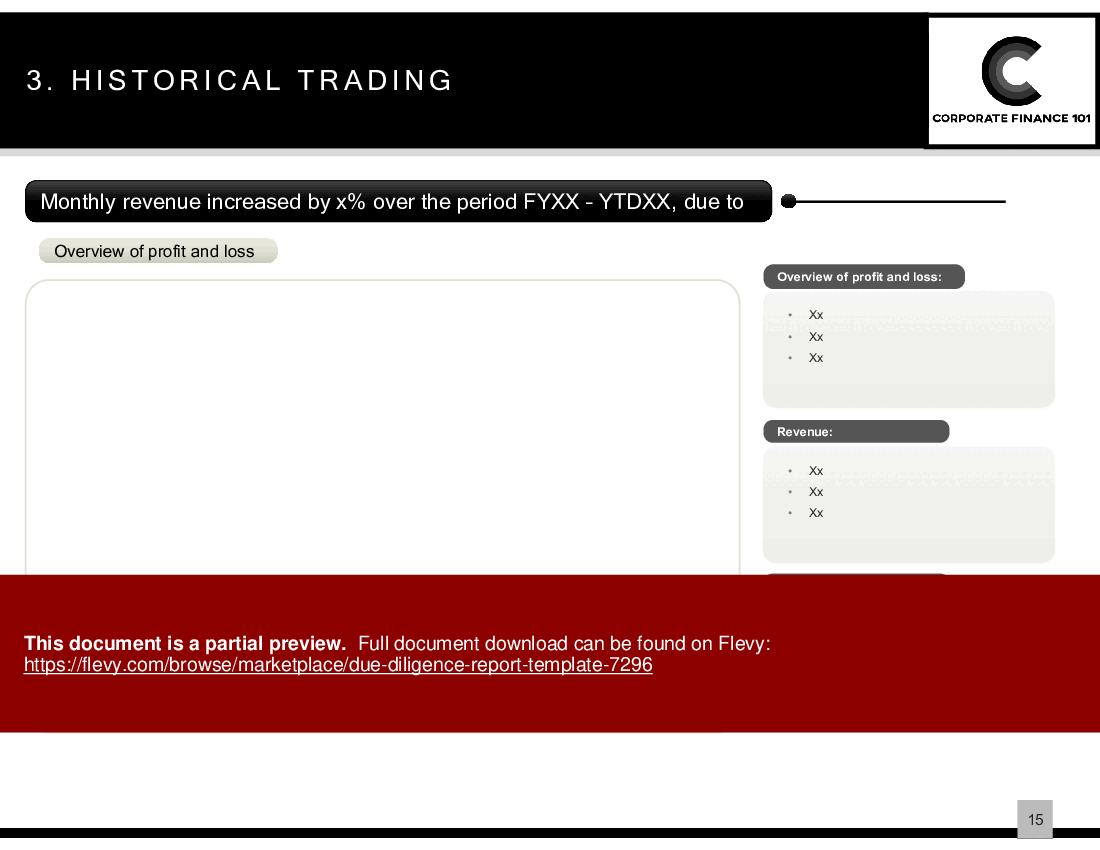
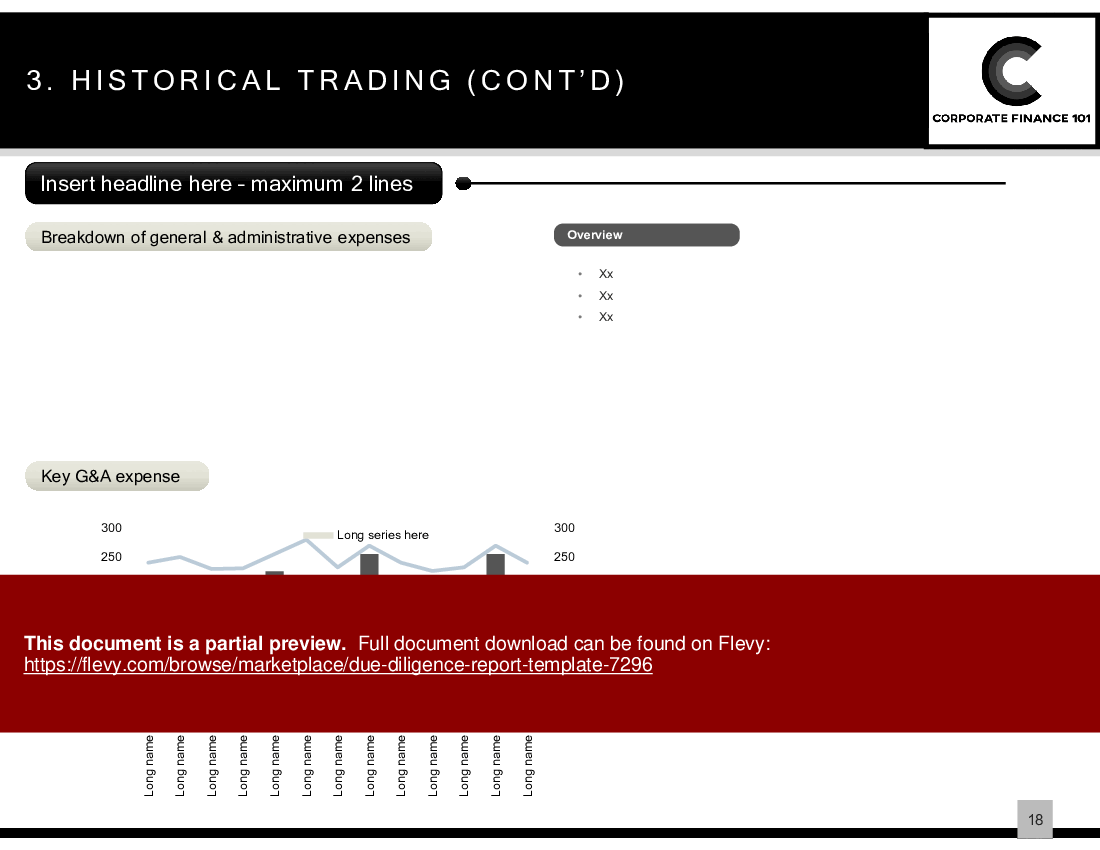
• Historical Trading - Examination of past revenue trends, cost structures, and profitability metrics to assess financial health.
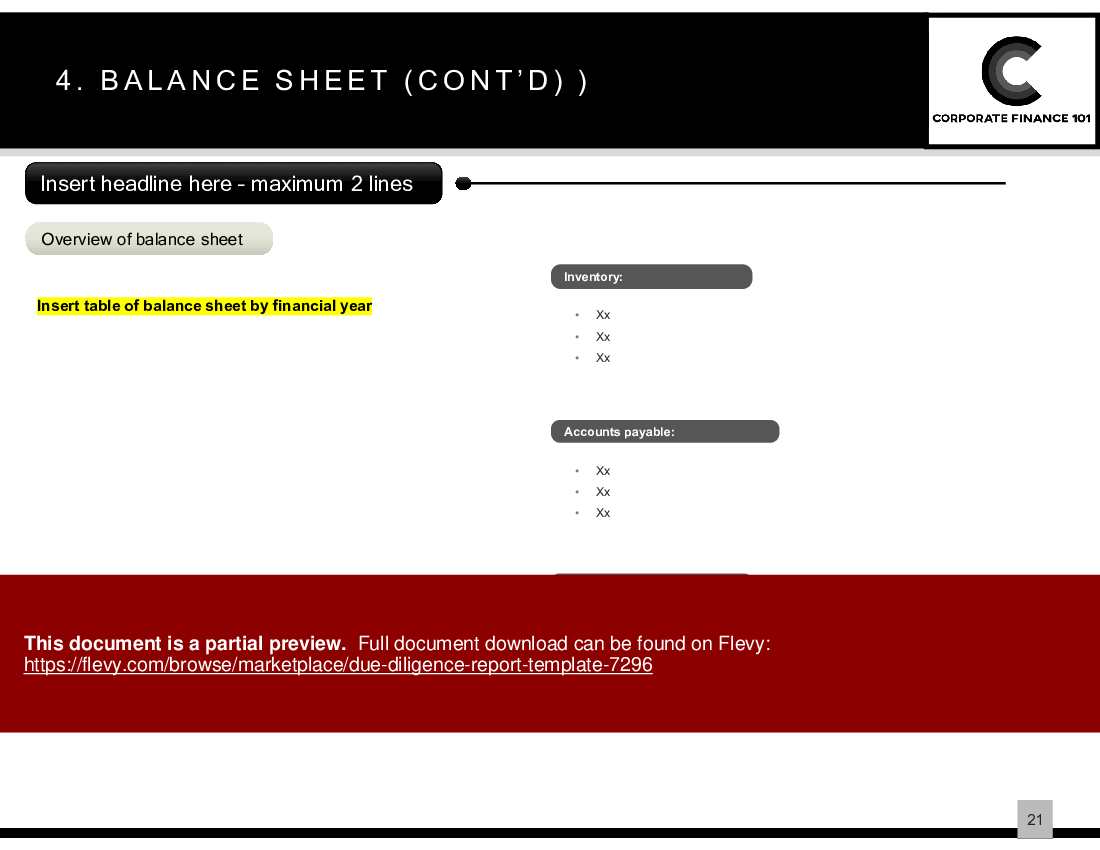
• Balance Sheet Analysis - Review of assets, liabilities, and equity to evaluate the company's financial position and stability.
• Cash Flow Analysis - Assessment of cash inflows and outflows to determine operational liquidity and financial sustainability.
• Recommendations - Strategic insights and actionable steps based on the financial analysis to guide decision-making.
Deliverables, Templates, and Tools
• Financial due diligence report template for M&A transactions
• Historical trading analysis framework
• Balance sheet and cash flow statement templates
• Key findings summary template for presenting insights
• Risk assessment matrix for evaluating financial risks
• Glossary of financial terms relevant to due diligence
Slide Highlights
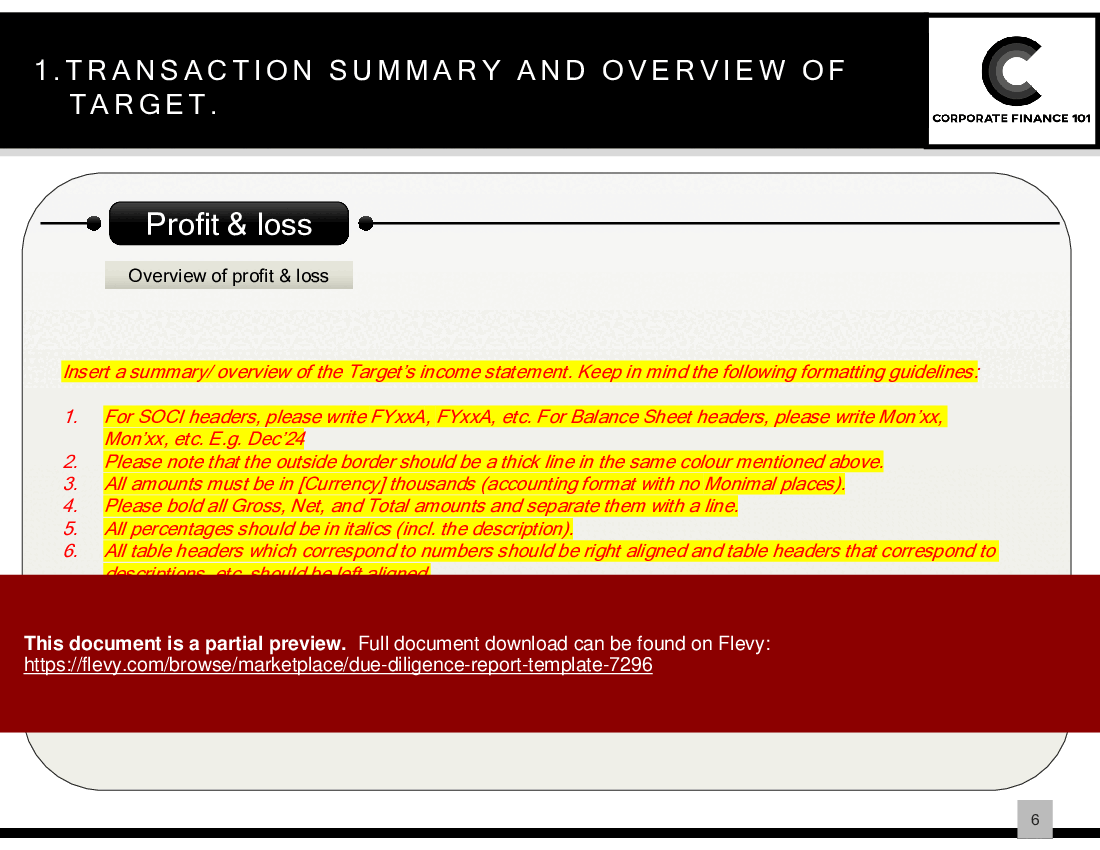
• Overview of the target's organizational structure and key performance indicators
• Detailed breakdown of revenue and cost of sales in historical trading
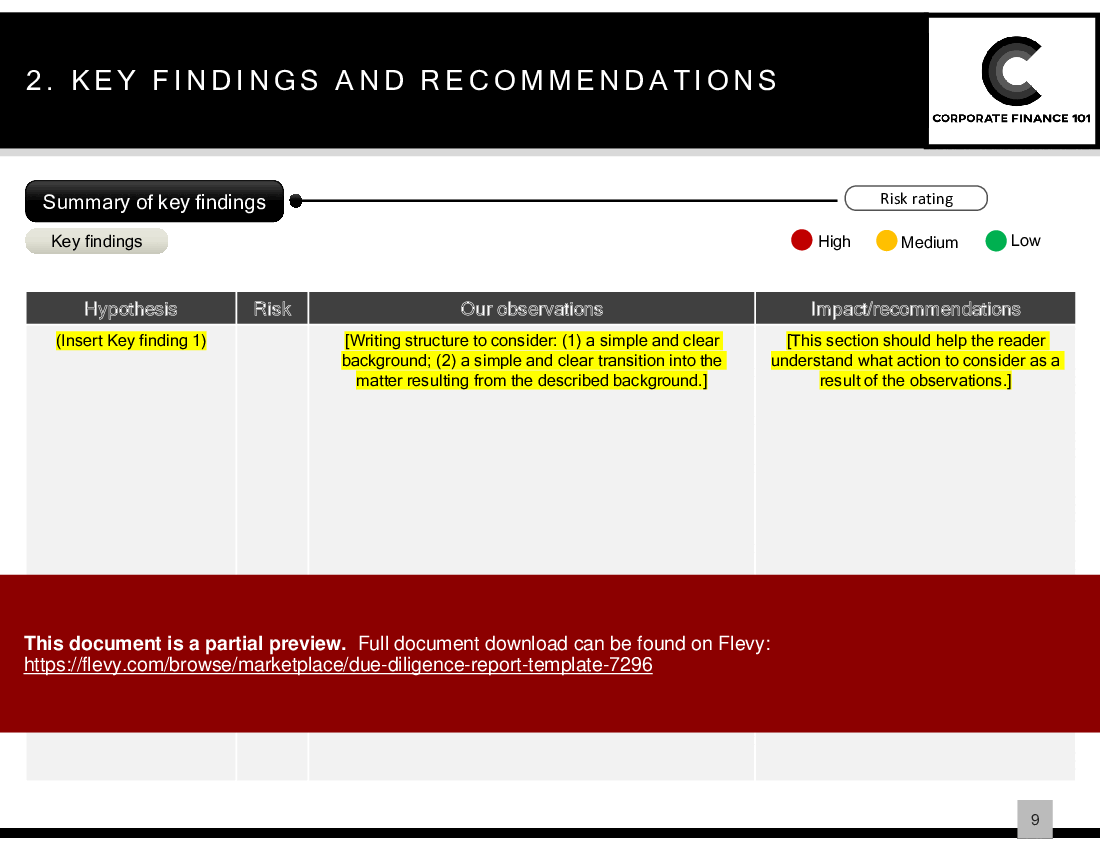
• Summary of key findings with risk ratings and recommendations
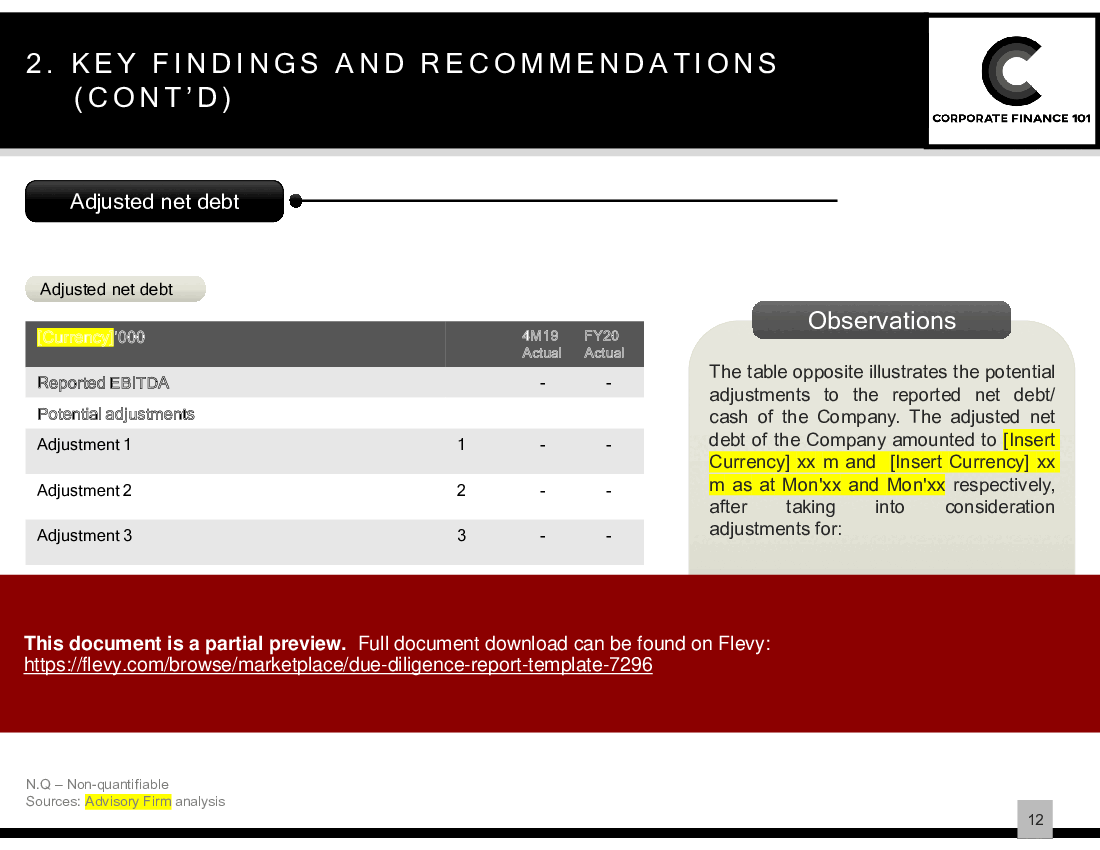
• Visual representation of adjusted EBITDA and net debt calculations
• Comprehensive cash flow statement analysis with year-on-year comparisons
Potential Workshop Agenda
Financial Due Diligence Overview (60 minutes)
• Introduce the purpose and scope of financial due diligence
• Discuss the importance of thorough financial analysis in M&A
Key Findings and Recommendations Session (90 minutes)
• Review key findings from the financial analysis
• Develop actionable recommendations based on insights
Balance Sheet and Cash Flow Analysis Workshop (60 minutes)
• Analyze the balance sheet for financial stability
• Evaluate cash flow statements for operational efficiency
Customization Guidance
• Tailor the template with specific client and project details
• Adjust financial metrics and KPIs to align with industry standards
• Update the glossary with relevant terms specific to the transaction
• Modify the risk assessment matrix to reflect unique project risks
Secondary Topics Covered
• Importance of compliance in financial reporting
• Techniques for effective financial forecasting
• Best practices for presenting financial findings to stakeholders
• Overview of common financial metrics used in due diligence
• Strategies for mitigating identified financial risks
Topic FAQ
Document FAQ
These are questions addressed within this presentation.
What is the purpose of a financial due diligence report?
The report aims to assess the financial health of a target company, identify potential risks, and provide actionable insights to inform M&A decisions.
Who should use this template?
This template is designed for corporate executives, integration leaders, financial analysts, and consultants involved in M&A transactions.
How can I customize the template for my specific needs?
Users can tailor the template by inserting specific client information, adjusting financial metrics, and updating the glossary with relevant terms.
What are the key components of the financial analysis?
Key components include historical trading performance, balance sheet evaluation, cash flow analysis, and risk assessment.
How does this template assist in compliance reviews?
The template provides a structured framework to ensure all financial aspects are reviewed for regulatory adherence during the due diligence process.
Can this template be used for industries outside of finance?
Yes, while it is tailored for financial analysis, the framework can be adapted for various industries by adjusting the metrics and KPIs.
What is the significance of adjusted EBITDA in the report?
Adjusted EBITDA provides a clearer picture of a company's operational performance by excluding one-off and non-recurring items.
How do I present the findings to stakeholders?
The template includes a summary of key findings and recommendations, which can be used to effectively communicate insights to stakeholders.
Glossary
• Adjusted EBITDA - Earnings before interest, tax, depreciation, and amortization, adjusted for one-off items.
• Balance Sheet - A financial statement that summarizes a company's assets, liabilities, and equity.
• Cash Flow Statement - A financial document that provides an overview of cash inflows and outflows.
• Due Diligence - The process of investigating a business before a transaction.
• Financial Analysis - The assessment of a company's financial data to understand its performance.
• Historical Trading - Review of past financial performance to identify trends.
• Key Performance Indicators (KPIs) - Metrics used to evaluate a company's success.
• Risk Assessment - The identification and evaluation of potential financial risks.
• Transaction Summary - An overview of the details surrounding an acquisition or merger.
• Working Capital - The difference between a company's current assets and current liabilities.
• Revenue - The total income generated from business activities.
• Cost of Sales - The direct costs attributable to the production of goods sold.
• Net Debt - Total debt minus cash and cash equivalents.
• Liquidity - The ability of a company to meet its short-term financial obligations.
• Financial Forecasting - The process of estimating future financial outcomes based on historical data.
• Compliance - Adherence to laws, regulations, and guidelines relevant to financial reporting.
Source: Best Practices in Due Diligence PowerPoint Slides: Financial Due Diligence Report Template PowerPoint (PPTX) Presentation Slide Deck, Corporate Finance 101
This document is available as part of the following discounted bundle(s):
Save %!
Complete Financial Due Diligence Toolkit
This bundle contains 5 total documents. See all the documents to the right.
|
Download our FREE Strategy & Transformation Framework Templates
Download our free compilation of 50+ Strategy & Transformation slides and templates. Frameworks include McKinsey 7-S, Balanced Scorecard, Disruptive Innovation, BCG Curve, and many more. |










