
Enterprise Architecture (EA) - An Introduction   104-slide PPT PowerPoint presentation slide deck (PPTX)
$55.00

Enterprise Architecture (EA) - An Introduction (104-slide PPT PowerPoint presentation slide deck (PPTX)) Preview Image
Log in to unlock full preview.
Enterprise Architecture (EA) - An Introduction (104-slide PPT PowerPoint presentation slide deck (PPTX)) Preview Image
Arrow   Click main image to view in full screen.

Enterprise Architecture (EA) - An Introduction (PowerPoint PPTX Slide Deck)

PowerPoint (PPTX) 104 Slides

$55.00
Developed by a team of experts with global consulting experience at McKinsey, Deloitte, and Capgemini.
Add to Cart


Immediate download
Fully editable PowerPoint
Free lifetime updates

ENTERPRISE ARCHITECTURE PPT DESCRIPTION

Editor Summary 104-slide PowerPoint presentation introducing Enterprise Architecture (EA), including framework templates, baseline architecture models, gap analysis tools, roadmaps, and performance measurement frameworks (5 deliverables/templates). Read more

Enterprise Architecture (EA) is a strategic discipline that focuses on aligning an organization's business objectives, processes, information, and technology to create a coherent and efficient enterprise-wide structure. It involves designing and managing the complex interrelationships between various components of an organization to ensure that they work harmoniously together to achieve the desired business outcomes.

Primary Purpose of Enterprise Architecture:
The primary purpose of Enterprise Architecture is to provide a holistic view of an organization's current state, future vision, and the roadmap to bridge the gap between them. It enables effective decision-making by providing insights into how changes in one area of the organization can impact other areas. EA helps organizations optimize their operations, minimize redundancies, and drive innovation, making it a vital aspect of modern business strategy.

Key Concepts in Enterprise Architecture:
1. Business Architecture: Focuses on understanding the organization's structure, processes, goals, and how it creates value for its stakeholders. It seeks to align business strategy with IT initiatives.
2. Information Architecture: Deals with data and information management, ensuring that data is accurate, consistent, and readily available to support business needs.
3. Application Architecture: Concerned with defining the organization's application portfolio, including how applications interact and support business processes.
4. Technology Architecture: Addresses the underlying technology infrastructure, hardware, software, networks, and security aspects of the organization.

Benefits of Enterprise Architecture:
1. Improved Alignment: EA aligns business and IT strategies, ensuring that technology investments directly contribute to achieving business goals.
2. Cost Optimization: By eliminating redundancies and optimizing processes, EA helps reduce operational costs and improve resource allocation.
3. Agility and Innovation: EA enables organizations to respond quickly to changing market conditions and drive innovation by providing a clear view of dependencies and opportunities.
4. Risk Management: It helps identify and manage risks related to technology, security, compliance, and business continuity.
5. Enhanced Decision-Making: EA provides decision-makers with comprehensive insights and analysis, leading to more informed and effective decisions.
6. Better Integration: It promotes seamless integration between various systems and processes, enhancing collaboration and efficiency.

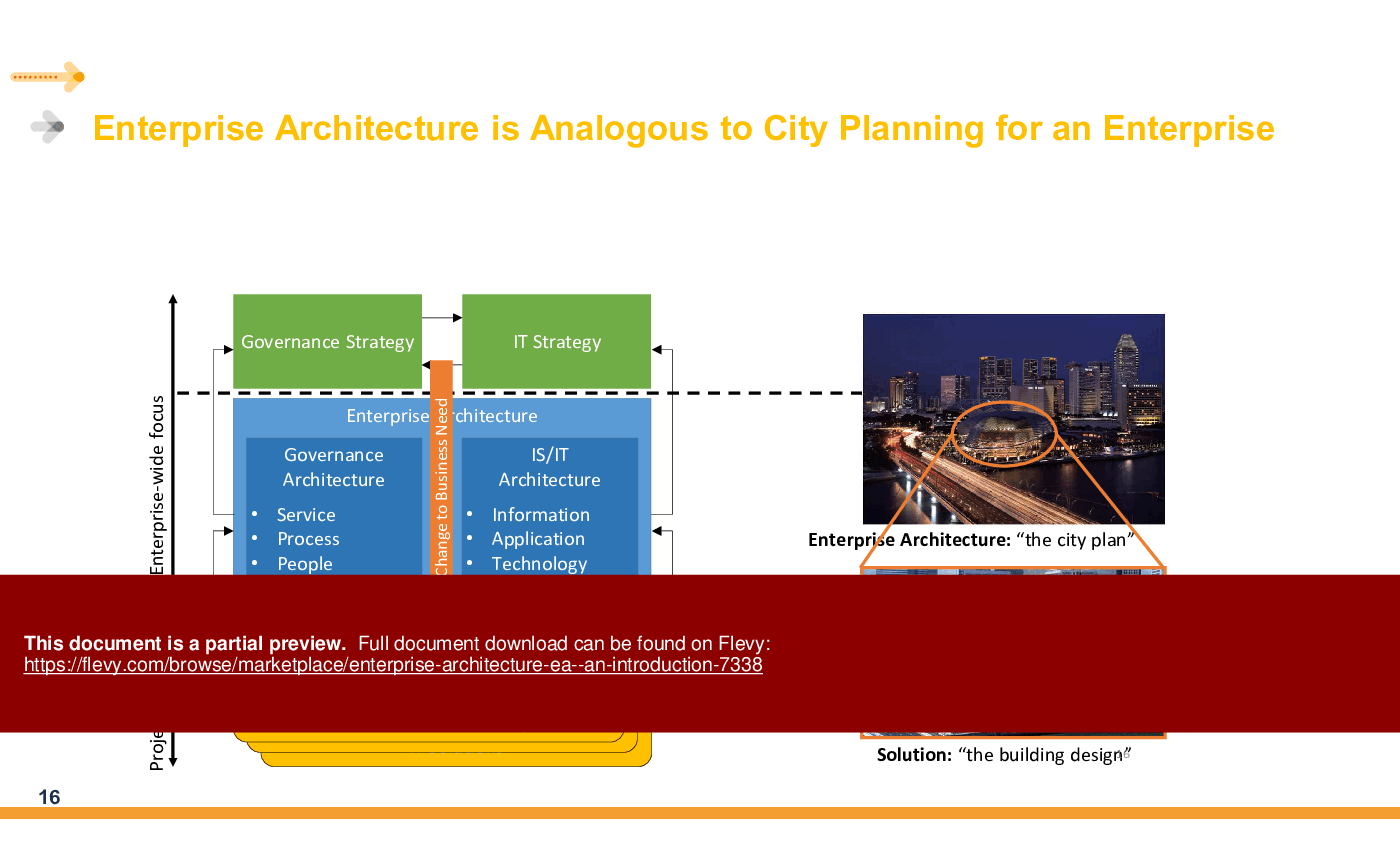
Enterprise Architecture frameworks and methodologies, such as TOGAF (The Open Group Architecture Framework) and Zachman Framework, provide standardized approaches to develop, implement, and maintain EA initiatives. Each organization may tailor its approach to suit its unique needs and objectives.

Key topics of the presentation include:
•  Understanding the nexus of Enterprise Architecture
•  History & Evolution of Enterprise Architecture
•  Components of Enterprise Architecture
•  Lifecycle of Enterprise Architecture
•  Implementation of EA
•  Enterprise Architecture Frameworks
•  Zachman Framework
•  TOGAF
•  IndEA

The 104-slide document explains, in detail, the Enterprise Architecture's crucial role in enabling organizations to adapt, innovate, and thrive in a dynamic and competitive business landscape.

Got a question about the product? Email us at support@flevy.com or ask the author directly by using the "Ask the Author a Question" form. If you cannot view the preview above this document description, go here to view the large preview instead.

MARCUS OVERVIEW

This synopsis was written by Marcus [?] based on the analysis of the full 104-slide presentation.


Executive Summary
The "Introduction to Enterprise Architecture" presentation by RadVector provides a comprehensive overview of Enterprise Architecture (EA), detailing its evolution, components, frameworks, and implementation strategies. Designed for corporate executives, integration leaders, and consultants, this presentation equips users with the knowledge to understand EA's role in aligning business processes and IT strategies. The content covers essential frameworks such as Zachman, TOGAF, and IndEA, enabling organizations to navigate the complexities of modern business environments effectively.

Who This Is For and When to Use
•  Corporate executives seeking to align IT and business strategies
•  Integration leaders managing complex organizational changes
•  Consultants advising on enterprise transformation projects
•  IT managers responsible for governance and architecture
•  Project managers overseeing enterprise-wide initiatives

Best-fit moments to use this deck:
•  During strategic planning sessions to define EA goals
•  In workshops focused on aligning IT and business objectives
•  When introducing EA concepts to stakeholders and teams
•  For training sessions on EA frameworks and methodologies

Learning Objectives
•  Define Enterprise Architecture and its significance in modern organizations
•  Identify key components and frameworks of Enterprise Architecture
•  Analyze the lifecycle of Enterprise Architecture and its implementation strategies
•  Develop a roadmap for integrating EA into organizational processes
•  Evaluate the impact of EA on business performance and IT alignment
•  Formulate strategies for overcoming challenges in EA adoption

Table of Contents
•  Understanding the Nexus of Enterprise Architecture (page 2)
•  History & Evolution of Enterprise Architecture (page 26)
•  Components of Enterprise Architecture (page 34)
•  Lifecycle of Enterprise Architecture (page 37)
•  Implementation of EA (page 39)
•  Enterprise Architecture Frameworks (page 54)

Primary Topics Covered
•  Nexus of Enterprise Architecture - Explains the interconnectedness of business processes and IT systems within an organization.
•  History and Evolution - Traces the development of EA from early methodologies to modern frameworks like TOGAF and IndEA.
•  Components of EA - Discusses the essential elements such as IT strategy, performance management, and logical architecture.
•  Lifecycle of EA - Outlines the stages from obtaining executive buy-in to maintaining the architecture.
•  Frameworks - Provides insights into various EA frameworks, including Zachman, TOGAF, and IndEA, highlighting their unique approaches.

Deliverables, Templates, and Tools
•  EA framework templates for strategic planning and implementation
•  Baseline architecture models for assessing current and target states
•  Gap analysis tools for identifying discrepancies between AS-IS and TO-BE states
•  Roadmaps for integrating EA into business processes
•  Performance measurement frameworks to evaluate EA effectiveness

Slide Highlights
•  Overview of the evolution of government observed in EA practices
•  Visual representations of the Zachman Framework and TOGAF
•  Illustrative examples of the EA lifecycle in practice
•  Comparative analysis of popular EA frameworks and their applications
•  Key principles of IndEA and its relevance to government architecture

Potential Workshop Agenda
Introduction to EA Concepts (60 minutes)
•  Overview of EA and its significance
•  Discussion on the evolution of EA frameworks

Framework Deep Dive (90 minutes)
•  Detailed exploration of Zachman, TOGAF, and IndEA
•  Group activities to analyze framework applicability

Implementation Strategies (60 minutes)
•  Best practices for EA adoption
•  Identifying challenges and solutions in EA implementation

Customization Guidance
•  Tailor the presentation to reflect specific organizational goals and challenges
•  Adjust framework examples to align with industry-specific needs
•  Incorporate case studies relevant to the audience's sector

Secondary Topics Covered
•  The role of governance in EA
•  Integration of business processes and IT systems
•  The importance of stakeholder engagement in EA initiatives
•  Challenges and risks associated with EA implementation

Topic FAQ

What are the main Enterprise Architecture frameworks and how do they differ?

Common EA frameworks include the Zachman Framework (artifact-oriented taxonomy), TOGAF (methodology for developing and managing architecture), and IndEA (government-focused holistic architecture). Each offers a different emphasis—organizing artifacts, prescribing development process, or addressing public-sector needs—and the presentation compares these 3 frameworks: Zachman, TOGAF, IndEA.

What does the lifecycle of Enterprise Architecture typically cover?

An EA lifecycle outlines stages from obtaining executive buy-in through design, implementation, and ongoing maintenance. It emphasizes iterative governance and alignment activities to keep architecture current with strategy. The Flevy deck presents the lifecycle beginning with executive buy-in and ending with maintaining the architecture.

What core components make up Enterprise Architecture?

EA typically comprises business architecture, information architecture, application architecture, and technology architecture, along with governance and performance management to ensure alignment. These component groupings support decision-making about dependencies and investments across the enterprise, focusing on business, information, application, and technology architecture components.

What should I look for in an EA slide deck or toolkit before purchasing?

Buyers should look for practical artifacts: EA framework templates, baseline AS‑IS and TO‑BE models, gap analysis tools, implementation roadmaps, and performance measurement frameworks. Flevy's Enterprise Architecture - An Introduction specifically lists EA framework templates, baseline models, gap analysis tools, roadmaps, and performance measurement frameworks.

How long are typical workshop sessions when introducing EA concepts to stakeholders?

A common workshop agenda splits time into modules such as a 60‑minute EA concepts overview, a 90‑minute framework deep dive with group activities, and a 60‑minute implementation strategies session, totaling approximately 3 and a half hours and individual session lengths of 60, 90, and 60 minutes.

What value do EA templates and tools deliver compared with building from scratch?

EA templates and tools provide ready-made artifacts for strategic planning, baseline assessments, gap analysis, roadmap creation, and performance measurement, which can reduce preparation time and standardize outputs. Organizations should compare scope and reuse potential; templates typically include baseline models, gap analysis tools, and roadmaps.

After a merger, what initial EA steps should my team take to align IT and business?

Start with baseline architecture modeling to document AS‑IS systems, run gap analysis to identify discrepancies with the desired TO‑BE state, select an applicable framework (e.g., TOGAF or Zachman), develop an integration roadmap, and establish governance for implementation using baseline models, gap analysis, and a roadmap.

How can an organization measure the success of EA adoption?

Success is measured through performance metrics that track alignment of IT and business goals, reductions in redundancy, governance effectiveness, and improved decision-making. The presentation identifies performance measurement frameworks and governance effectiveness as means to evaluate EA success via performance metrics and governance structures.

Document FAQ
These are questions addressed within this presentation.

What is Enterprise Architecture?
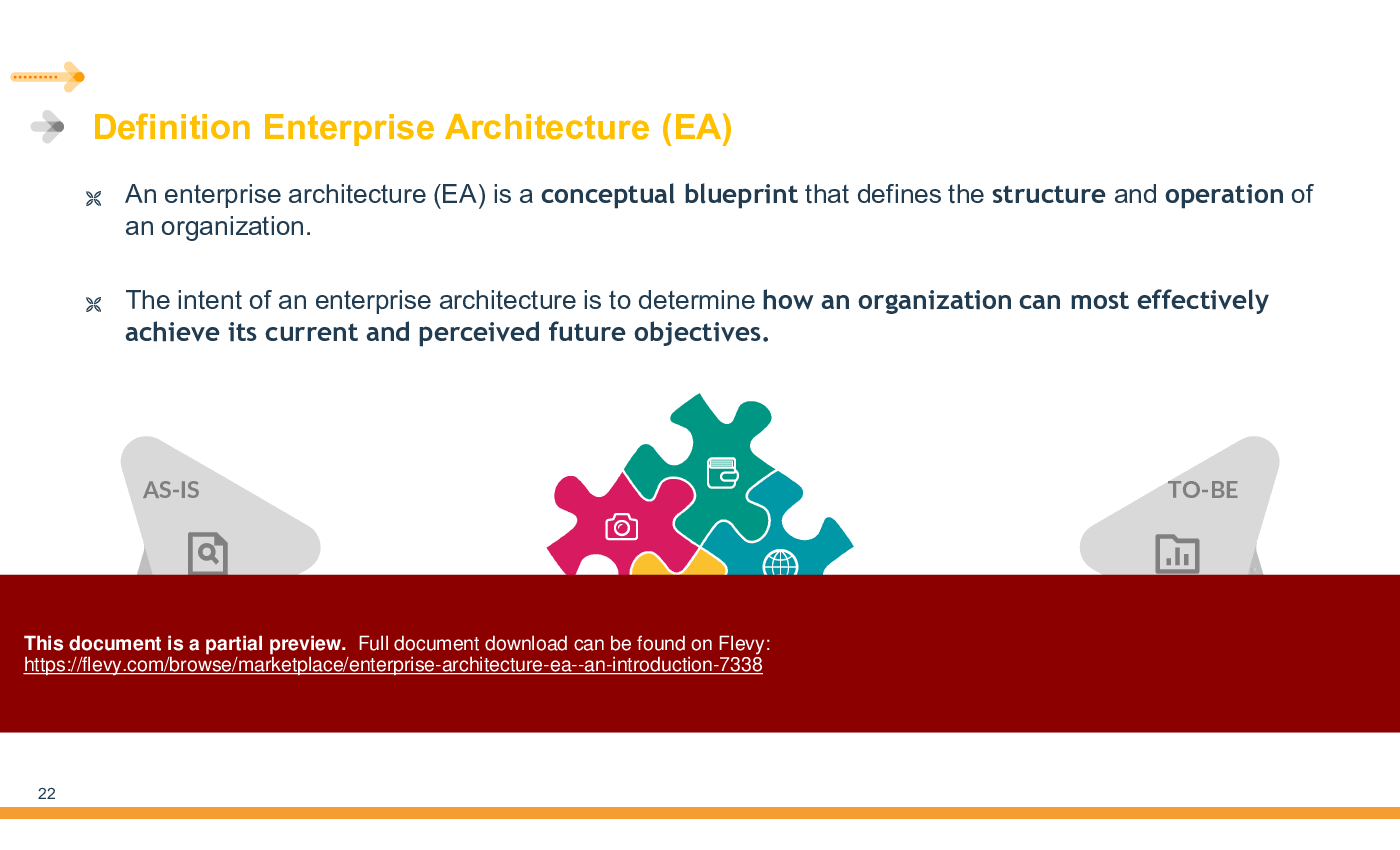
Enterprise Architecture is a conceptual blueprint that defines the structure and operation of an organization, facilitating alignment between business processes and IT strategies.

Why is EA important for organizations?
EA helps organizations navigate complexity, optimize IT investments, and improve overall performance by ensuring that business and IT strategies are aligned.

What are the main frameworks used in EA?
The primary frameworks include the Zachman Framework, TOGAF, and IndEA, each offering unique methodologies for implementing EA.

How does EA support organizational change?
EA provides a structured approach to managing change by aligning IT capabilities with business objectives, ensuring that transformations are strategic and effective.

What are common challenges in implementing EA?
Challenges include resistance to change, lack of executive support, and difficulties in aligning diverse stakeholder interests.

How can organizations measure the success of EA?
Success can be measured through performance metrics, alignment of IT and business goals, and the effectiveness of governance structures.

What is the role of an Enterprise Architect?
An Enterprise Architect is responsible for ensuring that the organization's architecture aligns with its strategic goals, overseeing the development and maintenance of architecture models.

How can EA frameworks be customized?
Frameworks can be tailored to meet specific organizational needs by selecting relevant components and adapting methodologies to fit the unique context of the organization.

Glossary
•  Enterprise Architecture (EA) - A conceptual framework that defines the structure and operation of an organization.
•  Zachman Framework - A schema for organizing architectural artifacts and understanding enterprise architecture.
•  TOGAF - The Open Group Architecture Framework, a methodology for developing and managing enterprise architecture.
•  IndEA - India Enterprise Architecture, a framework for developing holistic architecture in government.
•  Lifecycle of EA - The stages involved in developing and maintaining enterprise architecture.
•  Gap Analysis - A method for identifying discrepancies between current and desired states in an organization.
•  Performance Management - The process of monitoring and improving organizational performance through strategic alignment.
•  Governance - The framework for decision-making and accountability in enterprise architecture.
•  Framework - A structured approach to implementing enterprise architecture methodologies.
•  Stakeholder Engagement - The process of involving relevant parties in the development and implementation of EA.
•  Business Process Integration - The alignment of business processes with IT systems to enhance efficiency.
•  IT Strategy - The plan for aligning IT initiatives with business goals.
•  Architecture Governance - The oversight and management of architecture practices within an organization.
•  Interoperability - The ability of different systems and organizations to work together effectively.
•  Transformation - The process of making significant changes to organizational structures or processes.
•  Agility - The capacity to adapt quickly to changes in the business environment.
•  Alignment - Ensuring that business and IT strategies are in sync.
•  Robustness - The strength and reliability of an enterprise architecture framework.
•  Scalability - The ability of an architecture to grow and adapt as organizational needs change.
•  Integration - The process of combining different systems and processes to work together seamlessly.

Source: Best Practices in Enterprise Architecture PowerPoint Slides: Enterprise Architecture (EA) - An Introduction PowerPoint (PPTX) Presentation Slide Deck, RadVector Consulting


$55.00
Developed by a team of experts with global consulting experience at McKinsey, Deloitte, and Capgemini.
Add to Cart
  

ABOUT THE AUTHOR

Additional documents from author: 182

We are a group of aviation experts & specialists (PhDs, Engineers, Pilots, Navigators, ...), leaders in helping organizations to transform their business performance using Methodologies and Principles of Lean, Agile, Six Sigma, and Innovation.

Ask the Author a Question

You must be logged in to contact the author.

Click here to log in Click here register

Did you know?
The average daily rate of a McKinsey consultant is $6,625 (not including expenses). The average price of a Flevy document is $65.


Trusted by over 10,000+ Client Organizations
Since 2012, we have provided business templates to over 10,000 businesses and organizations of all sizes, from startups and small businesses to the Fortune 100, in over 130 countries.
AT&T GE Cisco Intel IBM Coke Dell Toyota HP Nike Samsung Microsoft Astrazeneca JP Morgan KPMG Walgreens Walmart 3M Kaiser Oracle SAP Google E&Y Volvo Bosch Merck Fedex Shell Amgen Eli Lilly Roche AIG Abbott Amazon PwC T-Mobile Broadcom Bayer Pearson Titleist ConEd Pfizer NTT Data Schwab


Read Customer Testimonials

 
"FlevyPro has been a brilliant resource for me, as an independent growth consultant, to access a vast knowledge bank of presentations to support my work with clients. In terms of RoI, the value I received from the very first presentation I downloaded paid for my subscription many times over! The "

– Roderick Cameron, Founding Partner at SGFE Ltd
 
"One of the great discoveries that I have made for my business is the Flevy library of training materials.

As a Lean Transformation Expert, I am always making presentations to clients on a variety of topics: Training, Transformation, Total Productive Maintenance, Culture, Coaching, Tools, Leadership Behavior, etc. Flevy "

– Ed Kemmerling, Senior Lean Transformation Expert at PMG
 
"Flevy.com has proven to be an invaluable resource library to our Independent Management Consultancy, supporting and enabling us to better serve our enterprise clients.

The value derived from our [FlevyPro] subscription in terms of the business it has helped to gain far exceeds the investment made, making a subscription a no-brainer for any growing consultancy – or in-house strategy team."

– Dean Carlton, Chief Transformation Officer, Global Village Transformations Pty Ltd.
 
"I have used FlevyPro for several business applications. It is a great complement to working with expensive consultants. The quality and effectiveness of the tools are of the highest standards."

– Moritz Bernhoerster, Global Sourcing Director at Fortune 500
 
"As a small business owner, the resource material available from FlevyPro has proven to be invaluable. The ability to search for material on demand based our project events and client requirements was great for me and proved very beneficial to my clients. Importantly, being able to easily edit and tailor "

– Michael Duff, Managing Director at Change Strategy (UK)
 
"As a young consulting firm, requests for input from clients vary and it's sometimes impossible to provide expert solutions across a broad spectrum of requirements. That was before I discovered Flevy.com.

Through subscription to this invaluable site of a plethora of topics that are key and crucial to consulting, I "

– Nishi Singh, Strategist and MD at NSP Consultants
 
"As a consultant requiring up to date and professional material that will be of value and use to my clients, I find Flevy a very reliable resource.

The variety and quality of material available through Flevy offers a very useful and commanding source for information. Using Flevy saves me time, enhances my expertise and ends up being a good decision."

– Dennis Gershowitz, Principal at DG Associates
 
"As an Independent Management Consultant, I find Flevy to add great value as a source of best practices, templates and information on new trends. Flevy has matured and the quality and quantity of the library is excellent. Lastly the price charged is reasonable, creating a win-win value for "

– Jim Schoen, Principal at FRC Group


Customers Also Bought These Documents


Customers Also Like These Documents

Explore Templates on Related Management Topics


Your Recently Viewed Documents
Download our FREE Digital Transformation Templates

Download our free compilation of 50+ Digital Transformation slides and templates. DX concepts covered include Digital Leadership, Digital Maturity, Digital Value Chain, Customer Experience, Customer Journey, RPA, etc.










