
 Click main image to view in full screen. Unlock all 13 preview images:
Electric Vehicle (EV) Charging Station Financial Model – Excel XLSX
Excel (XLSX)


BENEFITS OF THIS DOWNLOADABLE EXCEL DOCUMENT
- Provides a structured framework to evaluate the financial feasibility and scalability of an EV charging station business.
- Enables data-driven decision-making by translating charger configuration, utilization, and cost assumptions into clear revenue, cost, and cash-flow projections.
- Supports investors, founders, and operators in assessing profitability, capital requirements, and long-term returns through an integrated financial forecasting model.
ELECTRIC VEHICLE EXCEL DESCRIPTION
This financial model is designed to evaluate and forecast the financial performance of an Electric Vehicle (EV) charging station business. The model supports configurable charger types and is suitable for analyzing public or semi-public EV charging operations.
The model provides a 5-year (60-month) forecast, enabling users to assess revenue growth, cost of revenue, operating profitability, and cash generation under different charging station configurations and demand scenarios.
Model Structure – High-Level Overview
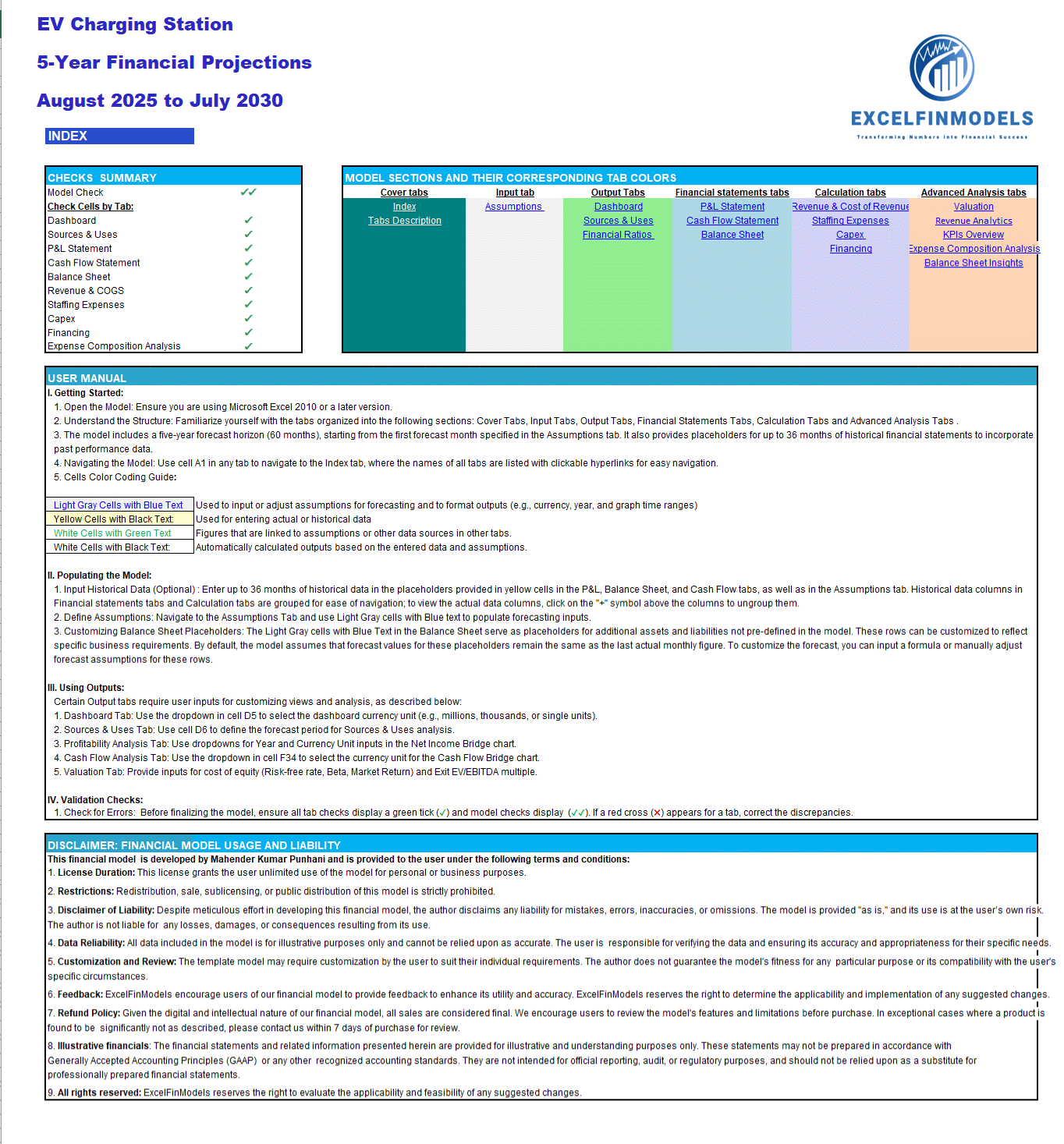
1. Cover & Navigation
• Clear index with intuitive navigation.
• Color coding for tabs and cells to distinguish inputs and calculations.
2. Input Assumptions
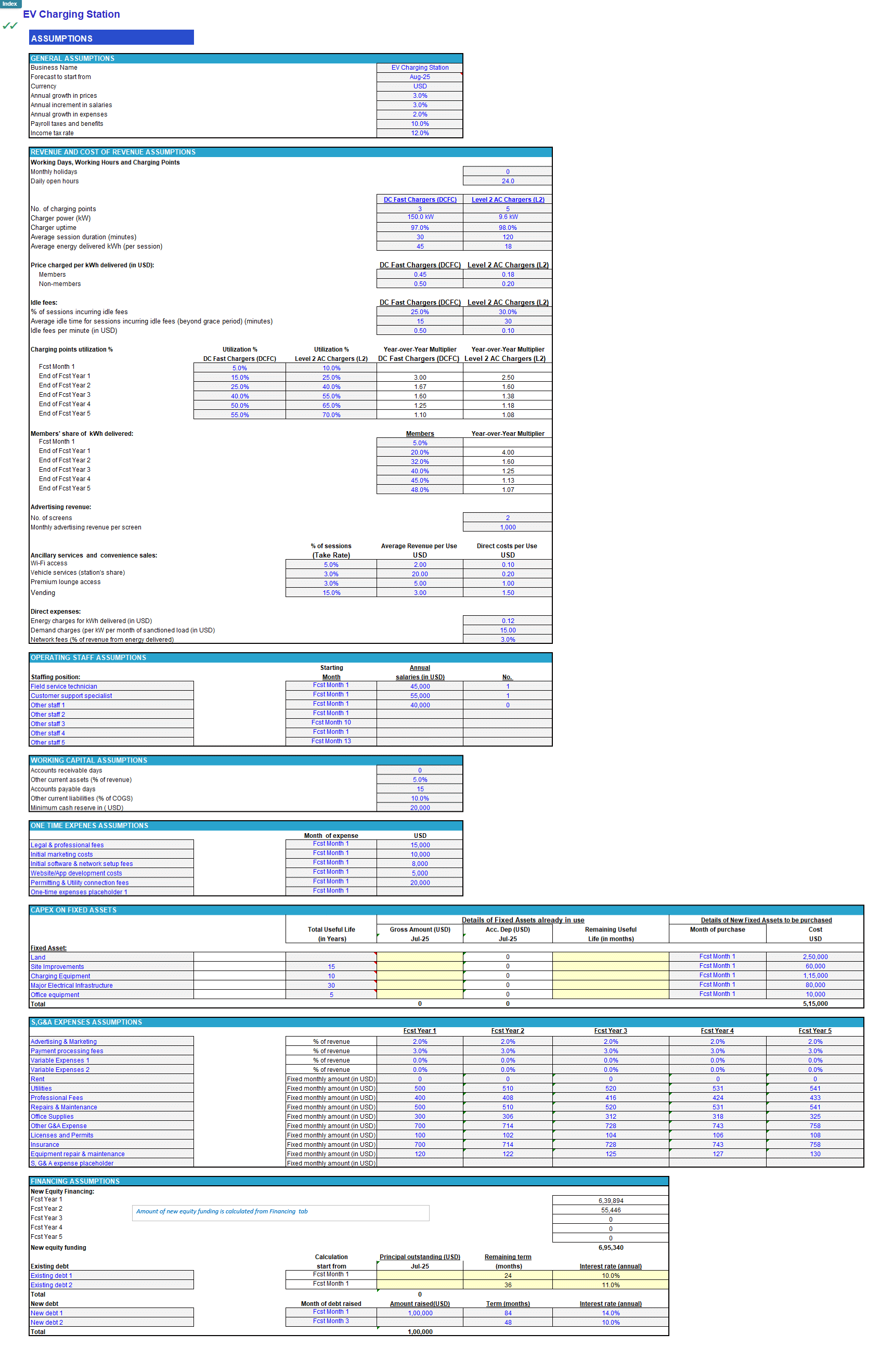
A centralized assumptions section captures the key operational and commercial drivers of an EV charging station, including:
• Charger configuration (customizable charger types).
• Charger power, charger uptime, demand coincidence factor, average duration per session
• Pricing per kWh delivered.
• Utilization ramp-up assumptions.
• Cost of revenue on energy charges and demand charges.
• Network fee assumptions.
• Direct operating expenses per charging port.
• Start-up costs, working capital, and staffing assumptions.
• Financing assumptions
3. Outputs
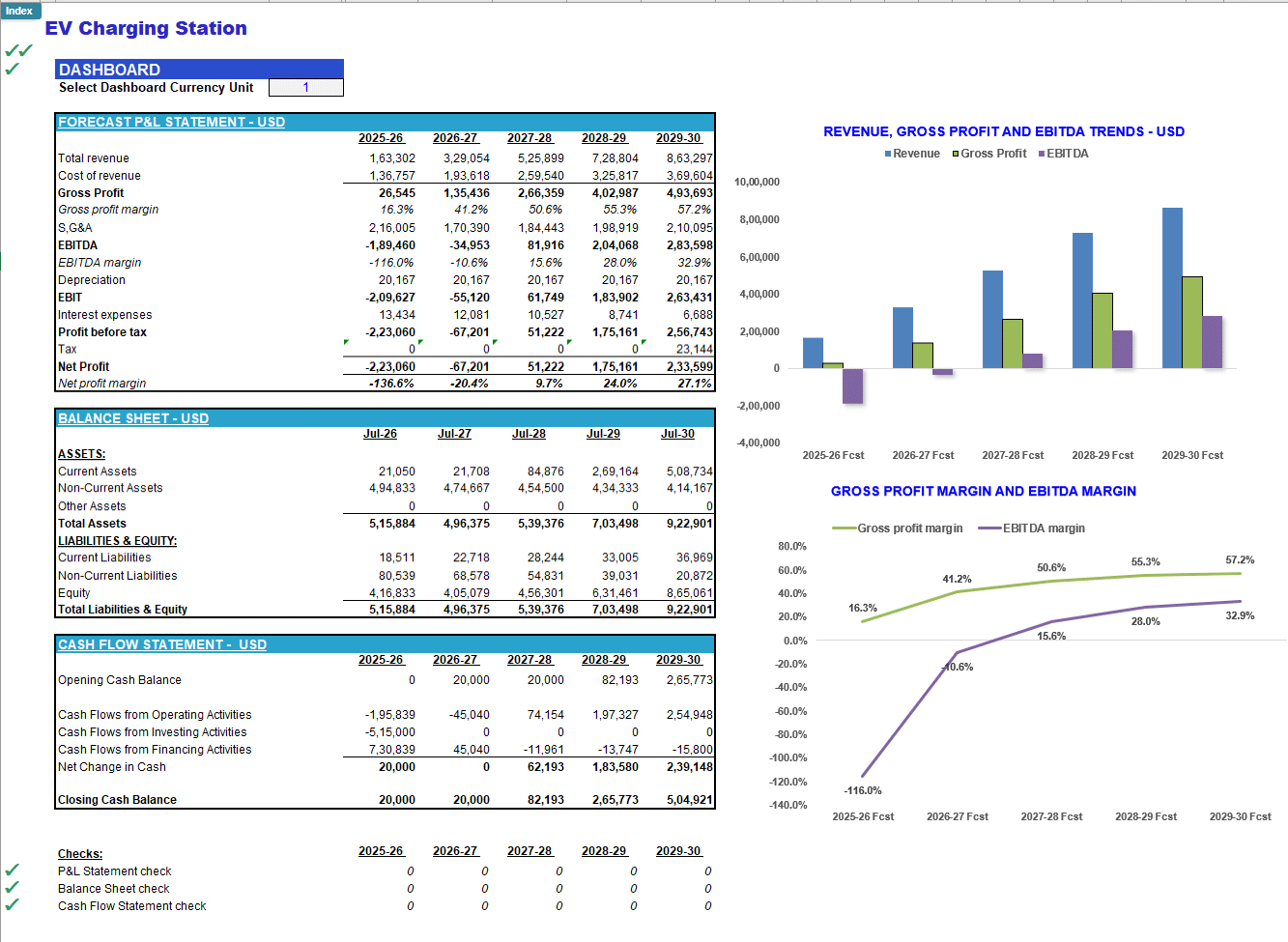
The dashboard provides a clear visual summary of business performance, including:
• Revenue, gross profit, and EBITDA trends.
• Gross margin and EBITDA margin evolution.
• Energy delivered (kWh) by charger type.
• Average sessions per charger per day.
• Integrated Profit & Loss, Cash Flow, and Balance Sheet summaries.
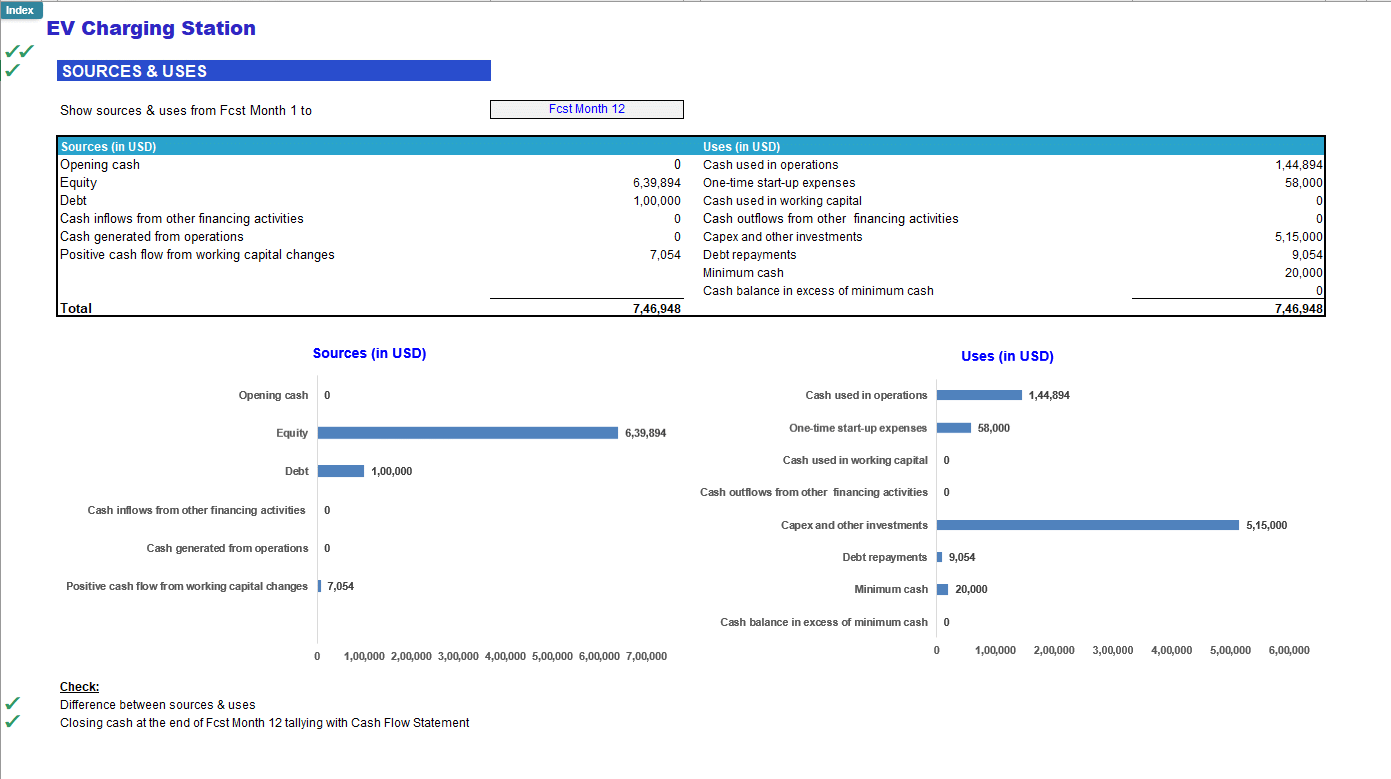
The sources & uses tabs shows various sources of funding and their utilization.
4. Integrated Financial Statements
The model includes fully linked:
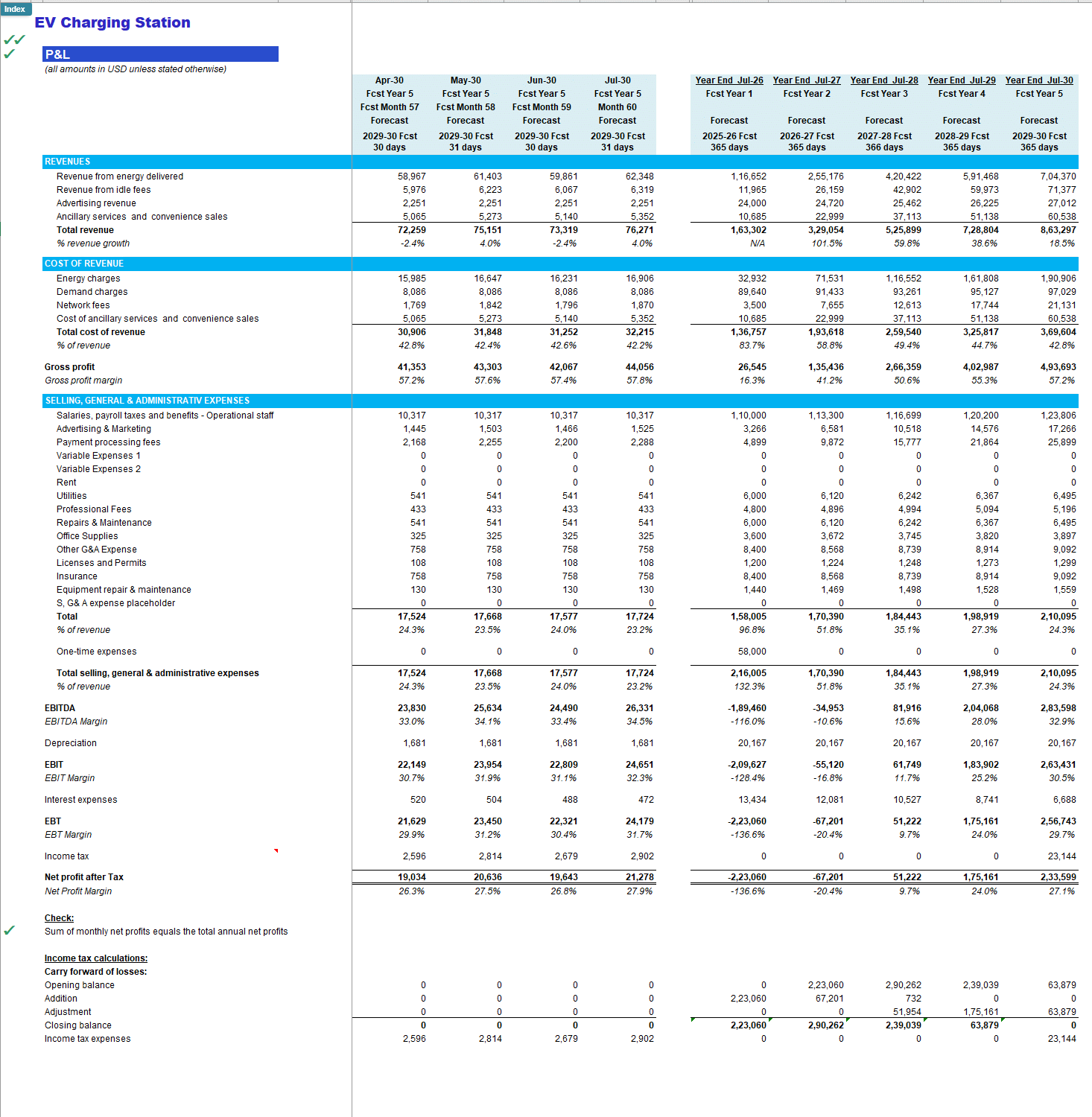
• Profit & Loss Statement
• Cash Flow Statement
• Balance Sheet
All statements update dynamically based on input assumptions.
5. Core Calculations
• Revenue and cost of revenue calculations.
• Utility energy charges, demand charges, and network/platform fees.
• Direct operating expenses and SG&A costs.
• Staffing costs, depreciation and interest calculations.
Technical Notes
• Fully transparent Excel model with no macros or VBA.
• Compatible with Excel 2010 and newer versions.
• Clear structure designed for ease of review and modification.
Why This Model Is Useful
This model is well suited for EV charging station owners, developers, and investors seeking a practical tool to evaluate station-level economics. It balances simplicity with analytical rigor, allowing users to understand how charger configuration, energy usage, and operating costs translate into profitability and cash flow over time.
Got a question about the product? Email us at support@flevy.com or ask the author directly by using the "Ask the Author a Question" form. If you cannot view the preview above this document description, go here to view the large preview instead.
Source: Best Practices in Electric Vehicle, Integrated Financial Model Excel: Electric Vehicle (EV) Charging Station Financial Model Excel (XLSX) Spreadsheet, ExcelFinModels
ABOUT THE AUTHOR

I am a finance professional with over 15 years of experience in financial modeling, analysis, planning, budgeting, and forecasting on various freelancing platforms. I have assisted over 500 start-ups and SMBs across diverse industries in securing over $1 billion in funding, internal planning, financial reporting, and strategy formulation. Additionally, I have provided services to numerous ... [read more]
Ask the Author a Question
You must be logged in to contact the author.




























