

 Click main image to view in full screen. Unlock all 22 preview images:
E-Methanol 300 ktpa Integrated Financial Model – Excel XLSX
Excel (XLSX) + supplemental PDF


BENEFITS OF THIS DOWNLOADABLE EXCEL DOCUMENT
- A defensible cost case built from first principles Capex is built up by plant island (energy, e-methanol synthesis and carbon capture) and phased over a four-year build. Opex is split into fixed, variable & feedstock costs over 25 operating years
- A full financial model ready for lenders and investment committees It includes: a full income statement, balance sheet, and direct and indirect cash flows; a real senior and shareholder debt schedule; a contractual cash waterfall; integrity checks
- Answers on value, cost and price in one workbook The model computes: the levelised cost of methanol, broken down by cost type; breakevens and single-and two-factor sensitivities; valuation by DCF, EV/EBITDA, comparable-company & precedent-transactions
CHEMICAL INDUSTRY EXCEL DESCRIPTION
The e-Methanol 300 ktpa Integrated Financial Model is a fully built, formula-driven, 30-year project finance model for a green e-methanol production facility – renewable power, electrolysis to green hydrogen, biogenic CO2 capture, and synthesis to 300,000 tonnes per year of e-methanol. It takes a project from a bottom-up technical and cost feasibility build through financing, full three-statement accounting, and a complete valuation and levelised-cost suite.
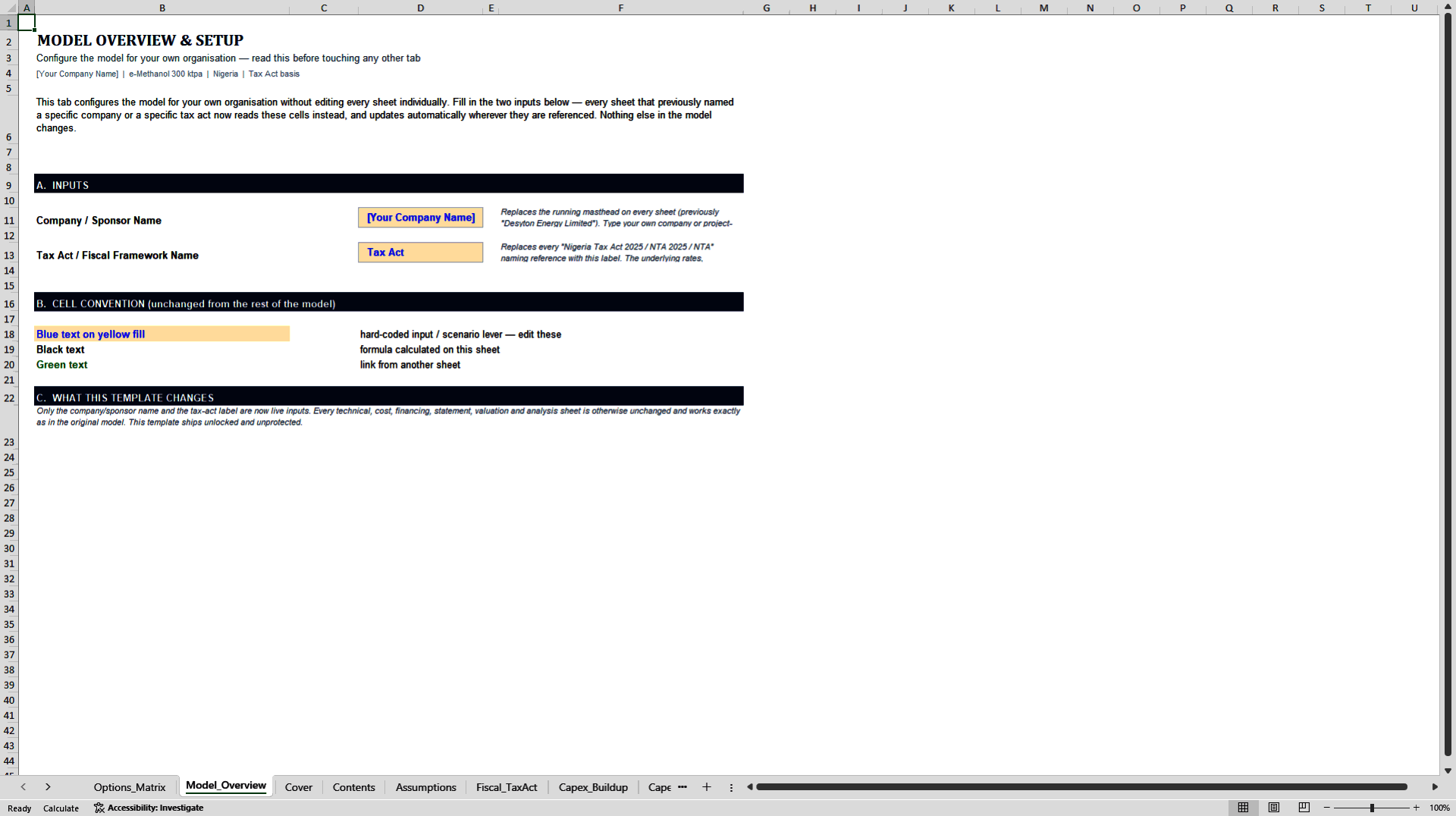
It was built on Desyton's own benchmark reading of the e-methanol value chain and has been genericised for resale: the running masthead that identifies whose project the model belongs to, and every reference to the specific tax act naming, are now live formulas. Enter your own company name and fiscal framework once on the Model Overview tab and the whole model – all 37 sheets – relabels itself instantly.
Who It's For
Project sponsors and developers screening a green methanol, e-fuels or power-to-X opportunity who need a defensible, first-principles capex/opex build rather than a rule-of-thumb cost estimate.
Corporate finance and treasury teams who need a bankable-grade financial model – full statements, a real debt schedule, and covenant-style checks – to take into a lender or investment-committee discussion.
Advisory and consulting practices who want a proven, resaleable modelling asset for energy-transition mandates that they can relabel for each client engagement in minutes.
Why It's Different
Genuinely reusable. A single Model Overview tab drives two live named inputs – Company/Sponsor Name and Tax Act/Fiscal Framework Name – that every one of the model's 37 sheets references by formula. Relabelling the entire model takes two keystrokes.
Built bottom-up, not benchmarked top-down. Capital cost is built by plant island (energy, e-methanol synthesis, carbon capture) and phased across a four-year construction programme; operating cost is built fixed, variable and feedstock, then phased across 25 operating years – not a single per-tonne rule of thumb.
Three depreciation methods, one live switch. Straight-line, double-declining-balance and unit-of-capacity schedules are all built out in full, with a single switch feeding whichever policy is selected through to the tax and statement build.
A full accounting build, not just a cash flow. Income statement, balance sheet, and both direct and indirect cash flow statements are built out in full, each checked against the others – the balance sheet, the sources-and-uses, and the two cash flow methods must all tie, and the model verifies this itself on every recalculation.
A genuine levelised-cost and valuation suite. Levelised cost of methanol with a full cost-family decomposition (and a treemap view), breakeven by variable and by opportunity, single- and two-factor sensitivities, and DCF, EV/EBITDA, comparable-company and precedent-transaction valuation are all built in, alongside a financed-versus-unfinanced comparison that isolates the value financing itself adds.
The Walkthrough – What's on Every Tab
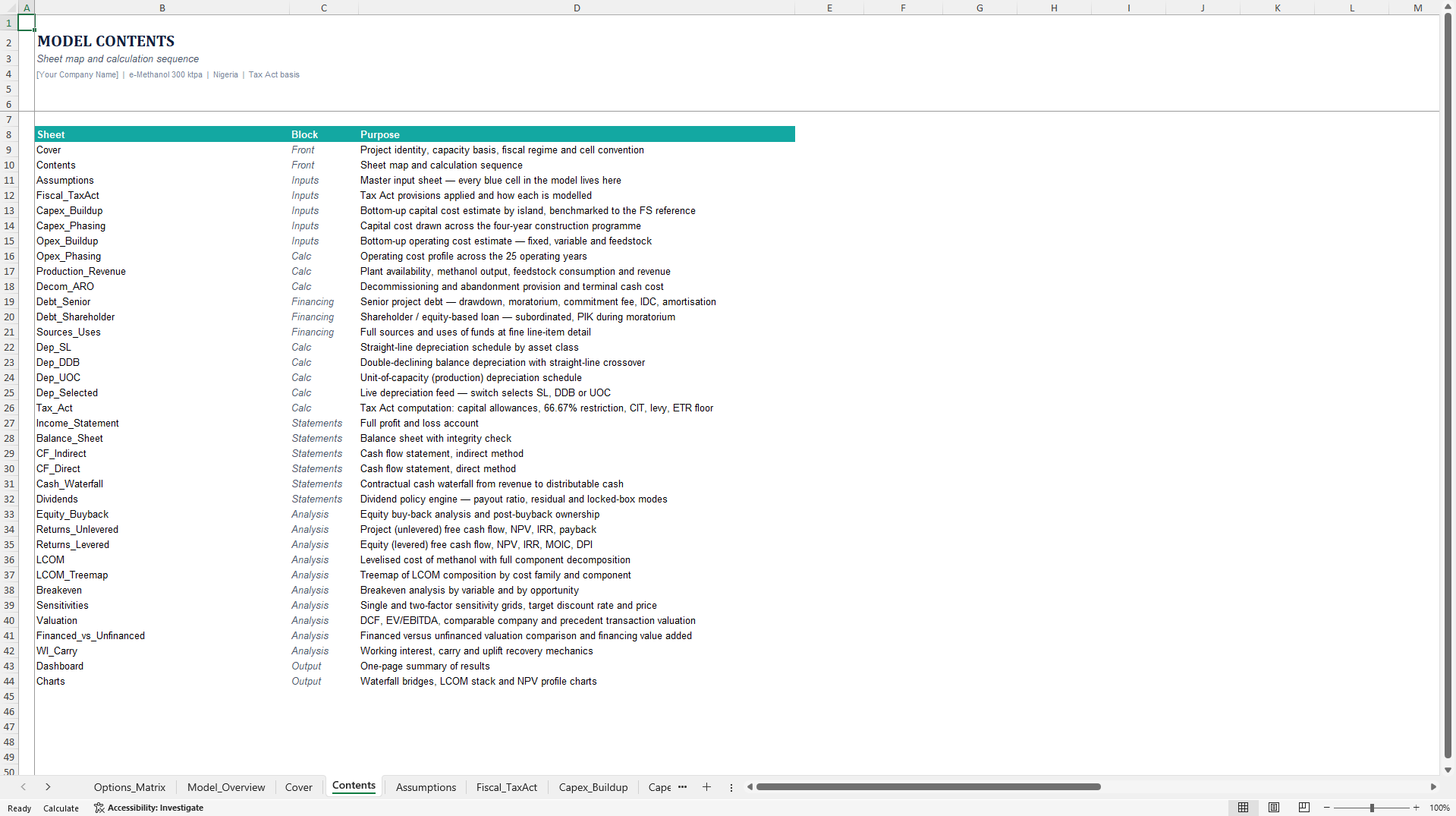
The model runs in a logical sequence: configure it for your organisation, set the technical and cost assumptions, build the fiscal and financing layer, flow everything through a full statement pack, then analyse returns, value and cost – with an executive dashboard drawing every headline number together on one page.
1. Foundation & Setup
Options Matrix – the tab you are reading a copy of right now inside the workbook itself, showing what is included at every licence tier and which edition the current file is.
Model Overview – the model's control panel. Two live inputs – Company/Sponsor Name and Tax Act/Fiscal Framework Name – drive every downstream reference in the workbook, alongside the same colour-convention key used throughout (blue-on-yellow for inputs, black for formulas, green for cross-sheet links).
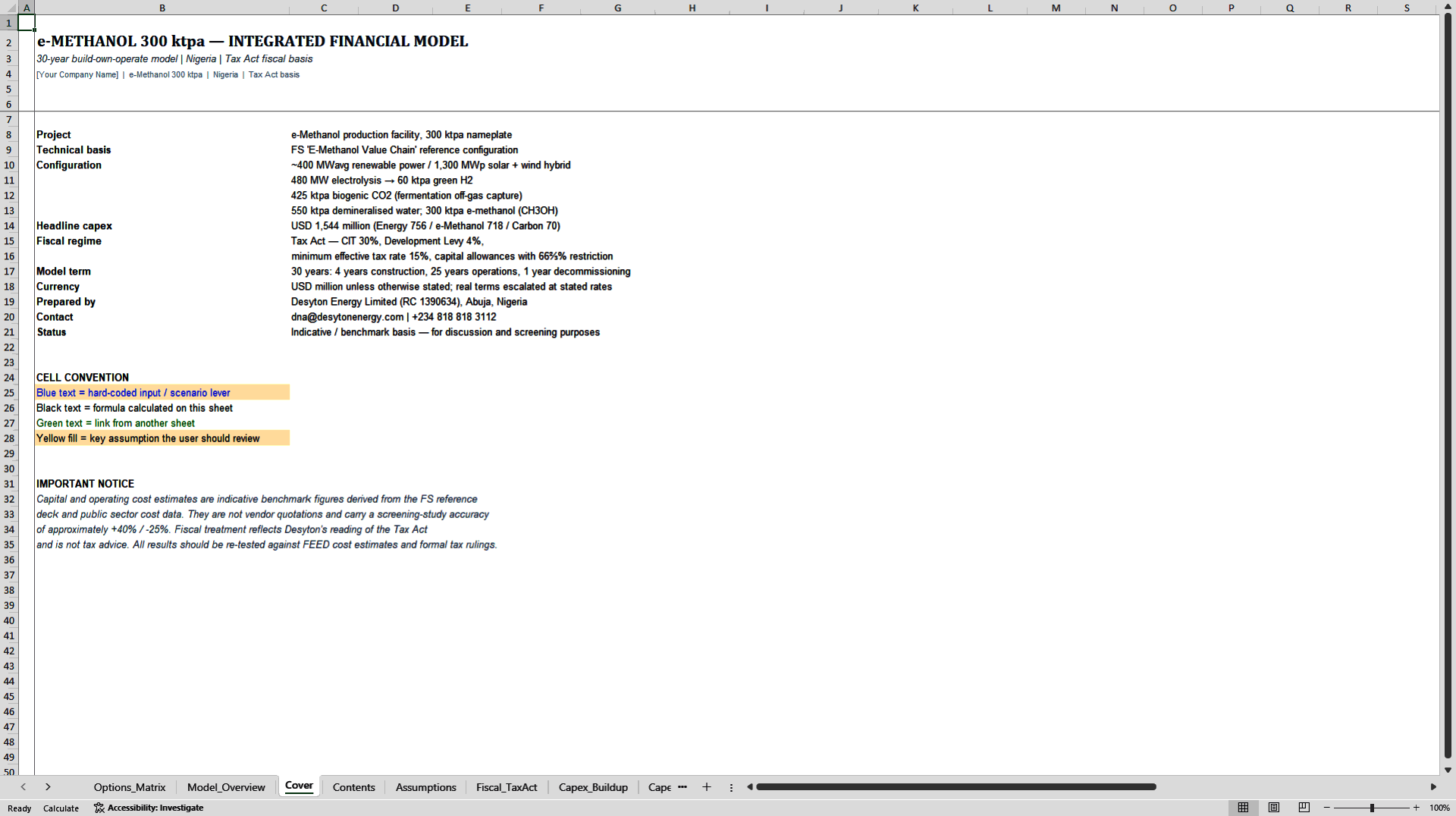
Cover & Contents – a one-page project identity card (capacity, configuration, headline capex, fiscal regime, model term) and a full sheet map showing every tab, its block, and its purpose – the fastest way to orient a new reader.
2. Technical & Cost Feasibility
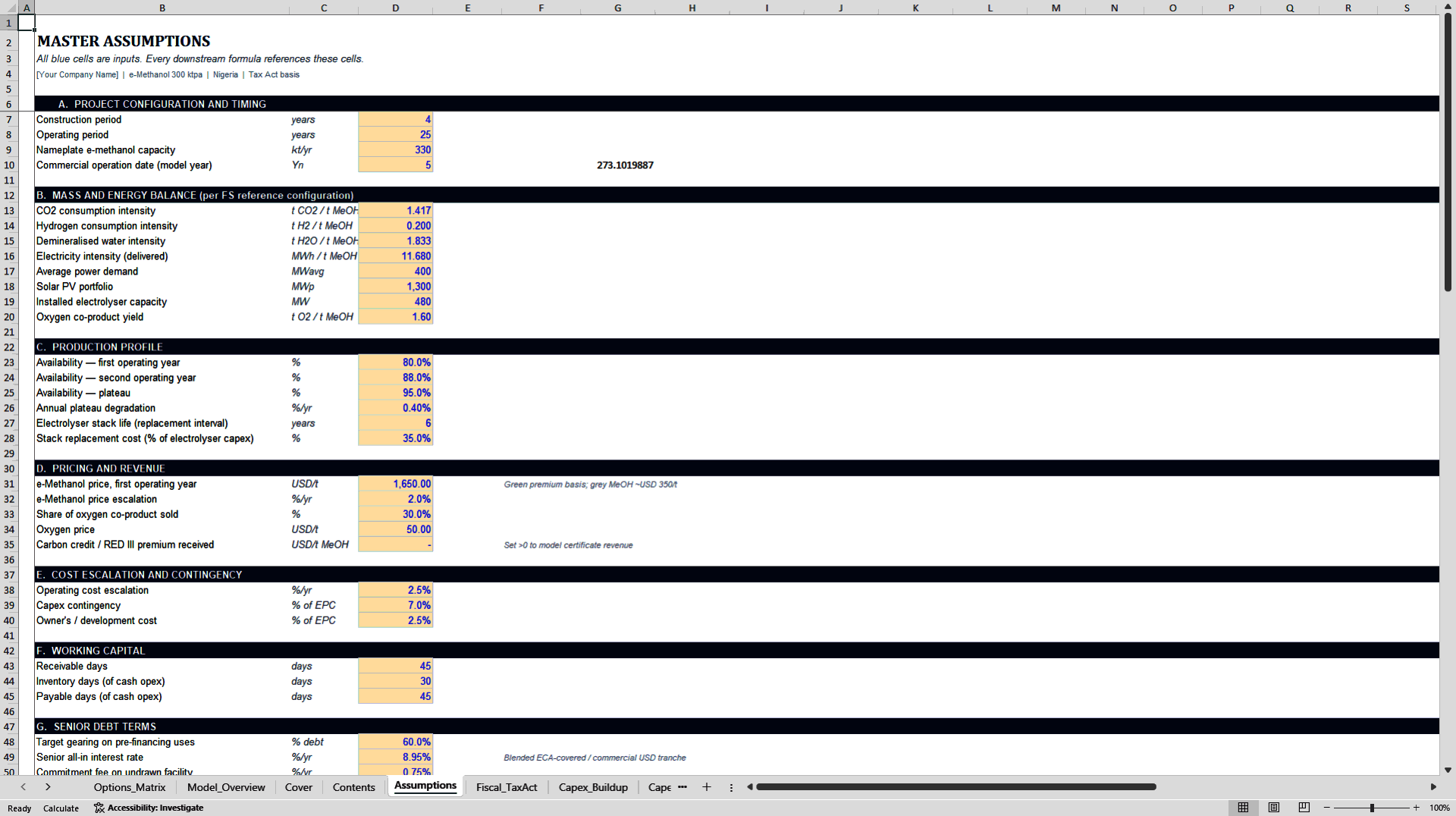
Assumptions – the model's single master input register: project configuration and timing, mass and energy balance, capex and opex bases, fiscal parameters, financing terms, dividend and buy-back policy, and the working-interest/carry/uplift levers – every blue cell in the entire model lives on this one sheet.
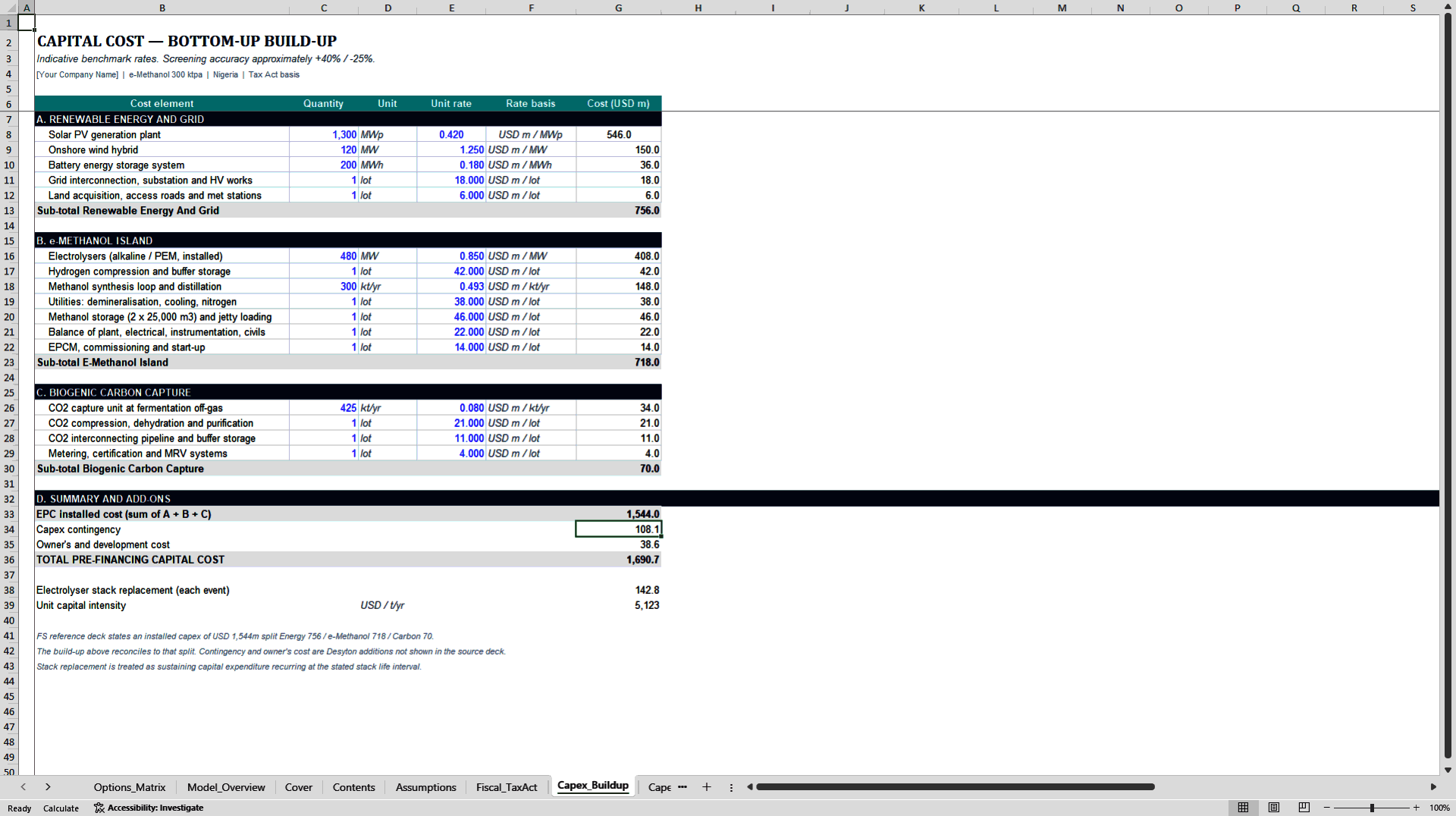
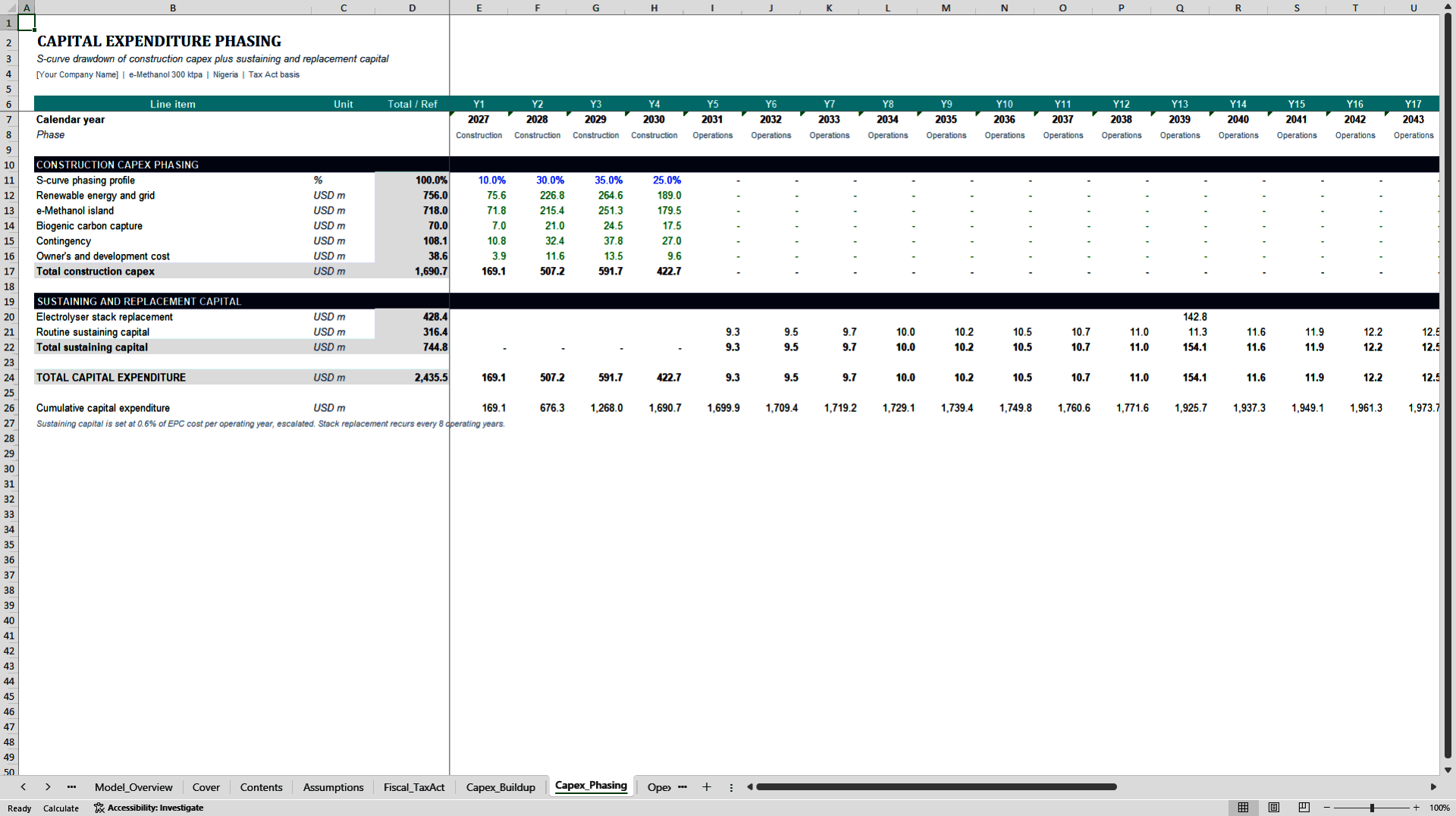
Capex Build-Up & Phasing – a bottom-up capital cost estimate by plant island (energy, e-methanol synthesis, carbon capture), benchmarked to the underlying reference configuration, then phased across the four-year construction programme.
Opex Build-Up & Phasing – a bottom-up operating cost estimate split fixed, variable and feedstock, phased across the 25 operating years.
Production & Revenue, Decommissioning/ARO – plant availability, methanol output, feedstock consumption and revenue on one tab; the decommissioning and abandonment provision and terminal cash cost on the other.
3. Fiscal & Financing (Full Model tier and above)
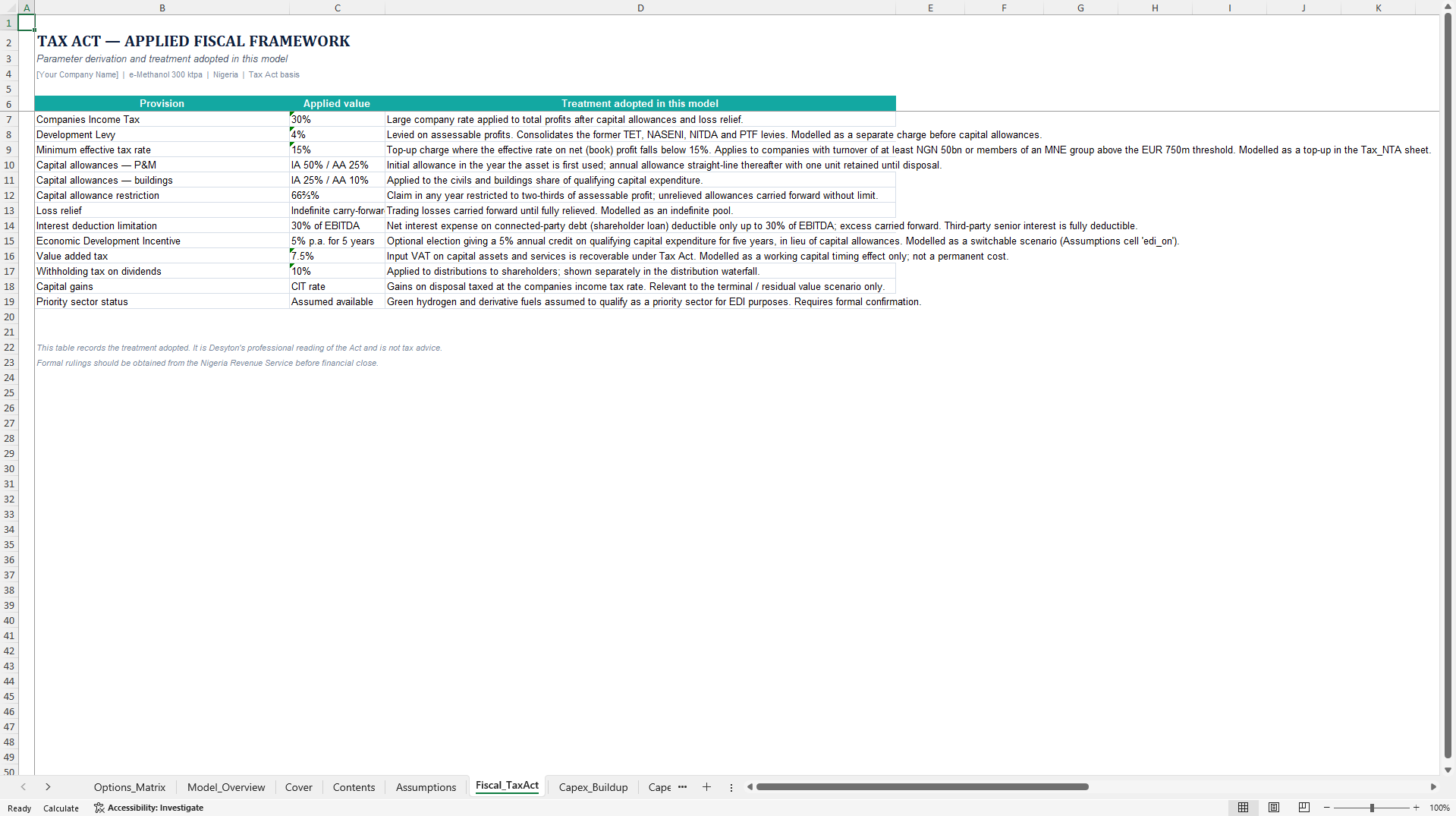
Fiscal Framework & Tax Computation – a documentation tab recording exactly how the applicable tax act's provisions are modelled, and a full computation tab covering capital allowances, the connected-party interest restriction, companies income tax, the development levy, and the minimum effective tax rate floor.
Debt (Senior & Shareholder) and Sources & Uses – a full senior project debt schedule (drawdown, moratorium, commitment fee, interest during construction, amortisation), a subordinated shareholder/equity-based loan, and a complete sources-and-uses of funds at fine line-item detail.
Depreciation Suite – straight-line, double-declining-balance and unit-of-capacity schedules built out in full, with a live switch selecting which policy feeds the tax and statement build.
4. Full Financial Statements (Full Model tier and above)
Income Statement, Balance Sheet, Cash Flow (Direct & Indirect) – the complete accounting build, with the balance sheet carrying its own integrity check and both cash flow methods checked against each other.
Cash Waterfall, Dividends, Equity Buy-Back – the contractual cash waterfall from revenue to distributable cash, a dividend policy engine (payout ratio, residual and locked-box modes), and equity buy-back analysis with post-buyback ownership.
5. Returns, Valuation & Analysis (Full Model tier and above)
Returns (Unlevered & Levered) – project free cash flow with NPV, IRR and payback; equity free cash flow with NPV, IRR, multiple on invested capital and DPI.
Levelised Cost of Methanol & Treemap – a full cost-family decomposition of the levelised cost, with a treemap view of its composition.
Breakeven, Sensitivities, Valuation, Financed vs Unfinanced – breakeven by variable and by opportunity; single- and two-factor sensitivity grids with a target discount rate and price solver; DCF, EV/EBITDA, comparable-company and precedent-transaction valuation; and a financed-versus-unfinanced comparison isolating the value financing adds.
Executive Dashboard & Charts – a one-page summary of every headline technical, financial and return metric, with a built-in model integrity check block confirming the balance sheet balances, sources equal uses, both cash flow methods reconcile, minimum cash never goes negative, senior debt is fully repaid by maturity, and the decommissioning provision is fully settled.
6. Structuring Tools (Plus tier only)
Working Interest, Carry & Uplift – a full participation-structuring analysis: sponsor and partner working interest, capital contributions with a carry advanced by the partner against the sponsor's capital share, carry recovery with an uplift multiple, and participant-level net cash flow, IRR and multiple on invested capital for both sides.
Scenario Register – because the model holds one live set of Assumptions at a time, this tab gives you a place to log and compare alternative structuring cases by hand – a live snapshot row that always reflects the current Assumptions and Working Interest/Carry sheets, plus ten blank rows to record scenarios as you test them.
Options Matrix – Choose Your Edition
Every edition ships unlocked and unprotected, with this Options Matrix tab built into the workbook and five business days of email support included. Upgrading to a higher tier at any time is charged only the difference between the two licence prices – the workbook does not need to be rebuilt.
Got a question about the product? Email us at support@flevy.com or ask the author directly by using the "Ask the Author a Question" form. If you cannot view the preview above this document description, go here to view the large preview instead.
Source: Best Practices in Chemical Industry, Integrated Financial Model Excel: E-Methanol 300 ktpa Integrated Financial Model Excel (XLSX) Spreadsheet, Desyton Energy Advisors
ABOUT THE AUTHOR

Desyton Energy Advisory is a strategic research & consulting firm providing a vast pool of services to our client base. We resolve our client's toughest challenges by providing services in strategy/advisory, business consulting, research & corporate planning. We are one of the leading strategic research services providers of professional services in Oil / Gas and Petrochemical Advisory ... [read more]
Ask the Author a Question
You must be logged in to contact the author.




























