
 Click main image to view in full screen. Unlock all 19 preview images:
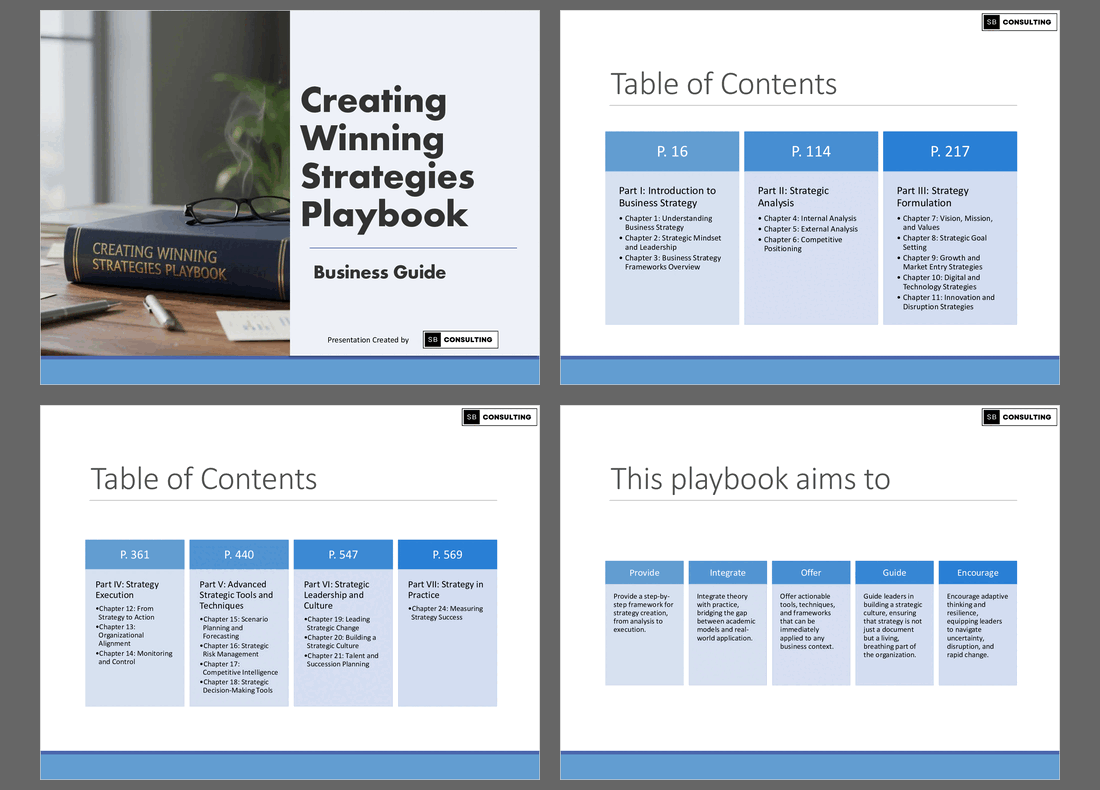
Creating Winning Strategies Playbook – PowerPoint PPTX Template
PowerPoint (PPTX) 621 Slides


BENEFITS OF THIS DOWNLOADABLE POWERPOINT DOCUMENT
- Provides a structured framework for designing and executing winning business strategies tailored to your organization.
- Delivers proven strategic tools to analyze markets, outmaneuver competitors, and build sustainable competitive advantage.
- Enables leaders to translate vision into measurable goals, actionable plans, and consistent execution across the organization.
STRATEGY DEVELOPMENT PPT TEMPLATE DESCRIPTION
Curated by McKinsey-trained Executives
Stop guessing. Stop reacting. Start winning—on purpose.
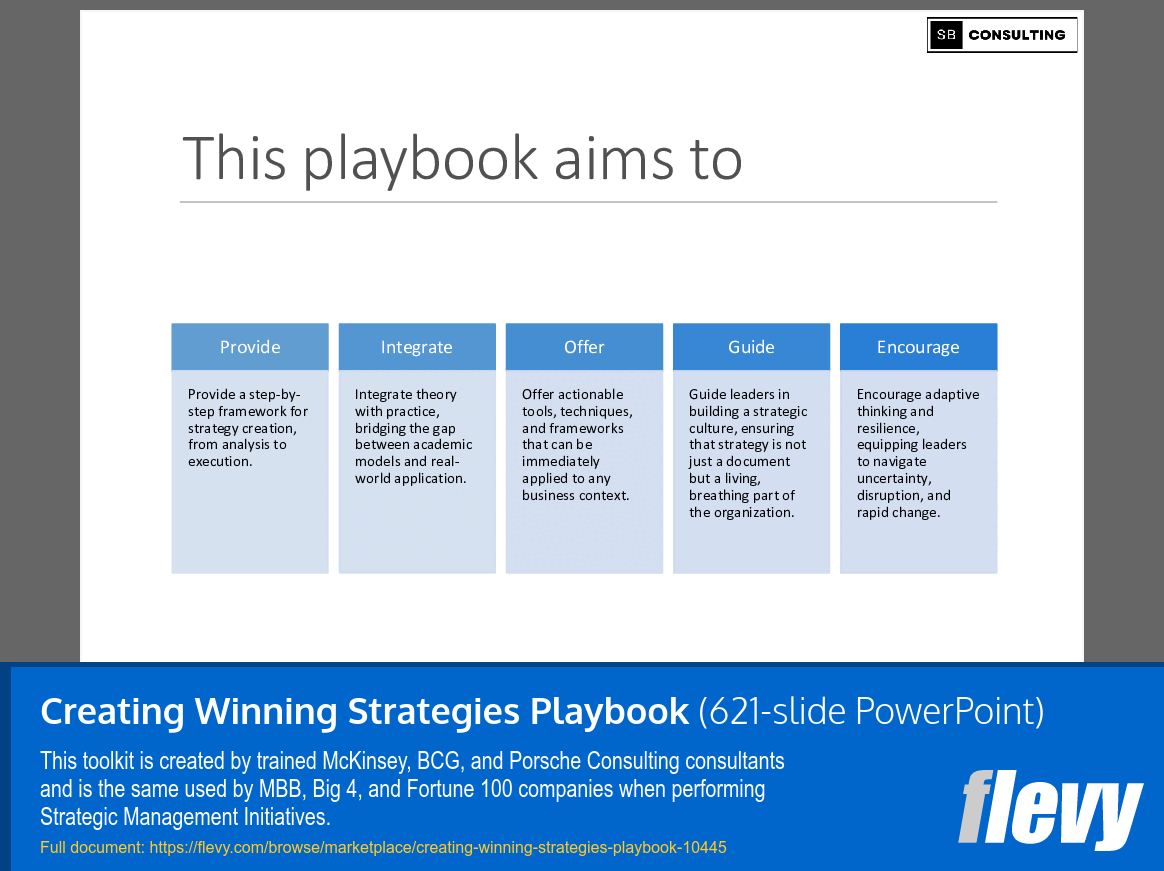
The Ultimate Creating Winning Strategies Playbook is not another fluffy business presentation. It's a 600+ slide, battle-tested PowerPoint deck designed to turn ambition into execution and ideas into measurable dominance. This is a complete strategic operating system for founders, executives, consultants, and high-performing teams who are done playing small.
If you're serious about business strategy, competitive advantage, growth planning, digital transformation, innovation, and execution, this playbook gives you the unfair advantage you've been looking for.
Why this strategy playbook crushes everything else
Most strategy resources explain *what* strategy is. This playbook shows you how to build it, pressure-test it, execute it, measure it, and adapt it—step by step. Every slide is designed to be actionable, visual, and decision-driven, making it perfect for boardrooms, leadership workshops, consulting engagements, and internal strategy sessions.
You'll learn how to:
• Think like elite strategists and top executives
• Analyze markets, competitors, customers, and internal capabilities with precision
• Design winning strategies that actually fit real-world constraints
• Turn vision into aligned goals, KPIs, and execution plans
• Outmaneuver competitors, manage risk, and lead through uncertainty
• Build a culture where strategy isn't a document—it's how decisions are made
Built for speed, clarity, and real results
This isn't theory trapped in text. The PowerPoint format means you can present, customize, teach, sell, or deploy instantly. Use it to:
• Run strategy offsites and leadership retreats
• Create investor-ready strategic narratives
• Train managers and future leaders
• Support consulting projects and client deliverables
• Align teams across growth, innovation, operations, and digital initiatives
Aggressively practical. Strategically deep.
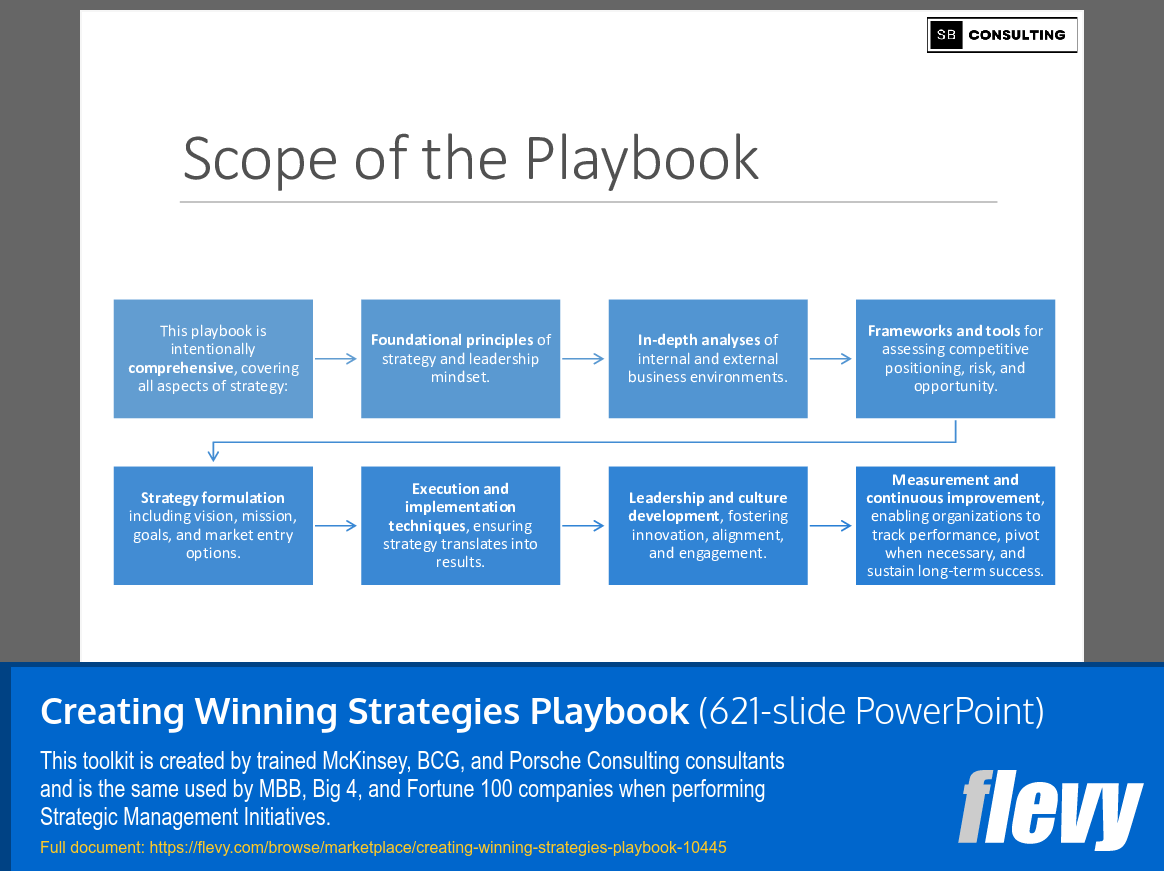
From high-level strategic thinking to advanced decision models, from growth and innovation to execution and performance tracking—this playbook connects every strategic dot. It's designed for organizations that want clarity, control, and sustained competitive advantage, not buzzwords.
Who this is for
• Founders scaling fast and needing structure
• CEOs and executives driving transformation
• Strategy, consulting, and advisory professionals
• Managers who want to think and act strategically
• Teams tired of strategies that never get executed
CONTENT OVERVIEW:
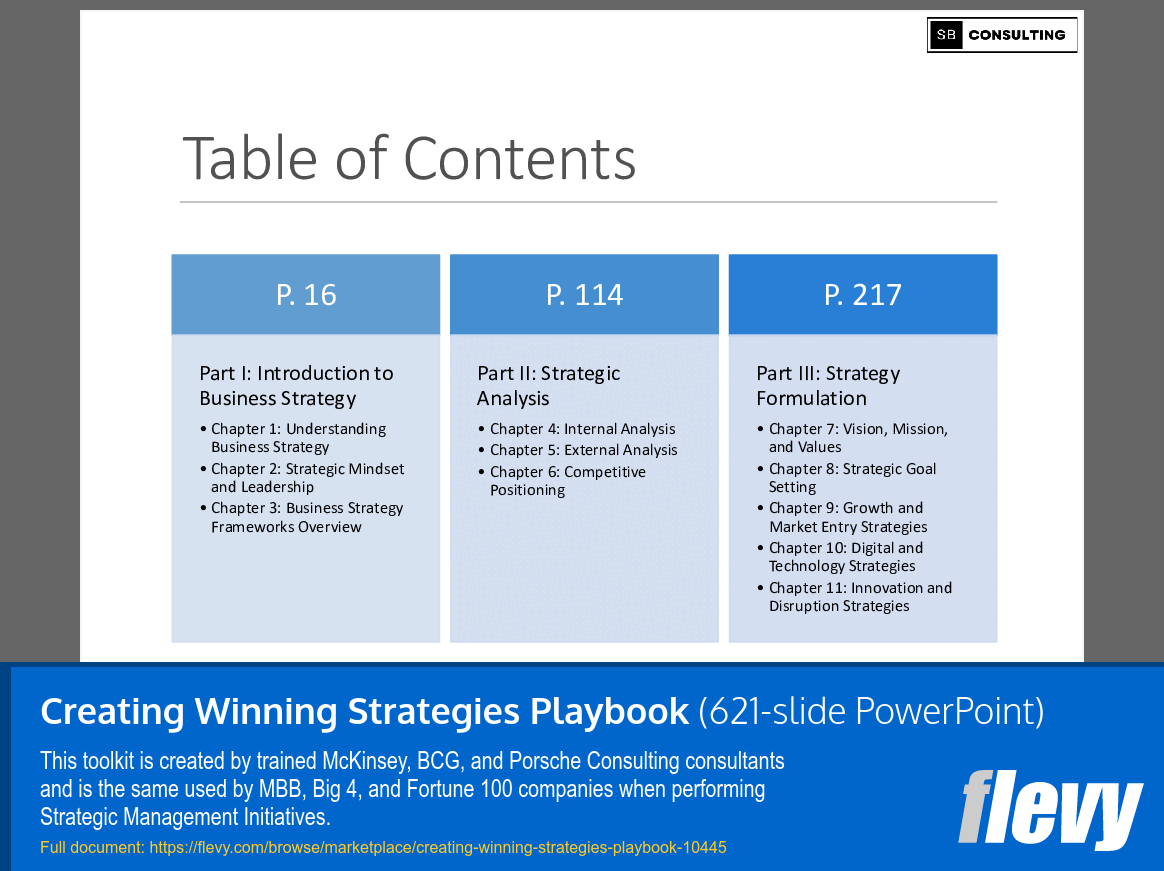
Part I: Introduction to Business Strategy
Chapter 1: Understanding Business Strategy
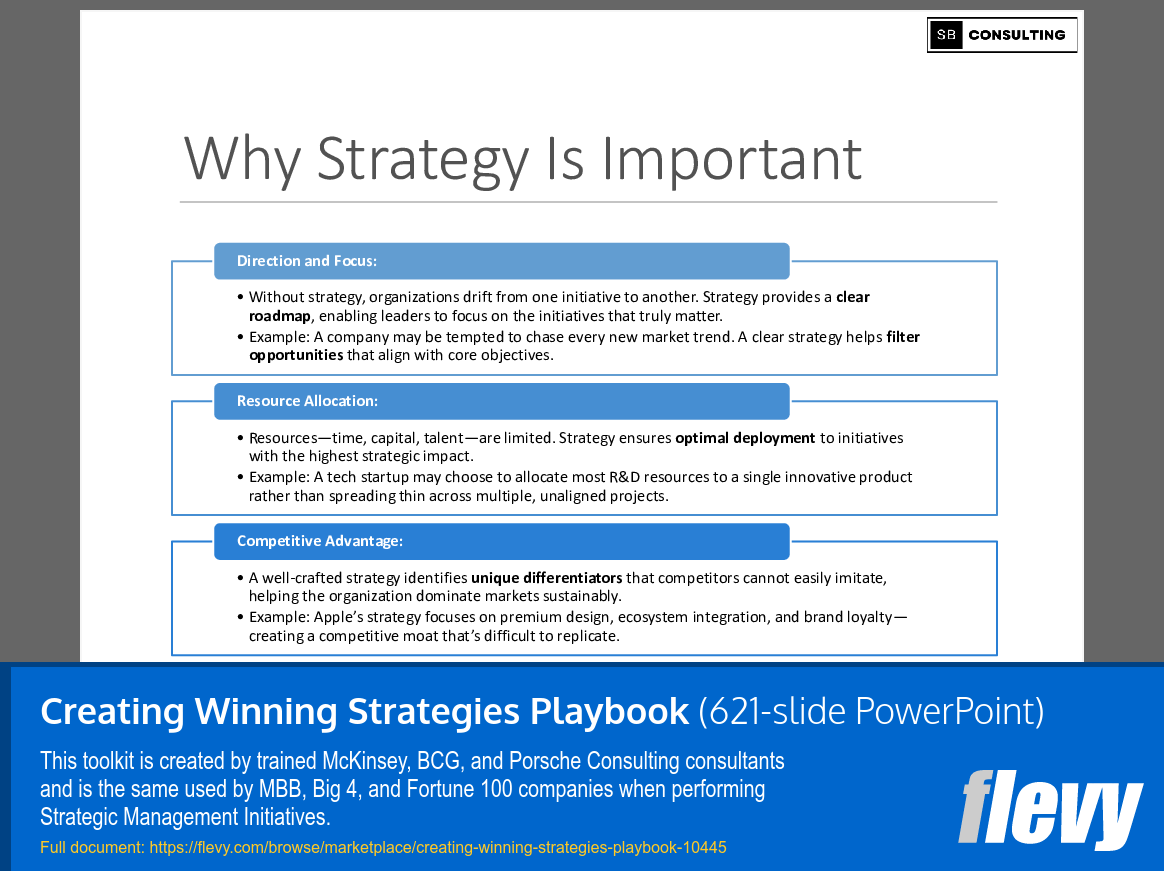
1.1 Definition and Importance of Strategy
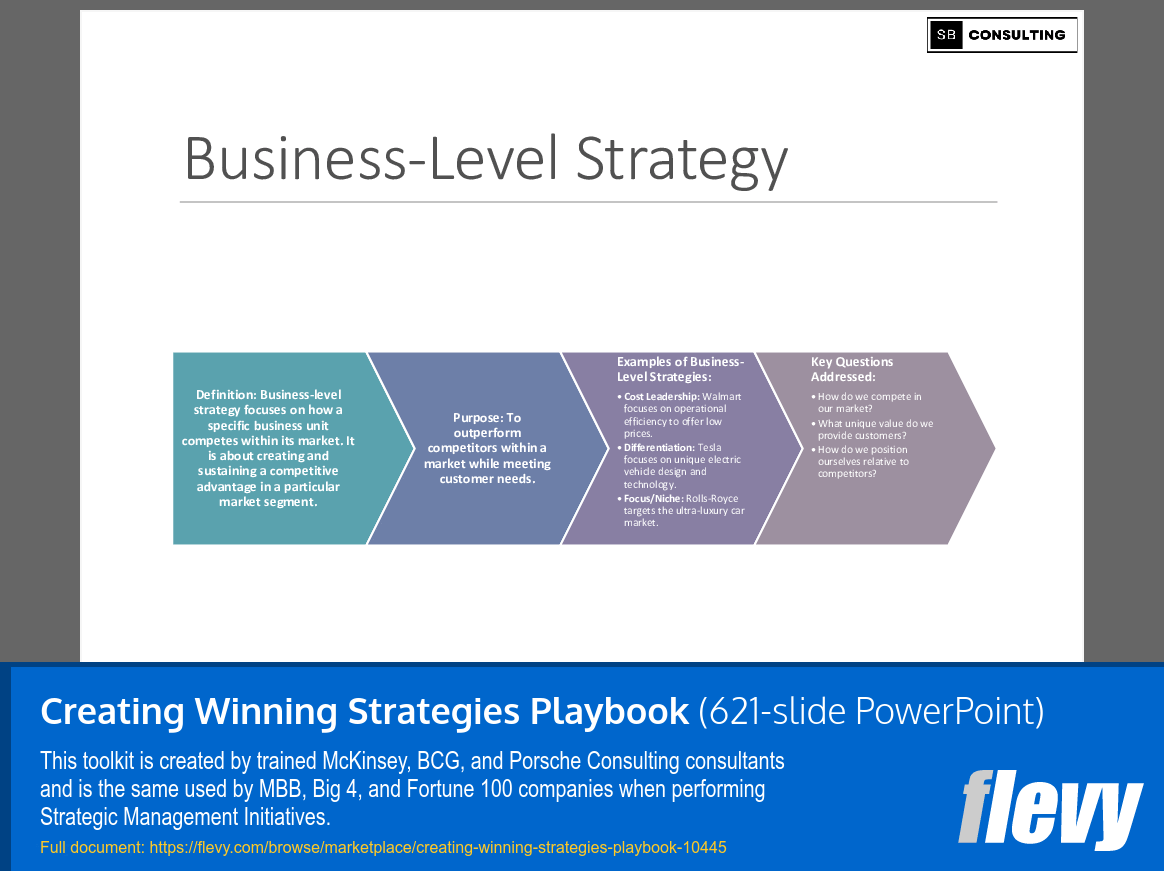
1.2 Types of Business Strategies (Corporate, Business Unit, Functional)
1.3 Common Misconceptions About Strategy
1.4 Strategy vs. Tactics vs. Operational Plans
1.5 Key Strategic Principles for Long-Term Success
Chapter 2: Strategic Mindset and Leadership
2.1 The Role of Leadership in Strategy
2.2 Developing a Strategic Mindset
2.3 Decision-Making Models for Executives
2.4 Psychological Biases in Strategic Thinking
2.5 Cultivating a Culture of Strategic Innovation
Chapter 3: Business Strategy Frameworks Overview
3.1 SWOT Analysis: Strengths, Weaknesses, Opportunities, Threats
3.2 PESTEL Analysis: Political, Economic, Social, Technological, Environmental, Legal Factors
3.3 Porter's Five Forces
3.4 Blue Ocean Strategy
3.5 Balanced Scorecard
3.6 Value Chain Analysis
3.7 Core Competency Model
3.8 VRIO Framework
3.9 Scenario Planning
Part II: Strategic Analysis
Chapter 4: Internal Analysis
4.1 Evaluating Organizational Strengths and Weaknesses
4.2 Assessing Resources and Capabilities
4.3 Organizational Culture and Its Impact on Strategy
4.4 Internal Process Audits
4.5 Financial Health and Strategic Implications
4.6 Talent and Human Capital Assessment
4.7 Technology and Digital Readiness
Chapter 5: External Analysis
5.1 Market Dynamics and Industry Trends
5.2 Competitor Analysis
5.3 Customer Behavior and Segmentation
5.4 Macro-Economic Factors
5.5 Regulatory and Legal Considerations
5.6 Technological Disruptions and Opportunities
5.7 Environmental and Social Factors
Chapter 6: Competitive Positioning
6.1 Differentiation vs. Cost Leadership
6.2 Niche Strategies
6.3 Strategic Group Mapping
6.4 Identifying Competitive Advantage
6.5 Sustaining Competitive Advantage Over Time
Part III: Strategy Formulation
Chapter 7: Vision, Mission, and Values
7.1 Crafting a Clear and Inspiring Vision Statement
7.2 Mission Statements that Guide Strategy
7.3 Aligning Core Values with Strategic Objectives
7.4 Communicating Vision and Mission Across the Organization
Chapter 8: Strategic Goal Setting
8.1 Setting SMART Goals
8.2 Long-Term vs. Short-Term Objectives
8.3 Prioritizing Strategic Initiatives
8.4 Linking KPIs to Strategic Goals
8.5 Cascading Goals Through the Organization
Chapter 9: Growth and Market Entry Strategies
9.1 Organic Growth vs. Inorganic Growth
9.2 Market Penetration Strategies
9.3 Product Development and Innovation
9.4 Market Development and Expansion
9.5 Diversification Strategies
9.6 Strategic Alliances, Partnerships, and Joint Ventures
9.7 Mergers and Acquisitions
Chapter 10: Digital and Technology Strategies
10.1 Digital Transformation Strategies
10.2 Technology Adoption and Integration
10.3 Data-Driven Strategic Decision Making
10.4 Artificial Intelligence and Automation in Business Strategy
10.5 Cybersecurity Considerations in Strategic Planning
Chapter 11: Innovation and Disruption Strategies
11.1 Identifying Innovation Opportunities
11.2 Sustaining vs. Disruptive Innovation
11.3 Design Thinking for Strategy
11.4 Lean Startup Principles for Business Strategy
11.5 Creating a Culture of Continuous Innovation
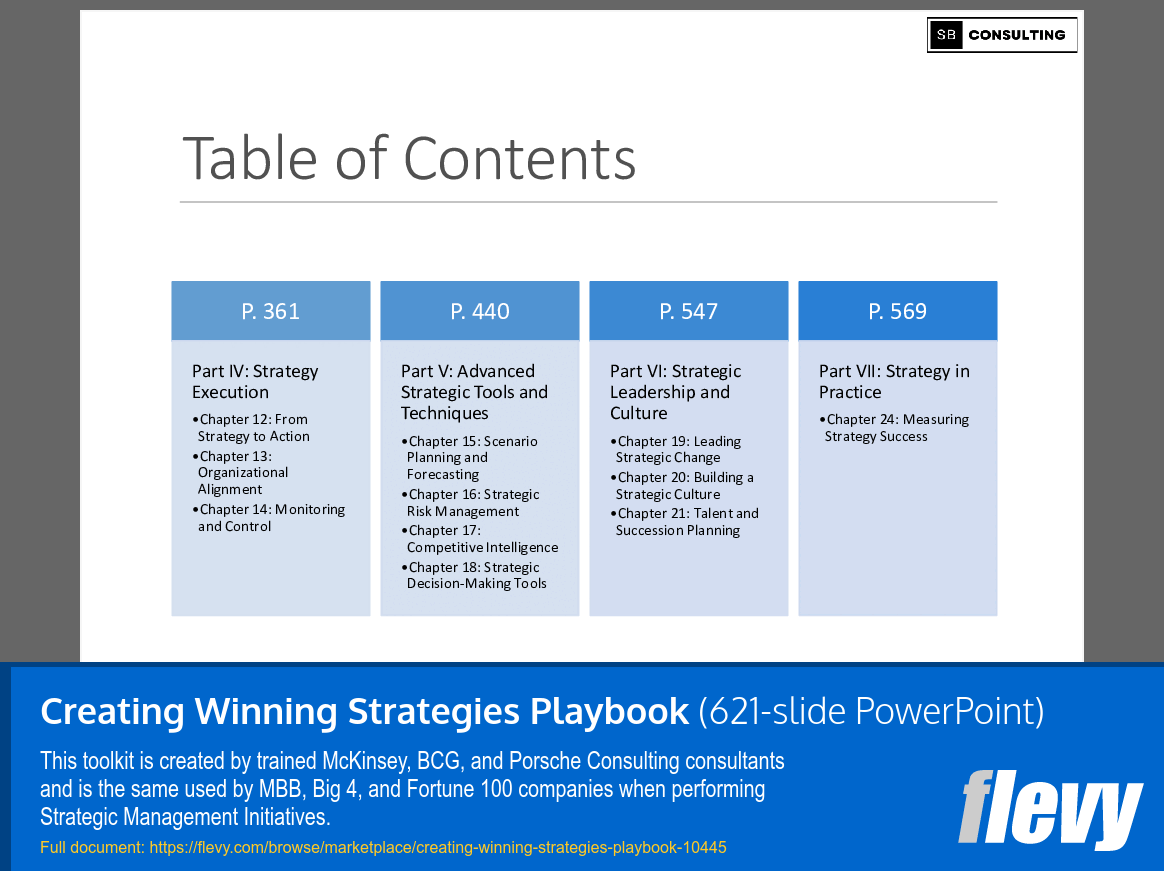
Part IV: Strategy Execution
Chapter 12: From Strategy to Action
12.1 Translating Strategy into Operational Plans
12.2 Resource Allocation and Budgeting
12.3 Project Management Principles for Strategy Execution
12.4 Cross-Functional Collaboration
12.5 Risk Assessment and Contingency Planning
Chapter 13: Organizational Alignment
13.1 Aligning Structure with Strategy
13.2 Performance Management Systems
13.3 Incentives and Compensation Alignment
13.4 Communication Strategies for Organizational Buy-In
13.5 Change Management for Strategic Initiatives
Chapter 14: Monitoring and Control
14.1 Establishing Key Performance Indicators (KPIs)
14.2 Balanced Scorecard Implementation
14.3 Real-Time Strategic Dashboards
14.4 Regular Strategic Reviews and Audits
14.5 Pivoting and Adjusting Strategy Based on Feedback
Part V: Advanced Strategic Tools and Techniques
Chapter 15: Scenario Planning and Forecasting
15.1 Identifying Key Drivers of Change
15.2 Developing Multiple Future Scenarios
15.3 Stress-Testing Strategies Against Scenarios
15.4 Using Predictive Analytics for Strategic Forecasting
Chapter 16: Strategic Risk Management
16.1 Types of Strategic Risks
16.2 Risk Assessment Frameworks
16.3 Mitigation Strategies
16.4 Strategic Contingency Planning
16.5 Crisis Management and Recovery
Chapter 17: Competitive Intelligence
17.1 Gathering and Analyzing Market Intelligence
17.2 Benchmarking Best Practices
17.3 Strategic Threat Analysis
17.4 Ethical Considerations in Competitive Intelligence
Chapter 18: Strategic Decision-Making Tools
18.1 Decision Trees and Analytical Models
18.2 Cost-Benefit Analysis
18.3 Game Theory Applications in Strategy
18.4 Multi-Criteria Decision Analysis
18.5 Scenario Simulations and Modeling
Part VI: Strategic Leadership and Culture
Chapter 19: Leading Strategic Change
19.1 Transformational Leadership for Strategy
19.2 Communicating Strategic Vision
19.3 Motivating Teams for Strategic Goals
19.4 Leading Through Uncertainty
Chapter 20: Building a Strategic Culture
20.1 Embedding Strategy into Organizational DNA
20.2 Encouraging Innovation and Experimentation
20.3 Learning Organizations and Knowledge Management
20.4 Ethical Considerations in Strategic Leadership
Chapter 21: Talent and Succession Planning
21.1 Strategic Human Capital Planning
21.2 Identifying and Developing Future Leaders
21.3 Aligning Employee Goals with Organizational Strategy
21.4 Training and Development for Strategic Competency
Part VII: Strategy in Practice
Chapter 24: Measuring Strategy Success
24.1 Quantitative vs. Qualitative Metrics
24.2 ROI on Strategic Initiatives
24.3 Customer and Market Feedback as Success Indicators
24.4 Continuous Improvement Loops
Bottom line
If you want better decisions, stronger positioning, faster execution, and long-term success, this is not optional—it's essential.
The Ultimate Creating Winning Strategies Playbook is your shortcut to elite-level strategy without years of trial and error.
Download it, deploy it, and start winning by design—not by luck.
Key Words:
Strategy & Transformation, Growth Strategy, Strategic Planning, Strategy Frameworks, Innovation Management, Pricing Strategy, Core Competencies, Strategy Development, Business Transformation, Marketing Plan Development, Product Strategy, Breakout Strategy, Competitive Advantage, Mission, Vision, Values, Strategy Deployment & Execution, Innovation, Vision Statement, Core Competencies Analysis, Corporate Strategy, Product Launch Strategy, BMI, Blue Ocean Strategy, Breakthrough Strategy, Business Model Innovation, Business Strategy Example, Corporate Transformation, Critical Success Factors, Customer Segmentation, Customer Value Proposition, Distinctive Capabilities, Enterprise Performance Management, KPI, Key Performance Indicators, Market Analysis, Market Entry Example, Market Entry Plan, Market Intelligence, Market Research, Market Segmentation, Market Sizing, Marketing, Michael Porter's Value Chain, Organizational Transformation, Performance Management, Performance Measurement, Platform Strategy, Product Go-to-Market Strategy, Reorganization, Restructuring, SWOT, SWOT Analysis, Service 4.0, Service Strategy, Service Transformation, Strategic Analysis, Strategic Plan Example, Strategy Deployment, Strategy Execution, Strategy Frameworks Compilation, Strategy Methodologies, Strategy Report Example, Value Chain, Value Chain Analysis, Value Innovation, Value Proposition, Vision Statement, Corporate Strategy, Business Development, Business plan pdf, business plan, PDF, Business Plan DOC, Business Plan Template, PPT, Market strategy playbook, strategic market planning, competitive analysis tools, market segmentation frameworks, growth strategy templates, product positioning strategy, market execution toolkit, strategic alignment playbook, KPI and OKR frameworks, business growth strategy guide, cross-functional strategy templates, market risk management, market strategy PowerPoint dec, guide, ebook, e-book ,McKinsey Change Playbook, Organizational change management toolkit, Change management frameworks 2025, Influence model for change, Change leadership strategies, Behavioral change in organizations, Change management PowerPoint templates, Transformational leadership in change, supply chain KPIs, supply chain KPI toolkit, supply chain PowerPoint template, logistics KPIs, procurement KPIs, inventory management KPIs, supply chain performance metrics, manufacturing KPIs, supply chain dashboard, supply chain strategy KPIs, reverse logistics KPIs, sustainability KPIs in supply chain, financial supply chain KPIs, warehouse KPIs, digital supply chain KPIs, 1200 KPIs, supply chain scorecard, KPI examples, supply chain templates, Corporate Finance SOPs, Finance SOP Excel Template, CFO Toolkit, Finance Department Procedures, Financial Planning SOPs, Treasury SOPs, Accounts Payable SOPs, Accounts Receivable SOPs, General Ledger SOPs, Accounting Policies Template, Internal Controls SOPs, Finance Process Standardization, Finance Operating Procedures, Finance Department Excel Template, FP&A Process Documentation, Corporate Finance Template, Finance SOP Toolkit, CFO Process Templates, Accounting SOP Package, Tax Compliance SOPs, Financial Risk Management Procedures.
NOTE: Our digital products are sold on an "as is" basis, making returns and refunds unavailable post-download. Please preview and inquire before purchasing. Please contact us before purchasing if you have any questions! This policy aligns with the standard Flevy Terms of Usage.
Got a question about the product? Email us at support@flevy.com or ask the author directly by using the "Ask the Author a Question" form. If you cannot view the preview above this document description, go here to view the large preview instead.
Source: Best Practices in Strategy Development PowerPoint Slides: Creating Winning Strategies Playbook PowerPoint (PPTX) Presentation Slide Deck, SB Consulting
ABOUT THE AUTHOR

SB Consulting is dedicated to empowering businesses to communicate their ideas with impact. This consulting firm specializes in teaching organizations how to create effective corporate and management presentations. With training from top-tier global consulting firms, including McKinsey, BCG, and Porsche Consulting, extensive expertise in presentation design and ... [read more]
Ask the Author a Question
You must be logged in to contact the author.




























