

 Click main image to view in full screen. Unlock all 12 preview images:
Consulting Client Handover Standard Operating Procedure – Word DOCX
Word (DOCX) 16 Pages


BENEFITS OF THIS DOWNLOADABLE WORD DOCUMENT
- Provides a framework for executing a structured, secure, and sustainable Consulting Client Handover.
- Provides a framework for transferring project knowledge, systems, processes, and operational ownership to your organization.
- Provides a framework for ensuring seamless project transition, client autonomy, and post-engagement value realization.
PROJECT MANAGEMENT WORD DESCRIPTION
Curated by McKinsey-trained Executives
Consulting Client Handover Governance Standard Operating Procedure (SOP)
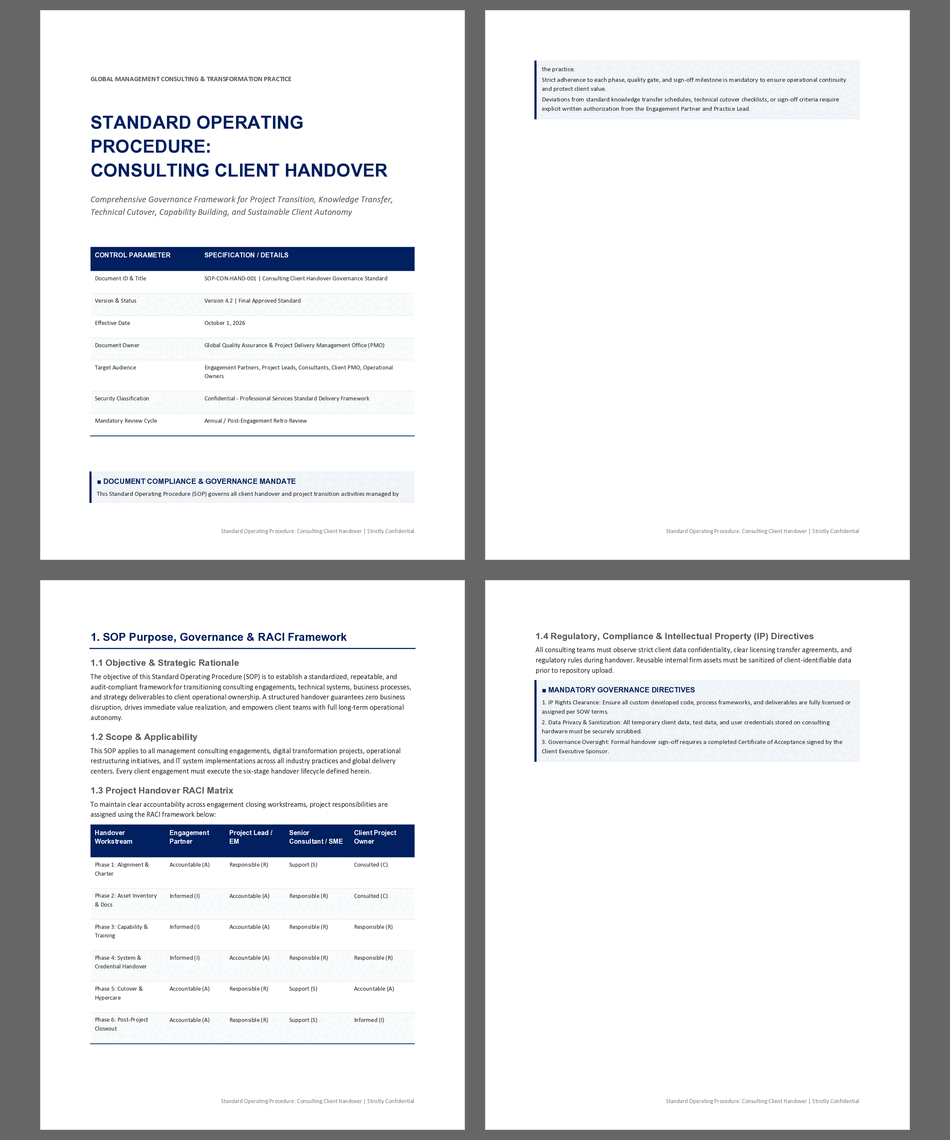
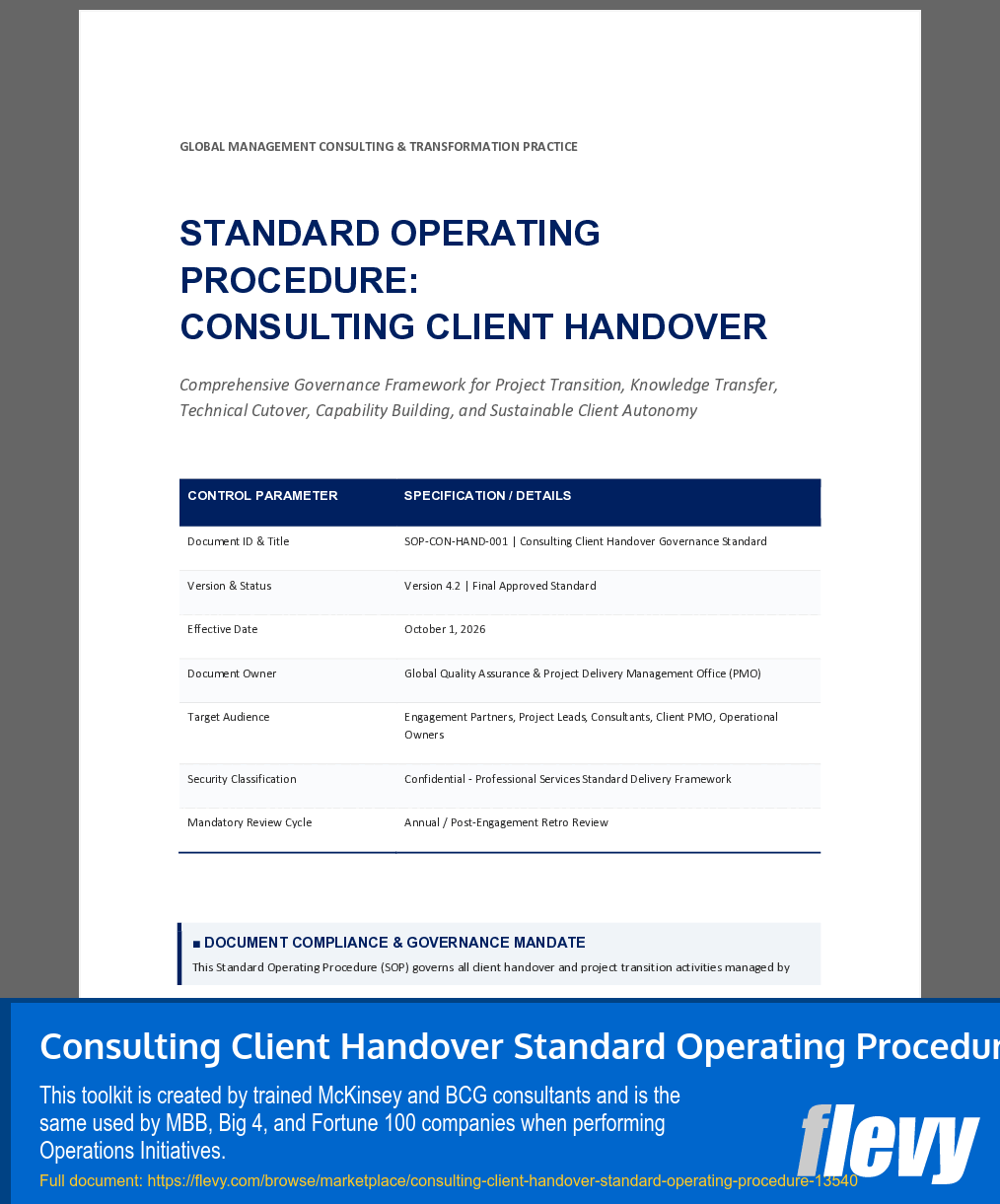
This downloadable Microsoft Word document provides an institutional-grade, end-to-end governance and execution framework for consulting engagement transition, knowledge transfer, technical cutover, operational capability building, client ownership transfer, hypercare management, and post-project value realization. Built specifically for Engagement Partners, Project Leads, Engagement Managers, Senior Consultants, SMEs, Client PMOs, IT Leaders, and Operational Owners, it establishes a structured six-phase handover lifecycle designed to protect business continuity, eliminate knowledge loss, secure technical environments, accelerate client autonomy, and create a controlled transition from consulting delivery to sustainable client ownership.
Section 1 – Handover Governance Architecture & RACI Framework
• Strategic governance model focused on ensuring operational continuity, rapid value realization, knowledge retention, technical security, and sustainable client autonomy following consulting engagement completion.
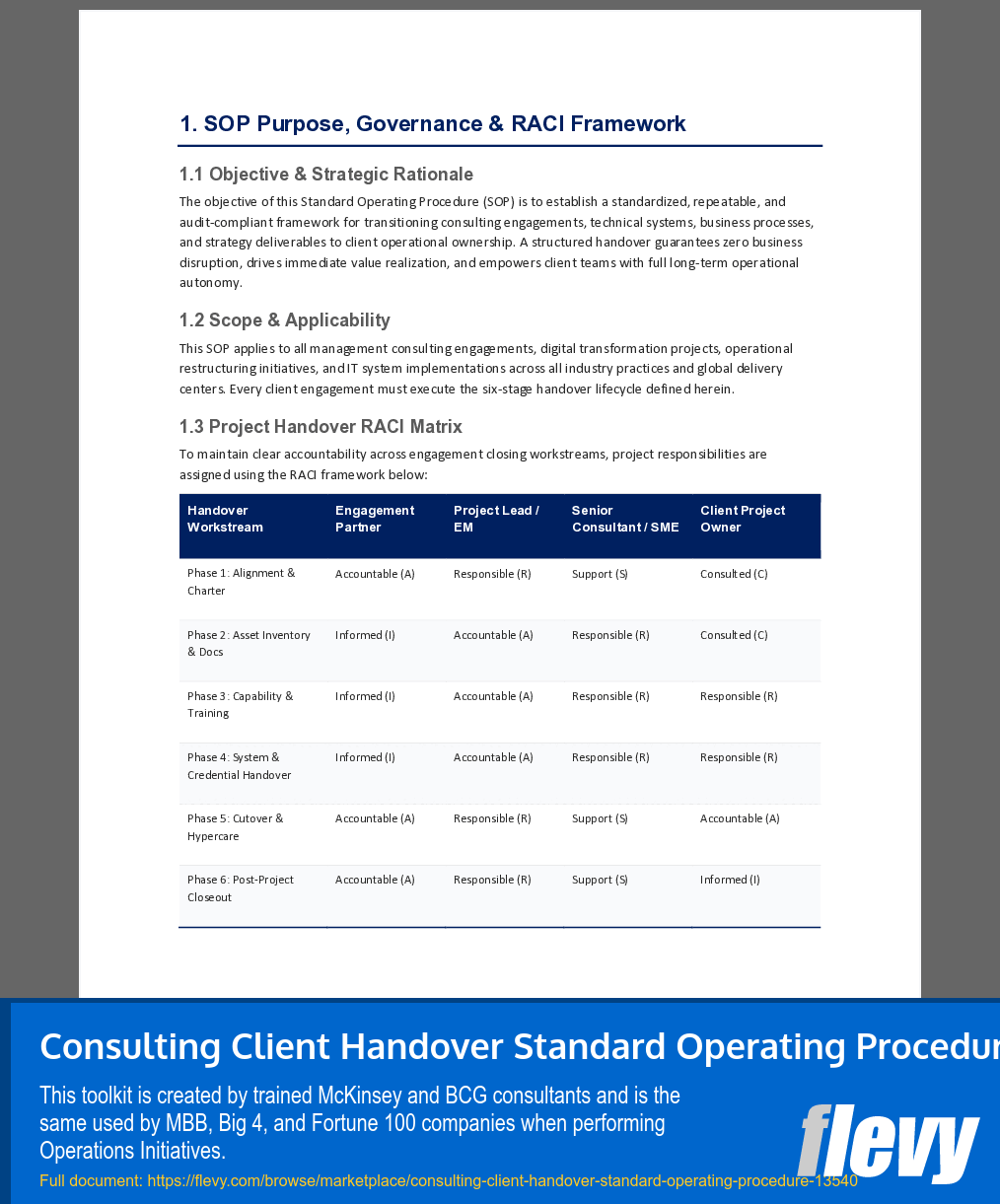
• Six-stage global handover lifecycle covering Planning & Alignment, Asset Inventory & Documentation, Capability Building, System & Credential Transfer, Go-Live & Hypercare, and Post-Project Closeout.
• Project Handover RACI Matrix mapping Engagement Partner, Project Lead/Engagement Manager, Senior Consultant/SME, and Client Project Owner accountability across every transition workstream.
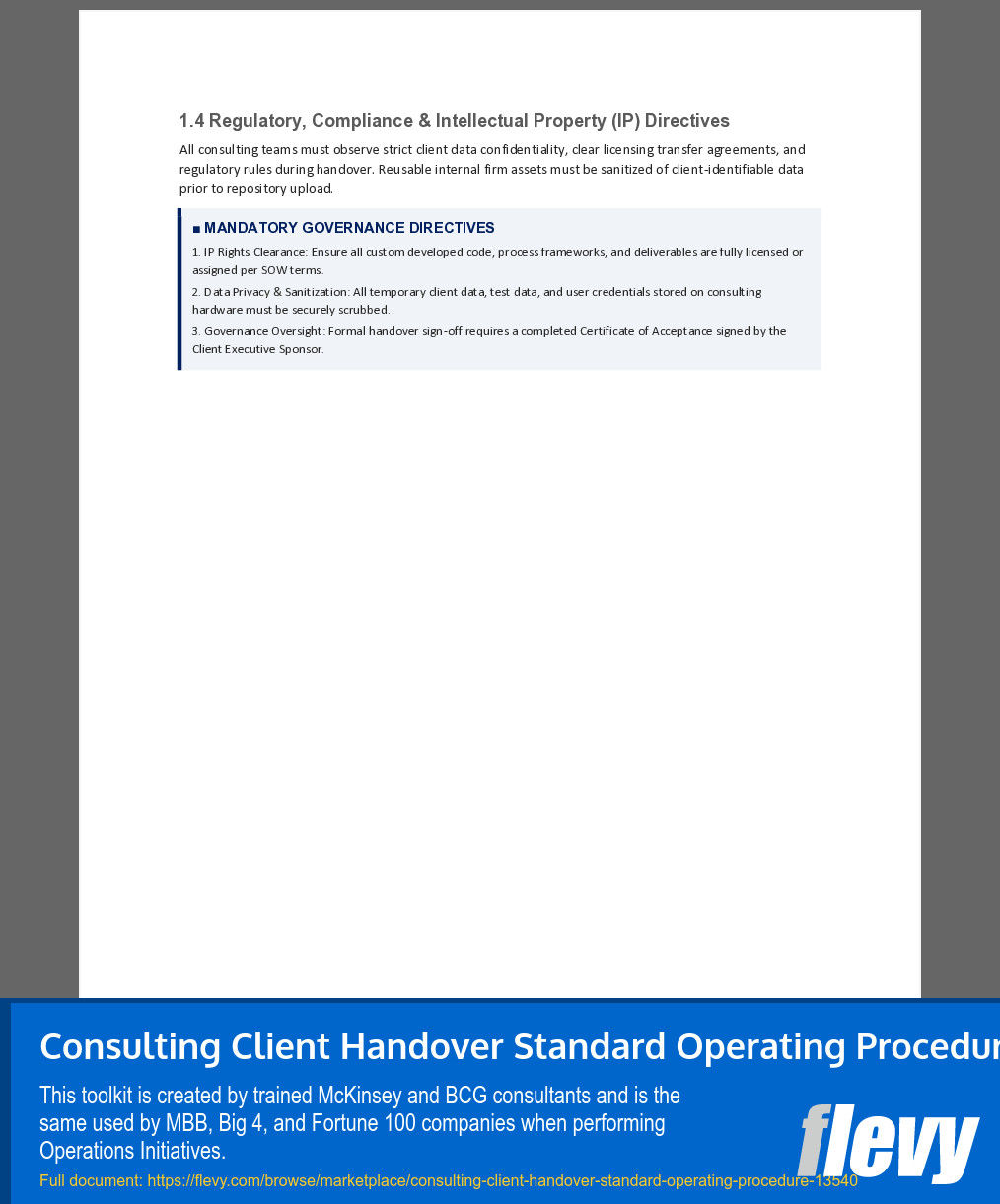
• Mandatory governance controls covering IP rights clearance, client data confidentiality, credential security, asset sanitization, and formal Certificate of Acceptance requirements.
• Written authorization requirements for deviations from approved knowledge-transfer schedules, technical cutover procedures, or handover sign-off criteria.
Section 2 – Pre-Handover Planning, Readiness Assessment & Stakeholder Alignment
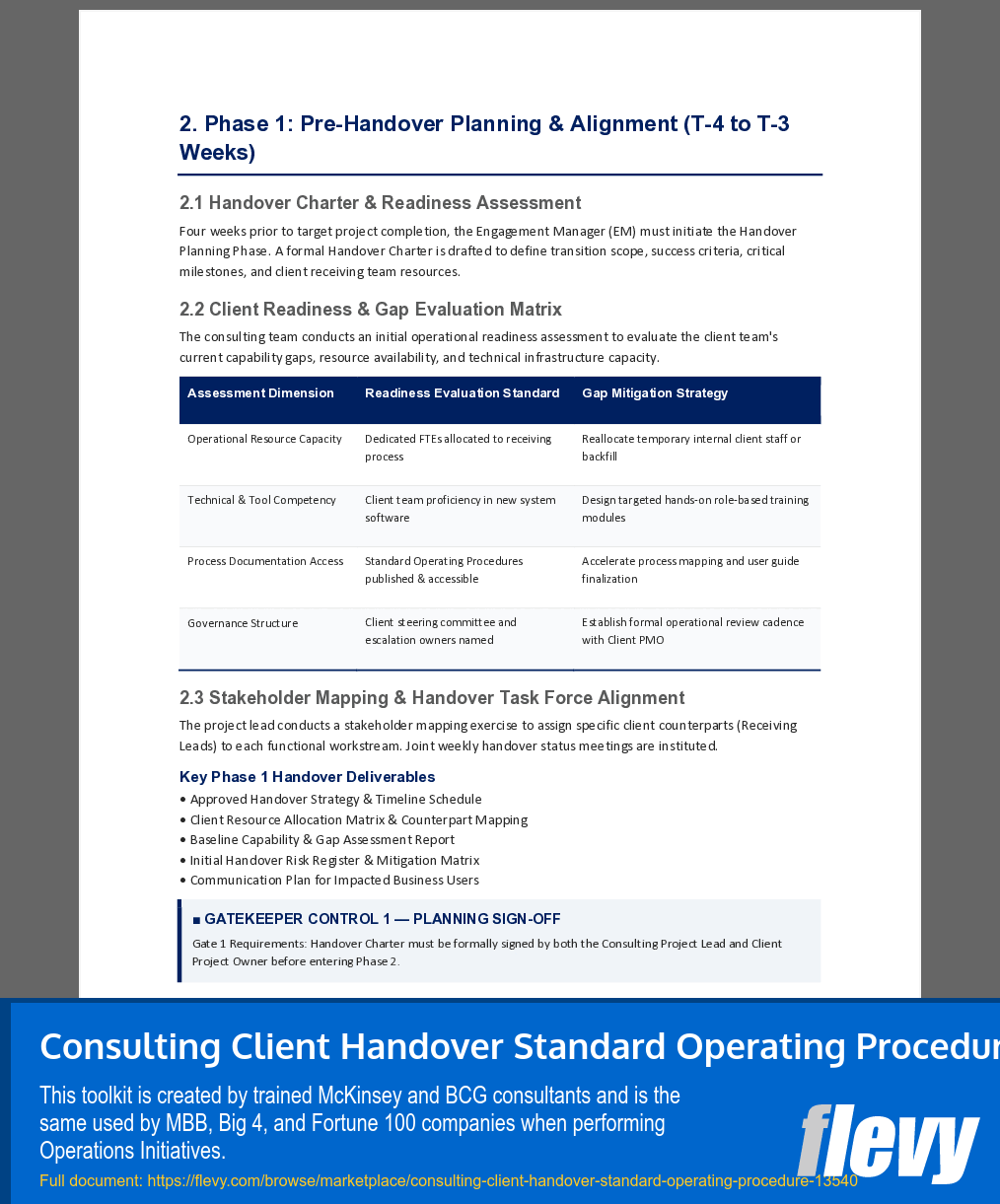
• Formal Handover Charter Framework initiated four weeks before project completion to establish transition scope, success criteria, milestones, receiving-team ownership, and resource requirements.
• Client Readiness & Gap Evaluation Matrix assessing operational staffing, technical competency, documentation access, governance structures, and infrastructure readiness.
• Structured gap-mitigation protocols covering client resource backfill, targeted training, process documentation acceleration, and operational governance establishment.
• Stakeholder Mapping & Receiving Lead Framework assigning named client counterparts to each functional handover workstream.
• Joint weekly handover governance cadence and communication planning for impacted business users.
• Gatekeeper Control 1 – Planning Sign-Off requiring formal approval of the Handover Charter by the Consulting Project Lead and Client Project Owner before asset transfer begins.
Section 3 – Asset Inventory, Documentation & Knowledge Capture
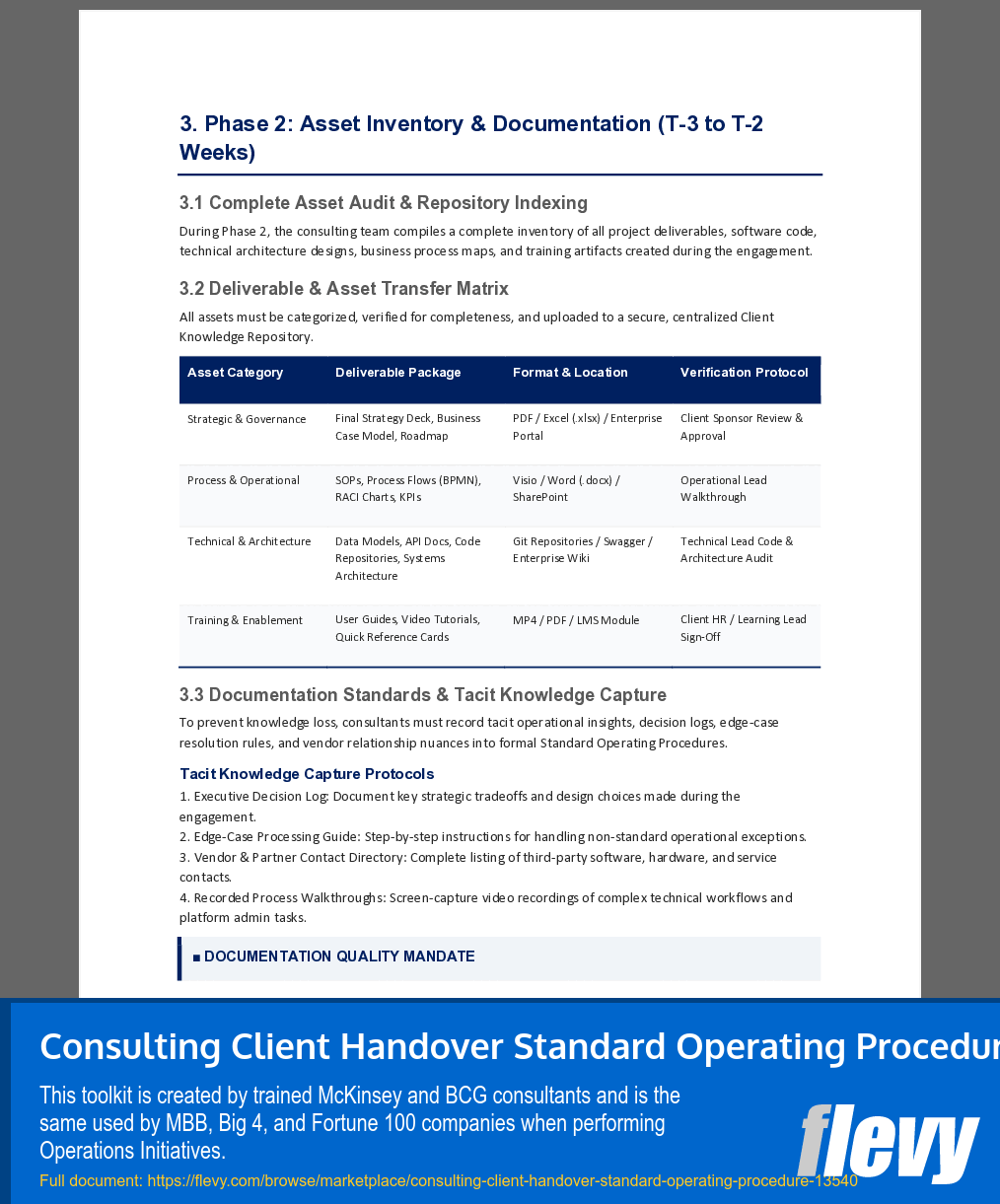
• Comprehensive Project Asset Audit Framework covering strategic deliverables, business cases, process models, SOPs, technical architectures, source code, data models, training materials, and operational artifacts.
• Deliverable & Asset Transfer Matrix defining asset categories, required formats, secure repository locations, verification protocols, and client approval authorities.
• Centralized Client Knowledge Repository Governance ensuring all final deliverables are complete, accessible, version-controlled, and formally transferred.
• Tacit Knowledge Capture Protocol designed to preserve institutional knowledge that may otherwise be lost when consultants exit the engagement.
• Mandatory capture of executive decision logs, design tradeoffs, edge-case resolution procedures, vendor relationships, operational nuances, and complex technical workflows.
• Documentation quality controls requiring Senior Consultant peer review, final-version certification, removal of draft commentary, and standardized version numbering before client transfer.
Section 4 – Capability Building, Training & Reverse Shadowing
• Structured Client Capability Enablement Framework designed to transition knowledge from consulting teams into sustainable client operational competency.
• Role-based training architecture covering Executive Leadership, Operational Managers, End-User Specialists, and System Administrators.
• Multi-channel enablement methodology combining executive briefings, instructor-led workshops, hands-on laboratories, technical deep-dives, sandbox practice, and competency assessments.
• Training Matrix & Competency Verification Framework linking each client role to required learning modules, delivery formats, assessment methods, and minimum proficiency standards.
• Mandatory Two-Way Shadowing Protocol combining Direct Shadowing and Reverse Shadowing to validate practical readiness.
• Reverse Shadowing control requiring client leads to independently complete 100% of core operational routines before technical handover authorization.
• Friction Log Remediation Process requiring targeted refresher training whenever operational errors or capability gaps are identified.
Section 5 – System, Access & Credential Handover
• Formal Technical Ownership Transfer Framework governing migration of administrative responsibility for cloud environments, SaaS platforms, repositories, databases, APIs, and technical infrastructure.
• System Access & Credential Migration Matrix defining access tiers, secure transfer mechanisms, ownership reassignment, security validation, and offboarding requirements.
• Secure credential transition controls covering enterprise password vaults, administrator reassignment, MFA re-binding, secret rotation, repository ownership transfer, and service-account management.
• Mandatory Consultant Access Revocation Protocol eliminating residual consulting-team access following administrative transfer.
• Production API Key, Database Secret & Integration Token Rotation requirements to protect client environments after transition.
• Hardware and temporary-storage sanitization requirements for consulting devices containing client information.
• Cybersecurity & Access Mandate prohibiting credential transmission through email or plain-text communications.
• Formal Technical Access Transfer Form requiring approval by the Client CISO or designated IT Lead.
Section 6 – Go-Live Cutover, Hypercare & Operational Stabilization
• Controlled Go-Live Cutover Execution Framework transferring operational ownership to the client through a pre-approved Cutover Execution Plan.
• Week 0 activation protocol covering operational ownership transfer, system activation, business-process transition, issue monitoring, and command-center governance.
• Dedicated Two-Week Hypercare Support SLA providing structured consulting support following operational cutover.
• Four-level incident severity model covering Critical, High, Medium, and Low incidents with defined response and resolution targets.
• Daily Hypercare Triage Standup Protocol for reviewing open incidents, operational metrics, ownership assignments, and stabilization priorities.
• Formal escalation mechanism ensuring critical operational, technical, and business-process issues receive immediate senior attention.
• Hypercare Exit Governance requiring zero open Severity 1 or Severity 2 incidents for five consecutive operational business days before full support transition.
• Structured transfer of remaining lower-severity issues into the client's internal Helpdesk/ITSM environment.
Section 7 – Post-Implementation Review, Value Realization & Relationship Transition
• Formal Post-Implementation Review (PIR) conducted after handover to evaluate delivery outcomes against the original Statement of Work and project objectives.
• Value Realization Measurement Framework tracking operational performance, process efficiency, automation, error reduction, adoption, and other agreed business outcomes.
• KPI governance comparing pre-project baselines, post-handover targets, and measured Week +4 performance.
• Executive debrief methodology for presenting final project impact and realized value to the Client Executive Board.
• Client Satisfaction & CSAT Governance capturing structured feedback from key stakeholders following transition.
• 90-day post-handover operational check-in framework designed to reinforce sustainable client value.
• Account Governance Transition Protocol moving the relationship from active project delivery into long-term executive account management and quarterly value-realization reviews.
Section 8 – Financial Closeout, Knowledge Management & Project Archiving
• End-to-end Financial & Administrative Closeout Framework covering final invoicing, expense reconciliation, subcontractor settlement, contractual guarantees, and project-account closure.
• Final Milestone Billing Governance requiring completion of deliverable approvals and reconciliation before engagement closure.
• Formal controls for clearing outstanding expenses, validating external specialist deliverables, and releasing holdbacks or performance escrows.
• Firm Knowledge Management Archiving Framework designed to convert sanitized engagement knowledge into reusable internal practice assets.
• Mandatory data-sanitization controls covering client names, logos, financial information, employee PII, and other confidential engagement information.
• Structured repository upload process for sanitized frameworks, tools, benchmarks, methodologies, and case-study materials.
• Internal Engagement Case Study Protocol capturing delivery methodology, value created, lessons learned, and reusable consulting practices.
Section 9 – Appendices, Master Handover Checklist & Executive Sign-Off
• Appendix A: Consolidated Master Handover Checklist covering all six lifecycle phases, milestone dates, execution requirements, and sign-off authorities.
• Appendix B: Formal Certificate of Acceptance & Handover Sign-Off confirming completion and client acceptance of project deliverables, technical assets, knowledge transfer, and operational responsibilities.
• Defined approval blocks for the Client Executive Sponsor, Client Operational Lead, Consulting Engagement Partner, and Consulting Project Manager.
• Final governance certification establishing formal acceptance of the engagement transition and transfer of operational ownership.
• Institutional documentation framework designed to make every client handover repeatable, auditable, secure, measurable, and independent of individual consultant knowledge.
Keywords: Process Audit SOPs, Internal Audit Standard Operating Procedures, Process Audit Framework, Control Testing Procedures, Risk Assessment Methodologies, Audit Governance, Process Audit Strategy, Audit Evidence Collection, Compliance Audit SOPs, Continuous Auditing, Process Mapping, Audit Documentation Standards, Audit Quality Assurance, Process Risk Management, Operational Risk Audit, Enterprise Audit Management, Audit Committee Reporting, Audit Analytics, Process Mining, AI-Assisted Auditing, Audit Technology SOPs, Global Process Audit, Audit Playbooks, Audit Templates, Audit Training Programs, Audit Remediation Management, Audit Excellence, Process Audit Toolkit, McKinsey Audit Framework, Audit Best Practices, Enterprise Governance, Internal Control Assessment, Audit Procedures Manual, Audit Program Design, Audit Resource Planning, Audit Scheduling, Audit Efficiency, Audit Effectiveness, Audit Performance Metrics, Audit KPIs, Audit ROI, Audit Value Creation, Process Optimization, Operational Excellence, Business Process Audit, Functional Audit, Departmental Audit, Transactional Audit, Service Audit, Administrative Process Audit, Supply Chain Process Audit, Finance Process Audit, IT Process Audit, HR Process Audit, Procurement Process Audit, Sales Process Audit, Customer Service Audit, Production Audit, Quality Audit, Compliance Testing, Regulatory Audit, Policy Compliance, Procedure Audit, Documentation Audit, Audit Trail Review, Exception Management, Control Design, Control Effectiveness, Control Testing, Preventive Controls, Detective Controls, Corrective Actions, Root Cause Analysis, Finding Classification, Audit Report Writing, Executive Summaries, Audit Communication, Stakeholder Engagement, Process Owner Engagement, Management Accountability, Audit Committee Governance, Audit Charter, Audit Independence, Auditor Ethics, Professional Skepticism, Audit Competency, Audit Training, Audit Certification, Audit Standards (IIA, IAASB), Audit Best Practices, Audit Methodology, Audit Framework, Audit Operating Model, Process Audit Excellence, Audit Mastery, Fortune 500 Audit, Enterprise Audit Operations, Corporate Audit Function, Strategic Audit Planning, Transformation Audit, Digital Audit, Innovation Audit, Benchmarking Audit, Maturity Assessment, Audit Scaling, Audit Outsourcing, Co-Sourcing Models, Vendor Management, Audit Technology Stack, Audit Tools, Audit Software, Continuous Monitoring, Predictive Analytics, Anomaly Detection, Data Quality, Process Intelligence, Workflow Analytics, Business Process Management, Process Automation, RPA Audit, AI Governance, Responsible AI Audit, Cybersecurity Audit, Data Governance Audit, Privacy Audit, Information Security, Audit Evidence Standards, Working Papers, Audit Documentation, Audit File Management, Audit Records Retention, Audit Trail Integrity, Audit Report Confidentiality, Multi-Site Audit Coordination, Global Audit Strategy, International Audit Standards, Regional Audit Compliance, Cultural Considerations in Audit, Localization of Audit Procedures, Process Transformation Audit, Business Reengineering Audit, Change Audit, Operational Change, Audit Change Management, Audit Communication Plan, Audit Stakeholder Communication, Audit Performance Review, Audit Function Review, Strategic Review Process, Audit Leadership Development, Audit Team Development, Audit Coaching, Audit Supervision, Audit Career Progression, Audit Knowledge Management, Audit Playbook Development, Audit Template Library, Audit Standards Documentation, Audit Policy Manual, Lessons Learned Capture, Best Practice Sharing, Audit Continuous Improvement, Audit Methodology Enhancement, Audit Process Optimization, Audit Efficiency Improvement, Audit Effectiveness Enhancement, Audit Quality Improvement, Audit Risk Management, Audit Risk Register, Audit Issue Management, Audit Action Tracking, Audit Metrics Dashboard, Audit Performance Dashboard, Audit Scorecard, Audit Balanced Scorecard, KPI Framework for Audit, Audit Success Factors, Critical Success Factors in Audit, Audit Strategic Objectives, Audit Vision Statement, Audit Mission Statement, Audit Values and Ethics, Audit Culture, Audit Maturity Model, Audit Capability Model, Audit Competency Framework, Professional Development in Audit, Audit Certification Programs, Internal Audit Standards, Audit Best Practices Guide, Audit Reference Manual, Audit Operating Manual, Audit Procedures Manual, Audit Program Manual, McKinsey Audit Excellence, Deloitte Audit Framework, EY Audit Approach, KPMG Audit Methodology, Big 4 Audit Standards, Audit Industry Benchmarks, Audit Industry Standards, Audit Thought Leadership, Audit Innovation, Audit Transformation Program, Audit Digital Transformation, Audit Process Transformation, Audit Service Transformation, Audit Operating Model Transformation, Audit Function Evolution, Audit Future-Proofing, Emerging Trends in Audit, Audit 2025 Roadmap, Audit Strategic Priorities, Audit Strategic Planning, Audit Strategic Execution, Audit Implementation Plan, Audit Deployment Strategy, Audit Rollout Plan, Audit Quick-Start Guide, Audit Implementation Guide, Audit User Guide, Audit Handbook, Audit Manual, Audit Documentation Standard, Audit Work Standards, Audit Quality Standards, Audit Performance Standards, Audit Excellence Standards, Enterprise Audit Excellence, Audit Mastery Program, Audit Excellence Initiative, Audit Excellence Framework, Audit Excellence Culture, Audit Excellence Mindset, Strategic Audit Excellence, Operational Audit Excellence, Financial Audit Excellence, Compliance Audit Excellence, Quality Audit Excellence, Process Audit Excellence, Audit Excellence ROI, Audit Excellence Value Creation, Audit Excellence Competitive Advantage, Audit Excellence Strategic Advantage, Audit Excellence Performance Advantage, Audit Excellence Organizational Advantage, Inventory Management, Demand Planning, Inventory Optimization, Inventory Control, Supply Chain Management, Warehouse Operations, Replenishment Strategy, Inventory Analytics, WIP Reduction, Inventory Accuracy, Distribution Network, Inventory Forecasting, Supply Chain Excellence, Working Capital, Inventory KPIs, Procurement Strategy, Inventory Governance, Inventory SOPs, Continuous Improvement, Supply Chain Transformation, GenAI deployment SOPs, generative AI operating model, enterprise AI governance framework, AI Center of Excellence, responsible AI, AI risk management, AI use case prioritization, GenAI implementation roadmap, AI vendor selection, prompt engineering standards, AI compliance, AI adoption strategy, generative AI across value chain, AI strategy, enterprise transformation, AI implementation, AI scaling framework
Strategy & Transformation, Growth Strategy, Strategic Planning, Strategy Frameworks, Innovation Management, Pricing Strategy, Core Competencies, Strategy Development, Business Transformation, Marketing Plan Development, Product Strategy, Breakout Strategy, Competitive Advantage, Mission, Vision, Values, Strategy Deployment & Execution, Innovation, Vision Statement, Core Competencies Analysis, Corporate Strategy, Product Launch Strategy, BMI, Blue Ocean Strategy, Breakthrough Strategy, Business Model Innovation, Business Strategy Example, Corporate Transformation, Critical Success Factors, Customer Segmentation, Customer Value Proposition, Distinctive Capabilities, Enterprise Performance Management, KPI, Key Performance Indicators, Market Analysis, Market Entry Example, Market Entry Plan, Market Intelligence, Market Research, Market Segmentation, Market Sizing, Marketing, Michael Porter's Value Chain, Organizational Transformation, Performance Management, Performance Measurement, Platform Strategy, Product Go-to-Market Strategy, Reorganization, Restructuring, SWOT, SWOT Analysis, Service 4.0, Service Strategy, Service Transformation, Strategic Analysis, Strategic Plan Example, Strategy Deployment, Strategy Execution, Strategy Frameworks Compilation, Strategy Methodologies, Strategy Report Example, Value Chain, Value Chain Analysis, Value Innovation, Value Proposition, Vision Statement, Corporate Strategy, Business Development, Business plan pdf, business plan, PDF, Business Plan DOC, Business Plan Template, PPT, Market strategy playbook, strategic market planning, competitive analysis tools, market segmentation frameworks, growth strategy templates, product positioning strategy, market execution toolkit, strategic alignment playbook, KPI and OKR frameworks, business growth strategy guide, cross-functional strategy templates, market risk management, market strategy PowerPoint doc, guide, ebook, e-book ,McKinsey Change Playbook, Organizational change management toolkit, Change management frameworks 2025, Influence model for change, Change leadership strategies, Behavioral change in organizations, Change management PowerPoint templates, Transformational leadership in change, supply chain KPIs, supply chain KPI toolkit, supply chain PowerPoint template, logistics KPIs, procurement KPIs, inventory management KPIs, supply chain performance metrics, manufacturing KPIs, supply chain dashboard, supply chain strategy KPIs, reverse logistics KPIs, sustainability KPIs in supply chain, financial supply chain KPIs, warehouse KPIs, digital supply chain KPIs, 1200 KPIs, supply chain scorecard, KPI examples, supply chain templates, Corporate Finance SOPs, Finance SOP Excel Template, CFO Toolkit, Finance Department Procedures, Financial Planning SOPs, Treasury SOPs, Accounts Payable SOPs, Accounts Receivable SOPs, General Ledger SOPs, Accounting Policies Template, Internal Controls SOPs, Finance Process Standardization, Finance Operating Procedures, Finance Department Excel Template, FP&A Process Documentation, Corporate Finance Template, Finance SOP Toolkit, CFO Process Templates, Accounting SOP Package, Tax Compliance SOPs, Financial Risk Management Procedures.
NOTE: Our digital products are sold on an "as is" basis, making returns and refunds unavailable post-download. Please preview and inquire before purchasing. Please contact us before purchasing if you have any questions! This policy aligns with the standard Flevy Terms of Usage.
Got a question about the product? Email us at support@flevy.com or ask the author directly by using the "Ask the Author a Question" form. If you cannot view the preview above this document description, go here to view the large preview instead.
Source: Best Practices in Project Management, Consulting Sales Word: Consulting Client Handover Standard Operating Procedure Word (DOCX) Document, SB Consulting
ABOUT THE AUTHOR
SB Consulting is dedicated to empowering businesses to communicate their ideas with impact. This consulting firm specializes in teaching organizations how to create effective corporate and management presentations. With training from top-tier global consulting firms, including McKinsey, BCG, and Porsche Consulting, extensive expertise in presentation design and ... [read more]
Ask the Author a Question
You must be logged in to contact the author.




























