
This capital budgeting business case development framework is created by former McKinsey, BCG, Deloitte, EY, and Capgemini consultants and is commonly used across Strategy Consulting projects. Financial model also included.
Editor Summary
The Business Case Development Framework is a 32-slide PowerPoint with a supplemental Excel capital budgeting model (PPT + XLSX) from LearnPPT Consulting, created by former McKinsey, BCG, Deloitte, EY, and Capgemini consultants and used across strategy consulting projects.
Read moreCovers 4 interlinked quantitative analysis elements, a Business Case Stream Charter, financial modeling guidance, and 6 deliverables/templates (stream charter, quantitative framework, sample Excel model, validation guidelines, checklist, pitfalls guide). Used by corporate executives, project managers, financial analysts, and strategy consultants to justify capital investments; sold as a digital download on Flevy.
Use this framework when an organization needs to justify or monitor a significant capital investment—during initial planning, executive approval, or ongoing project tracking.
Corporate executives evaluating and comparing NPV/ROI across competing capital projects to set funding priorities.
Project managers updating assumptions and tracking actual cash flows versus projections in the Excel model to monitor benefit realization.
Financial analysts building bottoms-up financial projections, testing scenarios, and validating key assumptions for NPV and payback calculations.
Strategy consultants combining top-down and bottoms-up analyses to prepare executive-ready business case summaries and sign-off materials using a Business Case Stream Charter.
The framework’s focus on 4 interlinked quantitative elements plus formal financial modeling reflects consulting-grade business case practice used in strategy projects at firms such as McKinsey and BCG.

The Business Case is an instrumental tool in both justifying a project (requiring a capital budgeting decision), as well as measuring the project's success. The Business Case model typically takes the form of an Excel spreadsheet and quantifies the financial components of the project, projecting key metrics for making any important business decision: e.g. Net Present Value (NPV), Return on Investment (ROI), Payback Period, Cost of Investment.
If a project has been justified by the Business Case (both financially and non-financially) and receives the go-ahead from executives, the Business Case model is then continuously maintained and adjusted to track the project's progress against the initial financial projections and assumptions. This model then becomes a working document used during the project management process.
This presentation will detail the process of creating a robust Business Case. It also includes a working sample Business Case model (in Microsoft Excel).
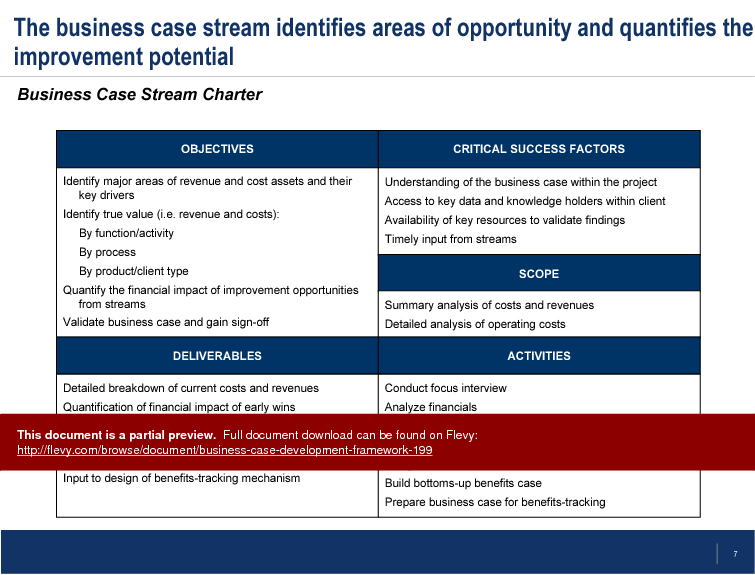
The Business Case Stream Charter outlines clear objectives, critical success factors, and deliverables to ensure comprehensive analysis and validation of business cases. It emphasizes the importance of identifying major revenue and cost drivers, quantifying financial impacts, and validating the business case to gain executive sign-off. This structured approach ensures that all relevant data and insights are captured, analyzed, and presented in a manner that supports informed decision-making.
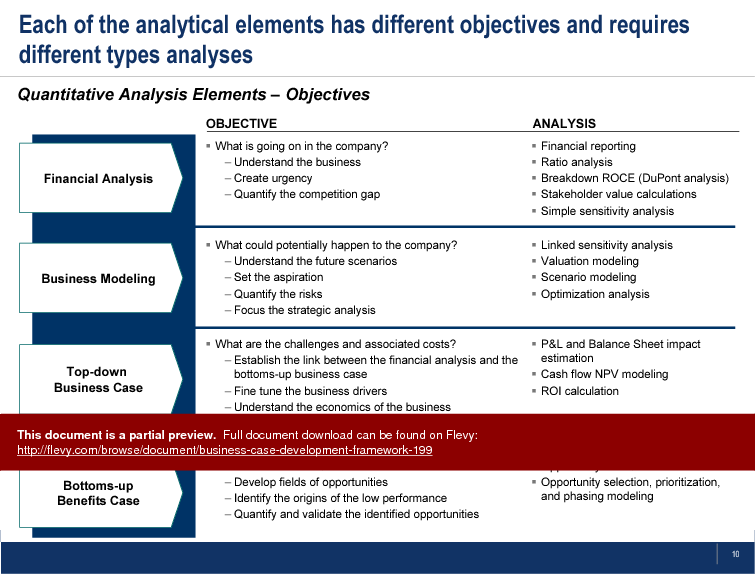
The document also delves into various quantitative analysis elements, such as financial analysis, business modeling, and both top-down and bottoms-up business cases. Each analytical element is designed to address specific business questions and challenges, using a range of techniques from ratio analysis to scenario modeling. By combining these approaches, the framework provides a holistic view of the business case, ensuring that all potential benefits and impacts are thoroughly evaluated and quantified.
Got a question about the product? Email us at support@flevy.com or ask the author directly by using the "Ask the Author a Question" form. If you cannot view the preview above this document description, go here to view the large preview instead.
MARCUS OVERVIEW
This synopsis was written by Marcus [?] based on the analysis of the full 32-slide presentation.
Executive Summary
The Business Case Development Framework is an essential toolkit for any project requiring significant investment, designed to justify the economic rationale behind such pursuits. This framework embodies a McKinsey, Bain, or BCG-quality approach (consulting-grade; not affiliated) and serves as a comprehensive guide to creating a robust business case. It includes a detailed capital budgeting model in Excel, enabling users to quantify financial metrics such as Net Present Value (NPV), Return on Investment (ROI), and Payback Period. By utilizing this framework, executives and project managers can effectively track project progress against initial financial projections and assumptions, ensuring informed decision-making throughout the project lifecycle.
Who This Is For and When to Use
• Corporate executives overseeing capital budgeting decisions
• Project managers responsible for justifying investment proposals
• Financial analysts conducting quantitative assessments of projects
• Strategy consultants developing business cases for client projects
Best-fit moments to use this deck:
• When preparing a business case for a new project requiring substantial investment
• During the initial phases of project planning to establish financial viability
• For ongoing project management to track financial performance against projections
Learning Objectives
• Define the core components of a business case and their significance
• Build a comprehensive financial model to support investment decisions
• Establish a framework for quantifying benefits and costs associated with projects
• Validate financial assumptions and metrics to ensure stakeholder buy-in
• Develop strategies for tracking project benefits throughout implementation
• Identify common pitfalls in business case development and how to avoid them
Table of Contents
• Overview (page 3)
• Executive Summary (page 4)
• Objectives (page 5)
• Business Case Stream Charter (page 7)
• Quantitative Analysis Elements (page 8)
• Business Case Modeling (page 14)
• Sample Business Case Model (Excel document) (page 23)
• Final Words (page 29)
• Dos and Don’ts (page 30)
• Common Pitfalls (page 31)
• Rules of Thumb (page 32)
Primary Topics Covered
• Business Case Objectives - The framework outlines core objectives, including quantifying improvement opportunities and ensuring resource allocation to high-leverage areas.
• Quantitative Analysis Elements - This section details the 4 interlinked elements of business case analysis: financial analysis, business modeling, top-down business case, and bottoms-up benefits case.
• Business Case Stream Charter - A structured approach to identifying revenue and cost assets, quantifying improvement potential, and validating findings.
• Financial Modeling - Guidance on creating a comprehensive financial model to project key metrics such as NPV and ROI.
• Common Pitfalls - Identifies frequent mistakes in business case development and strategies to avoid them.
• Rules of Thumb - Practical tips to enhance the effectiveness of business case development activities.
Deliverables, Templates, and Tools
• Business case stream charter template for organizing project objectives and deliverables
• Quantitative analysis framework to assess financial and non-financial impacts
• Sample Excel business case model for financial projections and metrics
• Guidelines for validating assumptions and calculations in business cases
• Checklist for dos and don’ts during business case development
• Common pitfalls reference guide to streamline the business case creation process
Slide Highlights
• Overview of business case objectives and their importance in project justification
• Detailed breakdown of quantitative analysis elements and their interdependencies
• Visual representation of the business case development approach, highlighting key phases
• Sample financial model showcasing NPV, ROI, and Payback Period calculations
• Common pitfalls and rules of thumb to guide effective business case development
Potential Workshop Agenda
Business Case Overview Session (60 minutes)
• Introduce the framework and its significance in project management
• Discuss core objectives and deliverables of a business case
• Review the quantitative analysis elements and their applications
Financial Modeling Workshop (90 minutes)
• Hands-on session to build a sample business case model in Excel
• Walk through key financial metrics and their calculations
• Validate assumptions and discuss common pitfalls in financial modeling
Business Case Validation and Tracking (60 minutes)
• Explore strategies for validating identified benefits and costs
• Discuss methods for tracking project performance against the business case
• Share best practices for stakeholder engagement and communication
Customization Guidance
• Tailor the financial model assumptions to reflect specific project conditions and requirements
• Adjust the business case stream charter to align with organizational priorities and resources
• Incorporate relevant industry metrics and benchmarks into the quantitative analysis elements
Secondary Topics Covered
• Stakeholder engagement strategies for securing buy-in on business cases
• Techniques for conducting effective financial analysis and modeling
• Importance of aligning business cases with organizational strategy and goals
• Methods for quantifying both financial and non-financial benefits
• Best practices for maintaining and updating business cases throughout project lifecycles
Topic FAQ
What are the core components of a business case?
A business case typically includes clear objectives, identification of revenue and cost drivers, quantified benefits and costs, assumptions validation, and financial projections. The Business Case Development Framework organizes these around 4 interlinked quantitative analysis elements: financial analysis, business modeling, top-down business case, and bottoms-up benefits case.
How do I build a capital budgeting financial model to calculate NPV and ROI?
Build a model by projecting cash flows, specifying timing and discount rates, documenting assumptions, and running scenario sensitivity tests. Validate inputs and reconcile top-down and bottoms-up estimates. Flevy's Business Case Development Framework includes a sample Excel business case model demonstrating NPV, ROI, and Payback Period calculations, including scenario testing.
What is the difference between top-down and bottoms-up approaches in a business case?
Top-down approaches focus on strategic alignment and aggregate financial impact estimates, while bottoms-up approaches quantify operational details and specific benefit drivers. Both are used together to cross-validate results and improve credibility; the framework explicitly treats these as complementary elements in the quantitative analysis.
How often should I update my business case during a project?
Update the business case regularly throughout the project lifecycle to reflect changes in assumptions, progress against milestones, realized cash flows, and emerging risks. The author notes the business case model becomes a working document maintained and adjusted during implementation to track performance against initial projections.
I need to justify a multimillion-dollar investment—what structured approach should I follow?
Use a stream charter to define objectives and success factors, identify major revenue and cost drivers, create top-down and bottoms-up estimates, validate assumptions, and build a capital budgeting model to calculate NPV/ROI/Payback. Flevy's Business Case Development Framework supplies a Business Case Stream Charter template to support this process.
What should I look for when buying a business case template?
Look for an included editable financial model (Excel), a stream charter or project charter template, a quantitative analysis framework, guidance on validating assumptions, and tools for tracking and governance. The product’s listed deliverables include a sample Excel business case model and checklists for dos and don’ts, which support those needs.
What common pitfalls should I avoid when developing a business case?
Common pitfalls include making unsubstantiated claims, failing to validate assumptions, neglecting stakeholder engagement, and insufficiently tracking actual performance against projections. The framework calls these out and provides a common pitfalls reference guide and a dos-and-don’ts checklist to help mitigate such issues.
How can I demonstrate the value of a business case template to executives when budget is tight?
Demonstrate that a template standardizes assumption documentation, enables comparable NPV/ROI analysis across options, and supports ongoing tracking of benefits versus plan—reducing decision risk and governance effort. Flevy's Business Case Development Framework includes an Excel model and guidance to quantify NPV, ROI, and Payback Period to support executive decisions.
Document FAQ
These are questions addressed within this presentation.
What is the purpose of a business case?
A business case justifies the economic rationale for a project requiring significant investment, outlining potential benefits and costs to support decision-making.
How do I quantify benefits in a business case?
Benefits can be quantified using financial metrics such as NPV, ROI, and Payback Period, alongside qualitative assessments of non-financial impacts.
What are common pitfalls in business case development?
Common pitfalls include making unsubstantiated claims, failing to validate assumptions, and neglecting to engage stakeholders throughout the process.
How can I ensure stakeholder buy-in for my business case?
Engage stakeholders early in the process, validate assumptions, and present clear, quantifiable benefits to gain their support.
What financial metrics should I include in my business case?
Key metrics include NPV, ROI, Payback Period, and cash flow analysis, which provide a comprehensive view of the project's financial viability.
How often should I update my business case?
Regular updates are recommended throughout the project lifecycle to reflect changes in assumptions, progress against projections, and emerging risks.
What is the difference between top-down and bottoms-up approaches in business cases?
Top-down approaches focus on strategic alignment and overall financial impacts, while bottoms-up approaches emphasize operational details and specific benefit quantification.
What tools can I use to develop a business case?
Utilize templates, financial modeling software, and analytical frameworks to streamline the business case development process.
Glossary
• Business Case - A document outlining the justification for a project, including financial and non-financial benefits.
• Net Present Value (NPV) - A financial metric used to assess the profitability of an investment by calculating the present value of future cash flows.
• Return on Investment (ROI) - A performance measure used to evaluate the efficiency of an investment, expressed as a percentage of profit relative to the total investment.
• Payback Period - The time it takes for an investment to generate enough cash flow to recover its initial cost.
• Quantitative Analysis - The process of evaluating financial data to inform decision-making.
• Financial Decomposition - Breaking down financial data to understand economic drivers and identify opportunities for improvement.
• Stakeholder Engagement - The process of involving individuals or groups with an interest in the project to ensure their needs and concerns are addressed.
• Assumptions Validation - The process of confirming the accuracy and reliability of assumptions used in financial modeling.
• Cost of Investment - The total expenses associated with undertaking a project or initiative.
• Benefits Matrix - A tool used to categorize and organize identified benefits based on their financial and non-financial impacts.
• Common Pitfalls - Frequent mistakes made during business case development that can undermine the credibility of the project.
• Rules of Thumb - Practical guidelines to enhance the effectiveness of business case development activities.
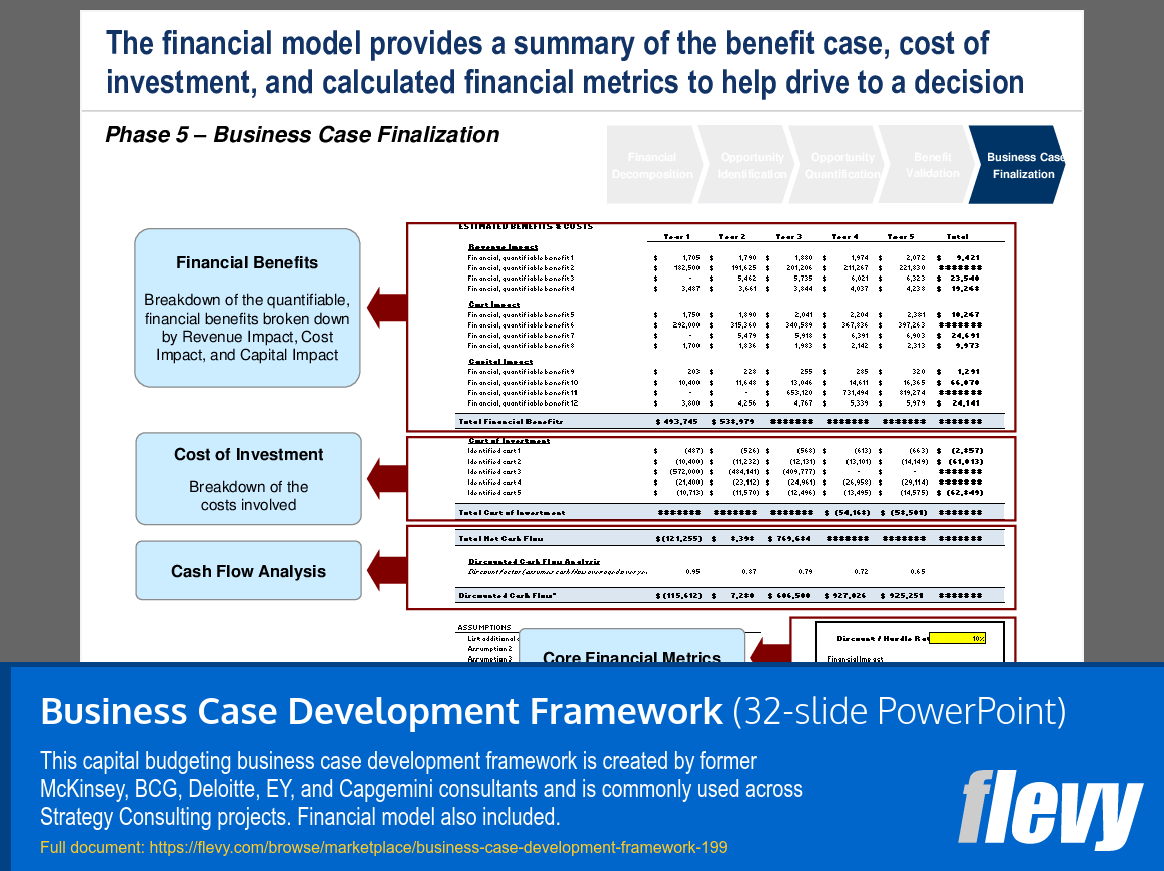
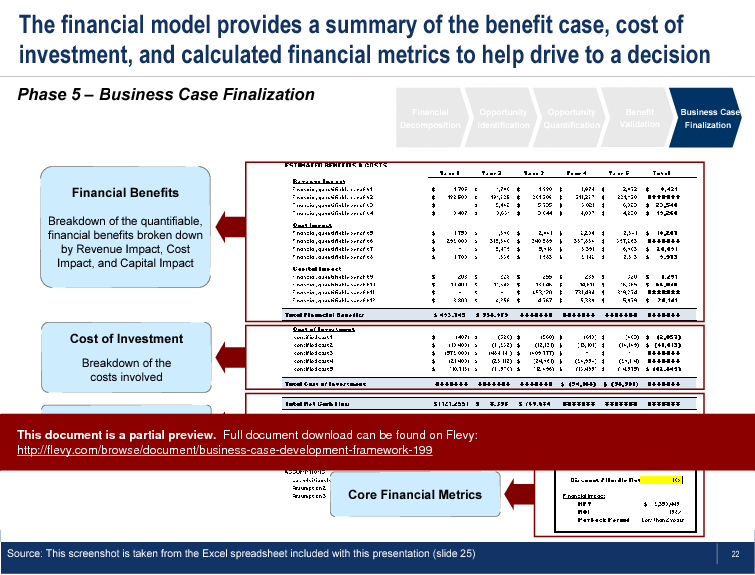
This PPT slide presents a comprehensive financial model structured into 3 sections: Financial Benefits, Cost of Investment, and Cash Flow Analysis. The Financial Benefits section categorizes quantifiable metrics into Revenue Impact, Cost Impact, and Capital Impact, providing a clear view of expected returns over multiple periods. The Cost of Investment section details identified costs, facilitating a thorough understanding of the financial outlay required for the project. The Cash Flow Analysis summarizes projected cash inflows and outflows, incorporating a discount factor to present the net present value, essential for understanding the time value of money. This analysis aids executives in making informed decisions based on projected financial performance.
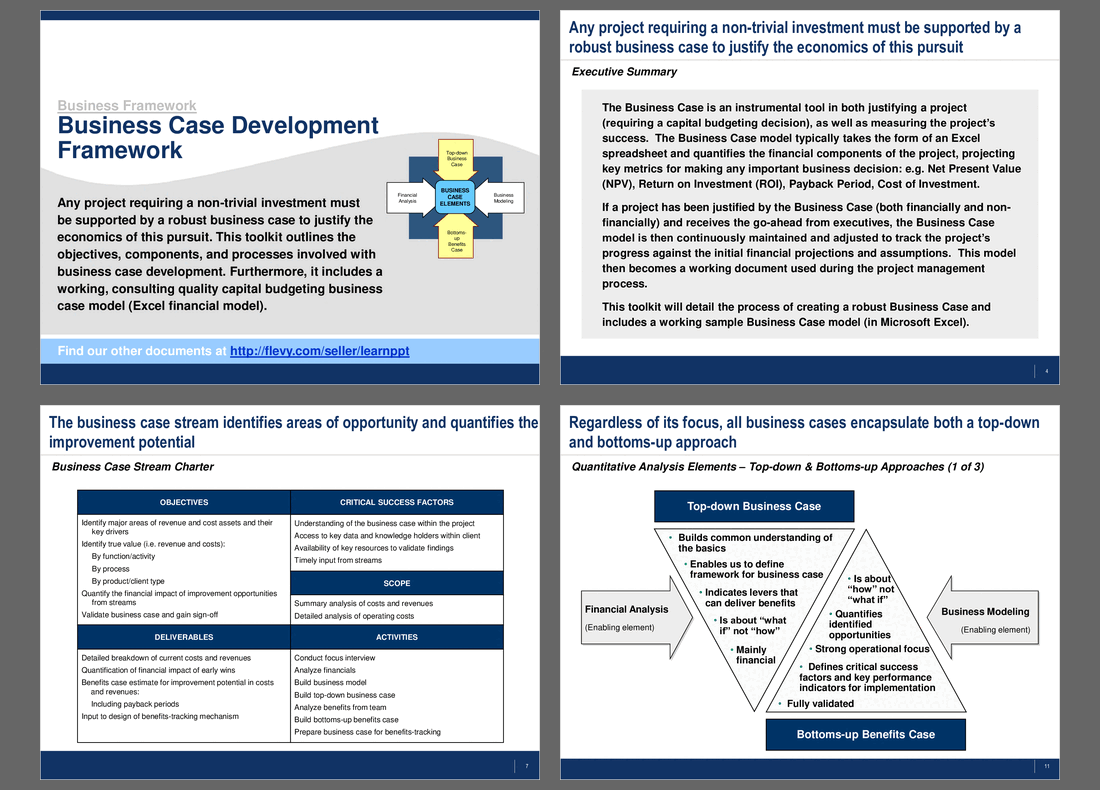
This PPT slide outlines a Business Case Stream Charter, focusing on identifying opportunities for improvement and quantifying their financial impact. It includes 5 key sections: Objectives, Critical Success Factors, Scope, Deliverables, and Activities.
The Objectives section emphasizes identifying major revenue and cost drivers, breaking down true value by function, process, and client type, while quantifying the financial impact of improvement opportunities.
Critical Success Factors highlight the need for understanding the business case, access to key data, and timely stakeholder input.
The Scope section defines the analysis extent, summarizing costs and revenues for effective resource alignment.
Deliverables include a detailed breakdown of current financials, quantification of early wins, and a benefits case estimate with payback periods.
Activities encompass conducting interviews, analyzing financials, and building various business cases to achieve the outlined objectives.
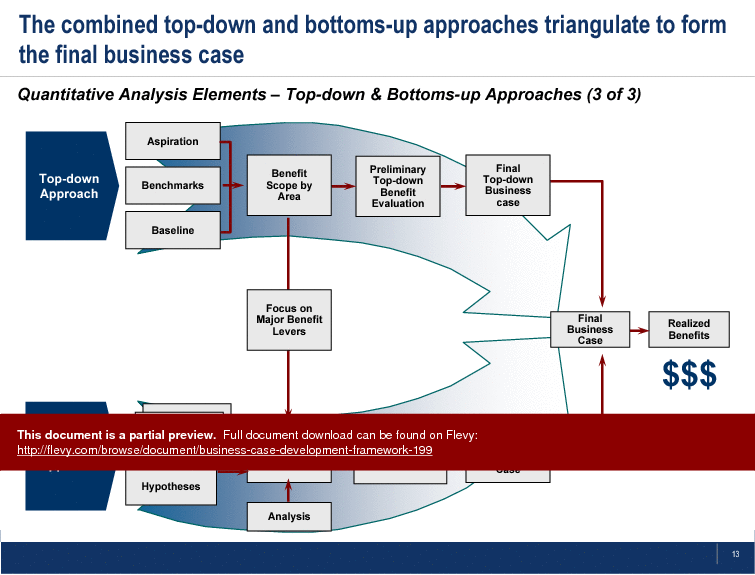
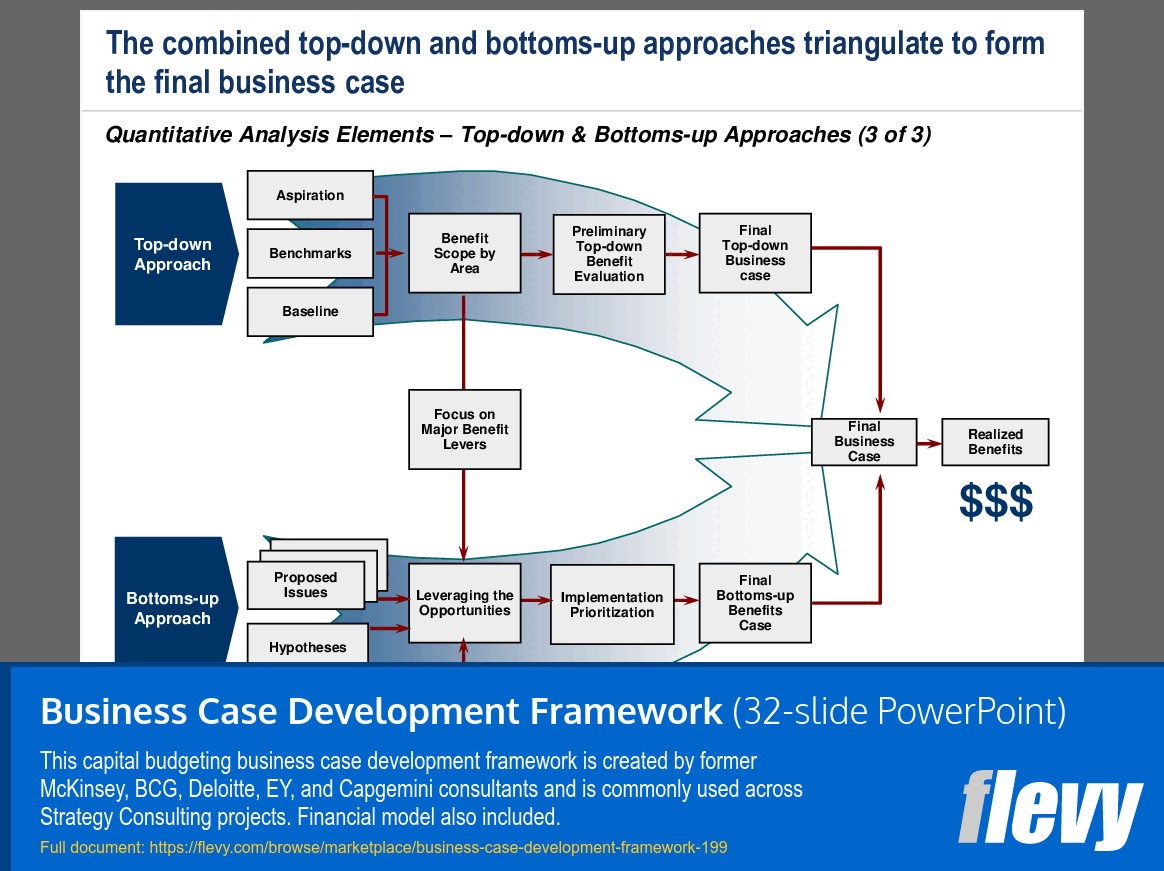
This PPT slide illustrates a structured approach to developing a business case using top-down and bottom-up methodologies. The top-down approach defines aspirations, benchmarks, and baseline metrics to establish the benefit scope, leading to a quantified financial outcome. The bottom-up approach starts with proposed issues and hypotheses, leveraging opportunities identified through detailed analysis and prioritizing impactful implementation steps. The outputs from both methodologies converge into a comprehensive business case, assessed for realized benefits. This triangulation of insights enhances the robustness of the business case, aligning strategic aspirations with operational realities and focusing on maximizing value creation while managing risks effectively.
This PPT slide outlines a structured approach to identifying and categorizing potential business benefits through financial decomposition and opportunity identification. Key actions include understanding financial levers, focusing on points of greatest leverage, and assessing the impact of benefits on company finances. Central to this is the Benefits Matrix, which categorizes benefits into 4 quadrants based on quantifiability and financial impact, divided into financial and non-financial categories. Financial benefits are further classified into identifiable and measurable versus those with financial impact, but difficult to estimate. Non-financial benefits are similarly categorized, highlighting measurable impacts and those that are challenging to quantify. This framework aids executives in systematically organizing benefits, prioritizing initiatives based on potential impact, and ensuring effective resource allocation for strategic planning and investment decisions.
This PPT slide outlines a structured approach for developing a business case using the "Sample Business Case Model" framework. It emphasizes mapping identified benefits against quantifiable financial attributes. A visual representation directs users to an interactive Excel financial model for quantifying benefits and generating financial projections. Users can double-click to access the model, enhancing engagement with the content. The slide also addresses potential technical issues, ensuring user accessibility. This practical tool aids executives in systematically evaluating benefits aligned with financial metrics, crucial for informed decision-making and securing stakeholder buy-in for investments.
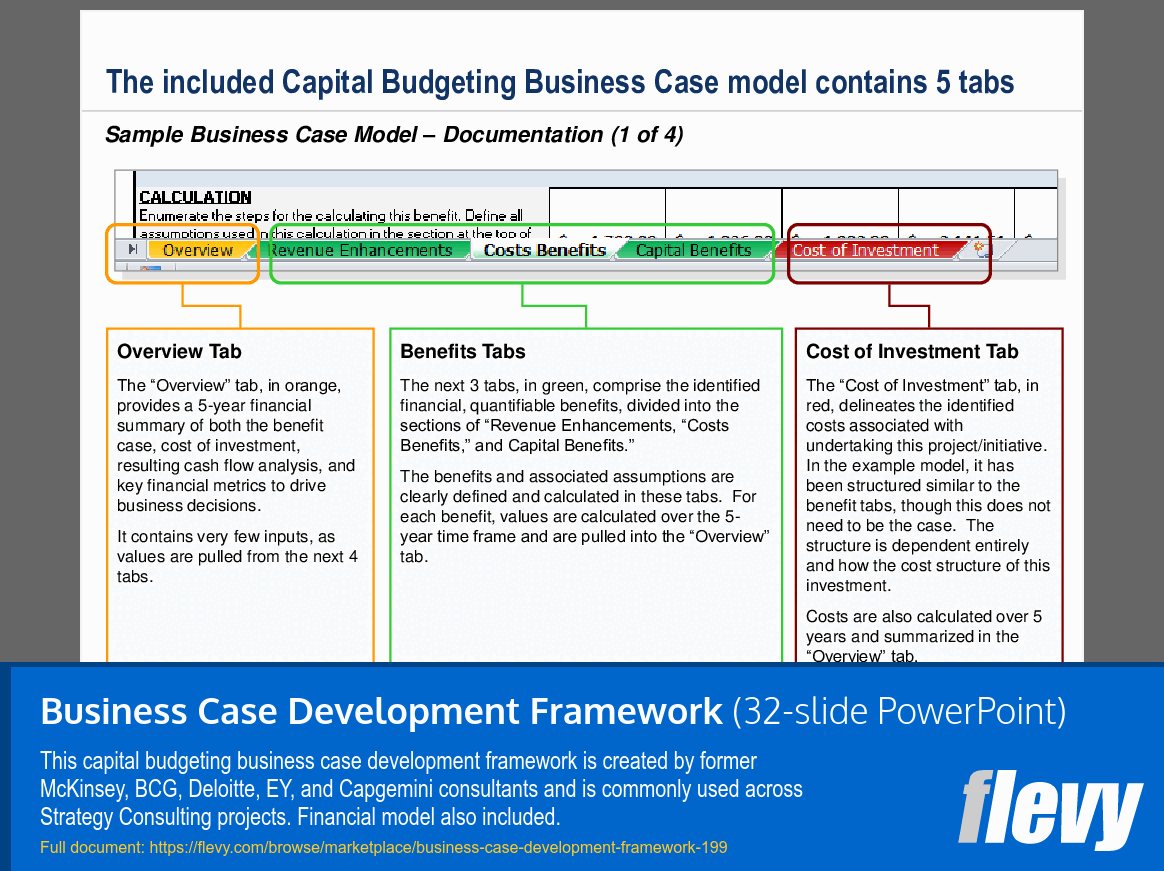
The Capital Budgeting Business Case model features 5 key tabs. The "Overview" tab provides a five-year financial summary, integrating the benefit case and investment costs, with minimal inputs relying on calculations from subsequent tabs. The "Benefits Tabs" categorize financial benefits into "Revenue Enhancements," "Costs Benefits," and "Capital Benefits," each defined and quantified over 5 years, ensuring clear assumptions for stakeholders. The "Cost of Investment" tab details the financial implications of the project, outlining costs associated with the investment and mirroring the benefits structure. This model systematically evaluates potential investments, supporting strategic decision-making and optimizing capital budgeting processes.
This PPT slide presents a framework for developing business cases, integrating top-down and bottoms-up approaches. The top-down business case focuses on establishing a common understanding of fundamental concepts and defining the overall framework, identifying key levers for generating benefits. It emphasizes financial analysis and "what if" scenarios. Conversely, the bottoms-up business case addresses operational aspects, quantifying specific opportunities and defining critical success factors and key performance indicators. Both methodologies rely on financial analysis and business modeling for effective evaluation and execution. A robust business case must incorporate insights from both approaches for comprehensive analysis and informed decision-making.
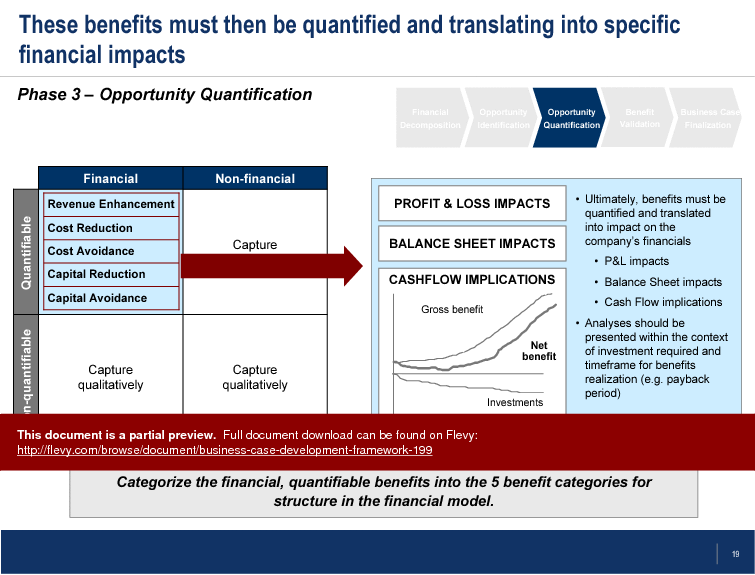
This PPT slide presents a structured framework for categorizing financial benefits in business case development. It identifies 5 distinct categories: Revenue Enhancement, Cost Reduction, Cost Avoidance, Capital Reduction, and Capital Avoidance. Revenue Enhancement focuses on increasing revenues, while Cost Reduction aims to lower existing costs. Cost Avoidance prevents costs from occurring, crucial for long-term financial health. The matrix features 2 axes: financial vs. non-financial and quantifiable vs. non-quantifiable, facilitating visualization of benefits captured quantitatively or qualitatively. The highlighted area emphasizes capturing benefits quantitatively, essential for rigorous financial analysis and decision-making. Organizations should categorize financial, quantifiable benefits into these 5 categories to enhance business case effectiveness and strategic planning.
Source: Best Practices in Business Case Development, Financial Modeling, Business Case Example PowerPoint Slides: Business Case Development Framework PowerPoint (PPT) Presentation Slide Deck, LearnPPT Consulting
This capital budgeting business case development framework is created by former McKinsey, BCG, Deloitte, EY, and Capgemini consultants and is commonly used across Strategy Consulting projects. Financial model also included.
We are a team of management consultants trained by top tier global consulting firms (including McKinsey, BCG, Deloitte, EY, Capgemini) with a collective experience of several decades. We specialize in business frameworks based on real-life consulting engagements.
We have served 100s of clients that range from Fortune 500 companies to tech startups to
... [read more] $1B+ private companies.
Utilize our consulting frameworks to apply structured thinking & analysis to address your business challenges, uncover strategic insights, and implement workable solutions. Our PowerPoint presentations follow traditional consulting slide design formats, starting with a clear slide headline. Easily customize and repurpose our slides for your own business presentations.
Beyond business frameworks & methodologies, we also offer PowerPoint templates and other business templates. Our templates are professionally designed and have been used in thousands of deliverables & work products across hundreds of clients.
The average daily rate of a McKinsey consultant is $6,625 (not including expenses). The average price of a Flevy document is $65.
Trusted by over 10,000+ Client Organizations
Since 2012, we have provided business templates to over 10,000 businesses and organizations of all sizes, from startups and small businesses to the Fortune 100, in over 130 countries.
Read Customer Testimonials
"I have used FlevyPro for several business applications. It is a great complement to working with expensive consultants. The quality and effectiveness of the tools are of the highest standards."
– Moritz Bernhoerster, Global Sourcing Director at Fortune 500
"My FlevyPro subscription provides me with the most popular frameworks and decks in demand in today’s market. They not only augment my existing consulting and coaching offerings and delivery, but also keep me abreast of the latest trends, inspire new products and service offerings for my practice, and educate me
in a fraction of the time and money of other solutions. I strongly recommend FlevyPro to any consultant serious about success.
"
– Bill Branson, Founder at Strategic Business Architects
"Flevy.com has proven to be an invaluable resource library to our Independent Management Consultancy, supporting and enabling us to better serve our enterprise clients.
The value derived from our [FlevyPro] subscription in terms of the business it has helped to gain far exceeds the investment made, making a subscription a no-brainer for any growing consultancy – or in-house strategy team."
– Dean Carlton, Chief Transformation Officer, Global Village Transformations Pty Ltd.
"I have found Flevy to be an amazing resource and library of useful presentations for lean sigma, change management and so many other topics. This has reduced the time I need to spend on preparing for my performance consultation. The library is easily accessible and updates are regularly provided. A wealth of great information."
– Cynthia Howard RN, PhD, Executive Coach at Ei Leadership
"[Flevy] produces some great work that has been/continues to be of immense help not only to myself, but as I seek to provide professional services to my clients, it gives me a large "tool box" of resources that are critical to provide them with the quality of service and outcomes they are expecting."
– Royston Knowles, Executive with 50+ Years of Board Level Experience
"Last Sunday morning, I was diligently working on an important presentation for a client and found myself in need of additional content and suitable templates for various types of graphics. Flevy.com proved to be a treasure trove for both content and design at a reasonable price, considering the time I
saved. I encountered a download issue during the ordering process. However, a quick email to Flevy's support team, even on a Sunday (!!!), resulted in assistance within less than an hour, allowing me to download the content I needed. Fantastic job, Flevy! I give 5 stars for both content/price and customer service. Thank you!
"
– M. E., Chief Commercial Officer, International Logistics Service Provider
"As a consulting firm, we had been creating subject matter training materials for our people and found the excellent materials on Flevy, which saved us 100's of hours of re-creating what already exists on the Flevy materials we purchased."
– Michael Evans, Managing Director at Newport LLC
"If you are looking for great resources to save time with your business presentations, Flevy is truly a value-added resource. Flevy has done all the work for you and we will continue to utilize Flevy as a source to extract up-to-date information and data for our virtual and onsite presentations!"
Download our free compilation of 50+ Strategy & Transformation slides and templates. Frameworks include McKinsey 7-S, Balanced Scorecard, Disruptive Innovation, BCG Curve, and many more.