

 Click main image to view in full screen. Unlock all 11 preview images:


BENEFITS OF THIS DOWNLOADABLE EXCEL DOCUMENT
- Business Planning for Airline companies
- Equity Research Firms
- Financial Analysis and Valuations
VALUATION MODEL EXAMPLE EXCEL DESCRIPTION
This is a very detailed and user-friendly financial model with the three financial statements i.e. Income Statement, Balance Sheet, and Cash Flow Statement, and detailed calculation around DCF based valuation and financial analysis.
The model captures 3 years of Historical + 5 Years of forecast period. Valuation is based on the 5-year forecast using a Discounted Cash Flow methodology.
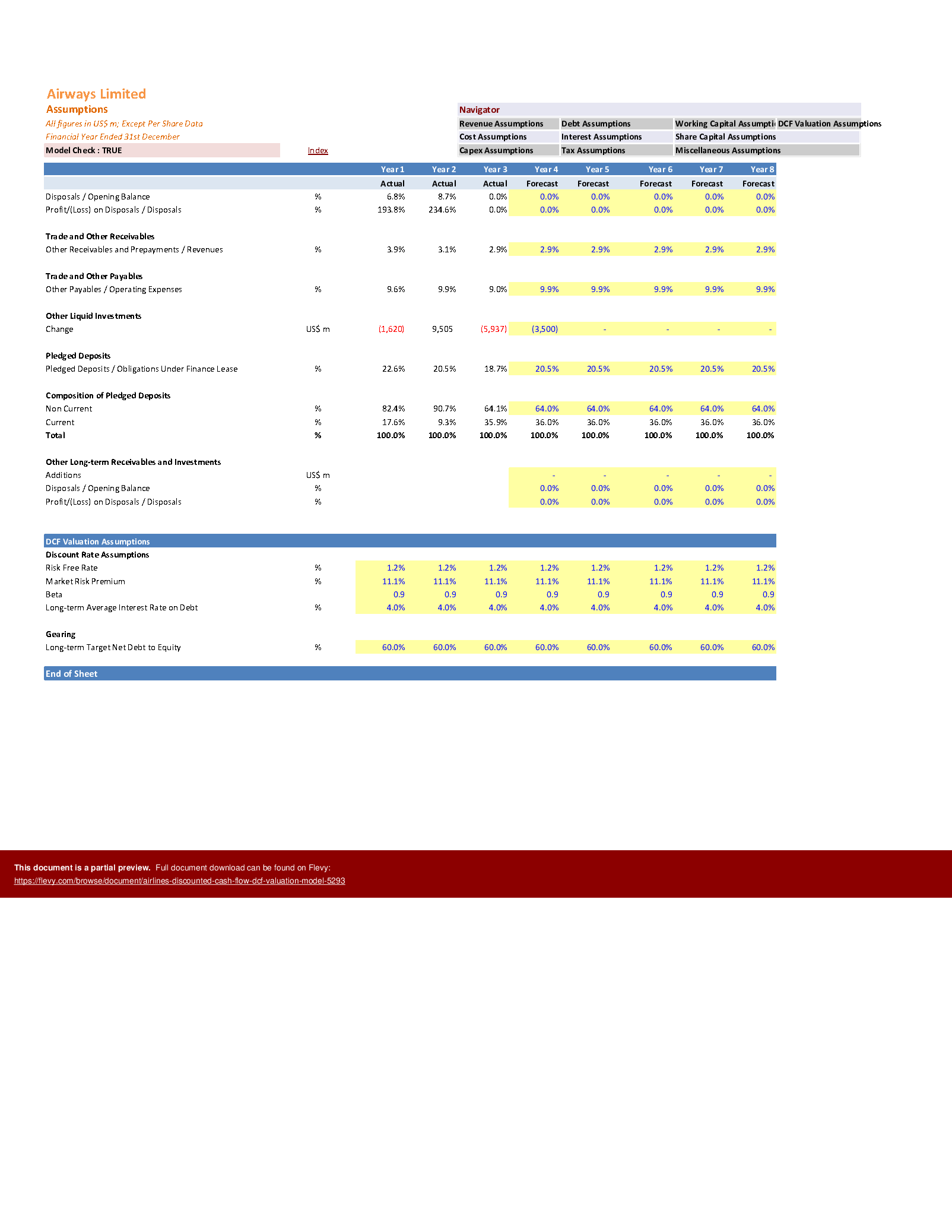
Assumptions tab allows for the inputting of a huge amount of financial data for your business. These inputs cover a wide range of financial data:
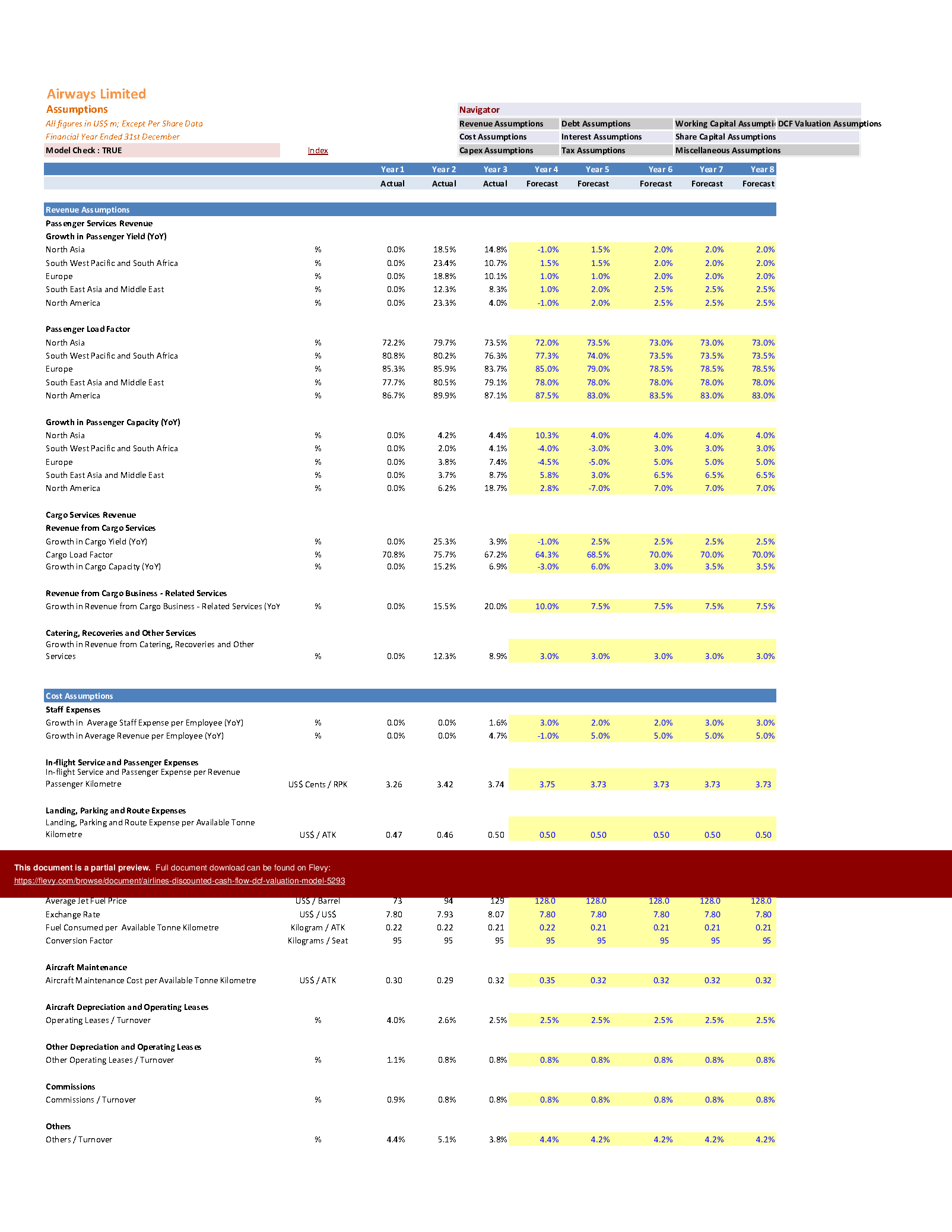
1. Revenue Assumption – Passenger Services (Passenger Yield, Passenger Traffic, and Passenger Load Factor and Capacity)
2. Revenue Assumption – Cargo Services (Cargo Yield, Cargo Traffic, and Capacity)
3. Costs Assumptions (Staff Cost, Fuel Expense, landing parking and route charges & more)
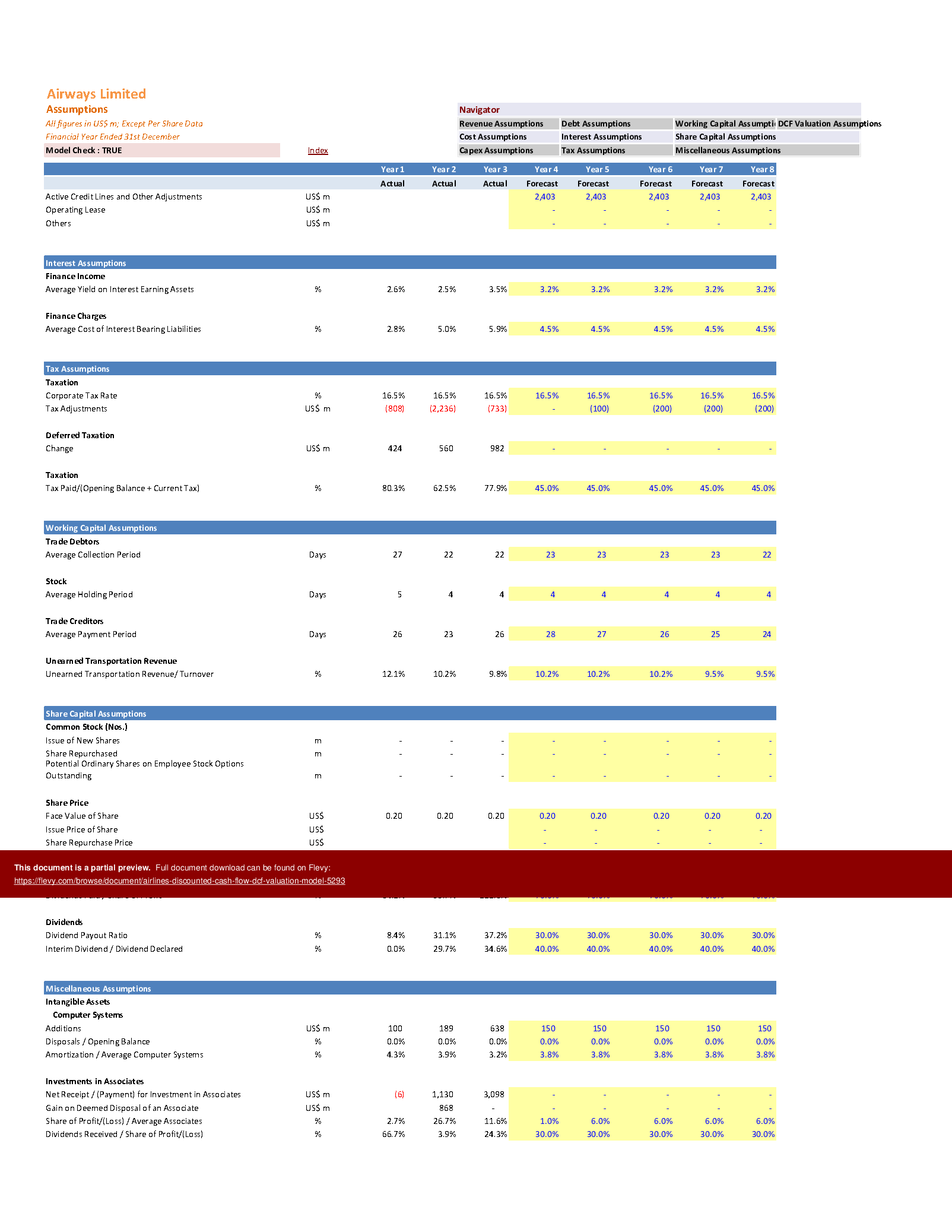
3. Income tax
4. Working Capital Assumptions (Receivables, Payable, Inventory)
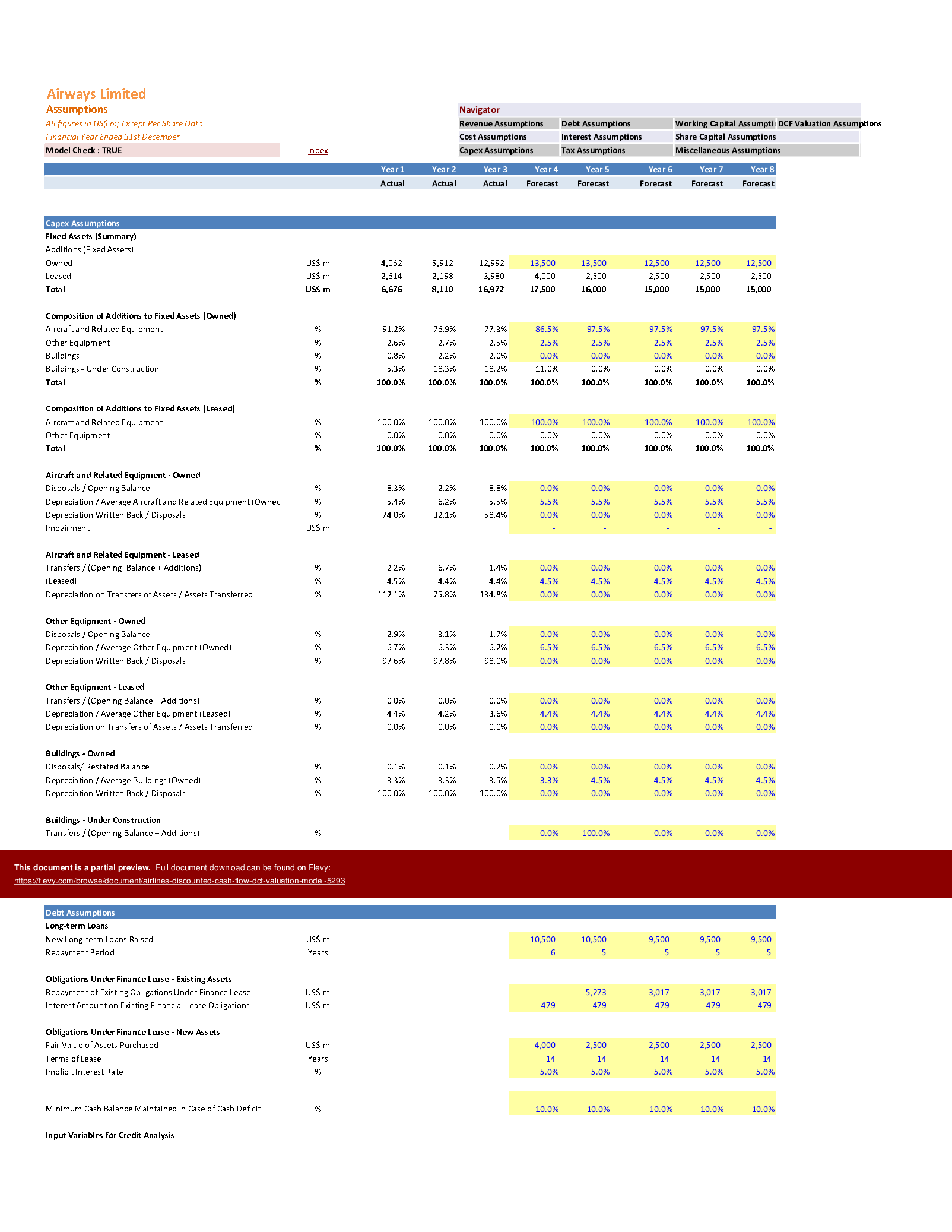
5. Capital Expenditure and Depreciation/Amortization (Tangle and In Tangible Assets)
6. Long Term and Short Term Debt
7. Share Capital (Issue of New shares and Reserve Accounts)
8. Dividend Calculation (Interim and Final Dividend along with Tax impact)
9. Interest Income and Expense calculations
The model runs comprehensive calculations based on the inputs provided by the user generate very accurate outputs which include:
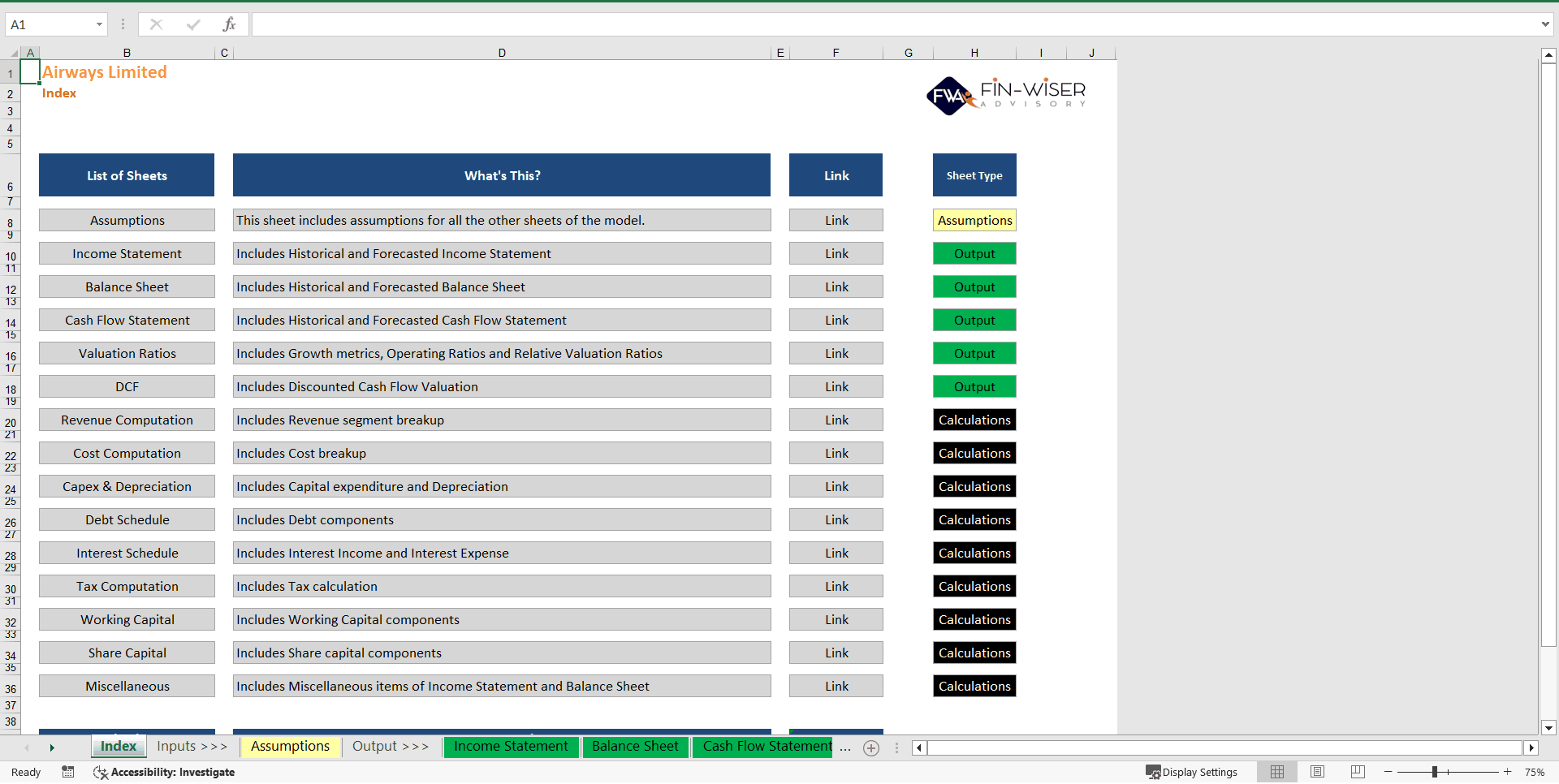
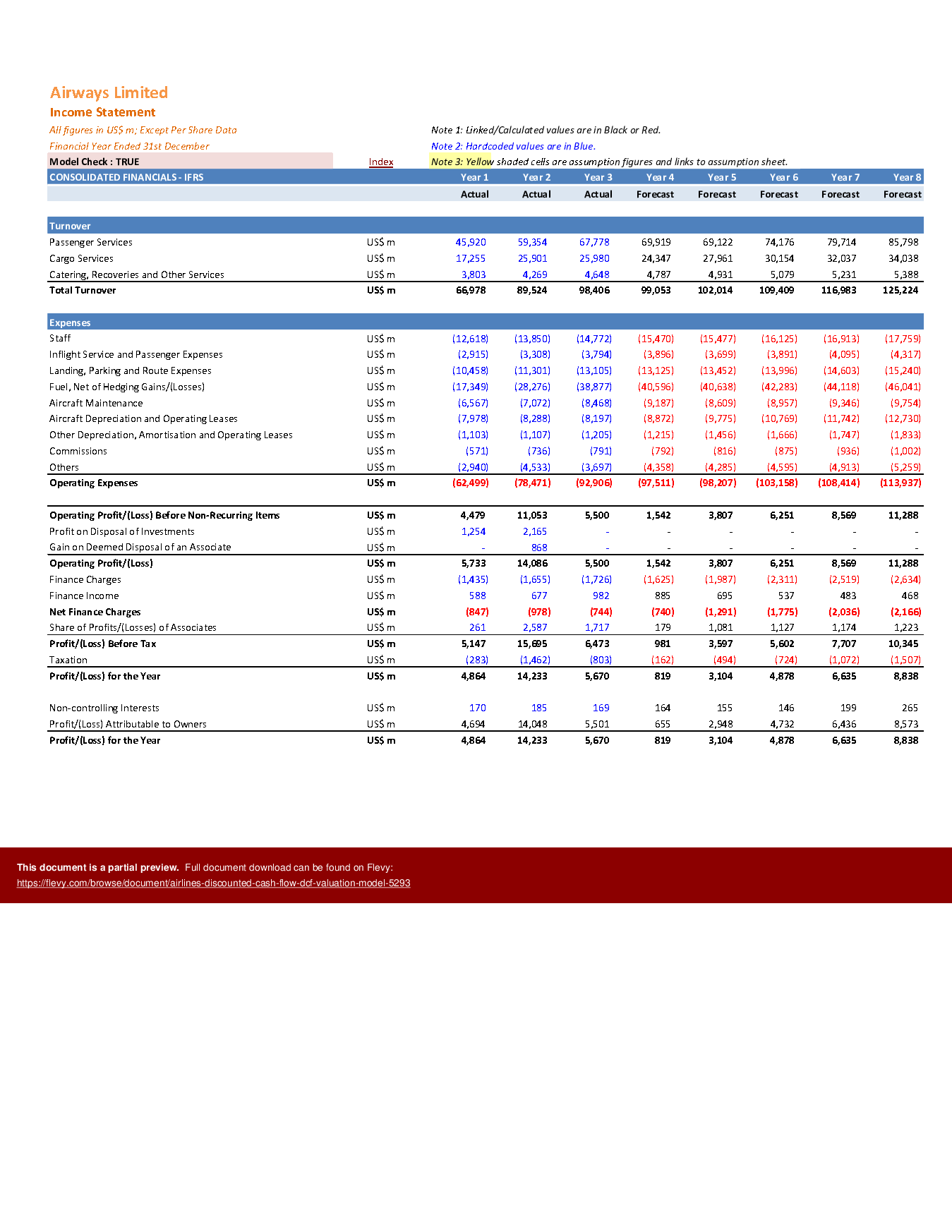
1. Income Statement: Includes Historical and Forecasted Profit and Loss statement
2. Balance Sheet: Includes Historical and Forecasted Balance sheet
3. Cash Flow Statement: Includes Historical and Forecasted cash flows
4. Valuation: DCF based valuation based on the Forecasted cash flows and discount rate assumptions
5. Valuation Ratio: A very detailed financial analysis covering:
• Price and EV based valuation ratios
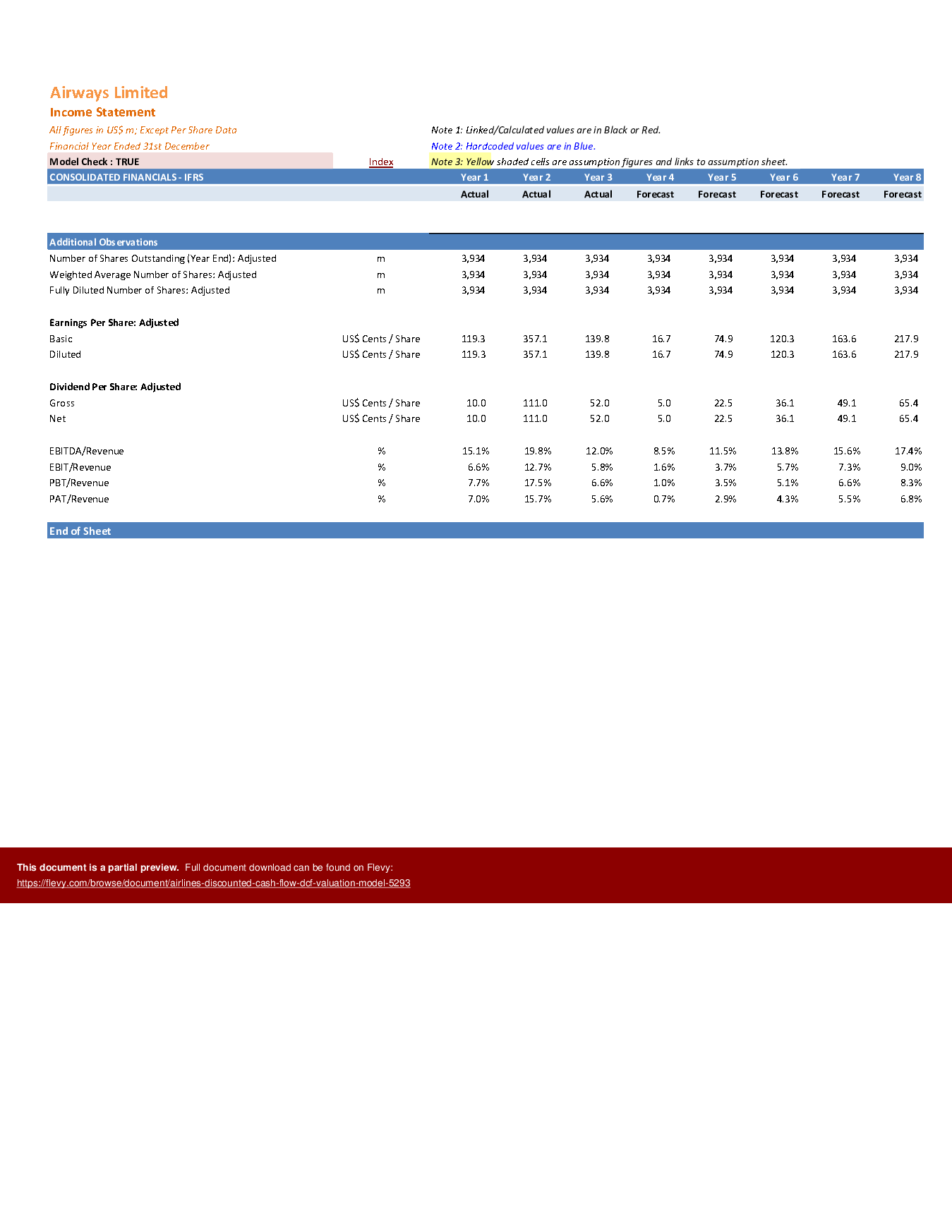
• Per Share Data like EPS, DPS, FCFF per share & more
• Margin ratios
• Return ratios
• Dupont Analysis
• Gearing Ratios
• Liquidity ratios
• Coverage Ratios
• Activity Ratios
• Investment rations
• Enterprise value
Functional areas where this model can be used:
1. Investment Banking (Buy Side and Sell Side)
2. Equity Research Firms
3. Financial Analysis and Valuations
4. Financial Modeling with Best Practices
5. Business Planning for Airline companies
The model includes detailed assumptions for revenue, costs, Capex, debt, and working capital, ensuring comprehensive financial forecasting. It also provides a thorough DCF valuation, including NPV calculations and sensitivity analysis, making it an indispensable tool for airline financial analysis.
Got a question about the product? Email us at support@flevy.com or ask the author directly by using the "Ask the Author a Question" form. If you cannot view the preview above this document description, go here to view the large preview instead.
TOPIC FAQ
What inputs are typically needed to build an airline DCF model?
Airline DCF models require revenue drivers (passenger yield, passenger traffic, load factor, capacity; cargo yield, cargo traffic, capacity), cost assumptions (staff, fuel, landing/route charges), tax, working capital (receivables, payables, inventory), CapEx and depreciation, debt, share capital, dividends, and interest calculations—inputs reflected in the model’s Assumptions tab.How do you forecast passenger revenue and capacity in an airline financial model?
Passenger revenue is projected by combining passenger yield with passenger traffic volumes, adjusted by load factor and available capacity; forecasting typically uses historical trends and explicit capacity assumptions to produce passenger services revenue forecasts using passenger yield, traffic, load factor, and capacity.What valuation outputs should I expect from an airline DCF model?
A complete airline model generates historical and forecasted Income Statement, Balance Sheet, and Cash Flow Statement, a DCF-based valuation with NPV, sensitivity analysis, and detailed valuation ratios such as price and EV multiples, per-share metrics, margin and return ratios, and enterprise value in Flevy’s Airlines Discounted Cash Flow (DCF) Valuation Model.How can sensitivity analysis affect an airline’s DCF valuation?
Sensitivity analysis varies key assumptions—discount rate, growth, yields, and cost items—to produce valuation ranges and show how NPV and DCF outcomes respond to input changes; the model includes sensitivity tools to quantify valuation volatility and NPV calculations.What should I look for when buying a ready-made airline financial model?
Buyers should confirm inclusion of the 3 core financial statements, multi-year coverage (historical and forecast), DCF and NPV valuation mechanics, sensitivity analysis, and detailed assumptions for passenger/cargo revenues, costs, CapEx, working capital, debt, and dividends—ideally covering 3 years historical and 5 years forecast.How can equity analysts derive per-share valuations from an airline DCF model?
Analysts convert forecasted free cash flows into enterprise value via DCF, adjust for net debt and share count to obtain equity value, and compute per-share metrics like EPS, DPS, and FCFF per share to support target price construction based on EPS, DPS, and FCFF per share.Can an airline DCF model be used for buy-side and sell-side transaction analysis?
Yes—investment banking use cases are explicit: the model supports buy-side and sell-side valuation workflows by providing forecasted cash flows, DCF/NPV outputs, enterprise value calculations, and ratio analyses applicable to transaction pricing and negotiation for buy-side and sell-side work.How do working capital and CapEx assumptions influence free cash flow in an airline valuation?
Changes in receivables, payables, and inventory alter operating cash conversion, while capital expenditure and depreciation determine cash required for asset investment; those inputs directly change forecasted free cash flows and therefore DCF valuation, using receivables, payables, inventory and capital expenditure assumptions.Source: Best Practices in Valuation Model Example, Airline Industry Excel: Airlines Discounted Cash Flow (DCF) Valuation Model Excel (XLSM) Spreadsheet, Fin-Wiser Advisory
ABOUT THE AUTHOR

Fin-wiser is a specialist advisory boutique focused on providing financial modelling, financial analysis, business transformation and business research services.
Our mission is to deliver high-quality Financial Models, Financial Analysis, Operational Transformation and Data Analytics which are custom made as per the business requirements. These solutions can integrate elements of business,
... [read more]
Ask the Author a Question
You must be logged in to contact the author.




























