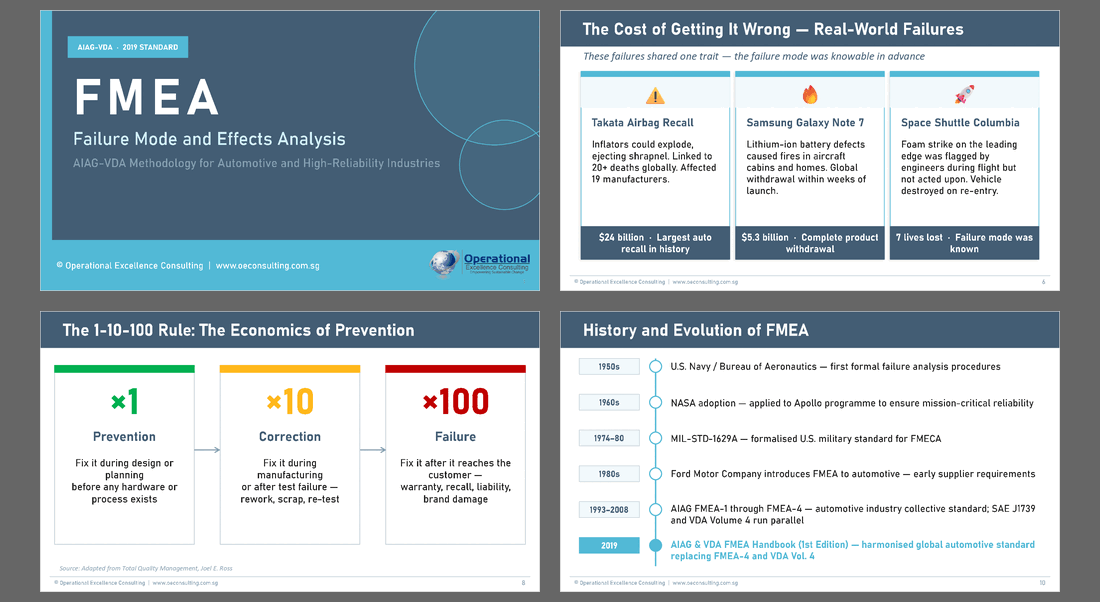

 Click main image to view in full screen. Unlock all 32 preview images:
AIAG VDA FMEA Toolkit – PowerPoint PPTX Template
PowerPoint (PPTX) + Excel (XLSX) 104 Slides


BENEFITS OF THIS DOWNLOADABLE POWERPOINT DOCUMENT
- Full Alignment with the IATF 16949 Standard: Standardize your engineering workflows to fully comply with global automotive customer-specific requirements (CSRs) and pass rigorous Tier 1 quality audits.
- Elimination of Risk Masking: Replace the arbitrary legacy Risk Priority Number (RPN) with the multi-dimensional AIAG-VDA Action Priority (AP) matrix, ensuring high-severity safety hazards are never overlooked.
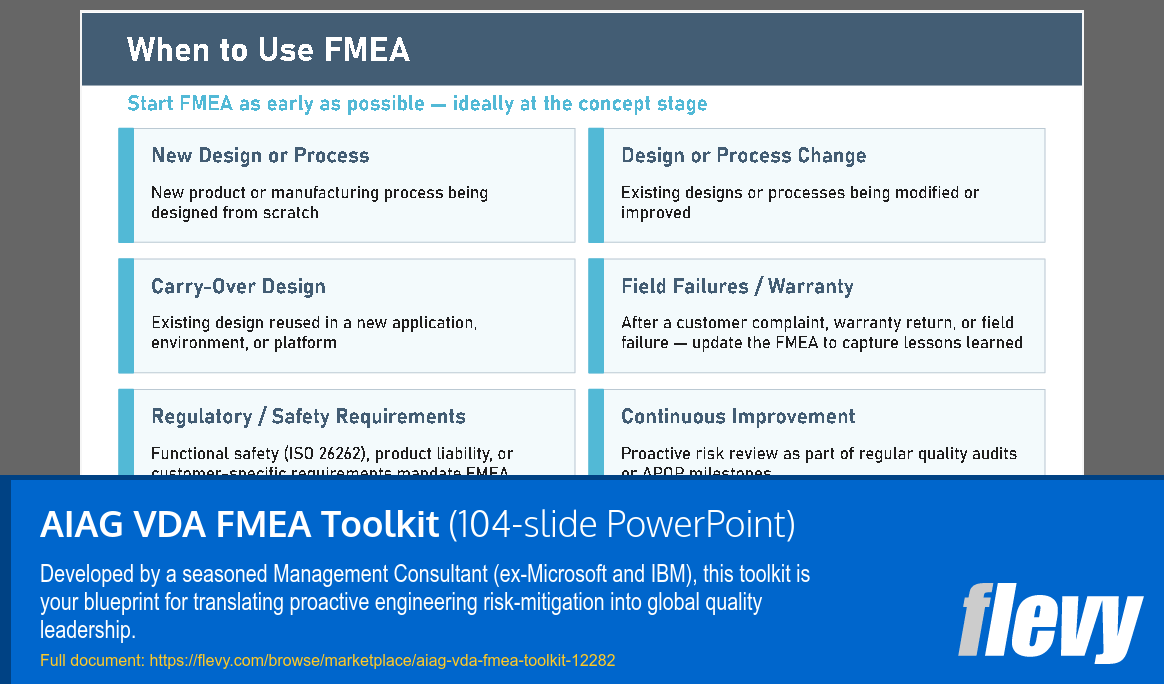
- Reduced Engineering Change Orders (ECOs): Identify design flaws and process bottlenecks "upstream" during the early planning phases, preventing expensive tooling re-work and launch delays.
FMEA PPT TEMPLATE DESCRIPTION
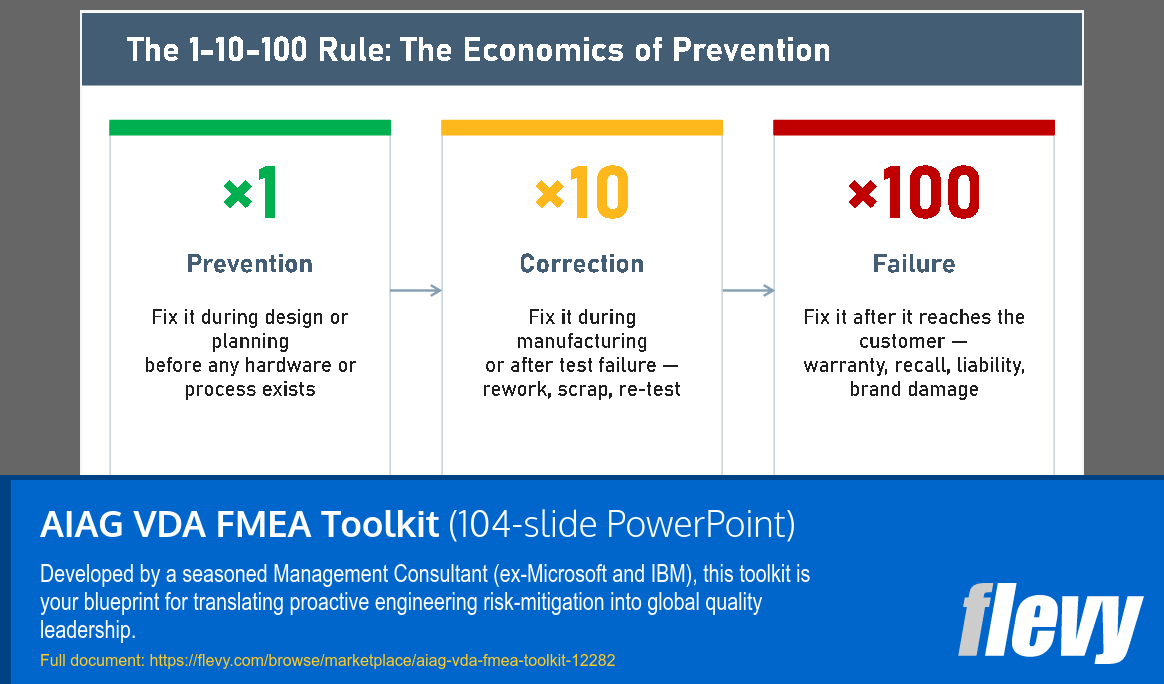
"If you can get clean water upstream, it is needless to purify the water downstream." In the world of high-reliability manufacturing, the 1-10-100 Rule proves that while prevention costs $1, fixing a failure after it reaches the customer can cost $100 in warranty, recalls, and brand damage. This toolkit empowers you to move "upstream," systematically identifying and eliminating failure modes before they ever reach the shop floor or the customer. Transitioning to the harmonized AIAG-VDA standard is no longer optional—it is your competitive advantage in ensuring zero-defect quality and regulatory compliance.
EXECUTIVE SUMMARY
This comprehensive AIAG-VDA FMEA Training Presentation & Practitioner Toolkit provides a complete roadmap for mastering the 2019 harmonized standard jointly developed by the Automotive Industry Action Group (AIAG) and the Verband der Automobilindustrie (VDA). The core of the package is a seven-module, instructor-led training presentation that guides teams through the disciplined Seven-Step methodology. Unlike legacy column-driven approaches, this toolkit focuses on building rigorous Structure, Function, and Failure analysis trees before documentation, ensuring a deeper understanding of technical risks.
TARGET AUDIENCE
This toolkit is designed for professionals in automotive and related high-reliability industries, specifically:
• Design and Process Engineers responsible for product integrity and manufacturing robustness.
• Quality Professionals and Auditors ensuring compliance with IATF 16949 and OEM requirements.
• Manufacturing Engineers and Program Managers who must lead cross-functional FMEA teams.
• Existing FMEA Practitioners transitioning from legacy AIAG FMEA-4 or VDA Volume 4 standards.
LEARNING OBJECTIVES
By the end of this training, participants will be able to:
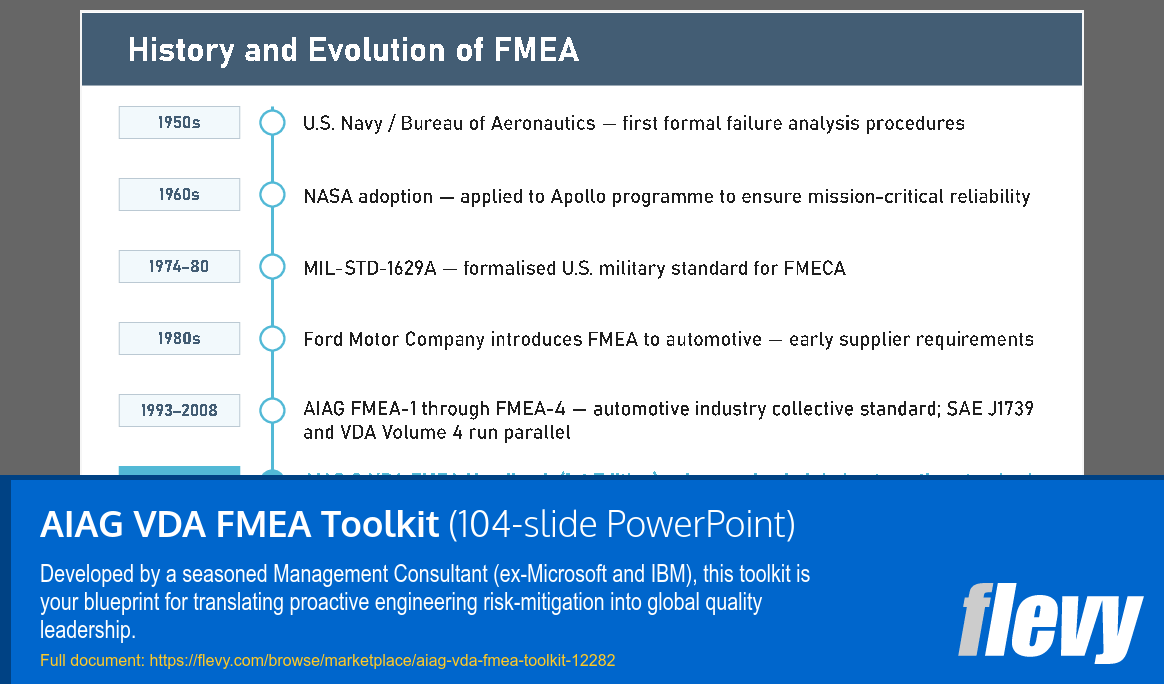
• Explain the business case and evolution of the AIAG-VDA FMEA methodology.
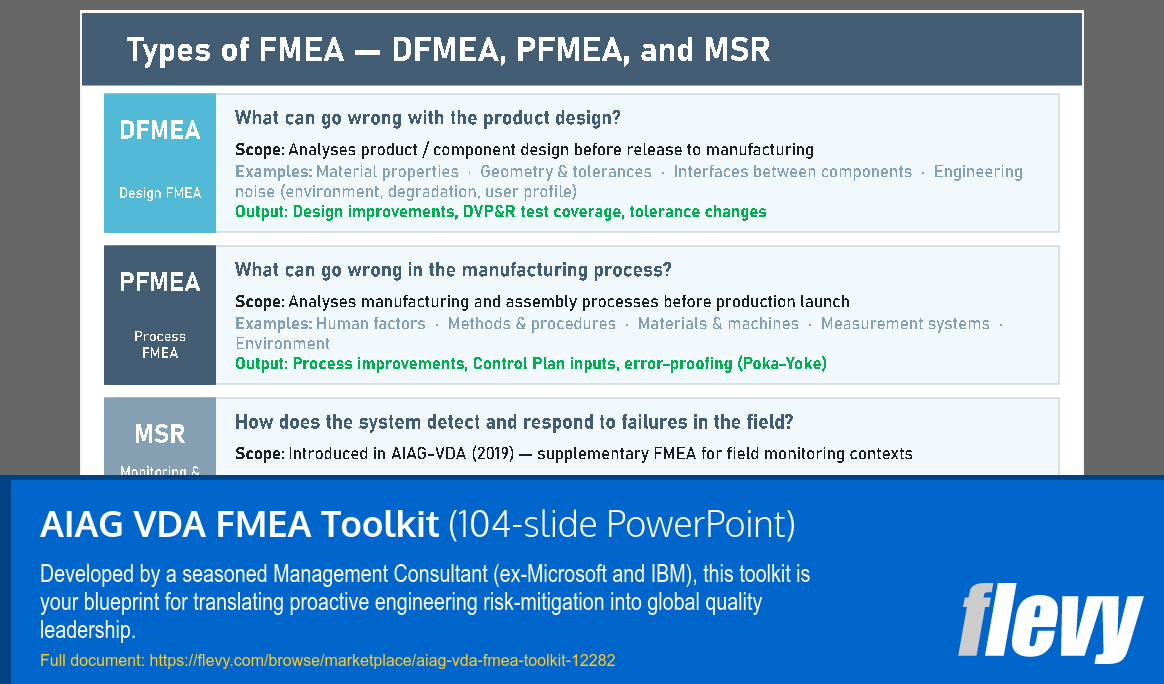
• Apply the Seven-Step process for both Design (DFMEA) and Process (PFMEA) contexts.
• Construct technical analysis trees for Structure, Function, and Failure (the "Failure Net").
• Utilize AIAG-VDA rating tables to accurately score Severity, Occurrence, and Detection.
• Prioritize actions using AP (High/Medium/Low) as the primary risk metric.
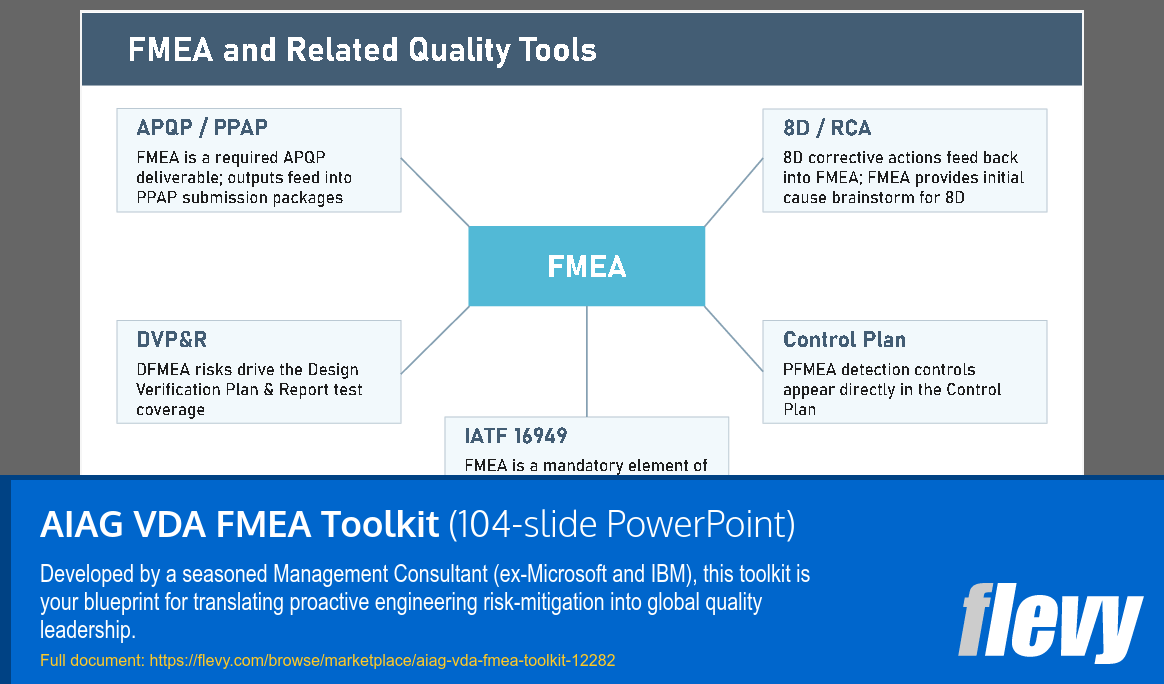
• Integrate FMEA outputs directly into Control Plans and Design Verification Plans (DVP&R).
KEY CONTENTS
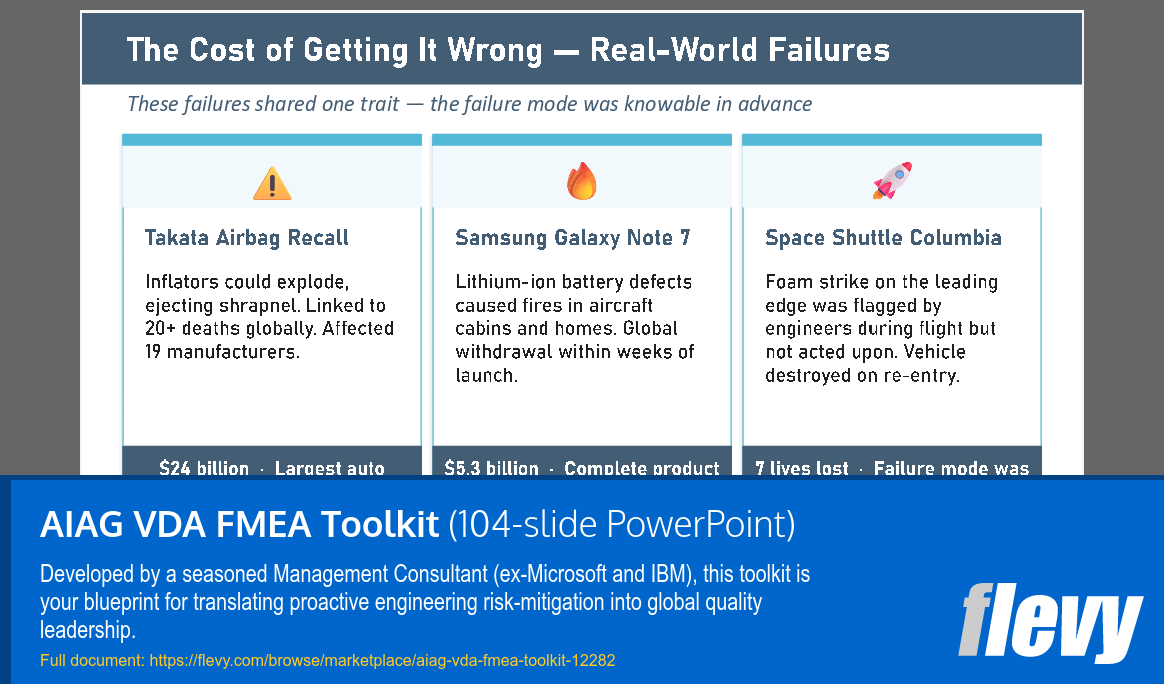
• Module 1: Introduction & Context: The history of FMEA and the cost of quality failures (e.g., Takata, Samsung).
• Module 2: AIAG-VDA vs. Universal FMEA: Why the standard changed and the limitations of legacy RPN.
• Module 3: The Seven-Step Process: A deep dive into Planning, Structure, Function, Failure, Risk Analysis, Optimization, and Documentation.
• Module 4: Rating Scales Deep-Dive: Precise calibration of S, O, D scores and reading AP tables.
• Module 5: Pitfalls & Best Practices: How to avoid the "checkbox FMEA" and manage team facilitation.
• Module 6: Case Studies: Real-world applications for an Engine Gasket (PFMEA) and a Brake Caliper (DFMEA).
• Module 7: Summary & Action Planning: Consolidating learning and committing to implementation.
WHAT DOES THIS TOOLKIT INCLUDE?
• Professional Powerpoint Presentation: Over 100 slides of instructor-led content with animations and group exercises.
• Excel PFMEA & DFMEA Templates: Fully structured templates aligned with the AIAG & VDA Handbook column requirements.
• Action Priority (AP) Look-Up Tables: Embedded references for quick risk determination.
• AIAG-VDA Rating Tables: Complete 1-10 scales for Severity, Occurrence, and Detection.
• FMEA Common Mistakes Quick-Reference Card: A "must-have" checklist for every FMEA session.
• Glossary of Key Terms: Ensuring the team speaks a common language.
GLOSSARY OF KEY TERMS
• Action Priority (AP): The primary risk decision metric (H/M/L) determined by a look-up table rather than a formula.
• Failure Net: A three-level structural link between Failure Effect (FE), Failure Mode (FM), and Failure Cause (FC).
• Focus Element: The specific component or process step being analyzed in a given FMEA row.
• Prevention Control: A feature that reduces the likelihood of a cause occurring (affects the Occurrence rating).
• Detection Control: A method that discovers a failure after it occurs but before it reaches the customer (affects the Detection rating).
• MSR FMEA: A supplementary FMEA type for Monitoring and System Response in field contexts.
• Poka-Yoke: An engineering or mechanical error-proofing technique designed to make it physically or procedurally impossible for a specific process failure to occur.
FREQUENTLY ASKED QUESTIONS
Does this replace our legacy FMEA-4 documents automatically? No. Transition timelines are typically determined by your OEM customer-specific requirements (CSRs).
Can we still use RPN? While RPN is retained for historical continuity, it is no longer the primary metric. You should report both, but AP must be the driver for action.
How do we handle a Severity 10 failure if detection is excellent? Per the AIAG-VDA look-up table, a Severity 9 or 10 failure is almost always "High" Action Priority (H) and requires a design-level action or formal risk acceptance.
What is the most common mistake in FMEA? Confusing the Failure Effect, Mode, and Cause. This toolkit uses the "Failure Net" to specifically prevent this error.
Got a question about the product? Email us at support@flevy.com or ask the author directly by using the "Ask the Author a Question" form. If you cannot view the preview above this document description, go here to view the large preview instead.
Source: Best Practices in FMEA PowerPoint Slides: AIAG VDA FMEA Toolkit PowerPoint (PPTX) Presentation Slide Deck, Operational Excellence Consulting
ABOUT THE AUTHOR

Operational Excellence Consulting, founded in 2009 by Allan Ung, draws from extensive experience at Microsoft, IBM, and Underwriters Laboratories (UL). We specialize in strategy deployment, customer experience design, and operational excellence, applying Design Thinking, Lean, and Systems Thinking to maximize customer value and minimize waste.
Our
... [read more]
Ask the Author a Question
You must be logged in to contact the author.




























