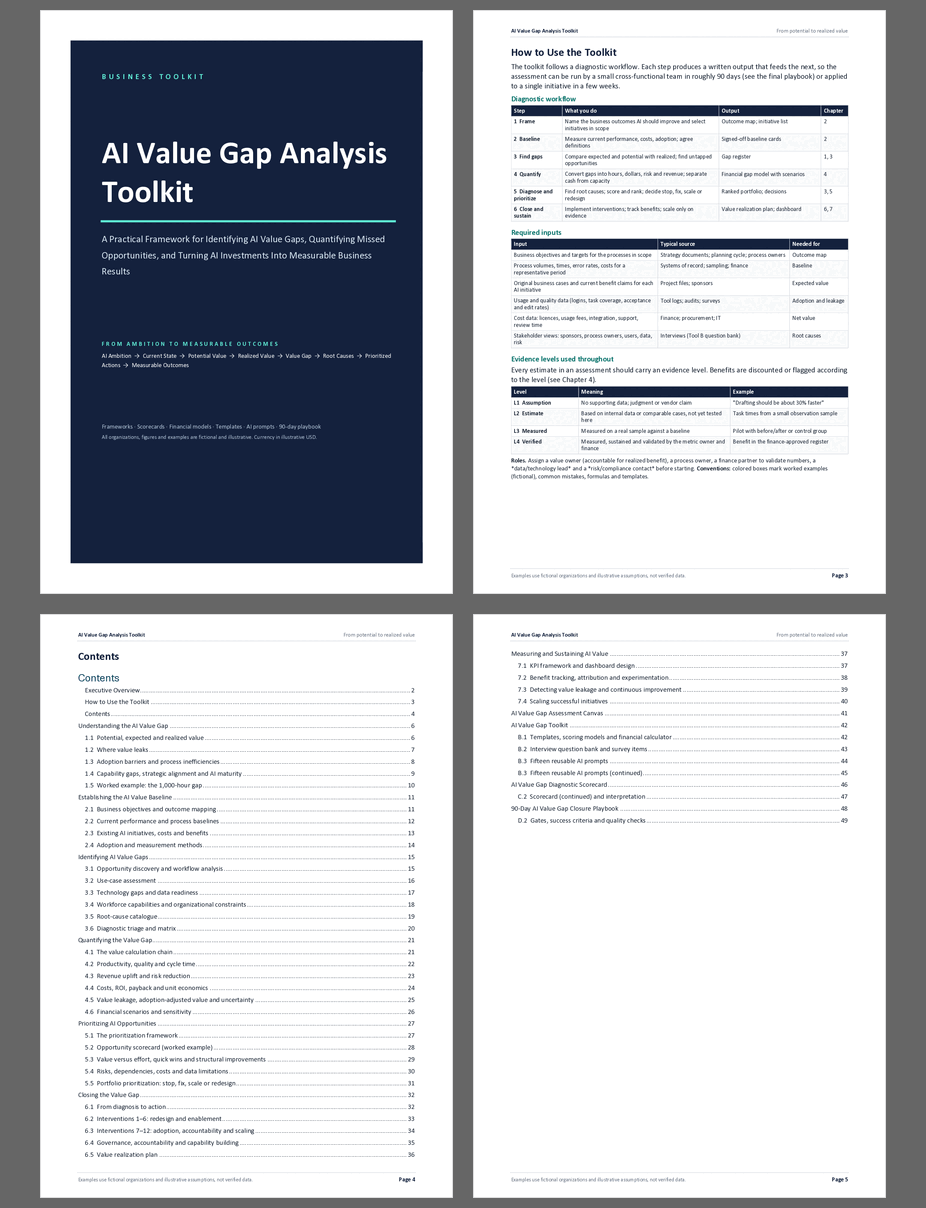
 Click main image to view in full screen. Unlock all 14 preview images:
AI Value Gap Analysis Toolkit – Word DOCX
Word (DOCX) 49 Pages


BENEFITS OF THIS DOWNLOADABLE WORD DOCUMENT
- Provides a framework for identifying AI value gaps and turning AI investments into measurable business results.
- Provides practical tools for measuring AI ROI, uncovering missed opportunities, and prioritizing high-value AI initiatives.
- Provides a structured 90-day roadmap for improving AI adoption, closing value gaps, and achieving sustainable business outcomes.
ARTIFICIAL INTELLIGENCE WORD DESCRIPTION
Curated by McKinsey-trained Executives
AI Value Gap Analysis Toolkit: Turn AI Investments Into Measurable Business Results
Stop spending on AI without knowing what it actually delivers. Discover where your AI investments are underperforming, uncover hidden productivity and revenue opportunities, quantify your AI ROI, and build a practical 90-day action plan to turn unrealized AI potential into measurable business value.
A practical, 49-page business toolkit for identifying AI value gaps, calculating missed opportunities, improving AI adoption, prioritizing high-value use cases, and proving the business impact of artificial intelligence.
THE PROBLEM EVERY BUSINESS LEADER FACES
Your organization is investing in AI. Employees are experimenting with AI tools. Teams are running pilots. Vendors are promising productivity gains, lower operating costs, faster workflows, and new revenue opportunities.
But here is the uncomfortable question:
Can you prove how much business value your AI investments are actually delivering?
If you cannot answer that question with credible numbers, you may have a costly AI value gap hiding in plain sight.
❌ You are paying for AI without proving the return. Licences, implementation, integration, training, and ongoing operating costs keep accumulating, while the actual financial benefits remain uncertain.
❌ Your AI tools are available, but adoption is inconsistent. Employees avoid certain tasks, distrust outputs, or continue using manual workflows. The technology exists, but the business impact falls short of expectations.
❌ Productivity gains never reach the bottom line. Employees may save minutes on individual tasks, but those hours are not deliberately redeployed, operating costs do not change, and finance cannot verify the savings.
❌ Your AI pilots look promising, but scaling is difficult. What works for a small, motivated team may fail when exposed to inconsistent data, legacy systems, different workflows, and organization-wide adoption challenges.
❌ You cannot distinguish genuine value from optimistic estimates. Time saved, theoretical benefits, revenue uplift, cost avoidance, and verified financial savings are often mixed together, making business cases difficult to defend.
❌ Nobody owns the value after go-live. Project teams deliver the technology, but accountability for adoption, benefit realization, and sustained business outcomes disappears.
❌ You keep investing without knowing what to fix, scale, or stop. Competing AI initiatives consume budget and resources without a consistent framework for comparing their potential value, feasibility, risk, and evidence.
The problem is not necessarily your AI technology. The problem may be the gap between what your AI could deliver and what your organization actually captures.
And until you identify that gap, you risk funding activity instead of results.
Now you can take a structured, evidence-based approach to closing it.
INTRODUCING: THE AI VALUE GAP ANALYSIS TOOLKIT
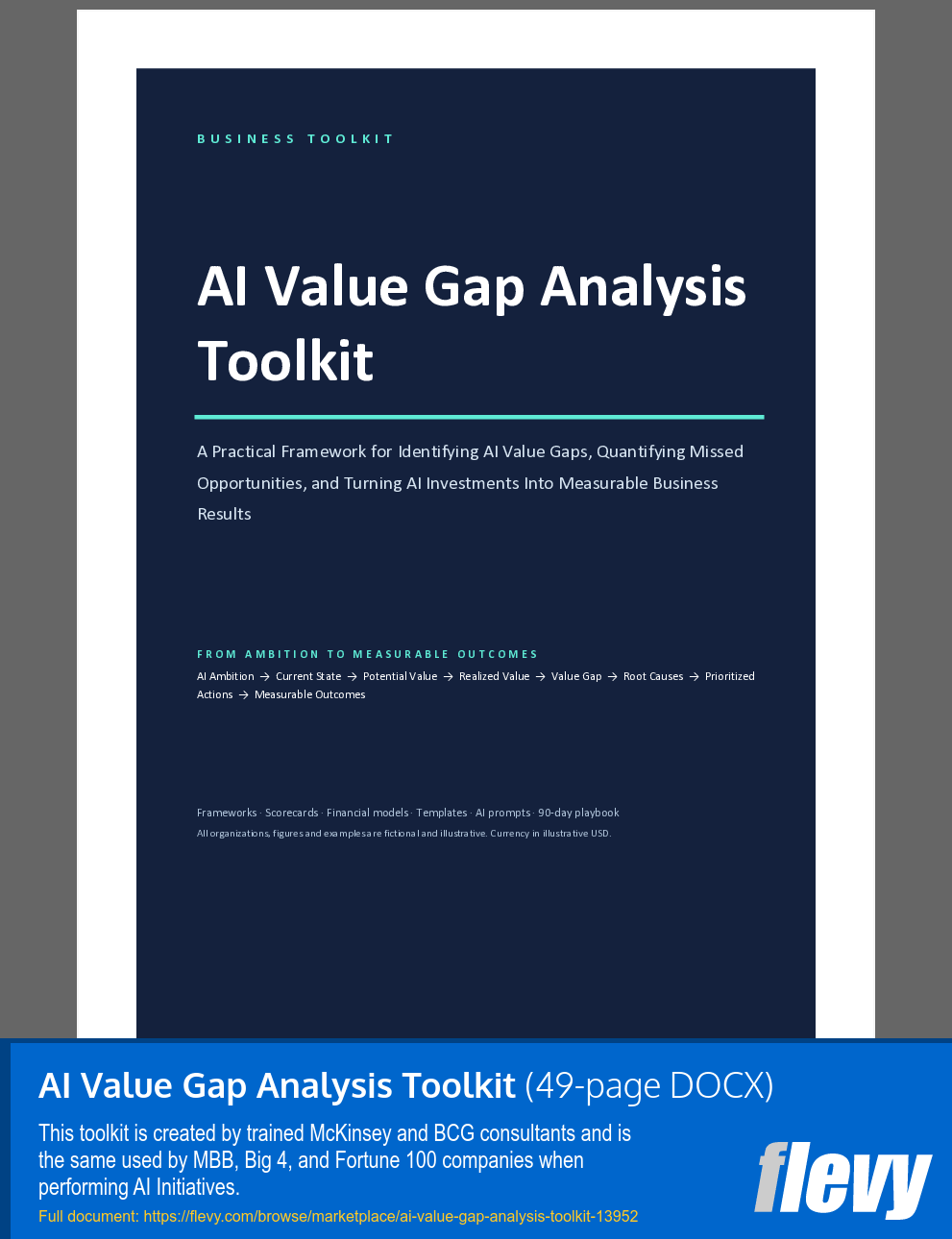
A Practical Framework for Identifying AI Value Gaps, Quantifying Missed Opportunities, and Turning AI Investments Into Measurable Business Results
The AI Value Gap Analysis Toolkit gives executives, finance leaders, AI managers, operations teams, and transformation professionals a practical framework for answering the questions that matter:
• Where is our AI investment creating measurable business value?
• Where are productivity gains, cost savings, and revenue opportunities leaking away?
• What is the financial difference between expected AI value and realized AI value?
• Which AI use cases deserve more investment, and which should be fixed, redesigned, or stopped?
• How can we improve AI adoption, reduce rework, and turn released capacity into tangible business benefits?
• How do we measure AI ROI, validate results, and scale successful initiatives with confidence?
Instead of relying on vendor promises, anecdotal productivity gains, or optimistic business cases, this toolkit helps you establish a consistent measurement process built around one practical framework:
AI Ambition → Current State → Potential Value → Realized Value → Value Gap → Root Causes → Prioritized Actions → Measurable Outcomes
This is how you move from AI experimentation to disciplined AI value realization.
Not more AI activity. Not more unverified claims. A structured method for identifying where value is being lost and deciding what to do about it.
WHAT IF YOU COULD UNCOVER THE VALUE YOUR AI INVESTMENTS ARE FAILING TO DELIVER?
Imagine being able to:
✅ Identify your AI value gaps systematically. Compare potential, expected, and realized business value to expose the difference between projected benefits and demonstrable results.
✅ Calculate the financial impact of AI underperformance. Translate missed productivity, incomplete adoption, excessive rework, and unrealized capacity into transparent financial models using defined assumptions.
✅ Measure AI ROI, payback, and net business value. Account for implementation costs, licences, usage fees, integration, support, monitoring, and operating effort rather than presenting gross benefits as profit.
✅ Discover why AI initiatives are underperforming. Investigate adoption barriers, workflow friction, data quality, integration weaknesses, workforce capability gaps, governance problems, and unsuitable use cases.
✅ Prioritize AI investments using a structured scoring framework. Compare business impact, confidence, feasibility, strategic fit, investment requirements, and risk to make more defensible portfolio decisions.
✅ Separate genuine financial savings from theoretical productivity gains. Distinguish cash savings, released capacity, cost avoidance, revenue contribution, risk reduction, and non-financial benefits without counting the same benefit twice.
✅ Build a credible AI value realization plan. Assign accountable owners, define corrective actions, set targets, establish measurement methods, and connect each intervention to an expected outcome.
✅ Create an AI performance dashboard that executives can use. Track baselines, targets, trends, adoption, quality, costs, and finance-validated benefits in a consistent reporting framework.
✅ Decide what to stop, fix, scale, or redesign. Replace vague judgments with explicit criteria, supporting evidence, and documented portfolio decisions.
✅ Follow a structured 90-day AI value gap closure playbook. Move from diagnosis and baseline measurement to prioritization, corrective action, verification, and an executive-level review.
The toolkit brings these activities together in one practical, reusable business framework.
WHAT'S INSIDE THE AI VALUE GAP ANALYSIS TOOLKIT
Executive Overview: Understand the AI value gap, why expected benefits fail to materialize, and how the toolkit connects diagnosis, financial analysis, corrective action, and measurable outcomes.
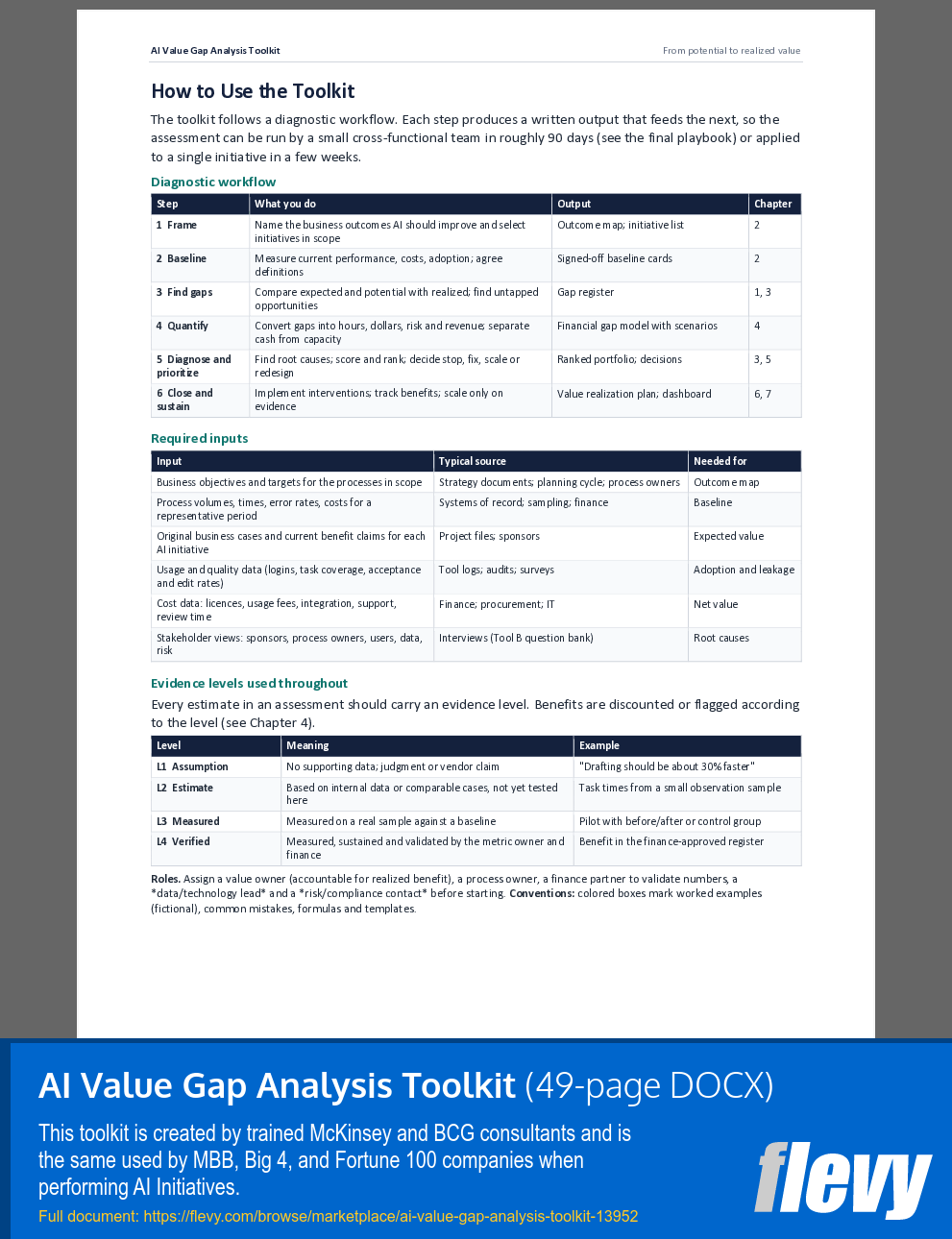
How to Use the Toolkit: Follow a structured diagnostic workflow, identify the required business inputs, assign responsibilities, and evaluate the strength of the evidence behind every benefit claim.
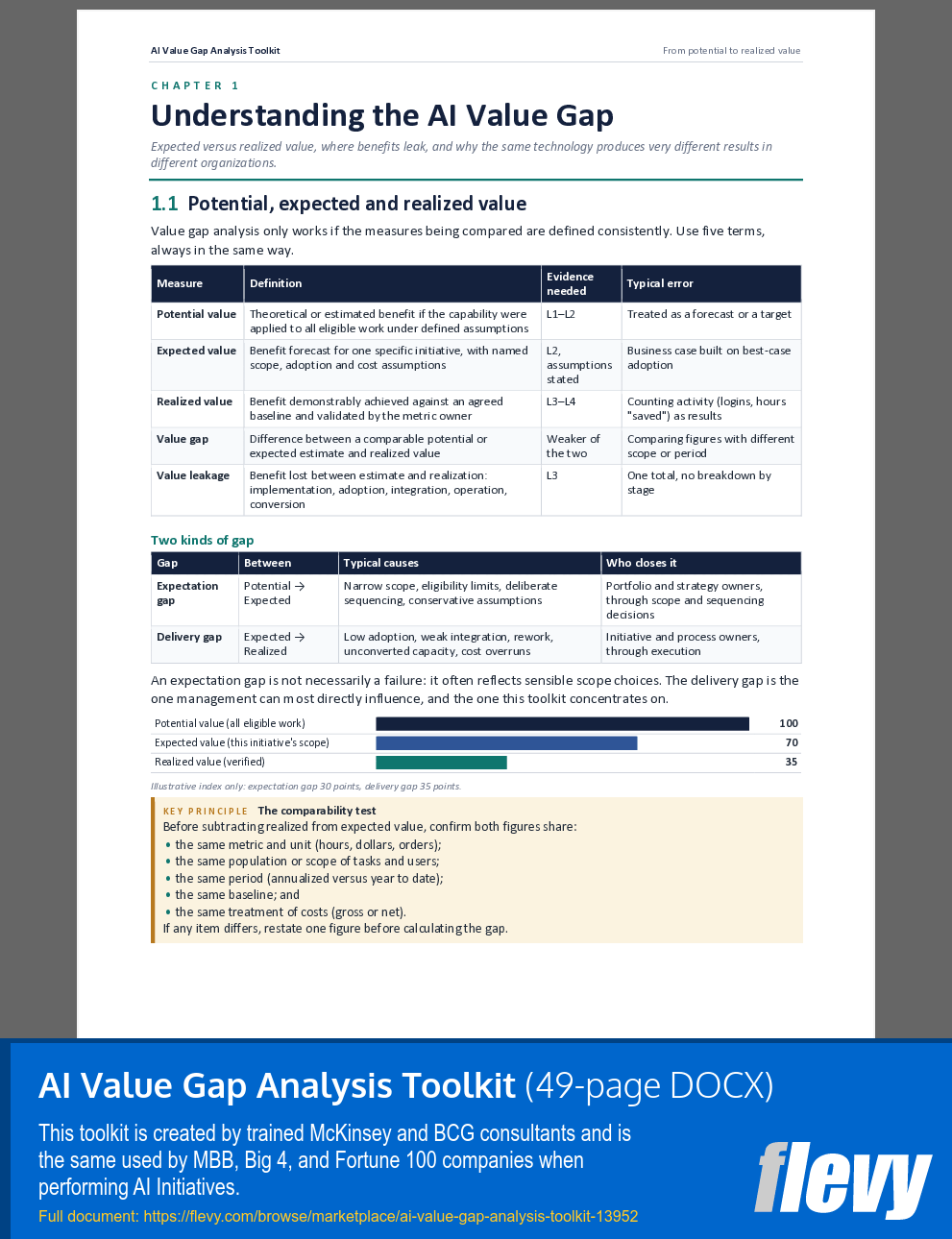
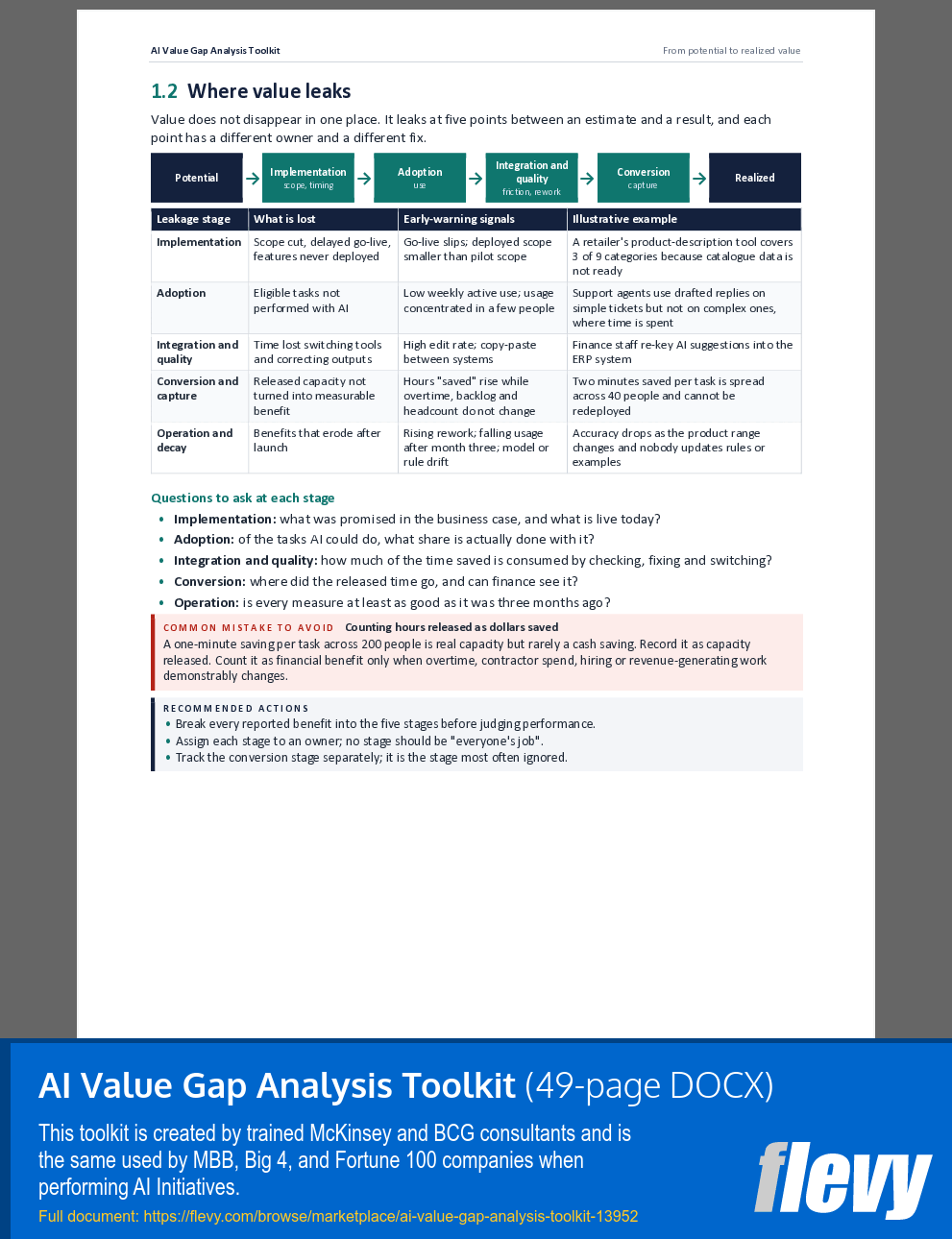
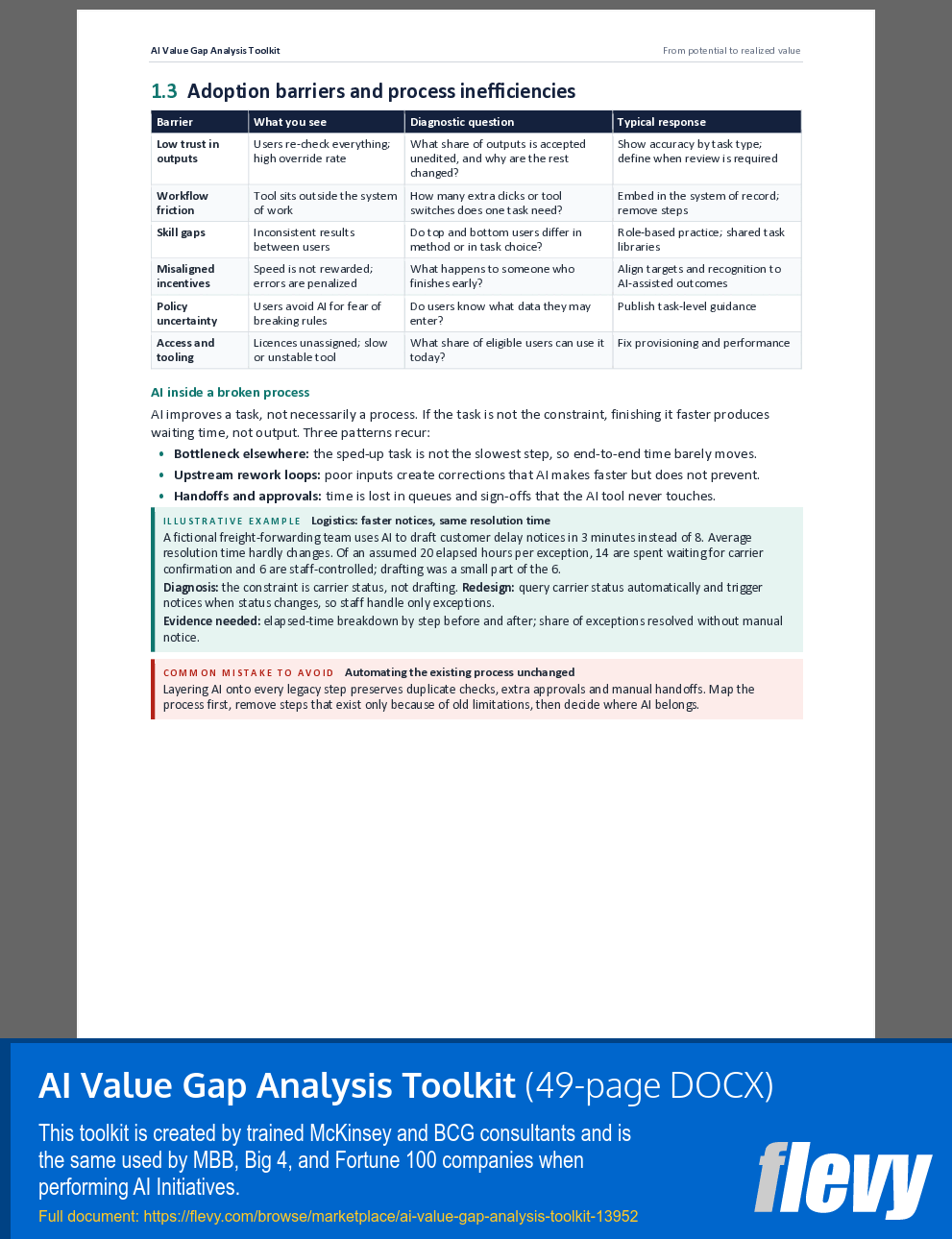
Understanding the AI Value Gap: Explore potential, expected, and realized AI value; identify five stages of value leakage; diagnose adoption barriers and process inefficiencies; assess strategic alignment and AI maturity; and work through the illustrative 1,000-hour gap example.
Establishing the AI Value Baseline: Define business objectives and outcome metrics, establish reliable process baselines, inventory existing AI initiatives, document costs and benefits, and measure adoption using clearly defined indicators.
Identifying AI Value Gaps: Discover high-value AI opportunities through workflow analysis, assess use-case suitability, evaluate technology and data readiness, identify workforce and organizational constraints, investigate root causes, and apply a diagnostic triage matrix.
Quantifying the Value Gap: Calculate gross potential value, adoption-adjusted benefits, realized financial value, net annual value, ROI, payback, productivity improvements, quality gains, cycle-time benefits, revenue contribution, risk reduction, and financial scenarios.
Prioritizing AI Opportunities: Use structured scoring models and opportunity scorecards to compare potential value against feasibility, investment, uncertainty, dependencies, and risk. Determine which initiatives represent quick wins, structural improvements, or candidates for stopping or redesign.
Closing the Value Gap: Translate diagnosis into corrective action through workflow redesign, enablement, adoption improvement, accountability, governance, capability building, and a documented value realization plan.
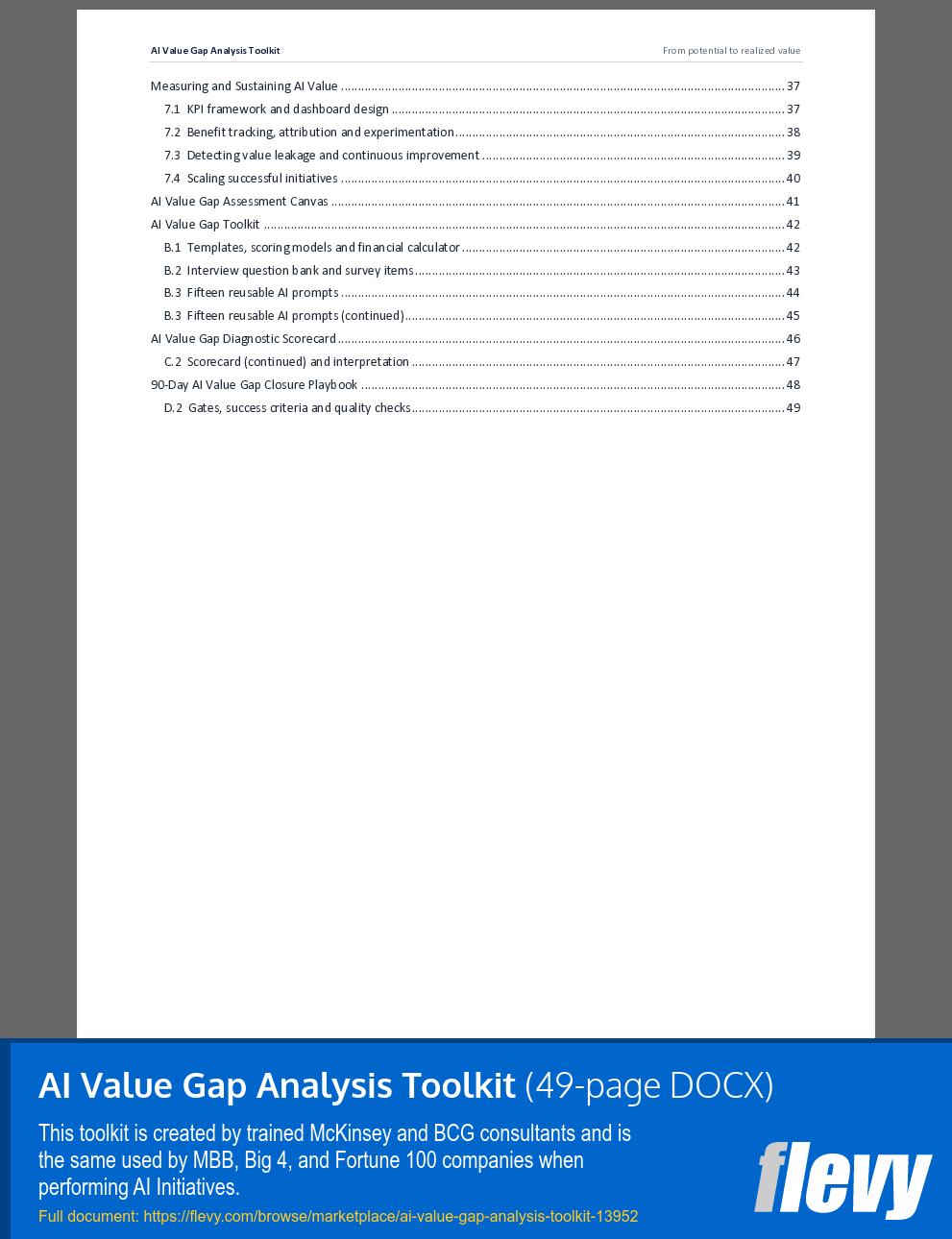
Measuring and Sustaining AI Value: Build an AI KPI dashboard, validate benefits through attribution and experimentation, detect value leakage after launch, establish continuous improvement routines, and scale initiatives only when the evidence supports the business case.
AI Value Gap Assessment Canvas: Bring the key elements of an individual AI initiative into one structured assessment, from business outcomes and baselines to financial impact, root causes, actions, ownership, and measurement.
AI Value Gap Toolkit: Access reusable templates, scoring models, a financial calculator worksheet, stakeholder interview questions, survey items, and 15 reusable AI prompts for supporting the assessment process.
AI Value Gap Diagnostic Scorecard: Evaluate organizational AI value maturity across eight dimensions using a 40-statement assessment, evidence-based scoring, and guidance for interpreting results and selecting interventions.
90-Day AI Value Gap Closure Playbook: Follow a week-by-week implementation roadmap with milestones, ownership, stage gates, success criteria, quality checks, risk mitigations, and a final verification process.
WHAT YOU GET
When you get the AI Value Gap Analysis Toolkit, you receive:
✅ 49 pages of practical AI business guidance in a professional, editable Microsoft Word document.
✅ Seven structured chapters covering the complete process from understanding the AI value gap to measuring and sustaining business value.
✅ An AI Value Gap Assessment Canvas that organizes the diagnosis of a single AI initiative into nine connected assessment areas.
✅ Reusable business templates and worksheets for outcome definition, baseline measurement, initiative tracking, workflow analysis, use-case assessment, financial scenarios, and value realization planning.
✅ AI ROI and financial calculation models for estimating gross potential, adjusting for adoption and rework, calculating realized financial benefits, accounting for costs, and assessing ROI and payback.
✅ AI use-case prioritization scorecards to evaluate business impact, confidence, feasibility, strategic fit, data readiness, and implementation requirements.
✅ A structured root-cause diagnostic framework for investigating low adoption, integration problems, poor data quality, excessive rework, weak governance, unsuitable success metrics, and scaling difficulties.
✅ A financial calculator worksheet that helps you organize assumptions and calculate the key stages of AI value realization.
✅ 15 reusable AI prompts to support structured analysis, investigation, and planning. AI-generated conclusions remain hypotheses until checked against appropriate evidence.
✅ An AI Value Gap Diagnostic Scorecard featuring 40 statements across eight dimensions to assess current organizational capabilities and identify priority improvement areas.
✅ A 90-Day AI Value Gap Closure Playbook with a phased implementation roadmap, weekly activities, assigned roles, decision gates, and verification criteria.
✅ Executive reporting and KPI guidance for tracking realized value, communicating progress, validating benefits, and making informed portfolio decisions.
Everything is organized around a coherent process, so you can move from identifying the problem to quantifying its impact and deciding what needs to happen next.
WHO IS THIS AI VALUE ANALYSIS TOOLKIT FOR?
This toolkit is designed for professionals who need a more rigorous approach to AI value realization, AI investment analysis, AI ROI measurement, and business transformation.
✅ CEOs, COOs, and business executives who need a clearer view of whether AI investments are advancing business objectives and delivering measurable outcomes.
✅ CFOs, finance directors, and financial controllers who want defensible methods for evaluating AI business cases, validating savings, measuring ROI, and separating financial benefits from released capacity.
✅ Chief AI Officers and AI leaders responsible for AI strategy, portfolio management, adoption, performance measurement, and scaling successful initiatives.
✅ Chief Information Officers, CTOs, and data leaders who need to connect technology implementation, data readiness, system integration, and governance to business results.
✅ Digital transformation and business transformation leaders who want a consistent framework for identifying improvement opportunities, ranking initiatives, and tracking value realization.
✅ Operations and process improvement managers who need to identify workflow inefficiencies, reduce manual rework, improve throughput, and redesign processes around appropriate AI capabilities.
✅ Consultants and AI advisors who want reusable diagnostic frameworks, structured assessment tools, financial models, and practical client-facing deliverables.
✅ Enterprise AI project and program managers who need a clear process for moving initiatives from pilot to production while retaining accountability for measurable benefits.
✅ Organizations already using generative AI, AI assistants, automation, predictive AI, and other AI-enabled workflows that want to understand whether adoption, quality, integration, and business impact are meeting expectations.
Whether your organization is experimenting with AI or managing a broader AI portfolio, this toolkit gives you a structured starting point for evaluating and improving the value you actually realize.
WHY THIS TOOLKIT BEATS ANOTHER AI STRATEGY DOCUMENT
❌ Not another collection of AI hype. The focus is on business outcomes, financial measurement, operational performance, and evidence—not simply what AI might be capable of doing.
❌ Not just an AI ROI calculator. Financial calculations are connected to baseline measurement, adoption, quality, workflow analysis, root-cause diagnosis, corrective actions, and ongoing verification.
❌ Not a vendor sales pitch. The frameworks are designed to support business-led evaluation and can be applied to different AI initiatives without requiring a particular AI vendor.
❌ Not a theoretical strategy guide. Templates, scorecards, diagnostic questions, financial models, AI prompts, and a 90-day playbook help translate concepts into practical work.
❌ Not a system that confuses usage with value. Logins, prompts, licences, and task activity are treated as indicators—not substitutes for measured business outcomes.
❌ Not a framework that assumes every AI project should succeed. The toolkit supports explicit stop, fix, scale, and redesign decisions when evidence points in different directions.
❌ Not a promise of guaranteed savings or ROI. All organizations, worked examples, scores, and financial figures in the document are fictional and illustrative. Actual results depend on your data, implementation, costs, adoption, and business conditions.
The difference is practical discipline: measure what matters, investigate what is missing, and invest in corrective action where the evidence supports it.
THE 90-DAY AI VALUE GAP CLOSURE PLAYBOOK
Turn your AI value gap analysis into a structured 90-day improvement program.
The toolkit includes a phased roadmap that takes you from initial diagnosis to prioritized action and measured results.
Days 1–30: Diagnose and establish the baseline
• Define business outcomes, scope, responsibilities, and value definitions.
• Establish baseline metrics and gather supporting data.
• Inventory existing AI initiatives, costs, and claimed benefits.
• Measure adoption and agree on consistent definitions.
• Review and sign off the initial baselines.
Day 30 milestone: Establish a defensible measurement foundation for the initiatives in scope.
Days 31–60: Quantify, diagnose, and prioritize
• Compare potential, expected, and realized AI value.
• Quantify value leakage by stage.
• Assess workflows, use-case suitability, and root causes.
• Build financial scenarios and document uncertainty.
• Score initiatives and develop a ranked portfolio.
• Determine which initiatives to stop, fix, scale, or redesign.
Day 60 milestone: Create an evidence-supported portfolio of improvement priorities and proposed interventions.
Days 61–90: Close gaps and verify results
• Develop value realization plans with named owners and target dates.
• Launch corrective interventions and support employee adoption.
• Track leading indicators, including task coverage and rework.
• Measure initial outcomes against the agreed baseline.
• Validate benefits with finance and document the evidence.
• Review results and determine the next portfolio decisions.
Day 90 milestone: Establish a documented, evidence-based view of progress, corrective actions, validated initial results, and the next steps for AI value realization.
The playbook is a structured implementation method, not a guarantee of a specific financial outcome within 90 days. Its purpose is to help your organization establish the evidence, ownership, and operating discipline required to manage AI value more effectively.
THE COST OF IGNORING YOUR AI VALUE GAP
Every AI initiative has a cost. Licences, usage fees, integration work, data preparation, employee training, support, and ongoing monitoring all consume resources.
But the less visible cost may be even more important: the business value you expect but never actually realize.
When adoption is low, outputs require excessive correction, workflows remain unchanged, or nobody is accountable for converting released capacity into measurable benefits, the gap can persist long after deployment.
Without a reliable measurement framework, you may continue investing in underperforming initiatives while overlooking opportunities to improve the ones you already have.
The AI Value Gap Analysis Toolkit helps you approach that problem systematically:
• Measure before you claim improvement.
• Diagnose before you buy more technology.
• Prioritize before you allocate more resources.
• Validate before you scale.
• Assign ownership before benefits disappear after go-live.
A better AI business case begins with better evidence.
A better AI portfolio begins with better prioritization.
And sustainable AI value begins when someone is accountable for realizing and measuring it.
INVESTMENT
AI Value Gap Analysis Toolkit
A Practical Framework for Identifying AI Value Gaps, Quantifying Missed Opportunities, and Turning AI Investments Into Measurable Business Results
49-page editable Microsoft Word document · Seven chapters · Reusable templates · Financial models · AI prompts · Diagnostic scorecard · 90-day implementation playbook
GET THE AI VALUE GAP ANALYSIS TOOLKIT NOW
Stop relying on assumptions about AI productivity. Stop confusing AI adoption with business impact. Stop funding initiatives without a consistent way to measure what they deliver.
Start identifying value leakage, quantifying financial opportunities, prioritizing corrective action, and building a repeatable process for AI value realization.
READY TO TURN YOUR AI INVESTMENT INTO MEASURABLE BUSINESS VALUE?
Stop guessing where your AI investments are working.
Stop accepting unverified productivity claims.
Stop letting adoption problems, workflow friction, and unconverted capacity undermine your business case.
Start measuring the gap between expected and realized AI value.
Start making better-informed decisions about which AI initiatives deserve investment.
Start building an evidence-based approach to AI ROI, performance improvement, and sustainable business outcomes.
Get the AI Value Gap Analysis Toolkit today and take a more disciplined approach to measuring, managing, and realizing the value of AI.
Your next AI investment decision should be based on evidence—not assumptions.
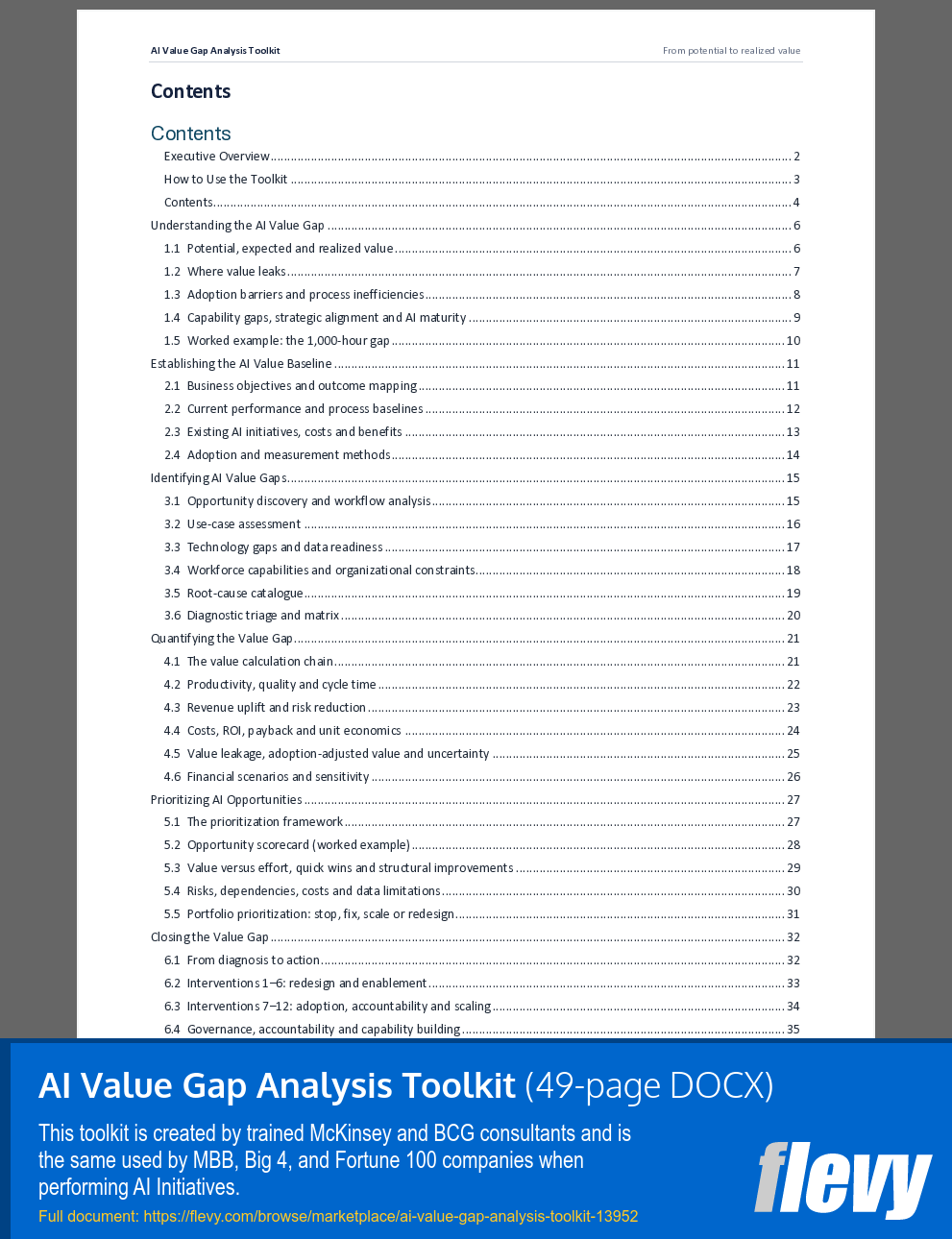
TABLE OF CONTENTS
Executive Overview
How to Use the Toolkit
Chapter 1: Understanding the AI Value Gap
• 1.1 Potential, Expected and Realized Value
• 1.2 Where Value Leaks
• 1.3 Adoption Barriers and Process Inefficiencies
• 1.4 Capability Gaps, Strategic Alignment and AI Maturity
• 1.5 Worked Example: The 1,000-Hour Gap
Chapter 2: Establishing the AI Value Baseline
• 2.1 Business Objectives and Outcome Mapping
• 2.2 Current Performance and Process Baselines
• 2.3 Existing AI Initiatives, Costs and Benefits
• 2.4 Adoption and Measurement Methods
Chapter 3: Identifying AI Value Gaps
• 3.1 Opportunity Discovery and Workflow Analysis
• 3.2 Use-Case Assessment
• 3.3 Technology Gaps and Data Readiness
• 3.4 Workforce Capabilities and Organizational Constraints
• 3.5 Root-Cause Catalogue
• 3.6 Diagnostic Triage and Matrix
Chapter 4: Quantifying the Value Gap
• 4.1 The Value Calculation Chain
• 4.2 Productivity, Quality and Cycle Time
• 4.3 Revenue Uplift and Risk Reduction
• 4.4 Costs, ROI, Payback and Unit Economics
• 4.5 Value Leakage, Adoption-Adjusted Value and Uncertainty
• 4.6 Financial Scenarios and Sensitivity
Chapter 5: Prioritizing AI Opportunities
• 5.1 The Prioritization Framework
• 5.2 Opportunity Scorecard: Worked Example
• 5.3 Value Versus Effort, Quick Wins and Structural Improvements
• 5.4 Risks, Dependencies, Costs and Data Limitations
• 5.5 Portfolio Prioritization: Stop, Fix, Scale or Redesign
Chapter 6: Closing the Value Gap
• 6.1 From Diagnosis to Action
• 6.2 Interventions 1–6: Redesign and Enablement
• 6.3 Interventions 7–12: Adoption, Accountability and Scaling
• 6.4 Governance, Accountability and Capability Building
• 6.5 Value Realization Plan
Chapter 7: Measuring and Sustaining AI Value
• 7.1 KPI Framework and Dashboard Design
• 7.2 Benefit Tracking, Attribution and Experimentation
• 7.3 Detecting Value Leakage and Continuous Improvement
• 7.4 Scaling Successful Initiatives
Tool A: AI Value Gap Assessment Canvas
A structured, nine-part assessment covering business outcomes, baselines, value definitions, gap decomposition, root causes, financial impact, actions and investment, decisions and ownership, and measurement planning.
Tool B: AI Value Gap Toolkit
• B.1 Templates, Scoring Models and Financial Calculator
• B.2 Interview Question Bank and Survey Items
• B.3 Fifteen Reusable AI Prompts
Tool C: AI Value Gap Diagnostic Scorecard
• Forty Statements Across Eight Dimensions
• C.2 Scorecard: Continued and Interpretation
Tool D: 90-Day AI Value Gap Closure Playbook
• Days 1–30: Diagnose and Establish Baselines
• Days 31–60: Quantify and Prioritize
• Days 61–90: Close Gaps and Verify
• D.2 Gates, Success Criteria and Quality Checks
AI value is not what your technology promises. It is what your organization can measure, verify, and sustain.
Keywords: Process Audit SOPs, Internal Audit Standard Operating Procedures, Process Audit Framework, Control Testing Procedures, Risk Assessment Methodologies, Audit Governance, Process Audit Strategy, Audit Evidence Collection, Compliance Audit SOPs, Continuous Auditing, Process Mapping, Audit Documentation Standards, Audit Quality Assurance, Process Risk Management, Operational Risk Audit, Enterprise Audit Management, Audit Committee Reporting, Audit Analytics, Process Mining, AI-Assisted Auditing, Audit Technology SOPs, Global Process Audit, Audit Playbooks, Audit Templates, Audit Training Programs, Audit Remediation Management, Audit Excellence, Process Audit Toolkit, McKinsey Audit Framework, Audit Best Practices, Enterprise Governance, Internal Control Assessment, Audit Procedures Manual, Audit Program Design, Audit Resource Planning, Audit Scheduling, Audit Efficiency, Audit Effectiveness, Audit Performance Metrics, Audit KPIs, Audit ROI, Audit Value Creation, Process Optimization, Operational Excellence, Business Process Audit, Functional Audit, Departmental Audit, Transactional Audit, Service Audit, Administrative Process Audit, Supply Chain Process Audit, Finance Process Audit, IT Process Audit, HR Process Audit, Procurement Process Audit, Sales Process Audit, Customer Service Audit, Production Audit, Quality Audit, Compliance Testing, Regulatory Audit, Policy Compliance, Procedure Audit, Documentation Audit, Audit Trail Review, Exception Management, Control Design, Control Effectiveness, Control Testing, Preventive Controls, Detective Controls, Corrective Actions, Root Cause Analysis, Finding Classification, Audit Report Writing, Executive Summaries, Audit Communication, Stakeholder Engagement, Process Owner Engagement, Management Accountability, Audit Committee Governance, Audit Charter, Audit Independence, Auditor Ethics, Professional Skepticism, Audit Competency, Audit Training, Audit Certification, Audit Standards (IIA, IAASB), Audit Best Practices, Audit Methodology, Audit Framework, Audit Operating Model, Process Audit Excellence, Audit Mastery, Fortune 500 Audit, Enterprise Audit Operations, Corporate Audit Function, Strategic Audit Planning, Transformation Audit, Digital Audit, Innovation Audit, Benchmarking Audit, Maturity Assessment, Audit Scaling, Audit Outsourcing, Co-Sourcing Models, Vendor Management, Audit Technology Stack, Audit Tools, Audit Software, Continuous Monitoring, Predictive Analytics, Anomaly Detection, Data Quality, Process Intelligence, Workflow Analytics, Business Process Management, Process Automation, RPA Audit, AI Governance, Responsible AI Audit, Cybersecurity Audit, Data Governance Audit, Privacy Audit, Information Security, Audit Evidence Standards, Working Papers, Audit Documentation, Audit File Management, Audit Records Retention, Audit Trail Integrity, Audit Report Confidentiality, Multi-Site Audit Coordination, Global Audit Strategy, International Audit Standards, Regional Audit Compliance, Cultural Considerations in Audit, Localization of Audit Procedures, Process Transformation Audit, Business Reengineering Audit, Change Audit, Operational Change, Audit Change Management, Audit Communication Plan, Audit Stakeholder Communication, Audit Performance Review, Audit Function Review, Strategic Review Process, Audit Leadership Development, Audit Team Development, Audit Coaching, Audit Supervision, Audit Career Progression, Audit Knowledge Management, Audit Playbook Development, Audit Template Library, Audit Standards Documentation, Audit Policy Manual, Lessons Learned Capture, Best Practice Sharing, Audit Continuous Improvement, Audit Methodology Enhancement, Audit Process Optimization, Audit Efficiency Improvement, Audit Effectiveness Enhancement, Audit Quality Improvement, Audit Risk Management, Audit Risk Register, Audit Issue Management, Audit Action Tracking, Audit Metrics Dashboard, Audit Performance Dashboard, Audit Scorecard, Audit Balanced Scorecard, KPI Framework for Audit, Audit Success Factors, Critical Success Factors in Audit, Audit Strategic Objectives, Audit Vision Statement, Audit Mission Statement, Audit Values and Ethics, Audit Culture, Audit Maturity Model, Audit Capability Model, Audit Competency Framework, Professional Development in Audit, Audit Certification Programs, Internal Audit Standards, Audit Best Practices Guide, Audit Reference Manual, Audit Operating Manual, Audit Procedures Manual, Audit Program Manual, McKinsey Audit Excellence, Deloitte Audit Framework, EY Audit Approach, KPMG Audit Methodology, Big 4 Audit Standards, Audit Industry Benchmarks, Audit Industry Standards, Audit Thought Leadership, Audit Innovation, Audit Transformation Program, Audit Digital Transformation, Audit Process Transformation, Audit Service Transformation, Audit Operating Model Transformation, Audit Function Evolution, Audit Future-Proofing, Emerging Trends in Audit, Audit 2025 Roadmap, Audit Strategic Priorities, Audit Strategic Planning, Audit Strategic Execution, Audit Implementation Plan, Audit Deployment Strategy, Audit Rollout Plan, Audit Quick-Start Guide, Audit Implementation Guide, Audit User Guide, Audit Handbook, Audit Manual, Audit Documentation Standard, Audit Work Standards, Audit Quality Standards, Audit Performance Standards, Audit Excellence Standards, Enterprise Audit Excellence, Audit Mastery Program, Audit Excellence Initiative, Audit Excellence Framework, Audit Excellence Culture, Audit Excellence Mindset, Strategic Audit Excellence, Operational Audit Excellence, Financial Audit Excellence, Compliance Audit Excellence, Quality Audit Excellence, Process Audit Excellence, Audit Excellence ROI, Audit Excellence Value Creation, Audit Excellence Competitive Advantage, Audit Excellence Strategic Advantage, Audit Excellence Performance Advantage, Audit Excellence Organizational Advantage, Inventory Management, Demand Planning, Inventory Optimization, Inventory Control, Supply Chain Management, Warehouse Operations, Replenishment Strategy, Inventory Analytics, WIP Reduction, Inventory Accuracy, Distribution Network, Inventory Forecasting, Supply Chain Excellence, Working Capital, Inventory KPIs, Procurement Strategy, Inventory Governance, Inventory SOPs, Continuous Improvement, Supply Chain Transformation, GenAI deployment SOPs, generative AI operating model, enterprise AI governance framework, AI Center of Excellence, responsible AI, AI risk management, AI use case prioritization, GenAI implementation roadmap, AI vendor selection, prompt engineering standards, AI compliance, AI adoption strategy, generative AI across value chain, AI strategy, enterprise transformation, AI implementation, AI scaling framework
Strategy & Transformation, Growth Strategy, Strategic Planning, Strategy Frameworks, Innovation Management, Pricing Strategy, Core Competencies, Strategy Development, Business Transformation, Marketing Plan Development, Product Strategy, Breakout Strategy, Competitive Advantage, Mission, Vision, Values, Strategy Deployment & Execution, Innovation, Vision Statement, Core Competencies Analysis, Corporate Strategy, Product Launch Strategy, BMI, Blue Ocean Strategy, Breakthrough Strategy, Business Model Innovation, Business Strategy Example, Corporate Transformation, Critical Success Factors, Customer Segmentation, Customer Value Proposition, Distinctive Capabilities, Enterprise Performance Management, KPI, Key Performance Indicators, Market Analysis, Market Entry Example, Market Entry Plan, Market Intelligence, Market Research, Market Segmentation, Market Sizing, Marketing, Michael Porter's Value Chain, Organizational Transformation, Performance Management, Performance Measurement, Platform Strategy, Product Go-to-Market Strategy, Reorganization, Restructuring, SWOT, SWOT Analysis, Service 4.0, Service Strategy, Service Transformation, Strategic Analysis, Strategic Plan Example, Strategy Deployment, Strategy Execution, Strategy Frameworks Compilation, Strategy Methodologies, Strategy Report Example, Value Chain, Value Chain Analysis, Value Innovation, Value Proposition, Vision Statement, Corporate Strategy, Business Development, Business plan pdf, business plan, PDF, Business Plan DOC, Business Plan Template, PPT, Market strategy playbook, strategic market planning, competitive analysis tools, market segmentation frameworks, growth strategy templates, product positioning strategy, market execution toolkit, strategic alignment playbook, KPI and OKR frameworks, business growth strategy guide, cross-functional strategy templates, market risk management, market strategy PowerPoint doc, guide, ebook, e-book ,McKinsey Change Playbook, Organizational change management toolkit, Change management frameworks 2025, Influence model for change, Change leadership strategies, Behavioral change in organizations, Change management PowerPoint templates, Transformational leadership in change, supply chain KPIs, supply chain KPI toolkit, supply chain PowerPoint template, logistics KPIs, procurement KPIs, inventory management KPIs, supply chain performance metrics, manufacturing KPIs, supply chain dashboard, supply chain strategy KPIs, reverse logistics KPIs, sustainability KPIs in supply chain, financial supply chain KPIs, warehouse KPIs, digital supply chain KPIs, 1200 KPIs, supply chain scorecard, KPI examples, supply chain templates, Corporate Finance SOPs, Finance SOP Excel Template, CFO Toolkit, Finance Department Procedures, Financial Planning SOPs, Treasury SOPs, Accounts Payable SOPs, Accounts Receivable SOPs, General Ledger SOPs, Accounting Policies Template, Internal Controls SOPs, Finance Process Standardization, Finance Operating Procedures, Finance Department Excel Template, FP&A Process Documentation, Corporate Finance Template, Finance SOP Toolkit, CFO Process Templates, Accounting SOP Package, Tax Compliance SOPs, Financial Risk Management Procedures.
NOTE: Our digital products are sold on an "as is" basis, making returns and refunds unavailable post-download. Please preview and inquire before purchasing. Please contact us before purchasing if you have any questions! This policy aligns with the standard Flevy Terms of Usage.
Got a question about the product? Email us at support@flevy.com or ask the author directly by using the "Ask the Author a Question" form. If you cannot view the preview above this document description, go here to view the large preview instead.
Source: Best Practices in Artificial Intelligence, Value Creation Word: AI Value Gap Analysis Toolkit Word (DOCX) Document, SB Consulting
ABOUT THE AUTHOR

SB Consulting is dedicated to empowering businesses to communicate their ideas with impact. This consulting firm specializes in teaching organizations how to create effective corporate and management presentations. With training from top-tier global consulting firms, including McKinsey, BCG, and Porsche Consulting, extensive expertise in presentation design and ... [read more]
Ask the Author a Question
You must be logged in to contact the author.




























