
AGILE PPT DESCRIPTION
Editor Summary
Agile for Everybody - A Primer is an 80-slide PowerPoint primer developed by RadVector Consulting and a team of experts with global consulting experience at McKinsey, Deloitte, and Capgemini, presenting Agile principles, the 4 Agile values and 12 principles, and frameworks such as Scrum, Kanban, and XP.

Read more
Includes templates and tools like an Agile User Story Template, backlog prioritization matrix, governance model framework, sprint planning checklist, retrospective workshop guide, and Kanban board template. Targeted at project managers, product owners, team facilitators, executives, and consultants; sold as a digital download on Flevy.
Use this primer when teams or organizations are moving from traditional project management to Agile, during training sessions, or when establishing Agile roles, governance, and backlog practices.
Project Managers designing sprint cadences and implementing sprint planning using the sprint planning checklist.
Product Owners prioritizing backlogs and writing clear user stories with the backlog prioritization matrix and Agile User Story Template.
Team Facilitators running retrospectives and improving team collaboration with the retrospective workshop guide.
Executives and integration leaders defining governance and decision rights with the governance model framework.
The emphasis on roles, governance structures, and iterative pilots aligns with consulting practice that stresses defined decision rights and practical implementation approaches used at McKinsey and Deloitte.
Agile represents a collaborative and cooperative way of working. It is ideally suited to many of today's uncertain projects. It is by no means a silver bullet, and there are times when an alternative or supplemental approach might make more sense. Yet, it represents a critical set of tools for modern project managers to have in their toolkit.
Agile is, avant tout, a mindset that every team member should have to manage work more efficiently and do the work more effectively while delivering the highest quality product within the constraints and limitations.
Agile as a mindset has 4 values and 12 principles and many many practices. the most famous, lightweight, simple and relevant one is SCRUM.
This presentation is a set of 80 slides composed of many figures and schemes that simplify the understanding of the fundamental AGILE Concepts.
In this era of digital transformation the agility is a must have and should be included in our day-to-day life, especially in our work and career.
The work is a Primer of AGILE MINDSET that present many details about the four values, 12 principles and practices.
This document is easily customizable, content can be removed (or skipped over during presentation). Plenty of graphics are included in order to get the holistic vision of the interrelated concepts.
Got a question about the product? Email us at support@flevy.com or ask the author directly by using the "Ask the Author a Question" form. If you cannot view the preview above this document description, go here to view the large preview instead.
MARCUS OVERVIEW
This synopsis was written by Marcus
[?] based on the analysis of the full 80-slide presentation.
Executive Summary
The "Agile for Everybody - A Primer" presentation serves as a foundational resource for understanding Agile methodologies, frameworks, and team dynamics. Designed for corporate executives, integration leaders, and consultants, this deck equips users with the knowledge to implement Agile practices effectively within their organizations. It emphasizes the importance of an Agile mindset, the evolution of project management, and the roles necessary for successful Agile execution. By leveraging this presentation, users will be able to foster collaboration, enhance responsiveness to change, and ultimately drive organizational success.
Who This Is For and When to Use
• Project Managers seeking to integrate Agile methodologies into their teams
• Product Owners responsible for prioritizing and managing backlogs
• Team Facilitators aiming to enhance team collaboration and effectiveness
• Executives looking to foster an Agile culture within their organizations
Best-fit moments to use this deck:
• During Agile training sessions for teams transitioning from traditional methodologies
• In workshops focused on establishing Agile roles and responsibilities
• For strategic planning sessions aimed at enhancing organizational agility
Learning Objectives
• Define Agile methodologies and their core principles
• Build effective Agile teams by understanding roles and responsibilities
• Establish a governance model that supports Agile practices
• Identify and implement key Agile frameworks such as Scrum and Kanban
• Foster an Agile mindset across the organization
• Utilize Agile practices to enhance collaboration and communication
Table of Contents
• Agile Methodology – A Primer (page 1)
• Understanding the Basic Frameworks (page 2)
• Building Your Agile Team and Roles (page 3)
Primary Topics Covered
• Agile Methodology - An overview of Agile principles, values, and practices that guide iterative and incremental development.
• Agile Frameworks - Exploration of various Agile frameworks such as Scrum, Kanban, and Extreme Programming (XP) that facilitate project execution.
• Agile Team Roles - Identification of key roles within Agile teams, including Product Owner, Scrum Master, and cross-functional team members.
• Governance Models - Discussion of governance structures that support Agile project management and decision-making.
• Agile Mindset - Emphasis on cultivating an Agile mindset that prioritizes collaboration, flexibility, and responsiveness to change.
• Backlog Management - Techniques for managing and prioritizing work items in an Agile backlog to ensure alignment with business value.


Deliverables, Templates, and Tools
• Agile User Story Template for capturing requirements
• Backlog prioritization matrix for evaluating user stories
• Governance model framework for Agile project oversight
• Sprint planning checklist to guide iterative development cycles
• Retrospective workshop guide for continuous improvement
• Kanban board template for visualizing workflow
Slide Highlights
• Overview of Agile principles and values that underpin successful Agile practices
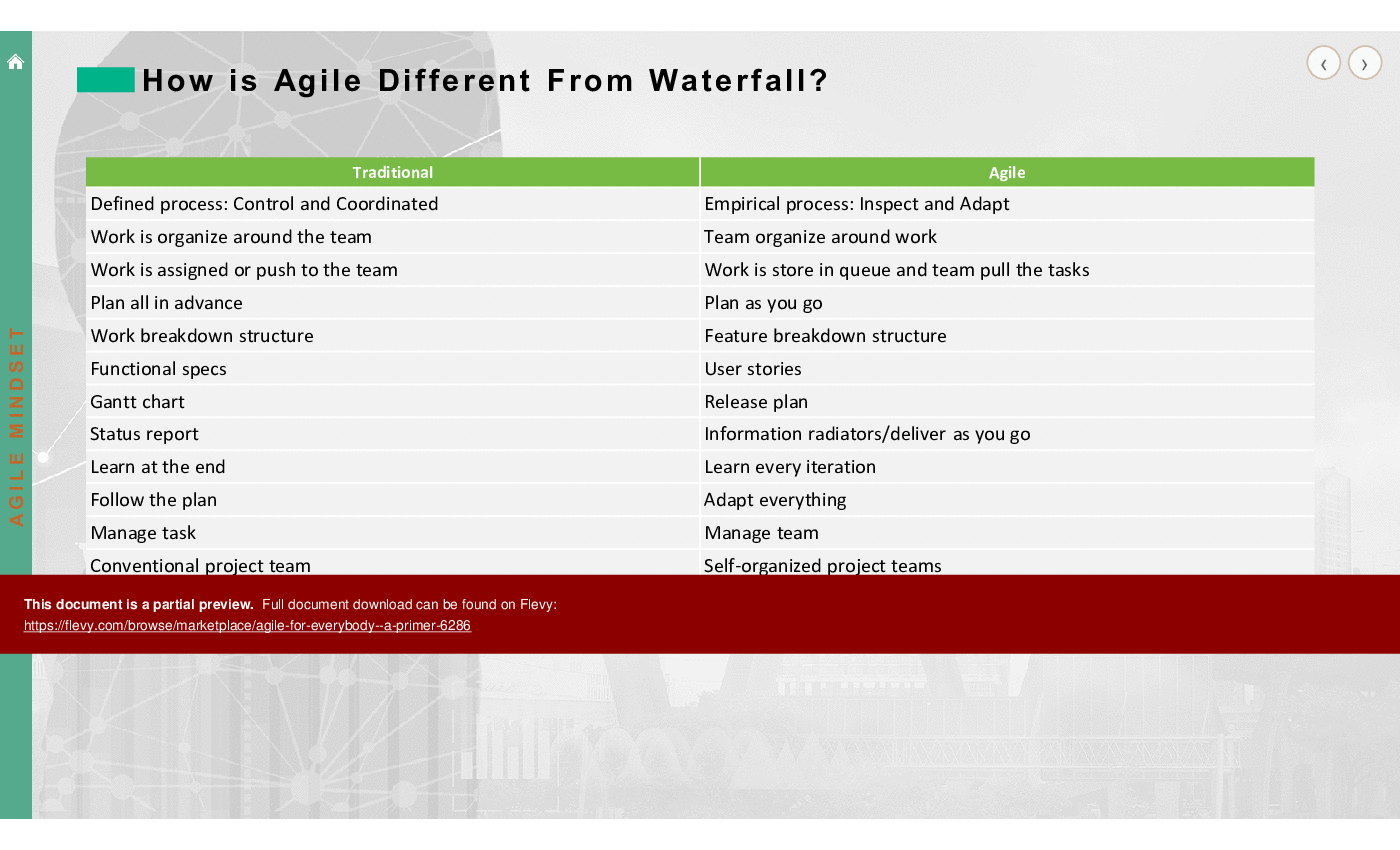
• Comparison of traditional project management vs. Agile methodologies
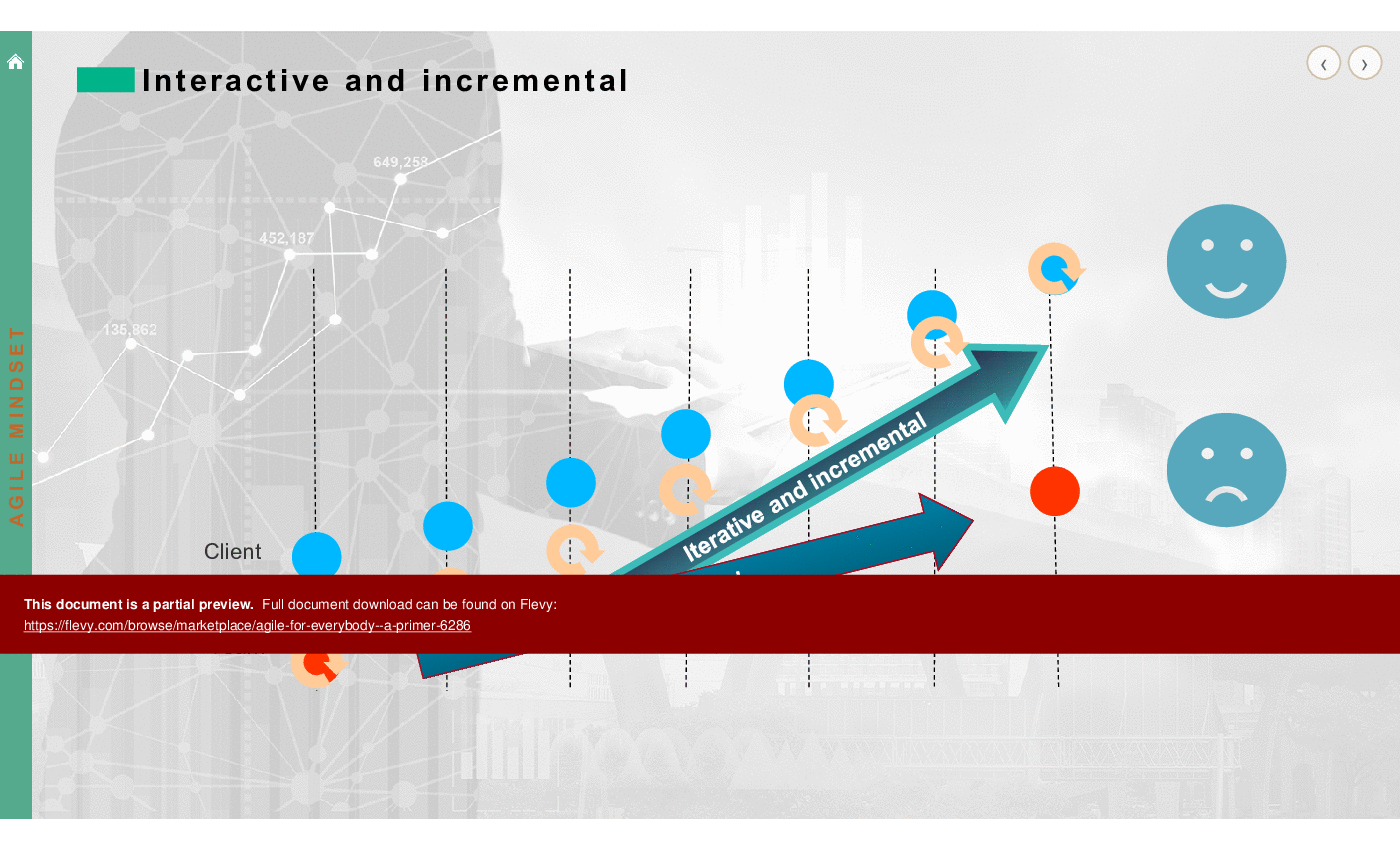
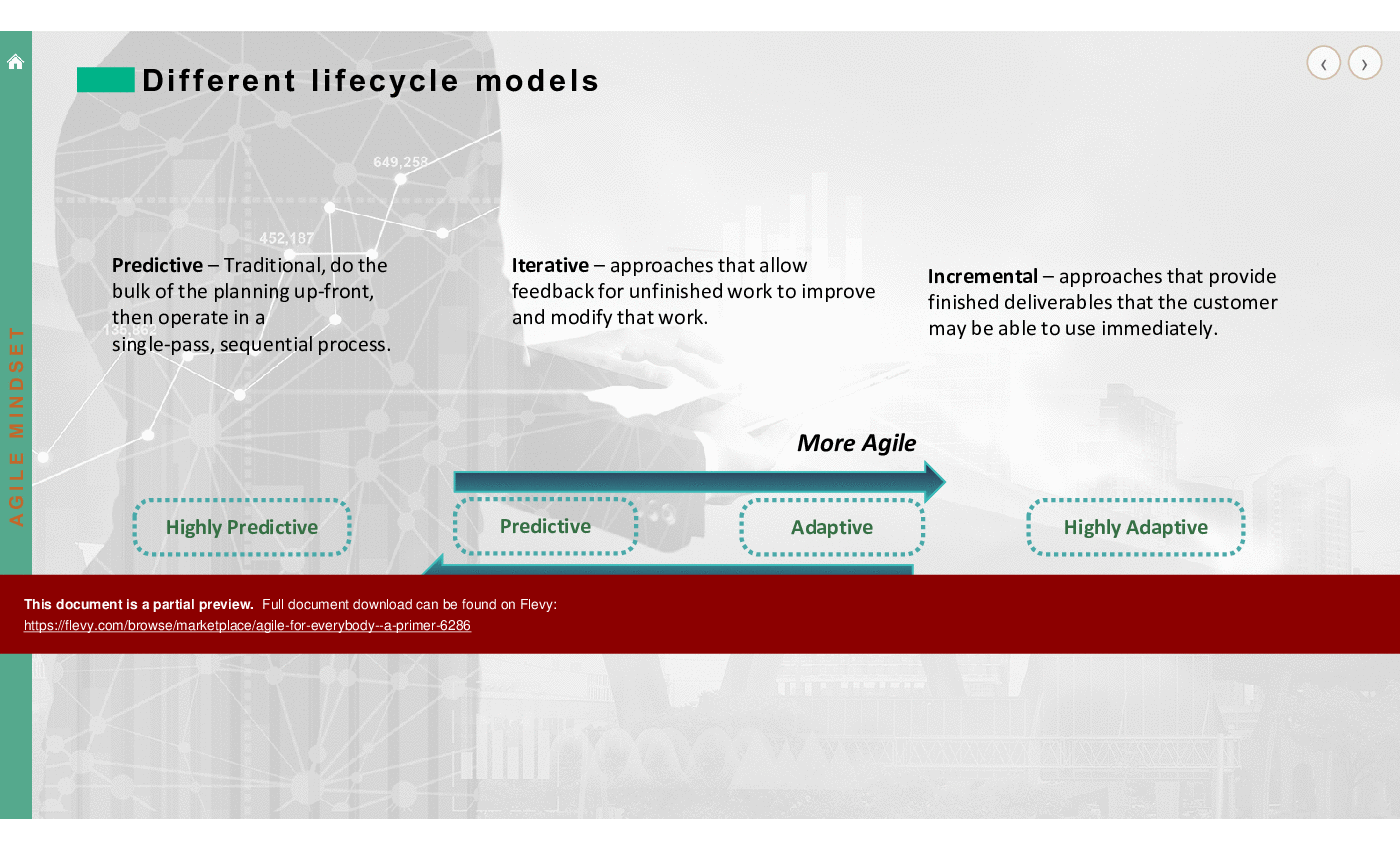
• Visual representation of the Agile lifecycle and iterative development process
• Examples of Agile roles and their responsibilities within a team
• Discussion of common myths surrounding Agile and their realities
Potential Workshop Agenda
Agile Fundamentals Workshop (90 minutes)
• Introduction to Agile principles and methodologies
• Group discussion on the benefits of Agile practices
• Interactive session on building effective Agile teams
Agile Frameworks Deep Dive (60 minutes)
• Overview of Scrum and Kanban methodologies
• Case studies showcasing successful Agile implementations
• Q&A session to address specific Agile challenges
Customization Guidance
• Tailor Agile practices to fit the specific needs and culture of your organization
• Adjust the roles and responsibilities outlined in the presentation to align with existing team structures
• Incorporate industry-specific examples and case studies to enhance relevance
Secondary Topics Covered
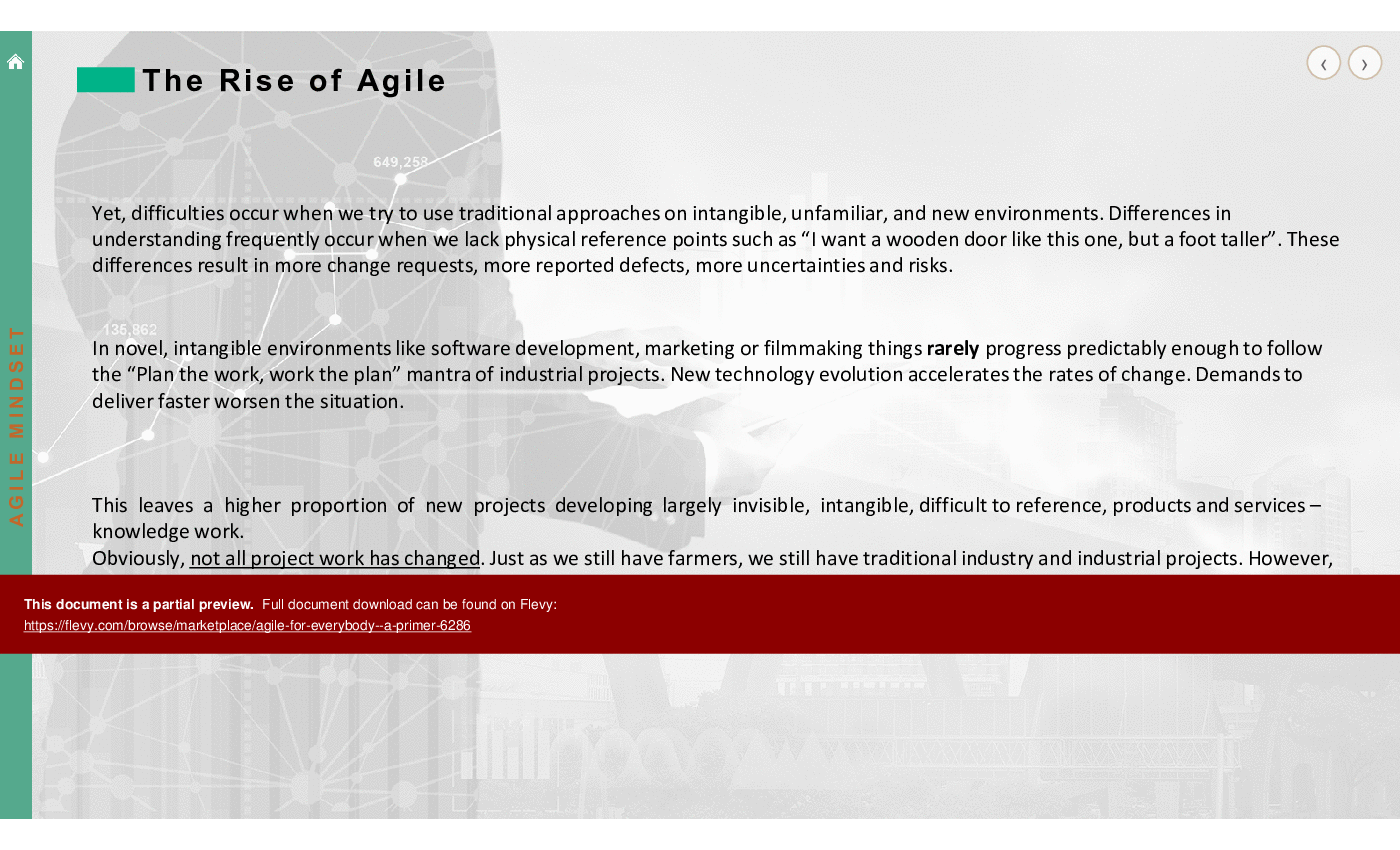
• The evolution of project management from traditional to Agile
• Techniques for fostering an Agile culture within organizations
• Strategies for managing stakeholder expectations in Agile projects
• The role of leadership in supporting Agile transformations
Topic FAQ
What are the core components of an Agile mindset I should teach teams first?
An Agile mindset centers on collaboration, flexibility, responsiveness to change, and continuous delivery of value. Teaching typically begins with the 4 Agile values and the twelve Agile principles, then links those to practices like iterative development, user stories, and retrospectives; the primer highlights the 4 values and 12 principles.
How do Scrum and Kanban differ and when should I choose one over the other?
Scrum is a time-boxed framework using sprints and roles like Product Owner and Scrum Master; Kanban is a visual flow-based method focused on limiting work-in-progress and optimizing flow. Choice depends on whether you need sprint cadences or continuous flow; both Scrum and Kanban are covered in the deck.
Which Agile team roles are essential and what are their responsibilities?
Core roles include the Product Owner, who defines and prioritizes the backlog; the Scrum Master, who facilitates process and removes impediments; and cross-functional team members who deliver work collaboratively. The presentation outlines these roles and their responsibilities, including backlog ownership by the Product Owner.
What should I look for when buying an Agile training deck or toolkit for my team?
Look for clear coverage of Agile principles and frameworks, role definitions, governance guidance, and ready-to-use artifacts that are customizable to your context. Useful inclusions are an Agile User Story Template, backlog prioritization matrix, sprint planning checklist, and a 90-minute workshop agenda as seen in Flevy's Agile for Everybody - A Primer.
Are paid Agile templates worth the cost for a mid-sized organization?
Paid templates can reduce setup time by providing ready artifacts—user story templates, backlog prioritization matrices, governance frameworks, sprint checklists, retrospective guides, and Kanban boards—and offer customization guidance to adapt to culture and timeline; the discussed product bundles these artifacts into an 80-slide deck.
My team is switching from waterfall to Agile — what should the initial training cover?
Initial training should explain Agile principles versus traditional project management, introduce iterative lifecycles and roles, teach backlog management and user story writing, and run practical exercises like sprint planning and retrospectives. The primer provides content suitable for an Agile Fundamentals Workshop and practical templates in an 80-slide deck.
How often should teams hold retrospectives and what should a retrospective guide include?
Teams should hold retrospectives at the end of each iteration to reflect and identify improvements. A guide should include structured reflection activities, root-cause analysis techniques, and mechanisms to convert observations into actionable improvement items; the product includes a retrospective workshop guide designed for iteration-end sessions.
What practical methods help manage and prioritize a product backlog effectively?
Effective backlog management uses clear, customer-focused user stories and a prioritization approach such as a backlog prioritization matrix, with the Product Owner owning the ordering. Practical artifacts that support this include an Agile User Story Template and a backlog prioritization matrix, both provided in the presentation.
Document FAQ
These are questions addressed within this presentation.
What is Agile?
Agile is an iterative and incremental approach to project management that emphasizes collaboration, flexibility, and customer satisfaction through continuous delivery of valuable software.
How does Agile differ from traditional project management?
Agile focuses on delivering business value through iterative cycles, while traditional project management often relies on detailed upfront planning and fixed schedules.
What are the key roles in an Agile team?
Key roles include the Product Owner, who prioritizes the backlog; the Scrum Master, who facilitates the process; and cross-functional team members who execute tasks collaboratively.
What frameworks are commonly used in Agile?
Common frameworks include Scrum, Kanban, and Extreme Programming (XP), each offering unique practices and structures for managing projects.
How do I implement Agile in my organization?
Start by educating teams on Agile principles, establishing clear roles, and gradually introducing Agile practices tailored to your organization's needs.
What is a backlog in Agile?
A backlog is an ordered list of work items, such as user stories, that need to be completed to deliver a product or service.
How often should Agile teams hold retrospectives?
Agile teams should hold retrospectives at the end of each iteration to reflect on their processes and identify areas for improvement.
What is the importance of an Agile mindset?
An Agile mindset fosters adaptability, encourages collaboration, and enhances responsiveness to change, which are essential for success in dynamic environments.
Glossary
•
Agile - An iterative approach to project management that emphasizes flexibility and customer collaboration.
•
Backlog - A prioritized list of tasks or features to be completed in an Agile project.
•
Scrum - A framework for managing Agile projects that uses time-boxed iterations called sprints.
•
Kanban - A visual method for managing work in progress and optimizing flow.
•
User Story - A simple description of a feature from the perspective of the end user.
•
Sprint - A time-boxed iteration in which specific work is completed and reviewed.
•
Product Owner - The role responsible for defining and prioritizing the product backlog.
•
Scrum Master - The facilitator who helps the team follow Agile practices and removes obstacles.
•
Retrospective - A meeting held at the end of an iteration to reflect on the team's performance and identify improvements.
•
Iteration - A cycle of development in Agile where work is completed and reviewed.
•
Epic - A large user story that can be broken down into smaller, manageable user stories.
•
Velocity - A measure of the amount of work completed in a sprint, often used for planning future iterations.
•
Test Driven Development (TDD) - A practice where tests are written before the code to ensure functionality.
•
Cross-Functional Team - A team composed of members with different expertise working collaboratively on a project.
•
Continuous Delivery - A practice of frequently releasing small, incremental updates to software.
•
Stakeholder - Any individual or group with an interest in the outcome of a project.
•
Governance Model - A framework for decision-making and accountability in project management.
•
Lean - A methodology focused on maximizing value by minimizing waste.
•
Extreme Programming (XP) - An Agile framework that emphasizes technical excellence and customer satisfaction.
•
Planning Poker - A consensus-based technique for estimating effort or relative size of user stories.
Source: Best Practices in Agile PowerPoint Slides: Agile for Everybody - A Primer PowerPoint (PPTX) Presentation Slide Deck, RadVector Consulting







