 Click main image to view in full screen.
15 AI & Automation Use Cases for KYC, AML & FinCrime – PowerPoint PPTX Template
PowerPoint (PPTX) + Excel (XLSX) 16 Slides


BENEFITS OF THIS DOWNLOADABLE POWERPOINT DOCUMENT
- Apply AI to financial crime responsibly -- 15 detailed KYC, AML and FinCrime use cases focused on evidence, triage, data quality and analyst productivity while preserving accountable human judgment
- Assess implementation, not just ideas -- every case includes baseline, 5-step approach, team, effort, benefits, control pattern, key risk and data requirements for practical opportunity evaluation
- Use the supporting Excel workbook to filter, compare and prioritize opportunities by automation potential, hard-saving potential and complexity for transformation planning and governance
ARTIFICIAL INTELLIGENCE PPT TEMPLATE DESCRIPTION
KYC, AML and Financial Crime functions face a difficult combination: very high data and alert volumes, complex judgment, regulatory scrutiny, fragmented evidence, and a requirement to explain how every material decision was reached. This makes the domain highly suitable for AI and automation—but also one where inappropriate automation can create significant regulatory, conduct, and reputational risk. The strongest solutions therefore assist analysts, structure evidence, prioritize workload, improve data quality, and automate mechanical steps while preserving accountable human judgment.
This toolkit presents 15 detailed AI and automation use cases for KYC, AML & Financial Crime. It is intended for Chief Compliance Officers, MLRO functions, financial-crime operations leaders, KYC teams, sanctions teams, risk executives, transformation offices, AI and automation Centers of Excellence, consultants, architects, business analysts, and technology teams.
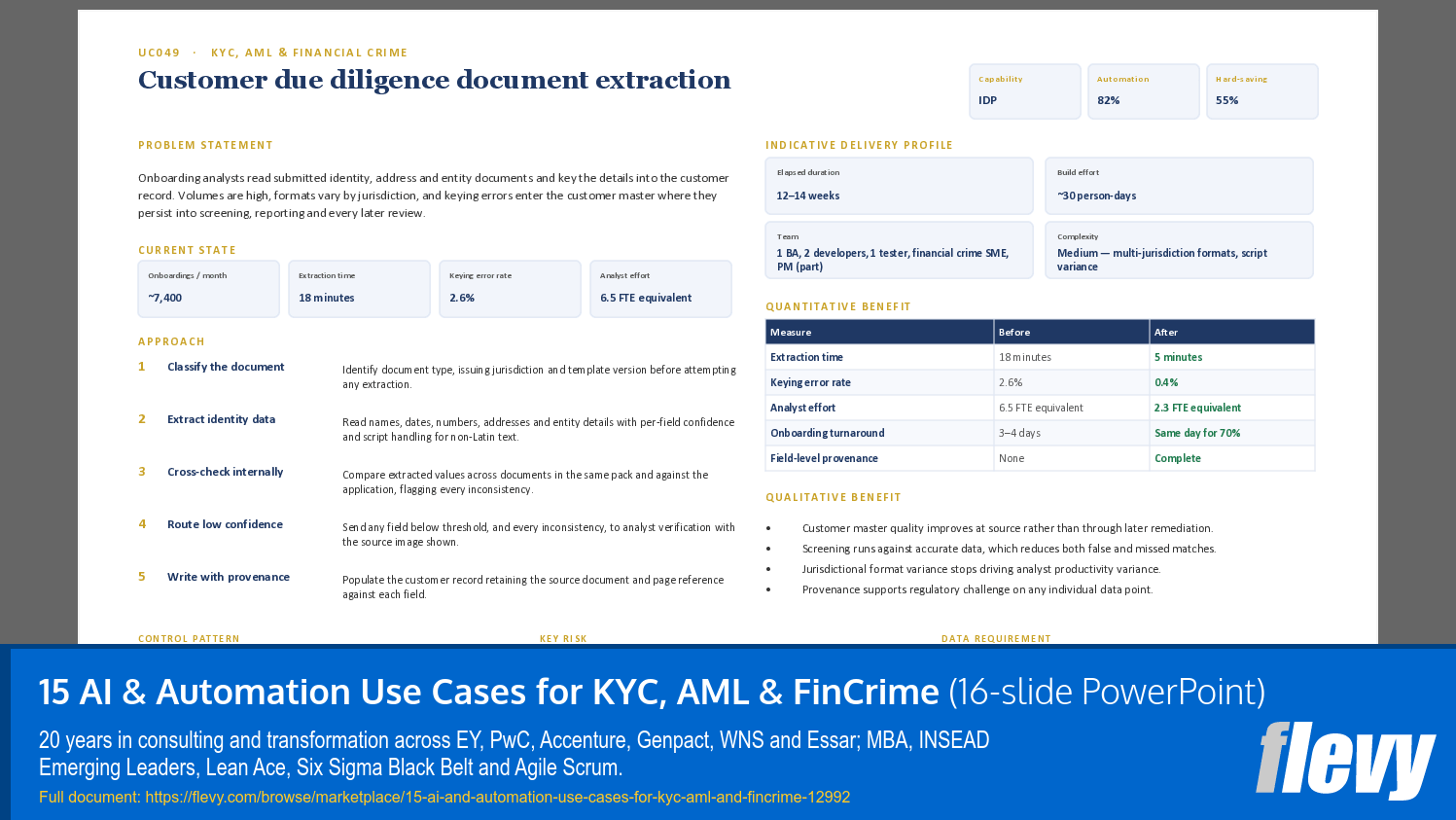
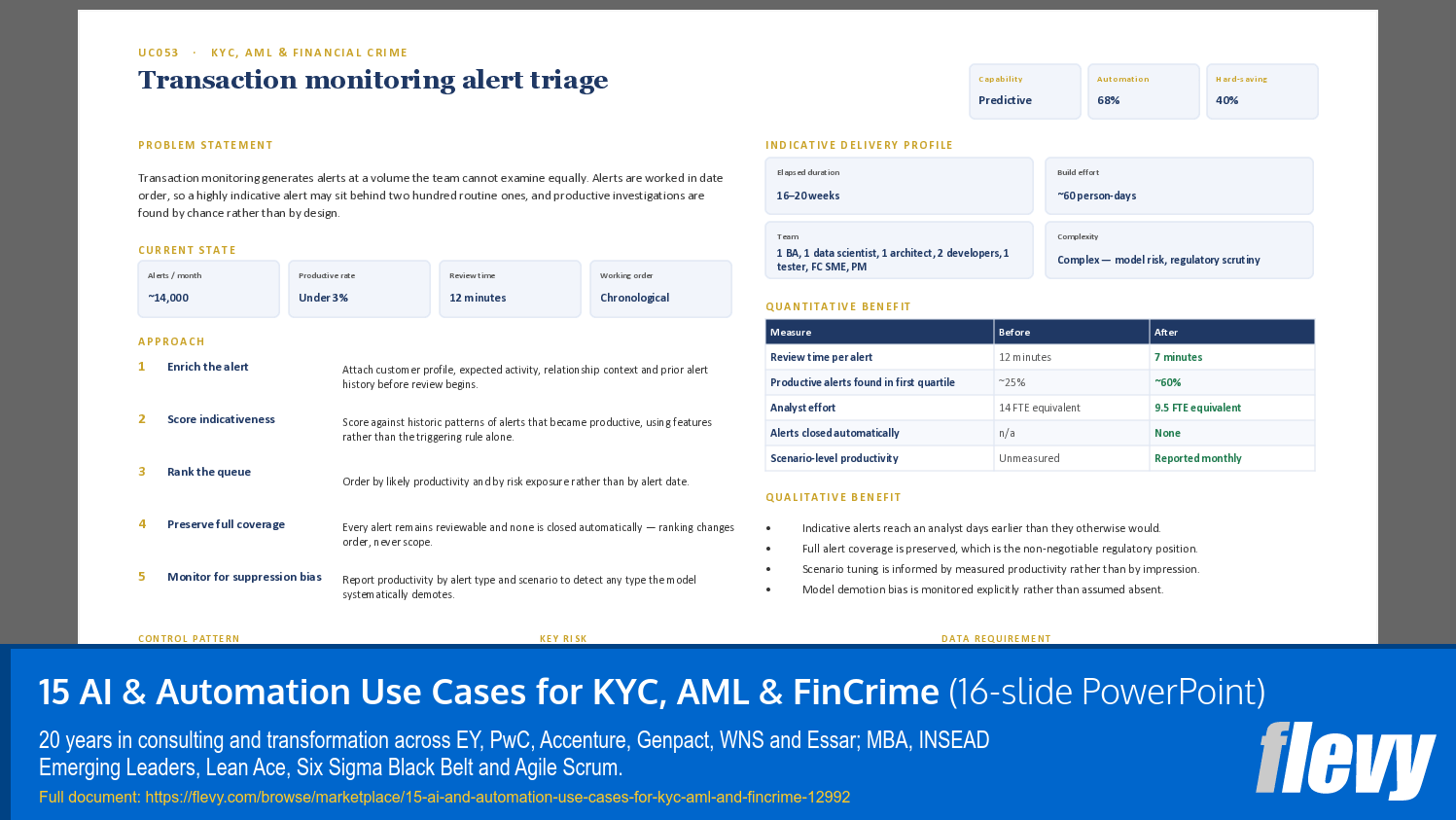
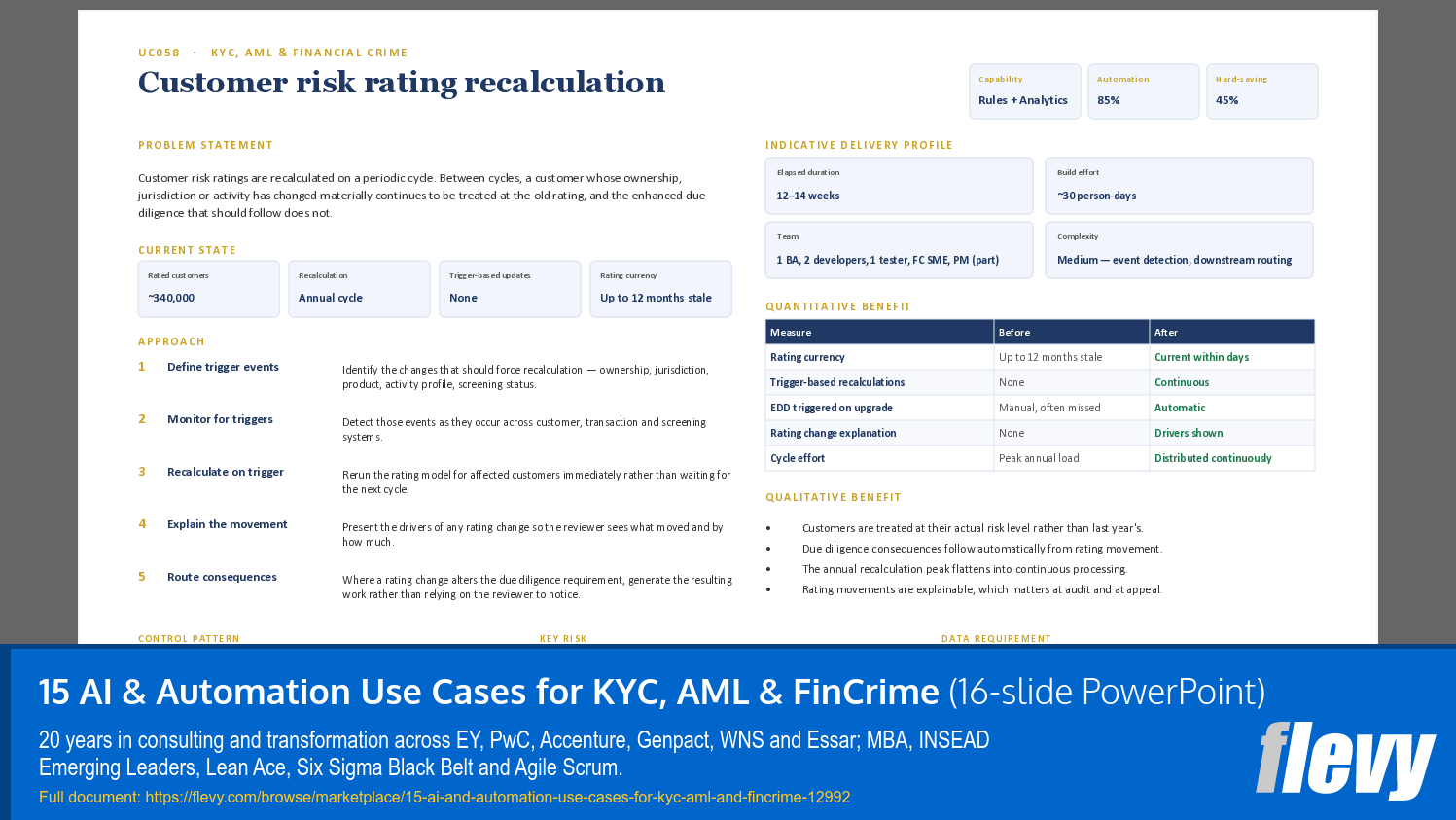
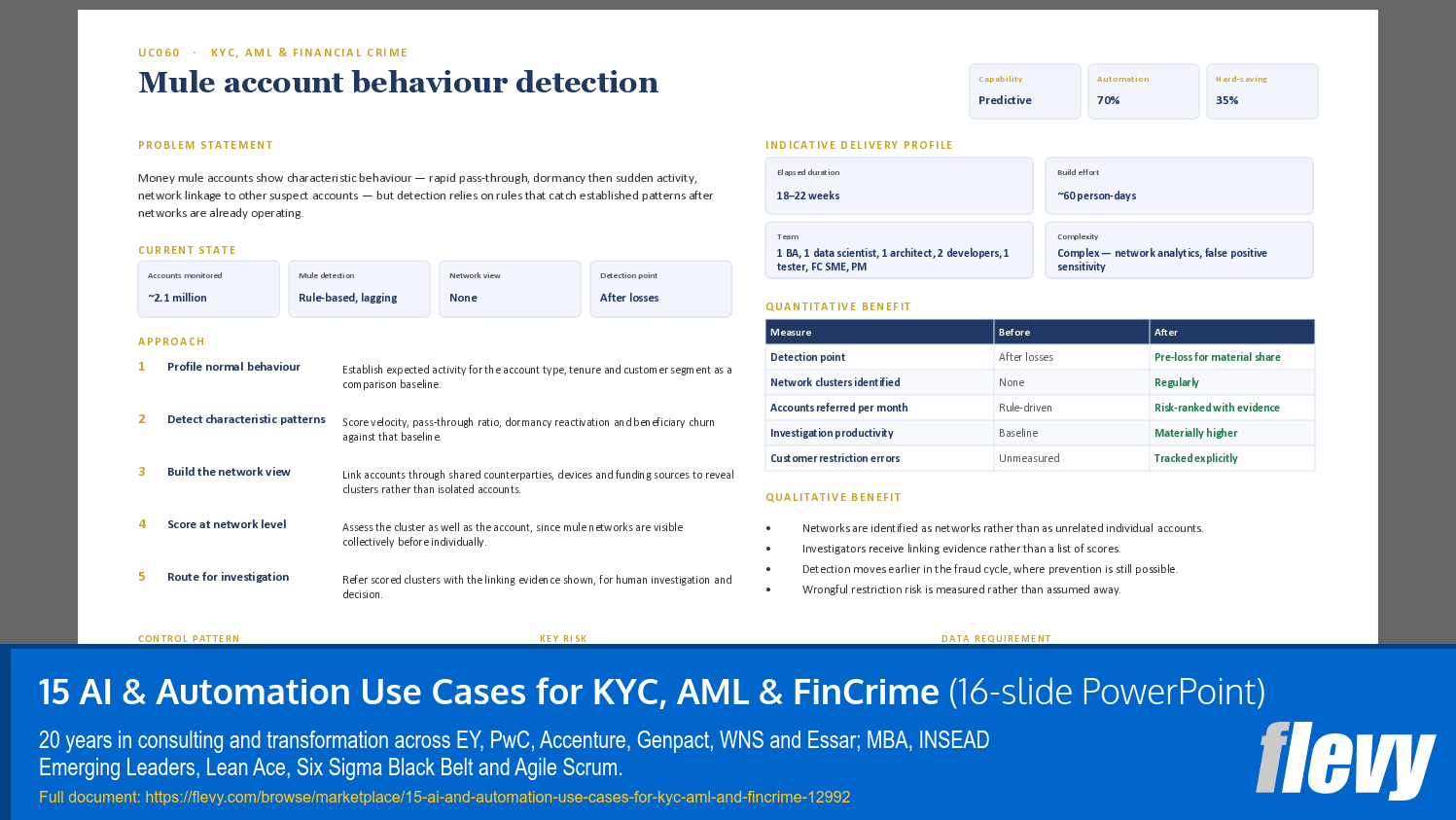
The document goes materially beyond a catalogue of ideas. Each use case is structured as a mini implementation case containing the business problem, current-state baseline, relevant capability, indicative automation potential, hard-saving potential, a five-step approach, elapsed delivery duration, build effort, indicative team, complexity, before-and-after quantitative benefit measures, qualitative benefits, control pattern, key risk, and data requirements.
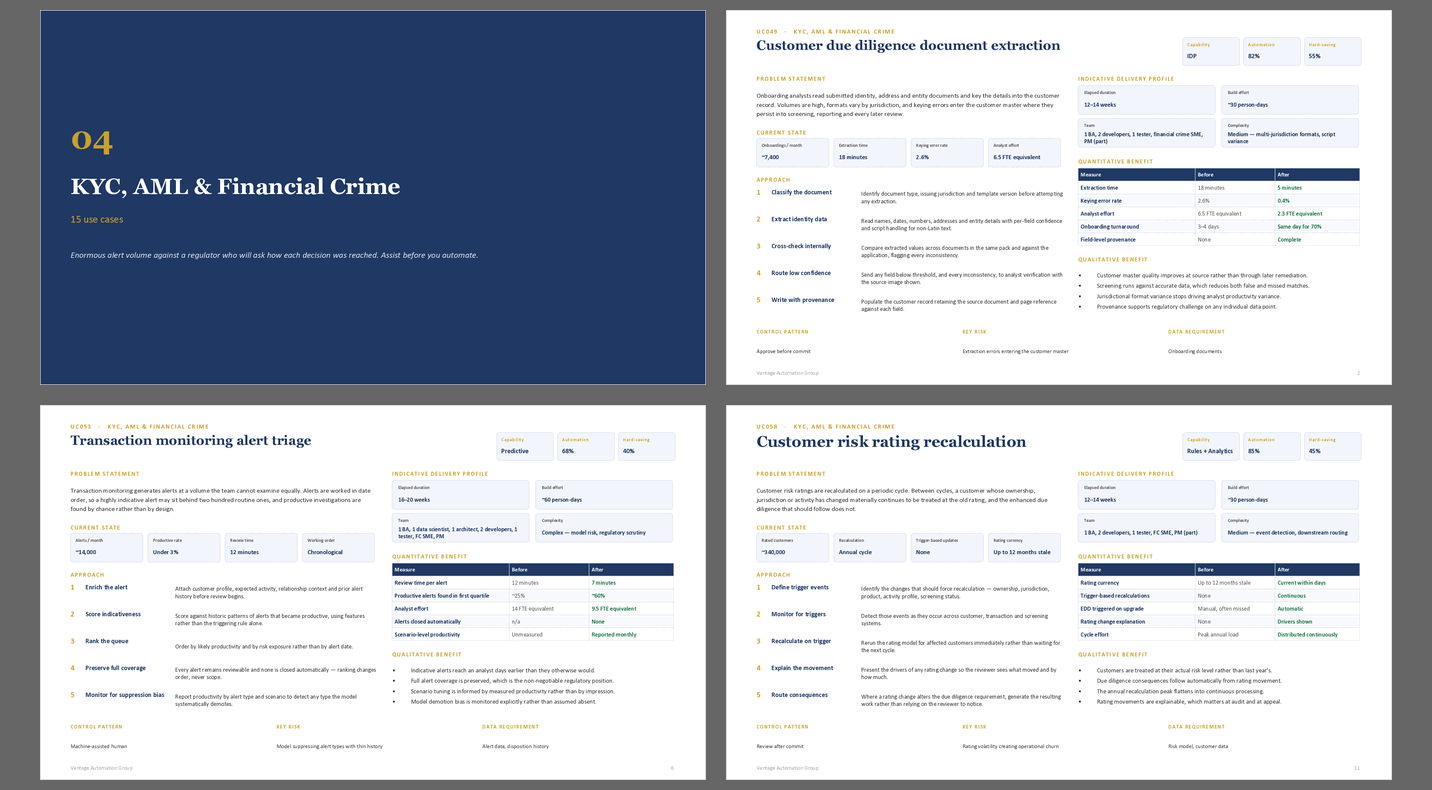
The 15 opportunities include customer due-diligence document extraction, ultimate-beneficial-ownership resolution, adverse-media screening triage, periodic-review scheduling and pre-population, transaction-monitoring alert triage, suspicious-activity-report drafting, PEP identification and classification, source-of-wealth narrative assessment, sanctions-list change impact assessment, customer-risk-rating recalculation, screening false-positive reduction, mule-account behavior detection, KYC data-quality remediation, investigation case-file assembly, and regulatory-question response support.
The operating philosophy across the toolkit is intentionally control-conscious. A large proportion of financial-crime work should be "machine-assisted human" rather than autonomous. The system can assemble evidence, classify documents, surface prior decisions, identify anomalies, rank workload, draft factual content, and highlight gaps—but the regulated disposition, suspicion determination, risk acceptance, or formal regulatory response remains with the authorized human where required.
A separate Excel supporting workbook converts the presentation into an operational reference tool. It contains a filterable use-case library, a quantitative-benefit matrix, and a prioritization sheet that compares automation potential, hard-saving potential, and implementation complexity. This supports structured opportunity-identification workshops, target-operating-model discussions, transformation roadmaps, investment cases, and portfolio governance.
The content has been developed from a senior consulting and transformation practitioner perspective shaped by more than 18 years of experience across transformation, operational excellence, governance, digital initiatives, automation, enterprise architecture, and operational resilience. The author's professional background includes experience across EY (Ernst & Young), PwC (PricewaterhouseCoopers), Accenture, Genpact, WNS, and Essar. Credentials include an MBA, INSEAD Emerging Leaders, Lean Ace, Six Sigma Black Belt, and Agile Scrum.
The toolkit is particularly valuable for teams trying to answer four questions: Where can technology remove mechanical work? Where can AI improve triage and evidence quality? Where must human accountability be preserved? And what practical data, team, control, and delivery requirements should be considered before implementation?
All baseline volumes, automation percentages, hard-saving estimates, team sizes, delivery timelines, and before-and-after metrics are indicative scenario assumptions intended for planning and comparison. They are not claims of realized results for any named client or employer. Buyers must validate each assumption against their own jurisdiction, regulatory obligations, risk appetite, policy, data quality, model governance, technology architecture, and control environment.
For financial institutions seeking to increase analyst capacity, reduce backlog, improve consistency, strengthen auditability, and apply AI responsibly in financial crime, this toolkit provides 15 practical opportunities framed around both value and control.
Got a question about the product? Email us at support@flevy.com or ask the author directly by using the "Ask the Author a Question" form. If you cannot view the preview above this document description, go here to view the large preview instead.
Source: Best Practices in Artificial Intelligence, Fraud PowerPoint Slides: 15 AI & Automation Use Cases for KYC, AML & FinCrime PowerPoint (PPTX) Presentation Slide Deck, Vantage Automation Group
ABOUT THE AUTHOR

Vantage Automation Group publishes decision-grade frameworks, financial models and operating model blueprints for people running large-scale operations and transformation programmes.
The material is drawn from nineteen years of enterprise delivery -- across global consulting firms and industry -- covering operations transformation, target operating model design, operational resilience and
... [read more]
Ask the Author a Question
You must be logged in to contact the author.




























