 Click main image to view in full screen. Unlock all 17 preview images:
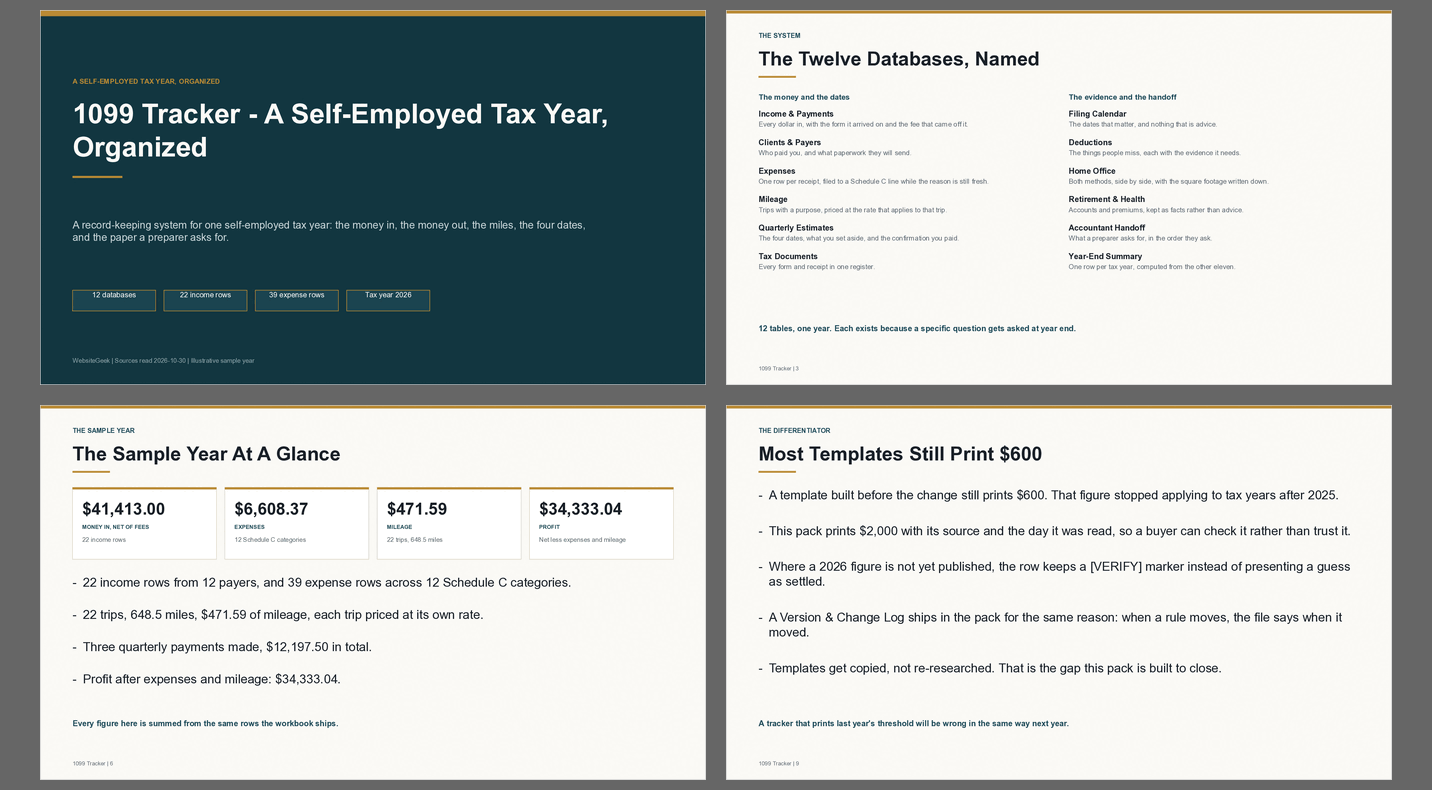
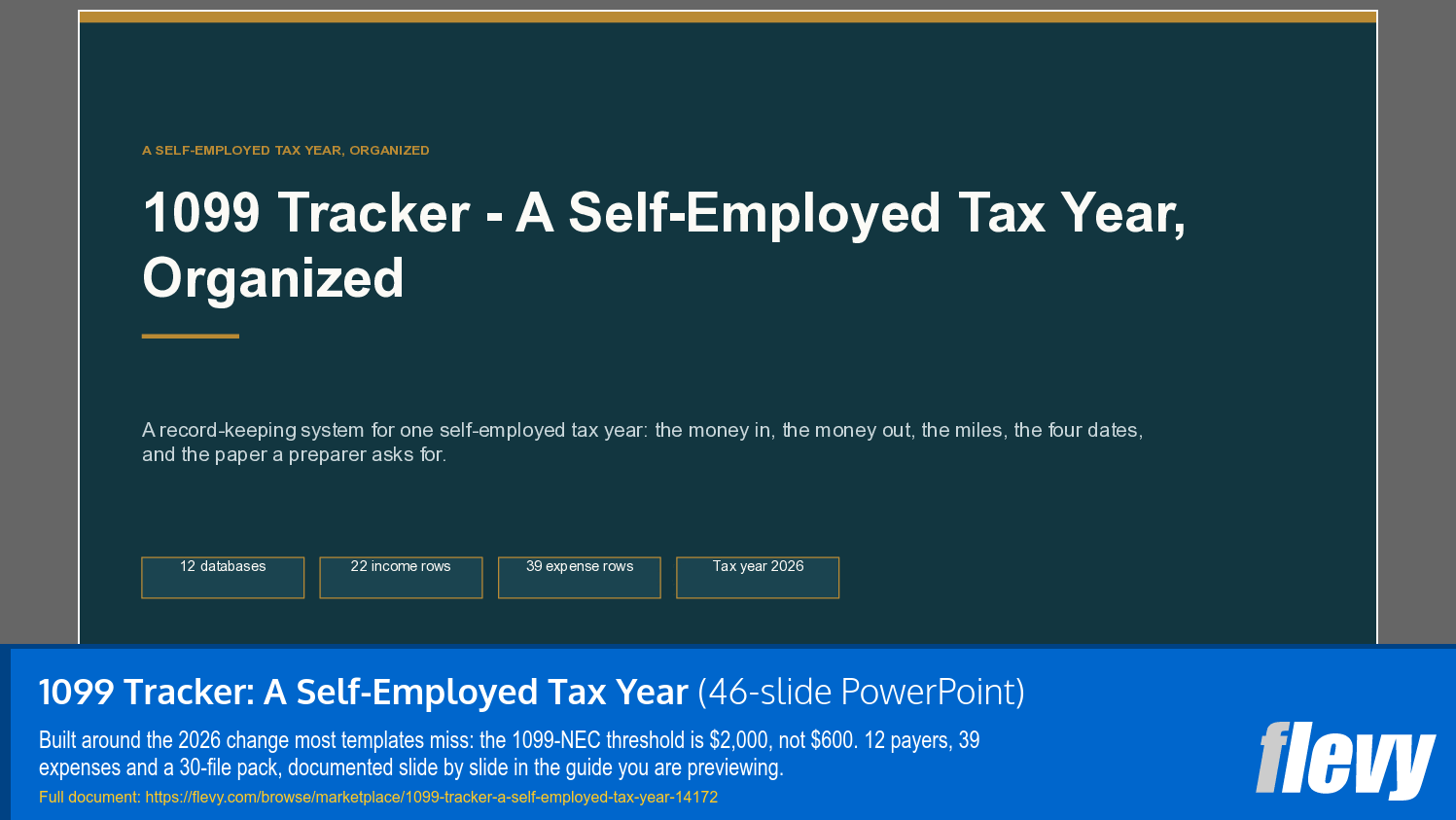
1099 Tracker: A Self-Employed Tax Year – PowerPoint PPTX Template
PowerPoint (PPTX) + Zip archive file (ZIP) 46 Slides


BENEFITS OF THIS DOWNLOADABLE POWERPOINT DOCUMENT
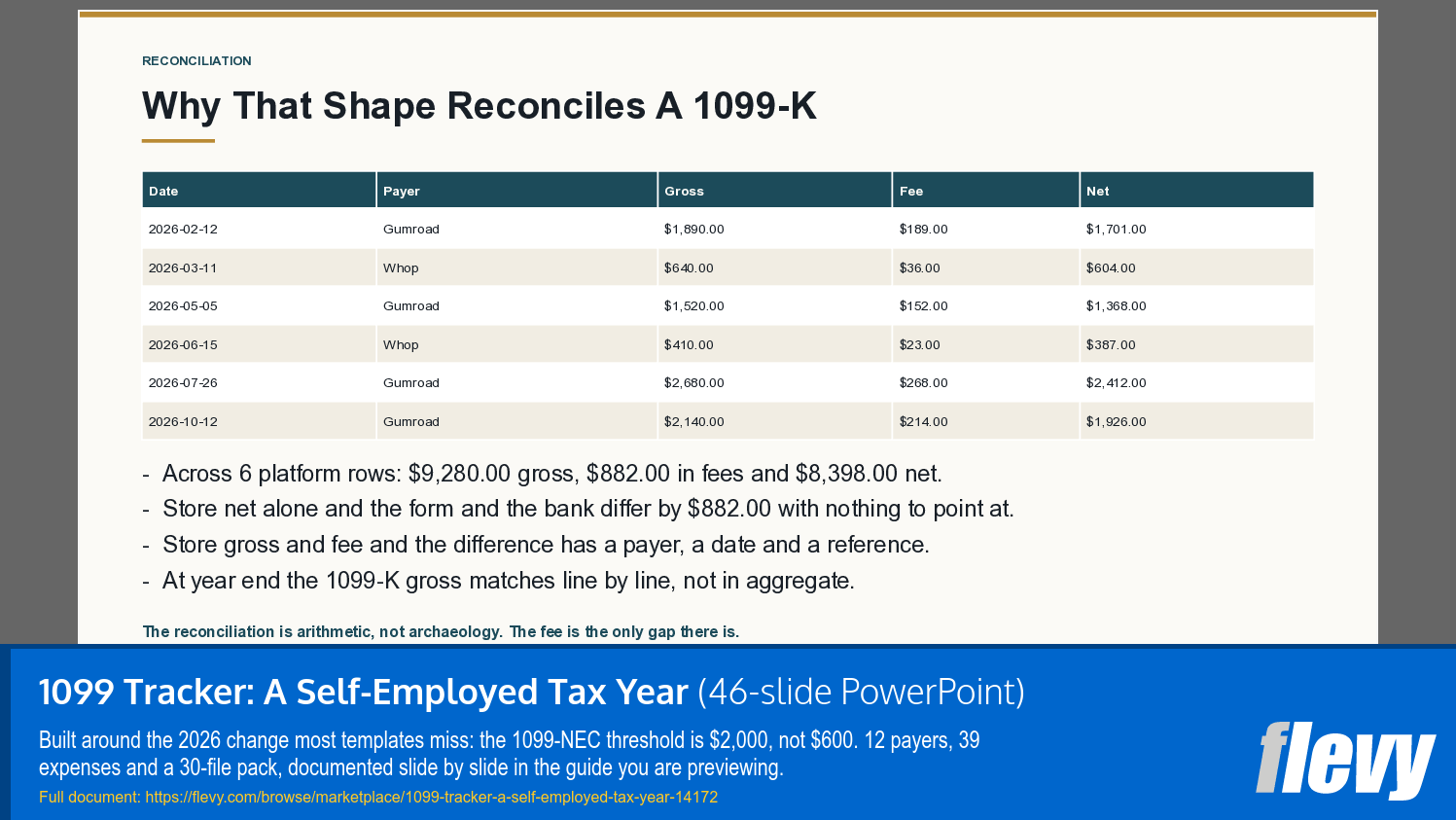
- Keeps gross, platform fee and net apart, so a 1099-K reconciles.
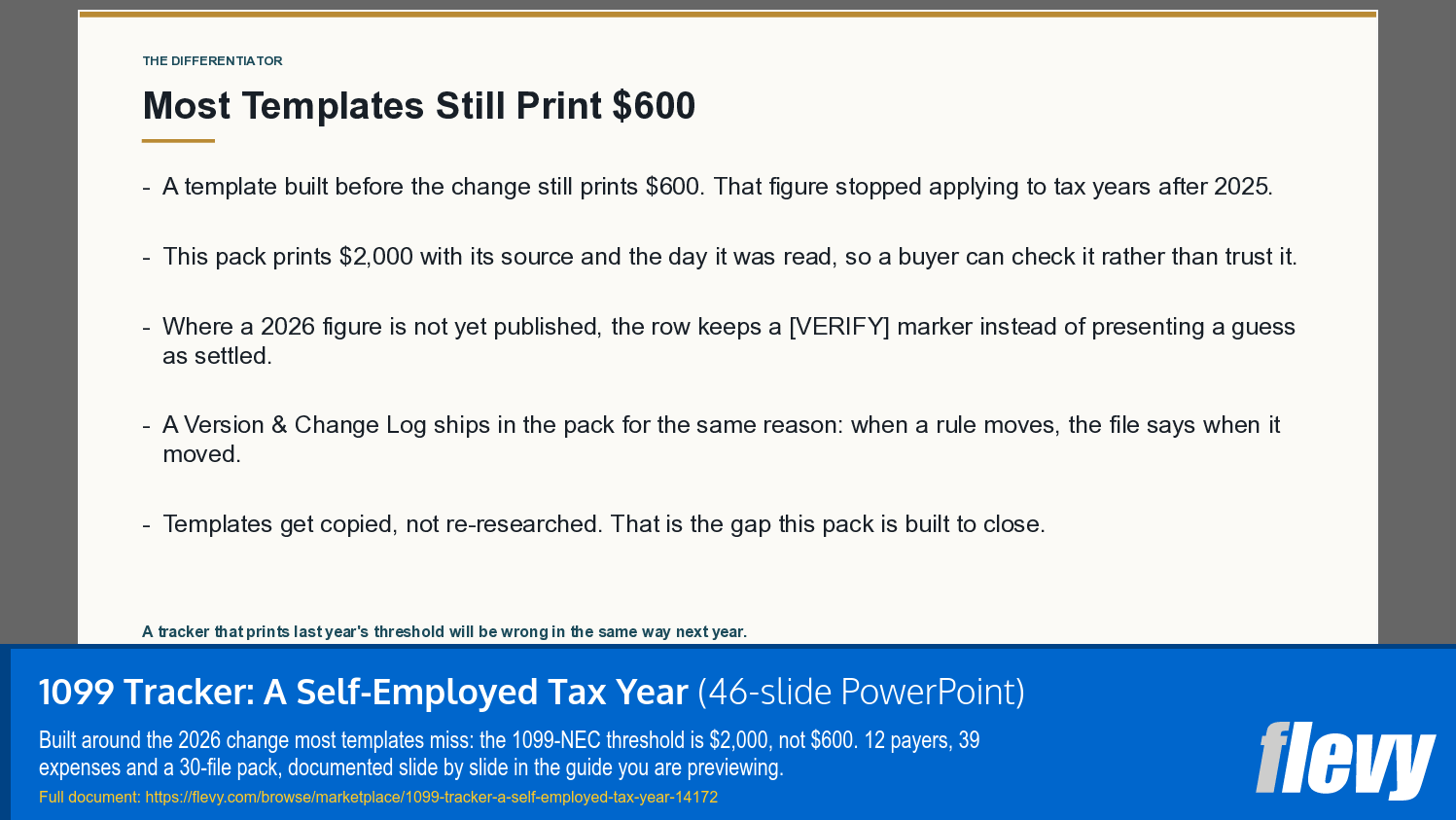
- Reflects the 2026 1099-NEC threshold of $2,000 instead of the old $600.
- Ships the paperwork a preparer asks for, in the order they ask.
SMALL BUSINESS PPT TEMPLATE DESCRIPTION
Self-employed people do not lose money because they cannot add up. They lose it because the record does not exist when the question arrives: which client paid what, on which form, and what is left after the platform took its share.
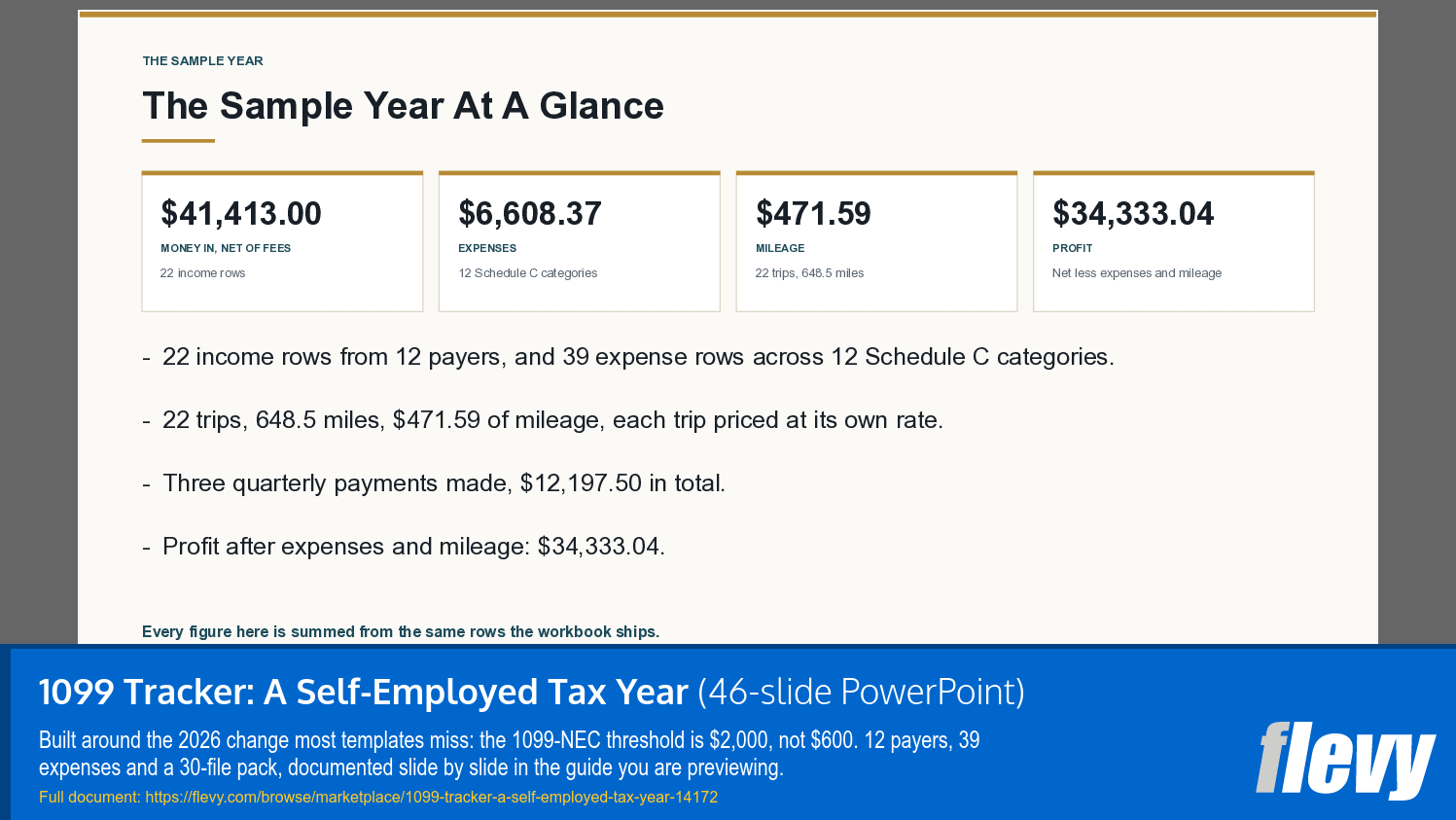
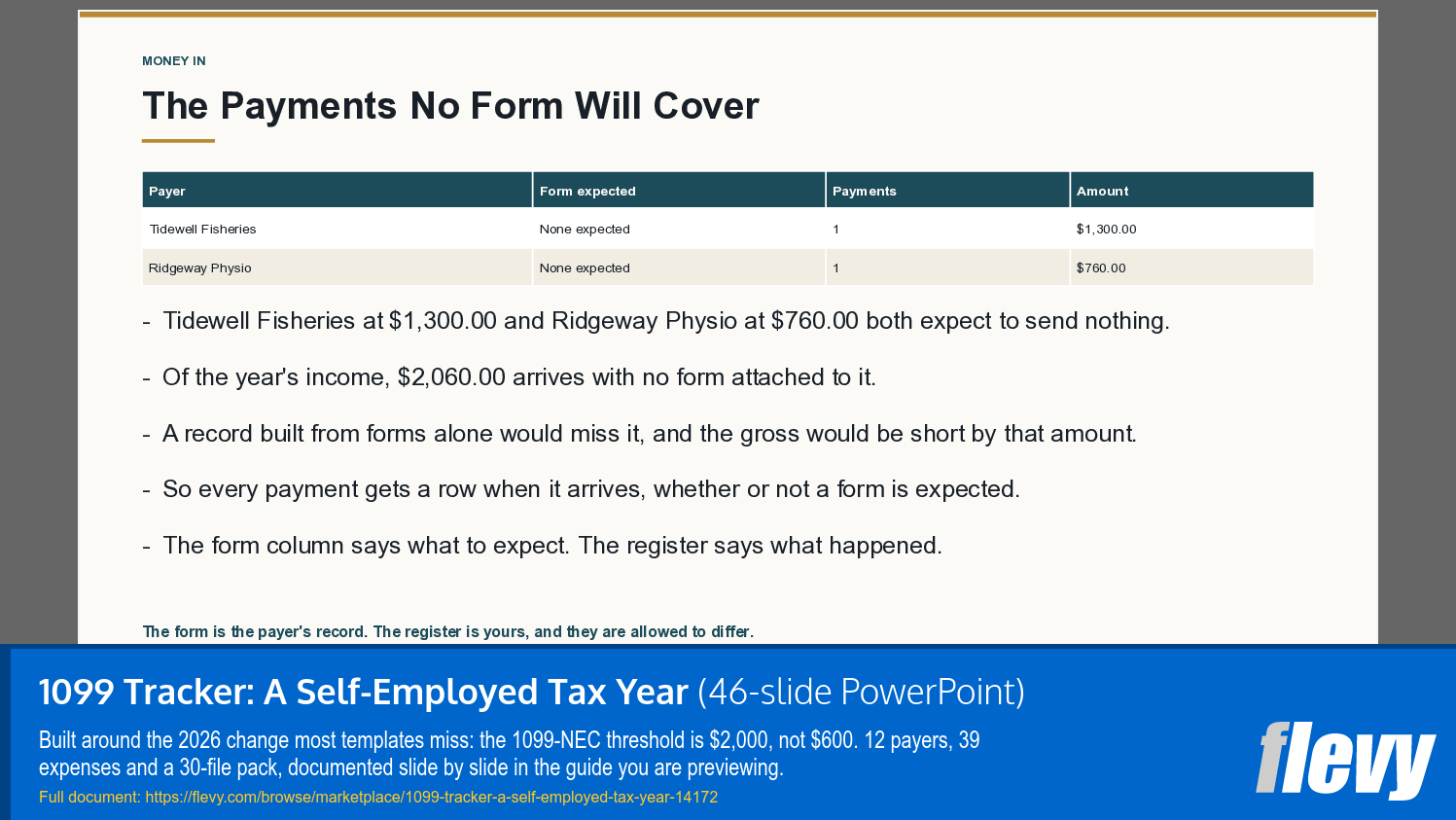
This guide and its pack organize one tax year. The income register keeps gross, platform fee and net as three separate figures, which is the only shape that lets a 1099-K reconcile against a 1099-NEC. Expenses are filed to the Schedule C categories as receipts arrive, rather than reconstructed in April. Mileage is logged per trip with a rate type, because 2026 has two business rates and a single annual number cannot be right for both halves of the year. Medical mileage is priced at the medical rate and kept out of the business total, because it is a Schedule A expense and not a Schedule C deduction. The filing calendar separates the day a platform must send you its 1099-K from the day it must file with the IRS, because they are not the same date.
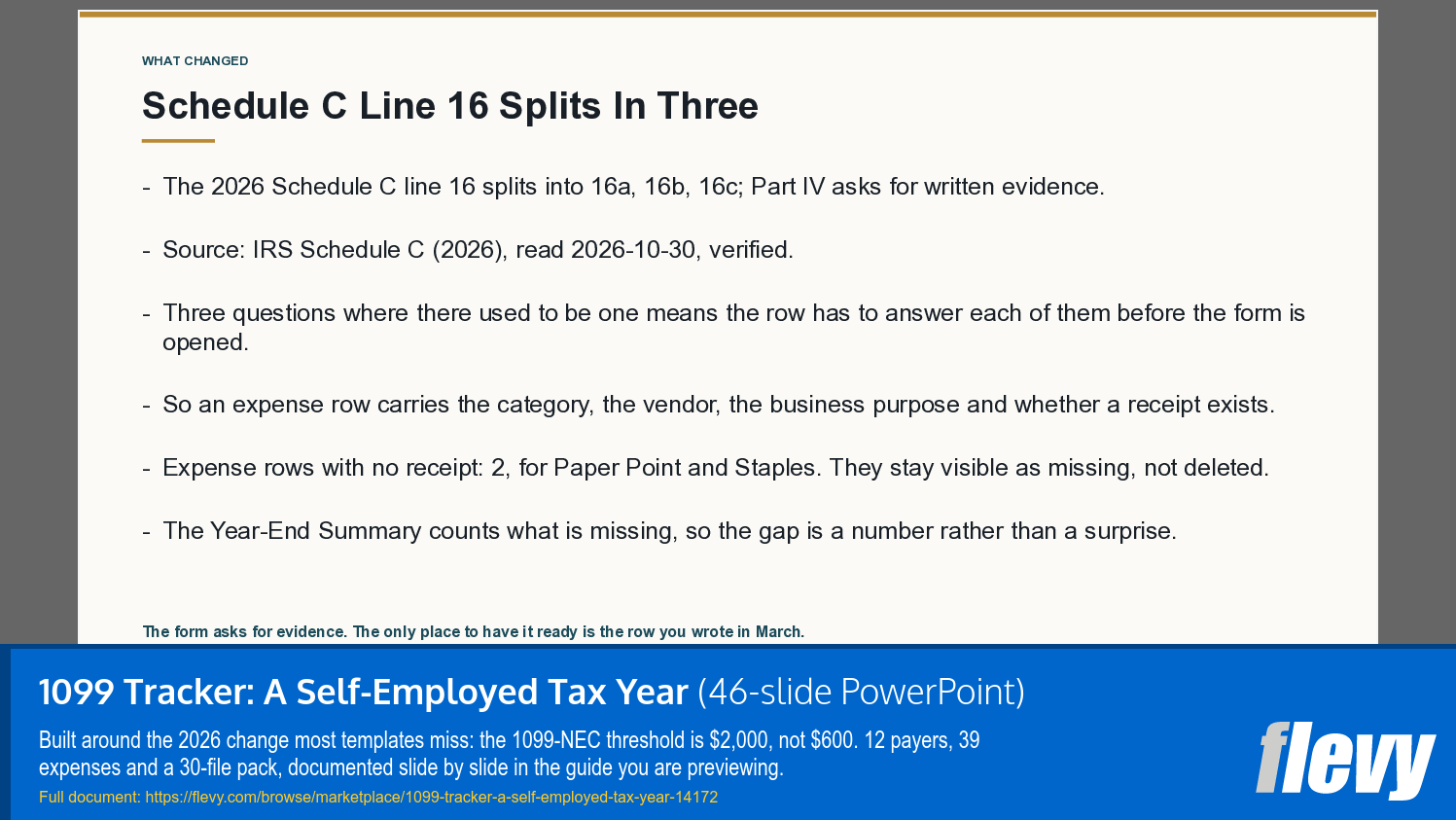
What changed for 2026 sits at the front of the guide, because it is the part most templates get wrong. The federal 1099-NEC filing threshold is $2,000 for tax years after 2025, up from $600. The 1099-K threshold is back to $20,000 and 200 transactions federally. Schedule C splits line 16 into three and asks whether written evidence exists.
THE GUIDE ITSELF
It is a 46-slide PowerPoint presentation rather than a text export: the 2026 changes come first, then a section each for money in, what is deductible, mileage, the four dates, the handoff and the paperwork, and it closes with every fact it relies on and the day that fact was read.
THE PACK THAT COMES WITH IT
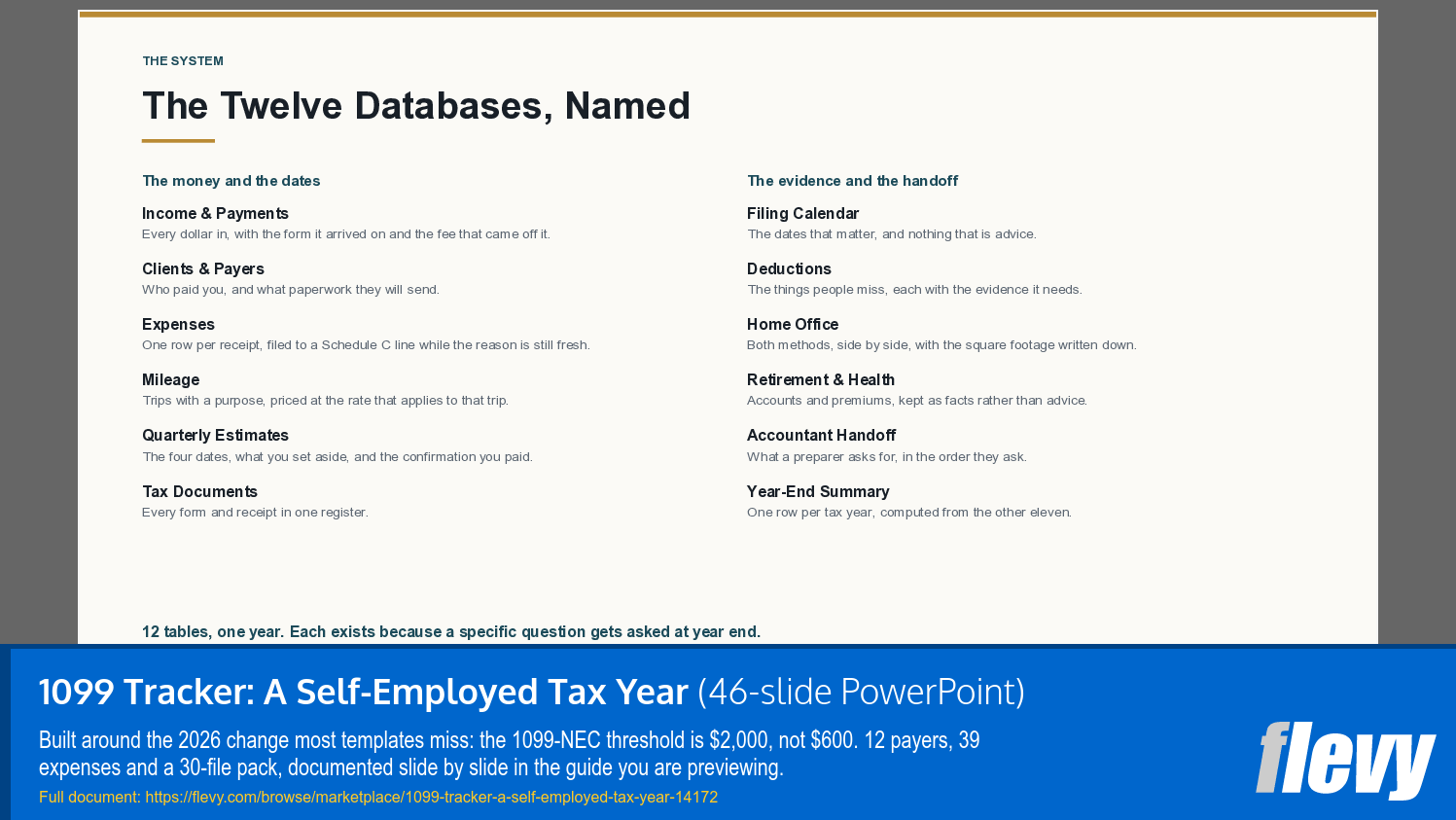
The pack carries the paperwork: 30 files across four formats: 2 workbooks, 12 CSV imports, 12 Word documents and 4 print-ready PDFs. The workbook has one tab per database and live formulas, so the year-end summary is computed rather than typed. The documents are the ones a freelancer actually sends: a W-9 request letter, an engagement note, a document request list, a mileage log that survives a review, and an accountant handoff checklist in the order a preparer asks for it.
HOW TO USE IT
Work in the order the year runs: set up payers and the income register first, file expenses as receipts arrive, log mileage per trip, check the quarterly page before each due date, and hand the preparer the summary and the documents the pack already holds. The CSV files import into the matching databases if you want the record and the paperwork in one place.
This is a record-keeping system. It does not prepare or file a return, does not decide what you owe, and does not give tax advice. It records what happened; it does not decide what you owe, and where a rule matters it cites the source and tells you to confirm it.
SAFETY FOOTER
Verify all facts, legal and compliance requirements, and niche-specific data before professional use.
You remain fully responsible for final content, advice, and outcomes.
No results are guaranteed. Use at your own professional discretion.
Got a question about the product? Email us at support@flevy.com or ask the author directly by using the "Ask the Author a Question" form. If you cannot view the preview above this document description, go here to view the large preview instead.
Source: Best Practices in Small Business, Tax PowerPoint Slides: 1099 Tracker: A Self-Employed Tax Year PowerPoint (PPTX) Presentation Slide Deck, WebsiteGeek
ABOUT THE AUTHOR

WebsiteGeek offers free website tools, SEO suites, file converters, browser extensions, calculators, and image utilities built to supercharge your productivity.
We also builds practical digital tools and templates for small business owners -- real formulas and sourced data.
Ask the Author a Question
You must be logged in to contact the author.