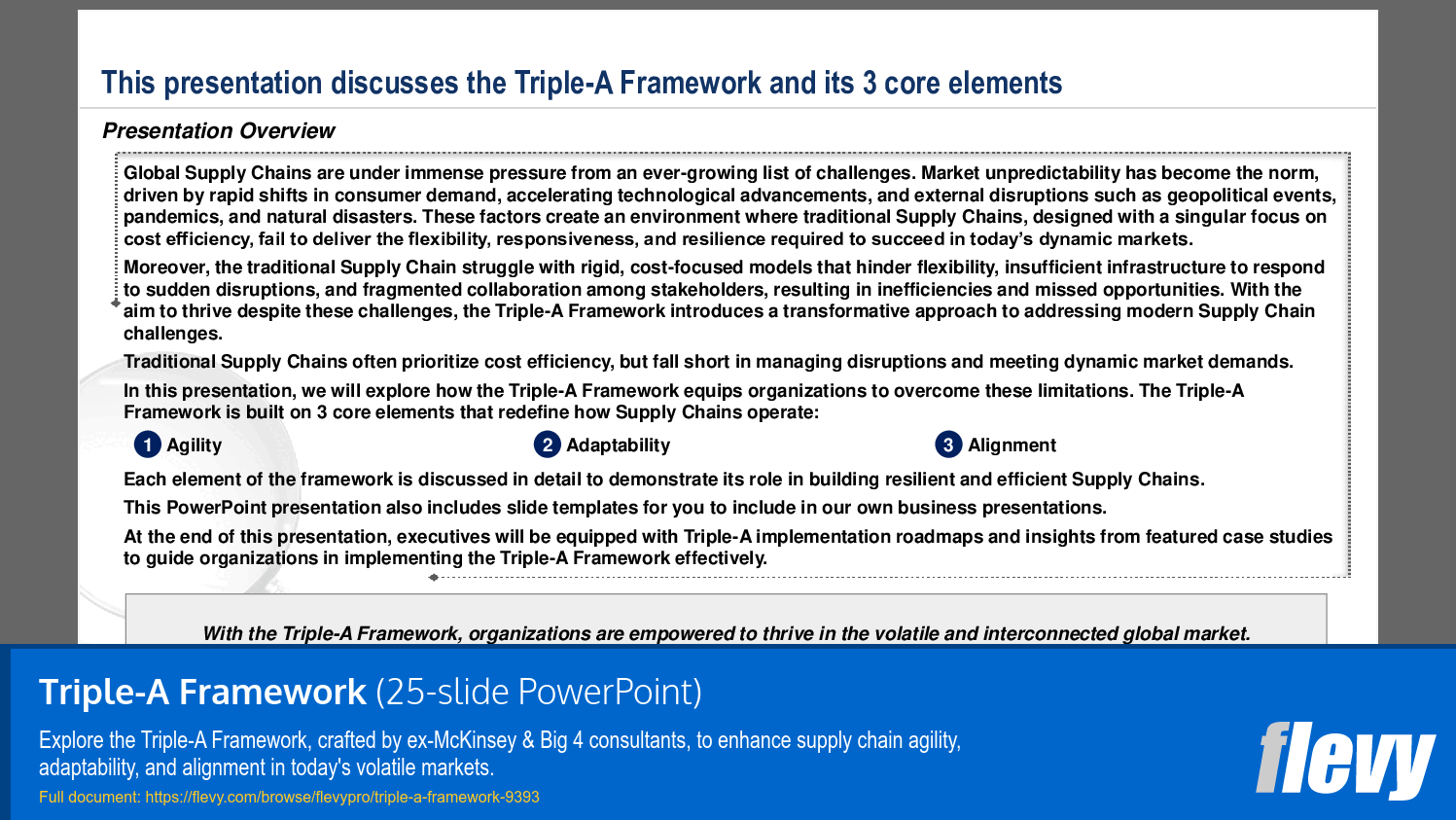

Global Supply Chains are under immense pressure from an ever-growing list of challenges. Market unpredictability has become the norm, driven by rapid shifts in consumer demand, accelerating technological advancements, and external disruptions such as geopolitical events, pandemics, and natural disasters. These factors create an environment where traditional Supply Chains, designed with a singular focus on cost efficiency, fail to deliver the flexibility, responsiveness, and resilience required to succeed in today's dynamic markets.
Moreover, the traditional Supply Chain struggle with rigid, cost-focused models that hinder flexibility, insufficient infrastructure to respond to sudden disruptions, and fragmented collaboration among stakeholders, resulting in inefficiencies and missed opportunities. With the aim to thrive despite these challenges, the Triple-A Framework introduces a transformative approach to addressing modern Supply Chain challenges.
Traditional Supply Chains often prioritize cost efficiency, but fall short in managing disruptions and meeting dynamic market demands.
In this PowerPoint presentation, we will explore how the Triple-A Framework equips organizations to overcome these limitations. The Triple-A Framework is built on 3 core elements that redefine how Supply Chains operate:
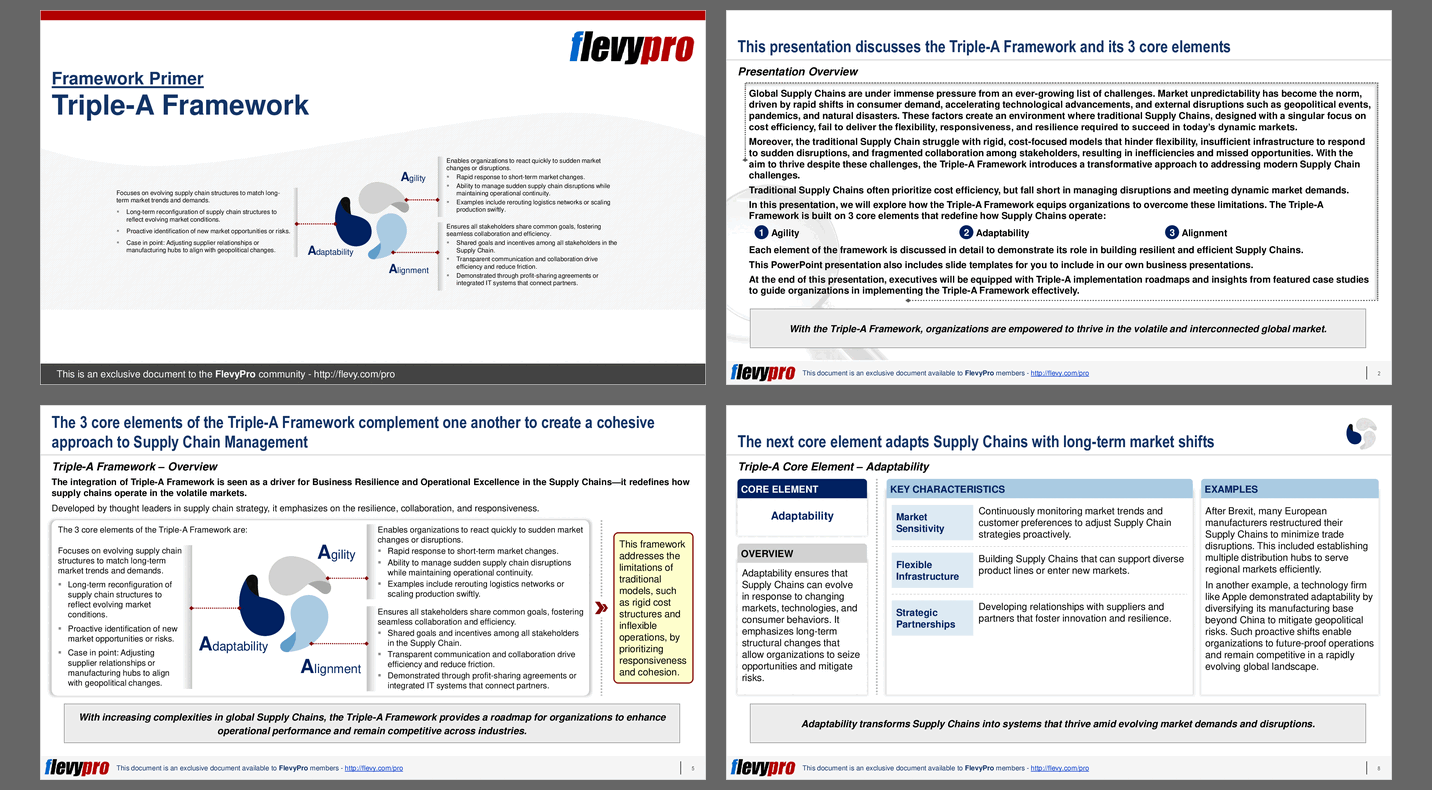
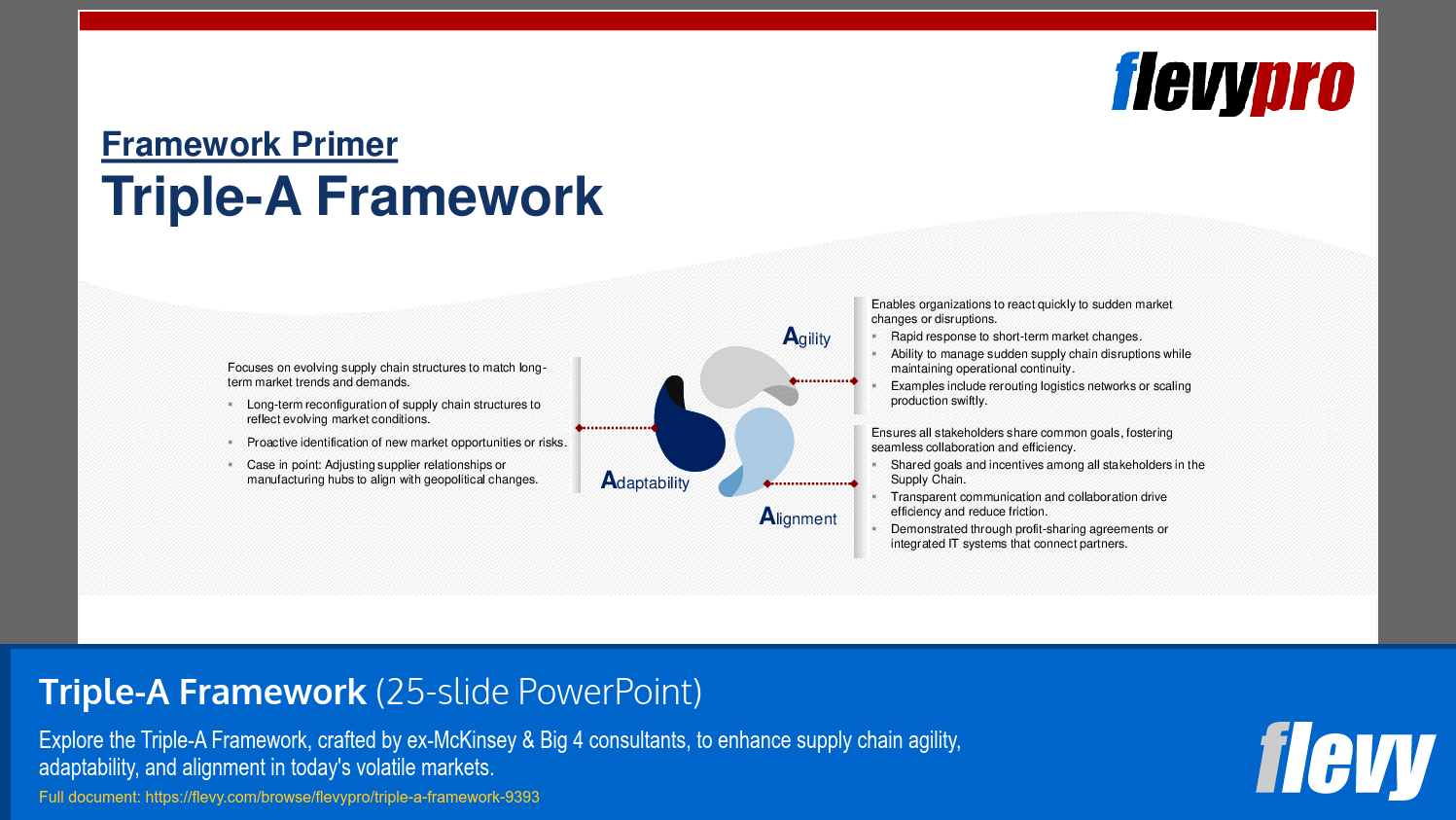
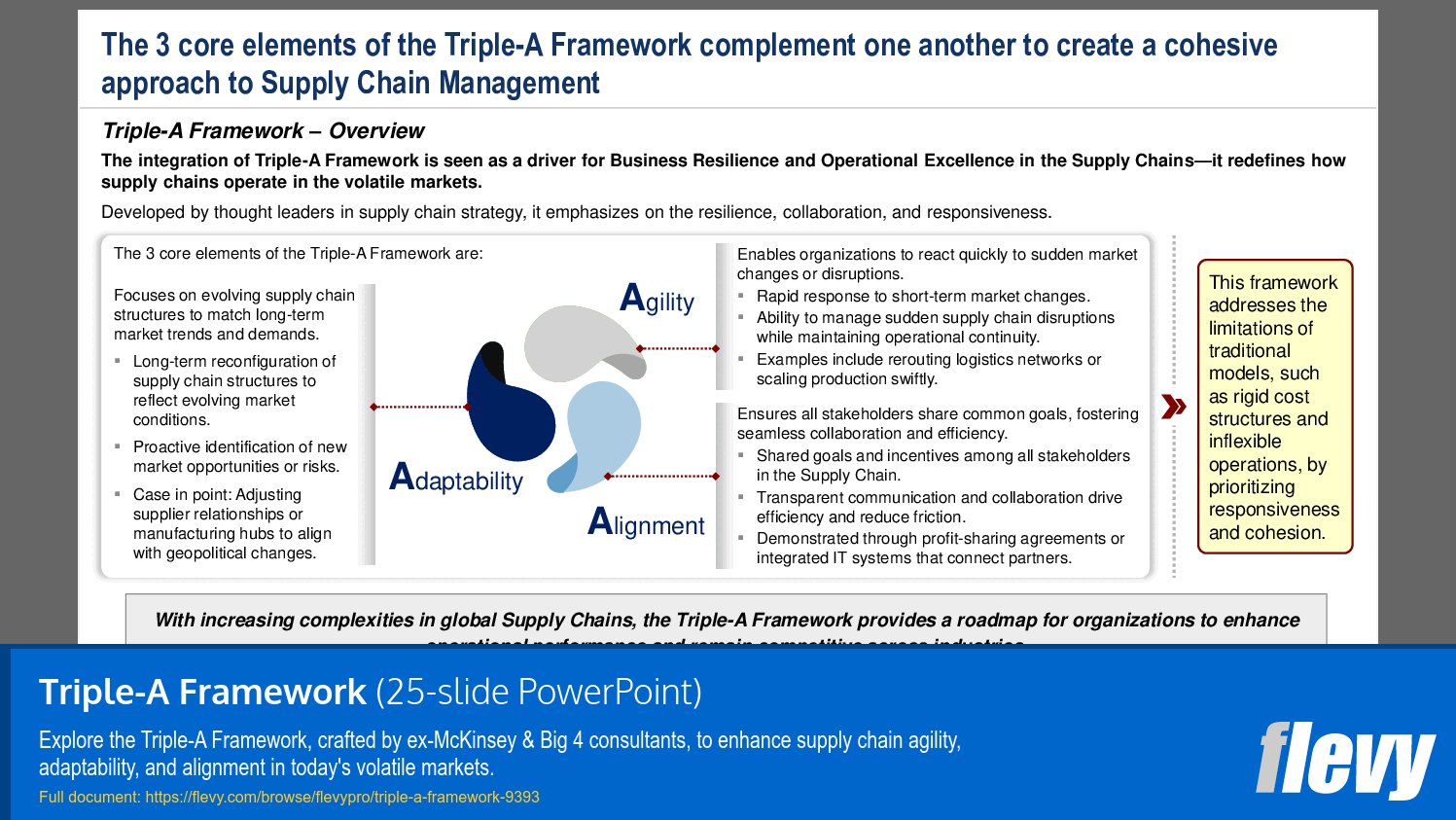
1. Agility – Enables organizations to react quickly to sudden market changes or disruptions.
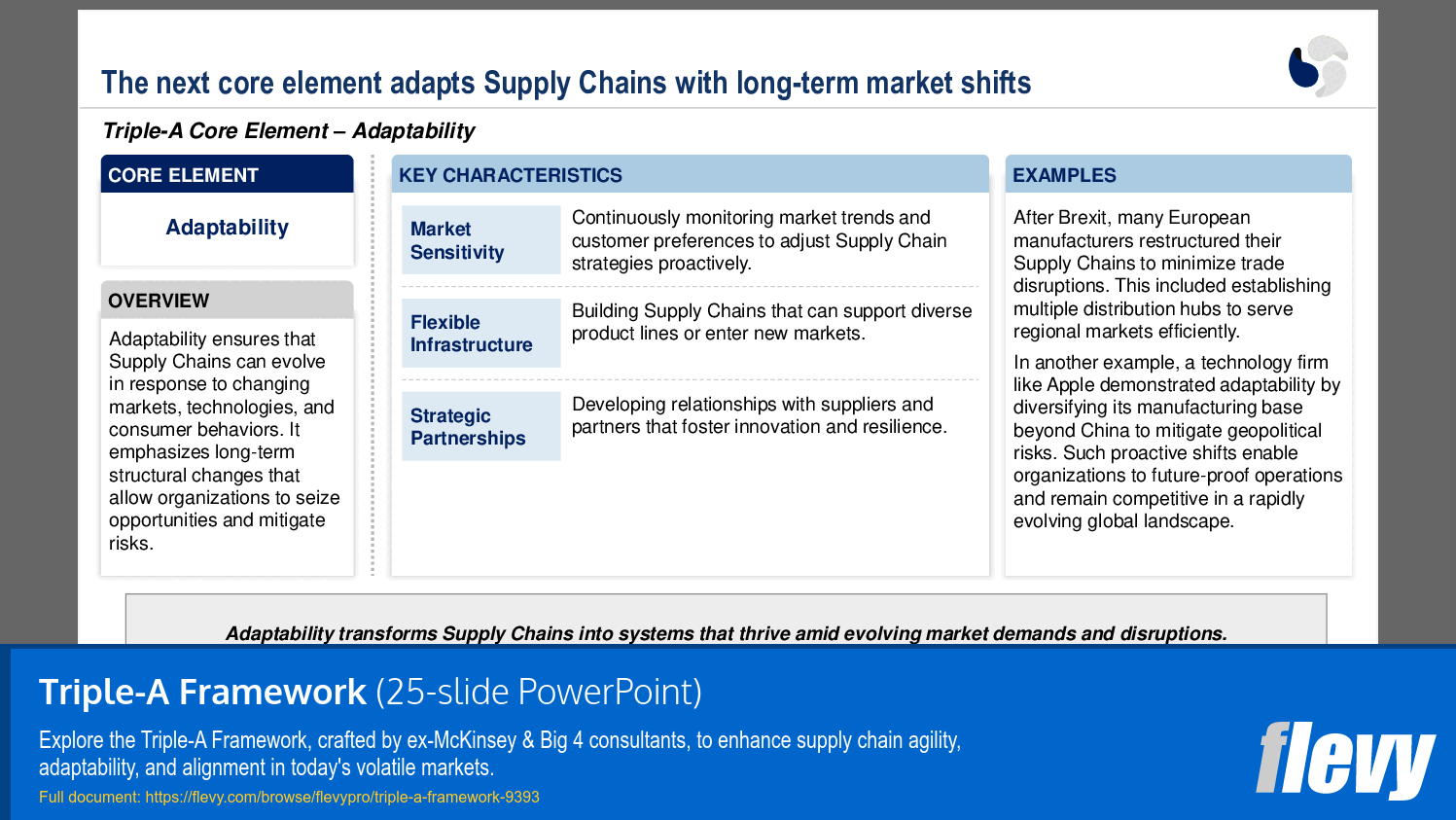
2. Adaptability – Focuses on evolving supply chain structures to match long-term market trends and demands.
3. Alignment – Ensures all stakeholders share common goals, fostering seamless collaboration and efficiency.
Each element of the framework is discussed in detail to demonstrate its role in building resilient and efficient Supply Chains.
This PPT presentation also includes slide templates for you to include in our own business presentations.
At the end of this presentation, executives will be equipped with Triple-A implementation roadmaps and insights from featured case studies to guide organizations in implementing the Triple-A Framework effectively.
Got a question about this document? Email us at flevypro@flevy.com.
Executive Summary
The Triple-A Framework is a strategic approach designed to enhance supply chain management by focusing on Agility, Adaptability, and Alignment. Developed by experts from McKinsey and Big 4 consulting firms, this framework equips organizations to respond swiftly to market changes, manage disruptions effectively, and foster collaboration among stakeholders. By implementing the Triple-A Framework, executives can ensure operational continuity, optimize supply chain structures, and align objectives across all partners, ultimately driving business resilience and operational excellence.
Who This Is For and When to Use
• Supply Chain Executives looking to enhance operational strategies.
• Integration Leaders responsible for managing supply chain transformations.
• Consultants advising organizations on supply chain optimization.
• Operations Managers aiming to improve responsiveness and collaboration.
Best-fit moments to use this deck:
• During strategic planning sessions to align supply chain goals with market demands.
• When addressing supply chain disruptions to develop rapid response strategies.
• In workshops focused on enhancing collaboration among supply chain partners.
Learning Objectives
• Define the Triple-A Framework and its core elements: Agility, Adaptability, and Alignment.
• Build strategies to enhance supply chain agility in response to market disruptions.
• Establish adaptability measures to align supply chain structures with long-term market trends.
• Foster alignment among stakeholders to ensure shared goals and incentives.
• Identify best practices for implementing the Triple-A Framework in real-world scenarios.
• Analyze case studies demonstrating successful application of the framework in various industries.
Table of Contents
• Overview (page 1)
• Triple-A Framework (page 2)
• Triple-A Core Elements (page 3)
• Additional Considerations (page 12)
• Slide Design Structure & Templates (page 14)
Primary Topics Covered
• Agility - The ability to quickly adapt to sudden market changes and disruptions, ensuring operational performance is maintained.
• Adaptability - The capacity to evolve supply chain structures in response to long-term market trends and consumer behaviors, enabling proactive risk management.
• Alignment - Ensuring all supply chain stakeholders share common objectives, fostering collaboration and efficiency through transparent communication.
Deliverables, Templates, and Tools
• Agility assessment template for evaluating current supply chain responsiveness.
• Adaptability roadmap for long-term supply chain restructuring.
• Alignment framework for establishing shared goals and incentives among stakeholders.
• Case study examples illustrating successful implementation of the Triple-A Framework.
• Slide templates for presenting the Triple-A Framework in business settings.
Slide Highlights
• Overview of the Triple-A Framework and its significance in modern supply chains.
• Detailed breakdown of the 3 core elements: Agility, Adaptability, and Alignment.
• Real-world case studies showcasing organizations that successfully implemented the framework.
• Visual representations of the framework’s impact on supply chain performance.
Potential Workshop Agenda
Introduction to the Triple-A Framework (30 minutes)
• Overview of the framework and its importance in today’s market.
• Discussion on the 3 core elements and their interconnections.
Agility and Adaptability in Action (60 minutes)
• Group activities to assess current agility levels in participants' organizations.
• Strategies for enhancing adaptability in supply chain operations.
Alignment Strategies for Stakeholders (45 minutes)
• Interactive session on aligning objectives and incentives among supply chain partners.
• Best practices for fostering collaboration and trust.
Customization Guidance
• Tailor the framework’s implementation roadmap to fit specific organizational needs and market conditions.
• Adjust case studies to reflect industry-relevant examples for participants.
• Modify templates to incorporate organizational branding and terminology.
Secondary Topics Covered
• Challenges in implementing the Triple-A Framework and strategies to overcome them.
• Future advancements in supply chain management, including technology integration and sustainability.
• Insights into global collaboration and its impact on supply chain resilience.
Topic FAQ
Document FAQ
These are questions addressed within this presentation.
What is the Triple-A Framework?
The Triple-A Framework is a strategic model that enhances supply chain management by focusing on Agility, Adaptability, and Alignment to respond effectively to market changes.
How can organizations improve agility in their supply chains?
Organizations can enhance agility by implementing rapid response mechanisms, such as flexible logistics and real-time inventory management.
What role does adaptability play in supply chain management?
Adaptability allows supply chains to evolve in response to changing market conditions, ensuring long-term resilience and competitiveness.
How does alignment benefit supply chain stakeholders?
Alignment fosters collaboration and efficiency by ensuring all stakeholders share common goals and incentives, reducing friction and enhancing performance.
Can you provide examples of successful implementation of the Triple-A Framework?
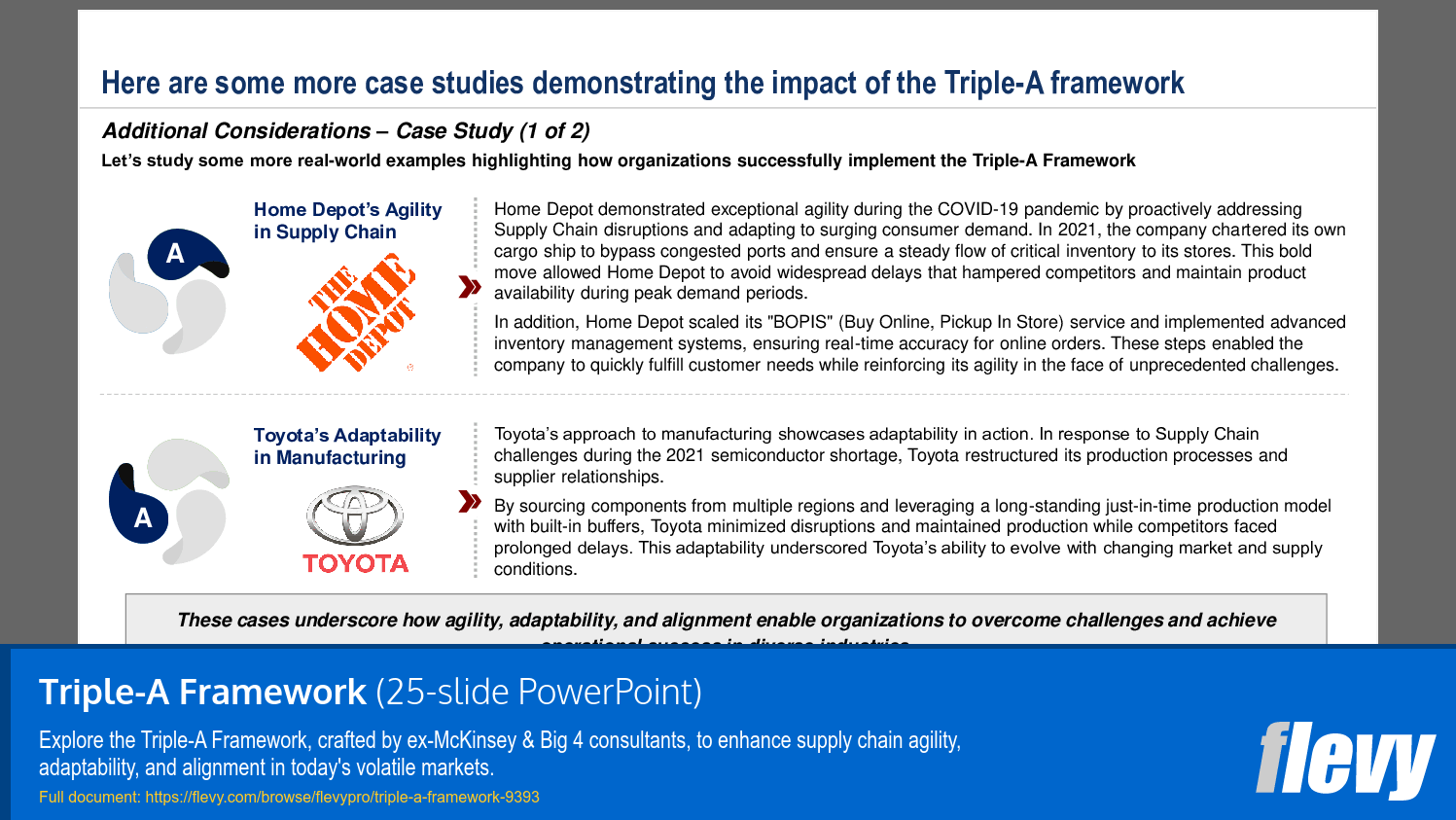
Yes, case studies from organizations like Home Depot and Toyota illustrate how the framework has been successfully applied to achieve operational excellence.
What challenges might organizations face when adopting the Triple-A Framework?
Common challenges include data silos, resistance to change, and the resource intensity of transitioning to a more agile supply chain model.
How can technology enhance the Triple-A Framework?
Integrating advanced technologies like AI and IoT can provide real-time insights and automation, improving responsiveness and operational efficiency.
What is the importance of collaboration in the Triple-A Framework?
Collaboration is crucial for ensuring all supply chain partners work towards shared objectives, enhancing overall efficiency and trust.
Glossary
• Agility - The ability to quickly respond to market changes and disruptions.
• Adaptability - The capacity to evolve supply chains in response to long-term market trends.
• Alignment - Ensuring all stakeholders share common goals and incentives.
• Supply Chain Resilience - The ability of a supply chain to withstand and recover from disruptions.
• Stakeholders - Individuals or organizations involved in the supply chain process.
• Data Silos - Isolated data systems that hinder transparency and collaboration.
• Proactive Risk Management - Identifying potential disruptions and preparing contingency plans.
• Collaborative Partnerships - Relationships among supply chain partners that foster trust and efficiency.
• Market Sensitivity - The ability to monitor and respond to changes in market conditions and consumer preferences.
• Integrated IT Systems - Technology solutions that connect stakeholders and facilitate real-time data sharing.
• Resource Intensity - The level of resources required to implement changes in supply chain operations.
• Sustainability Focus - Aligning supply chain practices with environmental goals.
Source: Best Practices in Supply Chain Management, Business Resilience PowerPoint Slides: Triple-A Framework PowerPoint (PPTX) Presentation Slide Deck, LearnPPT Consulting
Did you need more documents?
Consider a FlevyPro subscription from $39/month. View plans here.
For $10.00 more, you can download this document plus 2 more FlevyPro documents. That's just $13 each.
|
Receive our FREE presentation on Operational Excellence
This 50-slide presentation provides a high-level introduction to the 4 Building Blocks of Operational Excellence. Achieving OpEx requires the implementation of a Business Execution System that integrates these 4 building blocks. |










