
This framework is developed by a team of former McKinsey and Big 4 consultants. The presentation follows the headline-body-bumper slide format used by global consulting firms.
Explore our Tax Management & Strategy PPT, crafted by ex-McKinsey & Big 4 consultants. Integrate tax as a strategic partner with actionable insights and templates. Tax Management & Strategy is a 20-slide PPT PowerPoint presentation slide deck (PPT) available for immediate download upon purchase.
The Tax function should be our company's strategic partner—not a mere compliance function. First, let's understand...
What is Tax Management?
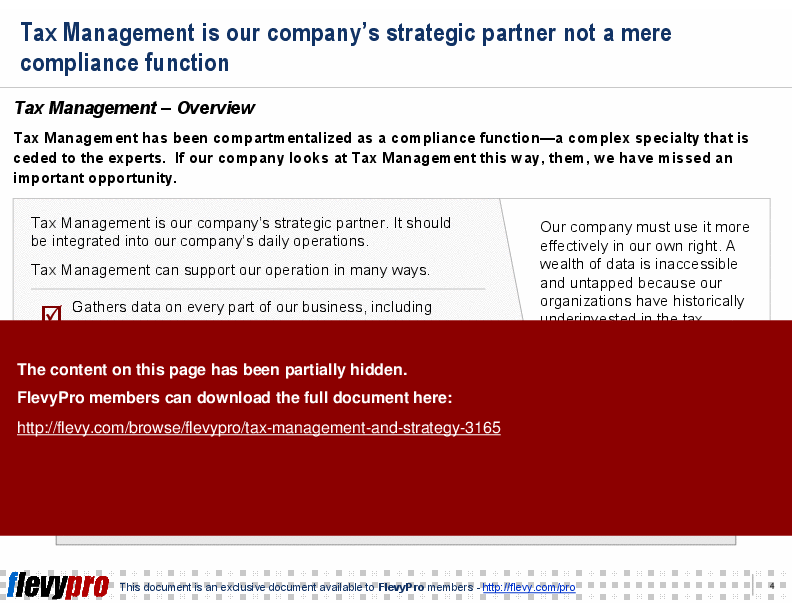
Tax Management is the corporate finance function that is responsible for the management of finances for the purpose of paying taxes. Tax Management deals with managing tax risks and addressing tax reporting, compliance, and accounting needs. Tax Management can support our operation in many ways, which include:
• Gathering data on every part of our business, including employees, assets, and intellectual property, in all territories.
• Ensuring a comprehensive accounting of the entirety of our business every year.
• Compiling all information together for regulators.
Hence, it is important that Tax Management should be integrated into our organization's daily operations. When effectively and efficiently managed, Tax Management can strategically direct our company to reach global competitiveness.
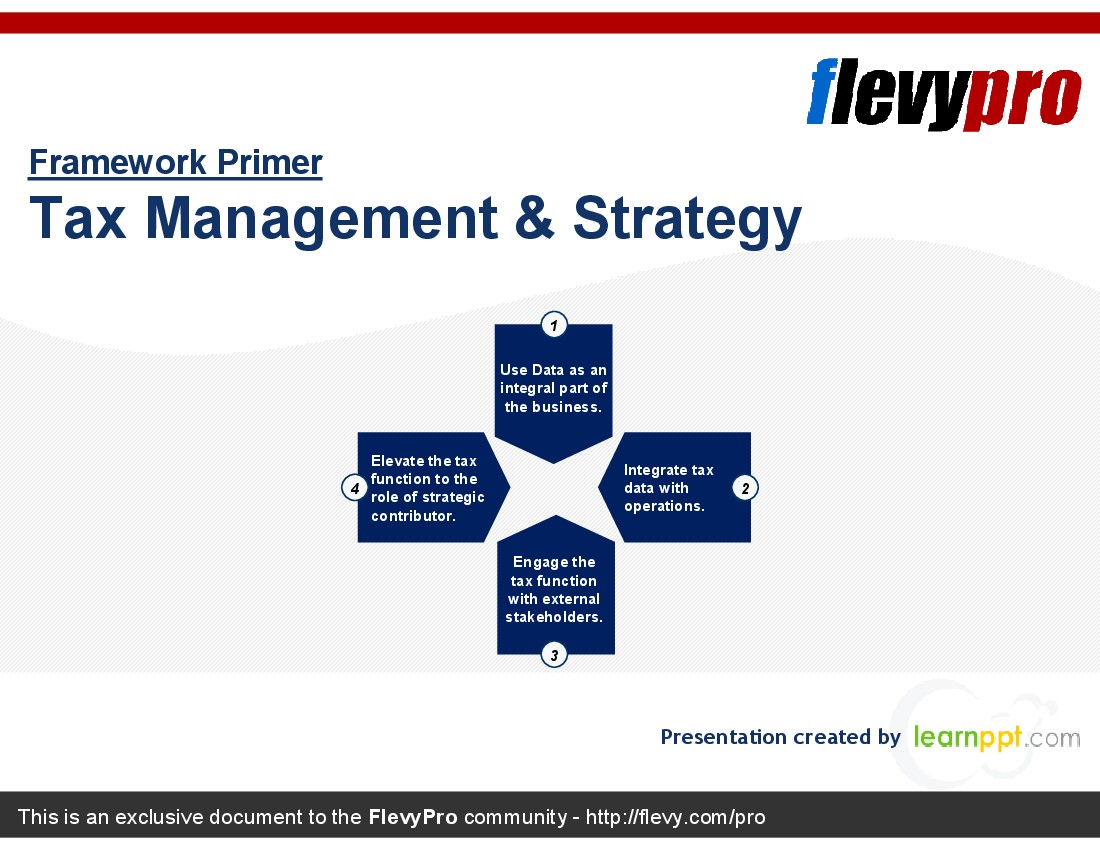
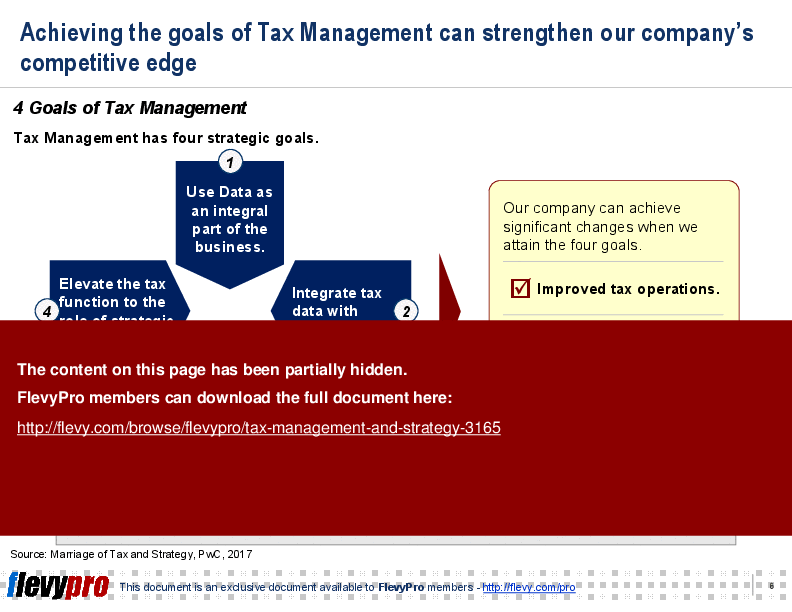
Tax Management has 4 goals:
1. Use Data as an integral part of the business.
2. Integrate tax data with operations.
3. Engage the tax function with external stakeholders.
4. Elevate the tax function to the role of strategic contributor.
These 4 Tax Management goals are discussed in depth in this PowerPoint presentation.
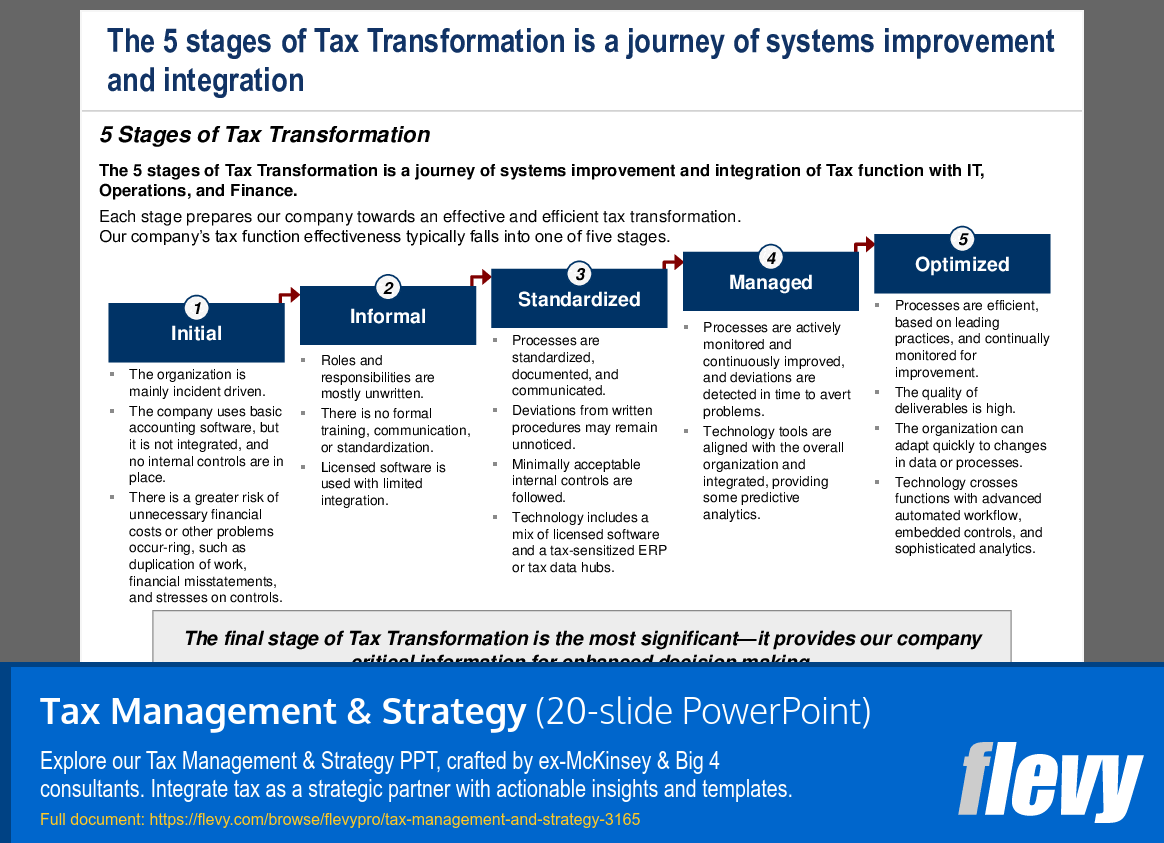
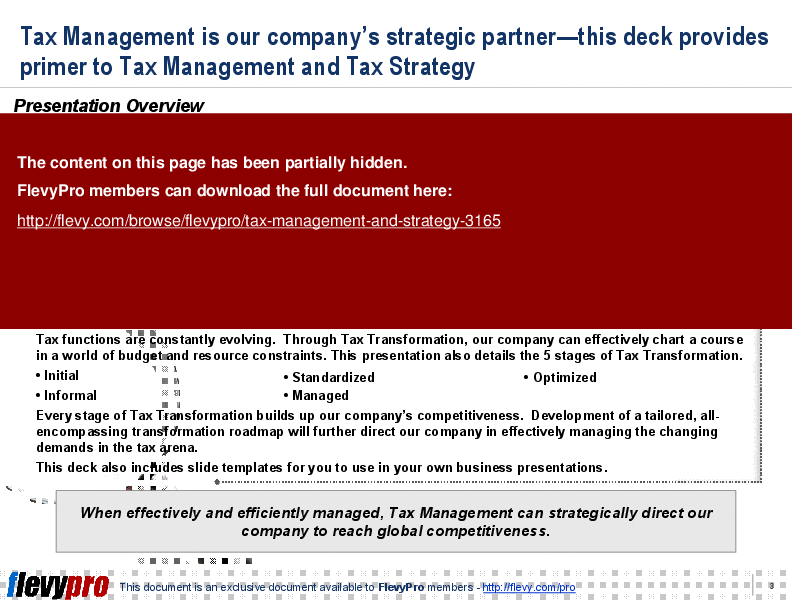
Tax functions are constantly evolving. Through Tax Transformation, our company can effectively chart a course in a world of budget and resource constraints. This Tax Management presentation also details the 5 stages of Tax Transformation:
Every stage of Tax Transformation builds up our company's competitiveness. The 5 stages of Tax Transformation is a journey of systems improvement and integration of Tax function with IT, Operations, and Finance.
Development of a tailored, all-encompassing Tax Transformation Roadmap will further direct our organization in effectively managing the changing demands in the tax arena. The key to success is to define our company’s own unique Tax Strategy and make it part of our overall corporate vision.
This Tax Management PPT also includes slide templates for you to use in your own business presentations, which convey the Tax frameworks of (1) 4 Goals of Tax Management and (2) 5 Stages of Tax Transformation.
This presentation provides a comprehensive roadmap for integrating tax management into your company's strategic operations. It includes actionable insights and practical templates to elevate your tax function to a strategic contributor.
The 5 stages of Tax Transformation enhance the tax function's integration with IT, Operations, and Finance.
1. Initial: A reactive approach using basic accounting software, leading to financial risks and inefficiencies.
2. Informal: Undefined roles and limited licensed software hinder effective tax management.
3. Standardized: Documented processes exist,, but deviations and minimal internal controls remain; technology includes a mix of licensed and tax-specific systems.
4. Managed: Actively monitored processes allow for continuous improvement and better alignment of technology with organizational structure, enabling predictive analytics.
5. Optimized: Efficient processes respond swiftly to changes, utilizing advanced technology for automated workflows and sophisticated analytics.
This structured approach underscores the significance of each stage in achieving an integrated and effective tax function.
This PPT slide outlines the integration of tax data within a company's operational framework to enhance efficiency. Key actions include real-time data analysis for timely decision-making, which helps identify data entry errors and ensures compliance. Improved decision-making processes through tax data integration can prevent unexpected tax issues and streamline filing. Accessibility of pricing data informs pricing strategies, impacting profitability. The integration process involves merging tax functions with finance operations, linking front and back office operations, and deciding on in-house versus outsourced tax management. This approach addresses compliance, risk management, and positions tax as a strategic element in business operations, optimizing tax management strategies for better performance.
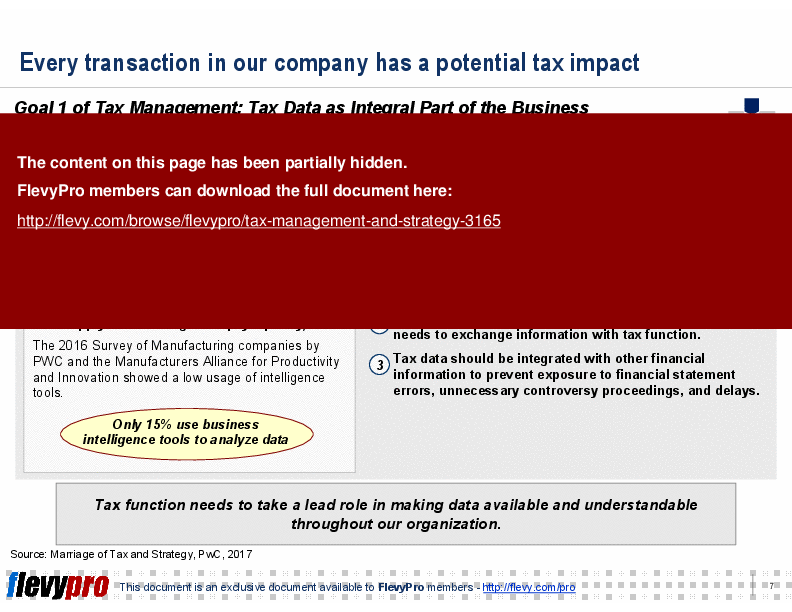
Tax data management is essential for enhancing tax accounting, indirect tax, transfer pricing, compliance, and dispute resolution. Effective tax data analysis can improve operational efficiency and mitigate tax-related risks. Additionally, tax data insights can inform broader business strategies, including supply chain performance metrics and gender pay equality. A 2016 survey revealed that only 15% of manufacturing companies use business intelligence tools for tax data analysis, highlighting a significant technology gap. To optimize tax data management, companies must shift focus from data gathering to analysis, ensuring integration with technological infrastructure and financial systems to minimize financial statement errors and controversies. Rethinking tax data management is crucial for making it actionable across the organization.
This PPT slide outlines 4 strategic goals of Tax Management. The first goal, "Use Data as an integral part of the business," emphasizes data-driven decision-making in tax management. The second goal, "Integrate tax data with operations," highlights the need for collaboration between tax functions and business operations to enhance operational efficiencies. The third goal, "Engage the tax function with external stakeholders," stresses the importance of communication with regulators and partners to improve compliance and mitigate risks. The final goal, "Elevate the tax function to the role of strategic contributor," reflects the shift of tax from compliance to a strategic partner in business planning. Achieving these goals can lead to improved tax operations, enhanced competitiveness, and reduced risk of noncompliance, demonstrating that effective tax management drives business value and strategic advantage.
The third goal of tax management is to enhance engagement with external stakeholders regarding the tax function. Digitizing and integrating tax functions facilitates a transparent exchange of data and dialogue with regulators, fostering significant benefits. Improved engagement creates stronger relationships with authorities, instills confidence in tax positions, lowers risk ratings by minimizing audits, and builds trust with societal stakeholders, enhancing reputation. The OECD's BEPS Action Plan emphasizes the need for companies to disclose detailed tax practices and economic activities, framing this shift towards transparency as essential for rebuilding public trust in the corporate tax system. As government pressure increases, effective tax management becomes critical for navigating these challenges.
Source: Best Practices in Tax Process Optimization, Tax Management PowerPoint Slides: Tax Management & Strategy PowerPoint (PPT) Presentation Slide Deck, LearnPPT Consulting
This framework is developed by a team of former McKinsey and Big 4 consultants. The presentation follows the headline-body-bumper slide format used by global consulting firms.
For $10.00 more, you can download this document plus 2 more FlevyPro documents. That's just $13 each.
ABOUT FLEVYPRO
This document is part of the FlevyPro Library, a curated knowledge base of documents for our FlevyPro subscribers.

FlevyPro is a subscription service for on-demand business frameworks and analysis tools. FlevyPro subscribers receive access to an exclusive library of curated business documents—business framework primers, presentation templates, Lean Six Sigma tools, and more—among other exclusive benefits.
The average daily rate of a McKinsey consultant is $6,625 (not including expenses). The average price of a Flevy document is $65.
Trusted by over 10,000+ Client Organizations
Since 2012, we have provided business templates to over 10,000 businesses and organizations of all sizes, from startups and small businesses to the Fortune 100, in over 130 countries.
"My FlevyPro subscription provides me with the most popular frameworks and decks in demand in today’s market. They not only augment my existing consulting and coaching offerings and delivery, but also keep me abreast of the latest trends, inspire new products and service offerings for my practice, and educate me
in a fraction of the time and money of other solutions. I strongly recommend FlevyPro to any consultant serious about success.
"
– Bill Branson, Founder at Strategic Business Architects
"I have found Flevy to be an amazing resource and library of useful presentations for lean sigma, change management and so many other topics. This has reduced the time I need to spend on preparing for my performance consultation. The library is easily accessible and updates are regularly provided. A wealth of great information."
– Cynthia Howard RN, PhD, Executive Coach at Ei Leadership
"Flevy is our 'go to' resource for management material, at an affordable cost. The Flevy library is comprehensive and the content deep, and typically provides a great foundation for us to further develop and tailor our own service offer."
– Chris McCann, Founder at Resilient.World
"Flevy.com has proven to be an invaluable resource library to our Independent Management Consultancy, supporting and enabling us to better serve our enterprise clients.
The value derived from our [FlevyPro] subscription in terms of the business it has helped to gain far exceeds the investment made, making a subscription a no-brainer for any growing consultancy – or in-house strategy team."
– Dean Carlton, Chief Transformation Officer, Global Village Transformations Pty Ltd.
"As a small business owner, the resource material available from FlevyPro has proven to be invaluable. The ability to search for material on demand based our project events and client requirements was great for me and proved very beneficial to my clients. Importantly, being able to easily edit and tailor
the material for specific purposes helped us to make presentations, knowledge sharing, and toolkit development, which formed part of the overall program collateral. While FlevyPro contains resource material that any consultancy, project or delivery firm must have, it is an essential part of a small firm or independent consultant's toolbox.
"
– Michael Duff, Managing Director at Change Strategy (UK)
"Last Sunday morning, I was diligently working on an important presentation for a client and found myself in need of additional content and suitable templates for various types of graphics. Flevy.com proved to be a treasure trove for both content and design at a reasonable price, considering the time I
saved. I encountered a download issue during the ordering process. However, a quick email to Flevy's support team, even on a Sunday (!!!), resulted in assistance within less than an hour, allowing me to download the content I needed. Fantastic job, Flevy! I give 5 stars for both content/price and customer service. Thank you!
"
– M. E., Chief Commercial Officer, International Logistics Service Provider
"As a consulting firm, we had been creating subject matter training materials for our people and found the excellent materials on Flevy, which saved us 100's of hours of re-creating what already exists on the Flevy materials we purchased."
– Michael Evans, Managing Director at Newport LLC
"[Flevy] produces some great work that has been/continues to be of immense help not only to myself, but as I seek to provide professional services to my clients, it gives me a large "tool box" of resources that are critical to provide them with the quality of service and outcomes they are expecting."
– Royston Knowles, Executive with 50+ Years of Board Level Experience
Download our free compilation of 50+ Strategy & Transformation slides and templates. Frameworks include McKinsey 7-S, Balanced Scorecard, Disruptive Innovation, BCG Curve, and many more.