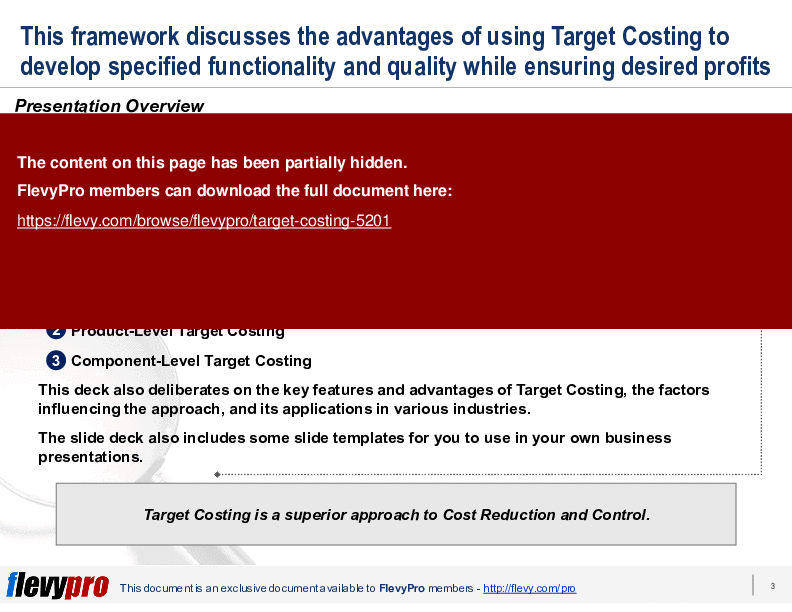
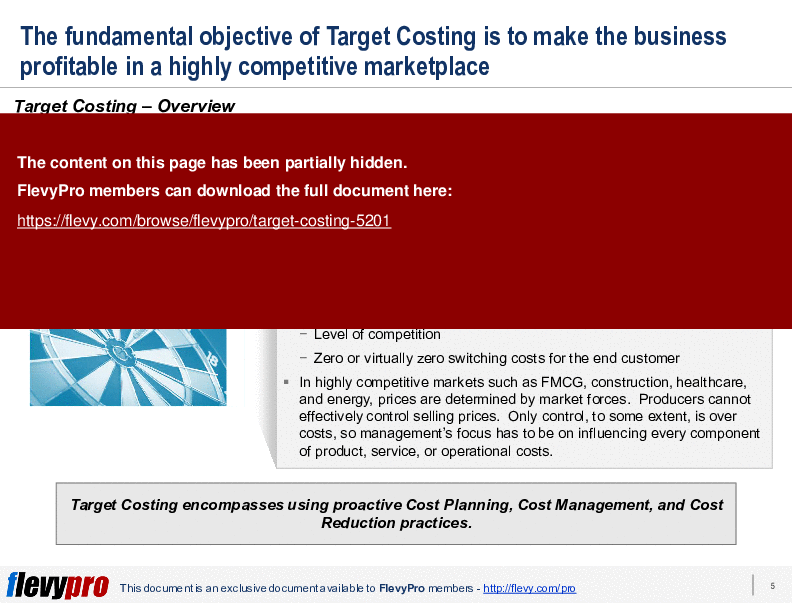
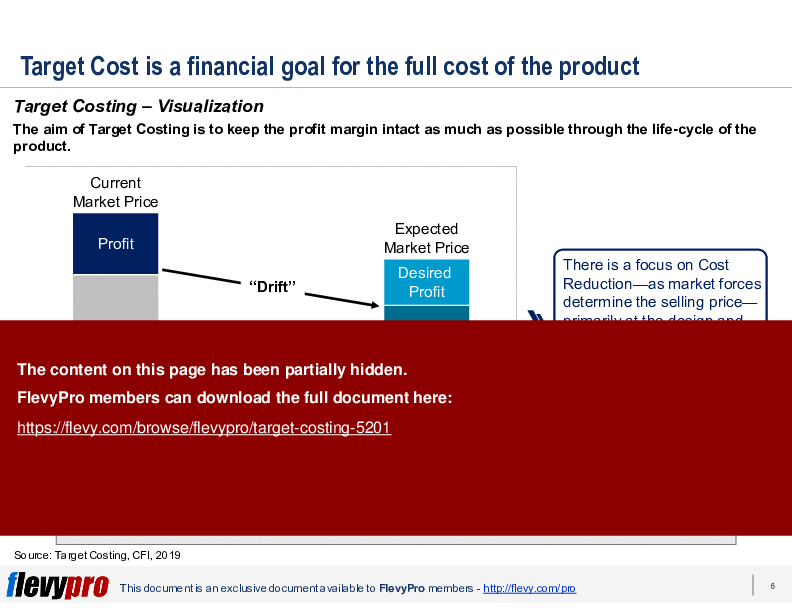

Target Costing is a proactive Cost Planning, Cost Management, and Cost Reduction practice. Costs are planned and managed out of a product and business early in product life-cycle, rather than during the later stages.
Target Costing is an organized process to determine the cost at which a proposed product must be developed so as to generate profits at the product's anticipated selling price in future.
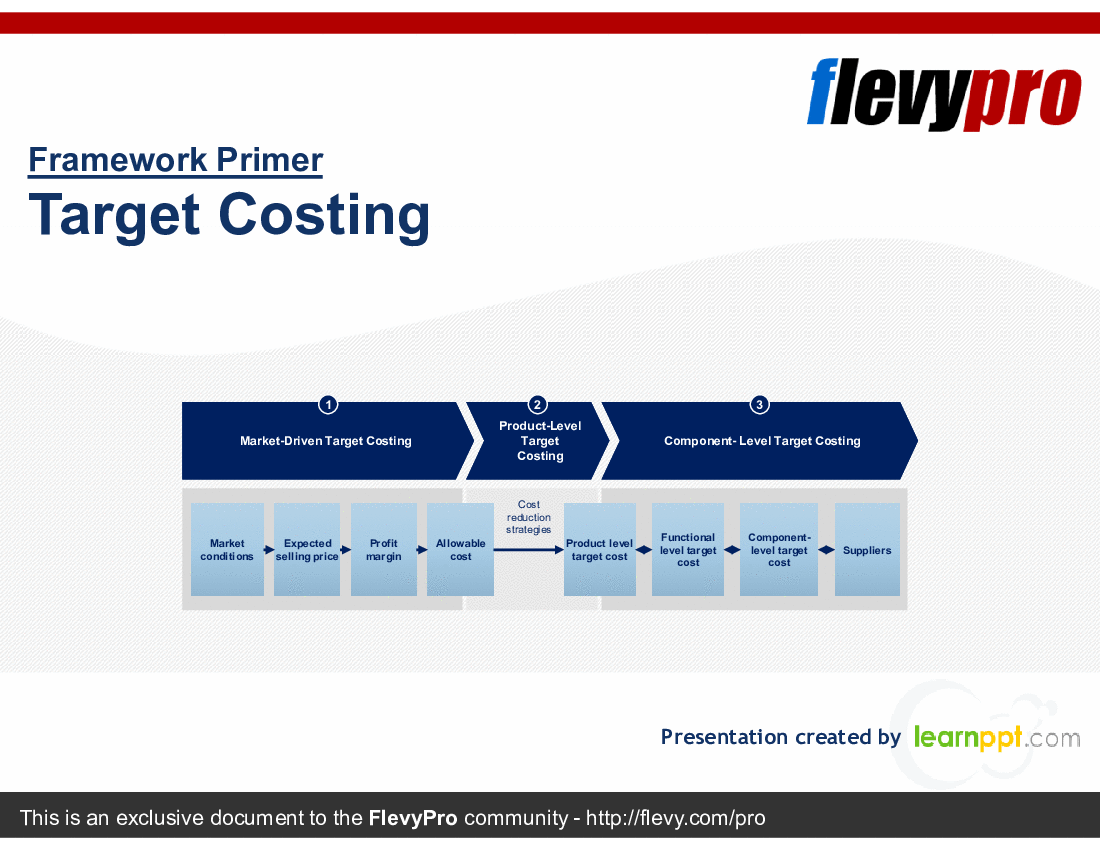
This presentation provides a detailed overview of the Target Costing Process and its 3 key phases:
1. Market-Driven Target Costing
2. Product-Level Target Costing
3. Component-Level Target Costing
This deck also deliberates on the key features and advantages of Target Costing, the factors influencing the approach, and its applications in various industries. Target Costing is a superior approach to Cost Reduction and Control.
The slide deck also includes some slide templates for you to use in your own business presentations.
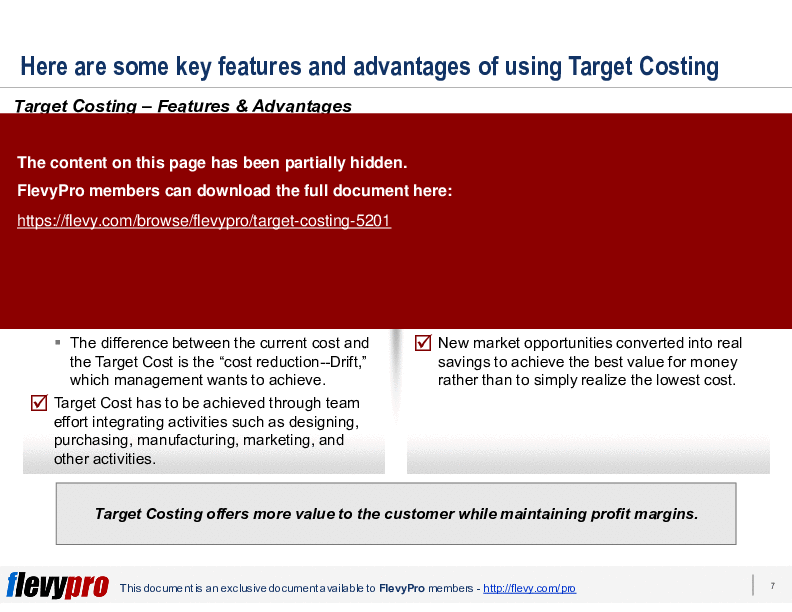
Target Costing is essential for maintaining profitability in a competitive marketplace. This framework emphasizes the importance of setting cost targets early in the product development process to ensure that the final product meets market demands while achieving desired profit margins. By focusing on cost management from the outset, companies can better control expenses and optimize resource allocation.
This presentation also highlights the role of cross-functional teams in achieving target costs. Integrating activities such as design, procurement, and manufacturing ensures that all aspects of the product lifecycle are aligned with cost objectives. The included templates provide practical tools for implementing Target Costing in your organization, making it easier to apply these principles and drive cost efficiency.
Got a question about this document? Email us at flevypro@flevy.com.
Executive Summary
This presentation on Target Costing provides a comprehensive framework for implementing effective cost management strategies in product development. Designed by an ex-McKinsey consultant, it outlines a proactive approach to cost planning and reduction, emphasizing the importance of establishing target costs early in the product lifecycle. By leveraging market-driven insights, this deck equips corporate executives and consultants with the tools to enhance profitability while maintaining product quality and functionality.
Who This Is For and When to Use
• Product Managers responsible for cost management in product development.
• Financial Analysts focused on profitability and cost reduction strategies.
• Operations Managers seeking to streamline production costs.
• Strategy Consultants advising clients on competitive pricing and cost management.
Best-fit moments to use this deck:
• During the initial phases of product development to set cost expectations.
• In strategic planning sessions focused on profitability and market positioning.
• For training sessions on cost management techniques and frameworks.
Learning Objectives
• Define the principles of Target Costing and its relevance in competitive markets.
• Establish product-level and component-level target costs based on market analysis.
• Implement cost reduction strategies through cross-functional collaboration.
• Analyze market conditions to determine allowable costs and profit margins.
• Utilize templates for effective communication of cost management strategies.
• Evaluate industry examples to apply Target Costing in various contexts.
Table of Contents
• Overview (page 3)
• Target Costing (page 5)
• Target Costing Process (page 9)
• Industry Examples (page 16)
• Templates (page 19)
Primary Topics Covered
• Market-Driven Target Costing - Focuses on analyzing market conditions to establish selling prices and allowable costs, ensuring alignment with profit margins.
• Product-Level Target Costing - Involves setting achievable target costs based on product design and manufacturing capabilities, emphasizing cost discipline.
• Component-Level Target Costing - Centers on supplier relationships and cost history to determine component-level target costs, ensuring effective cost management across the supply chain.
• Cost Reduction Strategies - Discusses methods such as Value Engineering and Design for Manufacture and Assembly to achieve target costs.
• Industry Applications - Highlights how Target Costing is utilized in manufacturing, energy, healthcare, and construction sectors to enhance profitability.
• Templates for Implementation - Provides practical templates for applying Target Costing principles in real-world scenarios.
Deliverables, Templates, and Tools
• Market analysis template for determining allowable costs.
• Product-level target cost framework for setting achievable cost goals.
• Component-level cost estimation tools for supplier evaluation.
• Value Engineering checklist for identifying cost reduction opportunities.
• Presentation templates for communicating cost management strategies.
• Case studies illustrating successful implementation of Target Costing.
Slide Highlights
• Overview of the Target Costing process with visual flowcharts.
• Key features and advantages of Target Costing presented in a clear format.
• Industry examples demonstrating practical applications of Target Costing.
• Templates for market-driven target costing and product-level costing strategies.
Potential Workshop Agenda
Introduction to Target Costing (30 minutes)
• Overview of Target Costing principles and objectives.
• Discussion on market conditions and their impact on costing strategies.
Cost Reduction Strategies Workshop (60 minutes)
• Interactive session on Value Engineering and Design for Manufacture.
• Group activities to identify cost-saving opportunities in product design.
Industry Applications and Case Studies (45 minutes)
• Review of successful Target Costing implementations across industries.
• Q&A session to address specific challenges faced by participants.
Customization Guidance
• Adapt market analysis templates to reflect specific industry conditions and competitive landscapes.
• Modify product-level target cost frameworks to align with organizational goals and capabilities.
• Tailor component-level costing strategies based on supplier relationships and historical cost data.
Secondary Topics Covered
• The role of cross-functional teams in achieving target costs.
• The impact of market forces on pricing and cost management.
• Techniques for effective supplier negotiation and relationship management.
• The importance of continuous improvement in cost management practices.
Topic FAQ
Document FAQ
These are questions addressed within this presentation.
What is Target Costing?
Target Costing is a proactive approach to cost management that determines the allowable cost of a product based on its anticipated selling price and desired profit margin.
How does Target Costing differ from traditional cost management?
Unlike traditional methods that focus on cost reduction after production, Target Costing emphasizes cost planning and management early in the product lifecycle.
What are the key phases of the Target Costing process?
The process consists of Market-Driven Target Costing, Product-Level Target Costing, and Component-Level Target Costing.
How can I implement Target Costing in my organization?
Utilize the provided templates and frameworks to analyze market conditions, set target costs, and engage cross-functional teams in cost management efforts.
What industries benefit most from Target Costing?
Target Costing is widely applicable across manufacturing, energy, healthcare, and construction sectors, where competitive pricing is essential.
What tools are available for cost reduction?
Tools such as Value Engineering and Design for Manufacture and Assembly are effective for achieving target cost reductions.
How do I determine the allowable cost of a product?
Calculate the allowable cost by subtracting the desired profit margin from the target selling price.
What role do suppliers play in Component-Level Target Costing?
Suppliers are critical in determining component costs and achieving target costs through effective negotiation and collaboration.
Glossary
• Target Costing - A proactive cost management approach to determine the allowable cost of a product.
• Allowable Cost - The maximum cost that can be incurred to achieve the desired profit margin.
• Value Engineering - A method to improve product functionality while reducing costs.
• Design for Manufacture and Assembly (DFMA) - A design approach that simplifies product structure to reduce manufacturing costs.
• Market Analysis - The process of evaluating market conditions to inform pricing and cost strategies.
• Profit Margin - The difference between the selling price and the cost of a product, expressed as a percentage of the selling price.
• Component-Level Target Costing - The phase of Target Costing focused on determining costs for individual components of a product.
• Cross-Functional Team - A group composed of members from different departments working together towards a common goal.
• Supplier Relations - The management of relationships with suppliers to ensure cost-effective sourcing and collaboration.
• Cost Reduction Strategies - Techniques employed to lower production costs while maintaining quality and functionality.
• Market-Driven Target Costing - A phase that focuses on setting prices based on market conditions and competition.
• Product-Level Target Costing - The phase that translates allowable costs into achievable target costs for product design.
Source: Best Practices in Cost Reduction, Cost Management, Cost Analysis PowerPoint Slides: Target Costing PowerPoint (PPTX) Presentation Slide Deck, LearnPPT Consulting
Did you need more documents?
Consider a FlevyPro subscription from $39/month. View plans here.
For $10.00 more, you can download this document plus 2 more FlevyPro documents. That's just $13 each.
|
Receive our FREE presentation on Operational Excellence
This 50-slide presentation provides a high-level introduction to the 4 Building Blocks of Operational Excellence. Achieving OpEx requires the implementation of a Business Execution System that integrates these 4 building blocks. |