
This framework is developed by a team of former McKinsey and Big 4 consultants. The presentation follows the headline-body-bumper slide format used by global consulting firms.
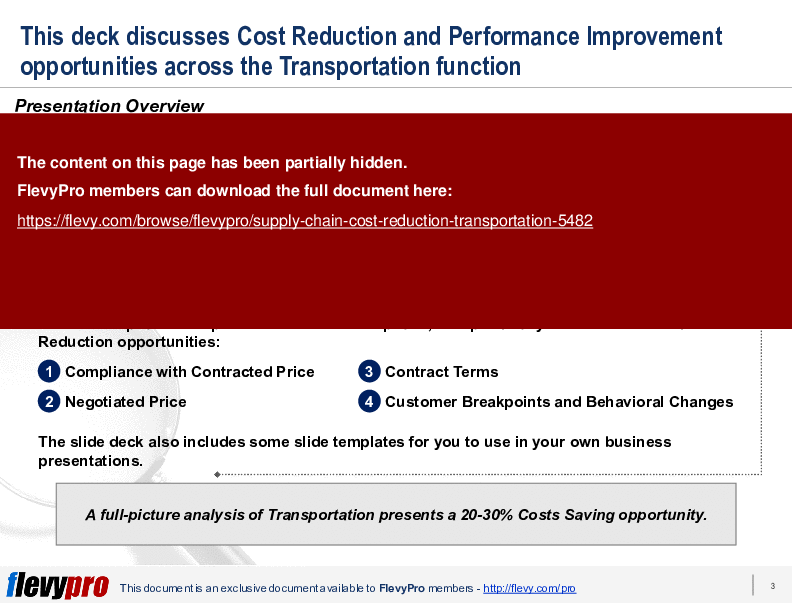
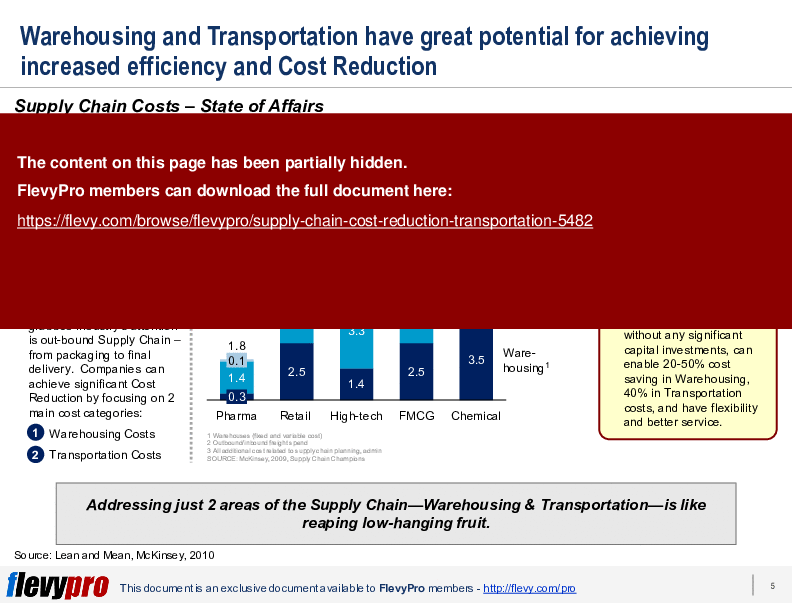
Companies looking to improve efficiency and reduce costs can gain significant ground in the Supply Chain function. Reason this area has gone under the radar is that companies do not consider Supply Chain to be their core competency.
Not only Warehousing, but Transportation also has almost the same potential in terms of opportunities for Cost Reduction and Process Efficiencies. In fact, a full-picture analysis of Transportation presents a 20-30% Costs Saving opportunity. The approach to Transportation Costs Reduction, though, is different to that of Warehousing.
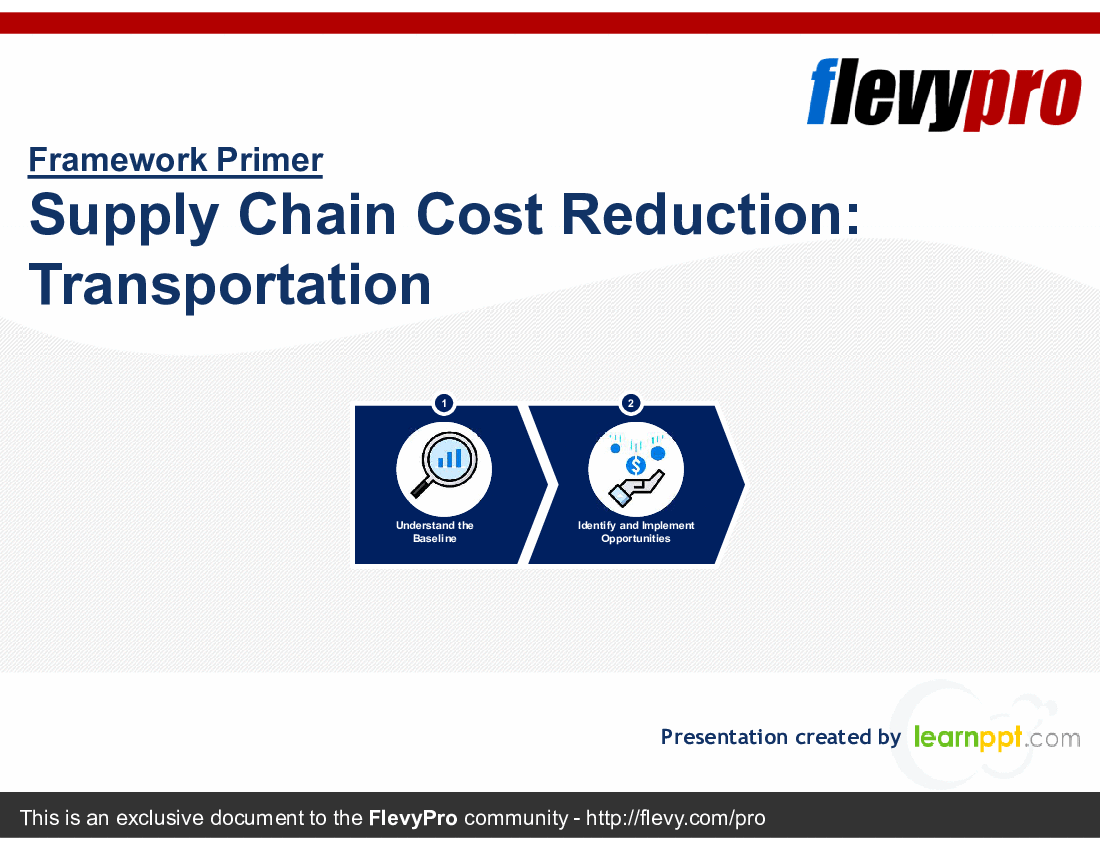
This presentation discusses in detail the 2-phased approach to Transportation Cost Reduction:
1. Understand the Baseline
2. Identify and Implement Opportunities
We discuss phase in depth. Within the second phase, we specifically discuss 4 levers of Cost Reduction opportunities:
1. Compliance with Contracted Price
2. Negotiated Price
3. Contract Terms
4. Customer Breakpoints and Behavioral Changes
The slide deck also includes some slide templates for you to use in your own business presentations.
This comprehensive guide delves into the nuances of Supply Chain Costs, emphasizing the critical role of Transportation in achieving substantial cost savings. It highlights the importance of understanding the baseline and identifying opportunities for cost reduction. The PPT provides a detailed analysis of three critical service areas—Temperature-controlled Distribution, Special Delivery Services, and Shipment Size—that disproportionately affect costs.
The presentation also covers Lean Six Sigma methodologies to streamline processes and eliminate waste, offering practical templates for implementation. By focusing on compliance with contracted prices, negotiating better terms, and understanding customer behavior, companies can unlock significant savings. This resource is essential for executives aiming to optimize their transportation strategies and drive cost efficiency.
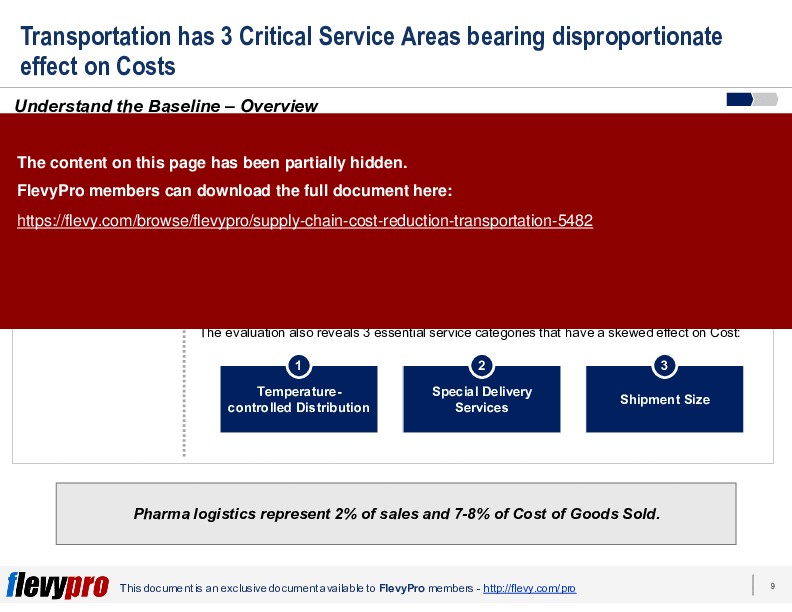
This PPT slide outlines critical factors impacting transportation costs within organizations. Understanding the operational baseline is essential for identifying improvement areas. Variability in operations, driven by diverse customer demands and service levels, complicates transportation optimization. Organizations can achieve cost savings of 20-30% by analyzing historical shipment data, including delivery sizes, modes, types, regions, and costs. This data-driven approach helps leaders pinpoint primary cost drivers in their transportation strategy. Three essential service categories disproportionately affecting costs are Temperature-controlled Distribution, Special Delivery Services, and Shipment Size, each presenting unique challenges and opportunities for cost management. Leveraging data analytics allows organizations to align services with customer needs while optimizing costs, particularly in industries like pharmaceuticals, where logistics significantly impact the cost of goods sold.
This PPT slide outlines strategies for negotiating contract prices in freight transportation, focusing on 2 primary methods. The first method emphasizes establishing a reference point for freight rates by comparing shipment rates from various suppliers on similar routes to create a negotiation benchmark. The second method is Clean-Sheet Cost Modelling, which analyzes the optimal mix of vehicle, fuel, labor, and operational costs to deliver a specified service level, identifying inefficiencies in suppliers' operations. Costs are categorized into variable costs, such as fuel (24% of total costs), and fixed costs, including labor (32%). Effective negotiations can yield savings of 15% to 50% by leveraging cost components and supplier inefficiencies.
This PPT slide outlines strategies for optimizing transportation costs by analyzing customer behavior and identifying key breakpoints. It advocates for wholesalers to shift from frequent deliveries to a consolidated approach, which can significantly reduce transportation expenses. The visual data illustrates the average delivery size and total weight shipped, highlighting that increasing delivery size enhances logistics efficiency. Current practices show excessive delivery frequency, with more than 7 deliveries per week deemed unnecessary. By reducing delivery frequency to an average of 2 per week, organizations can realize substantial cost savings. The expected baseline after implementing these changes reinforces the financial benefits of adjusting delivery strategies, ultimately improving logistics performance and customer experience.
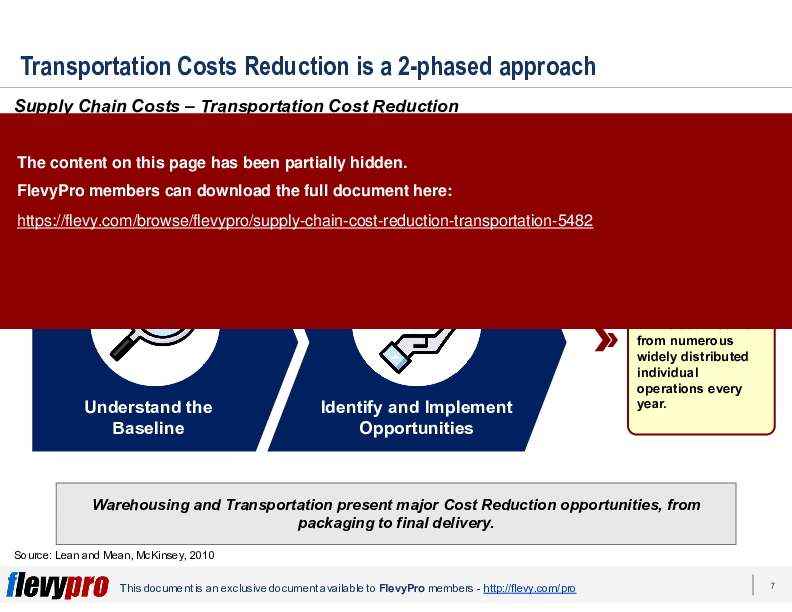
This PPT slide outlines a two-phased approach to reducing transportation costs in supply chain management. The first phase, "Understand the Baseline," emphasizes the importance of analyzing current transportation costs to identify efficiency opportunities. Without a clear understanding of existing expenditures, cost reduction efforts may lack direction. The second phase, "Identify and Implement Opportunities," focuses on actionable steps for organizations to address identified inefficiencies through data analysis and cross-team collaboration. The complexity of transportation costs, arising from numerous distributed operations, necessitates thorough analysis to effectively navigate potential reductions. This structured methodology aids businesses in optimizing transportation costs and enhancing overall supply chain efficiency.
This PPT slide outlines 4 key levers for cost reduction in transportation:
1. Compliance with Contracted Price: Adhering to agreed payment terms and reviewing contracts to uncover hidden charges can reveal potential savings.
2. Negotiated Price: Benchmarking against suppliers to identify the lowest possible costs can lead to substantial savings, especially if companies are unaware of market rates.
3. Contract Terms: Linking rates to external indices, such as fuel prices, helps avoid unnecessary expenses during price fluctuations.
4. Customer Breakpoints and Behavioral Changes: Analyzing customer ordering habits, such as unnecessary early deliveries, allows companies to optimize logistics strategies and reduce costs.
Implementing these strategies can yield up to 40% in savings.
This framework is developed by a team of former McKinsey and Big 4 consultants. The presentation follows the headline-body-bumper slide format used by global consulting firms.
For $10.00 more, you can download this document plus 2 more FlevyPro documents. That's just $13 each.
ABOUT FLEVYPRO
This document is part of the FlevyPro Library, a curated knowledge base of documents for our FlevyPro subscribers.
FlevyPro is a subscription service for on-demand business frameworks and analysis tools. FlevyPro subscribers receive access to an exclusive library of curated business documents—business framework primers, presentation templates, Lean Six Sigma tools, and more—among other exclusive benefits.
The average daily rate of a McKinsey consultant is $6,625 (not including expenses). The average price of a Flevy document is $65.
Trusted by over 10,000+ Client Organizations
Since 2012, we have provided business templates to over 10,000 businesses and organizations of all sizes, from startups and small businesses to the Fortune 100, in over 130 countries.
"As an Independent Management Consultant, I find Flevy to add great value as a source of best practices, templates and information on new trends. Flevy has matured and the quality and quantity of the library is excellent. Lastly the price charged is reasonable, creating a win-win value for
the customer, Flevy and the various authors. This is truly a service that benefits the consulting industry and associated clients. Thanks for providing this service.
"
– Jim Schoen, Principal at FRC Group
"[Flevy] produces some great work that has been/continues to be of immense help not only to myself, but as I seek to provide professional services to my clients, it gives me a large "tool box" of resources that are critical to provide them with the quality of service and outcomes they are expecting."
– Royston Knowles, Executive with 50+ Years of Board Level Experience
"As a consulting firm, we had been creating subject matter training materials for our people and found the excellent materials on Flevy, which saved us 100's of hours of re-creating what already exists on the Flevy materials we purchased."
– Michael Evans, Managing Director at Newport LLC
"Flevy is now a part of my business routine. I visit Flevy at least 3 times each month.
Flevy has become my preferred learning source, because what it provides is practical, current, and useful in this era where the business world is being rewritten.

many challenges and there is the need to make the right decisions in a short time, with so much scattered information, we are fortunate to have Flevy. Flevy investigates, selects, and puts at our disposal the best of the best to help us be successful in our work.
"
– Omar Hernán Montes Parra, CEO at Quantum SFE
"I have used FlevyPro for several business applications. It is a great complement to working with expensive consultants. The quality and effectiveness of the tools are of the highest standards."
– Moritz Bernhoerster, Global Sourcing Director at Fortune 500
"I like your product. I'm frequently designing PowerPoint presentations for my company and your product has given me so many great ideas on the use of charts, layouts, tools, and frameworks. I really think the templates are a valuable asset to the job."
– Roberto Fuentes Martinez, Senior Executive Director at Technology Transformation Advisory
"As a consultant requiring up to date and professional material that will be of value and use to my clients, I find Flevy a very reliable resource.
The variety and quality of material available through Flevy offers a very useful and commanding source for information. Using Flevy saves me time, enhances my expertise and ends up being a good decision."
– Dennis Gershowitz, Principal at DG Associates
"I have used Flevy services for a number of years and have never, ever been disappointed. As a matter of fact, David and his team continue, time after time, to impress me with their willingness to assist and in the real sense of the word. I have concluded in fact
that it is not at all just a repository of documents/resources but, in the way that David and his team manage the firm, it is like dealing with consultants always ready to assist, advise and direct you to what you really need, and they always get it right.
I am an international hospitality accomplished senior executive who has worked and lived during the past 35 years in 23 countries in 5 continents and I can humbly say that I know what customer service is, trust me.
Aside from the great and professional service that Flevy's team provide, their wide variety of material is of utmost great quality, professionally put together and most current.
Well done Flevy, keep up the great work and I look forward to continue working with you in the future and to recommend you to a variety of colleagues around the world.
"
– Roberto Pelliccia, Senior Executive in International Hospitality
Receive our FREE presentation on Operational Excellence
This 50-slide presentation provides a high-level introduction to the 4 Building Blocks of Operational Excellence. Achieving OpEx requires the implementation of a Business Execution System that integrates these 4 building blocks.