
Developed by top BCG and EY Consultants, the Executive Communication Excellence Framework provides timeless principles and techniques for clear and powerful C-suite Engagement.
Editor Summary
Powerful Executive Communication is a 74-slide PowerPoint (PPTX) framework developed by top consultants from BCG and EY that teaches executive-focused writing, message structuring, and presentation techniques.
Read moreThe deck includes 6 deliverables: a clear writing checklist, message structuring template, presentation slide templates, audience analysis framework, editing guide, and visual aid guidelines, and covers MECE and the Pyramid Principle. Sold as a digital download on Flevy with immediate digital download, it targets corporate executives, integration leaders, consultants, and team leaders preparing C-suite communications.
Use this deck when you must prepare high-stakes communications for senior leaders—board briefings, executive updates, integration steering-committee reports, or team workshops to improve message clarity.
Corporate executives preparing a concise briefing or executive summary for the CEO or board using top-line recommendations and supporting logic.
Integration leaders structuring an executive update on program milestones and decisions for a steering committee.
Consultants crafting client recommendation decks tailored to executive decision criteria.
Team leaders simplifying technical project updates into clear, priority-focused messages for senior sponsors.
The framework’s emphasis on the Pyramid Principle, MECE structuring, audience analysis, and consulting-style slide notes reflects the logical, hypothesis-driven communication approach used at McKinsey, Bain, and BCG.
In the realm of senior management, proficient communication skills are more than just a necessity—they're your ticket to making a lasting impact. Whether it's penning down compelling narratives or presenting influential pitches, the ability to convey ideas crisply and persuasively is indispensable, especially when engaging with the C-suite. The Executive Communication Excellence Framework, distilled from over 15 years of consulting and training expertise by top consultants from BCG and EY, is designed to elevate your communication skills to a level that not only resonates with top-tier executives but also amplifies your personal credibility.
Key Benefits: - Writing Mastery: Learn the art of clear, engaging, and error-free writing that captures attention and conveys your message effectively. - Structured Communication: Grasp the essence of logical message structuring to ensure your communication is coherent, concise, and impactful. - Presentation Prowess: Embark on the journey of becoming a confident and persuasive presenter, capable of delivering captivating presentations that command respect and action.
Framework Insights: 1. Clear, Engaging, and Error-Free Writing:
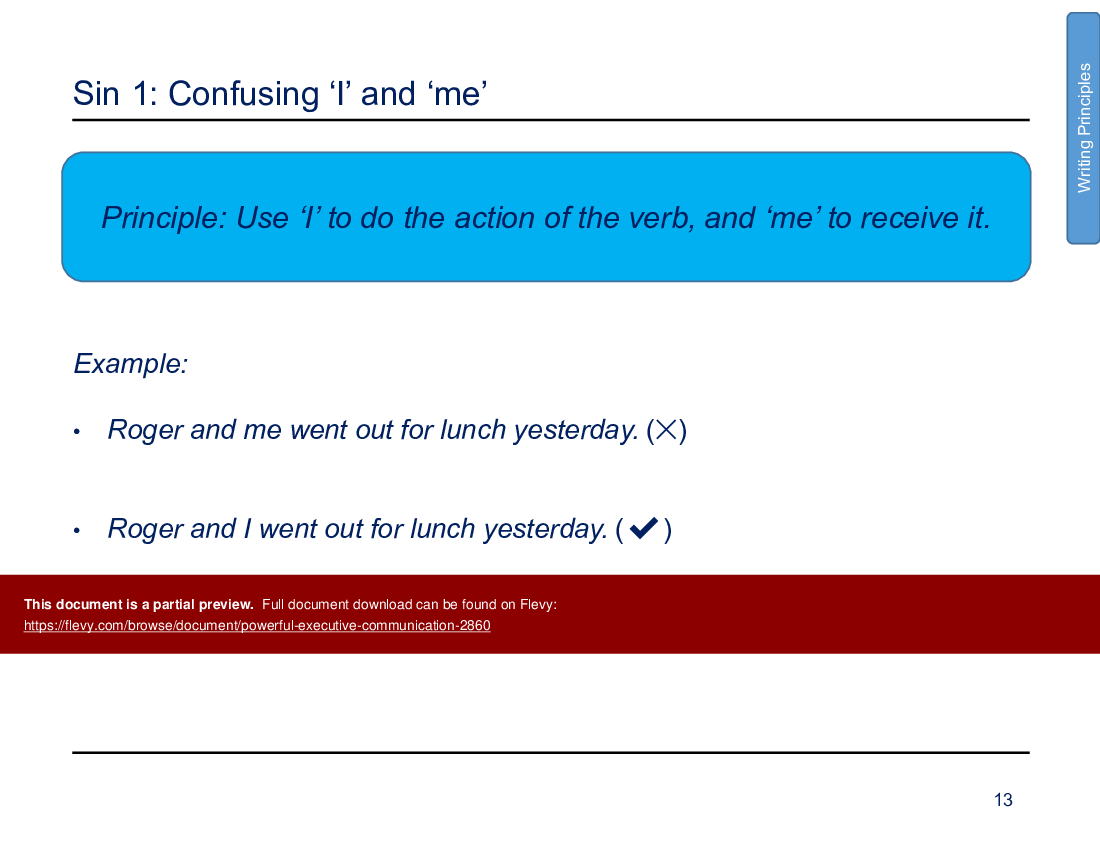
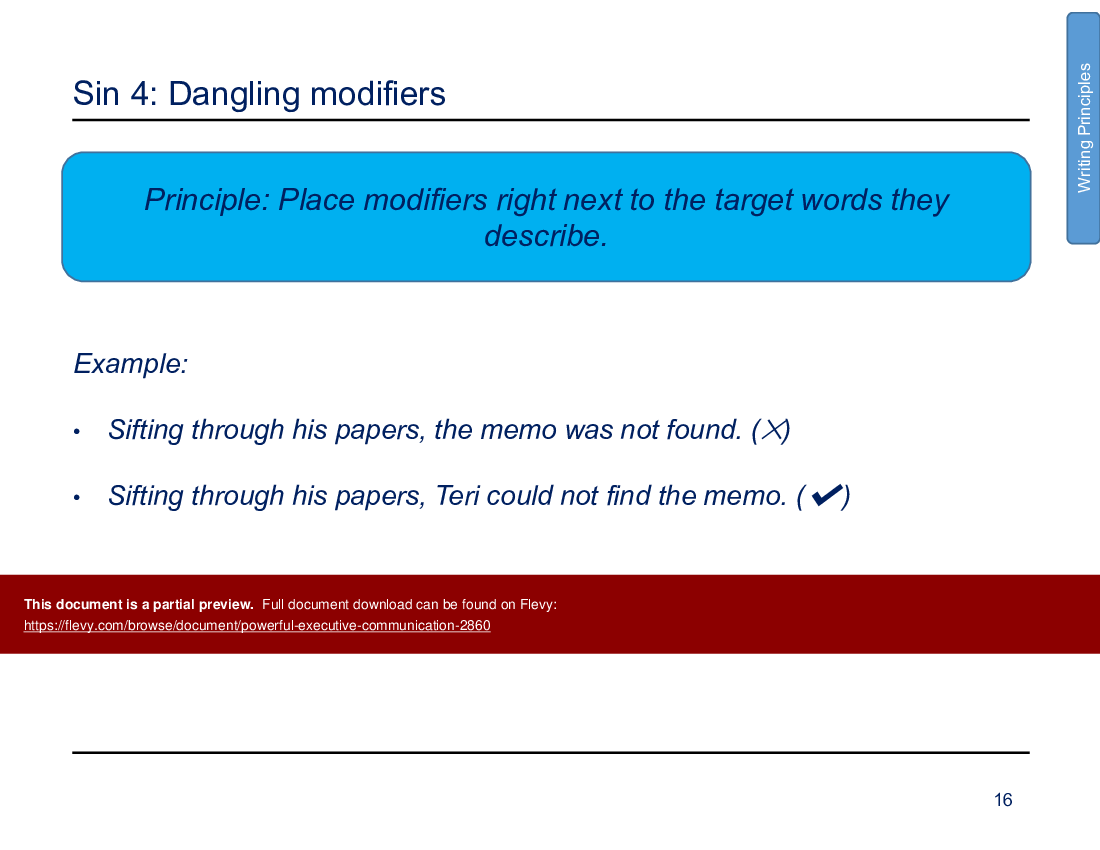
• Master the six rules of clear writing and steer clear of the five cardinal sins of poor grammar.
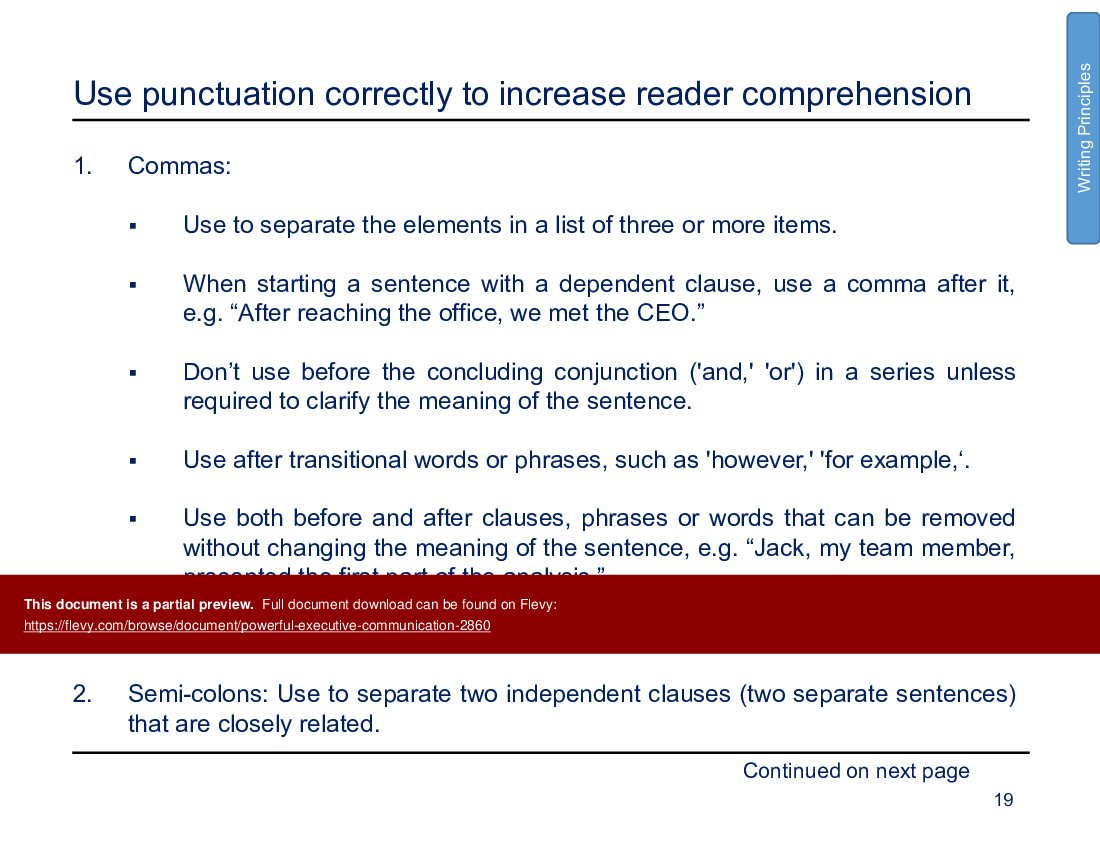
• Leverage correct punctuation to enhance reader comprehension and simplify ideas with bullet lists for better retention.
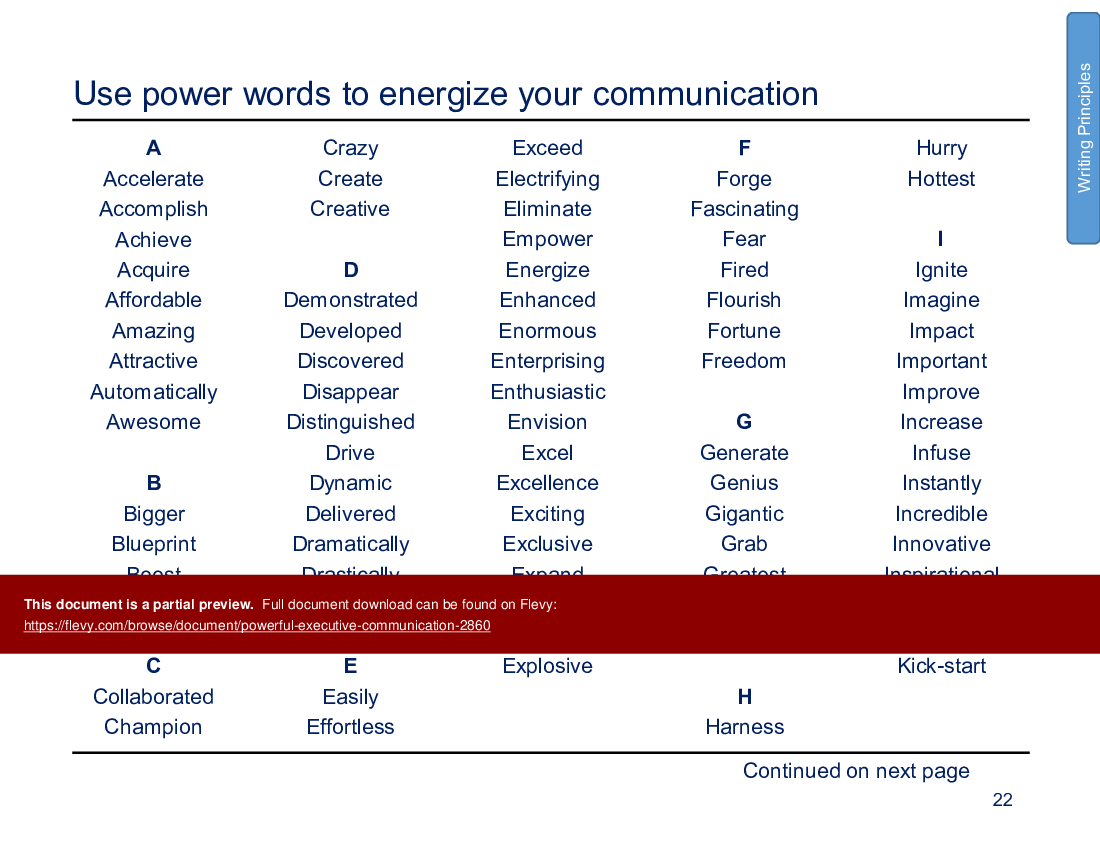
• Incorporate power words, professional writing style tips, and navigational devices such as headings and call-out boxes to energize and organize your communication.
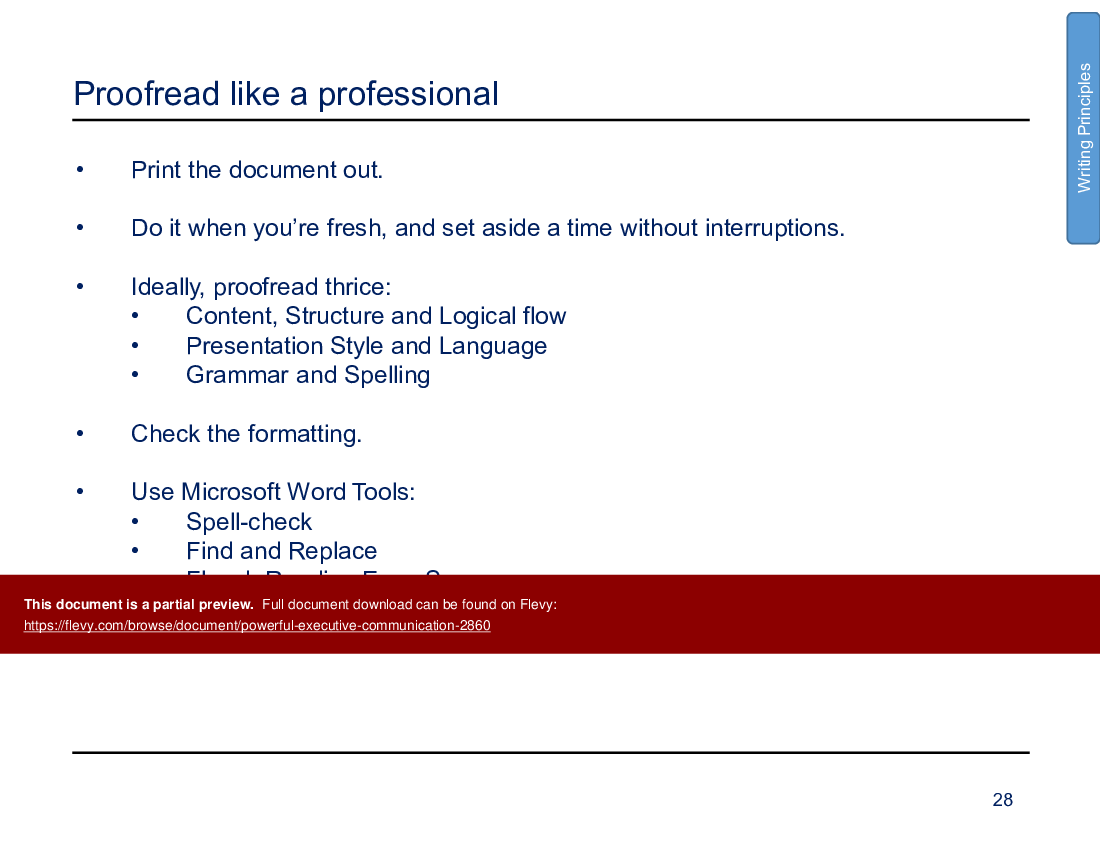
• Hone your proofreading skills to ensure a polished, professional finish to your documents.
2. Structuring Your Message:
• Clarify your purpose, understand your audience, and tailor your message for maximum relevance and impact.
• Adopt the "Pyramid Principle" to structure your communication logically and persuasively.
3. Presenting Your Message:
• Plan the horizontal and vertical logic in your story and use 'Ghosting Out' slides to visualize the presentation flow.
• Achieve a balanced mix of text and graphical elements for visual appeal, select the correct chart types for data representation, and employ "NLP" techniques for mental readiness.
• Master body language, vocal inflection, and pauses to enhance your presentation delivery, ensuring you communicate with confidence and passion.
Real World Examples:
• The framework includes detailed slide notes and exemplary slides from top-tier consulting firms like McKinsey, Bain, and BCG, providing a real-world glimpse into effective executive communication.
Embark on a transformative journey of communication mastery with the Executive Communication Excellence Framework. With each slide and note, unlock the secrets to resonating with the C-suite and accelerating your ascent in your career.
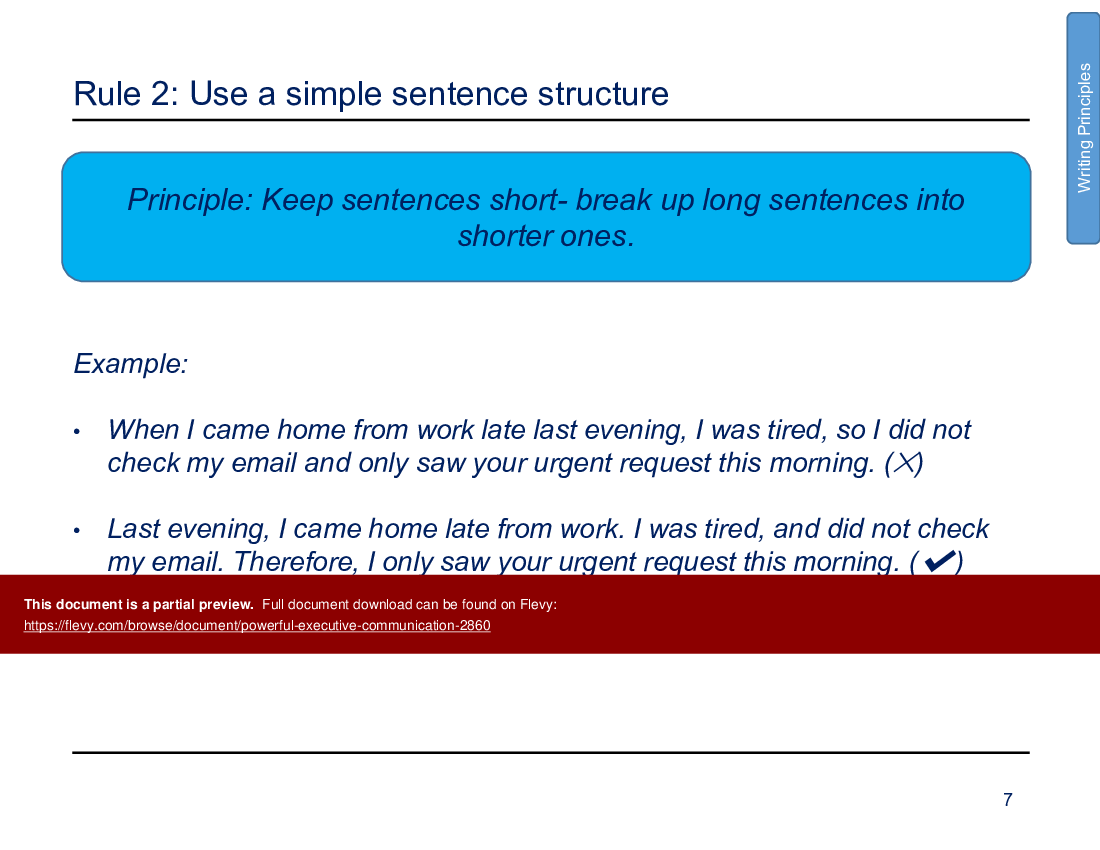
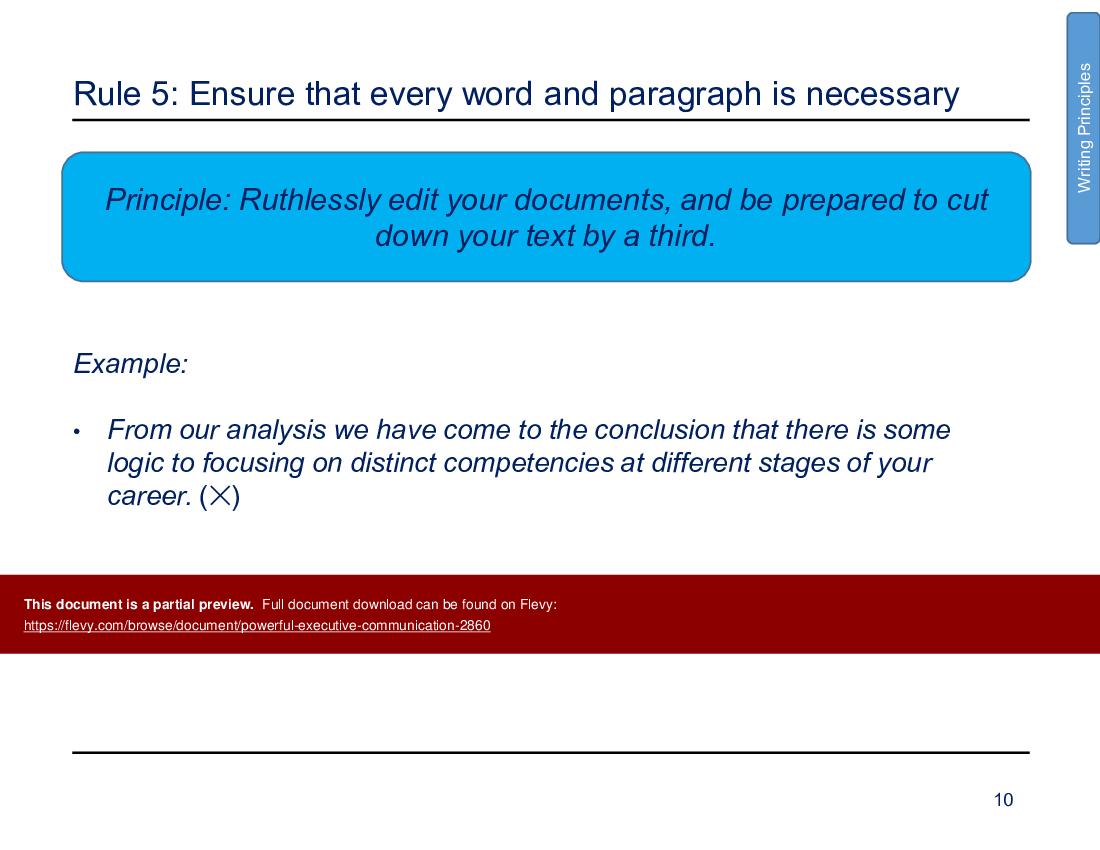
The PPT also covers the importance of using simple sentence structures and ensuring every word and paragraph is necessary. Learn to tailor your message based on your audience's social style and leverage the Pyramid Principle for logical communication.
Got a question about the product? Email us at support@flevy.com or ask the author directly by using the "Ask the Author a Question" form. If you cannot view the preview above this document description, go here to view the large preview instead.
MARCUS OVERVIEW
This synopsis was written by Marcus [?] based on the analysis of the full 74-slide presentation.
Executive Summary
The "Powerful Executive Communication" presentation is designed to enhance communication skills essential for engaging effectively with senior management. Developed by top consultants, this deck provides a consulting-grade framework that emphasizes clear writing, logical message structuring, and persuasive presentation techniques. By mastering these skills, executives can convey their ideas succinctly and confidently, thereby accelerating their personal credibility and effectiveness in high-stakes environments.
Who This Is For and When to Use
• Corporate executives seeking to improve their communication with C-suite stakeholders
• Integration leaders responsible for presenting strategic initiatives
• Consultants aiming to enhance their client communication skills
• Team leaders who need to convey complex information clearly
Best-fit moments to use this deck:
• Preparing for high-stakes presentations to senior management
• Crafting written communications that require clarity and persuasion
• Conducting workshops focused on improving team communication skills
Learning Objectives
• Define the principles of clear writing and their application in executive communication
• Build structured messages that resonate with diverse audiences
• Establish techniques for confident and persuasive presentations
• Identify and apply the MECE principle in message structuring
• Utilize effective visual aids to enhance message delivery
• Revise and edit communications for clarity and conciseness
Table of Contents
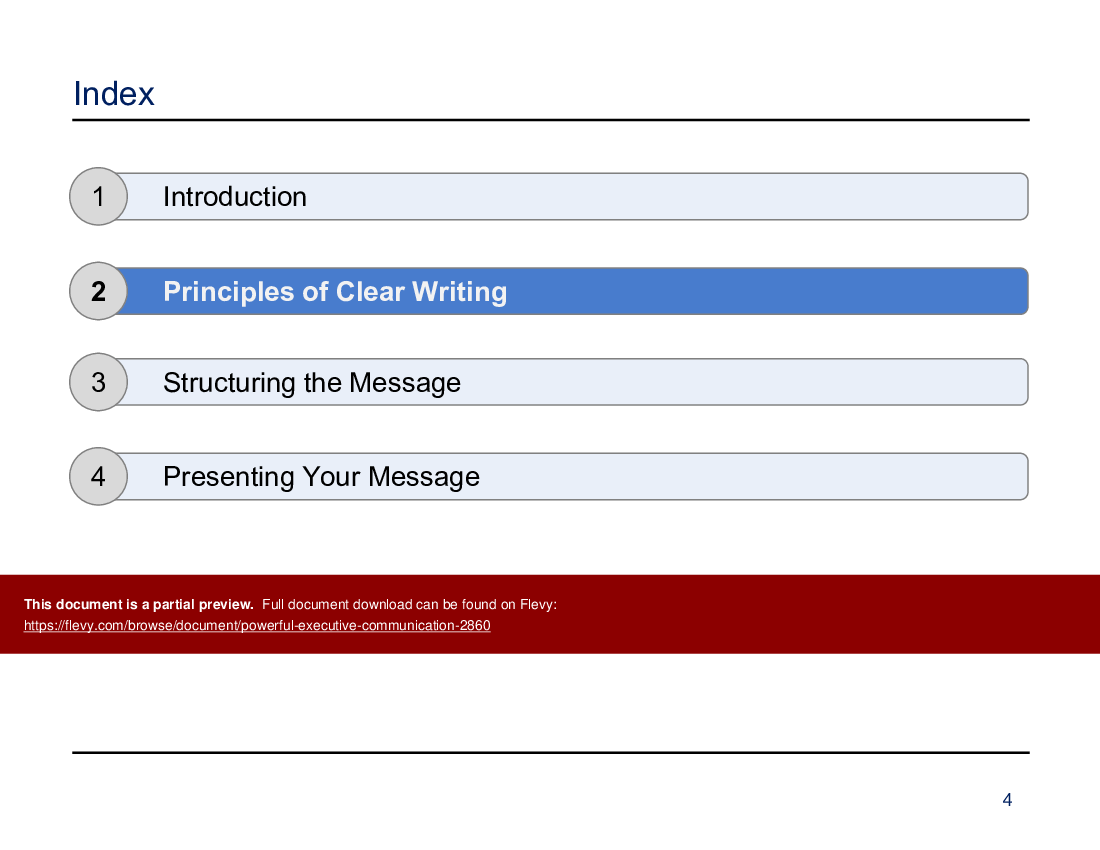
• Introduction (page 1)
• Principles of Clear Writing (page 2)
• Structuring the Message (page 3)
• Presenting Your Message (page 4)
Primary Topics Covered
• Clear Writing Principles - Focus on simplicity, active voice, and concise language to enhance clarity in communication.
• Message Structuring - Techniques for organizing messages logically to ensure clarity and engagement.
• Presentation Skills - Strategies for delivering messages confidently and persuasively to various audiences.
• Audience Analysis - Understanding audience needs and tailoring messages accordingly for maximum impact.
• Visual Communication - Effective use of visuals to reinforce key messages and enhance understanding.
• Editing Techniques - Methods for refining written communication to eliminate unnecessary content and improve clarity.
Deliverables, Templates, and Tools
• Clear writing checklist to ensure adherence to principles of effective communication
• Message structuring template for organizing ideas logically
• Presentation slide templates designed for clarity and visual appeal
• Audience analysis framework to tailor messages effectively
• Editing guide to streamline written communications
• Visual aid guidelines for enhancing presentations
Slide Highlights
• Overview of the 6 rules of clear writing, emphasizing simplicity and active voice
• Examples contrasting poor and effective writing structures
• Guidelines for understanding audience needs and motivations
• Visual representation of the MECE principle for message structuring
• Techniques for using visuals effectively in presentations
Potential Workshop Agenda
Introduction to Executive Communication (30 minutes)
• Overview of communication principles
• Discussion on the importance of clear writing
Clear Writing Techniques (60 minutes)
• Interactive session on writing principles
• Group exercises on revising sentences for clarity
Structuring Your Message (45 minutes)
• Introduction to the MECE principle
• Case study analysis and group discussion
Presentation Skills Development (60 minutes)
• Techniques for confident delivery
• Practice presentations with peer feedback
Customization Guidance
• Tailor examples and case studies to reflect industry-specific scenarios
• Adjust slide templates to align with organizational branding
• Incorporate company-specific terminology and metrics for relevance
Secondary Topics Covered
• The impact of social styles on communication
• Techniques for managing body language during presentations
• The role of vocal inflection in engaging audiences
• Strategies for managing Q&A sessions effectively
Topic FAQ
What are the core principles of clear executive writing I should focus on?
Core principles include simplicity, active voice, concise sentences, and ensuring every word serves a purpose. The framework highlights using correct punctuation, bullet lists for retention, power words and navigational devices like headings and call-outs, summarized as the 6 rules of clear writing.
How does the MECE principle help structure a short executive message?
MECE ensures your supporting points are mutually exclusive and collectively exhaustive, avoiding overlap and gaps so the logic is clear. The product provides a visual representation and guidance on applying MECE to organize ideas in a single coherent message, referencing the MECE principle.
What is the Pyramid Principle and how do I apply it to a slide deck?
The Pyramid Principle starts with the main idea or recommendation, then groups supporting arguments beneath it in logical order so conclusions flow from evidence. It guides horizontal and vertical story logic for executive audiences and is explicitly recommended in the framework as the structuring method.
Which visual aids are recommended for C-suite presentations to improve comprehension?
Use charts, graphs, and infographics to make complex information digestible, balance text and graphics for visual appeal, and choose the correct chart type for the data. The deck includes visual aid guidelines and examples showing charts, graphs, and infographics.
What should I look for when buying an executive communication toolkit?
Prioritize included practical tools: a clear writing checklist, message-structuring templates, editable slide templates, audience analysis frameworks, editing guides, and exemplar slide notes or consulting examples to speed preparation; look for these deliverables such as a message structuring template and clear writing checklist.
How can I judge cost versus value when purchasing communication templates?
Compare whether the toolkit supplies time-saving assets (checklists, templates, slide notes), consultant-style examples, and editable slide templates, and whether delivery format suits your workflow. Also check deck length and scope—for example, Flevy's Powerful Executive Communication is a 74-slide deck available as a digital download.
I need to prepare a 15-minute update to the CEO—what structure and rehearsal steps should I use?
Lead with your top-line recommendation, follow with MECE-organized supporting points, and use the Pyramid Principle for flow. Plan horizontal/vertical logic and “Ghosting Out” slides to visualize the story, then rehearse delivery with attention to body language and vocal inflection, using Ghosting Out slides.
How should I run a team workshop to improve executive communication skills?
Use a modular agenda: an introduction to principles (30 minutes), a 60-minute clear writing techniques session with revision exercises, a 45-minute session on structuring messages (MECE/Pyramid), and a 60-minute presentation skills practice with peer feedback. The example agenda includes a 60-minute clear writing session.
Document FAQ
These are questions addressed within this presentation.
What are the key principles of clear writing?
The key principles include using simple language, active voice, concise sentences, and ensuring every word serves a purpose.
How can I structure my message effectively?
Utilize the MECE principle to ensure your ideas are mutually exclusive and collectively exhaustive, making your message clear and logical.
What techniques can enhance my presentation skills?
Focus on body language, vocal inflection, and engaging storytelling to capture and maintain audience attention.
How do I tailor my message for different audiences?
Analyze the audience's needs, motivations, and social styles to adjust your message accordingly for maximum impact.
What visual aids should I use in my presentations?
Use charts, graphs, and infographics to reinforce key points and make complex information more digestible.
How can I effectively edit my written communications?
Ruthlessly cut unnecessary content, focus on clarity, and ensure every paragraph and sentence contributes to your main message.
What is the importance of audience analysis?
Understanding your audience allows you to tailor your message to meet their specific needs and expectations, enhancing engagement and effectiveness.
How can I practice my presentation skills?
Rehearse your presentation multiple times, ideally in front of an audience, to build confidence and refine your delivery.
Glossary
• MECE Principle - A framework ensuring ideas are mutually exclusive and collectively exhaustive.
• Active Voice - A sentence structure where the subject performs the action.
• Social Style - A model for understanding audience behavior and preferences in communication.
• Visual Aids - Tools such as charts and graphs used to enhance presentations.
• Editing - The process of revising written content for clarity and conciseness.
• Audience Analysis - The study of audience characteristics to tailor communication effectively.
• Body Language - Non-verbal cues that convey messages during presentations.
• Vocal Inflection - Variations in pitch and tone that enhance speech delivery.
• Clear Writing - Writing that is straightforward, concise, and easy to understand.
• Presentation Skills - Techniques for delivering messages effectively to an audience.
• Power Words - Strong, impactful words that energize communication.
• Pyramid Principle - A method for structuring communication logically, starting with the main idea.
• Conciseness - The quality of being brief and to the point in communication.
• Engagement - The level of attention and interest an audience shows during communication.
• Clarity - The quality of being clear and easy to understand in communication.
• Persuasion - The act of convincing an audience to accept a particular viewpoint or action.
• Feedback - Responses from the audience that can inform future communication strategies.
• Storytelling - The use of narrative to convey messages in a compelling way.
• Q&A Session - A segment of a presentation where the audience can ask questions.
• Infographic - A visual representation of information or data designed to present complex information quickly and clearly.
The Pyramid Principle is a structured approach to enhancing communication effectiveness in presentations. It emphasizes establishing context by clarifying the audience's purpose and potential gains. The "Trigger" engages the audience, prompting relevance consideration. Central to this framework is "The Question," encapsulating the main inquiry and guiding focus. The "Response" section outlines primary ideas addressing this question, with each idea branching into supporting points. Effective presentation structure includes a clear introduction or executive summary, organized headings, and strategically placed supporting data like charts and bullet points. This approach fosters clarity and engagement, enabling executives to communicate messages effectively and enhance audience understanding and retention.
Percentage column charts are preferable to pie charts for displaying progression and composition differences. They enable comparisons across datasets with varying totals, essential for assessing performance metrics without a common baseline. Connectors in these charts enhance clarity by illustrating contribution percentages over time, aiding trend recognition for strategic decision-making. Limiting the number of columns or categories prevents confusion and misinterpretation, ensuring effective communication. Additionally, indicating what 100% represents is crucial for accurate interpretation of the displayed percentages. This guidance enhances data visualization strategies for informed decision-making processes.
This PPT slide outlines structured communication, emphasizing vertical and horizontal organization of messages. The central "Response" box conveys the main point, supported by "Idea" boxes that contribute to the overall message. The vertical structure establishes a hierarchy, where each idea above summarizes those below, reinforcing the main response and creating a logical flow. The horizontal aspect allows for expansion with additional data or supporting arguments, enhancing clarity and retention. This approach aids in delivering complex information clearly, ensuring the audience can follow the logic behind the arguments. The visual representation serves as a guide for structuring presentations or reports, highlighting the importance of logical connections for impactful leadership.
This PPT slide compares 2 formats for conveying information about digitization challenges for businesses. Format 1 uses a traditional paragraph structure, discussing the evolution of consumer behavior and real-time data access,, but lacks clarity. Format 2 presents information in distinct points, highlighting 3 key challenges: loss of control over customer relationships, the necessity for digital engagement with suppliers and employees, and increased competition leading to commoditization. This structured approach enhances readability and facilitates better decision-making for C-level executives by focusing on single ideas, allowing for quicker assimilation of critical insights in a rapidly changing digital landscape.
This PPT slide addresses common pitfalls in professional communication related to misusing similar words. It provides a comparison of commonly confused terms: "Principle" (fundamental idea), "Its" (possession), "Compared to" (showing similarities), "Lose" (suffer a loss), and "Affect" (to influence). The slide contrasts these with their often-misused counterparts: "Principal" (main or most important), "It’s" (contraction for 'it is'), "Compared with" (equating dissimilar items), "Loose" (not fitting tightly), and "Effect" (result of an action). Understanding these distinctions enhances clarity and professionalism in communication, leading to more effective business interactions.
This PPT slide analyzes social progress beyond economic growth, focusing on the experiences of social progress leaders. It emphasizes the potential for substantial achievements through effective navigation of existing frameworks. The Global Risk Report highlights the importance of understanding social dynamics within economic frameworks, indicating that economic growth should not overshadow social well-being. The dual focus on "opportunity" and "risk" encourages leaders to leverage opportunities while mitigating challenges. The internet economy's projected growth in GDP underscores the necessity for decision-makers to prioritize digital transformation as a key driver for future progress. Visual data representation supports the argument that digital engagement is vital for achieving social progress, advocating for a balanced approach that integrates economic growth with social development.
Source: Best Practices in Presentation Development, Presentation Delivery, Pyramid Principle PowerPoint Slides: Powerful Executive Communication PowerPoint (PPTX) Presentation Slide Deck, Trinity Consulting
Developed by top BCG and EY Consultants, the Executive Communication Excellence Framework provides timeless principles and techniques for clear and powerful C-suite Engagement.
At Trinity Consulting, we are a team of dedicated professionals who have shaped our skills at world-renowned consulting firms like BCG and EY. Our project experiences span across blue-chip multinationals such as JP Morgan, AbbVie, and FedEx, amassing real-world knowledge and actionable insights across different industries.
With a collective experience spanning several
... [read more] decades, we excel in crafting practical business frameworks drawn from real-life consulting projects. Our clientele ranges from Fortune 500 companies to fast growing startups.
We are passionate about developing and deploying methodologies that propel organizations and employees to premier performance levels. Our offerings span across strategy development & execution, process streamlining, organizational effectiveness, and financial planning.
At Trinity Consulting, we believe in actionable solutions and tangible results. Do reach out to us with any questions or comments. We look forward to supporting you in your journey towards superior performance and sustained growth!
The average daily rate of a McKinsey consultant is $6,625 (not including expenses). The average price of a Flevy document is $65.
Trusted by over 10,000+ Client Organizations
Since 2012, we have provided business templates to over 10,000 businesses and organizations of all sizes, from startups and small businesses to the Fortune 100, in over 130 countries.
"Flevy.com has proven to be an invaluable resource library to our Independent Management Consultancy, supporting and enabling us to better serve our enterprise clients.
The value derived from our [FlevyPro] subscription in terms of the business it has helped to gain far exceeds the investment made, making a subscription a no-brainer for any growing consultancy – or in-house strategy team."
– Dean Carlton, Chief Transformation Officer, Global Village Transformations Pty Ltd.
"One of the great discoveries that I have made for my business is the Flevy library of training materials.
As a Lean Transformation Expert, I am always making presentations to clients on a variety of topics: Training, Transformation, Total Productive Maintenance, Culture, Coaching, Tools, Leadership Behavior, etc. Flevy
It is well worth the money to purchase these presentations. Sure, I have the knowledge and information to make my point. It is another thing to create a presentation that captures what I want to say. Flevy has saved me countless hours of preparation time that is much better spent with implementation that will actually save money for my clients.
"
– Ed Kemmerling, Senior Lean Transformation Expert at PMG
"I am extremely grateful for the proactiveness and eagerness to help and I would gladly recommend the Flevy team if you are looking for data and toolkits to help you work through business solutions."
– Trevor Booth, Partner, Fast Forward Consulting
"I have used FlevyPro for several business applications. It is a great complement to working with expensive consultants. The quality and effectiveness of the tools are of the highest standards."
– Moritz Bernhoerster, Global Sourcing Director at Fortune 500
"I like your product. I'm frequently designing PowerPoint presentations for my company and your product has given me so many great ideas on the use of charts, layouts, tools, and frameworks. I really think the templates are a valuable asset to the job."
– Roberto Fuentes Martinez, Senior Executive Director at Technology Transformation Advisory
"Flevy is now a part of my business routine. I visit Flevy at least 3 times each month.
Flevy has become my preferred learning source, because what it provides is practical, current, and useful in this era where the business world is being rewritten.
many challenges and there is the need to make the right decisions in a short time, with so much scattered information, we are fortunate to have Flevy. Flevy investigates, selects, and puts at our disposal the best of the best to help us be successful in our work.
"
– Omar Hernán Montes Parra, CEO at Quantum SFE
"As a small business owner, the resource material available from FlevyPro has proven to be invaluable. The ability to search for material on demand based our project events and client requirements was great for me and proved very beneficial to my clients. Importantly, being able to easily edit and tailor
the material for specific purposes helped us to make presentations, knowledge sharing, and toolkit development, which formed part of the overall program collateral. While FlevyPro contains resource material that any consultancy, project or delivery firm must have, it is an essential part of a small firm or independent consultant's toolbox.
"
– Michael Duff, Managing Director at Change Strategy (UK)
"[Flevy] produces some great work that has been/continues to be of immense help not only to myself, but as I seek to provide professional services to my clients, it gives me a large "tool box" of resources that are critical to provide them with the quality of service and outcomes they are expecting."
– Royston Knowles, Executive with 50+ Years of Board Level Experience
Receive our FREE whitepaper on the Top 101 Consulting Frameworks
Download our 200+ page guide summarizing the Top 101 Management Consulting Frameworks. Each framework provides a structured approach to analyzing and solving a common business problem.