
This framework is developed by a team of former McKinsey and Big 4 consultants. The presentation follows the headline-body-bumper slide format used by global consulting firms.
Explore the Organic Growth Framework (OGF) Phase 4, crafted by ex-McKinsey and Big 4 consultants. Master Behavior Change Value Propositions to drive sustainable growth. Organic Growth Framework (OGF) Series: Phase 4 is a 26-slide PPT PowerPoint presentation slide deck (PPTX) available for immediate download upon purchase.
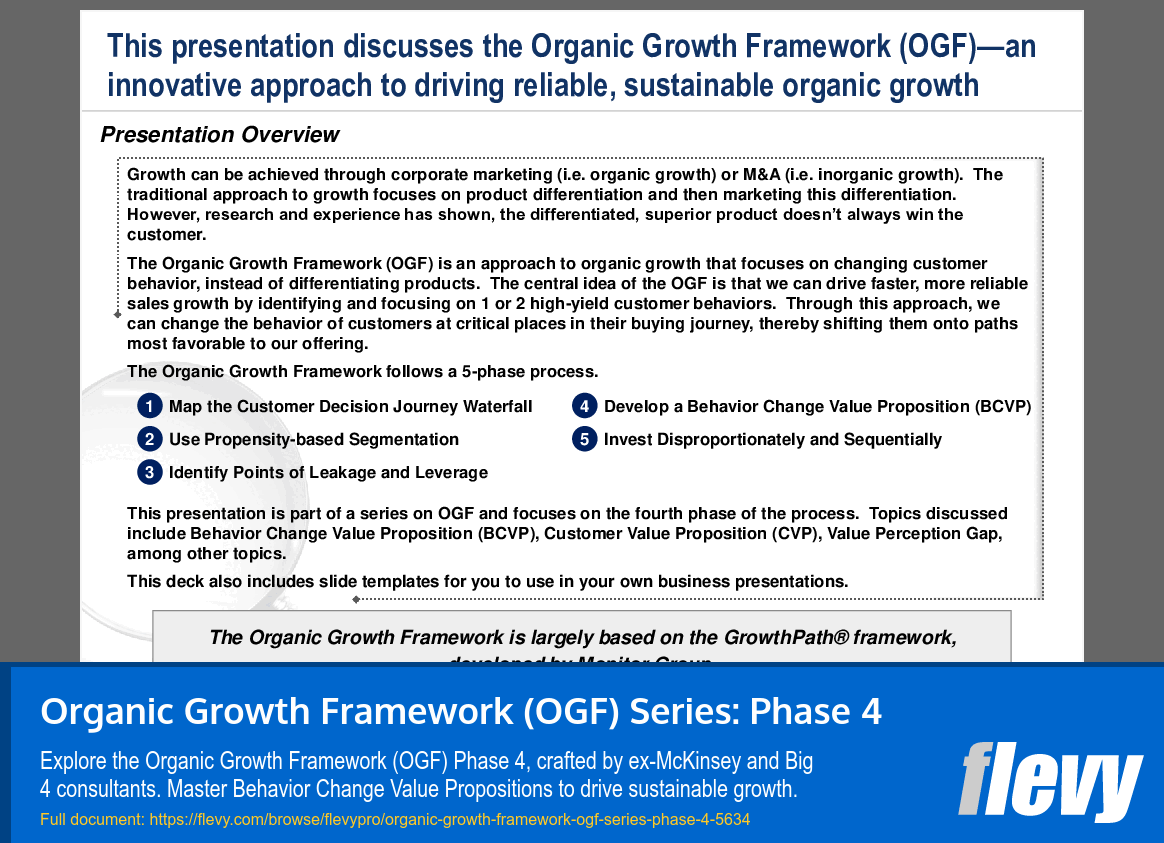
Growth can be achieved through corporate marketing (i.e. organic growth) or M&A (i.e. inorganic growth). The traditional approach to growth focuses on product differentiation and then marketing this differentiation. However, research and experience has shown, the differentiated, superior product doesn't always win the customer.
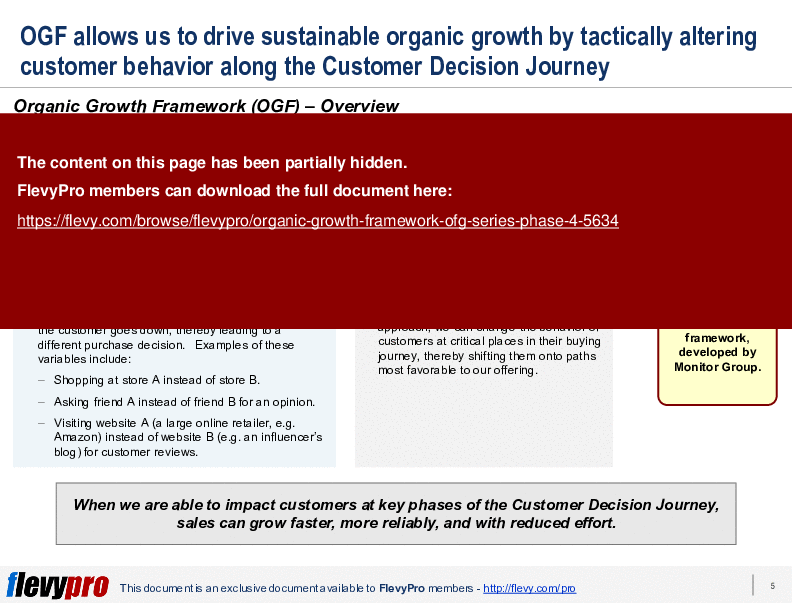
The Organic Growth Framework (OGF) is an approach to organic growth that focuses on changing customer behavior, instead of differentiating products. The central idea of the OGF is that we can drive faster, more reliable sales growth by identifying and focusing on 1 or 2 high-yield customer behaviors. Through this approach, we can change the behavior of customers at critical places in their buying journey, thereby shifting them onto paths most favorable to our offering.
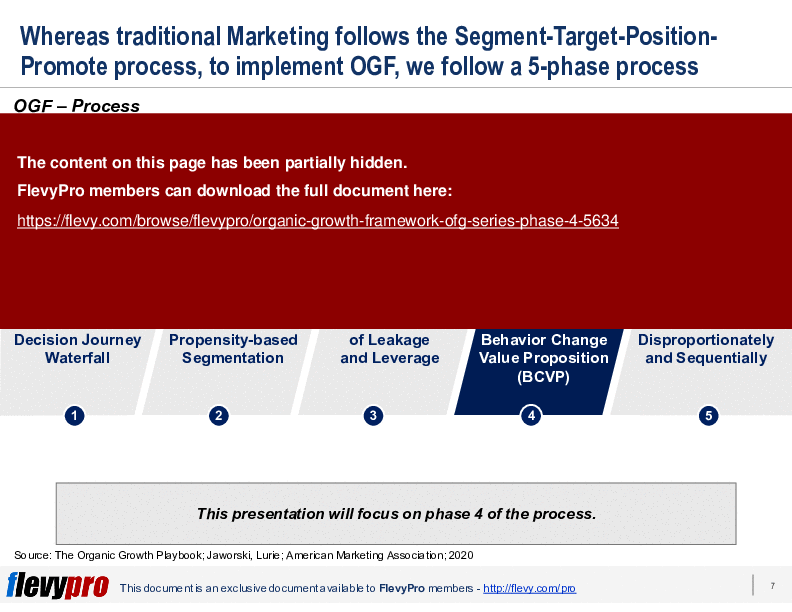
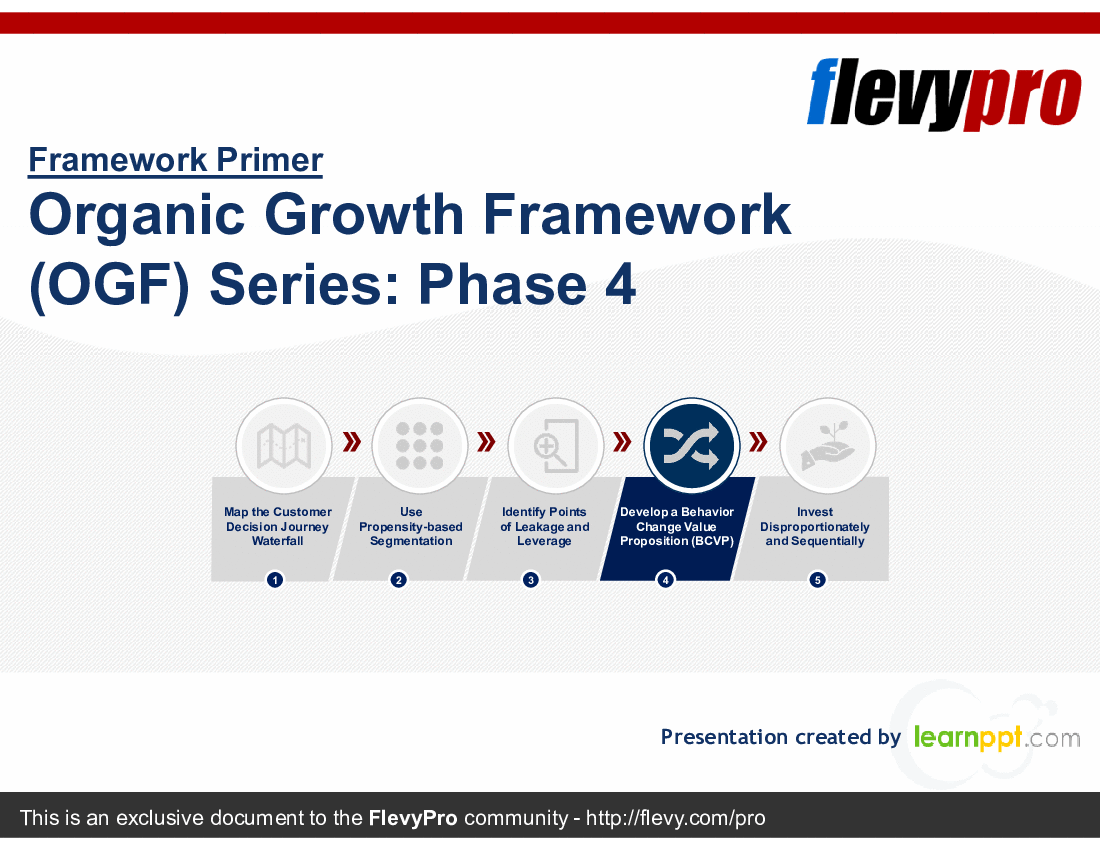
The Organic Growth Framework follows a 5-phase process.
1. Map the Customer Decision Journey Waterfall
2. Use Propensity-based Segmentation
3. Identify Points of Leakage and Leverage
4. Develop a Behavior Change Value Proposition (BCVP)
5. Invest Disproportionately and Sequentially
This presentation is part of a series on OGF and focuses on the fourth phase of the process. Topics discussed include the Customer Decision Journey, the Marketing Strategy Process, Strategic Objectives, Propensity-based Segmentation, among topics.
This deck also includes slide templates for you to use in your own business presentations.
Phase 4 of the Organic Growth Framework (OGF) zeroes in on the creation of the Behavior Change Value Proposition (BCVP). This phase is critical for bridging the gap between the Customer Value Proposition (CVP) and actual customer behavior. The BCVP focuses on defining and communicating the value of specific behaviors to customers, ensuring they align with high-yield actions. This PPT provides detailed templates and tools, including the CVP-BCVP Matrix, to help you articulate and implement a compelling BCVP. By the end of this phase, you will be equipped to drive customer behavior changes that lead to sustainable growth.
This PPT slide addresses the Customer Value Proposition (CVP) and the Value Perception Gap, highlighting the disconnect between the seller's defined value and the customer's perceived value. The seller's perspective is based on their own Value Proposition, which may not align with customer needs. In contrast, the customer's perspective is shaped by individual experiences and expectations. The Value Perception Gap can lead to misaligned decisions, where customers may opt not to engage based on their understanding of value rather than the seller's proposition. Minimizing this gap is essential, as customers make purchasing decisions based on their perceptions of value, not solely on what sellers present. Addressing this gap can enhance customer satisfaction and improve engagement strategies.
This PPT slide outlines the fourth phase of the Behavior Change Value Proposition (BCVP) framework, emphasizing its role as a vital complement to the Customer Value Proposition (CVP). The BCVP articulates the benefits of high-yield behaviors essential for driving growth. It highlights that a compelling CVP alone does not guarantee growth; the BCVP must leverage insights from previous phases, focusing on behavior change dynamics, leverage, and leakage. The slide specifies 2 primary communication objectives for the BCVP: effectively communicating behavior value to customers and defining enhancements for targeted segments. Tools like the CVP-BCVP Matrix and BCVP Template assist in articulating the BCVP clearly, ensuring stakeholder understanding and effective implementation.
This PPT slide outlines the 5 key components of a Behavior Change Value Proposition (BCVP) within a structured framework for customer engagement. A well-articulated BCVP demonstrates the benefits of adopting new behaviors versus current practices. The 2 primary communication objectives are to convey the value of the desired behavior and to outline enhancements necessary for the target segment. The BCVP must identify a specific customer segment and articulate the targeted behavior change, detailing the actions customers should take. It should clearly describe the benefits of the desired behavior, highlight points of leverage to increase adoption likelihood, and identify potential points of leakage that may hinder adoption. This structured approach clarifies desired outcomes and addresses challenges, crafting a compelling BCVP that drives sustainable growth.
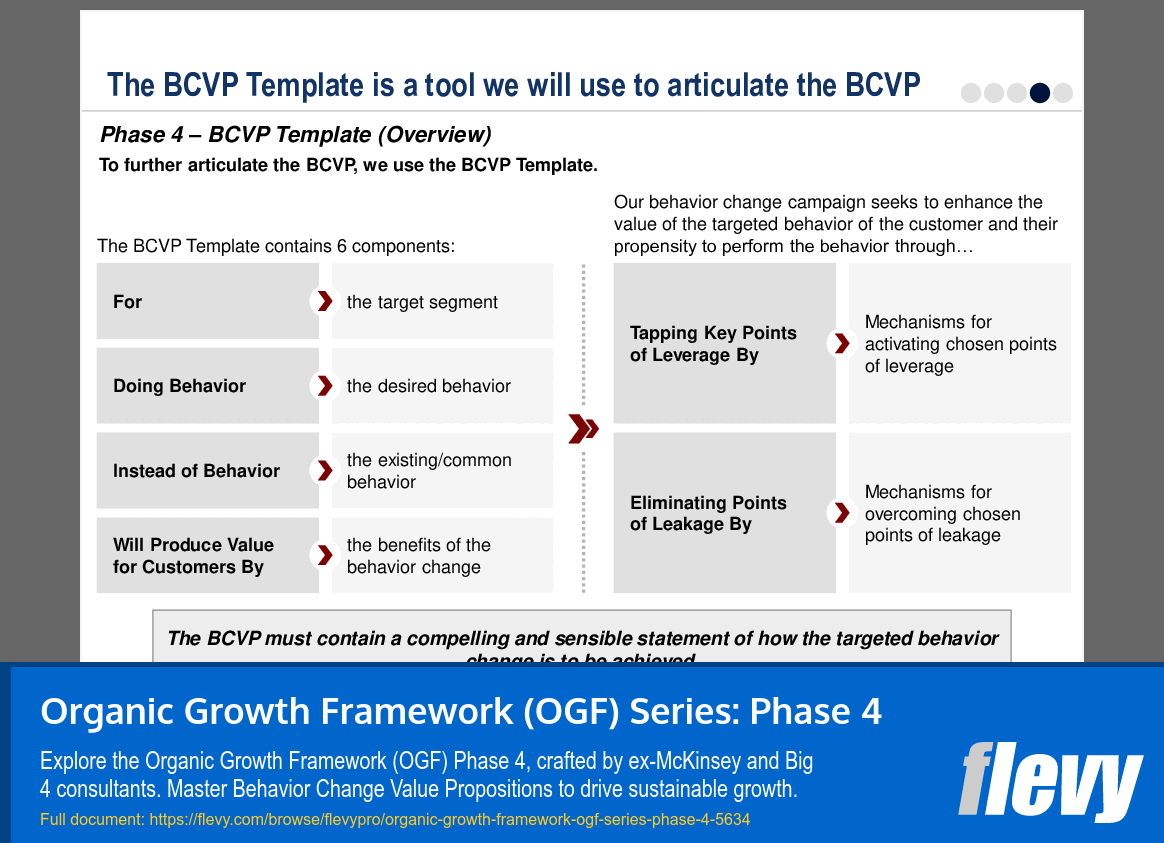
The BCVP (Behavior Change Value Proposition) Template outlines a structured approach to behavior change strategies, consisting of 6 key components. The first component, "For," identifies the target segment, while "Doing Behavior" specifies the desired behavior to promote. "Instead of Behavior" highlights existing behaviors for baseline comparison. The fourth component, "Will Produce Value for Customers By," emphasizes the benefits of behavior change, reinforcing the value proposition. Additionally, "Tapping Key Points of Leverage By" and "Eliminating Points of Leakage By" discuss mechanisms for activating desired behaviors and overcoming obstacles. The BCVP must articulate a clear statement on achieving targeted behavior change, ensuring clarity and strategic alignment in initiatives.
Source: Best Practices in Growth Strategy, Value Proposition PowerPoint Slides: Organic Growth Framework (OGF) Series: Phase 4 PowerPoint (PPTX) Presentation Slide Deck, LearnPPT Consulting
This framework is developed by a team of former McKinsey and Big 4 consultants. The presentation follows the headline-body-bumper slide format used by global consulting firms.
For $10.00 more, you can download this document plus 2 more FlevyPro documents. That's just $13 each.
ABOUT FLEVYPRO
This document is part of the FlevyPro Library, a curated knowledge base of documents for our FlevyPro subscribers.
FlevyPro is a subscription service for on-demand business frameworks and analysis tools. FlevyPro subscribers receive access to an exclusive library of curated business documents—business framework primers, presentation templates, Lean Six Sigma tools, and more—among other exclusive benefits.
The average daily rate of a McKinsey consultant is $6,625 (not including expenses). The average price of a Flevy document is $65.
Trusted by over 10,000+ Client Organizations
Since 2012, we have provided business templates to over 10,000 businesses and organizations of all sizes, from startups and small businesses to the Fortune 100, in over 130 countries.
Read Customer Testimonials
"The wide selection of frameworks is very useful to me as an independent consultant. In fact, it rivals what I had at my disposal at Big 4 Consulting firms in terms of efficacy and organization."
– Julia T., Consulting Firm Owner (Former Manager at Deloitte and Capgemini)
"Flevy is now a part of my business routine. I visit Flevy at least 3 times each month.
Flevy has become my preferred learning source, because what it provides is practical, current, and useful in this era where the business world is being rewritten.

many challenges and there is the need to make the right decisions in a short time, with so much scattered information, we are fortunate to have Flevy. Flevy investigates, selects, and puts at our disposal the best of the best to help us be successful in our work.
"
– Omar Hernán Montes Parra, CEO at Quantum SFE
"I am extremely grateful for the proactiveness and eagerness to help and I would gladly recommend the Flevy team if you are looking for data and toolkits to help you work through business solutions."
– Trevor Booth, Partner, Fast Forward Consulting
"I have used FlevyPro for several business applications. It is a great complement to working with expensive consultants. The quality and effectiveness of the tools are of the highest standards."
– Moritz Bernhoerster, Global Sourcing Director at Fortune 500
"Last Sunday morning, I was diligently working on an important presentation for a client and found myself in need of additional content and suitable templates for various types of graphics. Flevy.com proved to be a treasure trove for both content and design at a reasonable price, considering the time I
saved. I encountered a download issue during the ordering process. However, a quick email to Flevy's support team, even on a Sunday (!!!), resulted in assistance within less than an hour, allowing me to download the content I needed. Fantastic job, Flevy! I give 5 stars for both content/price and customer service. Thank you!
"
– M. E., Chief Commercial Officer, International Logistics Service Provider
"Flevy is our 'go to' resource for management material, at an affordable cost. The Flevy library is comprehensive and the content deep, and typically provides a great foundation for us to further develop and tailor our own service offer."
– Chris McCann, Founder at Resilient.World
"As a consulting firm, we had been creating subject matter training materials for our people and found the excellent materials on Flevy, which saved us 100's of hours of re-creating what already exists on the Flevy materials we purchased."
– Michael Evans, Managing Director at Newport LLC
"As an Independent Management Consultant, I find Flevy to add great value as a source of best practices, templates and information on new trends. Flevy has matured and the quality and quantity of the library is excellent. Lastly the price charged is reasonable, creating a win-win value for
the customer, Flevy and the various authors. This is truly a service that benefits the consulting industry and associated clients. Thanks for providing this service.
Download our free compilation of 50+ Strategy & Transformation slides and templates. Frameworks include McKinsey 7-S, Balanced Scorecard, Disruptive Innovation, BCG Curve, and many more.