
 Click main image to view in full screen. Unlock all 10 preview images:
Lean Warehousing Transformation – PowerPoint PPTX Template
PowerPoint (PPTX) 27 Slides FlevyPro Document


SUPPLY CHAIN MANAGEMENT PPT TEMPLATE DESCRIPTION
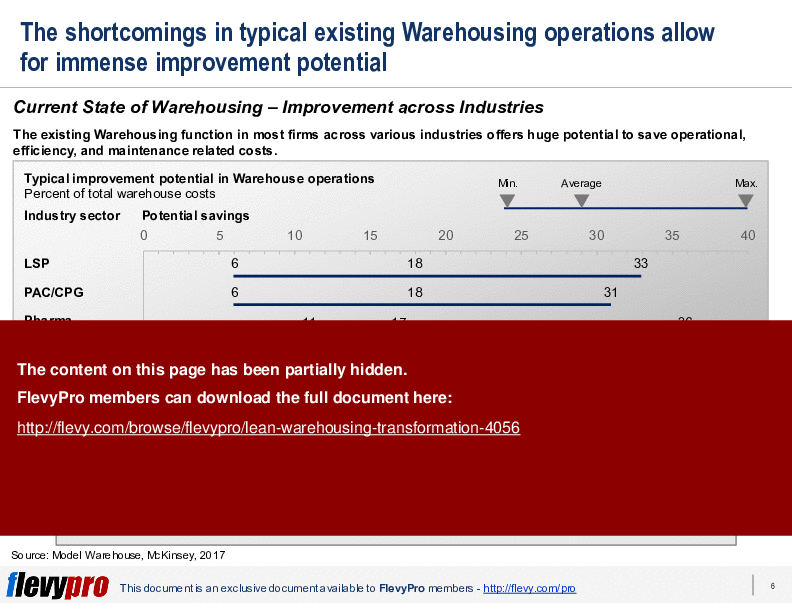
As the last decisive step in customer service, a warehouse ensures cost effective distribution. Latest technological innovation has turned Warehousing into a Competitive Advantage. It offers untapped potential for improvement.
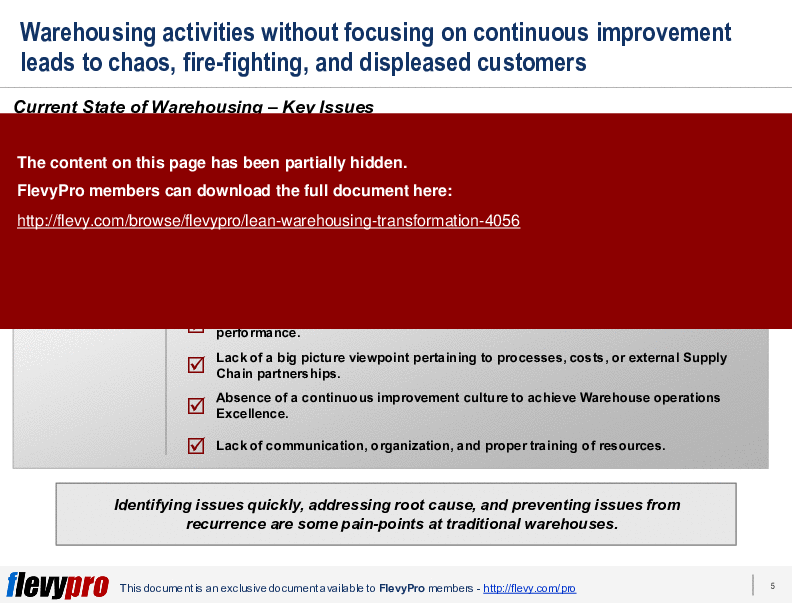
However, Warehousing is a hugely neglected part of global Supply Chains. There is inconsistency in picking, packing, and shipping all orders; storing receipts; managing inventory and logistics operations. Other issues and limitations in the way of smooth Warehousing operations—i.e. waste, variability, and inflexibility—exist almost everywhere.
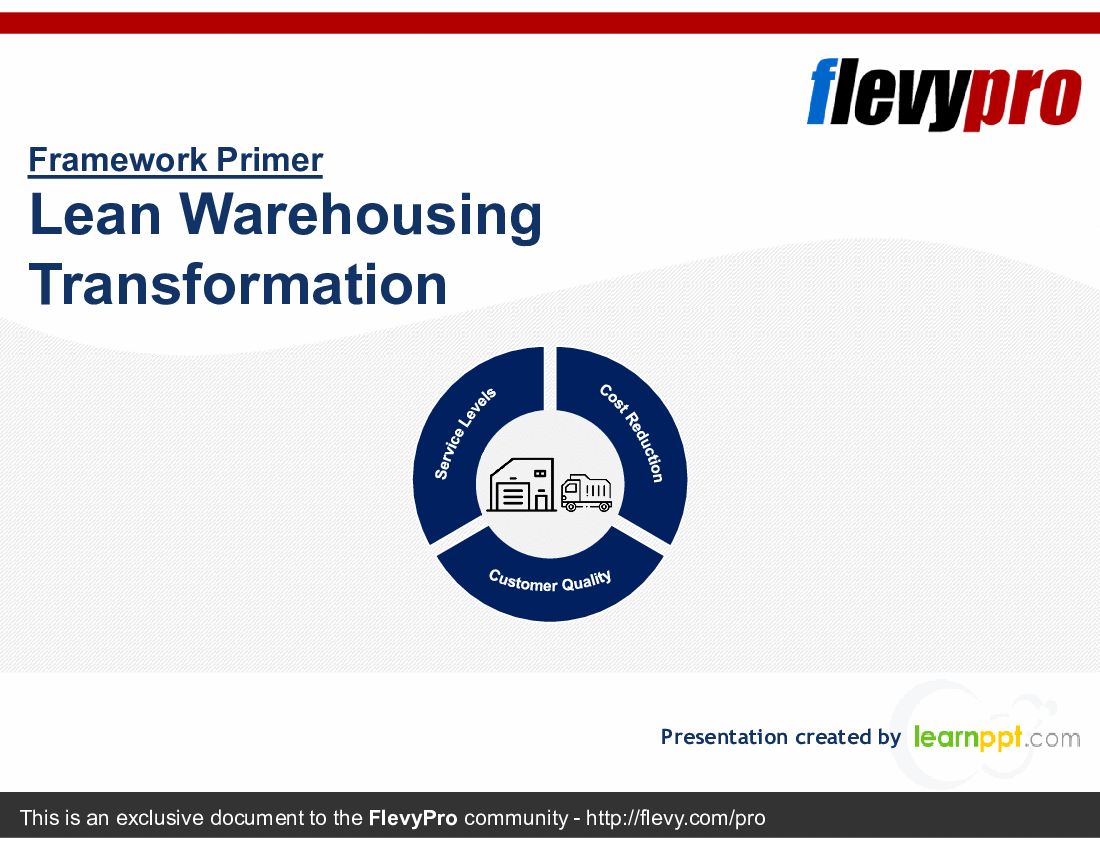
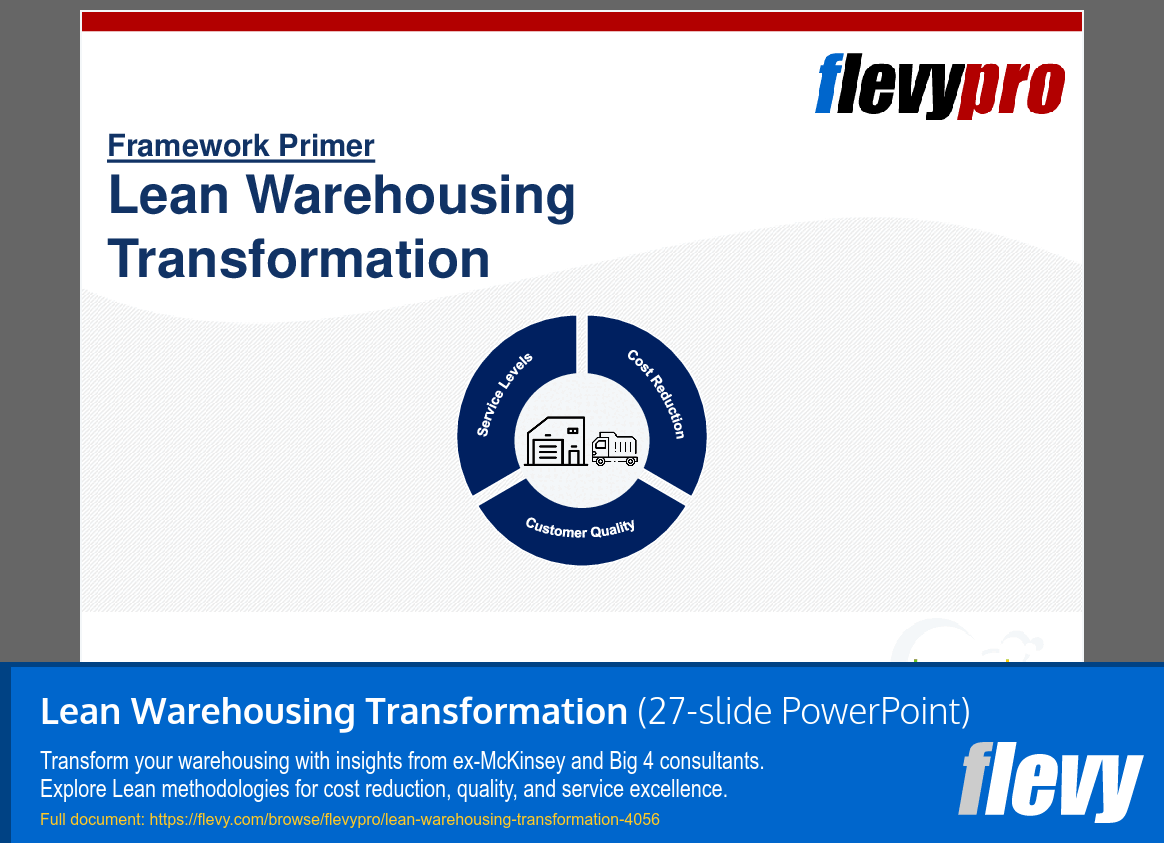
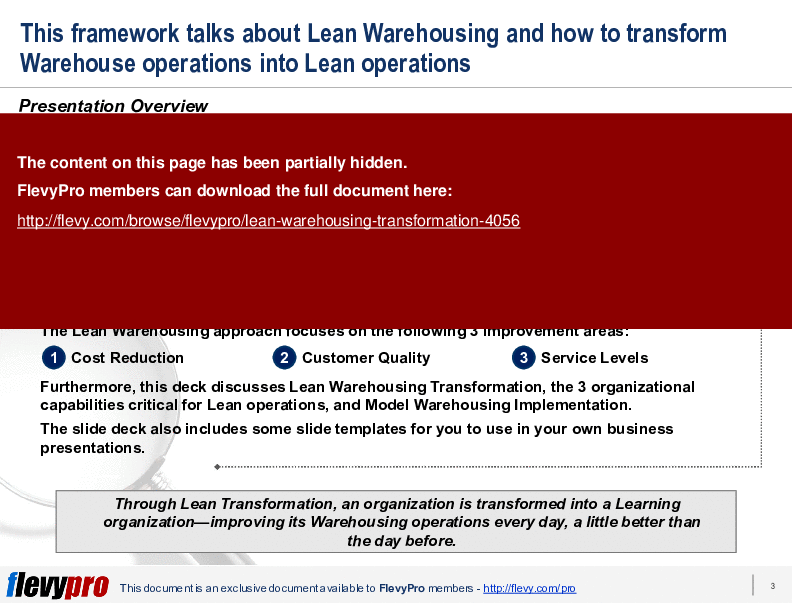
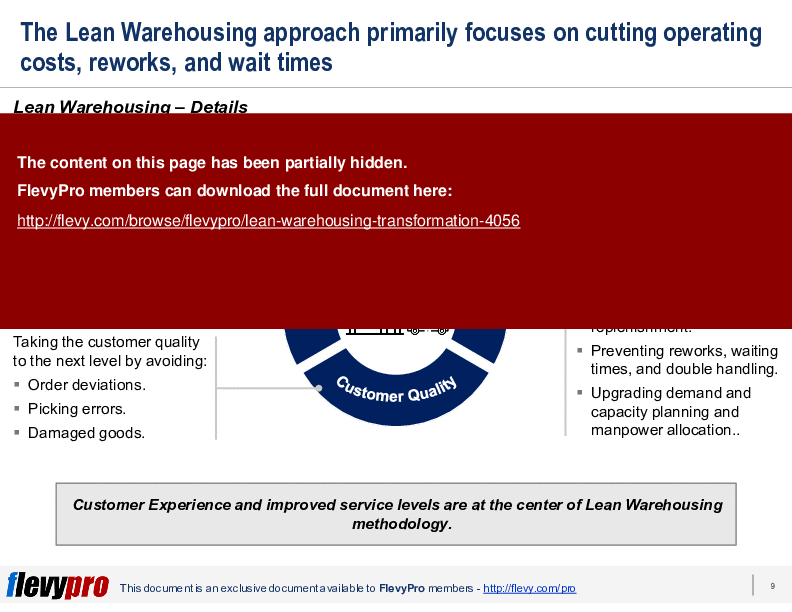
This presentation provides a detailed overview of Lean Warehousing—a comprehensive methodology designed to unlock significant productivity enhancement and growth opportunities. The Lean Warehousing approach focuses on the following 3 improvement areas:
1. Cost Reduction
2. Customer Quality
3. Service Levels
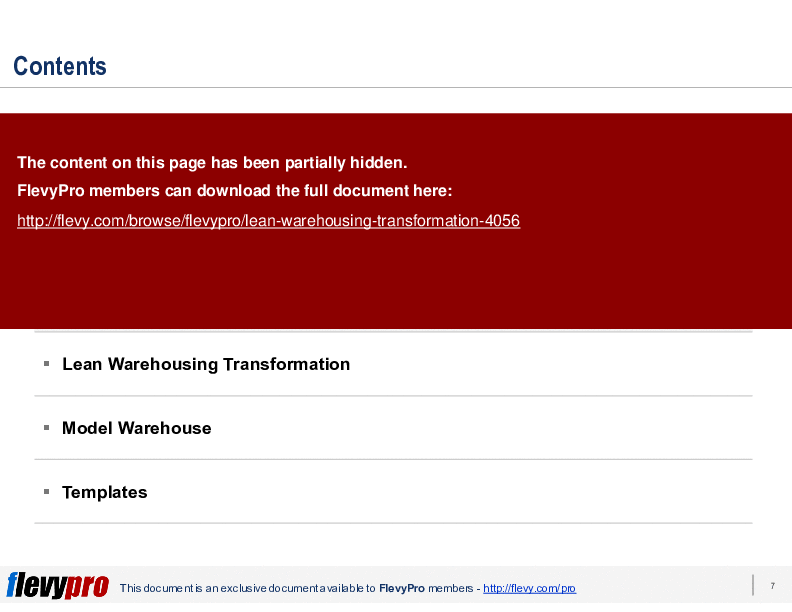
Furthermore, this deck discusses Lean Warehousing Transformation, the 3 organizational capabilities critical for Lean operations, and Model Warehousing Implementation.
The slide deck also includes some slide templates for you to use in your own business presentations.
Lean Warehousing Transformation also emphasizes the importance of continuous improvement and the role of a Model Warehouse. This facility allows participants to experience the latest warehousing technologies and systems, such as Smart Glasses and HoloLens, providing hands-on training that links theory to practice. The Model Warehouse serves as a learning environment where executives can observe, analyze, and implement best practices in their own operations.
The framework includes a rigorous Knowledge Sharing workshop, designed to build awareness and train central teams on Lean Warehousing methods. Participants engage in practical exercises and simulations to reinforce learning and ensure knowledge retention. This comprehensive approach ensures that your organization can achieve significant operational efficiencies and maintain a competitive edge in the market.
Got a question about this document? Email us at flevypro@flevy.com.
TOPIC FAQ
What is lean warehousing and which problems does it aim to solve?
Lean warehousing targets waste, variability, and inflexibility in warehouse operations, addressing inconsistent picking, packing, shipping, receipt storage, inventory, and logistics management. It focuses on improving Cost Reduction, Customer Quality, and Service Levels as the 3 primary improvement areas.What are the most common operational weaknesses in warehouses I should assess first?
Common weaknesses include inconsistent picking, packing, and shipping; inefficient handling of receipts; poor inventory control; and logistics variability. These issues manifest as waste and inflexibility across processes and are the primary targets of a Lean Warehousing assessment focused on reducing variability.How can a Model Warehouse be used during a transformation program?
A Model Warehouse provides a controlled learning environment where participants can observe, analyze, and implement best practices, and it enables hands-on trials of new systems and wearables such as Smart Glasses and HoloLens to link theory to practice in a real-world setting.What role do training and knowledge sharing play in sustaining warehouse improvements?
Training and knowledge sharing build awareness and capability in central teams; practical exercises and simulations reinforce learning and retention. Structured workshops help spread Lean Warehousing methods across the organization via the Knowledge Sharing workshop model.What should I look for when selecting a lean warehousing slide toolkit or playbook?
Look for explicit coverage of core improvement objectives (cost, quality, service), guidance on implementation (Model Warehouse use), materials for training central teams (Knowledge Sharing workshop), and reusable presentation slides or templates—features present in Lean Warehousing Transformation.How does a purchased toolkit support on-the-job learning and pilot testing?
A toolkit can provide the structure and materials to run workshops and hands-on sessions, and to stage pilots in a Model Warehouse where teams can practice with technologies and processes before wider rollout, supported by Knowledge Sharing workshop content.I need to improve on-time delivery and reduce customer complaints—what should I prioritize first?
Prioritize measures that directly affect service levels and customer quality: reduce process variability in picking/packing/shipping, improve inventory accuracy, and embed continuous improvement practices supported by training and Model Warehouse trials to validate changes.We're planning a pilot of wearable tech in our warehouse—what practical steps should we include?
Include a controlled learning environment to test usability and process integration, train participants through practical exercises, observe outcomes, and capture lessons for roll-out; the Model Warehouse is specifically described as the environment for Smart Glasses and HoloLens trials.SUPPLY CHAIN MANAGEMENT PPT TEMPLATES
Source: Best Practices in Supply Chain Management, Lean Management, Continuous Improvement, Warehouse Management PowerPoint Slides: Lean Warehousing Transformation PowerPoint (PPTX) Presentation Slide Deck, LearnPPT Consulting
Did you need more documents?
Consider a FlevyPro subscription from $39/month. View plans here.
For $10.00 more, you can download this document plus 2 more FlevyPro documents. That's just $13 each.