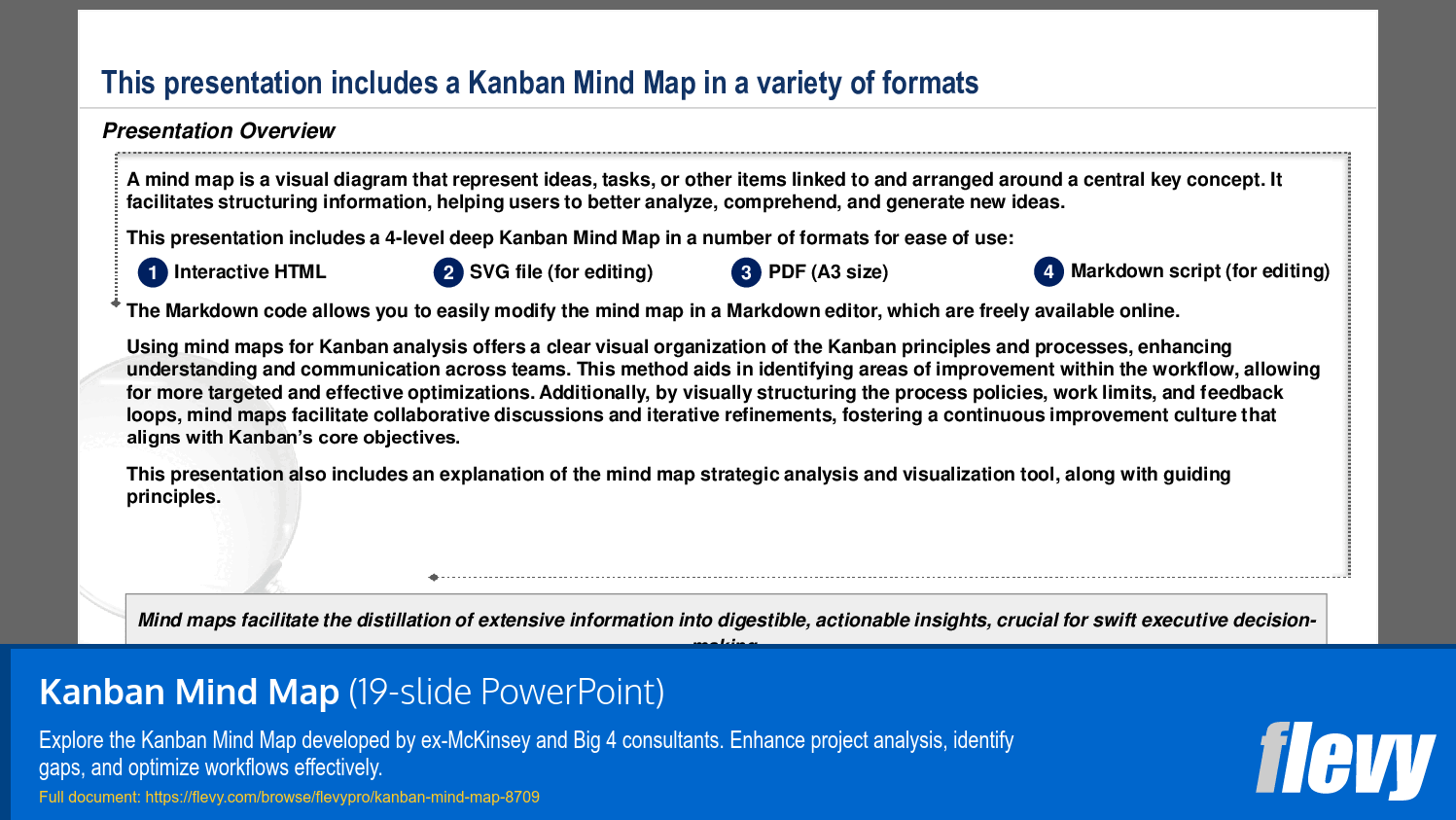
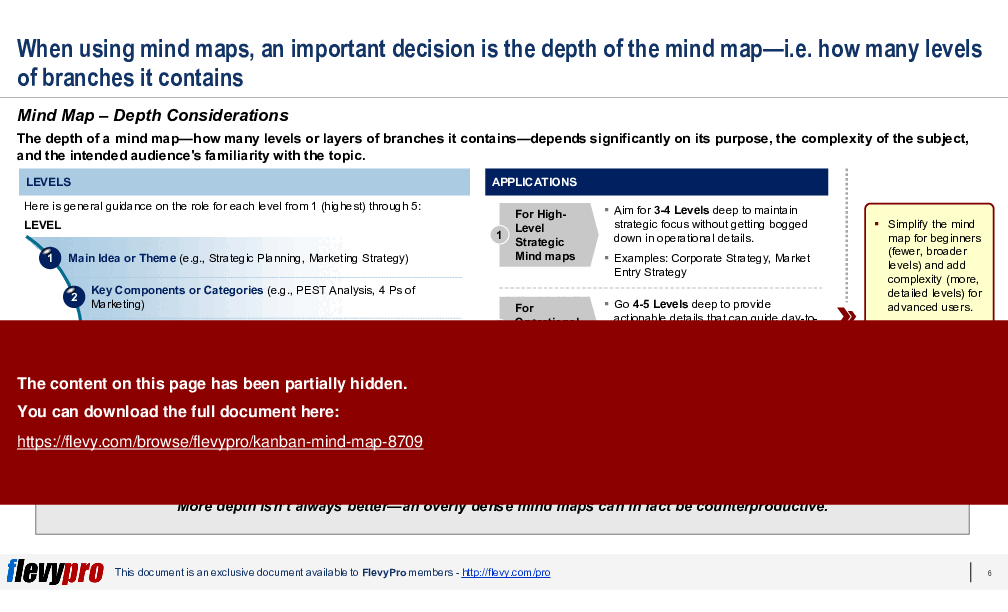

A mind map is a visual diagram that represent ideas, tasks, or other items linked to and arranged around a central key concept. It facilitates structuring information, helping users to better analyze, comprehend, and generate new ideas.
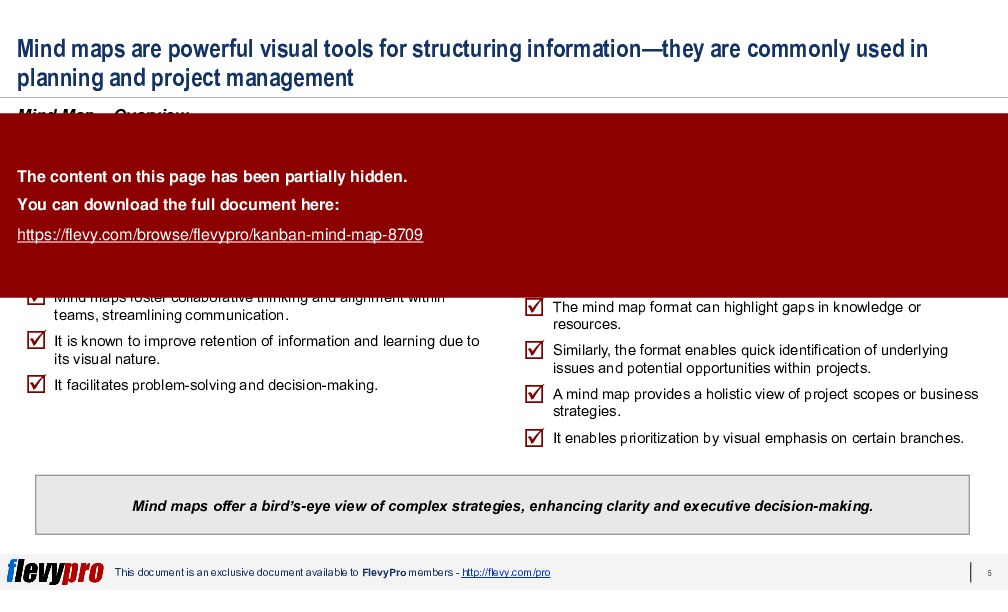
Using the mind map tool also can help reveal numerous potential insights, including:
A mind map identifies relationships and connections between different elements.
The mind map format can highlight gaps in knowledge or resources.
Similarly, the format enables quick identification of underlying issues and potential opportunities within projects.
A mind map provides a holistic view of project scopes or business strategies.
It enables prioritization by visual emphasis on certain branches.
This PowerPoint presentation includes a 4-level deep Kanban Mind Map in a number of formats for ease of use:
1. Interactive HTML
2. SVG file (for editing)
3. PDF (A3 size)
4. Markdown script (for editing)
The Markdown code allows you to easily modify the mind map in a Markdown editor, which are freely available online.
Using mind maps for Kanban analysis offers a clear visual organization of the Kanban principles and processes, enhancing understanding and communication across teams. This method aids in identifying areas of improvement within the workflow, allowing for more targeted and effective optimizations. Additionally, by visually structuring the process policies, work limits, and feedback loops, mind maps facilitate collaborative discussions and iterative refinements, fostering a continuous improvement culture that aligns with Kanban's core objectives.
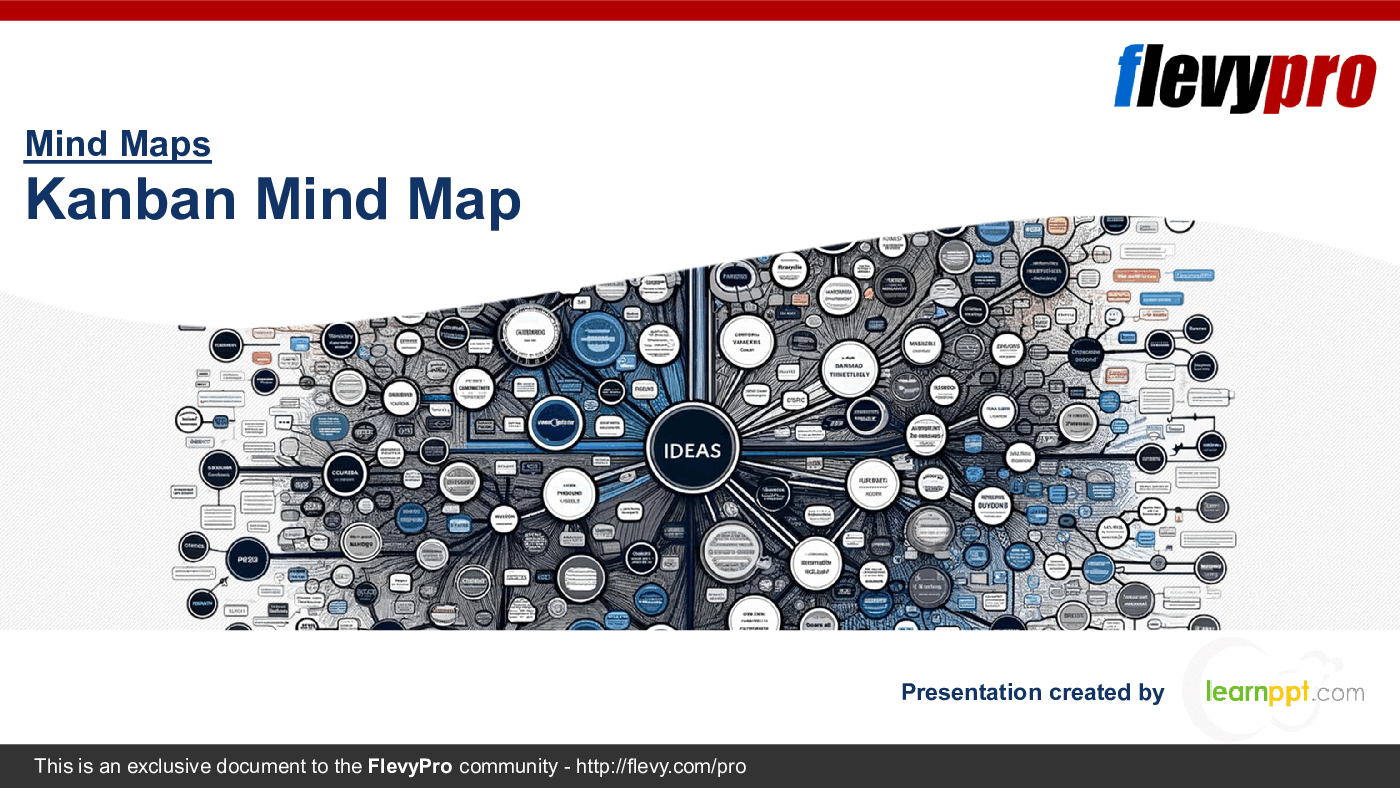
This Kanban Mind Map defines 6 level 2 branches:
1. Visualize Work
2. Limit Work in Progress
3. Manage Flow
4. Make Process Policies Explicit
5. Implement Feedback Loops
6. Improve Collaboratively, Evolve Experimentally
This PowerPoint presentation also includes an explanation of the mind map strategic analysis and visualization tool, along with guiding principles.
Got a question about this document? Email us at flevypro@flevy.com.
Executive Summary
The Kanban Mind Map presentation provides a structured visual representation of Kanban principles and processes, designed to enhance project analysis and workflow optimization. Developed by experienced consultants, this tool aids in identifying areas for improvement within workflows, facilitating targeted optimizations. The mind map is available in multiple formats, including interactive HTML, SVG, PDF, and Markdown, allowing for easy customization and integration into existing workflows. This resource is ideal for teams looking to enhance communication and collaboration while fostering a culture of continuous improvement.
Who This Is For and When to Use
• Project managers seeking to streamline workflows and enhance team collaboration
• Business analysts focused on identifying process improvements
• Team leaders aiming to implement Kanban methodologies effectively
• Consultants looking for visual tools to support client engagements
Best-fit moments to use this deck:
• During project kickoff meetings to establish workflow structures
• In team workshops aimed at identifying bottlenecks and inefficiencies
• As a reference tool for ongoing process improvement initiatives
Learning Objectives
• Define the core principles of Kanban and their application in project management
• Build a comprehensive Kanban Mind Map that visualizes workflows and processes
• Identify and analyze areas for improvement within existing workflows
• Facilitate collaborative discussions that drive iterative refinements
• Establish a continuous improvement culture aligned with Kanban objectives
• Utilize mind maps to distill complex information into actionable insights
Table of Contents
• Overview (page 3)
• Mind Map (page 5)
• Kanban Mind Map (page 9)
• Slide Design Guide (page 13)
Primary Topics Covered
• Kanban Principles - Fundamental concepts of Kanban that guide workflow management and process optimization.
• Visual Organization - Techniques for structuring information visually to enhance understanding and communication within teams.
• Workflow Optimization - Strategies for identifying and addressing inefficiencies in project workflows.
• Continuous Improvement - Methods for fostering a culture of ongoing refinement and adaptation in processes.
• Collaboration Techniques - Tools and practices that enhance teamwork and collective problem-solving.
• Mind Mapping Benefits - Advantages of using mind maps for clarity, retention, and decision-making in project management.
Deliverables, Templates, and Tools
• Kanban Mind Map template for visualizing workflows and processes
• Interactive HTML file for engaging presentations and discussions
• SVG file for customizable graphics and visual aids
• PDF format for easy sharing and printing
• Markdown script for further editing and adaptation
Slide Highlights
• Overview of Kanban principles and their applications in project management
• Visual representation of the Kanban Mind Map, illustrating key processes and workflows
• Explanation of the benefits of using mind maps for team collaboration and communication
• Guidelines for effective slide design and presentation structure
Potential Workshop Agenda
Kanban Principles Workshop (90 minutes)
• Introduce Kanban principles and their relevance to project management
• Collaboratively build a Kanban Mind Map based on current workflows
• Identify areas for improvement and discuss potential optimizations
Continuous Improvement Session (60 minutes)
• Review existing workflows and pinpoint inefficiencies
• Brainstorm actionable strategies for enhancing processes
• Establish a plan for ongoing monitoring and refinement
Customization Guidance
• Modify the Kanban Mind Map to reflect specific team workflows and processes
• Adapt terminology and metrics to align with organizational standards
• Incorporate team-specific feedback loops and improvement strategies
Secondary Topics Covered
• Techniques for effective brainstorming and idea generation
• Strategies for visual communication in project management
• Tools for tracking progress and measuring improvements
Topic FAQ
Document FAQ
These are questions addressed within this presentation.
What is a Kanban Mind Map?
A Kanban Mind Map is a visual tool that organizes Kanban principles and processes, helping teams understand workflows and identify areas for improvement.
How can I customize the Kanban Mind Map?
The Kanban Mind Map is available in multiple formats, including SVG and Markdown, allowing for easy customization to fit specific team needs.
What are the benefits of using mind maps in project management?
Mind maps enhance clarity, improve retention, and facilitate collaborative discussions, making complex information more digestible and actionable.
Can this presentation be used for team training?
Yes, the Kanban Mind Map is an effective training tool for introducing teams to Kanban methodologies and fostering a culture of continuous improvement.
What formats are available for the Kanban Mind Map?
The Kanban Mind Map is available in interactive HTML, SVG, PDF, and Markdown formats for ease of use and customization.
How does the Kanban Mind Map support continuous improvement?
By visually structuring workflows and processes, the Kanban Mind Map helps teams identify inefficiencies and implement targeted optimizations.
Is there a specific audience for this presentation?
The presentation is designed for project managers, business analysts, team leaders, and consultants looking to enhance workflow management.
How can I integrate the Kanban Mind Map into existing workflows?
The various formats allow for easy integration into presentations, training sessions, and team workshops to facilitate discussions and improvements.
Glossary
• Kanban - A visual workflow management method that emphasizes continuous delivery and improvement.
• Mind Map - A diagram used to represent ideas and tasks linked to a central concept, enhancing understanding and analysis.
• Workflow Optimization - The process of improving efficiency and effectiveness in project workflows.
• Continuous Improvement - An ongoing effort to enhance products, services, or processes through incremental improvements.
• Collaboration - Working together to achieve a common goal, often enhanced through visual tools like mind maps.
• Feedback Loop - A process in which outputs of a system are circled back and used as inputs, facilitating continuous improvement.
• Visual Communication - The use of visual elements to convey information and ideas effectively.
• Project Management - The discipline of planning, executing, and closing projects to achieve specific goals.
• SVG - Scalable Vector Graphics, a format for two-dimensional graphics that supports interactivity and animation.
• Markdown - A lightweight markup language used for formatting text, often used for creating documents and web content.
• Interactive HTML - A web-based format that allows users to engage with content dynamically.
• PDF - Portable Document Format, a file format used to present documents in a manner independent of application software, hardware, and operating systems.
Source: Best Practices in Kanban, Mind Map PowerPoint Slides: Kanban Mind Map PowerPoint (PPTX) Presentation Slide Deck, LearnPPT Consulting
Did you need more documents?
Consider a FlevyPro subscription from $39/month. View plans here.
For $10.00 more, you can download this document plus 2 more FlevyPro documents. That's just $13 each.
|
Receive our FREE presentation on Operational Excellence
This 50-slide presentation provides a high-level introduction to the 4 Building Blocks of Operational Excellence. Achieving OpEx requires the implementation of a Business Execution System that integrates these 4 building blocks. |










