
This framework is developed by a team of former McKinsey and Big 4 consultants. The presentation follows the headline-body-bumper slide format used by global consulting firms.
Internet of Things (IoT) Strategic Models PPT: Learn IoT business models, applications, architecture, and security frameworks. Download this expert presentation now. Internet of Things (IoT) Strategic Models is a 29-slide PPT PowerPoint presentation slide deck (PPTX) available for immediate download upon purchase.
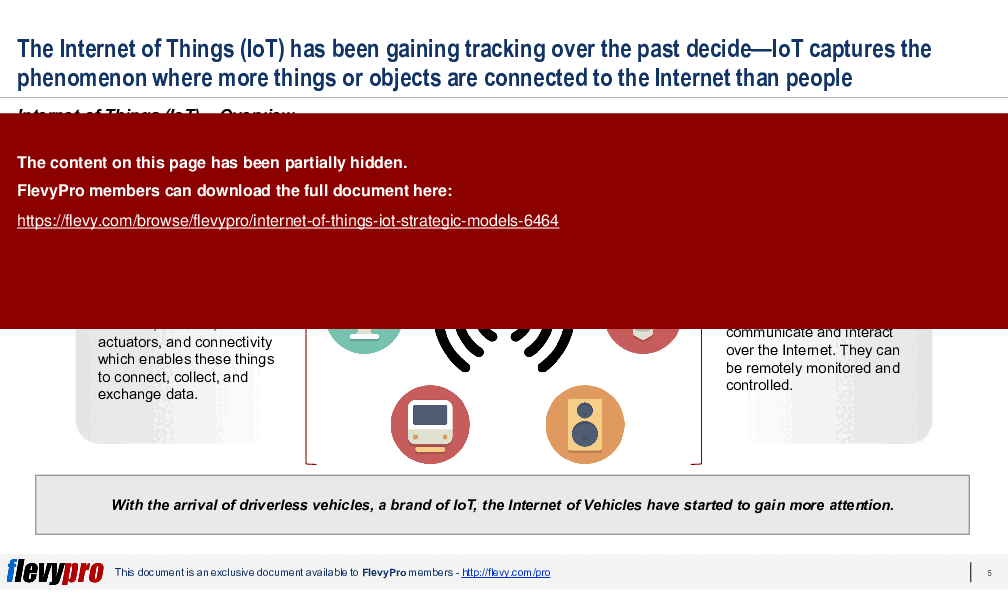
The Internet of Things (IoT) encompasses an accumulation of network-based devices. IoT involves extending internet connectivity beyond standard devices. Embedded with technology, these devices can communicate and interact over the internet. They can be remotely monitored and controlled.
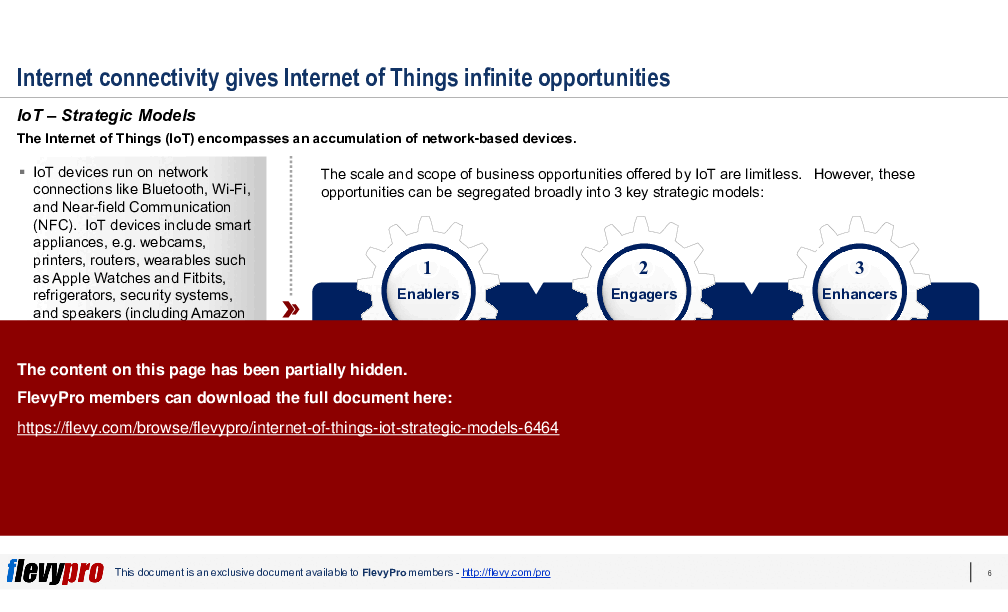
IoT devices run on network connections like Bluetooth, Wi-Fi, and Near-Field Communication (NFC). IoT devices include smart appliances, e.g. webcams, printers, routers, wearables such as Apple Watches and Fitbits, refrigerators, security systems, and speakers (including Amazon Echo and Google Home).
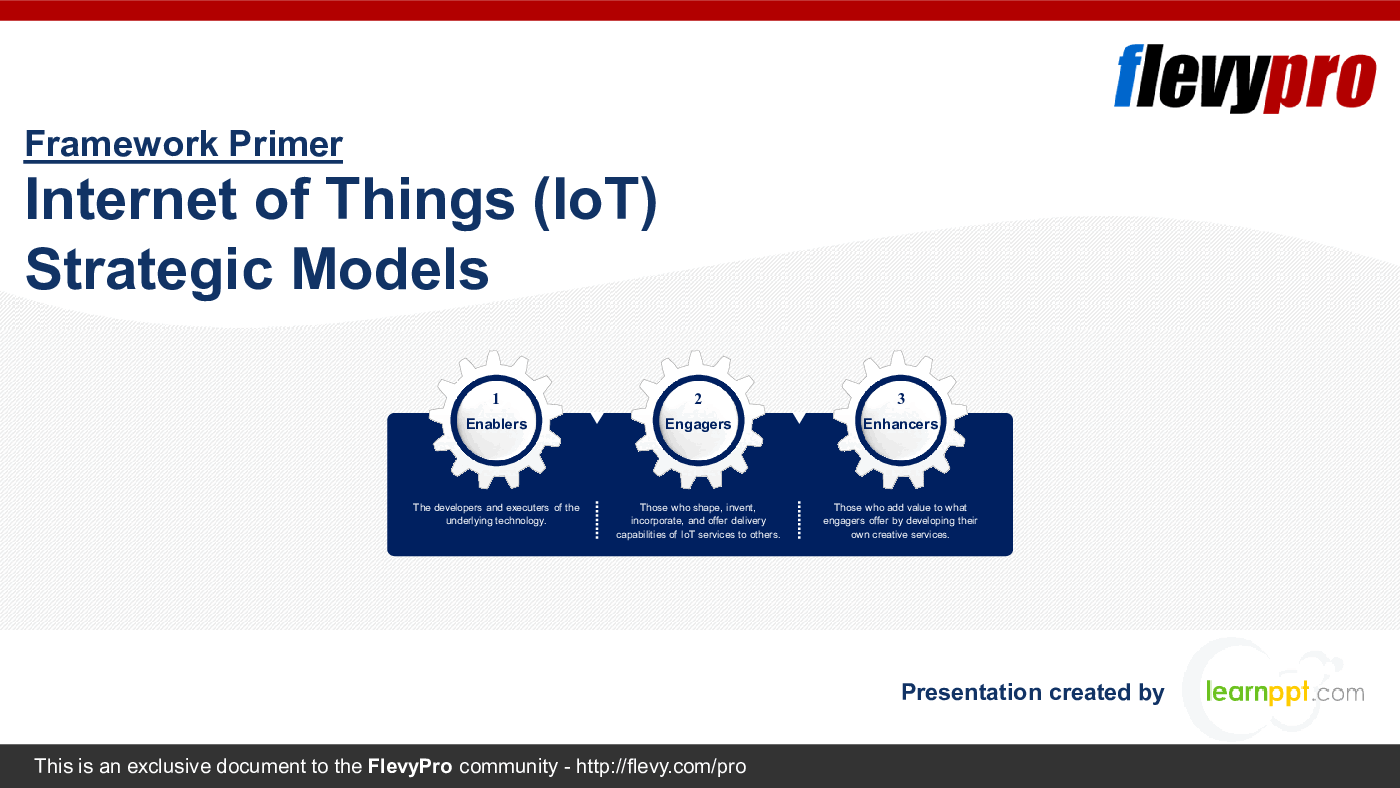
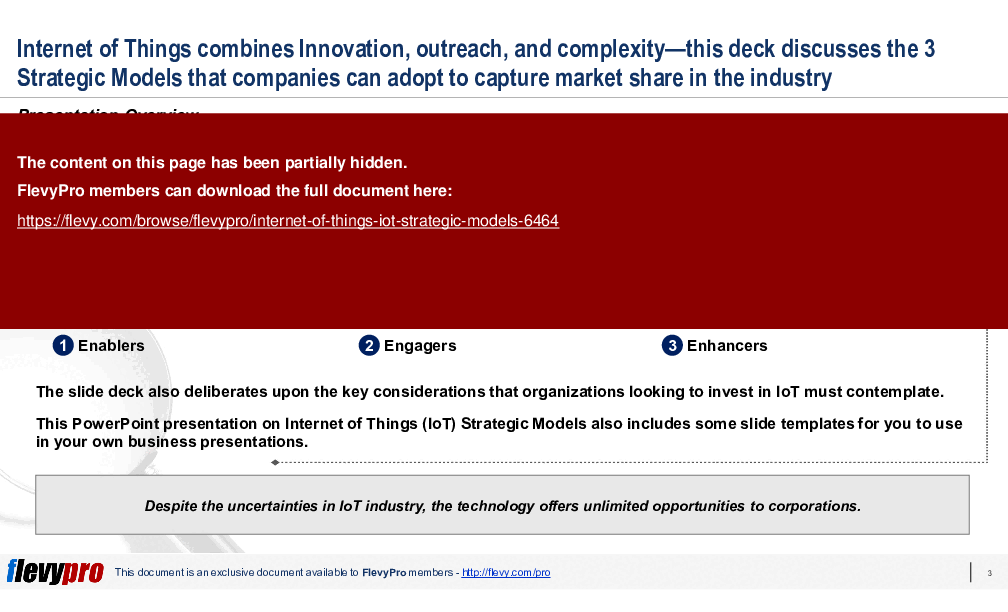
This Internet of Things presentation offers a comprehensive summary of the 3 Strategic Models (along with examples) that organizations offering IoT products and services embrace to succeed in the industry. These Strategic Models include:
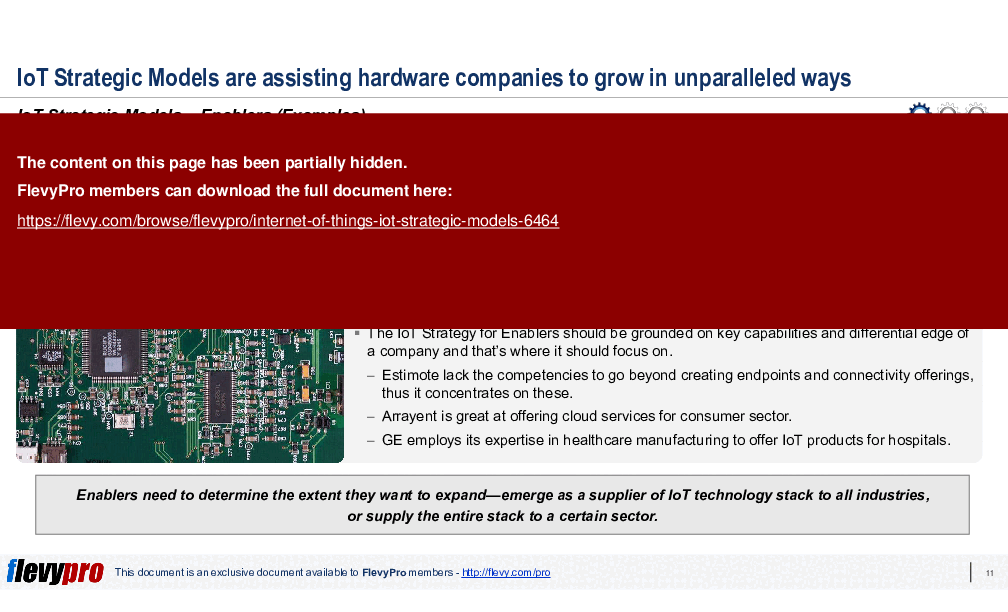
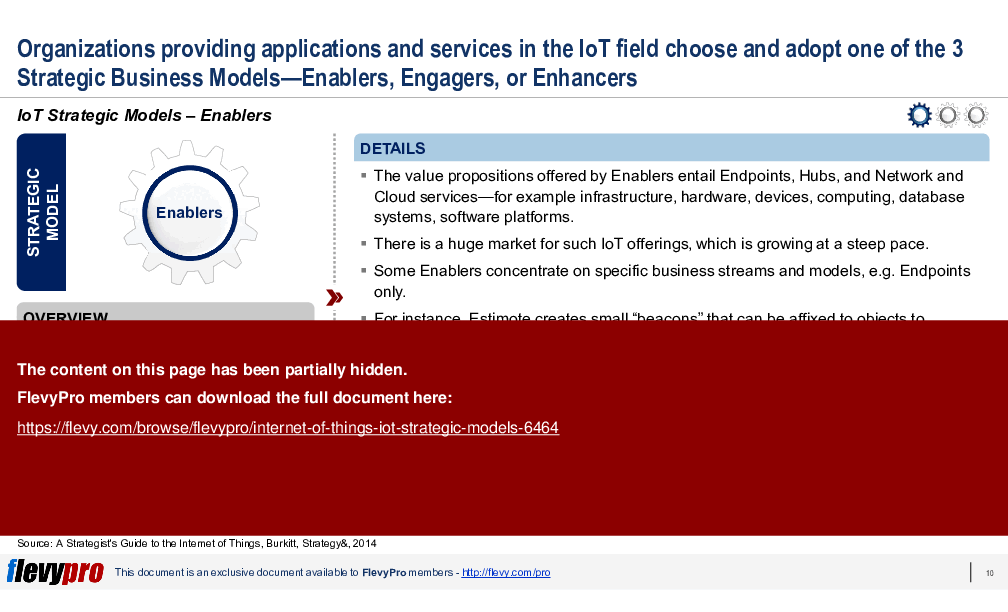
1. Enablers – Enablers are the developers and executers of the underlying technology. Enablers are technology-centric organizations—e.g. Cisco, Google, HP, IBM, and Intel—that develop and uphold key IoT infrastructure essential for Engagers to develop and offer individualized connected services.
2. Engagers – Engagers are those who shape, invent, incorporate, and offer delivery capabilities of IoT services to others. Engagers link the IoT with the market by employing endpoints, hubs, platforms, and other service offerings. They create services for consumers and businesses.
3. Enhancers – Enhancers are those who add value to what engagers offer by developing their own creative services. Enhancers deliver enhanced, integrated, value-added IoT services by revamping and repackaging Engagers' offerings.
These presentation slides also deliberate upon the 6 key strategic considerations that organizations looking to invest in IoT must contemplate. Additional topics touched upon include the IoT Technology Stack and IoT Digital Enterprise Ecosystem.
This Internet of Things PowerPoint presentation also includes some slide templates depicting the 3 IoT Strategic Models, IoT Technology Stack, and IoT strategic considerations for you to use in your own business presentations.
The presentation also provides insights into the IoT Technology Stack, detailing the layers of technology products and services that support IoT solutions. Organizations can leverage these templates to enhance their strategic planning and execution in the IoT domain.
This PPT slide outlines the Internet of Things (IoT) technology stack, detailing 5 key technology offerings essential for leveraging IoT. The first category, "End points," includes devices that collect data or interact with users, forming the foundation of any IoT solution. "Simple Hubs" represent basic connectivity solutions that aggregate data from multiple end points, crucial for initial data management. "Integrating Hubs" enable sophisticated data processing and integration, enhancing interaction between devices. "Network and Cloud Services" provide the infrastructure for data storage, processing, and analytics, vital for scaling IoT solutions. Finally, "Enhanced Services" encompass advanced functionalities like predictive analytics and machine learning, driving deeper insights and automation. As organizations progress through these layers, the complexity and interconnectivity of IoT devices increase, critical for realizing IoT's potential.
The IoT technology stack presents strategic choices for businesses developing IoT offerings. Organizations provide Network and Cloud Services, create Endpoints, and focus on Hub Integration services. The variety within the IoT stack can dilute focus, allowing competitors with defined IoT capabilities to gain an advantage.
Three strategic models are categorized: Enablers, Engagers, and Enhancers. Enablers deliver foundational technologies and applications, targeting core services like Endpoints and Cloud solutions. Engagers connect IoT to customers, bridging technology and user experience. Enhancers add value by integrating and augmenting Engager services, reaching customers innovatively.
The "Ecosystem" and "Digital Enterprise" context emphasizes collaboration among stakeholders. The "Embedder" concept highlights new operational paradigms affecting functional and cross-functional business processes. Selecting an appropriate model is essential for generating value in IoT strategy.
This PPT slide outlines essential factors for organizations entering the Internet of Things (IoT) market, emphasizing a structured approach to leverage opportunities while addressing challenges. Key challenges include fluctuating customer demands, evolving hardware and software standards, and integration of endpoints and intelligent devices. Critical concerns encompass data management, security, and customer privacy expectations.
A circular framework presents 6 key considerations: establishing clear objectives, understanding market changes due to IoT, focusing on customer engagement, assessing existing product portfolios for gaps, deploying fundamental IoT value propositions, and identifying organizational capabilities and deficiencies. This structured approach serves as a roadmap for navigating the complexities of the IoT landscape, guiding decision-making and strategic planning for IoT investments.
This PPT slide outlines strategic considerations for enhancing Internet of Things (IoT) business initiatives. Organizations must assess their product and service portfolios to identify IoT improvement opportunities. Evaluating current value propositions is essential for discovering new avenues through IoT technologies. Implementing basic IoT value propositions, such as connected devices, serves as a foundation for data analysis, generating insights for additional offerings. Identifying organizational capabilities and deficiencies is critical, including assessing strengths relative to competitors and understanding capital investment, financing, and human resource needs for IoT initiatives. Meeting minimum competency requirements, such as data management and partnerships with IoT firms, is necessary. Fostering a culture of innovation and customer-centricity maximizes IoT benefits in the evolving landscape.
The Internet of Things (IoT) encompasses network-based devices operating through connections like Bluetooth and Wi-Fi, including smart appliances and wearables. IoT opportunities are categorized into 3 strategic models: Enablers, Engagers, and Enhancers. Enablers develop the foundational technology and infrastructure for IoT functionality. Engagers enhance IoT service delivery, taking on a more interactive role. Enhancers add value by creating unique services that complement Engagers, fostering a dynamic ecosystem. This structured approach clarifies the multifaceted nature of IoT, guiding strategic decisions and investments in IoT initiatives. Understanding these roles is essential for leveraging IoT technologies effectively.
Source: Best Practices in Internet of Things PowerPoint Slides: Internet of Things (IoT) Strategic Models PowerPoint (PPTX) Presentation Slide Deck, LearnPPT Consulting
This framework is developed by a team of former McKinsey and Big 4 consultants. The presentation follows the headline-body-bumper slide format used by global consulting firms.
For $10.00 more, you can download this document plus 2 more FlevyPro documents. That's just $13 each.
ABOUT FLEVYPRO
This document is part of the FlevyPro Library, a curated knowledge base of documents for our FlevyPro subscribers.
FlevyPro is a subscription service for on-demand business frameworks and analysis tools. FlevyPro subscribers receive access to an exclusive library of curated business documents—business framework primers, presentation templates, Lean Six Sigma tools, and more—among other exclusive benefits.
The average daily rate of a McKinsey consultant is $6,625 (not including expenses). The average price of a Flevy document is $65.
Trusted by over 10,000+ Client Organizations
Since 2012, we have provided business templates to over 10,000 businesses and organizations of all sizes, from startups and small businesses to the Fortune 100, in over 130 countries.
"FlevyPro has been a brilliant resource for me, as an independent growth consultant, to access a vast knowledge bank of presentations to support my work with clients. In terms of RoI, the value I received from the very first presentation I downloaded paid for my subscription many times over! The
quality of the decks available allows me to punch way above my weight – it's like having the resources of a Big 4 consultancy at your fingertips at a microscopic fraction of the overhead.
"
– Roderick Cameron, Founding Partner at SGFE Ltd
"Flevy is our 'go to' resource for management material, at an affordable cost. The Flevy library is comprehensive and the content deep, and typically provides a great foundation for us to further develop and tailor our own service offer."
– Chris McCann, Founder at Resilient.World
"I am extremely grateful for the proactiveness and eagerness to help and I would gladly recommend the Flevy team if you are looking for data and toolkits to help you work through business solutions."
– Trevor Booth, Partner, Fast Forward Consulting
"As a small business owner, the resource material available from FlevyPro has proven to be invaluable. The ability to search for material on demand based our project events and client requirements was great for me and proved very beneficial to my clients. Importantly, being able to easily edit and tailor
the material for specific purposes helped us to make presentations, knowledge sharing, and toolkit development, which formed part of the overall program collateral. While FlevyPro contains resource material that any consultancy, project or delivery firm must have, it is an essential part of a small firm or independent consultant's toolbox.
"
– Michael Duff, Managing Director at Change Strategy (UK)
"I like your product. I'm frequently designing PowerPoint presentations for my company and your product has given me so many great ideas on the use of charts, layouts, tools, and frameworks. I really think the templates are a valuable asset to the job."
– Roberto Fuentes Martinez, Senior Executive Director at Technology Transformation Advisory
"FlevyPro provides business frameworks from many of the global giants in management consulting that allow you to provide best in class solutions for your clients."
– David Harris, Managing Director at Futures Strategy
"Flevy is now a part of my business routine. I visit Flevy at least 3 times each month.
Flevy has become my preferred learning source, because what it provides is practical, current, and useful in this era where the business world is being rewritten.

many challenges and there is the need to make the right decisions in a short time, with so much scattered information, we are fortunate to have Flevy. Flevy investigates, selects, and puts at our disposal the best of the best to help us be successful in our work.
"
– Omar HernĂ¡n Montes Parra, CEO at Quantum SFE
"As a niche strategic consulting firm, Flevy and FlevyPro frameworks and documents are an on-going reference to help us structure our findings and recommendations to our clients as well as improve their clarity, strength, and visual power. For us, it is an invaluable resource to increase our impact and value."
– David Coloma, Consulting Area Manager at Cynertia Consulting
Download our FREE Digital Transformation Templates
Download our free compilation of 50+ Digital Transformation slides and templates. DX concepts covered include Digital Leadership, Digital Maturity, Digital Value Chain, Customer Experience, Customer Journey, RPA, etc.