
This framework is developed by a team of former McKinsey and Big 4 consultants. The presentation follows the headline-body-bumper slide format used by global consulting firms.
Explore our EA Maturity Model PPT, crafted by ex-McKinsey and Big 4 consultants. Align IT with business goals to enhance performance and operational efficiency. Enterprise Architecture (EA): Elements of Maturity is a 24-slide PPT PowerPoint presentation slide deck (PPT) available for immediate download upon purchase.
IT works best when it is tied tightly to our company’s overall business goals. On the other hand, business unit executives have remained doubtful about IT’s ability to support them in creating value. Despite the best intentions of managers of both sides, companies continue to struggle to integrate IT systems and to determine whether IT actually improves performance.
This problematic tension between the IT departments and business units has inflicted on many companies for years.
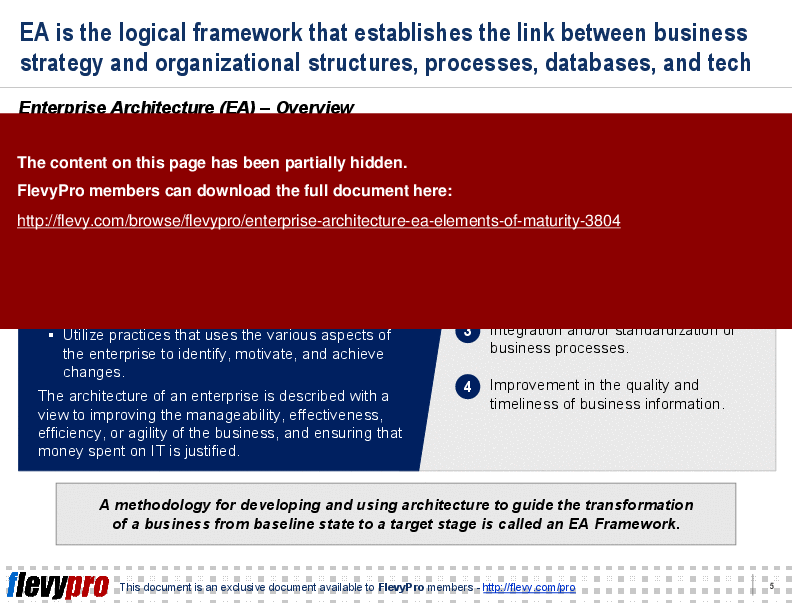
One approach to closing this gap is the discipline call Enterprise Architecture (EA). EA is a logical framework that establishes the links between business strategy and organizational structures, processes, databases, and technologies. If a company wants to capture better customer information in order to energize an effort to sell additional higher margin products and services to existing customers, the company can use an EA system to align its customer relationship management, information retrieval, and sales planning software. EA applications can also be set up for staff training, account management, and frequent assessments of the campaign’s efficacy.
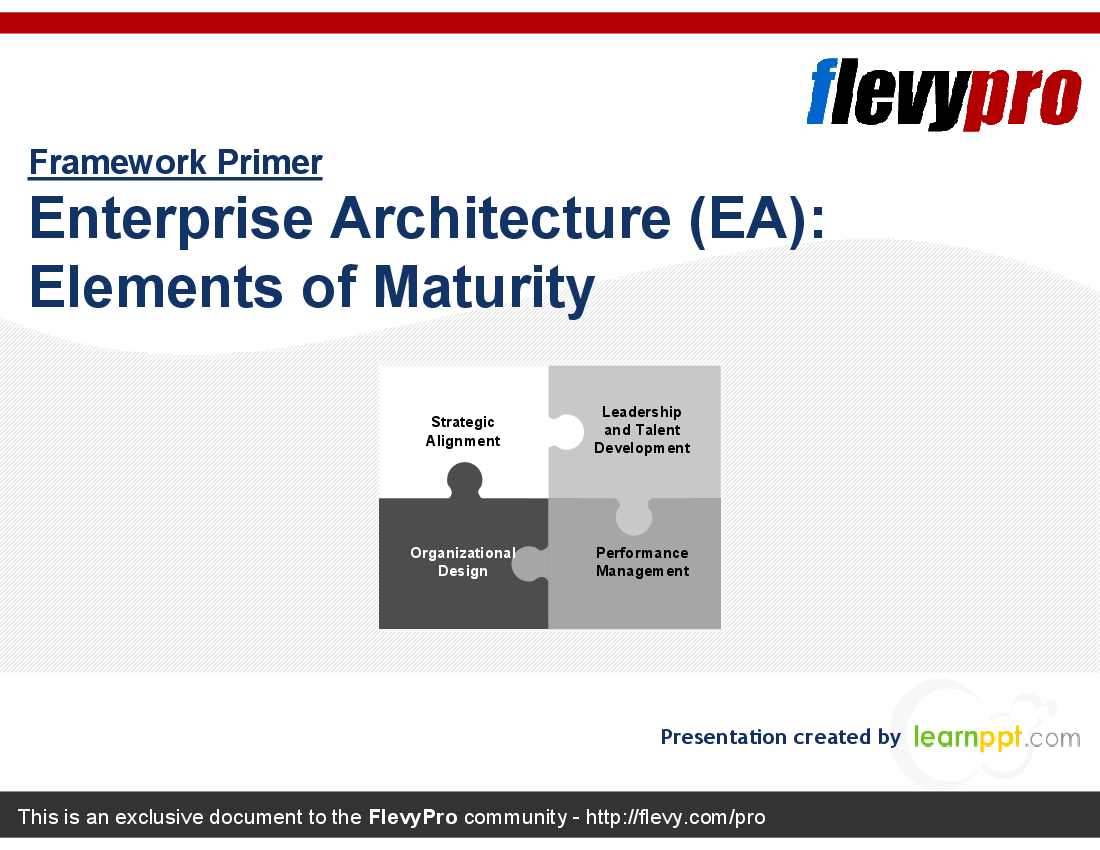
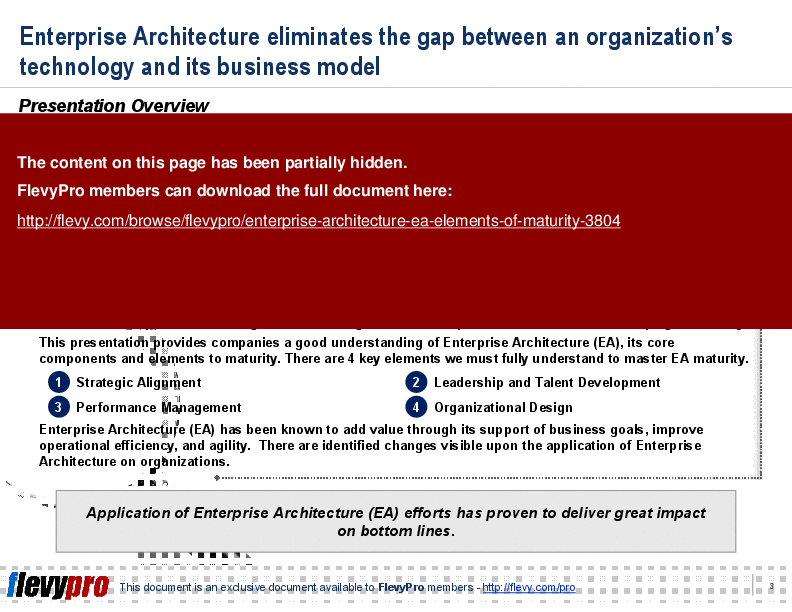
This presentation provides companies a good understanding of Enterprise Architecture (EA), its core components and elements to maturity. There are 4 key elements that companies must fully understand to master EA maturity.
1. Strategic Alignment
2. Leadership and Talent Development
3. Performance Management
4. Organizational Design
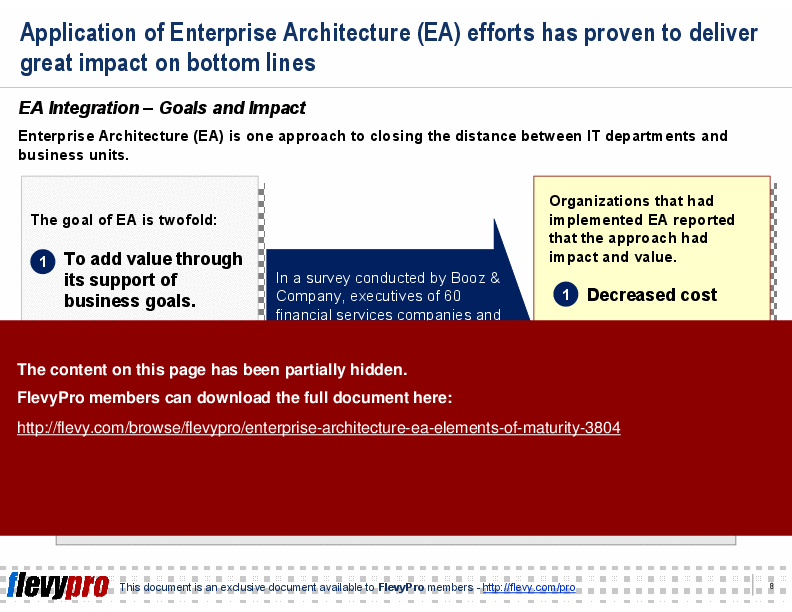
Enterprise Architecture (EA) has been known to add value through its support of business goals, improve operational efficiency, and agility. There are identified changes visible upon the application of Enterprise Architecture on organizations. Application of EA efforts has proven to deliver great impact on bottom lines.
This deck also includes slide templates for you to use in your own business presentations.
This PPT breaks down the EA Capability Maturity Model (CMM) into five evolutionary stages, providing a clear roadmap for organizations to follow. It also evaluates Enterprise Architecture across nine critical areas, ensuring a comprehensive approach to maturity.
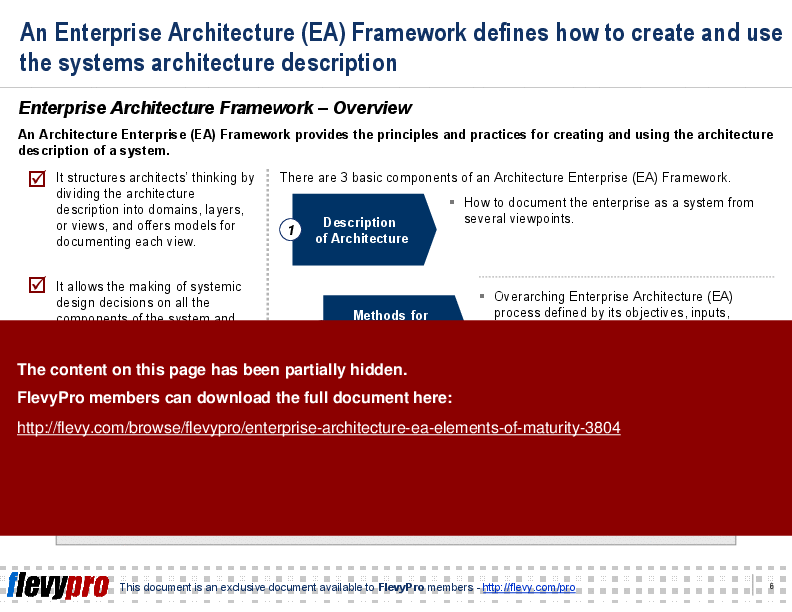
This PPT slide provides an overview of the Enterprise Architecture (EA) Framework, focusing on its foundational components for system design. The framework categorizes architecture descriptions into distinct domains, layers, or views to enhance clarity and effectiveness.
Three core components are highlighted:
1. Description of Architecture - Documents the enterprise as a system from multiple perspectives, ensuring stakeholder understanding of its structure and function.
2. Methods for Designing Architecture - Outlines the EA process, emphasizing objectives, inputs, phases, and outputs, supported by techniques, tools, principles, and practices for effective implementation.
3. Organization of Architects - Addresses governance of the architectural team, detailing necessary team structure, skills, experience, and training for navigating enterprise architecture complexities.
This structured approach emphasizes clarity, systematic design, and effective team organization for successful outcomes.
Enterprise Architecture (EA) bridges IT departments and business units by aligning IT initiatives with business objectives and quantifying value. A Booz & Company survey of executives from 60 financial services firms and government agencies revealed that organizations implementing EA experienced decreased costs, reduced complexity, minimized risk, and increased agility—key benefits for enhancing operational efficiency. The value derived from EA varies based on the maturity level of EA efforts, indicating that organizations should assess their current state and readiness to adopt EA practices effectively. Understanding this maturity helps tailor EA strategies to maximize benefits, supporting business goals and driving measurable improvements in performance and efficiency.
This PPT slide presents a framework for evaluating Enterprise Architecture (EA) maturity across nine areas: Architecture Process, Architecture Development, Business Linkage, Senior Management Involvement, Operating Unit Participation, Architecture Communication, IT Security, Governance, and IT Investment and Acquisition Strategy. Adapted from the TOGAF framework version 9.1, each area is essential for aligning an organization’s architecture with its strategy. For example, the Architecture Process focuses on methodologies for developing architecture, while Senior Management Involvement emphasizes leadership's role in architectural initiatives. IT Security ensures frameworks are robust against threats, and Governance establishes the policies guiding architectural practices. This structured approach provides a roadmap for organizations to assess and enhance their EA maturity.
Enterprise Architecture (EA) enhances organizational effectiveness across 5 key areas. In Organizational Design, EA facilitates smoother transitions during mergers and acquisitions by aiding in the design and redesign of structures. For Organizational Processes, EA enforces discipline and standardization, leading to better process consolidation and operational efficiency. In Project Portfolio Management, EA supports investment decision-making and prioritizes projects to align resources with strategic objectives. In Project Management, EA improves collaboration and communication among stakeholders, streamlining project scoping and deliverable definitions. Lastly, in Requirements Engineering, EA accelerates requirement elicitation and enhances accuracy through published architecture documentation, serving as a reference for stakeholders.
This PPT slide outlines critical components for achieving maturity in Enterprise Architecture (EA): Strategic Alignment and Leadership and Talent Development. Strategic Alignment integrates EA functions within technology and strategic planning, ensuring formal engagement between these domains to drive organizational success. Without this alignment, organizations may struggle to realize the full potential of their EA initiatives. Leadership and Talent Development emphasizes the need for top management to communicate EA's value across the organization, focusing on broader business implications beyond technical aspects. Training and development of Enterprise Architects is essential for enhancing EA capabilities. Measuring EA outcomes is critical for demonstrating its tangible impact on business performance, reinforcing that EA is a strategic initiative affecting the entire organization.
Source: Best Practices in Enterprise Architecture, Capability Maturity Model PowerPoint Slides: Enterprise Architecture (EA): Elements of Maturity PowerPoint (PPT) Presentation Slide Deck, LearnPPT Consulting
This framework is developed by a team of former McKinsey and Big 4 consultants. The presentation follows the headline-body-bumper slide format used by global consulting firms.
For $10.00 more, you can download this document plus 2 more FlevyPro documents. That's just $13 each.
ABOUT FLEVYPRO
This document is part of the FlevyPro Library, a curated knowledge base of documents for our FlevyPro subscribers.

FlevyPro is a subscription service for on-demand business frameworks and analysis tools. FlevyPro subscribers receive access to an exclusive library of curated business documents—business framework primers, presentation templates, Lean Six Sigma tools, and more—among other exclusive benefits.
The average daily rate of a McKinsey consultant is $6,625 (not including expenses). The average price of a Flevy document is $65.
Trusted by over 10,000+ Client Organizations
Since 2012, we have provided business templates to over 10,000 businesses and organizations of all sizes, from startups and small businesses to the Fortune 100, in over 130 countries.
"FlevyPro provides business frameworks from many of the global giants in management consulting that allow you to provide best in class solutions for your clients."
– David Harris, Managing Director at Futures Strategy
"Last Sunday morning, I was diligently working on an important presentation for a client and found myself in need of additional content and suitable templates for various types of graphics. Flevy.com proved to be a treasure trove for both content and design at a reasonable price, considering the time I
saved. I encountered a download issue during the ordering process. However, a quick email to Flevy's support team, even on a Sunday (!!!), resulted in assistance within less than an hour, allowing me to download the content I needed. Fantastic job, Flevy! I give 5 stars for both content/price and customer service. Thank you!
"
– M. E., Chief Commercial Officer, International Logistics Service Provider
"As a young consulting firm, requests for input from clients vary and it's sometimes impossible to provide expert solutions across a broad spectrum of requirements. That was before I discovered Flevy.com.
Through subscription to this invaluable site of a plethora of topics that are key and crucial to consulting, I
have been able to exceed expectations and deliver quality advice and solutions to my clients. The quality and expertise of the authors are exemplary and gives me great confidence to use as part of my service offerings.
I highly recommend this company for any consultant wanting to apply international best practice standards in their service offerings.
"
– Nishi Singh, Strategist and MD at NSP Consultants
"As a niche strategic consulting firm, Flevy and FlevyPro frameworks and documents are an on-going reference to help us structure our findings and recommendations to our clients as well as improve their clarity, strength, and visual power. For us, it is an invaluable resource to increase our impact and value."
– David Coloma, Consulting Area Manager at Cynertia Consulting
"As a consultant requiring up to date and professional material that will be of value and use to my clients, I find Flevy a very reliable resource.
The variety and quality of material available through Flevy offers a very useful and commanding source for information. Using Flevy saves me time, enhances my expertise and ends up being a good decision."
– Dennis Gershowitz, Principal at DG Associates
"As a small business owner, the resource material available from FlevyPro has proven to be invaluable. The ability to search for material on demand based our project events and client requirements was great for me and proved very beneficial to my clients. Importantly, being able to easily edit and tailor
the material for specific purposes helped us to make presentations, knowledge sharing, and toolkit development, which formed part of the overall program collateral. While FlevyPro contains resource material that any consultancy, project or delivery firm must have, it is an essential part of a small firm or independent consultant's toolbox.
"
– Michael Duff, Managing Director at Change Strategy (UK)
"If you are looking for great resources to save time with your business presentations, Flevy is truly a value-added resource. Flevy has done all the work for you and we will continue to utilize Flevy as a source to extract up-to-date information and data for our virtual and onsite presentations!"
– Debbi Saffo, President at The NiKhar Group
"I have used FlevyPro for several business applications. It is a great complement to working with expensive consultants. The quality and effectiveness of the tools are of the highest standards."
– Moritz Bernhoerster, Global Sourcing Director at Fortune 500
Download our FREE Digital Transformation Templates
Download our free compilation of 50+ Digital Transformation slides and templates. DX concepts covered include Digital Leadership, Digital Maturity, Digital Value Chain, Customer Experience, Customer Journey, RPA, etc.