Your AI assistant becomes a Flevy-powered consultant, with direct access to our full library of frameworks, templates, and case studies. Free to connect. No account, sign-in, or API key required.
STEP 1 · CHOOSE YOUR ASSISTANT
STEP 2 · CONNECT
1
No copying needed. Flevy is in the official Claude Connectors Directory.
2
Click the button below, then click Connect on the Flevy listing.
This framework is developed by a team of former McKinsey and Big 4 consultants. The presentation follows the headline-body-bumper slide format used by global consulting firms.
Editor Summary
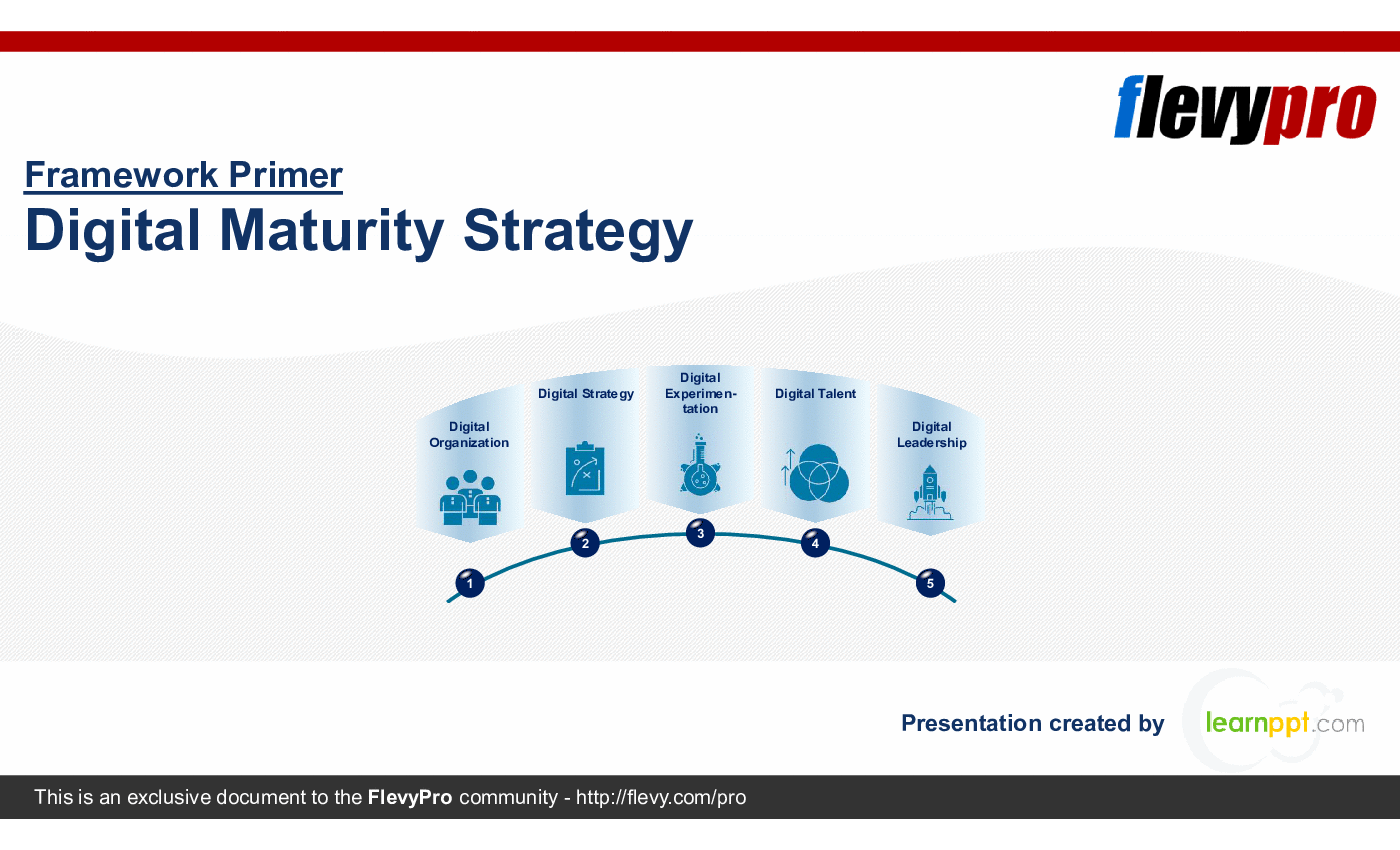
Digital Maturity Strategy is a 36-slide PowerPoint (PPTX) presentation by LearnPPT Consulting that outlines a digital maturity roadmap organized around 5 capability areas: Digital Organization, Digital Strategy, Digital Experimentation, Digital Talent, and Digital Leadership.
Read moreThe deck compares digitally mature, progressing, and nascent organizations, discusses impacts on customer reach and internal operations, and includes slide templates for reuse. Sold as a digital download on Flevy, it is aimed at CIOs, digital transformation leads, strategy executives, and management consultants for planning and presentations.
Use this presentation when your organization needs to develop or communicate a plan to build digital capabilities, modernize internal operations, or better respond to digital trends.
CIOs and digital transformation leads mapping a target operating model and agile cross-functional teams to improve internal efficiencies.
Strategy executives defining digital priorities and how they align to customer reach and business objectives.
HR or talent leads designing programs to upskill staff for digital roles tied to capability gaps.
Management consultants benchmarking client maturity and preparing executive-facing recommendations.
The approach centers on assessing and prioritizing across 5 capability areas commonly used in consulting assessments.
Go digital or go home. To survive in the Digital Age, organizations must develop their digital capabilities to not only support strategies and reach customers, but also to modernize and achieve efficiencies in their internal operations and processes. The pursuit of Digital Maturity is quickly becoming a necessity.
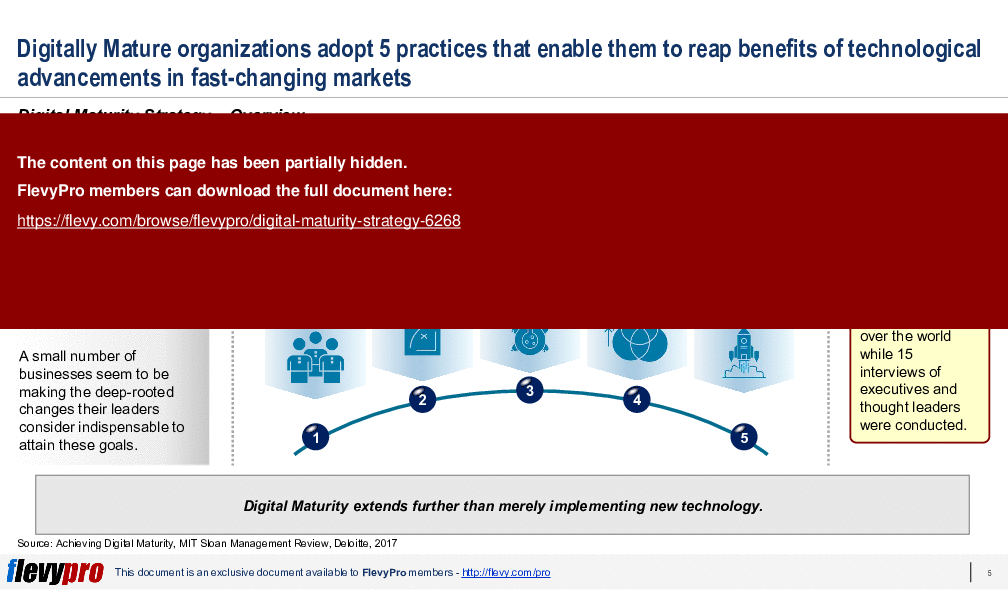
Yet, most organizations are unable to properly strategize their transition to Digital Maturity. Nevertheless, there are organizations that are digitally mature or are leaping towards that state with ease. Research into the Strategies of such organizations reveals that Digitally Mature organizations develop strong capabilities around 5 areas that make them leaders in this race:
1. Digital Organization
2. Digital Strategy
3. Digital Experimentation
4. Digital Talent
5. Digital Leadership
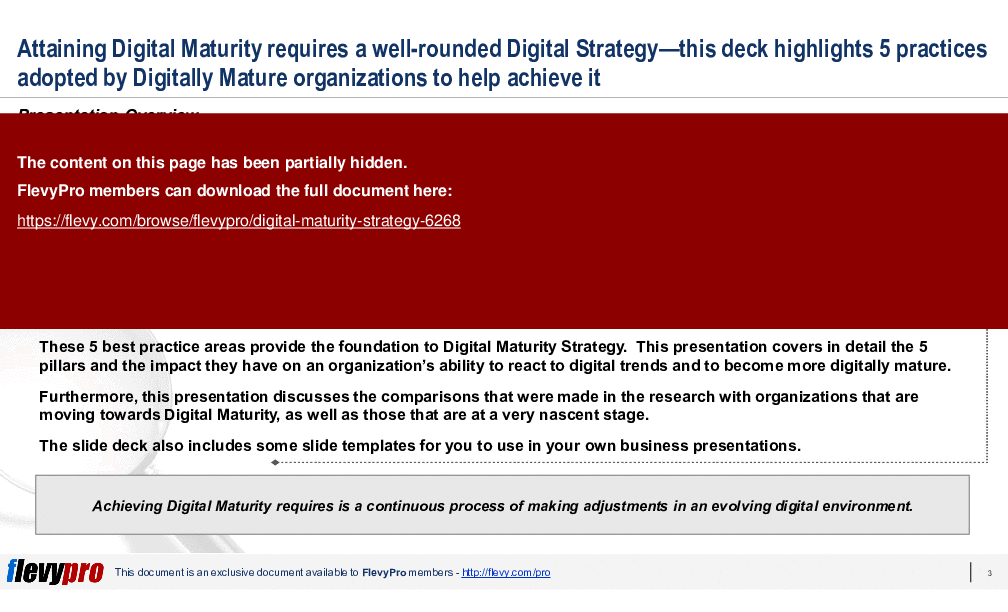
These 5 best practice areas provide the foundation to Digital Maturity Strategy. This presentation covers in detail the 5 pillars and the impact they have on an organization's ability to react to digital trends and to become more digitally mature.
Furthermore, this presentation discusses the comparisons that were made in the research with organizations that are moving towards Digital Maturity, as well as those that are at a very nascent stage.
The slide deck also includes some slide templates for you to use in your own business presentations.
The Digital Maturity Strategy presentation offers a comprehensive roadmap for organizations aiming to excel in the digital landscape. It delves into the critical aspects of Digital Organization, Strategy, Experimentation, Talent, and Leadership, providing actionable insights and real-world examples. The deck emphasizes the importance of evolving from traditional structures to agile, cross-functional teams and highlights the necessity of a robust strategy to navigate digital trends effectively. It also includes practical templates to facilitate your own strategic planning and presentations, ensuring you have the tools to drive your organization towards digital maturity.
What are the commonly recognized pillars of digital maturity organizations should assess?
Research summarized in the Digital Maturity Strategy identifies 5 capability areas to assess: Digital Organization, Digital Strategy, Digital Experimentation, Digital Talent, and Digital Leadership. These 5 pillars form the basis for comparing and prioritizing initiatives across maturity stages.
How does improving digital maturity affect an organization’s internal operations?
The overview links digital maturity to modernization and efficiency gains in internal operations and processes, enabling faster reaction to digital trends and improved support for strategy and customer reach. These impacts are considered across the 5 capability areas.
What role does experimentation play in a digital maturity program?
Digital Experimentation is named as one of the 5 core capability areas and is presented as a mechanism that helps organizations test responses to digital trends and accelerate learning, contributing directly to movement toward higher maturity under the Digital Experimentation pillar.
What should I look for when choosing a slide deck or toolkit for digital maturity planning?
Look for a deck that maps capability areas like organization, strategy, experimentation, talent, and leadership, includes comparisons across maturity stages, and provides ready-to-use slide templates for presentations. The Digital Maturity Strategy deck, for example, covers the 5 pillars and includes slide templates.
How much content is typical in a practitioner slide deck on digital maturity?
Practitioner slide decks vary,, but the referenced resource is a 36-slide PowerPoint (PPTX) that covers the 5 capability areas, maturity comparisons, impacts on operations and customers, and includes reusable slide templates in PPTX format.
I need to compare 2 business units at different maturity levels—what approach helps structure that comparison?
Use a capability-based comparison across the 5 areas (Organization, Strategy, Experimentation, Talent, Leadership) to map current-state gaps and desired-state priorities. The Digital Maturity Strategy presentation includes comparisons between digitally mature, progressing, and nascent organizations for this purpose.
As a CIO building a roadmap, how should I prioritize initiatives across digital efforts?
Prioritization is typically guided by assessing which of the 5 capability areas most constrain customer reach, internal efficiency, or strategic goals; emphasis on organization, strategy, and leadership often precedes large-scale talent programs. The five-pillar structure supports sequencing and prioritization.
Are there ready-made templates to use for executive presentations and workshops on digital maturity?
The Digital Maturity Strategy slide deck includes several slide templates intended for reuse in business presentations and workshops, provided within the 36-slide PPTX package.
The Digital Talent Lifecycle is a cyclical framework comprising 4 key components: Talent Planning, Talent Acquisition, Talent Development, and Talent Retention. Talent Planning identifies the skills necessary for executing the digital strategy, laying the groundwork for subsequent phases. Talent Acquisition focuses on leveraging various channels to attract individuals with the required capabilities. Talent Development enhances the skills of existing employees, building internal capacity to adapt to evolving digital landscapes. Talent Retention is vital for maintaining a skilled workforce, requiring organizations to create growth opportunities that engage and commit talent. Effective talent management in a digital context relies on objective assessments of skills and performance, ensuring alignment with organizational goals. A well-planned approach to talent management is essential for fostering the skills needed in today’s fast-paced digital environment.
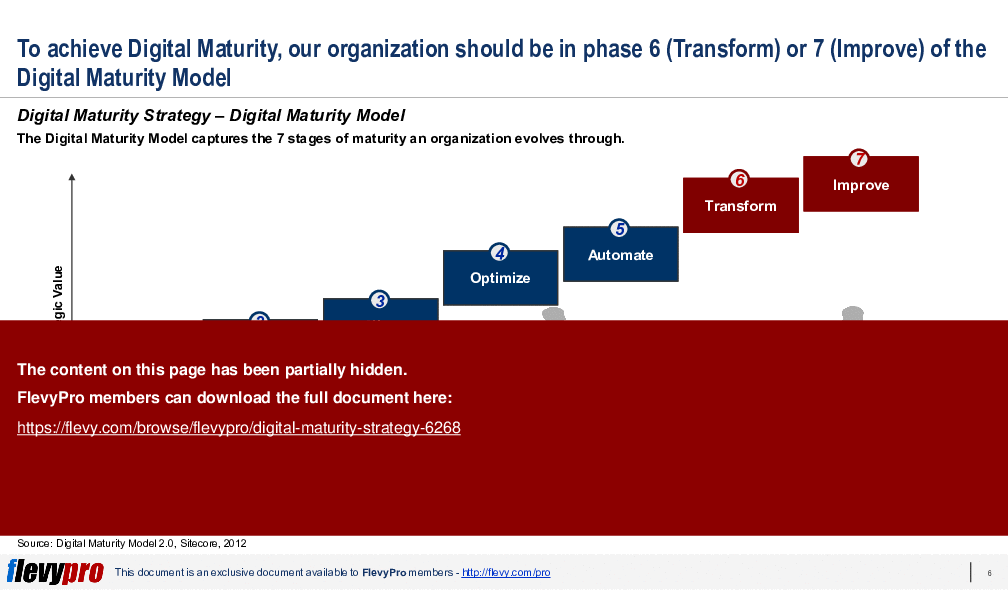
This PPT slide template presents a framework for assessing digital maturity through a seven-phase model: Initiate, Radiate, Align, Optimize, Automate, Transform, and Improve. The continuum from "Crawl" to "Run" illustrates the evolution of digital capabilities. The "Initiate" phase marks the beginning of digital transformation, while "Radiate" focuses on fostering a digital culture. "Align" emphasizes integrating digital initiatives with business strategy. "Optimize" involves refining processes for efficiency, and "Automate" implements technology to streamline operations. The goal is to reach the "Transform" or "Improve" phases, where organizations leverage digital tools for significant transformation or continuous improvement. The vertical axis labeled "Strategic Value" indicates that advancing through these phases enhances the strategic value derived from digital initiatives.
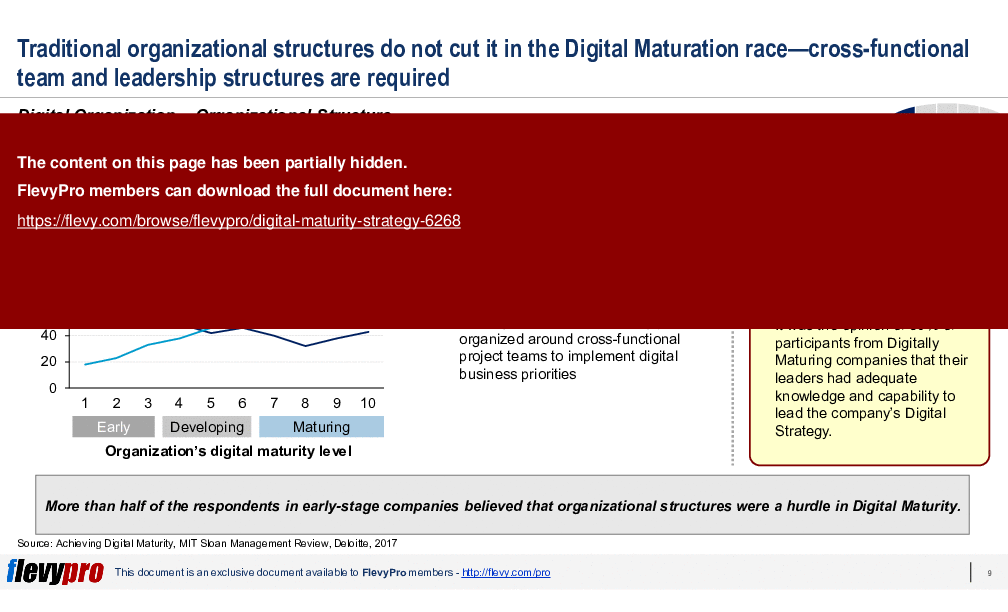
Organizations must shift from traditional hierarchical structures to agile, cross-functional teams to achieve digital maturity. Conventional frameworks relying on functional silos hinder responsiveness in today’s fast-paced market. A research survey categorizes organizations by digital maturity: early-stage, developing, and maturing. Nearly 60% of early-stage respondents identify existing management practices as barriers to digital engagement, highlighting the need for change. In contrast, 80% of digitally maturing companies believe their leaders understand how to guide digital strategy effectively. This indicates that lower reliance on hierarchical structures in maturing organizations correlates with more flexible management approaches. Organizations at various stages of digital maturity must reassess their structures and evolve management practices to support digital initiatives, driving better business outcomes.
Organizations must adapt their structures to thrive in a digital landscape. Traditional command-and-control hierarchies hinder agility in rapidly evolving markets. Data shows a correlation between organizational structure and digital maturity; organizations with flexible, cross-functional teams report higher digital maturity levels. The graph indicates that companies embracing cross-functional project teams engage more successfully in digital initiatives. A significant portion of early-stage respondents view existing structures as obstacles to digital maturity. Key insights highlight the need for altering leadership mindsets and fostering an adaptable workforce to support digital strategies. Notably, 80% of digitally maturing participants believe their leaders have the skills to guide digital strategies, underscoring leadership capability as critical in navigating digital transformation. Emphasizing cross-functional collaboration and leadership development is pivotal for overcoming barriers to digital maturity.
Fostering a digital skills development environment is critical for organizational retention. Employees, especially in leadership roles, are increasingly dissatisfied without opportunities for digital growth. Data shows that only 3% of CIOs and 2% of VPs/Directors plan to leave if supported in their digital skill development, while 43% of sales staff are likely to leave without such opportunities. Vice-presidential executives deprived of digital development prospects are 15 times more likely to consider leaving within a year. Organizations that neglect digital skills risk losing valuable talent to competitors prioritizing employee growth, leading to significant turnover and a diminished competitive edge.
Digitally mature organizations effectively manage and scale experimentation processes, yet many companies struggle to achieve significant operational impact from technological experimentation. A structured approach is essential for scaling successful experiments, focusing on urgent business problems that align with strategic objectives. Digitally maturing organizations are 2.5 times more likely to conduct and scale experiments effectively, fostering a culture of innovation. Embracing failure as a learning opportunity is vital for scaling efforts, encouraging organizations to view setbacks as growth prospects. Integrating experimentation scale and impact into core business strategy enhances innovation capabilities through a structured approach to digital experimentation.
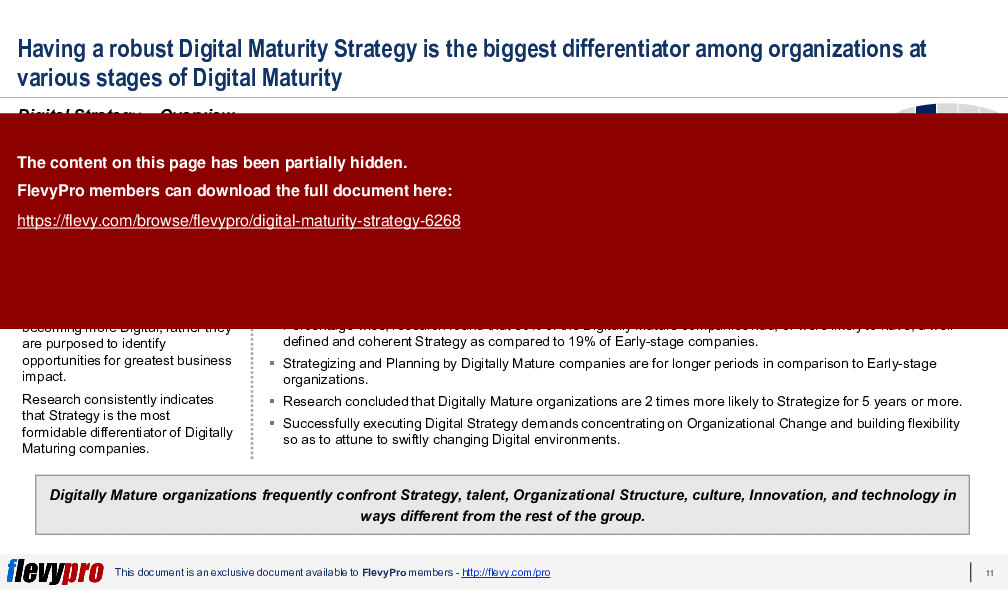
This PPT slide template outlines the significance of a robust Digital Maturity Strategy in differentiating organizations based on their digital maturity levels. Effective digital strategies extend beyond technology implementation to identify opportunities that drive substantial business impact. Research indicates that 80% of Digitally Mature organizations have a well-defined strategy, compared to only 19% of Early-stage companies, highlighting the importance of strategic planning for achieving digital maturity. Digitally Mature organizations engage in long-term planning, often for 5 years or more, to adapt to evolving digital landscapes. Successful execution of digital strategies necessitates a focus on organizational change and flexibility, enabling rapid responses to shifting environments.
Leadership commitment, investment, and vision are critical for achieving digital maturity. Effective leadership correlates with appropriate investment in digital initiatives; 75% of organizations that allocate sufficient resources report positive outcomes, while 34% feel under-invested. Support for talent is essential; 72% of organizations fostering a supportive culture for digital growth see better results, compared to 24% that do not. A clear digital strategy vision is vital, with 72% of organizations with such vision reporting better performance versus 22% without it. Companies lagging in digital maturity are less likely to increase investment, hindering progress. Overall, organization-wide commitment to digital initiatives leads to fruitful outcomes, underscoring that digital maturity results from strategic leadership and investment.
Source: Best Practices in Digital Transformation, Digital Maturity PowerPoint Slides: Digital Maturity Strategy PowerPoint (PPTX) Presentation Slide Deck, LearnPPT Consulting
This framework is developed by a team of former McKinsey and Big 4 consultants. The presentation follows the headline-body-bumper slide format used by global consulting firms.
For $10.00 more, you can download this document plus 2 more FlevyPro documents. That's just $13 each.
ABOUT FLEVYPRO
This document is part of the FlevyPro Library, a curated knowledge base of documents for our FlevyPro subscribers.
FlevyPro is a subscription service for on-demand business frameworks and analysis tools. FlevyPro subscribers receive access to an exclusive library of curated business documents—business framework primers, presentation templates, Lean Six Sigma tools, and more—among other exclusive benefits.
The average daily rate of a McKinsey consultant is $6,625 (not including expenses). The average price of a Flevy document is $65.
Trusted by over 10,000+ Client Organizations
Since 2012, we have provided business templates to over 10,000 businesses and organizations of all sizes, from startups and small businesses to the Fortune 100, in over 130 countries.
"I like your product. I'm frequently designing PowerPoint presentations for my company and your product has given me so many great ideas on the use of charts, layouts, tools, and frameworks. I really think the templates are a valuable asset to the job."
– Roberto Fuentes Martinez, Senior Executive Director at Technology Transformation Advisory
"As a consulting firm, we had been creating subject matter training materials for our people and found the excellent materials on Flevy, which saved us 100's of hours of re-creating what already exists on the Flevy materials we purchased."
– Michael Evans, Managing Director at Newport LLC
"As a young consulting firm, requests for input from clients vary and it's sometimes impossible to provide expert solutions across a broad spectrum of requirements. That was before I discovered Flevy.com.
Through subscription to this invaluable site of a plethora of topics that are key and crucial to consulting, I
have been able to exceed expectations and deliver quality advice and solutions to my clients. The quality and expertise of the authors are exemplary and gives me great confidence to use as part of my service offerings.
I highly recommend this company for any consultant wanting to apply international best practice standards in their service offerings.
"
– Nishi Singh, Strategist and MD at NSP Consultants
"I have found Flevy to be an amazing resource and library of useful presentations for lean sigma, change management and so many other topics. This has reduced the time I need to spend on preparing for my performance consultation. The library is easily accessible and updates are regularly provided. A wealth of great information."
– Cynthia Howard RN, PhD, Executive Coach at Ei Leadership
"Last Sunday morning, I was diligently working on an important presentation for a client and found myself in need of additional content and suitable templates for various types of graphics. Flevy.com proved to be a treasure trove for both content and design at a reasonable price, considering the time I
saved. I encountered a download issue during the ordering process. However, a quick email to Flevy's support team, even on a Sunday (!!!), resulted in assistance within less than an hour, allowing me to download the content I needed. Fantastic job, Flevy! I give 5 stars for both content/price and customer service. Thank you!
"
– M. E., Chief Commercial Officer, International Logistics Service Provider
"My FlevyPro subscription provides me with the most popular frameworks and decks in demand in today’s market. They not only augment my existing consulting and coaching offerings and delivery, but also keep me abreast of the latest trends, inspire new products and service offerings for my practice, and educate me
in a fraction of the time and money of other solutions. I strongly recommend FlevyPro to any consultant serious about success.
"
– Bill Branson, Founder at Strategic Business Architects
"The wide selection of frameworks is very useful to me as an independent consultant. In fact, it rivals what I had at my disposal at Big 4 Consulting firms in terms of efficacy and organization."
– Julia T., Consulting Firm Owner (Former Manager at Deloitte and Capgemini)
"[Flevy] produces some great work that has been/continues to be of immense help not only to myself, but as I seek to provide professional services to my clients, it gives me a large "tool box" of resources that are critical to provide them with the quality of service and outcomes they are expecting."
– Royston Knowles, Executive with 50+ Years of Board Level Experience

 Click main image to view in full screen. Unlock all 13 preview images: