
This framework is developed by a team of former McKinsey and Big 4 consultants. The presentation follows the headline-body-bumper slide format used by global consulting firms.
Editor Summary
26-slide PowerPoint (PPTX) titled "Artificial Intelligence (AI) Strategy: Top Priorities" by LearnPPT Consulting presents a five-priority AI strategy framework covering Boring AI, AI-ready Workforce, Responsible and Ethical AI, AI Operationalization, and Business Model Innovation.
Read moreIncludes 5 deliverables: AI strategy framework template, workforce development plan, governance model, operationalization roadmap, and a BMI assessment tool. Target users include corporate executives, integration leaders, consultants, and digital transformation teams. Sold as a digital download on Flevy with immediate digital download.
Use this slide deck when an organization is defining or formalizing AI priorities, assessing readiness to scale AI, or preparing stakeholder briefings and workshops about AI adoption.
Corporate executives framing strategic AI priorities during planning sessions and stakeholder briefings.
Integration leaders building department-level operationalization roadmaps and data-integration plans.
Consultants assessing AI readiness, governance gaps, and ethical risk controls for clients.
Learning & development or HR leads designing cross-skilling and training programs to create an AI-ready workforce.
The five-priority approach—covering routine automation, workforce readiness, governance, operationalization, and business model redesign—reflects themes highlighted in PwC research on AI scaling challenges.
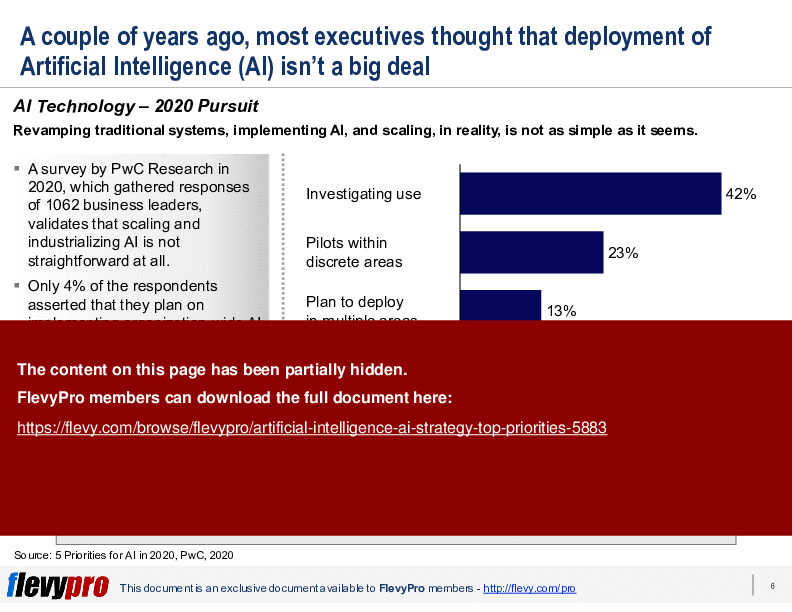
Revamping traditional systems, implementing AI, and scaling, in reality, is not as simple as it seems. PwC's 2020 Research validates that scaling and industrializing AI is not straightforward at all. Only 4% of the survey respondents asserted that they plan on implementing organization-wide AI in 2020. Whereas, a year earlier, the same survey revealed 20% of the executives planning to do that.
This shows a significant decrease in the number of senior leaders thinking of executing AI. The reason for this drop is attributed mainly to the lack of preparedness required for enterprise-wide AI implementation.
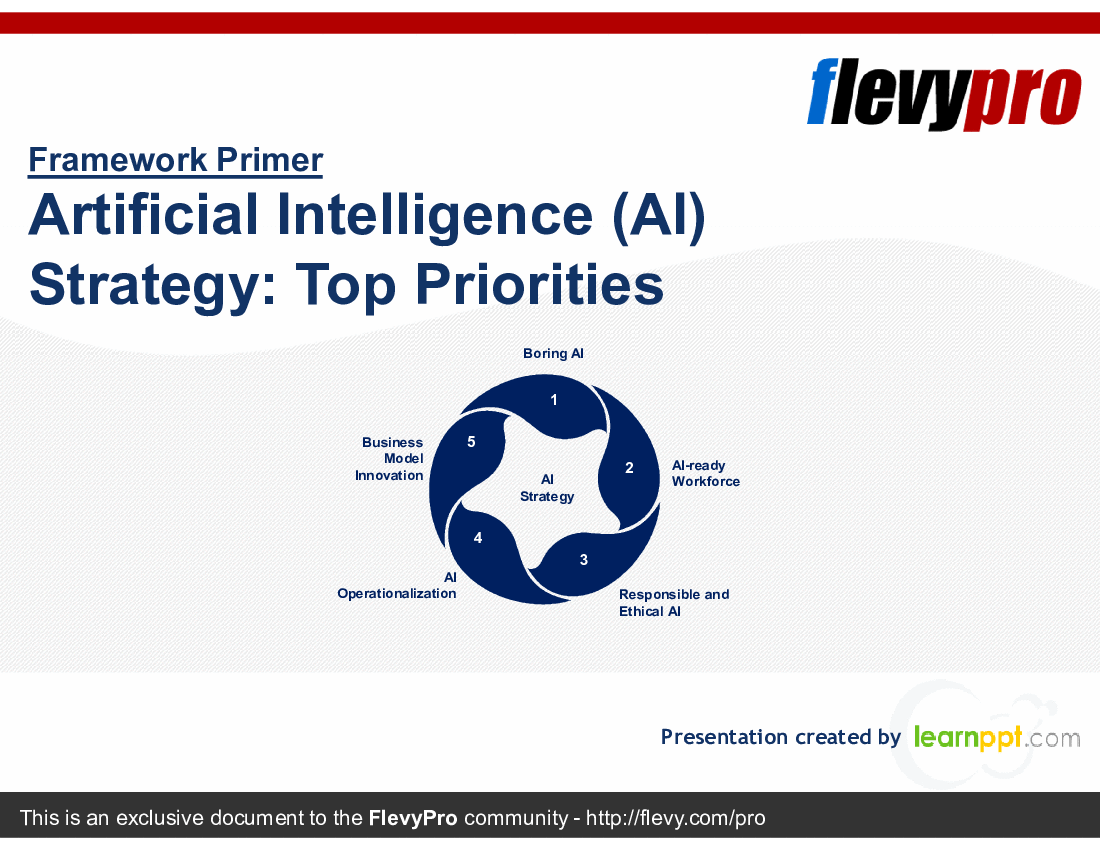
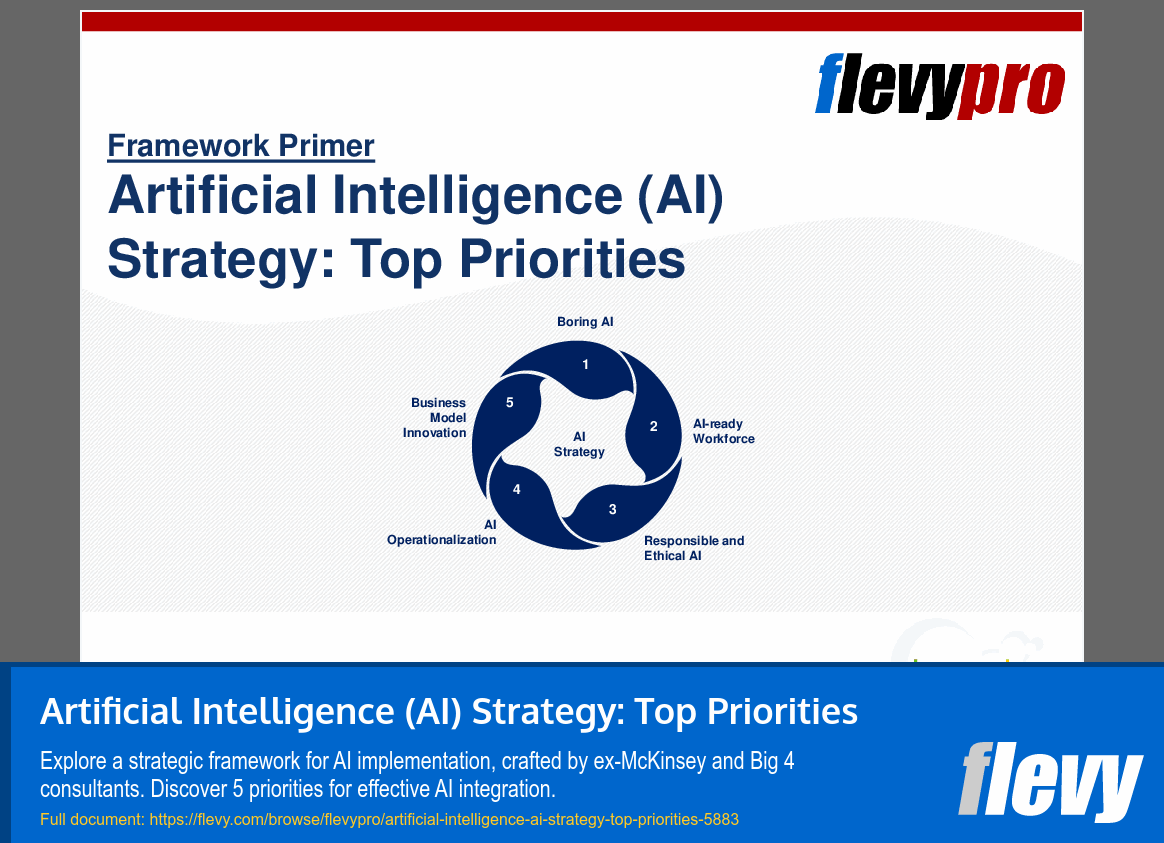
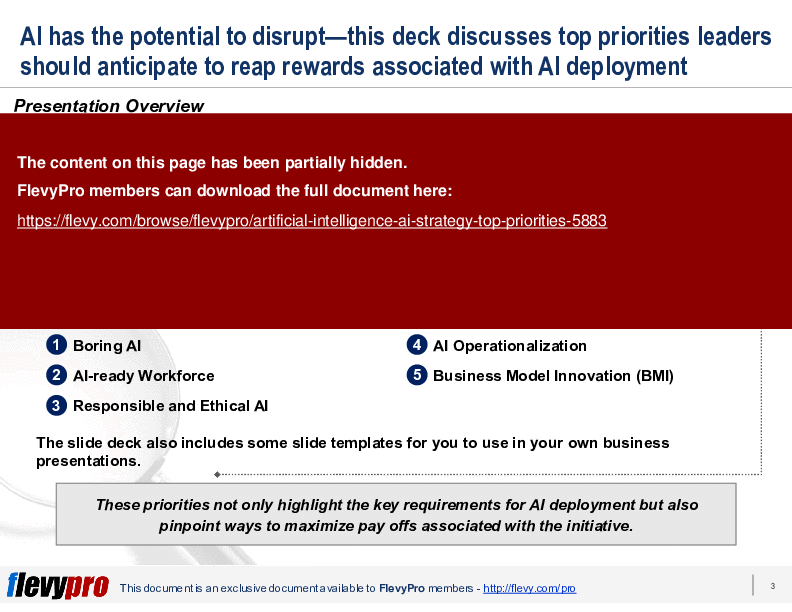
This presentation talks about the 5 key priorities of a robust AI Strategy that businesses should follow to position themselves as AI leaders:
1. Boring AI
2. AI-ready Workforce
3. Responsible and Ethical AI
4. AI Operationalization
5. Business Model Innovation (BMI)
The slide deck also includes some slide templates for you to use in your own business presentations.
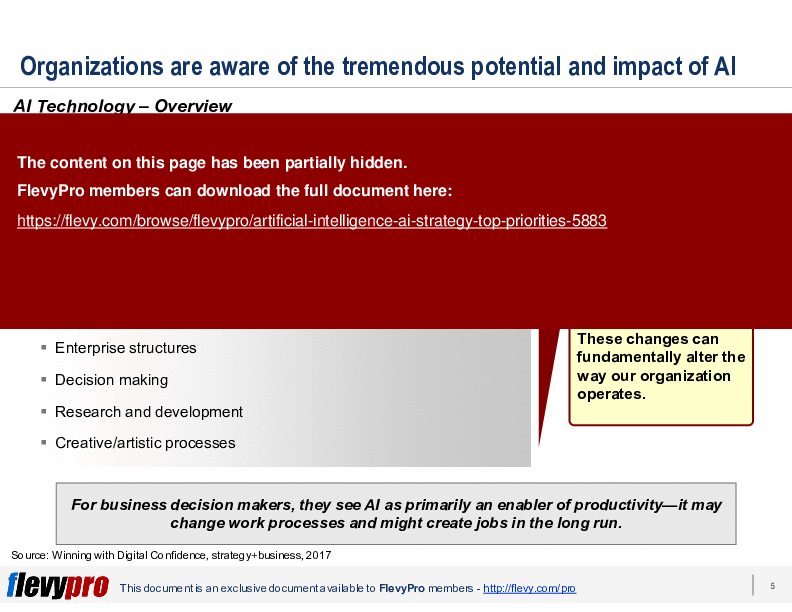
AI technology is reshaping enterprise structures, decision-making processes, and research and development. This presentation underscores how AI can fundamentally alter organizational operations, driving productivity and creating new job roles. It emphasizes that AI should be integrated with other technologies and not deployed in isolation to avoid potential pitfalls.
Executives must recognize the importance of an AI-ready workforce, upskilling employees to handle AI and machine learning technologies. This PPT provides insights into the critical steps for operationalizing AI across multiple departments, ensuring data integration, and addressing AI-related challenges. It also includes templates to help you craft your own AI strategy presentations.
This synopsis was written by Marcus [?] based on the analysis of the full 26-slide presentation.
Executive Summary
The "Artificial Intelligence (AI) Strategy: Top Priorities" presentation provides a comprehensive framework for organizations aiming to harness the transformative power of AI. It outlines 5 critical priorities that leaders must address to successfully implement AI initiatives and maximize their benefits. This deck not only highlights the essential components of an AI strategy, but also offers actionable insights and templates that can be utilized in business presentations. By following these priorities, organizations can position themselves as leaders in AI deployment and innovation.
Who This Is For and When to Use
• Corporate executives seeking to integrate AI into their business strategies
• Integration leaders responsible for overseeing AI implementation
• Consultants advising organizations on AI readiness and operationalization
• Teams focused on digital transformation and innovation management
Best-fit moments to use this deck:
• During strategic planning sessions to define AI priorities
• In workshops aimed at building AI capabilities within teams
• For presentations to stakeholders on AI deployment strategies
• When assessing organizational readiness for AI integration
Learning Objectives
• Define the key components of an effective AI strategy
• Identify the top priorities for successful AI implementation
• Develop a framework for operationalizing AI across the organization
• Establish governance mechanisms for responsible and ethical AI use
• Create a roadmap for building an AI-ready workforce
• Analyze the impact of AI on existing business models and processes
Table of Contents
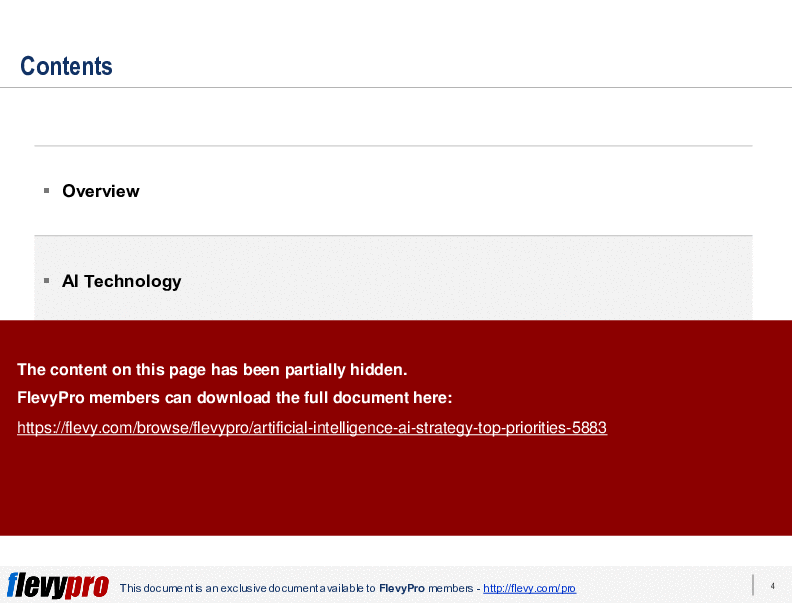
• Overview (page 3)
• AI Technology (page 5)
• Top Priorities of AI Strategy (page 8)
• Templates (page 20)
Primary Topics Covered
• Boring AI - Focuses on the automation of routine tasks to enhance efficiency and productivity within organizations.
• AI-ready Workforce - Emphasizes the importance of building capabilities and skills in the workforce to effectively leverage AI technologies.
• Responsible and Ethical AI - Addresses the need for robust governance and risk management practices to mitigate potential AI-related risks.
• AI Operationalization - Discusses the integration of AI into various business functions to unlock its full value across the organization.
• Business Model Innovation (BMI) - Explores how AI can be utilized to transform and innovate existing business models for greater impact.
Deliverables, Templates, and Tools
• AI strategy framework template for outlining key priorities
• Workforce development plan for building AI capabilities
• Governance model for managing AI risks and ethical considerations
• Operationalization roadmap for integrating AI across departments
• Business model innovation assessment tool for evaluating AI impact
Slide Highlights
• Overview of AI's potential to disrupt traditional business processes
• Key priorities for AI strategy and their implications for organizations
• Insights from PwC's research on AI implementation challenges
• Visual representation of the AI operationalization process
• Framework for assessing workforce readiness for AI technologies
Potential Workshop Agenda
AI Strategy Development Session (90 minutes)
• Discuss the 5 key priorities of AI strategy
• Identify organizational strengths and weaknesses in AI readiness
• Develop an action plan for implementing AI initiatives
Workforce Capability Building Workshop (60 minutes)
• Assess current workforce skills related to AI
• Outline training and development programs for AI readiness
• Establish cross-functional collaboration strategies
Customization Guidance
• Tailor the AI strategy framework to align with specific organizational goals and objectives
• Modify workforce development plans to address unique skill gaps within the organization
• Adjust governance models to reflect industry-specific regulations and ethical standards
• Integrate existing business processes into the AI operationalization roadmap
Secondary Topics Covered
• Integration of AI with existing IT systems and data analytics
• Challenges in scaling AI initiatives across the organization
• The role of leadership in fostering an AI-driven culture
• Strategies for measuring the success of AI implementations
Topic FAQ
What are the core priorities an organization should include in an AI strategy?
Core priorities are Boring AI (automation of routine tasks), AI-ready Workforce (training and cross-skilling), Responsible and Ethical AI (governance and risk management), AI Operationalization (integration across functions), and Business Model Innovation (using AI to transform offerings). These form the 5 priorities outlined in the deck.
What does "Boring AI" mean and why is it listed as a priority?
"Boring AI" refers to applying AI to automate routine, repetitive tasks to improve efficiency and productivity. It is prioritized because automating operational workstreams can deliver measurable productivity gains before pursuing more speculative AI use cases, identified as the first priority in the framework.
How can a company build an AI-ready workforce?
Building an AI-ready workforce involves targeted training, cross-skilling programs, and providing practical opportunities for employees to apply AI and machine learning in their roles. The deck includes a workforce development plan template intended to structure training and capability development activities.
What should I check when selecting an AI strategy slide deck for my organization?
Evaluate whether the deck covers end-to-end priorities (automation, workforce, governance, operationalization, BMI), includes practical templates (strategy framework, workforce plan, governance model, operationalization roadmap, BMI assessment), and matches your presentation needs and slide count, such as the 26-slide LearnPPT deck.
Can slide decks support short workshops and stakeholder presentations on AI?
Yes. Slide decks can structure strategic planning and capability workshops, provide visuals for stakeholder briefings, and outline action plans. The product specifically lists use in strategic planning sessions, 90-minute AI strategy development sessions, and 60-minute workforce workshops.
What practical steps help operationalize AI across departments?
Practical steps include mapping use cases to functions, ensuring data integration with existing systems, establishing governance and risk controls, piloting automations, and scaling successful pilots. The presentation supplies an operationalization roadmap template to guide these steps.
How should organizations address ethics and governance in AI projects?
Organizations should define governance frameworks, risk management processes, and ethical guidelines to mitigate biased algorithms, data privacy issues, and decision-making risks. The slide deck provides a governance model template to document roles, controls, and oversight mechanisms.
What value do prebuilt AI strategy templates provide compared with building from scratch?
Prebuilt templates supply ready-structured slides and tools to articulate priorities, plan workforce development, document governance, map operationalization steps, and assess business-model impact, helping teams prepare presentation-ready material; this product includes 5 templates covering those areas.
Document FAQ
These are questions addressed within this presentation.
What are the main priorities for an AI strategy?
The main priorities include Boring AI, AI-ready Workforce, Responsible and Ethical AI, AI Operationalization, and Business Model Innovation.
How can organizations ensure their workforce is AI-ready?
Organizations should focus on training, cross-skilling, and providing opportunities for employees to apply AI skills in their roles.
What risks are associated with AI deployment?
Risks include biased algorithms, data privacy concerns, and the need for robust governance to manage AI-related decisions.
How does AI impact business models?
AI can transform existing business models by streamlining processes, enhancing decision-making, and creating new revenue opportunities.
What is the significance of operationalizing AI?
Operationalizing AI ensures that it is integrated across various functions, maximizing its value and effectiveness within the organization.
How can organizations measure the success of their AI initiatives?
Success can be measured through established KPIs that track productivity, innovation, and the overall impact of AI on business outcomes.
What are the key components of responsible AI?
Key components include governance frameworks, risk management processes, and ethical guidelines for AI usage.
How can organizations overcome challenges in AI implementation?
Organizations can address challenges by developing a clear strategy, investing in workforce training, and establishing strong governance mechanisms.
Glossary
• AI - Artificial Intelligence, the simulation of human intelligence in machines.
• Operationalization - The process of embedding AI into organizational functions.
• Business Model Innovation (BMI) - The process of transforming existing business models using AI.
• Governance - Frameworks and processes for managing AI-related risks and ethical considerations.
• AI-ready Workforce - A workforce equipped with the necessary skills and knowledge to leverage AI technologies.
• Boring AI - The use of AI for automating routine tasks to improve efficiency.
• Cross-skilling - Training employees in multiple areas to enhance collaboration and problem-solving.
• Risk Management - Processes for identifying and mitigating risks associated with AI usage.
• Data Privacy - The protection of personal data in AI applications.
• KPI - Key Performance Indicator, a measurable value that demonstrates how effectively an organization is achieving its objectives.
• Ethical AI - The responsible use of AI technologies, ensuring fairness and accountability.
• Integration - The process of combining AI with existing systems and processes.
• Transformation - Significant changes in business processes driven by AI technologies.
• Productivity Gains - Increases in efficiency and output as a result of AI implementation.
• Decision Making - The process of making choices based on data and insights provided by AI.
• Automation - The use of technology to perform tasks without human intervention.
• Collaboration - Working together across teams to leverage AI capabilities.
• AI Models - Algorithms and systems that enable AI functionalities.
• Data Governance - Policies and procedures for managing data quality and usage in AI.
• Machine Learning - A subset of AI that enables systems to learn from data and improve over time.
Boring AI refers to the automation of mundane administrative tasks, such as tax and finance functions. A PwC study reveals that 44% of business leaders believe AI enhances operational efficiency, while 42% see increased productivity as a key benefit. AI's ability to automate repetitive tasks can lead to significant time savings by minimizing human effort in data handling. To maximize AI's business value, leadership should develop strategies to identify impactful areas, build necessary capabilities, and integrate AI solutions with existing systems. Implementing oversight mechanisms and establishing key performance indicators (KPIs) are essential for measuring productivity and aligning AI initiatives with organizational goals.
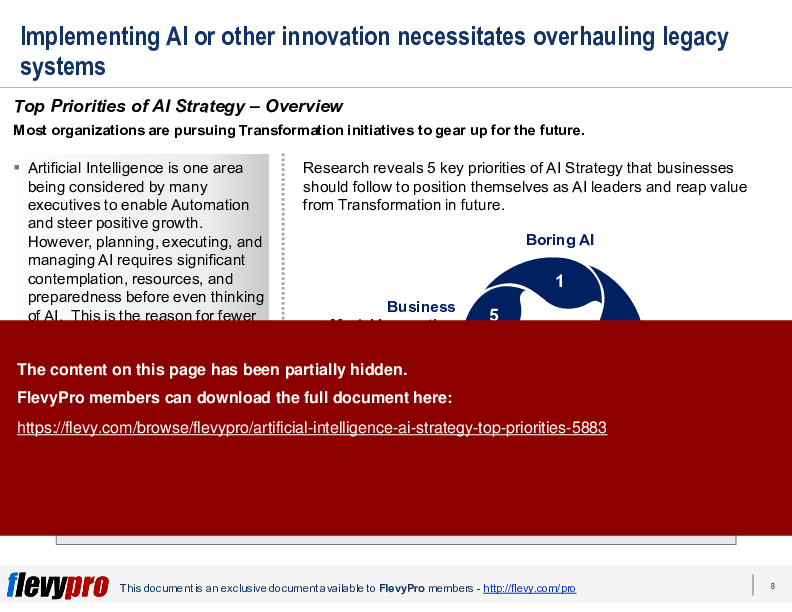
This PPT slide outlines top priorities for an AI strategy, emphasizing the need to overhaul legacy systems for effective AI implementation. Key priorities include:
1. AI Strategy - Establishing a clear and actionable strategy for AI.
2. AI-ready Workforce - Equipping the workforce with necessary AI skills.
3. Responsible and Ethical AI - Committing to ethical AI practices for trust and compliance.
4. Operationalization - Integrating AI into existing operations seamlessly.
5. Business Model Innovation - Rethinking business models to leverage AI capabilities.
A PwC survey indicates that complexities in planning and managing AI initiatives contribute to organizational hesitation. Most perceive AI as presenting more opportunities than risks, highlighting the importance of a structured AI strategy.
This PPT slide focuses on operationalizing Artificial Intelligence (AI) within organizations, emphasizing the need for integration across business units and technological frameworks. AI must be embedded throughout operations, including marketing and finance, and integrated into the IT infrastructure to maximize its value. Building machine learning into production processes is essential for practical application. Specialized methodologies and tools are necessary for AI development, differing from traditional software delivery. Effective data management, including labeling and categorization, is crucial, requiring robust governance and skilled teams. Active learning enhances data categorization, with data scientists refining algorithms. AI should align with broader transformation initiatives like automation and analytics for optimal effectiveness.
Organizations must develop an AI-ready workforce, moving beyond traditional training to dynamic skill development. Research shows that rewarding employees for applying training in real-world scenarios enhances problem-solving capabilities and productivity, indicating a shift from passive learning to active application. Cross-skilling is a key strategy, fostering collaboration among specialists from various domains to effectively address AI-related challenges. This approach enhances technical skills and integrates essential business acumen. Tailored training is crucial for roles like engineers and data scientists, who need specialized guidance in AI model development and data governance. A comprehensive strategy combining broad skill development, specialized training, and real-world application is essential for improving efficiency and innovation in AI initiatives.
This PPT slide presents findings from a 2020 PwC Research survey of 1,062 business leaders on the challenges of implementing Artificial Intelligence (AI) at an organizational level. In 2019, 20% of respondents planned for organization-wide AI implementation,, but this dropped to 4% in 2020, indicating increased awareness of the complexities in scaling AI technologies. The survey reveals that 42% of executives are still investigating AI uses, 23% are conducting pilots, and 18% have implemented AI in multiple areas. Only 13% plan for multi-area deployment, and just 4% aim for enterprise-wide implementation. Organizations must focus on foundational elements and phased approaches, prioritizing pilot programs before broader AI strategies.
Source: Best Practices in Artificial Intelligence, Business Model Innovation, Business Ethics PowerPoint Slides: Artificial Intelligence (AI) Strategy: Top Priorities PowerPoint (PPTX) Presentation Slide Deck, LearnPPT Consulting
This framework is developed by a team of former McKinsey and Big 4 consultants. The presentation follows the headline-body-bumper slide format used by global consulting firms.
For $10.00 more, you can download this document plus 2 more FlevyPro documents. That's just $13 each.
ABOUT FLEVYPRO
This document is part of the FlevyPro Library, a curated knowledge base of documents for our FlevyPro subscribers.
FlevyPro is a subscription service for on-demand business frameworks and analysis tools. FlevyPro subscribers receive access to an exclusive library of curated business documents—business framework primers, presentation templates, Lean Six Sigma tools, and more—among other exclusive benefits.
The average daily rate of a McKinsey consultant is $6,625 (not including expenses). The average price of a Flevy document is $65.
Trusted by over 10,000+ Client Organizations
Since 2012, we have provided business templates to over 10,000 businesses and organizations of all sizes, from startups and small businesses to the Fortune 100, in over 130 countries.
Read Customer Testimonials
"The wide selection of frameworks is very useful to me as an independent consultant. In fact, it rivals what I had at my disposal at Big 4 Consulting firms in terms of efficacy and organization."
– Julia T., Consulting Firm Owner (Former Manager at Deloitte and Capgemini)
"Flevy is now a part of my business routine. I visit Flevy at least 3 times each month.
Flevy has become my preferred learning source, because what it provides is practical, current, and useful in this era where the business world is being rewritten.

many challenges and there is the need to make the right decisions in a short time, with so much scattered information, we are fortunate to have Flevy. Flevy investigates, selects, and puts at our disposal the best of the best to help us be successful in our work.
"
– Omar Hernán Montes Parra, CEO at Quantum SFE
"My FlevyPro subscription provides me with the most popular frameworks and decks in demand in today’s market. They not only augment my existing consulting and coaching offerings and delivery, but also keep me abreast of the latest trends, inspire new products and service offerings for my practice, and educate me
in a fraction of the time and money of other solutions. I strongly recommend FlevyPro to any consultant serious about success.
"
– Bill Branson, Founder at Strategic Business Architects
"I have used Flevy services for a number of years and have never, ever been disappointed. As a matter of fact, David and his team continue, time after time, to impress me with their willingness to assist and in the real sense of the word. I have concluded in fact
that it is not at all just a repository of documents/resources but, in the way that David and his team manage the firm, it is like dealing with consultants always ready to assist, advise and direct you to what you really need, and they always get it right.
I am an international hospitality accomplished senior executive who has worked and lived during the past 35 years in 23 countries in 5 continents and I can humbly say that I know what customer service is, trust me.
Aside from the great and professional service that Flevy's team provide, their wide variety of material is of utmost great quality, professionally put together and most current.
Well done Flevy, keep up the great work and I look forward to continue working with you in the future and to recommend you to a variety of colleagues around the world.
"
– Roberto Pelliccia, Senior Executive in International Hospitality
"One of the great discoveries that I have made for my business is the Flevy library of training materials.
As a Lean Transformation Expert, I am always making presentations to clients on a variety of topics: Training, Transformation, Total Productive Maintenance, Culture, Coaching, Tools, Leadership Behavior, etc. Flevy
It is well worth the money to purchase these presentations. Sure, I have the knowledge and information to make my point. It is another thing to create a presentation that captures what I want to say. Flevy has saved me countless hours of preparation time that is much better spent with implementation that will actually save money for my clients.
"
– Ed Kemmerling, Senior Lean Transformation Expert at PMG
"I have used FlevyPro for several business applications. It is a great complement to working with expensive consultants. The quality and effectiveness of the tools are of the highest standards."
– Moritz Bernhoerster, Global Sourcing Director at Fortune 500
"As an Independent Management Consultant, I find Flevy to add great value as a source of best practices, templates and information on new trends. Flevy has matured and the quality and quantity of the library is excellent. Lastly the price charged is reasonable, creating a win-win value for
the customer, Flevy and the various authors. This is truly a service that benefits the consulting industry and associated clients. Thanks for providing this service.
"
– Jim Schoen, Principal at FRC Group
"I like your product. I'm frequently designing PowerPoint presentations for my company and your product has given me so many great ideas on the use of charts, layouts, tools, and frameworks. I really think the templates are a valuable asset to the job."
– Roberto Fuentes Martinez, Senior Executive Director at Technology Transformation Advisory
Download our FREE Digital Transformation Templates
Download our free compilation of 50+ Digital Transformation slides and templates. DX concepts covered include Digital Leadership, Digital Maturity, Digital Value Chain, Customer Experience, Customer Journey, RPA, etc.
Download our FREE Digital Transformation Templates
Get Our FREE Product.
Download our free compilation of 50+ Digital Transformation slides and templates. DX concepts covered include Digital Leadership, Digital Maturity, Digital Value Chain, Customer Experience, Customer Journey, RPA, etc.